
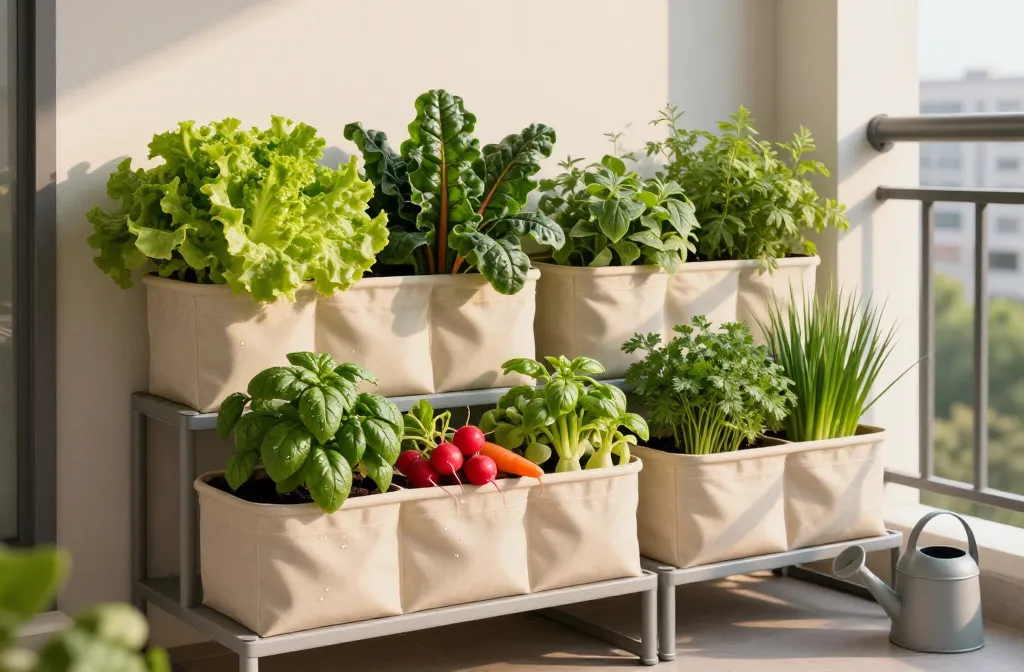
Short on square footage but big on flavor? A vertical garden can turn your tiny balcony into a veggie vending machine. We’re talking crisp greens, snackable tomatoes, and herbs that actually taste like something. Ready to stack, hang, and harvest? Let’s make your wall work harder than your floor.
1. Stack Smart: Tiered Planters That Do The Heavy Lifting
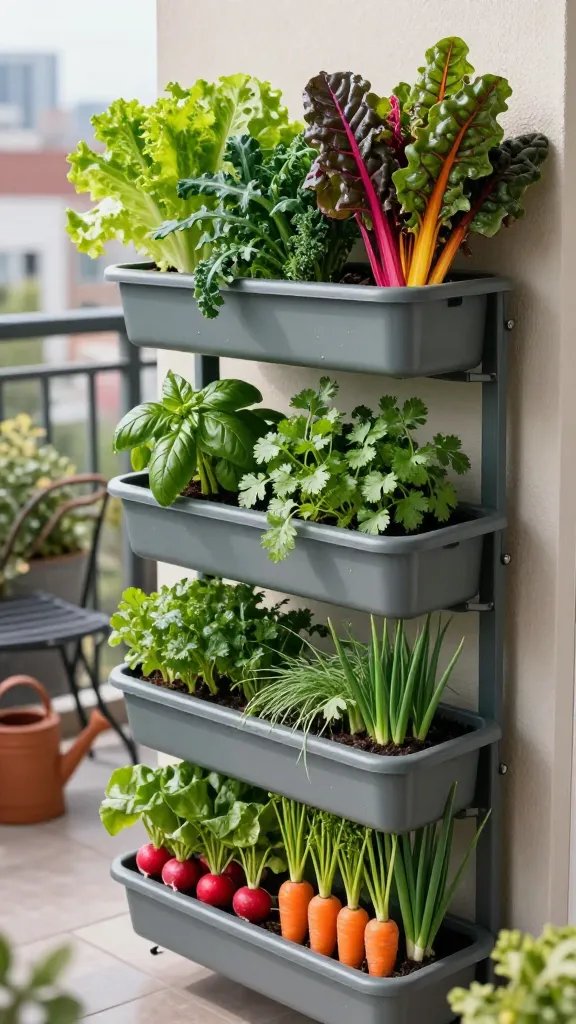
Tiered planters give you the most veggie per square inch—no gym membership required. They stack vertically, keep roots contained, and make watering a breeze. Bonus: they turn a blank wall into a living salad bar.
Great Vegetables For Tiers
- Leafy Greens: Lettuce, spinach, arugula, kale, Swiss chard
- Compact Herbs: Basil, cilantro, parsley, chives
- Snackable Veg: Radishes, baby carrots (short varieties), green onions
These plants have shallow roots and love consistent moisture. That’s exactly what tiered planters deliver.
Tips
- Choose breathable containers: Fabric pockets or plastic with drainage holes keep roots happy.
- Use a light potting mix: Go for mixes labeled “container” or “soilless.” Heavy garden soil = sad plants.
- Water from the top: Let gravity help. Many tiered systems wick moisture downward.
- Rotate tiers: Give each level a turn weekly for even sun.
When you want quick harvests and constant turnover, stacked planters set you up for weekly snips and salads with minimal fuss.
2. Climb Higher: Trellises And A-Frames For Vining Winners
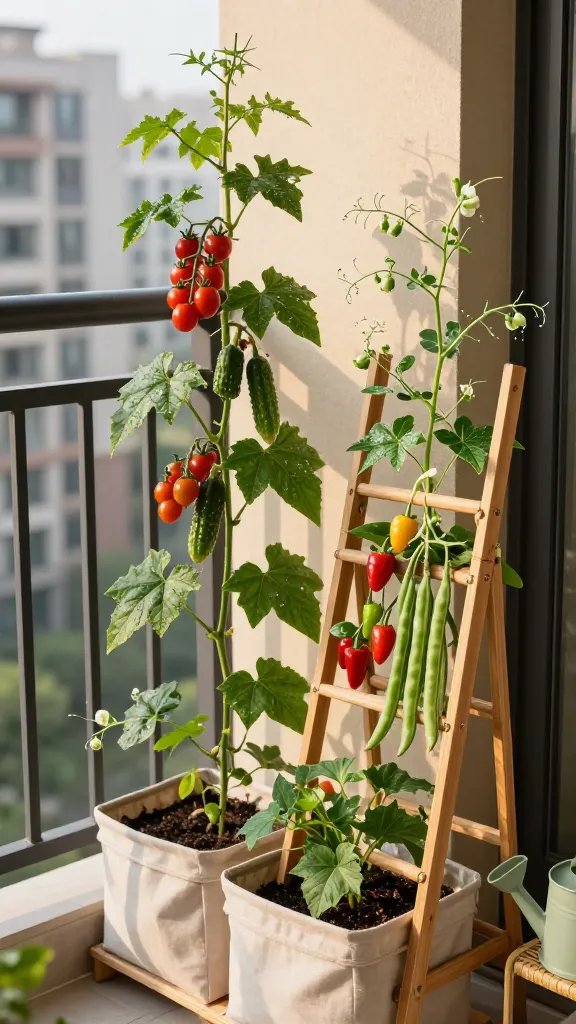
Vertical vines = balcony superheroes. They rocket upward, shade your railing, and produce like overachievers. If you’ve got six hours of sun, you’ve got a vine jungle waiting to happen.
Climbing Vegetables That Shine
- Tomatoes (dwarf/indeterminate on trellis): ‘Sweet 100’, ‘Sungold’, ‘Tidy Treats’
- Cucumbers (bush or vining): ‘Spacemaster’, ‘Bush Champion’, ‘Salad Bush’
- Peas (spring/fall): Sugar snap, snow peas
- Pole Beans: ‘Blue Lake Pole’, ‘Kentucky Wonder’
- Mini Peppers: Lunchbox varieties (stake or cage)
They climb, they fruit, and they look fabulous. What’s not to love?
Setup Essentials
- Containers: 5–10 gallon for tomatoes and cucumbers; 3–5 gallon for peas and beans.
- Trellis options: Foldable A-frames, bamboo teepees, or mesh panels zip-tied to railings.
- Training: Gently weave stems into the support weekly. Snip suckers on tomatoes for airflow.
- Pollination: Give flowers a gentle shake in the morning. Urban pollinators help, but you can assist.
Use this when you want dramatic growth and bigger harvests without sacrificing floor space. Your neighbors will ask for cucumbers, FYI.
3. Rail, Hang, Repeat: Balconies That Grow From Every Angle
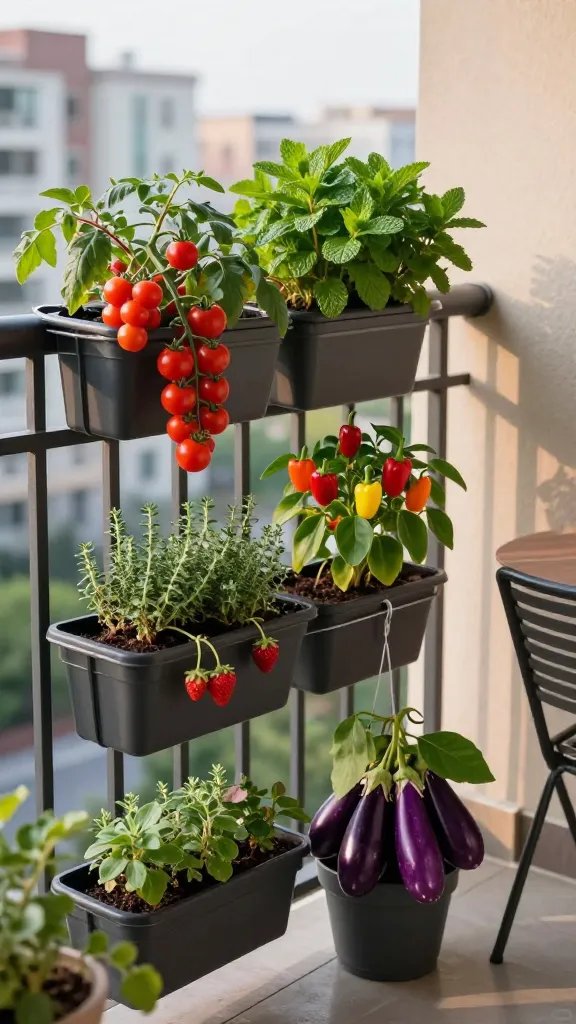
Rail planters and hanging baskets turn wasted airspace into dinner. They’re easy to install, look cute, and keep plants out of foot traffic. Also, you can move them like chess pieces to chase sun.
Best Picks For Hanging And Rail Planters
- Trailing Cherry Tomatoes: ‘Tumbling Tom’, ‘Cherry Falls’
- Strawberries: Not a veg, but you’ll want them—trust me
- Herbs: Thyme, oregano, mint (hang mint alone—bully vibes)
- Hot Peppers: Compact varieties like ‘Apache’, ‘Basket of Fire’
- Baby Eggplant: ‘Patio Baby’ (in deeper baskets)
These varieties thrive in baskets and rail boxes because they spill, drape, or stay compact.
How To Keep Them Thriving
- Choose deep baskets: 10–12 inches deep for fruiting plants; 8 inches works for herbs.
- Add moisture control: Mix in coco coir or water-retentive crystals. Wind dries baskets fast.
- Feed lightly, often: Weekly liquid fertilizer at half strength keeps baskets productive.
- Secure everything: Use sturdy brackets and zip ties. Surprise gravity tests are not fun.
Use hanging and rail setups for sun-soaked edges and to free the floor for chairs, pets, or, you know, humans.
4. The 20-Veggie Vertical Hit List (With Sun + Pot Specs)
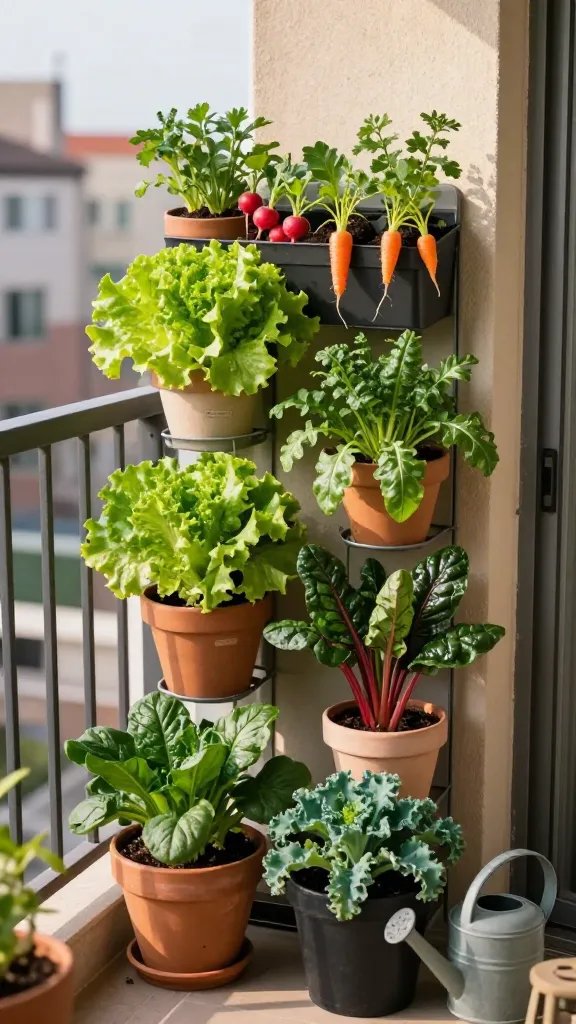
Here’s the no-fluff list you came for: 20 balcony-friendly veggies that crush it in vertical gardens. Pick 5–8 to start, then scale like a boss.
Leafy + Quick Harvest
- Lettuce: 4–6 hours sun; 6–8 inch deep pots; cut-and-come-again.
- Spinach: Cool temps; 6–8 inch pots; partial shade friendly.
- Arugula: 4–6 hours; 6 inch pots; spicy leaves in 30 days.
- Kale (dwarf): 6+ hours; 8–10 inch pots; harvest outer leaves.
- Swiss Chard: 6+ hours; 8–10 inch pots; colorful and forgiving.
Crunchy + Rooted (Short Varieties)
- Radishes: 4–6 hours; 6 inch pots; harvest in 25–35 days.
- Baby Carrots: 6+ hours; 8–10 inch deep pots; choose ‘Thumbelina’ or ‘Paris Market’.
- Green Onions/Scallions: 4–6 hours; 6 inch pots; grow dense for snipping.
- Beets (greens + roots): 6+ hours; 10–12 inch deep pots; harvest baby beets early.
Vining + Fruiting
- Cherry Tomatoes: 6–8+ hours; 5–10 gallon pots; trellis or hang.
- Cucumbers (bush): 6–8 hours; 5–7 gallon pots; trellis always.
- Pole Beans: 6–8 hours; 3–5 gallon pots; climb like pros.
- Peas: 4–6 hours; 3–5 gallon pots; cooler seasons.
- Mini Bell/Hot Peppers: 6–8 hours; 3–5 gallon pots; sturdy cages help.
- Baby Eggplant: 6–8 hours; 5–7 gallon pots; stake early.
Herb All-Stars (Yes, They Count—And They Boost Flavor)
- Basil: 6+ hours; 6–8 inch pots; pinch tops to bush out.
- Cilantro: 4–6 hours; 6–8 inch pots; sow every 2–3 weeks.
- Parsley: 4–6 hours; 6–8 inch pots; flat-leaf for stronger flavor.
- Chives: 4–6 hours; 6 inch pots; cut low, they rebound fast.
- Mint: 4–6 hours; 8 inch pot alone; invasive but glorious.
Mix fast growers (radish, arugula) with steady producers (tomatoes, peppers) to keep harvests rolling all season.
5. Water, Feed, Sun: The Balcony Grower’s Survival Kit
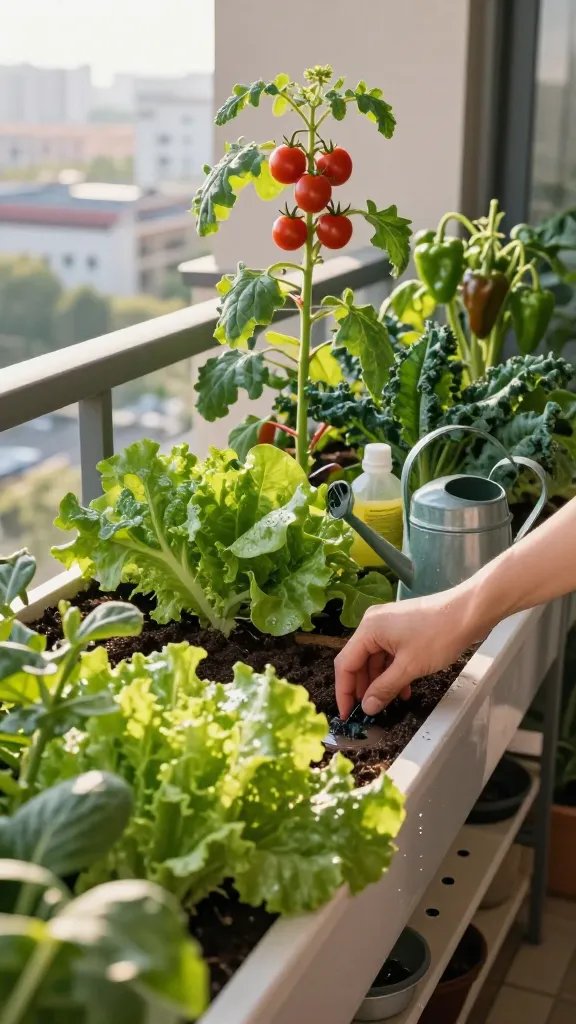
You don’t need fancy gadgets—just a few smart habits. Keep roots moist, nutrients steady, and sun angles on your side. Do that and your balcony turns into a brag-worthy buffet.
Watering Made Easy
- Finger test: If the top inch feels dry, water thoroughly until it drains.
- Self-watering planters: Great for weekends away and forgetful brains (been there).
- Morning routine: Water early to reduce evaporation and mildew.
Feeding For Results
- Weekly liquid feed: Half-strength balanced fertilizer for leafy crops.
- Bloom boosters for fruiting: Switch to higher potassium once tomatoes/peppers flower.
- Top up with compost: A thin layer every month supports microbes and moisture.
Sun, Heat, And Wind
- Track sun hours: 4–6 hours suits greens; 6–8+ fuels fruiting plants.
- Reflect light: Use light walls or white trays behind plants to bounce sun.
- Wind shields: Clear panels or mesh reduce leaf stress on high floors.
Pest + Disease Control
- Scout weekly: Flip leaves; look for aphids, mites, whiteflies.
- Soap spray: Mild insecticidal soap handles most soft-bodied pests.
- Airflow: Don’t cram plants; prune for space to prevent mildew.
These habits keep plants resilient and productive. It’s like a mini plant gym membership—results come from consistency, not gadgets, IMO.
Ready to build your Small Space Vertical Garden | 20 Vegetables for Limited Balconies masterpiece? Start with two planters, a trellis, and a few fast growers. You’ll be harvesting in weeks, not months—seriously. When your balcony becomes your favorite grocery aisle, don’t forget to brag a little.