
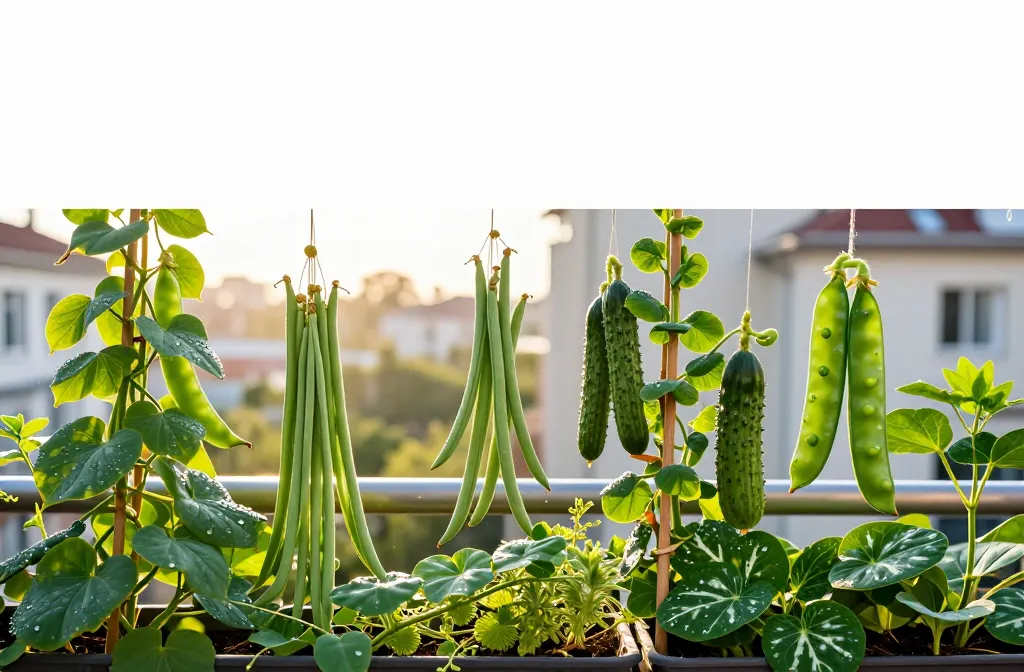
Want big harvests from a tiny balcony or patio? Vertical veggies are your spring superpower. These climbers turn walls, trellises, and fences into food factories fast. Stick with me and you’ll have a lush, edible jungle by summer—no sprawling beds required.
We’re talking easy trellises, smart watering, compact varieties, and harvest hacks that keep the produce coming. Ready to stack your garden upward? Let’s build a sky-high snack bar.
1. Choose The Right Climbers (And Skip The Drama Queens)
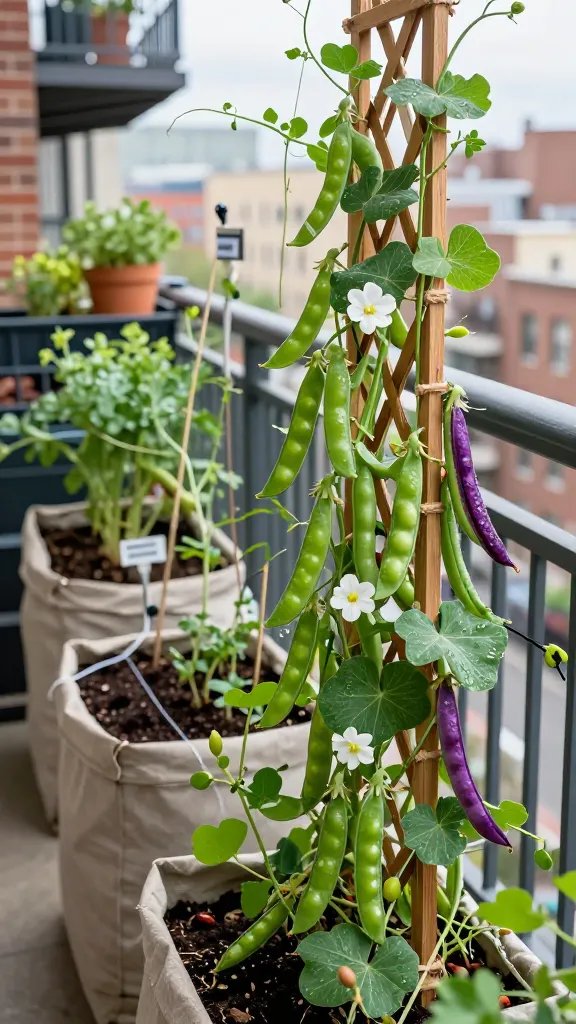
You don’t need every seed packet. Start with compact, fast, and productive climbers that behave in small spaces. These picks love trellises, handle containers, and deliver steady harvests in May and beyond.
Rockstar Climbers For Small Spaces (12 To Choose From)
- Snap Peas (Sugar Ann, Sugar Snap): Sweet, quick, and super vertical.
- Snow Peas (Oregon Sugar Pod): Flat pods, heavy yields, cool-weather champs.
- Pole Beans (Blue Lake, Kentucky Wonder, Purple Podded): Reliable, crispy, and climb like champs.
- Cucumbers (Spacemaster, Boston Pickling): Trellis them for straighter, cleaner fruit.
- Malabar Spinach: Heat-loving leafy vine that laughs at summer.
- Yardlong Beans (Asparagus Bean): Slim pods, huge drama, tiny footprint.
- Climbing Zucchini (Tromboncino): Vines instead of bushy chaos, IMO the best zucchini for vertical setups.
- Vining Tomatoes (Indeterminate Cherry/Slicer): Sungold, Sweet Million, or Juliet crush containers.
- Climbing Nasturtiums: Edible leaves and flowers, mild peppery bite, insane color.
- Bottle Gourd (Calabash/Lauki): Lightweight fruit, great stuffed—train it up, not out.
- Mini Pumpkins (Jack Be Little): Adorable, trellised Halloween prep, sling heavier fruit.
- Hops (If you brew): Not a veg, but a beastly, beautiful climber for shade and vibes.
Mix a few for staggered harvests: peas and spinach for spring, beans and cucumbers for summer, tomatoes running all season. You’ll always have something ready to pick.
Quick Variety Tips
- Choose dwarf or compact types when possible.
- Look for tags like “container,” “patio,” “bush,” or “space-saver.”
- Pick early-maturing (50–70 days) to get wins fast.
Start with 3–4 varieties so you learn what you like—and what actually gets eaten at your place.
2. Build Slim, Sturdy Trellises That Don’t Eat Floor Space
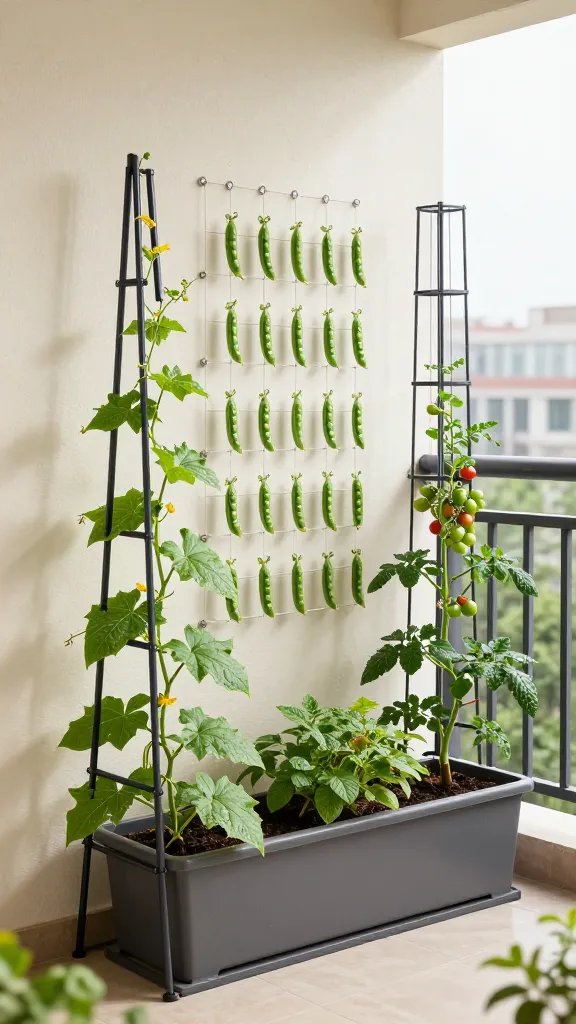
Vertical gardens glow when the support system disappears into the background and just works. You need structures that are slim, strong, and easy to move if you rent. No one has time for wobbly spaghetti trellises.
Space-Smart Trellis Ideas
- A-Frame Foldables: Two panels hinged at the top; perfect for cucumbers and beans. Store flat in winter.
- String Trellis Wall: Screw eye hooks high and low, run twine lanes every 6–8 inches. Beans and peas climb happily.
- Obelisks/Cages: Great for tomatoes, cucumbers, and malabar spinach. Choose powder-coated metal for durability.
- Grid Panels: Repurpose a livestock panel or wire mesh against a fence. Zip ties are your best friend.
- Hanging Rail + S-Hooks: Train vines from pots up a cable or chain; adds instant green curtains.
Materials That Last (And Don’t Look Janky)
- Galvanized wire or vinyl-coated mesh for rust resistance.
- UV-stable garden twine or jute (replace yearly if biodegradable).
- Cedar or composite for wood frames near soil.
- Heavy-duty zip ties for quick installs and adjustments.
Setup Tips
- Angle A-frames south-facing to maximize sun exposure.
- Give each plant a dedicated lane to climb—no tangled love triangles.
- Hit 5–7 feet tall for beans and tomatoes; 4 feet works for peas.
Upgrade supports early, not when vines explode. A strong trellis means straighter fruit, better airflow, and less pest drama. Trust me, it’s worth it.
When To Use What
- Peas/Beans: Strings and nets.
- Cucumbers: Rigid panels or A-frames.
- Tomatoes: Cages + clips or string trellis with pruning.
- Heavier Fruit (gourds, mini pumpkins): Add slings (old T-shirts or produce bags).
Choose the simplest structure you’ll maintain. Fancy doesn’t harvest more—consistency does.
3. Containers, Soil, And Watering: The No-Fail Trio
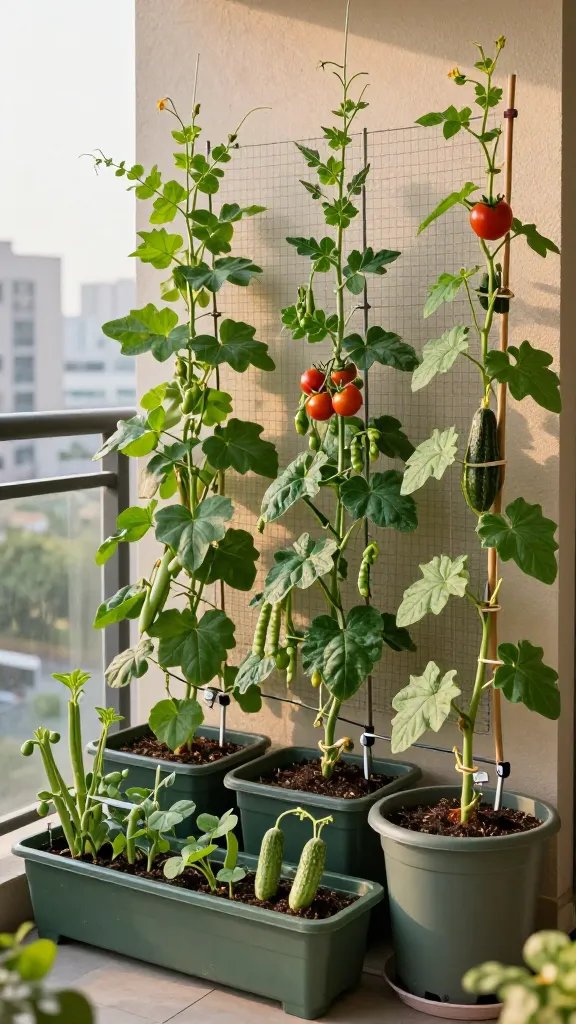
Plants climb up, but roots still need room. Give them the right pot, rich soil, and steady water, and they’ll go full jungle mode. Skimp here and you’ll get sadness on a stick.
Best Container Sizes
- Peas/Beans: 10–12 inches deep; window boxes work in a pinch.
- Cucumbers: 5-gallon pot per plant (or 2 in a long 10-gallon trough).
- Tomatoes (indeterminate): 10–15 gallons; one plant per container—non-negotiable.
- Malabar Spinach/Yardlong Beans: 5–7 gallons for vigorous growth.
- Gourds/Mini Pumpkins: 10+ gallons and a strong trellis.
Soil Mix That Actually Drains
- 2 parts high-quality potting mix (not garden soil)
- 1 part compost for nutrients
- Optional: a handful of perlite for airflow and root happiness
Fertilizing Without Guesswork
- Mix in a slow-release organic fertilizer at planting.
- Top up with a liquid feed (fish/seaweed or balanced veg formula) every 10–14 days once vines take off.
- For tomatoes, add calcium (gypsum or tomato-tone) to prevent blossom end rot.
Watering That Doesn’t Miss
- Install a drip line or use self-watering containers to keep moisture even.
- Water deeply until it drains, then wait until the top inch dries.
- Mulch with shredded leaves or straw to cool roots and save water.
Good containers and steady water supercharge growth, reduce stress, and mean fewer pests. Basically, it’s gardening insurance.
4. Train, Prune, And Harvest Like A Pro (So Plants Don’t Ghost You)
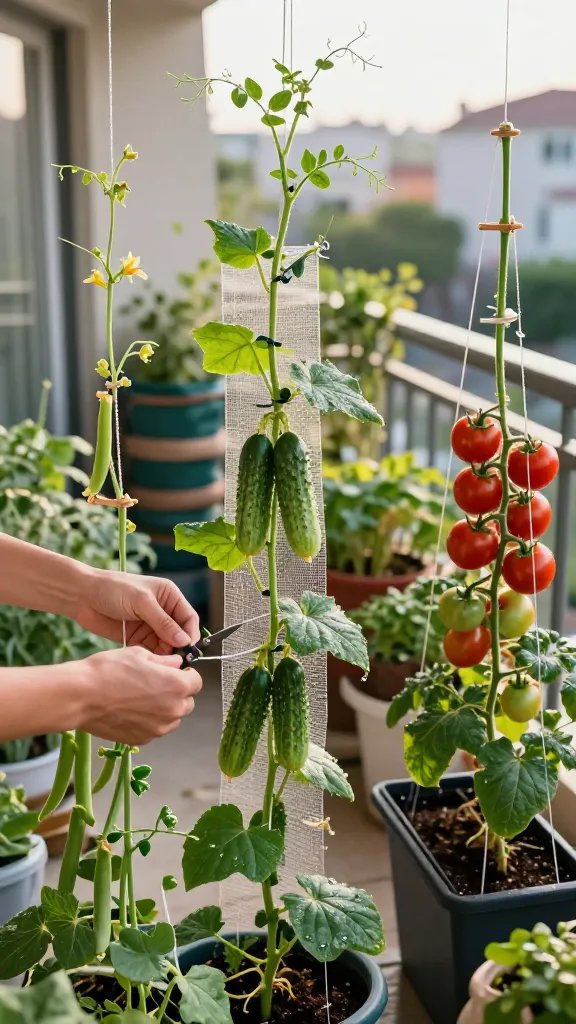
Climbers want direction. A little guiding, a little haircut, and they’ll reward you with baskets of produce. Skip this and you’ll get tangled vines and three sad cucumbers.
Training 101
- Peas/Beans: Gently wrap tendrils around strings. Add clips early if needed.
- Cucumbers: Use soft ties every 6–8 inches. Snip side shoots that dive into walkways.
- Tomatoes: Choose one method:
- Single Leader String: Prune to one main stem; clip to string weekly.
- Sturdy Cage: Let 2–3 leaders, but keep it contained.
- Yardlong Beans/Malabar Spinach: Spiral vines up a central string for neat, lush columns.
Pruning Cheatsheet
- Tomatoes: Remove suckers below the first flower truss for airflow and manageable growth.
- Cucumbers: Pinch lateral shoots up to knee height; focus energy on vertical growth.
- Peas: Trim tips lightly once they reach the top to push pod production.
- Beans: Minimal pruning—just remove congested or yellowing leaves.
Harvest Timing (The Yield Multiplier)
- Peas/Snow Peas: Pick when pods feel crisp, before seeds bulge.
- Pole Beans: Harvest thin and young; every other day during peak.
- Cucumbers: Don’t wait for baseball bats—pick small for better flavor and more fruit.
- Tomatoes: Harvest at blush and finish ripening indoors if birds get nosy.
- Malabar Spinach: Pinch tender tips often to keep it branching.
Regular training and picking signals plants to keep producing. It’s the difference between a snack and a summer’s worth of salads.
Tools Worth Having
- Soft plant ties or Velcro tape
- Tomato clips for string systems
- Bypass pruners for clean cuts
- Harvest bag so you stop using your hoodie pocket
Set a weekly “vine check” and you’ll never feel behind. Seriously, 10 minutes changes everything.
5. Sun, Pests, And Microclimates: Play The Balcony Like A Boss
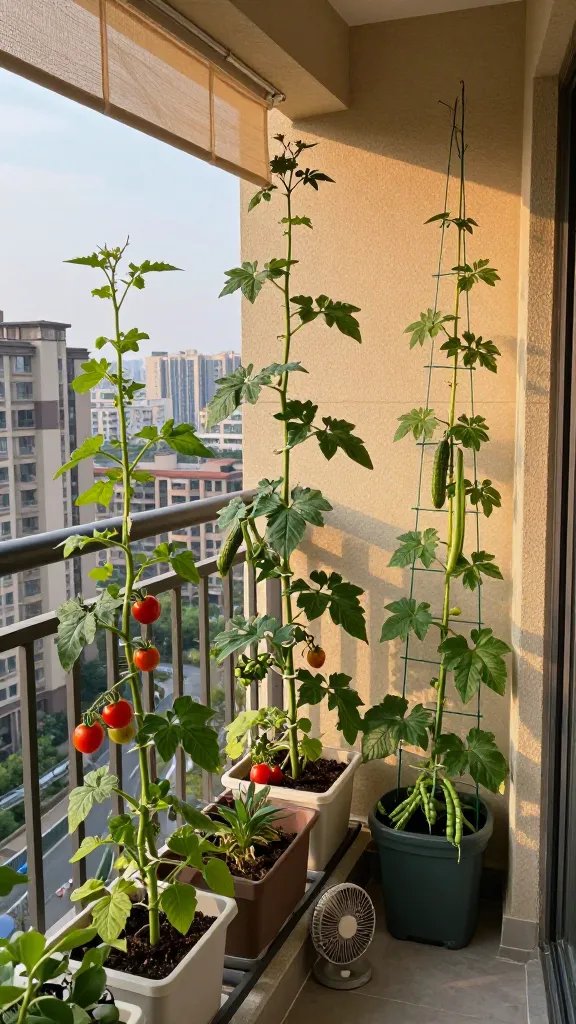
Small spaces have quirks—wind tunnels, hot walls, and surprise shade hours. Use them instead of fighting them. Dial the environment and you’ll squeeze ridiculous yields from a few square feet.
Find Your Best Sun
- 6–8 hours of direct sun for tomatoes, cucumbers, beans, and gourds.
- 4–6 hours works for peas and malabar spinach (especially afternoon shade).
- Rotate containers a quarter-turn weekly for even growth if light hits one side.
Heat And Wind Hacks
- Use a lightweight shade cloth on brutal afternoons to prevent blossom drop.
- Mulch and larger pots buffer heat spikes and reduce root stress.
- Add a simple windbreak (reed screen or clear plastic) if your balcony howls.
Pest Control That Doesn’t Nuke The Good Guys
- Aphids: Blast with water, then spray neem or soapy water weekly until gone.
- Spider Mites: Increase humidity; use insecticidal soap on leaf undersides.
- Powdery Mildew: Prune for airflow; spray diluted milk (yes, really) or potassium bicarbonate.
- Slugs: Copper tape on pot rims; beer traps if you’re feeling vengeful.
Companions And Pollination
- Weave in nasturtiums and basil to attract pollinators and add flavor options.
- Hand-pollinate cucumbers and squash on cloudy days: move pollen from male to female flowers with a paintbrush.
- Shake tomato trellises midday to improve fruit set—DIY bee vibes.
Match crops to your microclimate, and tiny spaces become overachievers. FYI, observation beats any single hack—watch your light, adjust, repeat.
Quick Troubleshooting
- Lots of flowers, no fruit? Heat stress or low pollination—add shade cloth, hand-pollinate.
- Yellowing leaves? Overwatering or nutrient dip—check drainage, add liquid feed.
- Leggy vines? Not enough sun—move containers or trim nearby shade.
The more you tweak, the more your garden rewards you. It’s a feedback loop you’ll actually enjoy.
Ready to stack your garden to the sky? Pick three climbers, throw up a simple trellis, and start training early. By the time summer hits, you’ll be snacking straight off the vine—and flexing that small-space magic to anyone who visits, obviously.
You’ve got this. Green walls, fresh harvests, zero lawn required. Now go vertical and grow ridiculous.