
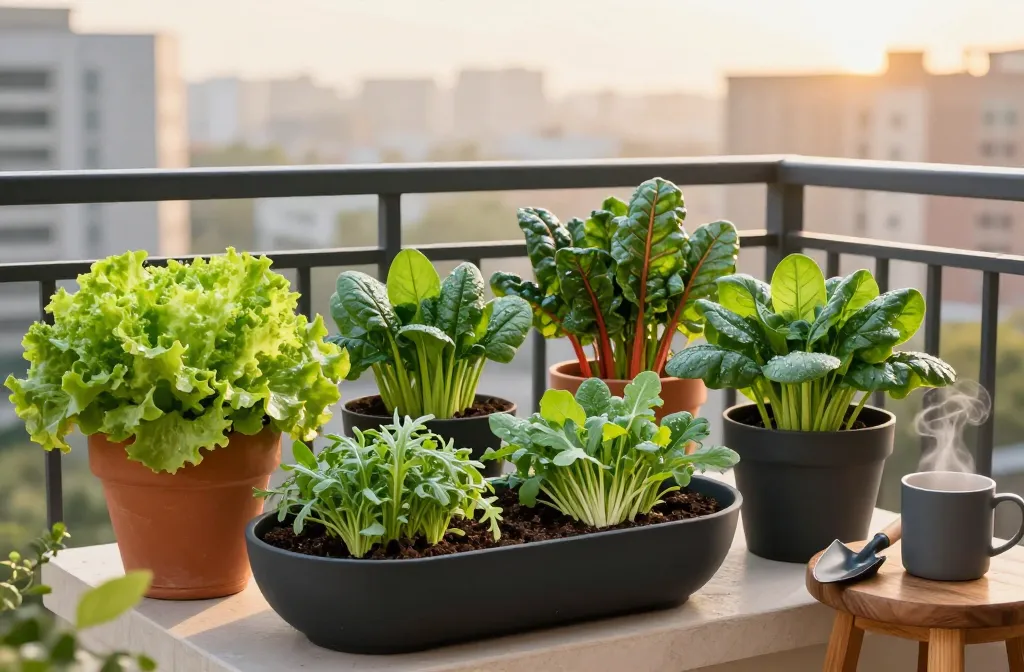
Ready to turn your patio, balcony, or stoop into a fall food factory? September is prime time for cool-season crops that love containers and chill temps. Plant now, harvest in weeks, and brag all season. Let’s make your fall garden ridiculously productive without turning your life into a full-time farm job.
We’ll group all 18 veggies into smart, mix-and-match categories so you know exactly what to plant together, what size pots to use, and how to keep everything happy. Grab your trowel and your favorite mug—this is going to be fun.
1. Speedy Salad Bowls: Leafy Greens You’ll Harvest In Weeks
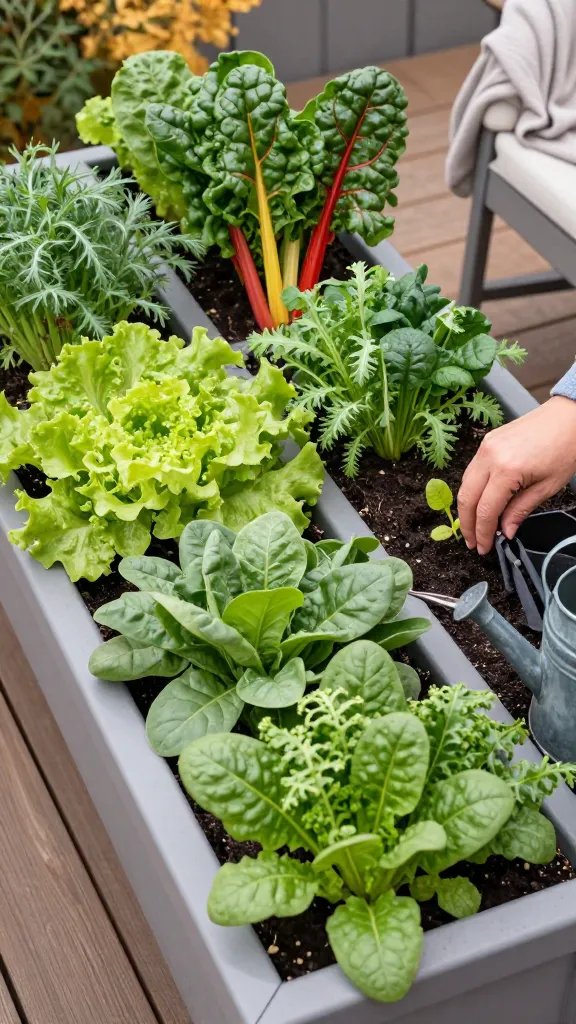
If you want fast results, start here. These leafy greens love cool weather, grow like champs in small containers, and forgive a missed watering or two. Plus, you can cut-and-come-again for nonstop salads.
Plant These 7 Greens:
- Lettuce (leaf and romaine types)
- Spinach
- Arugula
- Swiss chard
- Mizuna
- Tatsoi
- Mustard greens
Go for wide, shallow containers—think 6–8 inches deep and 12–24 inches wide. Sprinkle seeds thickly, then thin to a finger’s width apart for baby greens, or 4–6 inches for larger leaves. Keep soil consistently moist for tender growth.
Tips
- Sun: 4–6 hours daily; afternoon shade keeps leaves sweet.
- Soil: High-quality potting mix with compost mixed in (about 20%).
- Fertilizer: Mild, weekly liquid feed (fish/seaweed) after the first true leaves.
- Harvest: Snip outer leaves often to keep plants producing.
Bonus: These greens shrug off light frosts, so you’ll harvest into late fall. Perfect for quick salads, smoothies, and last-minute “I should eat a vegetable” moments.
2. Root Veggie Tubs: Crisp, Sweet, And Totally Container-Friendly
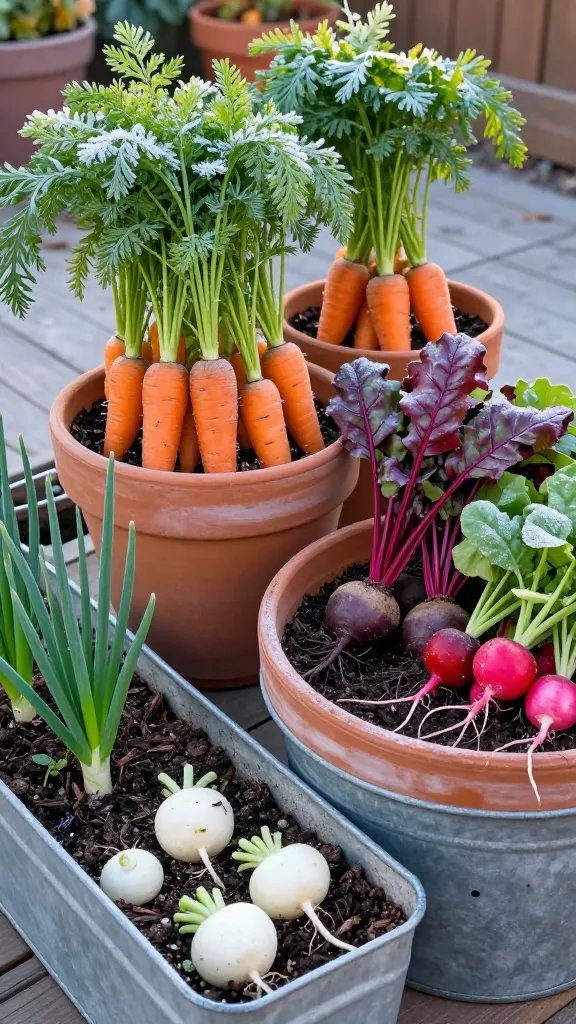
Want that crunchy, earthy sweetness? Roots love the cool days of fall and taste even better after a nip of frost. The secret sauce is depth and drainage—then it’s easy street.
Plant These 5 Roots:
- Radishes (French Breakfast, Cherry Belle)
- Carrots (short types like Parisian, Thumbelina; or Danvers in deeper pots)
- Beets
- Turnips (Hakurei for salad turnips = chef’s kiss)
- Green onions/scallions
Use containers at least 10–12 inches deep for carrots and beets. Radishes and turnips forgive shallower pots, but don’t skimp on space if you want bigger bulbs. Sow directly—no transplant drama here.
Key Points
- Soil texture: Fluffy, stone-free mix. Add perlite for airy structure.
- Spacing: Thin ruthlessly—crowding = tiny roots. Follow packets or go with 2 inches for radishes, 3 inches for beets/turnips, 1 inch for scallions.
- Water: Even moisture prevents cracking and spongy texture.
- Timing: Radishes = 25–35 days. Carrots/beets/turnips = 45–70 days depending on variety.
These pack big nutrition in small pots. Harvest baby roots for snacks and let a few grow on for roasting season. FYI: beet greens and turnip tops taste amazing sautéed with garlic.
3. Cold-Tolerant Powerhouses: The Brassica Dream Team
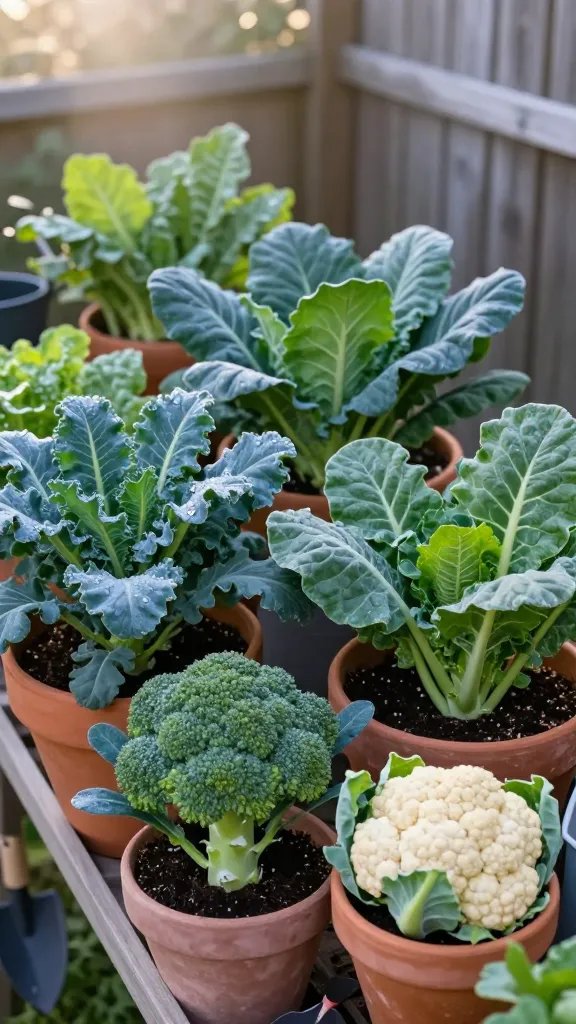
Craving hearty fall meals? Brassicas bring the crunch and the cozy. They love chilly nights and reward you with rich flavor—some even get sweeter after frost.
Plant These 4 Brassicas:
- Kale (Lacinato, Red Russian, or curly types)
- Collard greens
- Broccoli (look for compact or sprouting varieties for containers)
- Cauliflower (choose “mini” or “container” types)
Start with sturdy transplants if you can, since September can be tight for broccoli and cauliflower in cooler zones. Kale and collards handle seeds or starts just fine. Give each plant its own 3–5 gallon pot, or space 12–18 inches apart in a trough planter.
How To Keep Them Happy
- Sun: 6+ hours. They’ll take more if temps stay under 80°F.
- Food: Heavy feeders—mix slow-release organic fertilizer at planting, then side-dress monthly.
- Pests: Cabbage worms love these. Cover with insect netting or pick worms early. A quick spray of BT on leaves saves the day, IMO.
- Moisture: Steady water = tender leaves and bigger heads.
Use leaves for soups, sheet-pan dinners, and salads. If broccoli heads stay small, don’t panic—sprouting side shoots keep the party going for weeks. Seriously, kale in a container is fall garden insurance.
4. Aromatic MVPs: Herbs And Alliums That Make Everything Taste Better
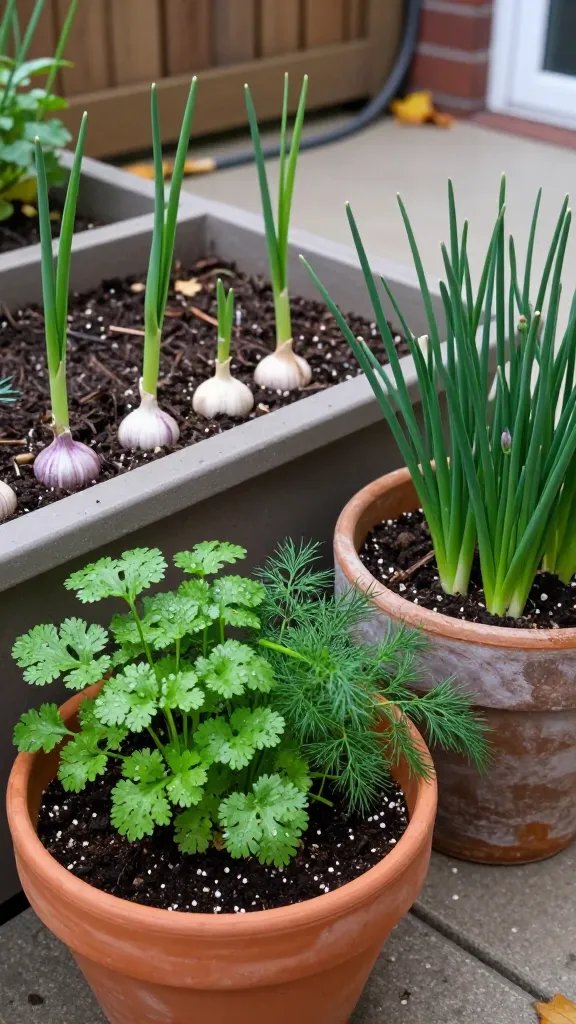
Flavor matters. These herbs and mild alliums thrive in cool weather and turn basic weeknight meals into “who taught you to cook like this?” perfection. They also fit into small nooks you thought were useless.
Plant These 5 Flavor Boosters:
- Cilantro (bolts slower in cool temps)
- Parsley (flat or curly)
- Dill
- Chives
- Garlic (for summer bulbs; use greens/scapes in spring)
Cilantro, parsley, and dill love 6–8 inch deep bowls with good drainage. Chives come back year after year in a 1–2 gallon pot. Plant garlic in a 10–12 inch deep container now; you’ll harvest bulbs next summer and enjoy the green shoots all winter in mild zones.
Container Know-How
- Sun: 4–6 hours for leafy herbs; more sun = stronger flavor.
- Cut smart: Harvest cilantro and dill regularly to prevent flowering. Snip chives down to 1–2 inches; they rebound fast.
- Soil and feed: Light, fertile mix; a monthly liquid feed keeps growth lush.
- Drainage: Non-negotiable—soggy herbs sulk.
These pack a huge punch for minimal space. Toss handfuls into soups, eggs, and roasted veggies. Trust me: fresh herbs make your fall meals taste like you planned ahead.
5. Container Combos And Care: Mix, Match, And Max Out Your Space
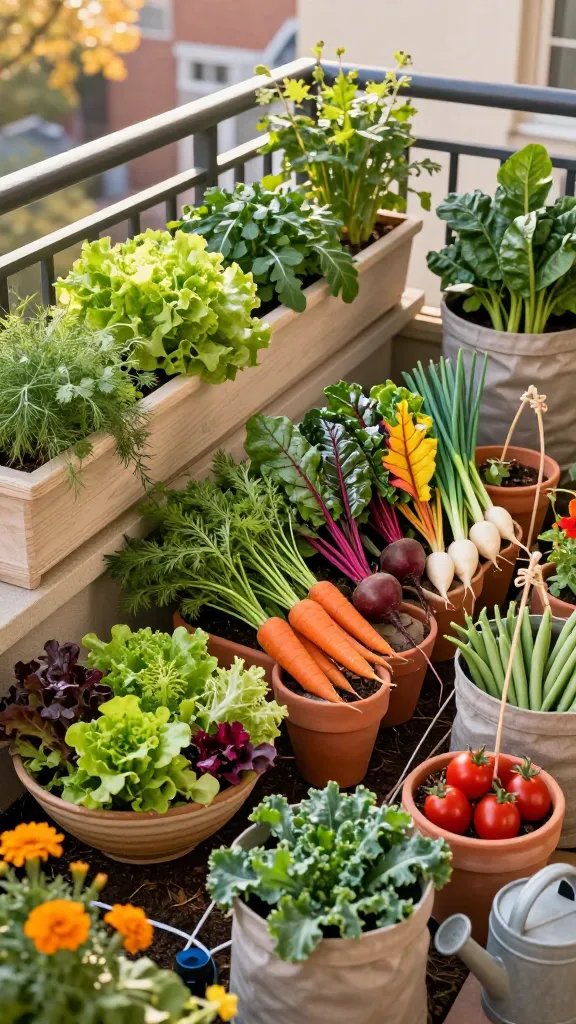
Let’s turn your 18 veggies into a small-space masterpiece. Smart combinations save space, reduce pests, and give you something to harvest every week. Plus, the containers look gorgeous—bonus points for curb appeal.
Best Container Sizes
- Window boxes (6–8 inches deep): Lettuce, arugula, spinach, cilantro, dill.
- Bowls (12–18 inches wide): Mixed greens, mizuna, tatsoi, mustard greens.
- Tall pots (10–12 inches deep): Carrots, beets, turnips, chard, scallions.
- Buckets and grow bags (3–5 gallons): Kale, collards, compact broccoli/cauliflower.
Simple, Productive Combos
- Salad Symphony: Lettuce + arugula + spinach + cilantro in a wide bowl. Harvest nonstop.
- Root Roundup: Carrots around the edges, radishes in the middle (they’ll finish first), and scallions tucked wherever.
- Brassica Buddy Pot: One kale + one chard in a 5-gallon grow bag, underplanted with dill or parsley.
- Herb Rail: Parsley + chives + dill in a window box for quick kitchen snips.
Watering, Feeding, And Light—Keep It Simple
- Water: Aim for evenly moist, not soggy. In cool weather, every 2–3 days often works. Finger test > fancy gadgets.
- Fertilizer: Mix slow-release granules at planting, then supplement leafy crops with a weak weekly liquid feed.
- Light: South or west exposure is ideal. If you only get 3–4 hours, focus on greens and herbs.
- Frost Prep: Keep a lightweight frost cloth or old sheet handy. Most fall crops handle light frost, but a cover extends your season by weeks.
Scheduling And Succession
- Stagger sowings: Replant radishes and salad greens every 10–14 days for continuous harvests.
- Plan for cold snaps: Move pots near walls for extra warmth; group containers to create a microclimate.
- Harvest small, harvest often: Baby beets and turnips? Delish. Don’t wait for “perfect.”
These strategies turn your September container garden into a lean, mean, veggie machine. Great for tiny patios, busy schedules, and anyone who likes brag-worthy bowls of homegrown goodness.
You’ve got the playbook—now grab some seeds, a bag of potting mix, and start planting. In a few weeks, you’ll harvest fresh greens, roots, and herbs like a pro. Your future fall dinners just sent a thank-you note.