
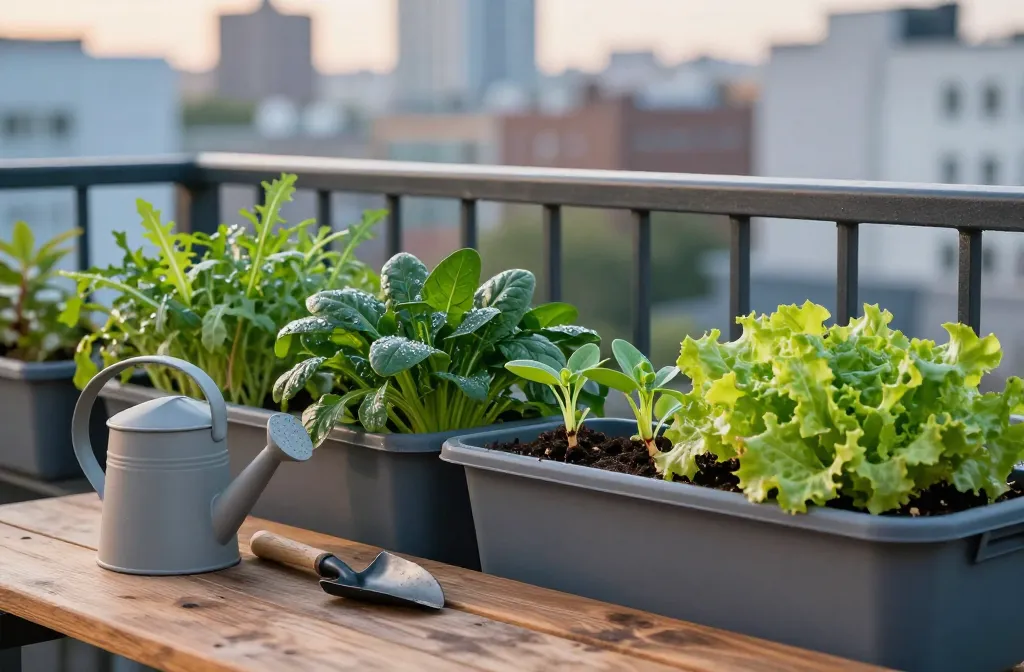
Your balcony can crank out fresh veggies before the first frost hits—no yard needed. September gives you cooler temps, fewer bugs, and plants that actually like sweater weather. We’re talking crisp greens, crunchy roots, and quick wins that won’t ghost you like summer tomatoes. Ready to turn a few pots into a mini farmers’ market?
1. Speed-Demon Greens: Arugula, Spinach, and Baby Lettuce
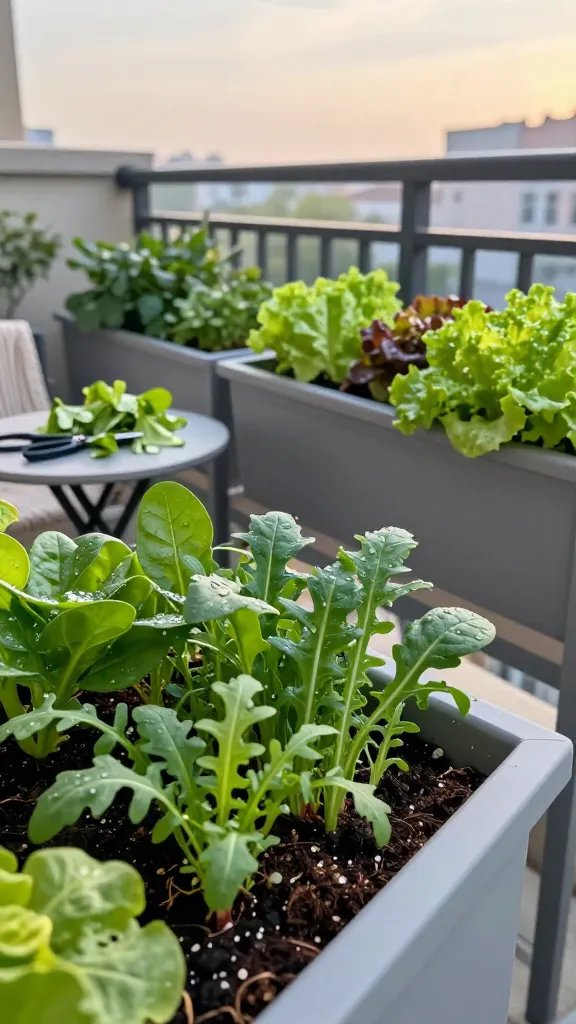
Want near-instant gratification? These greens sprint from seed to salad in 21–35 days. They thrive in cooler nights and bounce back after light harvests, so you can snip and snack all month.
Why They Rock
- Quick maturity: Baby leaves in 2–4 weeks.
- Small-space friendly: Shallow roots, happy in window boxes and shallow trays.
- Cut-and-come-again: One sowing, multiple harvests. Efficiency for the win.
Container + Setup
- Container depth: 6–8 inches for all three; wider is better than deeper.
- Soil: Fluffy potting mix with compost (70/30 blend). Good drainage = fewer regrets.
- Spacing: Scatter sow like you’re salting fries; thin to a leaf every 1–2 inches.
Light + Water
- Light: 4–6 hours sun. Afternoon shade prevents bitter leaves.
- Water: Keep consistently moist. Dry spells cause bolting, especially arugula.
Harvest Tips
- Pick outer leaves when they’re 3–5 inches long.
- Spinach loves cool: if nights dip below 55°F (13°C), it gets sweeter.
- Arugula packs heat—pair with citrus or pears. IMO, it’s the balcony MVP.
Best when you want fast salads, easy sandwiches, and zero drama gardening. Seriously.
2. Crunch Crew: Radishes, Baby Carrots, and Turnips
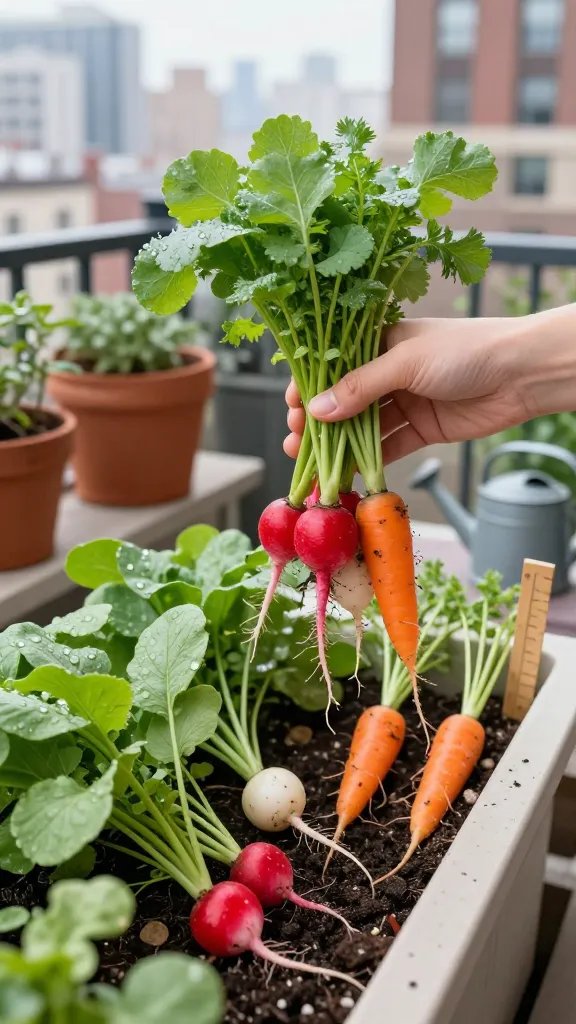
Root crops in containers? Totally doable—and fast. These crunch bombs mature quickly in cool weather and give you that satisfying pull-from-the-soil moment on a tiny balcony.
Why They Rock
- Speed: Radishes in 25–35 days, baby carrots in 40–50, salad turnips in 30–40.
- Dual harvest: Eat the roots and the greens (radish and turnip tops are legit).
- Kid- and newbie-friendly: Visible progress fast = instant motivation.
Container + Setup
- Depth: 8–10 inches for radishes and turnips; 10–12 inches for carrots.
- Soil: Fine, stone-free potting mix. Add extra perlite for loose texture.
- Spacing:
- Radish: 2 inches apart.
- Baby carrot varieties (like ‘Parisian’ or ‘Little Finger’): 2 inches apart.
- Salad turnips (like ‘Hakurei’): 3–4 inches apart.
Light + Water
- Light: 5–6 hours minimum. More sun = sweeter crunch.
- Water: Even moisture or you’ll get split roots and spicy radishes.
Harvest Tips
- Radishes: harvest as soon as bulbs reach grape-to-golf-ball size.
- Carrots: tug test at 40 days for baby size; don’t overthink it.
- Turnips: pick at ping-pong ball size for creamy, not woody, texture.
Perfect when you crave crisp snacks and want that farm-stand vibe without leaving your slippers.
3. Cold-Loving Brassicas: Kale, Bok Choy, and Mustard Greens
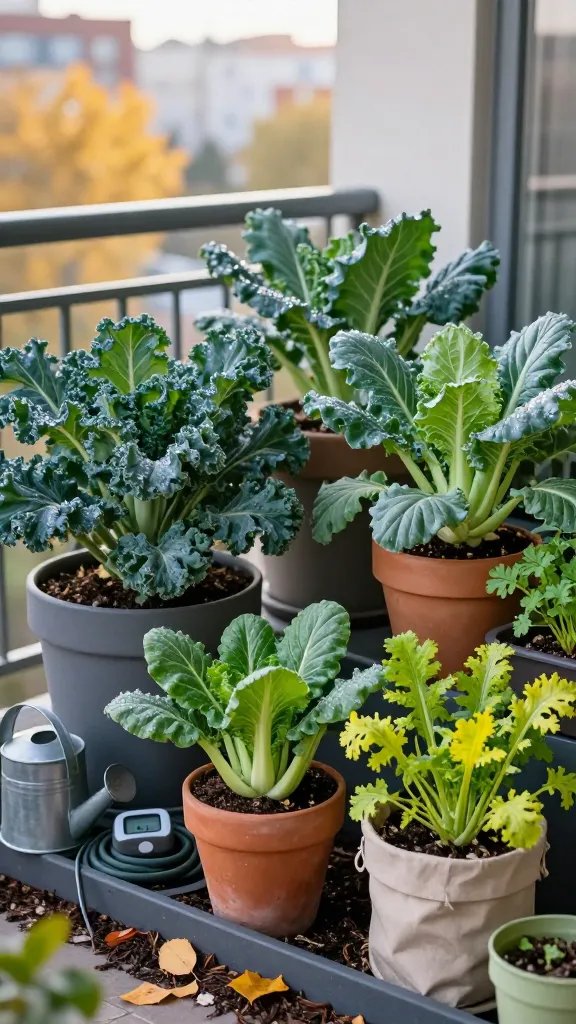
These leafy legends laugh at chilly evenings and keep producing deep into fall. They bring big flavor and serious nutrition with minimal fuss on a balcony.
Why They Rock
- Frost-kissed flavor: Cooler temps make them sweeter and less bitter.
- Compact options: Baby bok choy and dwarf kale fit in tight spots.
- Versatile: Stir-fries, soups, salads—your weeknight dinners just got easier.
Container + Setup
- Depth: 10–12 inches for kale; 8–10 inches for bok choy and mustard.
- Soil: Rich potting mix with slow-release organic fertilizer at planting.
- Spacing:
- Dwarf kale: 8–10 inches apart.
- Baby bok choy: 6–8 inches apart.
- Mustard greens: 6–8 inches or dense-sow for baby leaves.
Light + Water
- Light: 4–6 hours works; they don’t mind partial shade.
- Water: Keep evenly moist. Mulch with shredded leaves to stabilize temps.
Pest + Harvest Tips
- Netting: If cabbage moths still wander around in September, toss on insect netting.
- Harvest: Take outer leaves regularly; for bok choy, harvest whole heads at 6–8 inches.
- Flavor boost: A light frost makes kale taste like you added butter. Almost.
Best for hearty, nutrient-packed meals when the days get shorter and you want real food fast.
4. Cool-Season Herbs: Cilantro, Dill, and Chives
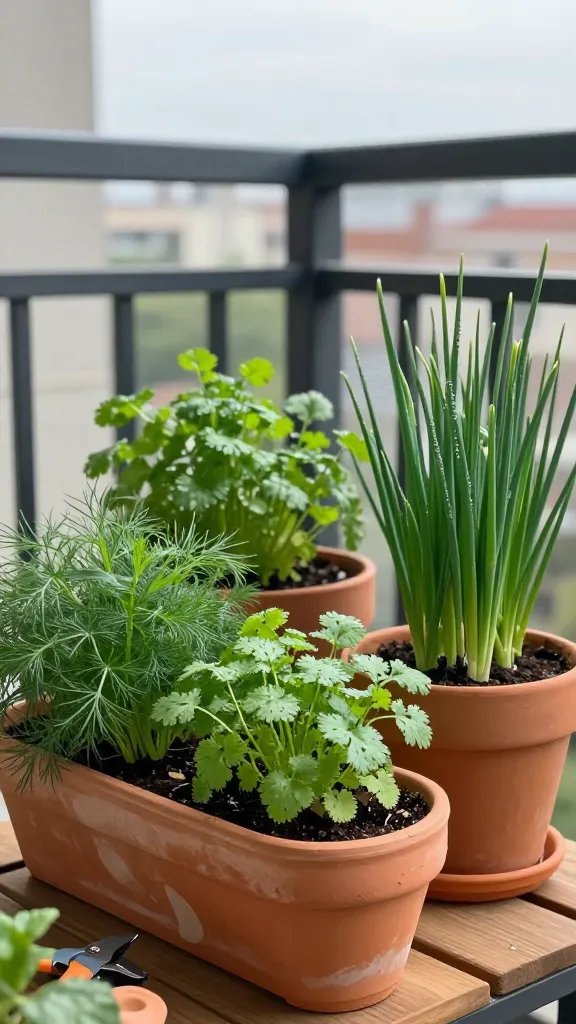
Herbs in September? Absolutely. These three prefer the chill and bolt slower than they do in summer, which means more flavor per square inch.
Why They Rock
- Flavor payoff: Bright, fresh, and wildly useful in fall soups, stews, and roasts.
- Low maintenance: Shallow roots and compact growth suit balconies perfectly.
- Continuous snipping: Regular harvests encourage bushy growth and more yield.
Container + Setup
- Depth: 6–8 inches for cilantro and dill; 8–10 for chives clumps.
- Soil: Well-draining potting mix with a pinch of compost. Avoid heavy, wet soil.
- Spacing:
- Cilantro: scatter sow; thin to 3 inches.
- Dill: 6–8 inches apart; choose dwarf ‘Fernleaf’ for containers.
- Chives: plant clumps 6 inches apart or one clump per 6-inch pot.
Light + Water
- Light: 4–6 hours. Morning sun, afternoon shade keeps cilantro calm.
- Water: Steady moisture; don’t let cilantro dry out or it will peace out early.
Harvest Tips
- Snip outer stems first; leave centers to regrow.
- Dill fronds are delicate—add at the end of cooking.
- Chives regrow fast—cut to 2 inches and they’ll bounce back like champs.
Use when you want to turn basic eggs, potatoes, and grain bowls into “wow, who cooked this?” moments.
5. Balcony Powerhouses: Peas, Swiss Chard, and Green Onions
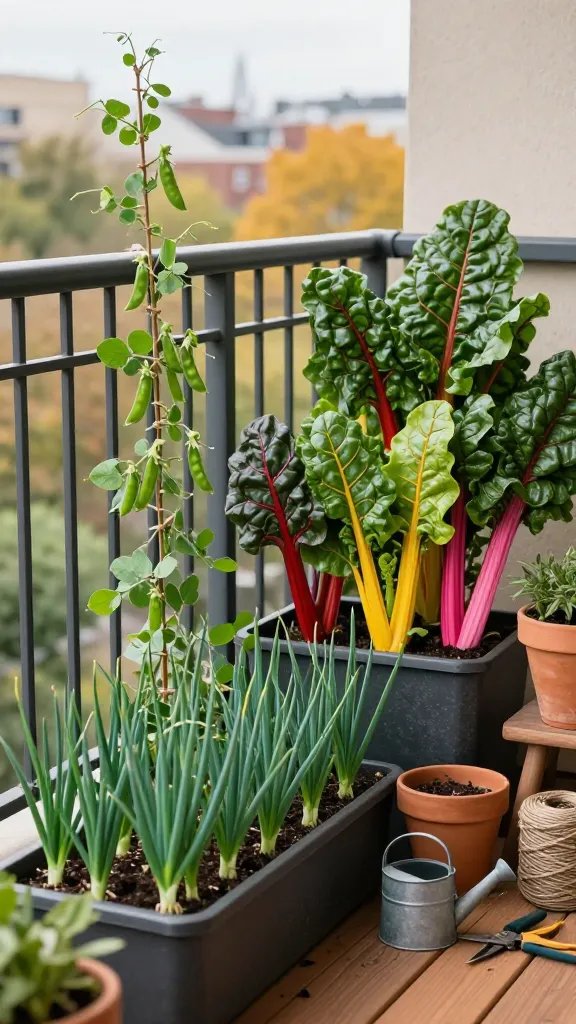
These guys handle cool weather, look pretty, and keep producing for weeks. They earn their keep with vertical growth, nonstop harvests, and minimal drama. Trust me, they’re the quiet overachievers of fall.
Why They Rock
- Peas: Climb up twine and give sweet pods fast.
- Swiss chard: Colorful stems, tender leaves, endless cut-and-come-again potential.
- Green onions: Thin, tidy, and ready in bunches—no peeling, no crying.
Container + Setup
- Depth: 10–12 inches for peas and chard; 6–8 inches for green onions.
- Trellis for peas: A simple string lattice or compact obelisk saves space.
- Soil: Standard potting mix plus compost. Add slow-release fertilizer at planting.
- Spacing:
- Peas: 2 inches apart along the trellis.
- Swiss chard: 8–10 inches apart or dense-sow for baby leaves.
- Green onions: 1 inch apart in snug clumps.
Light + Water
- Light: 5–6 hours. Peas handle a bit less; chard loves bright but tolerates shade.
- Water: Keep evenly moist; avoid soggy soil for peas to prevent sulking.
Harvest Tips
- Peas: Pick pods when plump but still tender; frequent picking = more flowers.
- Chard: Take outer leaves at 6–10 inches; the plant will keep pumping out new ones.
- Green onions: Harvest at pencil-thick or just snip greens for a gentle onion hit.
Best pick when you want vertical interest, bright color, and steady harvests without babysitting.
Quick September Balcony Playbook
- Pick compact varieties: Look for terms like “baby,” “dwarf,” “patio,” or “container.”
- Sow in waves: Plant a small batch every 1–2 weeks to keep harvests rolling.
- Feed lightly: A balanced liquid feed every 2–3 weeks keeps containers from running out of steam.
- Chase the sun: Rotate pots so everyone gets their turn in the spotlight.
- Frost heads-up: Keep a light row cover or old sheet handy for surprise chills.
- Companion wins: Tuck green onions between greens; interplant radishes around slower brassicas.
12 Fast-Growing Stars At A Glance
- Arugula, Spinach, Baby Lettuce
- Radishes, Baby Carrots, Salad Turnips
- Kale, Bok Choy, Mustard Greens
- Cilantro, Dill, Chives
- Peas, Swiss Chard, Green Onions
Ready to flex your balcony’s potential? Plant a couple of trays this weekend and you’ll be snipping salads, tossing stir-fries, and crunching radishes before your pumpkin candle burns out. Cooler weather is your secret weapon—use it and eat well, fast.