
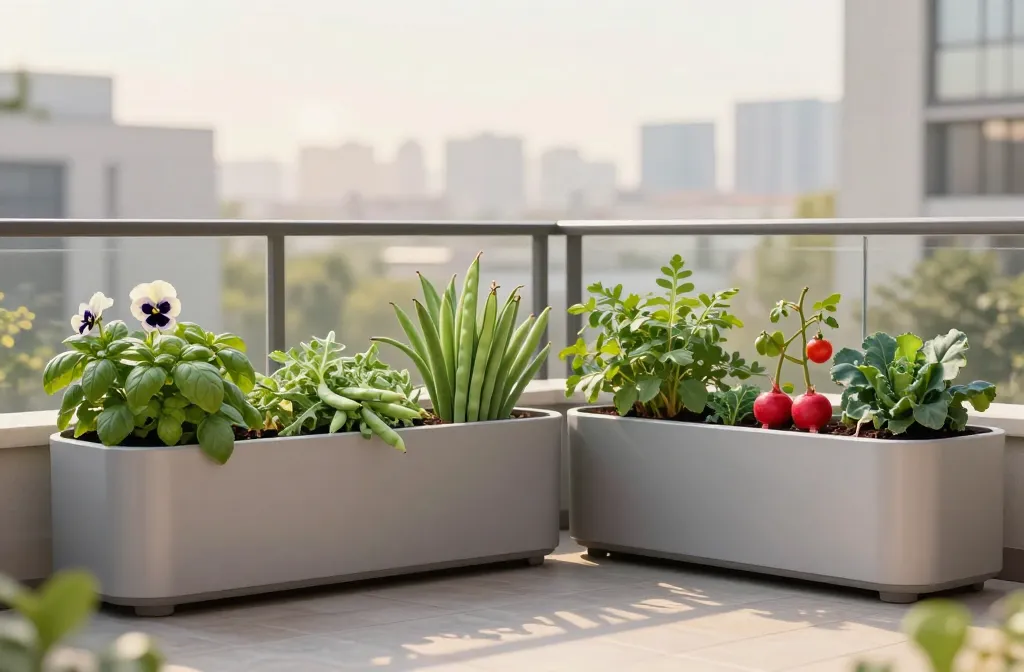
Your balcony or windowsill can crank out color, herbs, and happy vibes all year long—no yard needed. The trick? Pair plants like they’re roommates who actually get along and rotate them with the seasons. These five strategies make the most of tiny spaces, shifting light, and unpredictable weather. Ready to grow smarter, not harder?
1. Design Four-Season Duos That Tag-Team Your Space
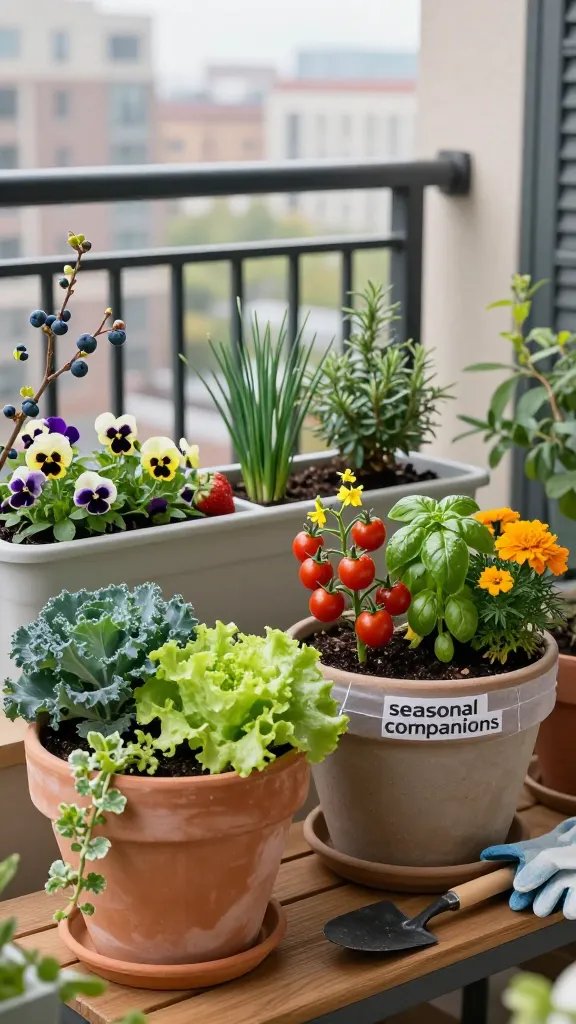
Think of your containers as stages where different stars take the spotlight each season. You’ll set up “companions” that pass the baton as the weather changes, keeping pots full and productive year-round.
Core Idea
- Pair cool-season and warm-season plants in the same pot or planter so one thrives while the other rests or gets swapped.
- Use removable nursery liners inside decorative pots for quick swaps without mess.
- Choose compact varieties marked “patio,” “bush,” or “dwarf.”
Winning Combos (20 Planting Strategies In Mini-Pairs)
- Spring → Summer: Pansy + Dwarf Basil (swap pansy when heat hits)
- Spring → Summer: Snap Peas + Bush Beans
- Spring → Summer: Arugula + Cherry Tomato (underplant arugula early, harvest before tomato shades it)
- Spring → Fall: Radish + Kale (radish first, kale carries on)
- Spring → Summer: Cilantro + Thai Basil
- Spring → Summer: Lettuce Mix + Patio Pepper
- Spring → Summer: Chive + Dwarf Cucumber (keep the chive year-round)
- Spring → Fall: Spinach + Swiss Chard
- Summer → Fall: Bush Tomato + Mâche (add mâche as temps fall)
- Summer → Fall: Eggplant + Parsley (parsley persists into winter)
- Summer → Fall: Oregano + Strawberry (everbearing berries, oregano stays evergreen-ish)
- Summer → Fall: Basil + Marigold (basil fades, marigold coasts into frost)
- Summer → Winter: Rosemary + Ornamental Kale
- Summer → Winter: Thyme + Pansy
- Fall → Winter: Broccoli Rabe + Green Onion
- Fall → Winter: Mizuna + Garlic Chives
- Fall → Spring: Hardy Sage + Violas
- Fall → Spring: Swiss Chard + Heuchera (color + greens)
- Winter → Spring: Dwarf Blueberry + Tulip Bulbs (bulbs pop before foliage fills out)
- Winter → Spring: Bay Laurel + Primrose
Use this approach when you want continuous interest without buying new pots every season. It’s efficient, budget-friendly, and seriously satisfying.
2. Map Your Microclimates Like A Plant Detective
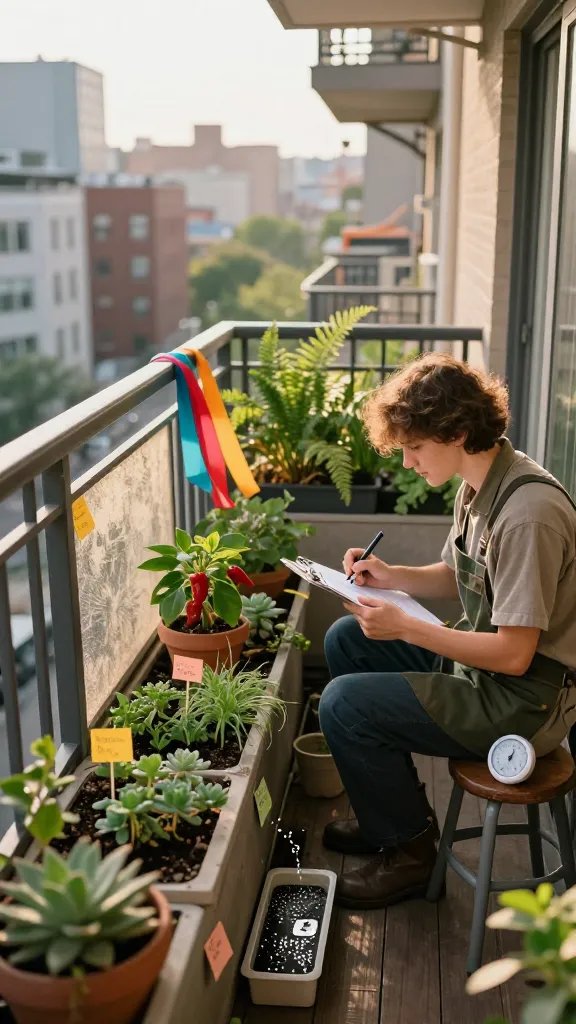
Every apartment has hot spots, wind tunnels, and shady corners. When you learn your microclimates, you’ll stop fighting nature and start leaning into it.
How To Scout Your Space
- Sun audits: Track hours of direct sun at 8 a.m., noon, and 4 p.m. for a few days.
- Heat traps: Metal railings and walls store heat—perfect for peppers and succulents.
- Wind checks: Tape a ribbon to the railing and watch it for a day. Constant flapping? You need windbreaks.
- Drip zones: Roof runoff or AC drips? Place thirsty plants there and save yourself watering.
Plant By Microclimate
- Full Sun (6–8 hours): Cherry tomatoes, bush cucumbers, peppers, lavender.
- Part Sun (3–5 hours): Lettuce, radish, chard, mint (contain it), parsley.
- Bright Shade: Ferns, hosta-in-a-pot, mizuna, violas, mint again (because mint refuses to quit).
- Windy Zones: Thyme, rosemary, juniper bonsai, compact grasses.
- Heat Reflectors: Eggplant, basil, zinnias, marigolds.
Quick Infrastructure Wins
- Clip-on shade cloth for brutal afternoon sun.
- Clear corrugated panels on one side as a windbreak that still lets in light.
- Reflective trays or white walls to bounce light deeper onto the sill.
Use microclimate mapping when plants keep “mysteriously” failing. It’s not you—it’s the corner they live in, FYI.
3. Stack, Swap, And Sneak: Space-Maximizing Container Tactics
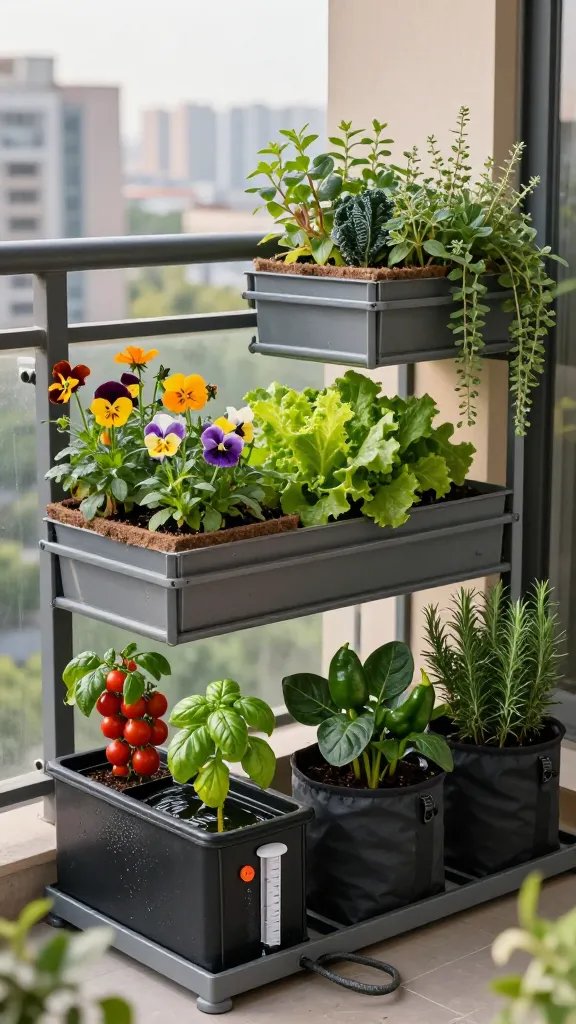
Tiny apartment? Great. We’re going vertical and modular. You’ll fit more plants per square foot than a garden-center display and make switching seasons painless.
Container Playbook
- Self-watering planters: Reduce watering frequency and buffer heat waves.
- Stacked or tiered planters: Leafy greens lower, flowers up top, trailing herbs along edges.
- Rail boxes with liner inserts: Pre-plant seasonal liners; pop them in and out in five minutes.
- Fabric grow bags: Lightweight, breathable, cheap, and easy to stash off-season.
- Hanging baskets: Strawberry + thyme in summer, pansy + ivy in winter.
Potting Mix That Works
- Base: High-quality container mix with bark and perlite (not garden soil).
- Add-ins: A scoop of compost and a slow-release organic fertilizer every season.
- Drainage insurance: Mesh over holes, never rocks at bottom (myth alert).
Seasonal Swap System
- Spring: Plant cool crops in shallow pots; start warm crops in 4-inch nursery pots indoors or near a sunny window.
- Summer: Move warm crops into prime real estate; shift cool crops to shadier spots or harvest out.
- Fall: Seed greens in any gaps left by summer divas fading.
- Winter: Consolidate into fewer, larger containers for thermal mass and wrap exposed pots.
Use this when space and time are limited. Modular setups mean fewer headaches and more “wow, that looks intentional.”
Quick Companion Layouts For Containers
- 12–14 inch pot: Center dwarf tomato + trailing basil + marigold.
- Window box: Lettuce row + chive clumps + viola border.
- Grow bag (10–15 gallons): Patio cucumber + dill + nasturtium spillover.
- Hanging basket: Strawberries + thyme (summer), swap to pansies + ivy (winter).
These layouts balance root depth, water needs, and aesthetics—so your space looks lush and stays productive.
4. Light, Water, And Food: Your Four-Season Care Rhythm
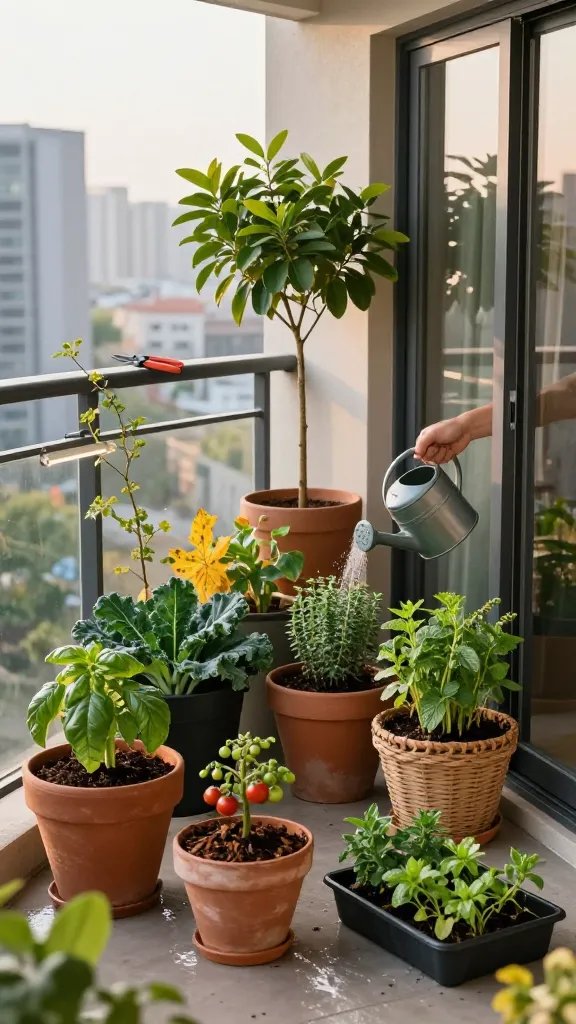
Plants love consistency. Your job? Set a rhythm that adapts to shifting light, temperature, and growth phases. No complicated spreadsheets—just a few smart habits.
Seasonal Care Calendar
- Spring: Increase light hours gradually; prune winter dieback; top-dress with compost; seed cool greens.
- Summer: Water deeply in the morning; mulch containers with fine bark or coco coir; pinch herbs for bushiness.
- Fall: Reduce feeding; plant fall greens; move tender plants inward; start light pruning on summer crops.
- Winter: Pull back on water; rotate pots toward the best light; add a small LED grow light if windows underperform.
Watering That Saves Time
- Finger test: If top inch is dry, water until it drains. Simple, reliable.
- Self-watering reservoirs: Awesome for heat waves or vacations.
- Micro-drip kit on a timer: Balcony game-changer, especially for weekend escapes.
Feeding Without Fuss
- Baseline: Slow-release organic fertilizer at planting.
- Boosts: Liquid seaweed or fish emulsion every 2–3 weeks in peak growth.
- Pause: Ease up in winter when growth slows, or you’ll stress roots.
Light Hacks
- Reflectors: Place a white foam board or reflectix behind shade-lovers.
- Clip-on LED grow lights: 12–14 hours for greens near dim windows.
- Rotation: Quarter-turn pots weekly to keep growth even.
Follow this rhythm if you want healthy plants without babysitting. Seriously, a little consistency beats heroic rescues later.
5. Weather-Proofing, Pest Patrol, And Quick Fixes For City Life
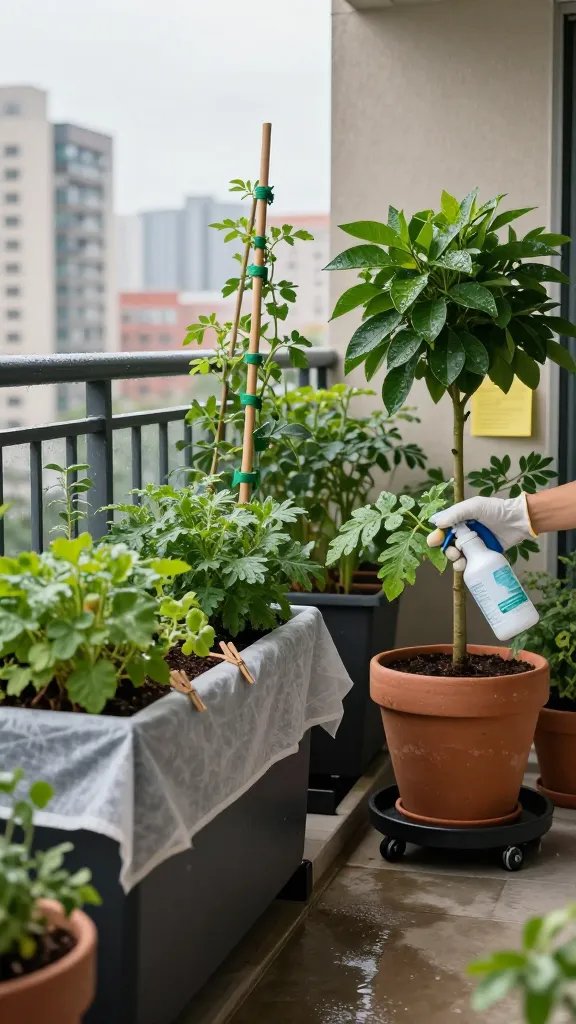
Apartment gardens face wind, sudden storms, and the occasional aphid party. Build a small toolkit and you’ll keep everything thriving through drama.
Weather-Proofing Essentials
- Frost cloth + clothespins: Throw it over plants during cold snaps; remove by noon.
- Plant feet or pot risers: Keep pots off freezing floors and improve drainage.
- Velcro plant ties: Gentle support for stems in windy spots.
- Moveable dolly trays: Roll big pots to shelter during storms.
Pest And Disease Tactics
- Aphids/whiteflies: Blast with water, follow with insecticidal soap; repeat every 3–4 days.
- Spider mites: Increase humidity, mist undersides, and use neem oil weekly until controlled.
- Fungus gnats: Let surface dry, add a layer of coarse sand, and use yellow sticky traps.
- Powdery mildew: Improve airflow, space plants, prune lower leaves, and avoid late-day watering.
Quick Rescues
- Wilting at noon only: Sun stress—add temporary shade cloth instead of drowning it.
- Yellow leaves bottom-up: Likely lack of nitrogen—feed with a balanced liquid fertilizer.
- Leggy growth: Increase light or trim back to a node; add a grow light if needed.
- Root-bound: Slide out, tease roots, up-pot one size, water thoroughly.
Safety And Neighbor-Friendly Tips
- Secure everything: Use railing brackets rated for your planter weight.
- Drainage control: Saucers and drip trays save your downstairs neighbor from surprise showers.
- Prune tidy: Keep pathways clear and fallen petals swept—your HOA will chill out.
Use this toolkit when life (and weather) goes sideways. You’ll keep plants alive and your sanity intact, IMO.
Ready to turn your apartment into a four-season oasis? Start with one or two companion combos, map your light, and watch the momentum build. You’ll harvest herbs in February and tomatoes in July—trust me, your windowsill is about to flex.