
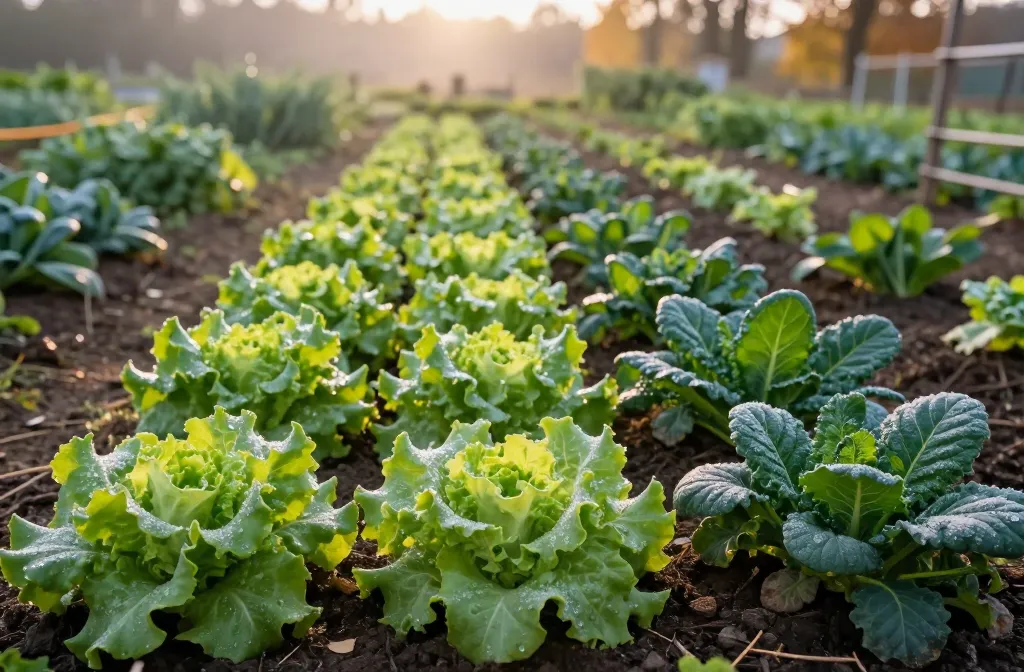
You still have time to grow a delicious fall harvest. Late summer planting flips your garden from heat-weary to thriving, fast. Many cool-season veggies love shorter days and crisp nights, and they taste sweeter after a light frost. Ready to squeeze a second season out of your beds? Let’s go.
1. Leafy Greens Blitz: Lettuce, Spinach, Kale
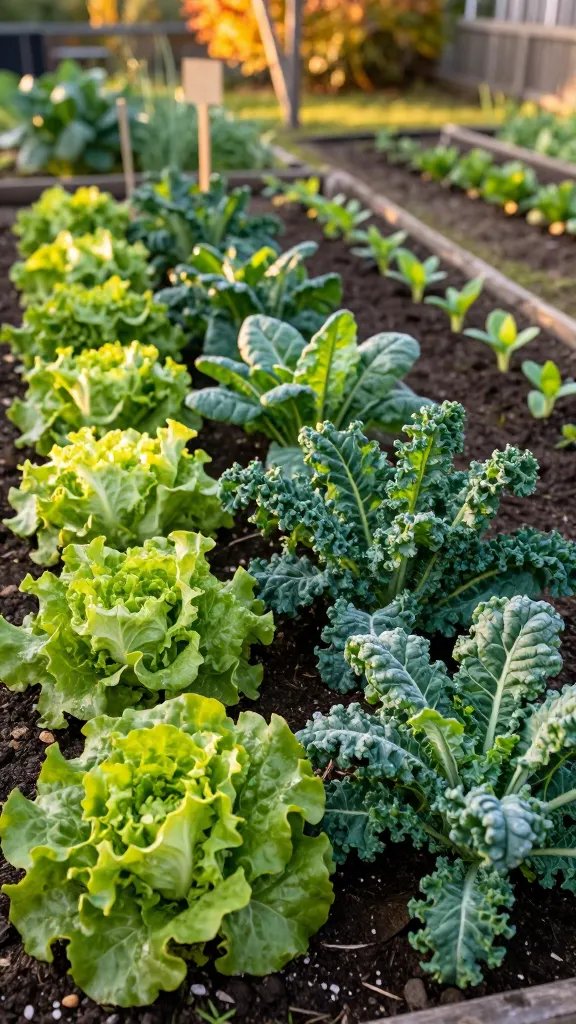
Greens thrive when temps ease up, and they grow fast enough to give you multiple pickings. Plant them now and you’ll be making salads while your neighbors stare at empty beds. Also, frost turns many greens sweeter—free flavor upgrade.
Key Picks
- Lettuce: Looseleaf and romaine types mature quickly.
- Spinach: Cold-tolerant and sturdy, especially savoy types.
- Kale: Curly or lacinato; handles frost like a champ.
Timing & Technique
- Sow window: 6–10 weeks before first frost for lettuce and spinach; kale can go 8–12 weeks before frost.
- Germination hack: Chill seeds (especially spinach) in the fridge for a few days; water in the evening to keep soil cool.
- Spacing: Lettuce 6–8 inches; spinach 3–4 inches; kale 12–18 inches.
- Shade cloth: Use 30% shade if days still scorch.
Harvest & Use
- Cut-and-come-again: Snip outer leaves to keep plants producing.
- Flavor note: Frost makes kale sweeter—IMO it’s basically garden candy by November.
Plant these when you want quick, continuous harvests and a steady supply of salad and sautés.
2. Root Riot: Radishes, Beets, Carrots
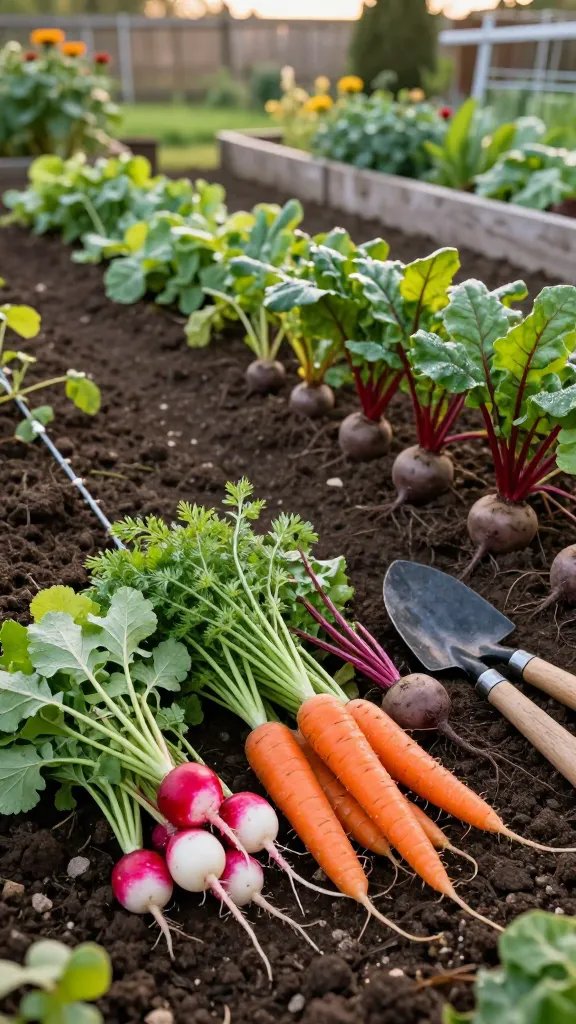
Roots love the steady moisture and milder nights of late summer into fall. Plant now for crisp radishes, candy-sweet carrots, and earthy beets. Cooler temps improve flavor and texture, especially for carrots.
Fast vs. Slow
- Radishes: 25–35 days. Instant gratification. Try French Breakfast or Cherry Belle.
- Carrots: 55–75 days. Nantes types do great in fall.
- Beets: 50–65 days. Bonus: tender greens are edible.
Soil Prep
- Depth matters: Loosen soil 8–10 inches; remove stones to prevent forked roots.
- Even moisture: Keep the top inch damp until seedlings establish.
- Thin ruthlessly: Carrots to 2 inches, beets to 3–4 inches; overcrowding = spindly roots.
Timing & Protection
- Sow window: 8–10 weeks before frost for carrots and beets; 4–6 weeks for radishes.
- Row cover: Use lightweight fabric to guard against flea beetles and retain moisture.
Grow these when you want a colorful, crunchy harvest that stores well and tastes amazing after chilly nights.
3. Brassica Powerhouse: Broccoli, Cauliflower, Cabbage, Brussels Sprouts
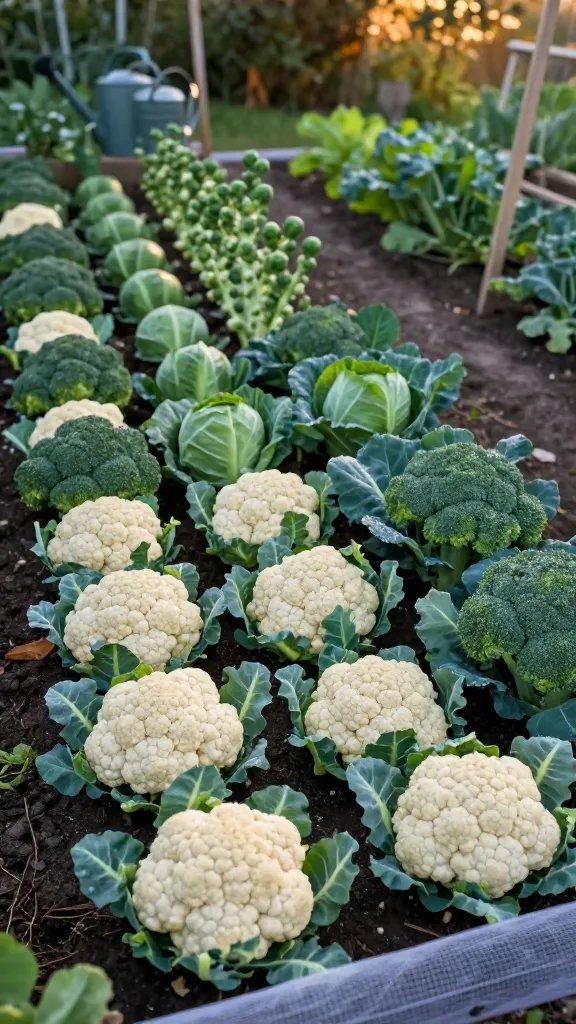
Brassicas shine in fall. Heads form tighter, leaves get sweeter, and pests finally chill out. They take a bit longer, but the payoff is huge—think dense broccoli heads and buttery cabbage slaws all season.
Start Smart
- Transplants rule: Use healthy starts in late summer for a reliable harvest window.
- Spacing: Broccoli and cauliflower 18–24 inches, cabbage 18 inches, Brussels sprouts 24 inches.
- Fertility: They’re heavy feeders. Add compost and a balanced organic fertilizer at planting.
Pest & Heat Management
- Row cover or insect netting: Keep cabbage worms out early; remove later for pollination-free growth.
- Mulch: 2–3 inches to keep roots cool and moisture steady.
- Side-dress: Feed again midseason for strong heads and sprouts.
Timing Tips
- Broccoli/Cauliflower: Plant 8–10 weeks before frost; choose fall varieties like ‘Arcadia’ or ‘Snow Crown.’
- Cabbage: Mid- to late-summer transplants; savoy types tolerate cold well.
- Brussels Sprouts: Earliest starts do best; top the plant in early fall to size up sprouts.
Pick brassicas when you want showstopper produce that laughs at chilly weather and anchors cozy meals.
4. Quick Crunch Club: Arugula, Mustards, Bok Choy, Turnips
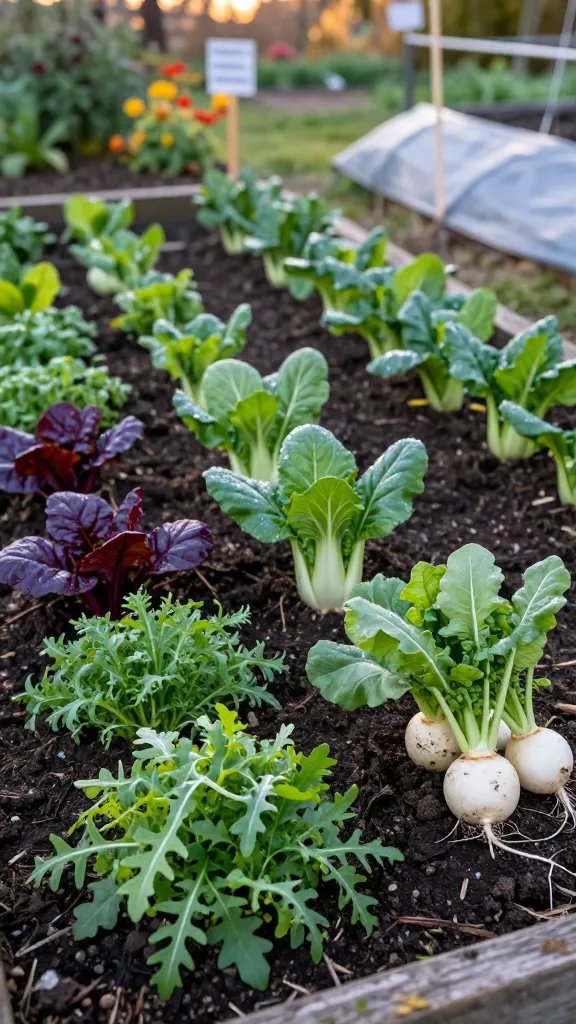
Need fast food, garden edition? These Asian greens and tender turnips mature quickly and bring big flavor. They love short days and cool air, so they basically behave.
Speedy All-Stars
- Arugula: Peppery leaves in 21–30 days.
- Mustard Greens: ‘Mizuna’ or ‘Red Giant’ add zip in 30–40 days.
- Bok Choy/Pak Choi: Baby heads in 35–45 days; full size by 50–60.
- Turnips: Salad types like ‘Hakurei’ in 35–45 days—sweet and crisp.
Planting & Care
- Sow window: 6–8 weeks before frost; repeat every 1–2 weeks for steady harvests.
- Spacing: Arugula/mustards 4–6 inches; bok choy 8–12 inches; turnips 3–4 inches.
- Moisture matters: Keep evenly watered to avoid bitterness or bolting.
- Flea beetle defense: Floating row cover from day one, then remove as temps cool.
Harvest & Kitchen Wins
- Baby greens: Cut with scissors, rinse, devour.
- Turnip tops: Eat the greens too—tender and nutrient-dense.
- Stir-fry heroes: Bok choy and mizuna shine in quick sautés.
Plant these when you crave fast harvests, bold flavors, and minimal fuss—seriously, they’re almost too easy.
5. Cool-Season Workhorses: Peas, Swiss Chard, Scallions, Garlic
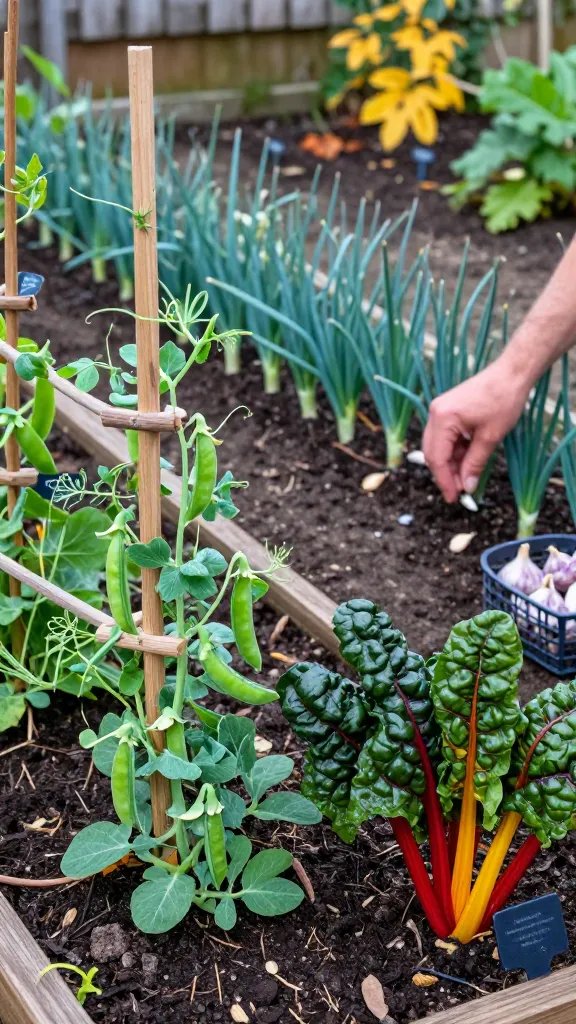
Round out your fall lineup with crops that either mature before frost or ride into winter with you. These bring versatility, color, and future-you benefits. Yes, we’re talking garlic—plant now, feast next summer.
Peas For Sweet Snacking
- Types: Sugar snaps and snow peas work best for fall.
- Timing: 8–10 weeks before frost; use bush varieties for speed.
- Tips: In hot climates, pre-sprout seeds in the fridge. Provide short trellises.
Swiss Chard: Color And Endurance
- Why it rocks: Handles light frost, keeps producing, looks gorgeous.
- Spacing: 10–12 inches; harvest outer leaves first.
- Varieties: ‘Bright Lights’ for rainbow stems, ‘Fordhook Giant’ for resilience.
Scallions: The Flavor Hack
- Timing: Sow anytime late summer through early fall; they shrug off cold.
- Trick: Sow thickly and harvest in clumps. Zero drama, maximum flavor.
Garlic: The Long Game
- Planting window: 2–4 weeks before ground freeze.
- Hardneck vs. Softneck: Hardneck for colder regions and scapes; softneck for braids and storage.
- How-to: Plant individual cloves 2–3 inches deep, 6 inches apart; mulch heavily.
General Care Boosters
- Mulch: Retains moisture and stabilizes fall soil temps.
- Frost protection: Keep row cover or low tunnels handy for surprise cold snaps.
- Succession plan: Keep sowing greens and radishes every 10–14 days until first hard frost.
Choose these when you want variety now and a head start on next year—FYI, future you will send a thank-you note.
Here’s the bottom line: late summer is not the end—it’s your second chance at glory. Mix a few quick crops with some cool-season champs, toss on a little mulch, and you’ll cruise into fall with baskets of produce. Ready to turn that tired bed into a comeback story? Plant now, harvest happy, and brag later.