
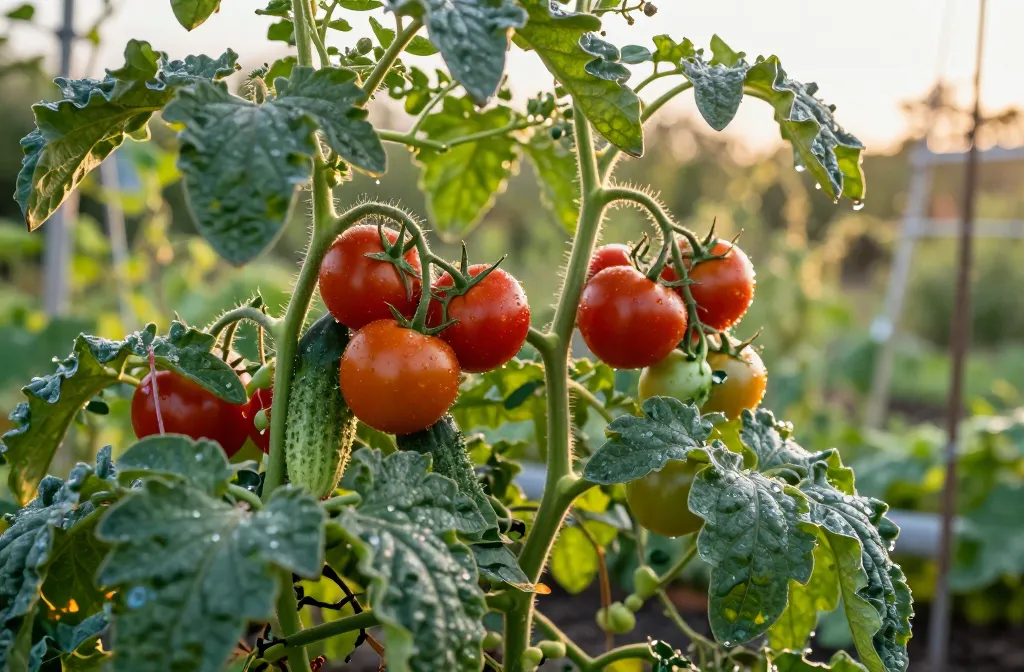
Stacking plants looks cool until they start beefing for light, water, and nutrients. Vertical gardens amplify any bad pairing, so the wrong neighbors can tank your harvest fast. Let’s save your trellis, ladder planters, and wall pockets from drama with pairings that just don’t work. Ready to dodge pests, mildew, and stunted growth? Let’s climb.
1. Tomatoes & Cucumbers: Mildew Mayhem On A Trellis
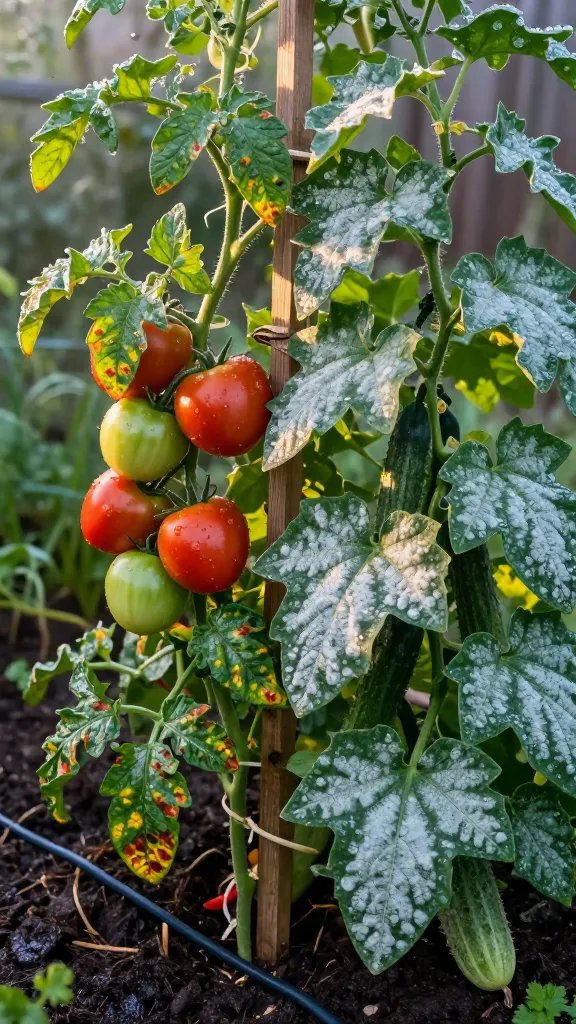
Both love sunlight and a vertical boost, but together they turn your trellis into a humidity trap. Tomatoes want airflow and consistent pruning; cucumbers bring big, shady leaves and crazy thirst. Result? Powdery mildew, leaf spot, and a race for the top rung.
Why This Combo Fails
- Humidity spikes around cucumber leaves encourage fungal disease on both plants.
- Shading and crowding choke tomato airflow, which you need for blight prevention.
- Water needs clash: cucumbers sulk without constant moisture; tomatoes split with overwatering.
Space them on separate structures with at least a foot of airflow between vines. If you must stack, put cucumbers on the sunnier, windward side and prune hard. Your tomatoes will thank you with sweeter fruit, seriously.
Better Alternatives
- Tomatoes with basil or marigolds at the base for pest deterrence.
- Cucumbers with dill or nasturtiums to lure beneficial insects.
Use this when you want clean, disease-light vines and fewer pest parties.
2. Onions & Peas: Nitrogen Neighbors Who Don’t Speak
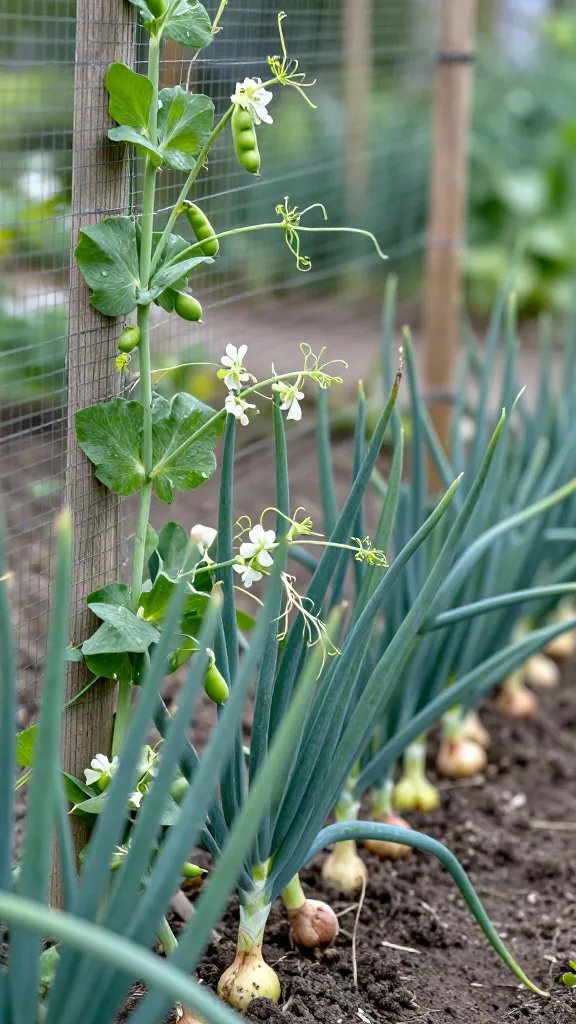
Peas climb beautifully on netting and feed soil with nitrogen. Onions stay compact and seem perfect to tuck underneath, right? Wrong. Alliums and legumes throw shade at each other chemically and physiologically.
Why This Combo Fails
- Alliocin compounds from onions can suppress pea root bacteria that fix nitrogen.
- Pea tendrils snag onion tops, yanking or bending them as they climb.
- Different timing: peas like cool, evenly moist conditions; onions prefer drier intervals to bulb up.
Plant onions on a separate row or lower tier. Let peas own the trellis with good airflow and cool roots. FYI, your pea yield will jump when their rhizobia aren’t stressed.
Better Alternatives
- Peas with lettuce or spinach beneath for shade-loving greens.
- Onions with carrots or beets nearby (not stacked) for pest confusion.
Use this strategy when you want crisp peas and plump onions instead of moody plants that ghost each other.
3. Mint & Anything Tender: The Mint Takeover (Vertical Edition)
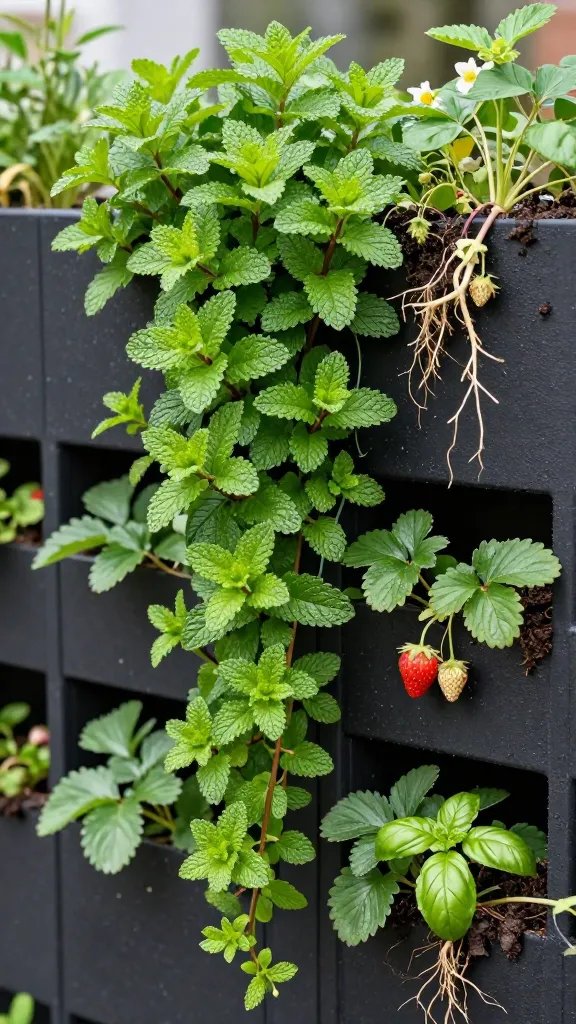
Mint smells amazing, makes you look like a cocktail wizard, and will absolutely colonize your wall if you let it. In vertical systems, its aggressive roots and dense foliage overwhelm neighbors and block light. Even in pockets, mint sends runners and hogs water.
Why This Combo Fails
- Invasive roots muscle into adjacent cells and steal nutrients.
- Shade casting from rapid top growth stunts delicate plants like strawberries and basil.
- Moisture dominance: mint loves consistently damp media that can rot less tolerant herbs.
Grow mint in its own container or a sealed pocket with a root barrier. Place it on the bottom tier so any spread stops there. IMO, you’ll keep the aroma and lose the chaos.
Plants That Hate Sharing With Mint
- Strawberries (stunted fruit, increased mildew under dense mint shade)
- Basil (competes for water; loses aroma when stressed)
- Parsley (slower growth and legginess)
Use mint solo when you want a reliable harvest and zero neighbor drama.
4. Potatoes & Tomatoes: Vertical Cousins With Shared Problems
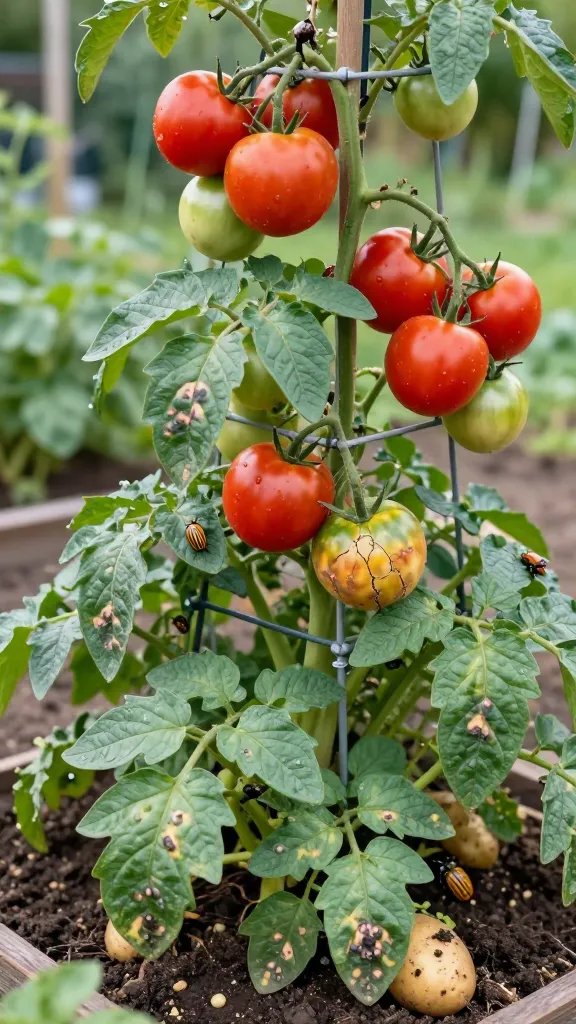
Solanaceae siblings look like a space-saving dream: tomatoes climb, potatoes mound. But they share pests and diseases, especially late blight, early blight, and potato beetles. Stack them and you create a highway for infections.
Why This Combo Fails
- Shared pathogens spread faster in tight vertical setups.
- Nutrient strain: both crave potassium; competition means weaker fruit and smaller tubers.
- Water conflict: potatoes prefer steady moisture but not soggy; tomatoes crack with fluctuating water.
Separate structures and rotate them yearly. Keep potatoes in deep containers or grow bags away from tomato trellises by at least several feet. Trust me, your BLT does not need a side of blight.
Smarter Pairings
- Tomatoes with basil, chives, or calendula for pest management.
- Potatoes with horseradish at the corners of beds (not stacked) to deter beetles.
Use this when disease pressure runs high or you’ve had blight before. Prevention beats sprays every time.
5. Fennel & Just About Everyone: The Frenemy Herb
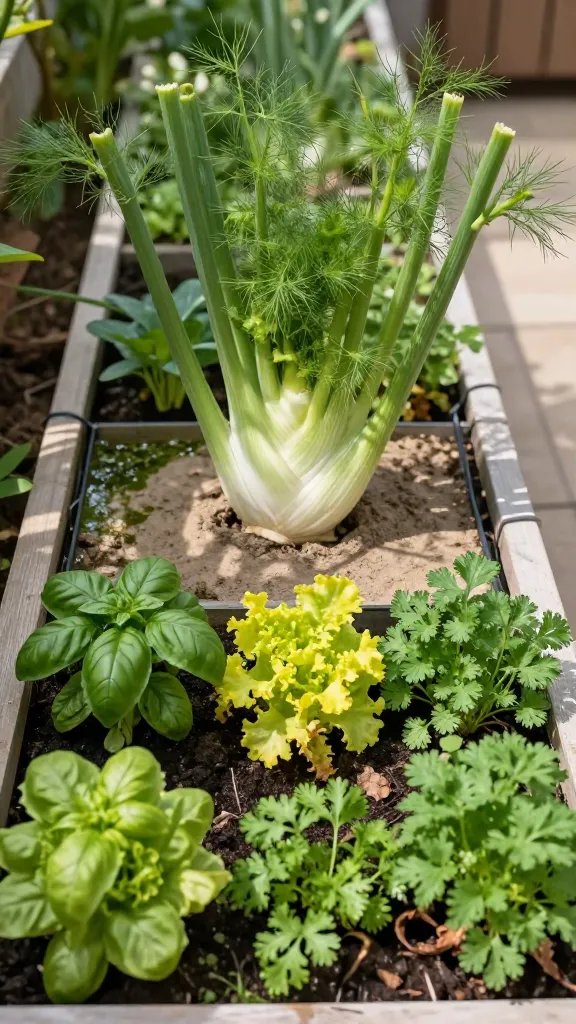
Fennel looks elegant and pollinator-friendly, but it exudes allelopathic compounds that stall growth in many herbs and veggies. In a vertical garden, that effect concentrates because root zones overlap and drainage recirculates. Most neighbors will sulk or stop altogether.
Why This Combo Fails
- Allelopathy: fennel inhibiting chemicals reduce germination and root development nearby.
- Height and shade: tall fronds block sun from compact plants below.
- Moisture misfit: fennel prefers drier, lean soil; many greens want richer, consistent moisture.
Give fennel a solo pot away from shared irrigation. Place it where runoff won’t wash into other pockets. You’ll still get those pretty umbels and visiting hoverflies without wrecking your herb wall.
Plants That Especially Struggle Near Fennel
- Basil and cilantro (stunted and bitter)
- Beans and peas (poor nitrogen fixation and weak vines)
- Tomatoes (reduced vigor and weird flavor, yes really)
Use this rule when designing tight systems: if the plant might bully, give it its own room.
Bonus Lightning Round: 13 Bad Combinations To Avoid Vertically
- Tomatoes + Cucumbers: humidity and disease tag-team.
- Onions + Peas: chemistry clash and tangled tops.
- Mint + Strawberries: mint suffocates and steals.
- Mint + Basil: water wars and shade stress.
- Mint + Parsley: root invasion, delayed growth.
- Potatoes + Tomatoes: shared diseases, nutrient brawl.
- Fennel + Basil: allelopathy kills the vibe.
- Fennel + Beans/Peas: nitrogen-fixing fails.
- Fennel + Tomatoes: stunted growth, off flavors.
- Cucumbers + Melons: pest magnet, powdery mildew central.
- Tomatoes + Brassicas (Cabbage/Kale): nutrient and pH mismatch, shade issues.
- Dill + Carrots (mature dill): cross-inhibition and flavor confusion.
- Sage + Cucumbers: sage prefers dry feet; cukes want constant moisture.
These pairings crash vertical gardens fast. Keep them apart and your walls stay lush instead of tragic.
Design Tips For Vertical Harmony
- Match moisture needs: group thirsty plants together; keep dry lovers separate.
- Mind the shade gradient: tall or leafy plants go low; sun-worshippers sit high.
- Stagger harvest windows: don’t stack peak-season bullies over slow growers.
- Prune relentlessly: increased airflow beats fungus every time.
- Rotate by tiers: swap positions seasonally to reduce disease buildup.
Dial in these basics and your vertical garden goes from crowded to curated.
Ready to stack smarter? Avoid these problem duos, give bullies their own zone, and watch your wall go from messy to mega-productive. Play matchmaker, tweak spacing, and, seriously, prune like a boss—you’ve got this.