Want a garden that looks crisp, calm, and low-maintenance—without a jungle of chaos? Companion planting can do that, as long as you keep it clean and intentional. These pairings look sculptural, support each other, and won’t turn your beds into a messy free-for-all. Ready to plant smarter and prettier at the same time?
1. Sculpted Calm: Olive Tree + Lavender Drift
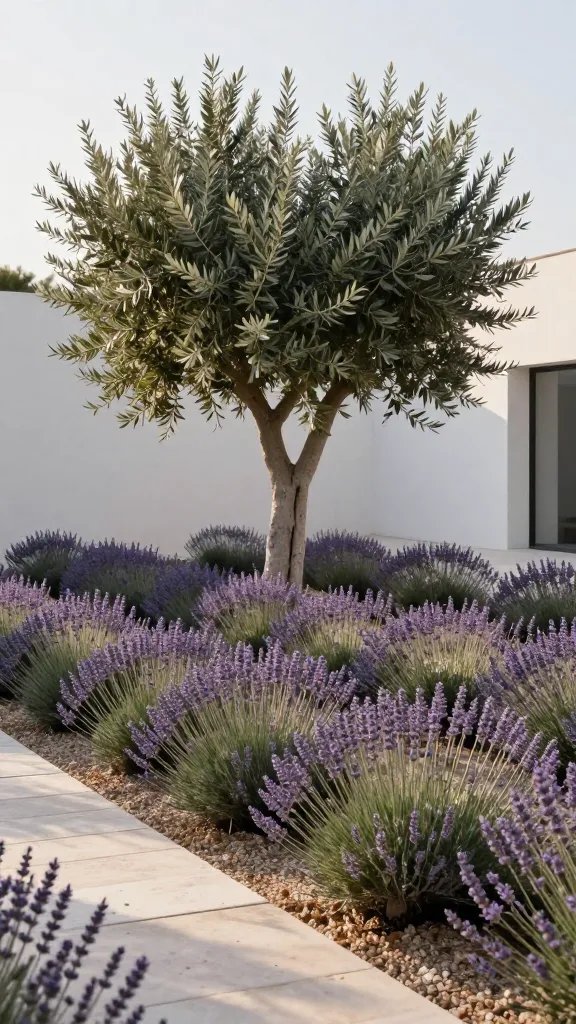
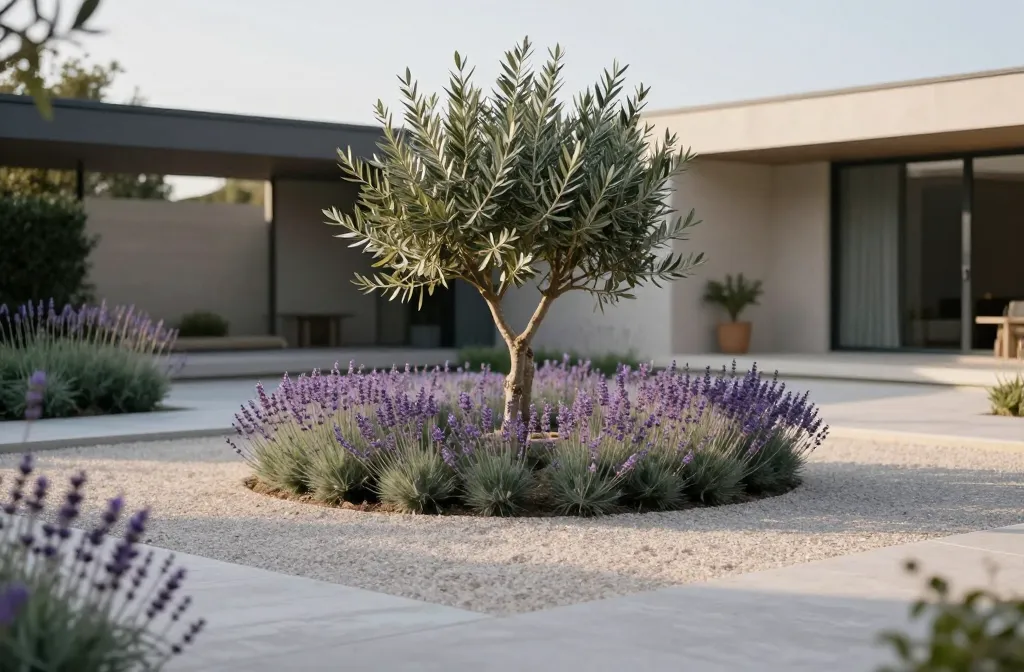
This combo screams breezy Mediterranean minimalism without trying too hard. The upright, silvery silhouette of an olive tree pairs beautifully with a low lavender carpet that softens hard edges and perfumes the air.
Both love sun, lean soil, and infrequent watering—so you won’t play plant referee. Their matching hues—cool greens and silvers—keep things visually quiet and super chic.
Why It Works
- Shared conditions: Full sun, well-draining soil, drought tolerance.
- Form contrast: Tree canopy + low mounding groundcover equals instant balance.
- Pollinator magnet: Lavender brings bees, which helps nearby fruiting plants.
Tips
- Choose a compact olive (e.g., ‘Arbequina’) for pots or small courtyards.
- Use 3–5 lavender plants as a loose ring around the trunk, leaving 18–24 inches of breathing room.
- Keep soil gritty: add crushed rock or sand to avoid soggy roots.
Use this when you want a calm focal point that reads minimalist from the street but still feels alive up close. FYI, it’s patio perfection.
2. Monochrome Texture: Black Mondo Grass + White Alliums
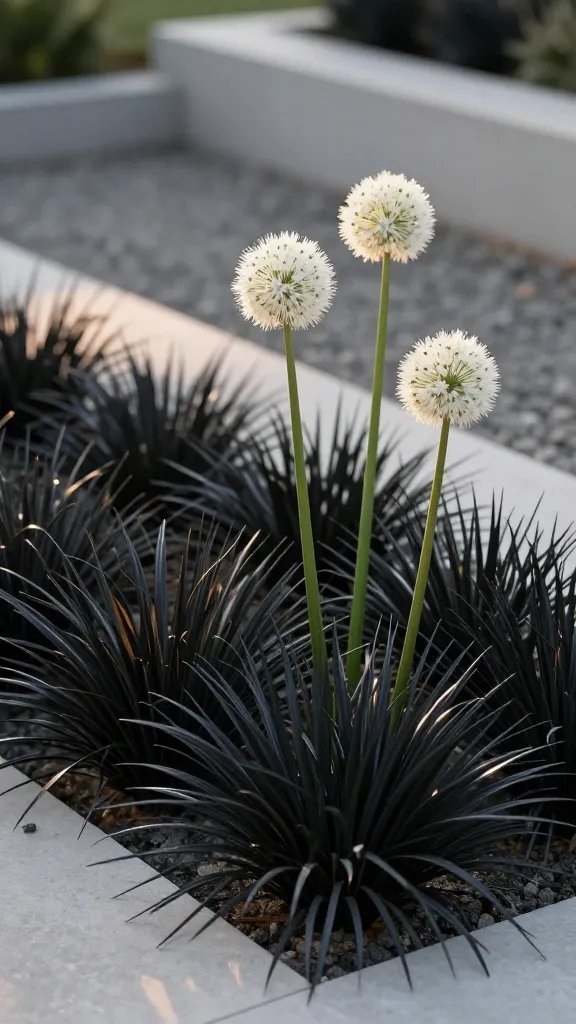
Want drama without clutter? Pair the inky tufts of black mondo grass with crisp, spherical white alliums. It’s graphic, minimal, and ridiculously photogenic.
The allium bulbs pop in spring, then disappear, leaving a textured black base that looks intentional year-round. It’s basically a living black-and-white photo.
Why It Works
- Color contrast: Dark foliage makes white blooms glow, especially at dusk.
- Seasonal rhythm: Alliums give a clean bloom moment, mondo handles the off-season.
- Low fuss: Both tolerate light drought once established and hate heavy fertilizing.
Planting Notes
- Plant allium bulbs in fall among existing mondo clumps, about 6 inches deep.
- Choose white varieties like Allium ‘Mount Everest’ for tall, sculptural stems.
- Edge paths or frame a modern bench for a gallery-like vignette.
Use this when you want a high-contrast feature that stays tidy and architectural. Seriously, it makes any walkway look like a design magazine spread.
3. Edible Elegance: Kale Rosettes + Nasturtium Runway
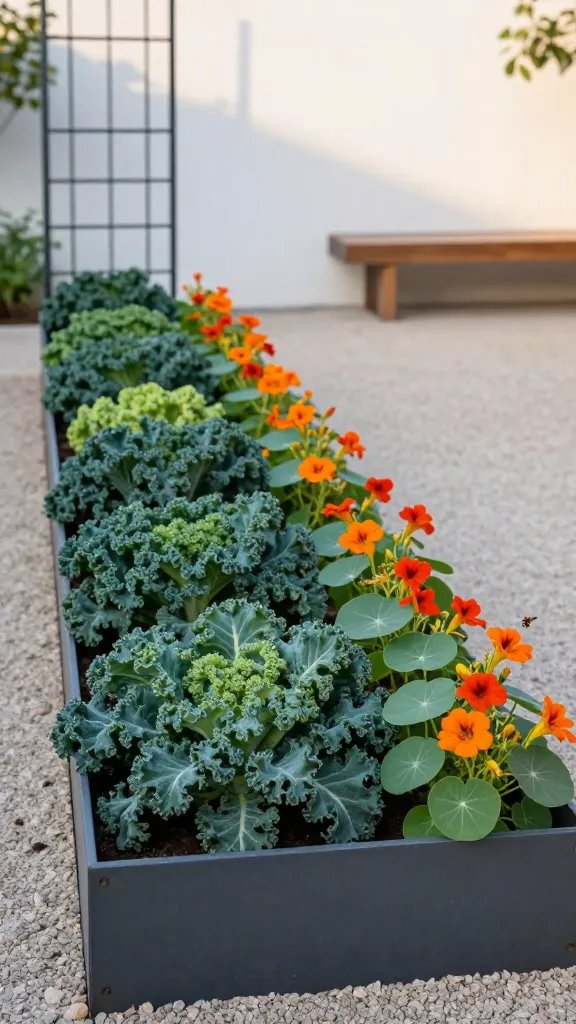
Edible garden, but make it minimalist. Curly or lacinato kale forms structured rosettes while nasturtiums spill in a clean, graceful line—no mess, just color and function.
Nasturtiums attract pollinators and can distract pests from your brassicas. Meanwhile, kale’s upright habit keeps the bed orderly, so it still looks curated on your busiest week.
Why It Works
- Companion benefits: Nasturtiums lure aphids away from kale and attract beneficial insects.
- Color + form: Deep green kale contrasted with jewel-toned trailing blooms.
- Harvest-friendly: Snip leaves and flowers without disrupting the composition.
How To Arrange
- Plant kale in a straight or staggered grid, 12–18 inches apart.
- Thread nasturtiums along the front edge or between rows as a simple ribbon.
- Choose compact nasturtiums for small beds; trailing types for planters.
Use this in raised beds or balcony planters where you want edible beauty with a clean edge. IMO, it’s the easiest “fancy” kitchen garden look you can pull off.
4. Desert Zen: Agave Centerpiece + Blue Fescue Halo
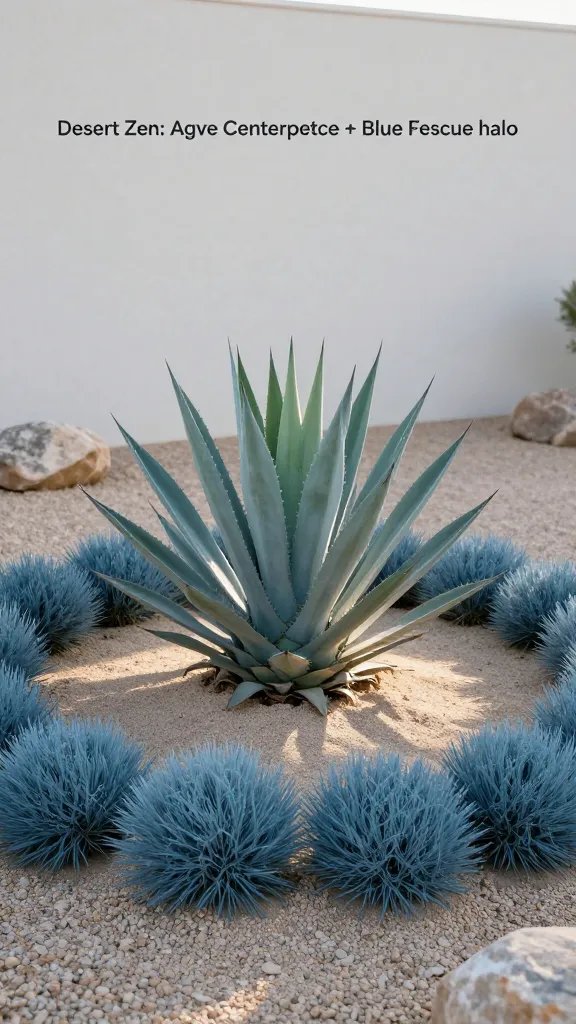
If you love sculptural plants that never look messy, this duo is your minimalist dream. A single agave acts like living art, while blue fescue forms a soft, low halo that frames it without stealing the show.
Both thrive in full sun and fast-draining soil. You’ll get interesting forms, subtle blue tones, and zero visual noise.
Why It Works
- Form contrast: Bold rosette vs. fine-textured tufts.
- Color harmony: Blue-green agave with steely blue fescue reads calm and cohesive.
- Water-wise: Perfect for xeriscapes, gravel gardens, and curbside strips.
Design Tips
- Choose a medium agave (e.g., Agave parryi) to avoid outgrowing the space.
- Space fescue 10–12 inches apart to form a continuous ring or staggered arc.
- Top-dress with pale gravel to highlight the geometry and keep weeds down.
Use this when you want a sculptural focal point that looks intentional 24/7. Trust me, it’s low effort with maximum design cred.
5. Shade-Chic Serenity: Hosta Waves + Japanese Forest Grass
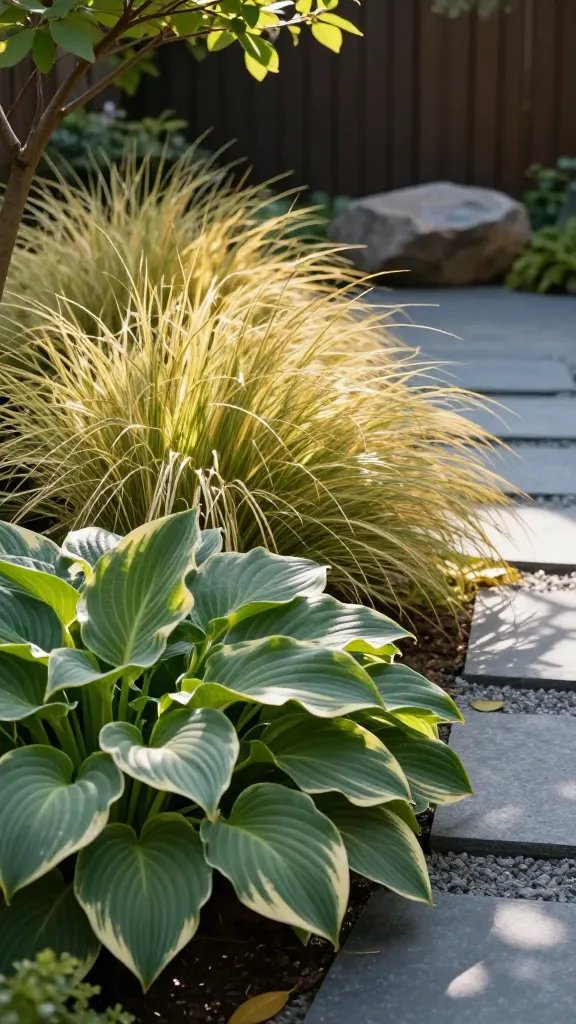
Shade beds can feel chaotic fast, but this pairing keeps things serene. Big, glossy hosta leaves set the rhythm, while Japanese forest grass (Hakonechloa) adds a soft cascade that moves with the breeze.
The color echoes—greens, chartreuse, or variegation—give the bed a cohesive, spa-like vibe. You get depth and movement without a hundred plant types fighting for attention.
Why It Works
- Texture layering: Broad leaves vs. fine, flowing blades.
- Light play: Variegated hostas and golden grass brighten shade without flowers.
- Consistent moisture: Both enjoy rich soil and even watering.
Placement Guide
- Use hostas as anchors in repeating clumps; plant Hakonechloa in front like a soft fringe.
- Mix 2–3 hosta varieties max to keep the palette tight.
- Mulch with dark compost for a clean finish and fewer weeds.
Use this along north-facing foundations, under trees with dappled shade, or flanking a shaded path. It’s quiet luxury for low light areas—no neon flowers needed.
You don’t need a plant encyclopedia or a weekend lost to pruning to get a chic, modern garden. Pick one pairing, keep the lines simple, and repeat it for that curated, calm vibe. Go plant it—your future self (and your neighbors) will absolutely thank you.