
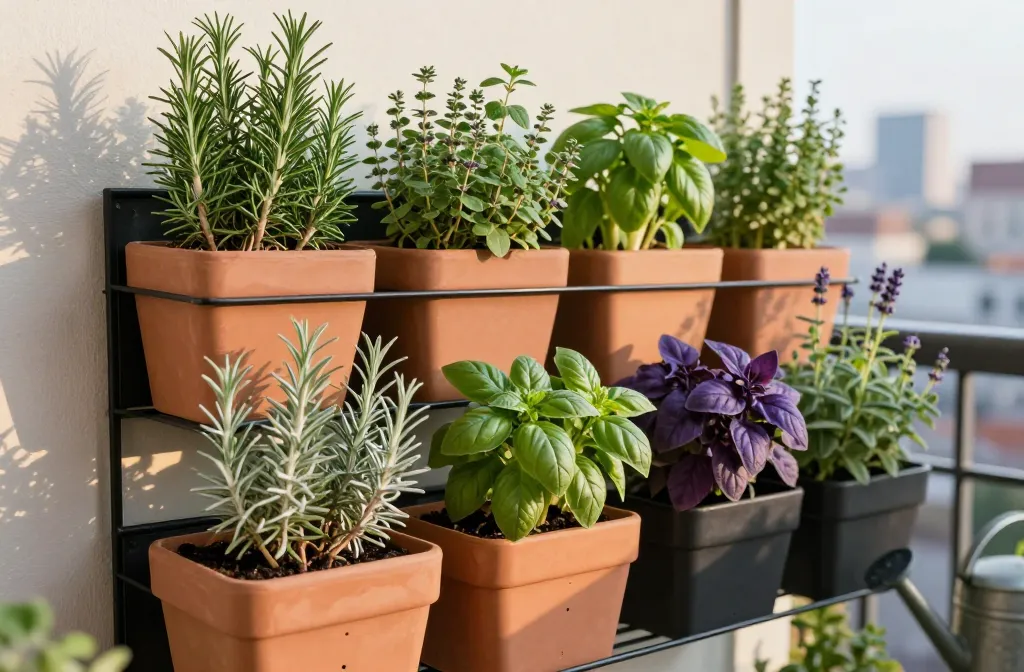
Sun-soaked balcony and zero clue what to plant? Meet your Mediterranean dream team. These herbs love heat, sip water like espresso, and turn any railing into a mini Riviera. You’ll cook better, your space will smell amazing, and your neighbors might start “accidentally” dropping by, FYI.
We’re building a vertical herb wall that thrives all summer, looks gorgeous, and barely complains. Ready to grow a low-maintenance, high-flavor oasis? Let’s hang it up and get growing.
1. Plan The Herb Wall Like A Tiny Sun-Drenched Garden
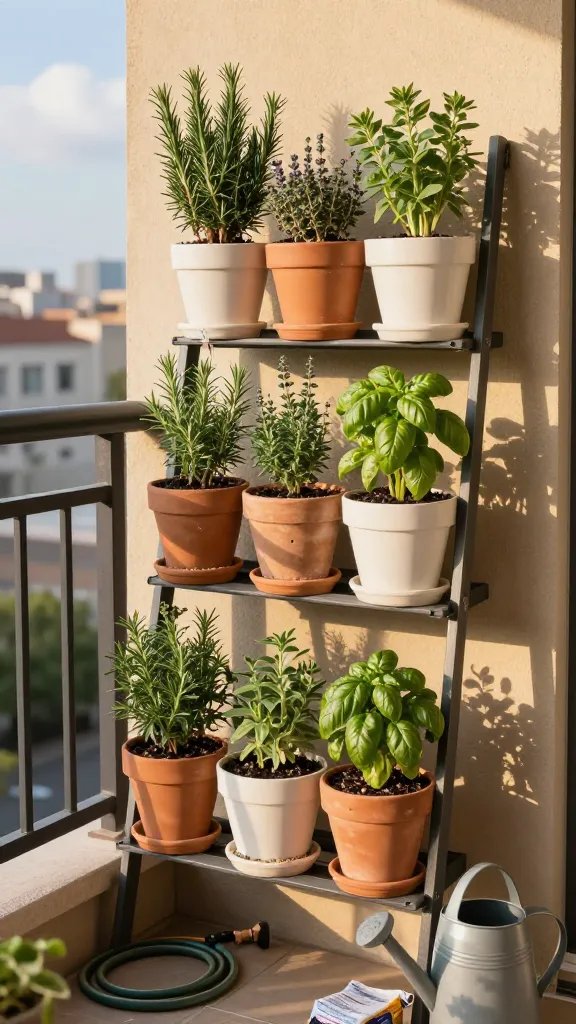
Before you buy a single pot, map the sun, the wind, and your watering routine. Mediterranean herbs adore bright light and good drainage, but they hate soggy feet. A little planning saves you from crispy thyme and sulky basil later.
Sun, Space, And Setup
- Orientation: South or west-facing balconies win. Aim for 6–8 hours of direct sun.
- Containers: Use wall planters, stackable pockets, or a ladder shelf with 12–20 cm deep pots.
- Drainage: Always drill extra holes and use a gritty mix (think 60% potting soil, 30% coarse sand, 10% perlite).
- Watering access: Keep a slim watering can nearby. Self-watering inserts help but don’t skip drainage.
- Wind check: Secure planters to railings or walls. High wind = smaller pots dry out faster.
Group herbs by thirst levels so your rosemary doesn’t drown while basil chugs water. Bonus: a cohesive layout looks intentional, not like a plant yard sale.
Starter Layout Idea
- Top row (drought-tolerant): Rosemary, thyme, oregano
- Middle row (moderate drinkers): Sage, savory, lavender
- Bottom row (thirstier friends): Basil, parsley or mint (in a separate pot to contain it)
Think of this as your balcony’s skyline: sun-lovers up high, shade-tolerant buddies below. It’s practical and pretty—win-win.
2. Rosemary, Thyme, And Oregano: The Evergreen Flavor Trio
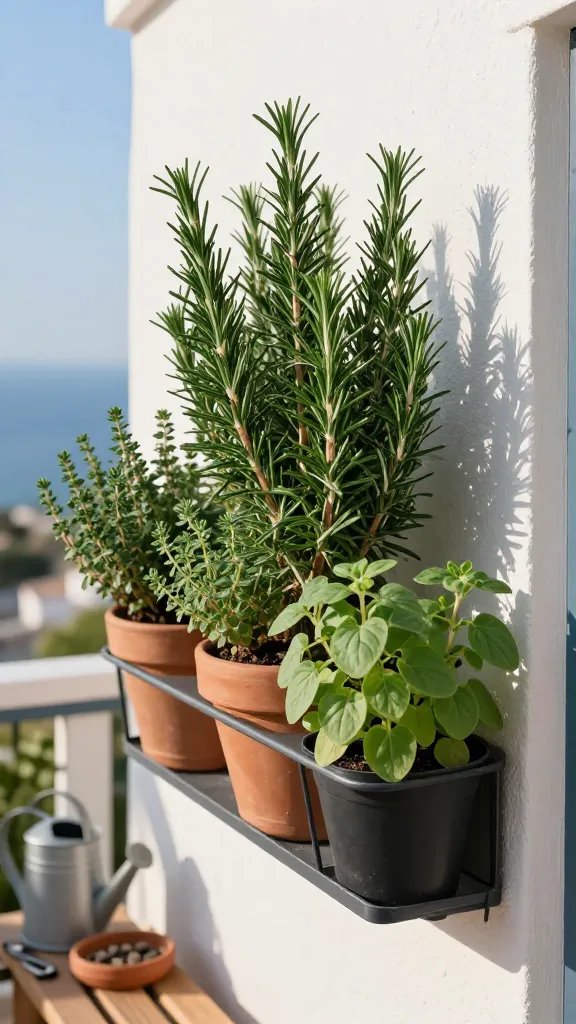
This trio forms the backbone of any Mediterranean herb wall. They’re tough, drought-tolerant, and crazy aromatic. Plus, they play nice in the same light and soil, which keeps maintenance simple.
Why They’re Awesome
- Rosemary: Woody, vertical, and fragrant. Great for skewers, roasts, and focaccia.
- Thyme: Compact and cascading. Season soups, eggs, and fish like a pro.
- Oregano: Punchy and earthy. Pizza nights will never be the same, seriously.
Tips For Thriving Plants
- Soil: Fast-draining is non-negotiable. Add extra grit for rosemary.
- Water: Let soil dry out between waterings. Overwatering = root rot city.
- Pruning: Harvest often to keep them bushy. Never strip a stem bare; take tips.
- Sun: Full sun all day. Leggy growth means they need more light.
Use these when you want flavor without fuss. They’re your set-it-and-forget-it anchors that look good year-round.
Quick Harvest Ideas
- Rosemary sprigs in olive oil for roasted potatoes
- Thyme butter on grilled vegetables
- Oregano tossed into tomato salads or baked feta
These herbs deliver maximum impact with minimum effort. Ideal for busy cooks and lazy waterers (no judgment).
3. Basil, Parsley, And Mint: The Thirsty Delights You’ll Use Daily
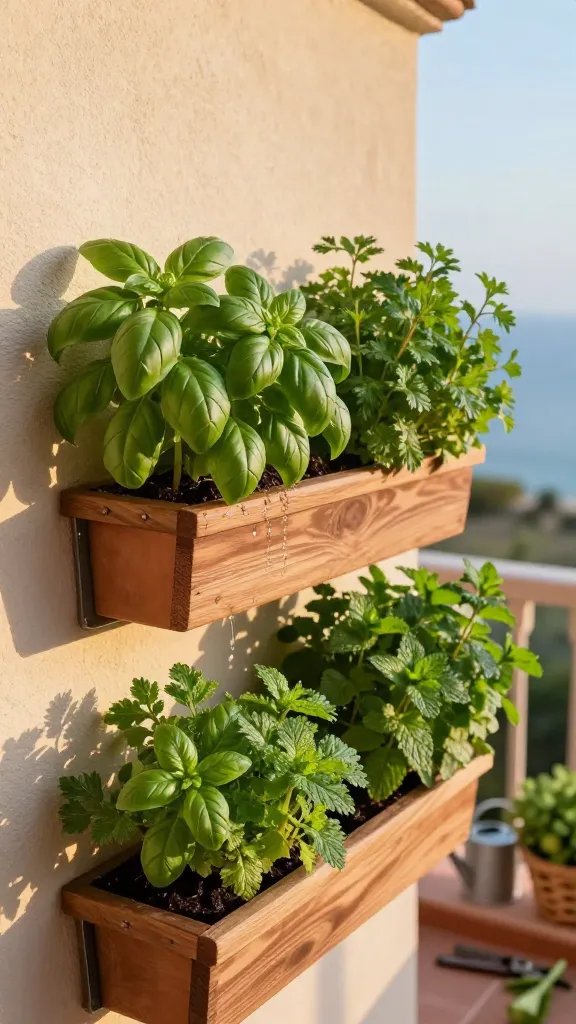
These leafy legends bring fresh, green goodness to everything. They need more water and richer soil, but they’ll reward you with pesto, chimichurri, and mojitos on demand. Keep them lower in your wall where moisture hangs out longer.
Know Their Quirks
- Basil: Sun-lover that bolts if stressed. Pinch the tops weekly to keep it leafy.
- Flat-Leaf Parsley: Steady grower; handles part-sun. Great for tabbouleh and sauces.
- Mint: Invasive genius. Always keep it in its own pot unless you like chaos.
Watering And Feeding
- Soil: Richer mix with compost. Still keep drainage strong.
- Water: Stay consistent—especially basil. Morning watering helps prevent mildew.
- Fertilizer: Light, balanced feed every 2–3 weeks during peak growth.
Use these for high-frequency harvesting. IMO, if you cook often, this trio pays for itself in weeks.
Fast Kitchen Wins
- Basil + tomatoes + mozzarella = effortless balcony lunch
- Parsley chimichurri over grilled halloumi or chicken
- Mint iced tea or lemon-mint yogurt sauce with anything spicy
Whenever you crave bright, fresh flavors, snip from this row. Your grocery bill will sigh with relief.
4. Sage, Savory, And Marjoram: The Underestimated All-Stars
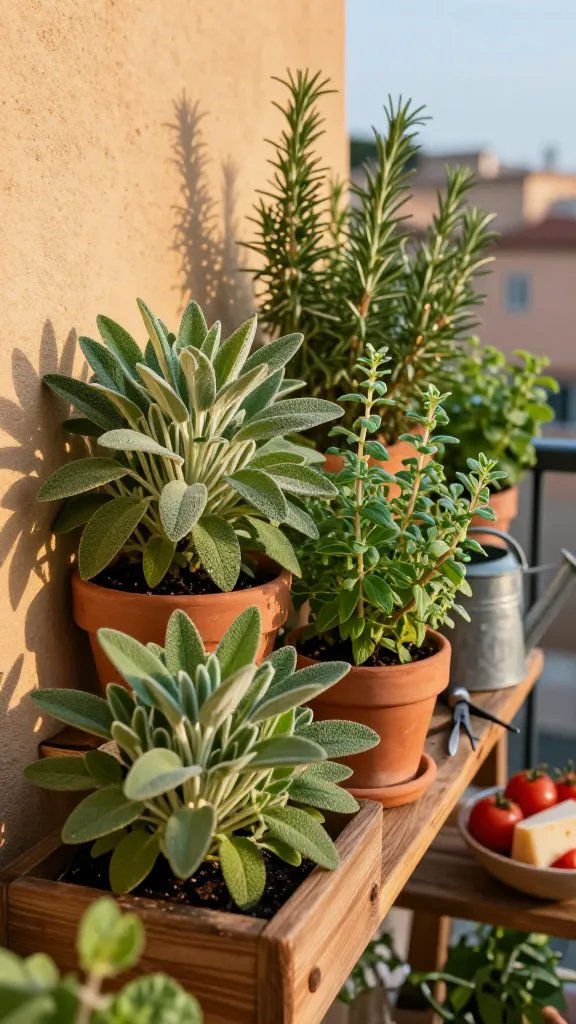
Ready for herbs that make you feel like a chef without trying? Enter sage, savory, and marjoram. They love sun, tolerate a little drought, and taste amazing with roasted veggies, beans, and anything cheesy.
Meet The Players
- Sage: Fuzzy leaves, big personality. Perfect with butter, pumpkin, and browned anything.
- Summer Savory: Peppery, thyme-adjacent. Gorgeous in beans, vinaigrettes, and grilled mushrooms.
- Marjoram: Sweeter cousin of oregano. Use fresh in salads, seafood, and herb oil.
Care And Styling
- Placement: Middle or top row for full sun.
- Soil: Similar to thyme—drainage first, always.
- Pruning: Regular trims keep marjoram and savory compact. For sage, avoid woody stems when harvesting.
- Design tip: Mix leaf textures—sage’s velvety leaves next to marjoram’s fine foliage looks luxe.
Use these when you want depth and warmth without heaviness. They’re the secret to “How did you make this?” compliments.
Quick Flavor Tricks
- Crispy sage leaves in brown butter over gnocchi
- Savory and lemon zest on grilled zucchini
- Marjoram stirred into warm olive oil for dipping bread
They shine in shoulder seasons, too—cool nights, cozy dinners, perfect herbs.
5. Lavender And Bay Laurel: Fragrant Showpieces With Serious Payoff
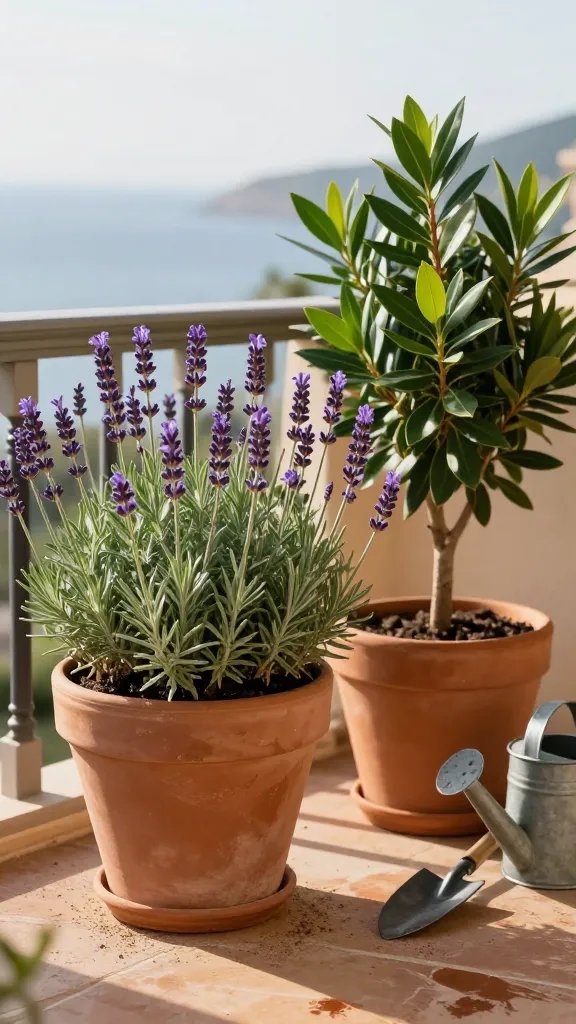
Want your balcony to smell like a seaside hillside at golden hour? Plant lavender and bay. They bring structure, perfume, and practical kitchen perks without constant babysitting.
Lavender Love
- Type: Choose English (Lavandula angustifolia) for pots. Compact and cold-tolerant.
- Soil: Ultra-gritty. Add extra sand and perlite.
- Water: Infrequent but deep. Let it dry out fully between drinks.
- Pruning: Shear lightly after bloom; never cut into old wood.
Bay Laurel Basics
- Form: Upright shrub or small standard tree—instant focal point.
- Pot: Heavy container to prevent tipping in wind.
- Care: Bright sun, moderate water, and occasional shaping. Bring indoors if winters get harsh.
Why They’re Worth It
- Lavender: Attracts pollinators, deters mosquitoes, and perfumes the whole setup.
- Bay: One leaf transforms stews, soups, and braises. It’s culinary gold.
Use lavender near seating for that instant spa vibe. Keep bay within arm’s reach of the kitchen door for easy snips.
Bonus Styling Tips
- Pair silvery lavender with terracotta for a classic Mediterranean look.
- Flank your herb wall with a potted bay as a “bookend” for structure.
- Mix trailing thyme or oregano at the edges for soft, romantic spillover.
They elevate your wall from “cute” to “wow.” Trust me, you’ll feel fancy every time you step outside.
Quick Care Calendar (Simple And Sanity-Saving)
- Weekly: Check moisture, pinch basil, snip leggy stems.
- Monthly: Light feed for leafy herbs; top up grit for woody herbs if soil compacts.
- Seasonal: Hard prune oregano and thyme in early spring; shape bay; shear lavender after bloom.
Consistent, tiny tasks beat marathon maintenance. Your plants will reward you with nonstop flavor and vibes.
Ready to build your sunny, Mediterranean herb wall? Start with the evergreen trio, add your thirsty delights, then layer in the under-the-radar stars and fragrant showpieces. Keep the soil gritty, the sun bright, and the harvests generous—you’ll turn your balcony into a vacation you can snack on daily.