
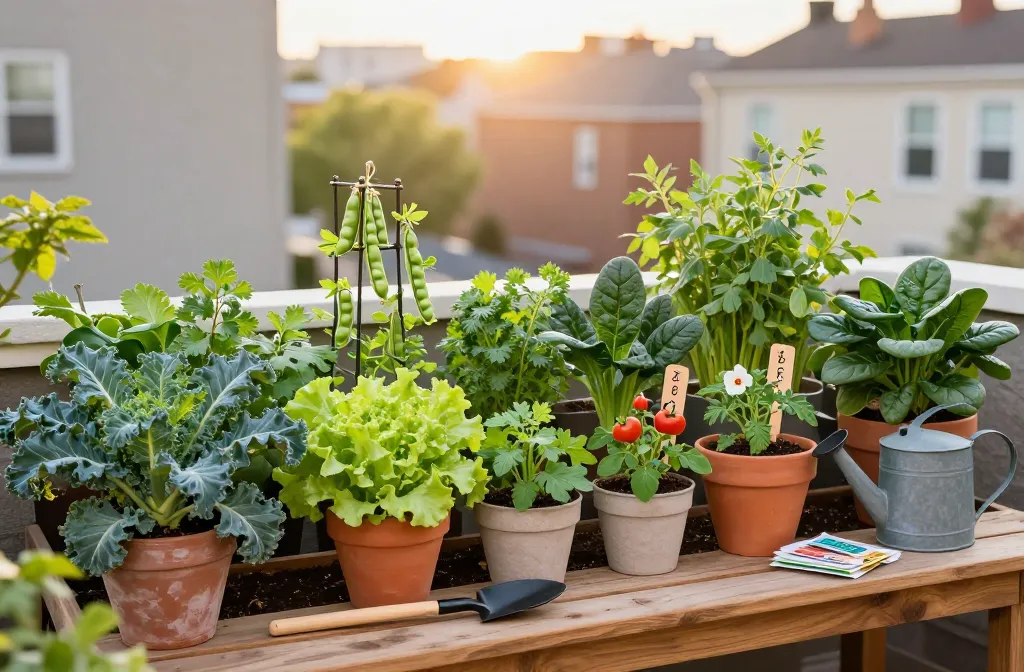
You want containers that crank out herbs, greens, blooms, and tomatoes without drama, right? This month-by-month game plan keeps your Zone 6–8 pots thriving from January shivers to December glow-ups. Short tasks, smart timing, and zero guesswork. Ready to grow like a boss?
1. Map the Year: Your Month-by-Month Game Plan, No Overwhelm
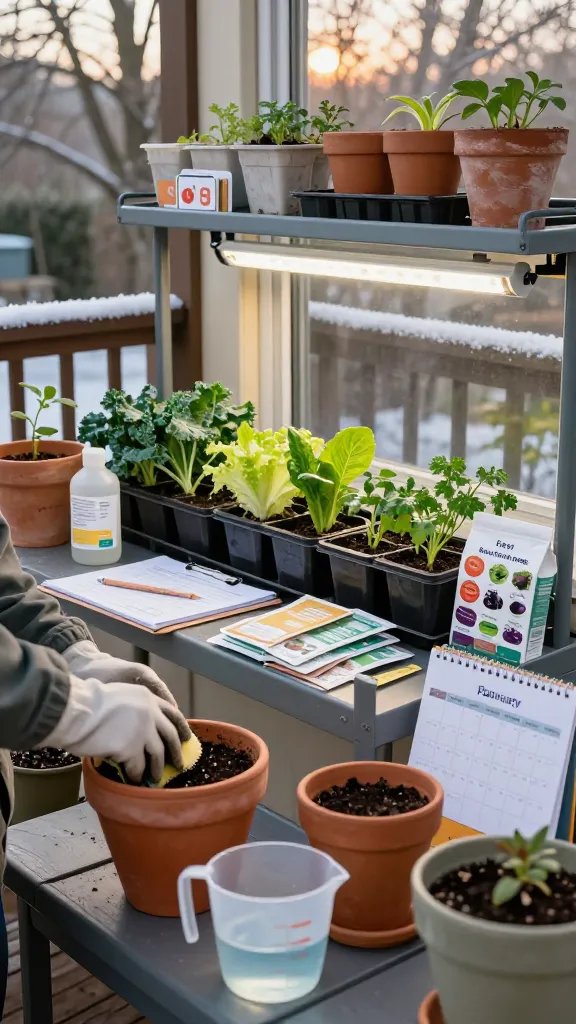
You’ll grow way more when you know exactly what to do each month. This roadmap breaks your container garden into tiny, doable moves that stack up to big harvests. No more “Wait, did I miss planting peas?” panic.
Jan–Feb: Prep + Dream
- Inventory pots and tools. Scrub containers with a 1:10 bleach solution to kill pathogens.
- Order seeds suited for containers: dwarf tomatoes, bush beans, patio eggplant, baby leaf greens.
- Start cool-season seedlings indoors: kale, lettuce, spinach, parsley. Zone 6 can wait till late Feb; Zone 8 can start early Feb.
Benefit: You hit March with seedlings ready to roll instead of wishful thinking.
March: Wake-Up Month
- Refresh potting mix: replace the top third with fresh, high-quality mix. Add slow-release organic fertilizer.
- Direct-sow peas, arugula, radishes, and cilantro in large containers. Protect with cloches on frosty nights.
- Harden off indoor seedlings for 7–10 days.
Use this month to build momentum. Your cool-season stuff loves it.
April: Cool Crops Party
- Plant lettuces, kale, chard, dill, and pansies. Tuck in edible violas for pretty salads.
- Zone 8: Start early tomatoes and peppers in big containers but keep frost cloth handy.
- Mulch with shredded leaves or fine bark to stabilize moisture.
Bonus: Containers warm faster than ground. Your salads will be smugly early.
May: Warm-Season Go Time
- After last frost (earlier in Zone 8), plant tomatoes, peppers, basil, bush beans, cucumbers (bush types), and dwarf dahlias.
- Install supports now: tomato cages, trellises for cukes, bamboo for beans.
- Side-dress with compost and switch to balanced liquid feed every 2 weeks.
Aim for sturdy growth, not floppy chaos. Supports save your future self.
June: Growth + First Harvests
- Harvest greens often to keep them tender. Re-sow arugula and radishes.
- Prune suckers on indeterminate tomatoes and remove lower leaves for airflow.
- Water deeply in the morning; containers dry fast in heat.
Regular harvesting = continuous production. Seriously, pick more.
July: Heat Management
- Water daily in heat waves. Add a light-colored mulch to reflect sun.
- Switch to bloom/fruit fertilizer for tomatoes, peppers, cukes.
- Start a second round of bush beans and basil.
Keep plants stress-free and they reward you with buckets of produce.
August: Peak + Fall Prep
- Start fall seedlings indoors: kale, broccoli raab, pak choi, lettuce.
- Direct-sow carrots (short varieties), beets, and turnips in deep containers.
- Deadhead flowers and keep feeding fruiting plants.
Fall harvests start now if you plan ahead. IMO, August is the secret weapon month.
September: The Great Switch
- Pull tired summer annuals. Replant containers with fall crops: spinach, cilantro, parsley, pansies.
- Zone 6: Be ready with row cover for early snaps. Zone 8: You’re golden till late fall.
- Reduce watering slightly as temps drop.
Fresh greens return, and your garden looks sharp again.
October: Cozy Growth
- Keep harvesting kale, chard, and lettuce. Protect with frost cloth as needed.
- Plant garlic in deep, wide pots for next summer’s harvest.
- Swap to a low-nitrogen fertilizer for sturdier cold growth.
Cool temps sweeten flavors. Your spinach will taste like candy.
November: Tuck-In Time
- Group containers near a south-facing wall for warmth.
- Mulch perennials and perennial herbs. Wrap pots with burlap to prevent freeze-crack.
- Plant hardy herbs like thyme and chives in protected spots.
Everything naps better when cozy. You’ll lose fewer plants to cold snaps.
December: Low-Maintenance Mode
- Water sparingly on frost-free days to prevent desiccation.
- Snip herbs like rosemary and thyme for holiday cooking.
- Make notes on winners and duds for next year.
Minimal work, maximum smugness. You did it.
2. Set Up Containers That Don’t Quit: Size, Soil, Sun, and Water
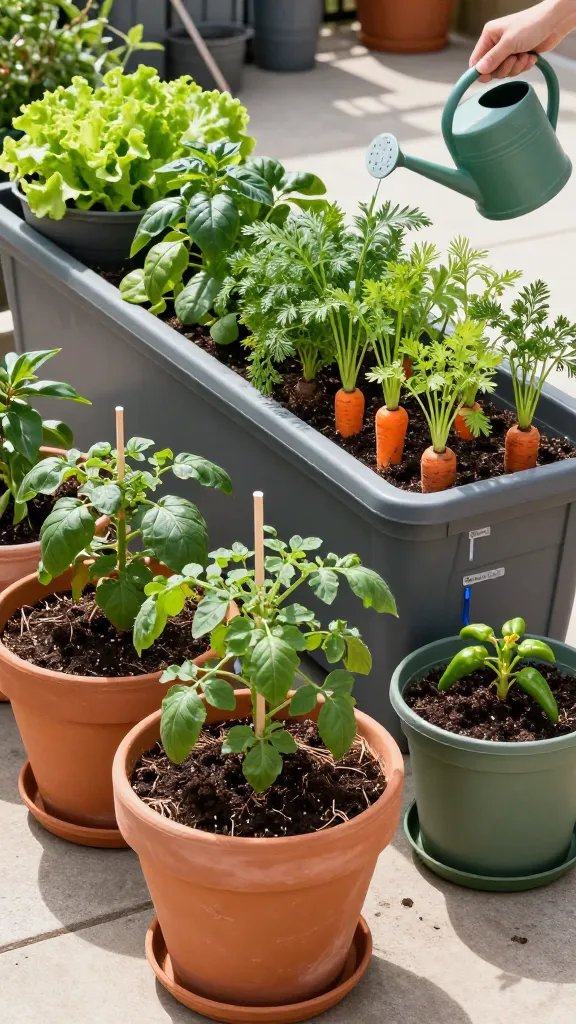
Great containers make everything easier. Think of them like tiny life-support systems: perfect drainage, fresh fuel, and the right light equals happy plants. Cheap out here and you’ll fight problems all season.
Container Size + Materials
- Greens and herbs: 8–12 inches deep. Window boxes and bowls work.
- Tomatoes and peppers: 15–20 inches wide, 12–18 inches deep minimum. Bigger is better.
- Root crops: 12–18 inches deep. Choose carrots bred for containers: ‘Parisian’, ‘Short ‘n Sweet’.
- Materials: Fabric pots drain well and keep roots cool; glazed ceramic looks great but gets heavy; plastic retains water longer.
Match plant to pot. Too small and you stunt growth; too large and you risk soggy roots.
Soil That Performs
- Use high-quality potting mix only. No garden soil—too dense and pest-prone.
- Blend in 10–20% compost for nutrition and biology.
- Add perlite or pine bark fines for drainage if your mix feels heavy.
Healthy roots mean fewer disease issues and stronger yields.
Sunlight: Aim for the Sweet Spot
- Fruiting crops: 6–8+ hours of direct sun.
- Leafy greens and herbs: 3–6 hours, or bright partial shade in summer.
- Use reflective surfaces (white walls, light gravel) to bounce extra light.
No sun? No fruit. Put the divas (tomatoes, peppers) in the brightest spot.
Water Like You Mean It
- Deep, infrequent watering early; daily or twice-daily in peak heat.
- Stick a finger into the soil. Dry to the first knuckle? Water.
- Drip lines or a simple self-watering reservoir saves time.
Consistent moisture = fewer blossom-end rot meltdowns and better flavor.
3. Plant Combos That Slap: What Plays Nice in Pots
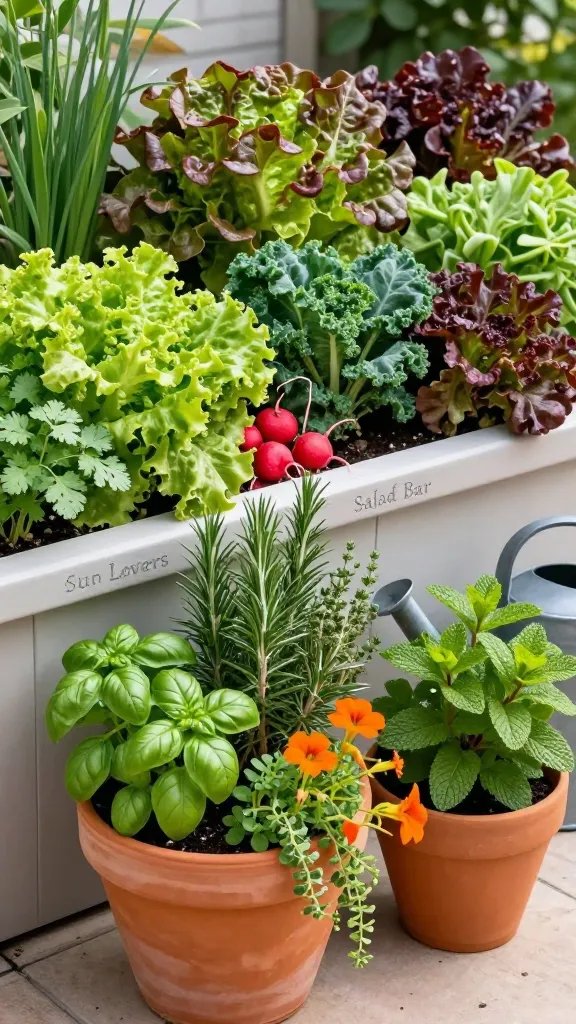
Smart combos make your containers productive and pretty. Mix heights, roots, and speeds so plants share space without brawling. Also, yes, you get more flavor variety.
Herb Party Bowls
- Sun Lovers: Basil, thyme, oregano, rosemary (upright), trailing thyme or nasturtium around the rim.
- Shade Tolerant: Parsley, chives, cilantro, mint (solo pot unless you love chaos).
Harvest little and often. You’ll cook better instantly.
Salad Bar Container
- Center: Red romaine or kale for height.
- Edge: Baby lettuces, arugula, spinach.
- Sprinkle: Edible flowers—violas, calendula, nasturtium.
Cut-and-come-again greens keep giving for weeks. FYI, salad bragging is allowed.
Tomato + Friends
- 1 dwarf or determinate tomato in a 15–20 inch pot.
- Underplant with basil, chives, and marigolds for pest pressure and flavor vibes.
- Skip heavy companions like cucumbers in the same pot—they’ll compete too hard.
Everything you need for caprese, one pot. Chef’s kiss.
Pollinator Thriller-Filler-Spiller
- Thriller: Dwarf dahlia or salvia.
- Filler: Alyssum, lantana, lemon gem marigolds.
- Spiller: Trailing verbena, calibrachoa, or creeping thyme.
More pollinators mean more fruit set on your veggies. Plus, it looks ridiculously good.
Cool-Season Combo
- Tall: Swiss chard or lacinato kale.
- Mid: Pak choi, tatsoi, baby broccoli raab.
- Edge: Cilantro and dill.
Plant in March/April and again in September. You’ll crush the shoulder seasons.
4. Seasonal Care Hacks: Pruning, Feeding, Pests, and Weather Drama
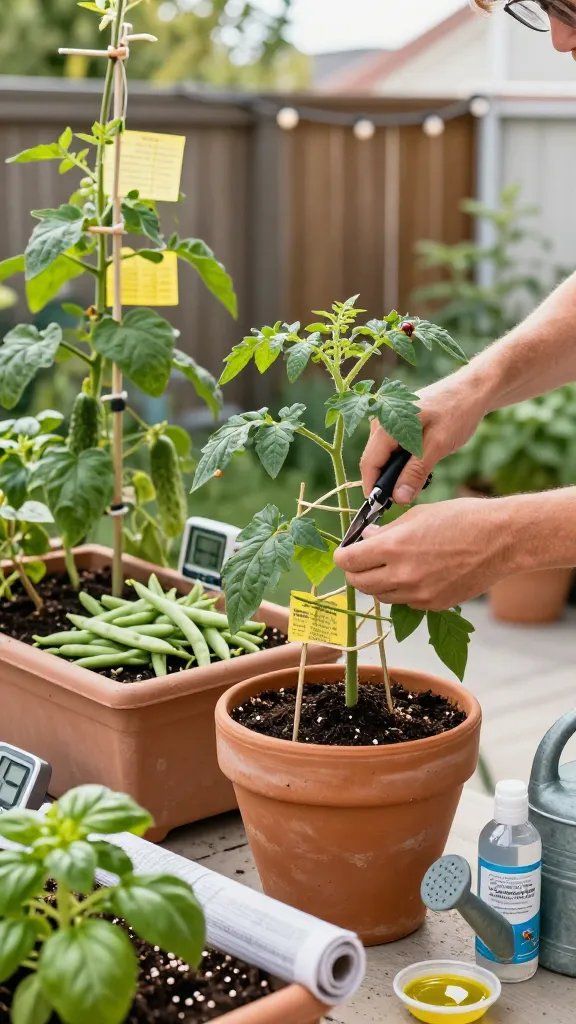
Containers grow fast and need quick tune-ups. Tiny adjustments beat big rescues every time. These moves keep your garden lush without babysitting.
Feeding Schedule
- Base: Mix slow-release organic fertilizer into fresh potting mix at planting.
- Boost: Every 2 weeks, feed with liquid fish/seaweed or a balanced synthetic (follow label).
- Switch: When fruiting starts, use a bloom/fruit formula with lower nitrogen.
Steady nutrition powers continuous harvests without leggy growth.
Pruning + Training
- Tomatoes: Remove suckers on indeterminates; keep 1–2 main stems. Stake early.
- Peppers: Tip prune lightly for bushiness; support stems when fruit sets.
- Cucumbers: Train up a trellis; prune side shoots if it gets wild.
- Herbs: Pinch basil tops weekly; never let it flower early unless you want to replant.
Clean shape = better airflow and fewer diseases.
Pest + Disease Quick Defense
- Aphids/whiteflies: Blast with water, then use insecticidal soap.
- Caterpillars: Hand-pick or use BT on edibles.
- Powdery mildew: Increase airflow; spray with potassium bicarbonate or horticultural oil.
- Blossom-end rot (tomatoes): Keep watering consistent; add calcium only if your mix lacks it.
Catch issues early and you’ll never spiral. Check leaves while you water. Two birds, one stone.
Weather-Proofing
- Heat waves: Provide afternoon shade with a patio umbrella or shade cloth.
- Cold snaps: Drape frost cloth at night and cluster pots near walls.
- Wind: Anchor tall pots and use soft ties for stems.
Mobile gardens are your superpower—move pots, save crops.
5. Month-By-Month Planting Lists: What To Sow, Plant, and Harvest
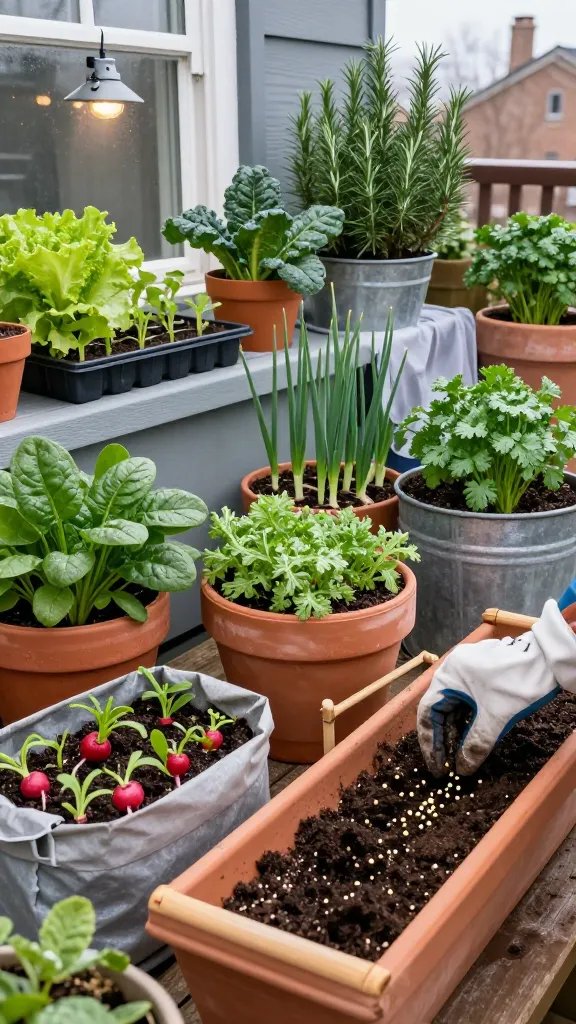
Let’s get specific so you can act fast. Use this checklist to plan weekends and avoid analysis paralysis. Adjust a couple of weeks earlier for Zone 8, later for Zone 6.
January–February
- Sow indoors: Lettuce, kale, chard, parsley, cilantro, scallions.
- Plant now outdoors (Zone 8, protected): Spinach, mache, peas.
- Harvest: Overwintered herbs like rosemary, thyme.
Light starts now pay off in spring. Trust me, future you will high-five past you.
March
- Direct-sow: Peas, radishes, arugula, spinach, mache, cilantro.
- Transplant: Hardened-off kale, chard, lettuces.
- Harvest: Early greens, microgreens indoors.
Cool-loving crops explode this month. Get them in.
April
- Direct-sow: Dill, carrots (short types), beets, turnips.
- Transplant: More lettuces, chard, parsley; early tomatoes in Zone 8 with protection.
- Harvest: Arugula, baby spinach, radishes, spring herbs.
Mix flowers with edibles for pollinators and pretty vibes.
May
- Direct-sow: Bush beans, zucchini (compact), cucumbers (bush types).
- Transplant: Tomatoes, peppers, eggplant, basil, thyme, oregano, marigolds, zinnias.
- Harvest: Lettuce, kale, peas; first herbs.
Most fun month to plant. Everything wakes up fast.
June
- Succession-sow: Beans, basil, cilantro (partial shade).
- Transplant: More peppers and tomatoes if you’re behind.
- Harvest: Peas, greens, herbs; early tomatoes in warm microclimates.
Keep sowing small amounts so you always have something coming.
July
- Direct-sow: Beans, quick greens in shade, more dill and cilantro.
- Transplant: Heat-tolerant flowers; late cucumbers.
- Harvest: Tomatoes, peppers, cucumbers, beans, basil.
Water religiously and mulch. Your plants will thank you.
August
- Sow indoors: Lettuce mixes, kale, pak choi for fall.
- Direct-sow: Carrots (short), beets, radishes for autumn.
- Harvest: Peak tomatoes and peppers; dry herbs for winter.
Turn summer success into fall momentum.
September
- Transplant: Fall greens, kale, chard, pak choi, lettuce.
- Direct-sow: Spinach, cilantro, arugula.
- Harvest: Late tomatoes, beans; fresh greens return.
Best salad month incoming. Cooler nights = crisp textures.
October
- Direct-sow: Spinach and radishes for quick fall harvest in Zone 8; protect in Zone 6.
- Transplant: Pansies, violas, parsley.
- Harvest: Herbs, kale, chard, late peppers till frost.
Lean into the cozy crops. They thrive now.
November–December
- Plant: Garlic in deep pots, perennial herbs in protected spots.
- Protect: Wrap pots, mulch crowns, use frost cloth on freezing nights.
- Harvest: Cold-hardy greens and herbs on mild days.
Quiet months, but flavor still lives in those pots.
Ready to roll? With this Zone 6–8 container plan, you’ll harvest something almost every month, keep plants healthy, and dodge avoidable stress. Start small, stack wins, and watch your patio turn into the most productive square footage you’ve ever had. Now go get your hands dirty—in the classy, planter-box kind of way.