
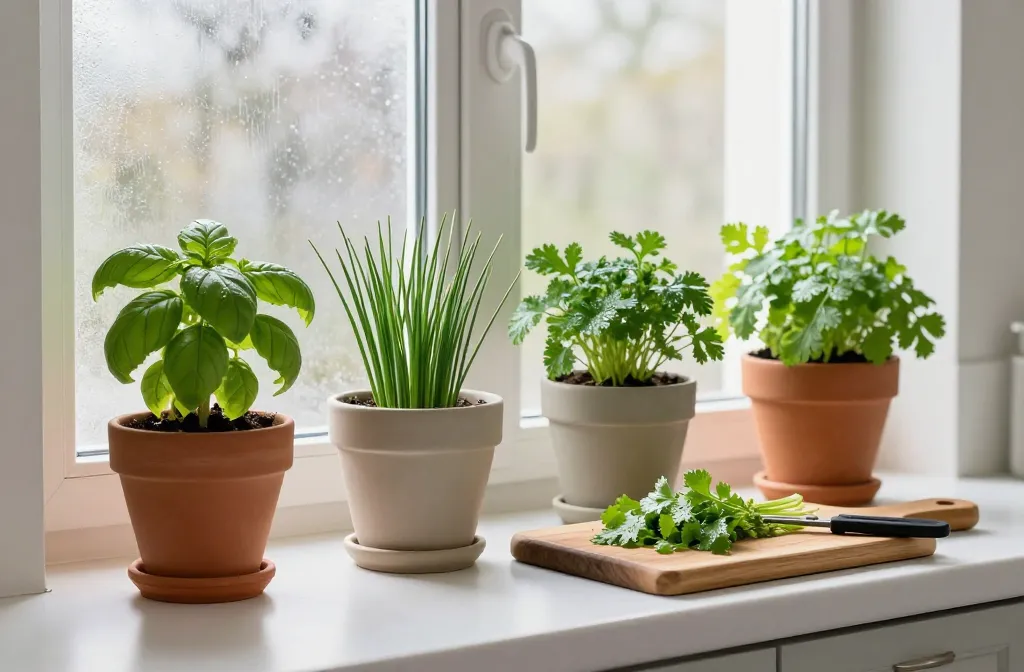
Winter feels long, but your meals don’t have to. A sunny windowsill plus a few small pots can turn January into fresh pesto, minty tea, and herby everything. These eight beginner-friendly herbs thrive indoors right now, even if you’re more “plant-curious” than green-thumbed. Ready to snip dinner from your sill? Let’s grow.
1. Basil, Chives, Parsley, And Cilantro: The “Weeknight Flavor Squad”
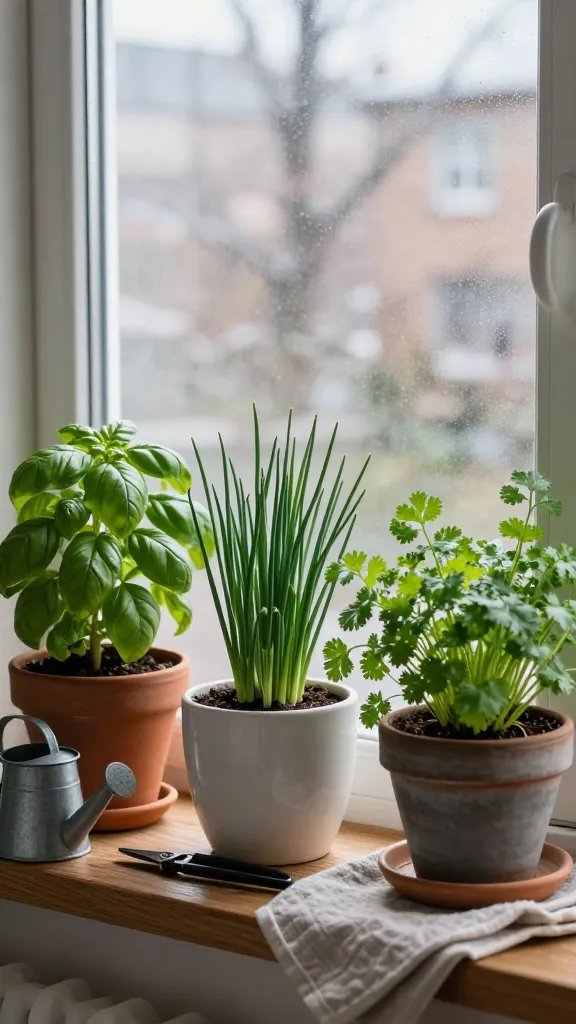
Want instant wins? Start with the four herbs you’ll use constantly. They grow fast, forgive minor slips, and deliver maximum taste with minimal fuss—aka perfect for cold, dark evenings when you need dinner to slap.
Why They’re Awesome
- Basil: Sweet, fragrant, and pesto-ready. Loves warmth and bright light.
- Chives: Mild onion kick. Snip and it keeps producing like a champ.
- Parsley: Clean, green flavor that brightens everything from soups to salads.
- Cilantro: Essential for tacos and curries. Fresh, citrusy, and fast-growing.
Setup Tips
- Containers: 4–6 inch pots with drainage. No drainage = soggy roots = sad herbs.
- Soil: Light potting mix labeled for indoor containers. Skip heavy garden soil.
- Light: South or west window. Aim for 6+ hours of bright light; supplement with a small LED grow light if needed.
- Water: Water when the top inch feels dry. Basil likes it slightly more moist; chives and parsley handle a bit more dryness between sips. Cilantro hates soggy feet—drain well.
Pro Moves
- Pinch Basil: Remove the top pair of leaves above a node to make it bushy, not leggy.
- Chop Chives Often: Frequent harvesting keeps them thick and tender.
- Cut Parsley Low: Snip outer stems at the base; leave inner growth to mature.
- Cilantro Succession: Sow a new pot every 2–3 weeks since it bolts quickly indoors.
Use these four on everything: eggs, pasta, sheet-pan dinners, bowls. Benefit: consistent, quick growth and endless weeknight rescue missions.
2. Mint, Dill, Thyme, And Oregano: The “Fragrant Flavor Bombs”
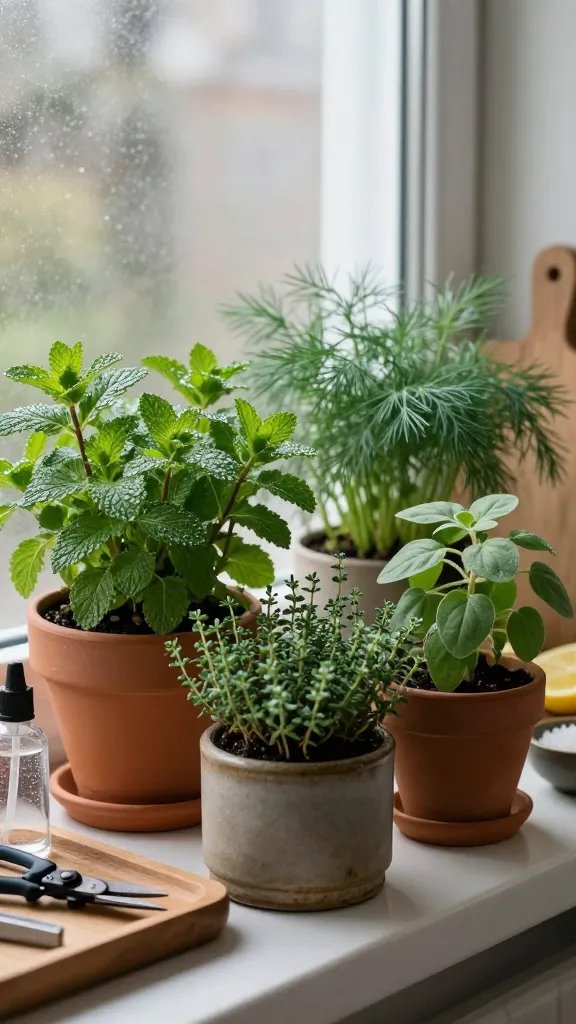
These herbs bring aroma and personality. You’ll smell them before you even cook with them, which is basically free mood therapy on a bleak January Tuesday.
Why They’re Awesome
- Mint: Mojitos, tea, smoothies, spring rolls—mint does it all. Super forgiving.
- Dill: Bright, feathery, and perfect with salmon, potatoes, and yogurt sauces.
- Thyme: Woodsy, cozy, and perfect for roasting. Tiny leaves, big payoff.
- Oregano: Pizza herb energy. Earthy, bold, and amazing dried or fresh.
Setup Tips
- Containers: Give mint its own pot. It’s a polite bully outdoors and still bossy indoors.
- Light: Thyme and oregano love bright, direct light. Dill likes bright light but tolerates a bit less. Mint’s chill with bright indirect light.
- Water: Mint and dill prefer slightly more moisture; thyme and oregano prefer to dry out between waterings.
- Air: These aromatic herbs appreciate airflow. Crack a window occasionally or run a small fan nearby.
Harvesting Smarts
- Mint: Cut stems above a node to encourage fresh, tender growth.
- Dill: Snip fronds as needed. For seed heads (pickling!), let a few stems mature.
- Thyme & Oregano: Trim stems lightly and often to prevent woodiness.
Use these when you want big aroma with minimal effort. Benefit: they elevate simple dishes instantly—think roasted veg, yogurt dips, and herby flatbreads.
3. Windowsill Setup That Actually Works (Light, Pots, Water, Repeat)
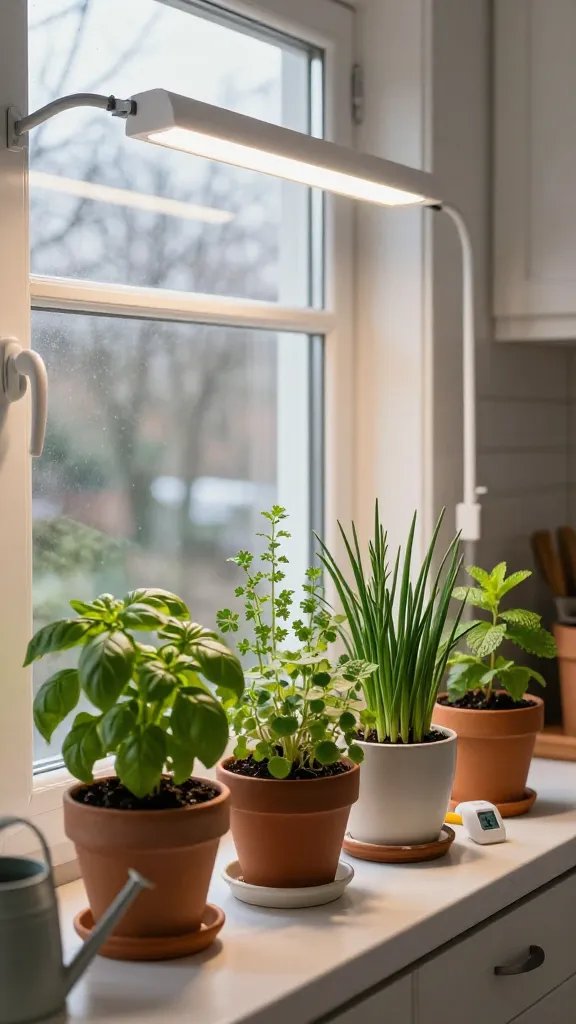
You don’t need a greenhouse—just a good setup that keeps your herbs thriving instead of limping. Nail these basics once and your plants will basically coach themselves. FYI, the “I’ll water when I remember” plan rarely ends well.
Light And Heat
- Best Window: South-facing for most light; west-facing is solid too. East works if you add a grow light.
- Grow Light: Clip-on LED with a timer (12–14 hours/day). Place 6–10 inches above plants.
- Temperature: Aim for 65–72°F. Keep leaves off cold glass and away from heating vents.
Pots And Soil
- Pot Size: Start with 4–6 inch pots for singles. Use a long window trough for multiple herbs, but group by water needs.
- Drainage: Non-negotiable. Add a saucer or a liner tray.
- Soilless Mix: Light and fast-draining. Add a handful of perlite for extra fluff.
Watering And Feeding
- Finger Test: Water when the top inch is dry. Slow pour until it trickles out the bottom, then stop.
- Humidity: Herbs don’t need rainforest vibes, but misting helps during dry heating season. Or group pots to create a mini microclimate.
- Fertilizer: Every 3–4 weeks, use a half-strength liquid fertilizer labeled for edibles. Too much = bland or leggy growth, IMO.
Keep Them Compact
- Rotate: Turn pots 1–2 times a week so they don’t lean toward the light like teenagers at a fridge.
- Pinch And Harvest: Regular snips keep plants bushy and productive.
Master this setup and you’ll grow anything short of a pineapple. Benefit: healthier, tastier herbs with minimal drama.
4. From Seed, Cuttings, Or Store-Bought? Choose Your Adventure
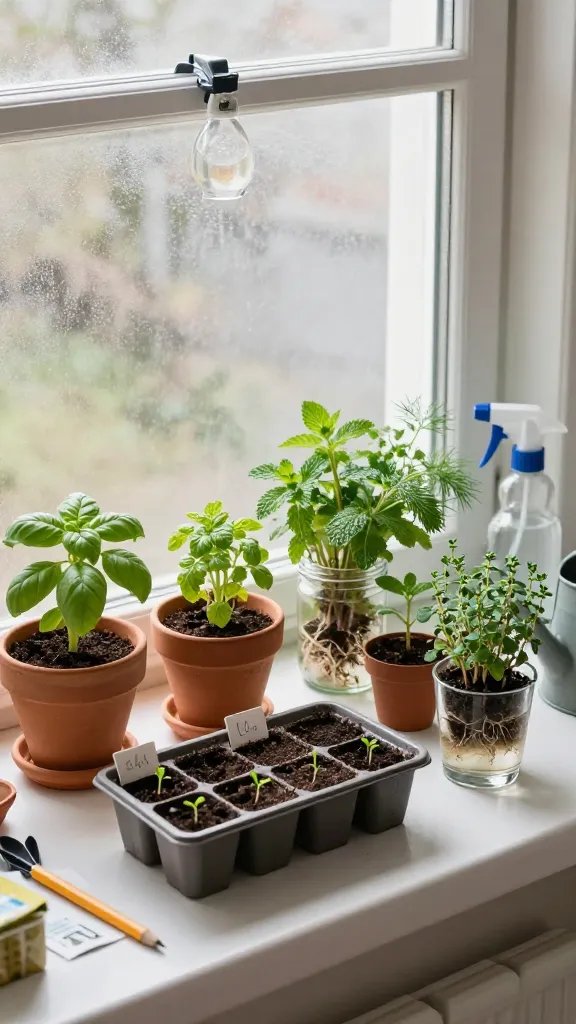
You’ve got options, and each one fits a different patience level. Want instant gratification? Buy starts. Want bragging rights? Grow from seed. Want free plants? Hello, cuttings.
Seeds: Cheap And Satisfying
- Best From Seed: Basil, cilantro, dill, parsley, chives.
- How: Sow 2–3 seeds per cell or pot, 1/4 inch deep. Keep evenly moist until sprouted.
- Light: Give strong light as soon as they pop to avoid leggy stems.
Cuttings: Fast And Free(ish)
- Best For Cuttings: Mint, oregano, thyme, basil.
- Method: Snip a 4–6 inch stem below a node, strip lower leaves, and root in water or directly in moist potting mix. Roots show in 1–2 weeks.
- Upgrade: Dip in rooting hormone if you’re fancy, but it’s optional for these herbs.
Store-Bought Starts: No-Time, No-Problem
- Pick Healthy Plants: Look for perky leaves, no yellowing, and no bugs. Avoid those crowded supermarket clumps—split them gently and repot.
- Repot ASAP: Move from nursery soil to fresh mix and a pot with drainage to avoid gnats and rot.
Choose whichever path fits your vibe. Benefit: you control cost, speed, and effort without sacrificing flavor.
5. Troubleshooting, Harvesting, And Actually Using Your Herbs
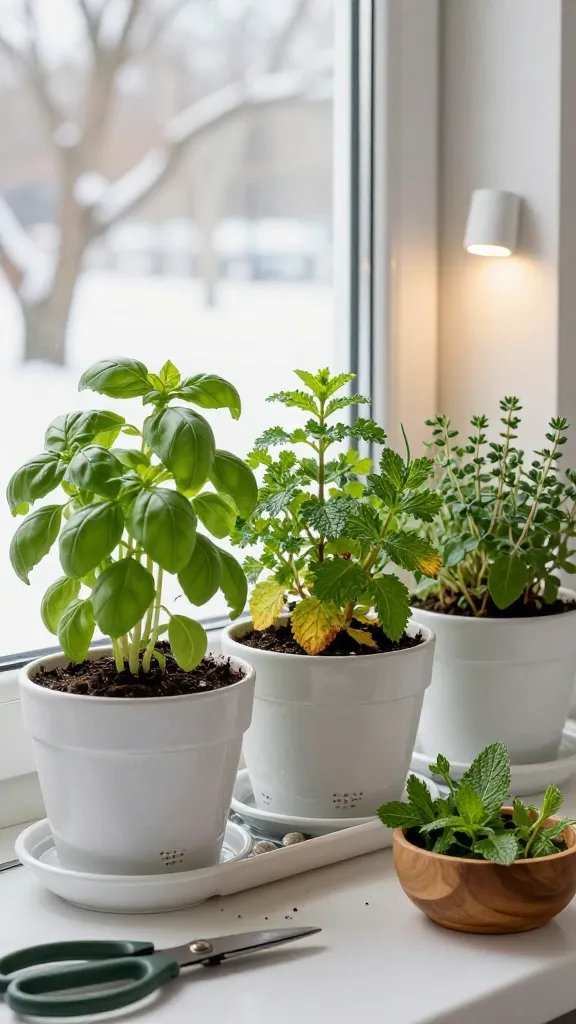
Let’s keep everything alive and delicious. A few simple checks solve 90% of issues, and smart harvesting turns a windowsill into a mini produce aisle. Because what’s the point if you’re not tossing handfuls on dinner?
Common Problems And Fixes
- Leggy, Pale Stems: Not enough light. Move closer to the window or add a grow light.
- Yellowing Leaves: Overwatering or poor drainage. Let soil dry more and check that saucer isn’t swampy.
- Brown Crispy Edges: Air too dry or heat vent nearby. Add humidity and move away from drafts.
- Tiny Flies (Fungus Gnats): Let the top inch dry out, use sticky traps, and water from the bottom occasionally.
- Slow Growth: Cold windows or no nutrients. Warm things up and feed lightly.
Harvesting For Maximum Regrowth
- Never scalp the plant. Take no more than one-third at a time.
- Cut above a node so two new shoots appear. Efficiency for the win.
- Morning snips taste brightest. Rinse, pat dry, and use or store.
Storage Hacks
- Short-Term: Wrap tender herbs in a slightly damp paper towel, stash in a container in the fridge.
- Mint & Parsley: Store like a bouquet in a jar with water, bag loosely over the top.
- Long-Term: Freeze chopped herbs in olive oil in ice cube trays for instant flavor bombs.
Use Them Like A Pro
- Basil: Toss with tomatoes and mozzarella, blitz into pesto, or shower on pizza post-bake.
- Chives: Finish eggs, loaded potatoes, soups, and buttered noodles.
- Parsley: Make gremolata, tabbouleh, or a quick chimichurri.
- Cilantro: Salsa, guac, pho, and curries—add at the end for max freshness.
- Mint: Tea, couscous, fruit salads, spring rolls, and cocktails.
- Dill: Salmon, yogurt-dill sauce, potato salad, and pickles.
- Thyme: Roasted veg, chicken, beans, and skillet sauces.
- Oregano: Tomato sauces, roasted mushrooms, and Greek salads.
Benefit: smarter harvests and zero-waste flavor. Seriously, you’ll wonder why you ever bought those sad plastic clamshells.
That’s your January game plan—eight herbs, one windowsill, endless flavor. Start small, snip often, and enjoy the kind of fresh you can’t buy in winter. Your soups, eggs, and late-night pasta are about to level up, trust me.