
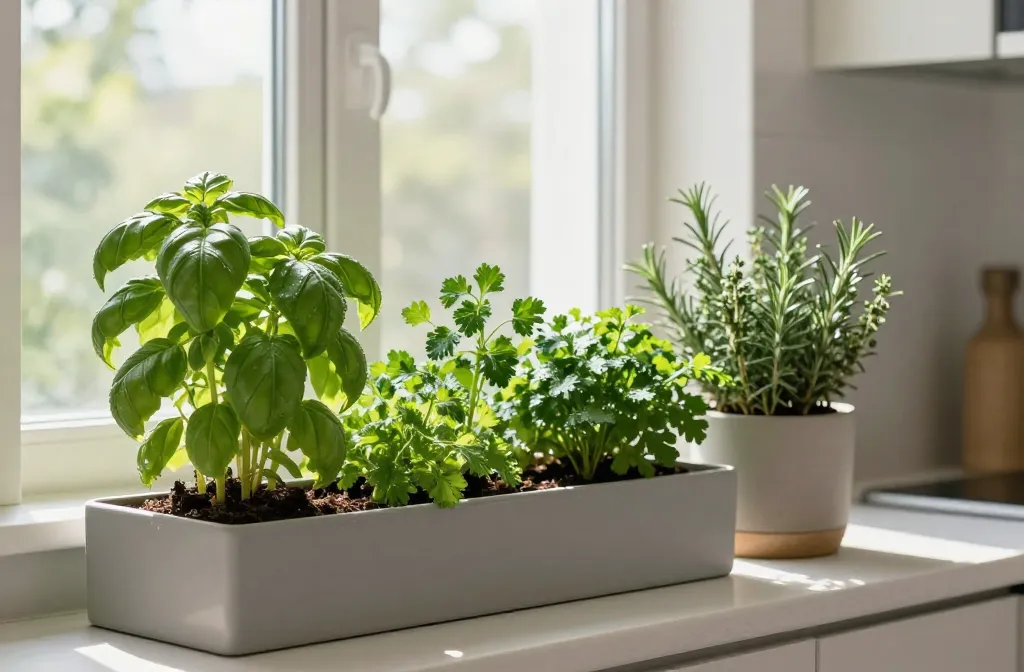
Sun-drenched windowsills are basically VIP seats for plants. Why seat just one diva when you can stage a whole duet? Companion planting indoors keeps pests down, boosts growth, and turns your sill into a tiny jungle that actually earns its keep. Let’s pair plants that vibe together—no drama, just lush leaves, better harvests, and great smells.
We’ll hit 12 spot-on pairings in five smart setups, perfect for bright kitchens, living rooms, and that office window begging for life. Short on space? These combos pack maximum benefits into pots and rails. Ready to play matchmaker?
1. Herb Besties That Never Fight
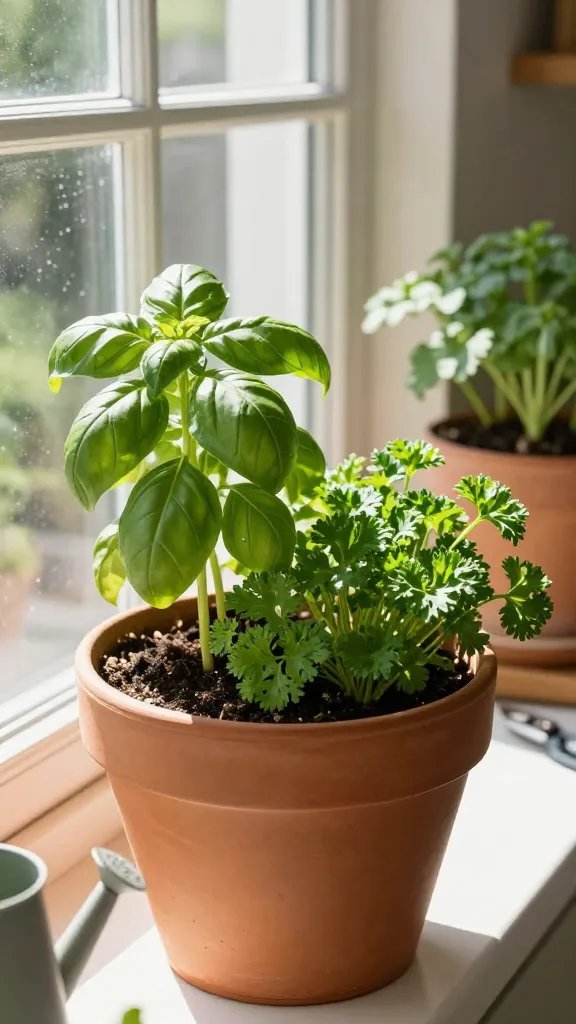
Some herbs just get each other. They share water needs, love bright light, and make your kitchen smell like you casually cook five-star meals. These pairings thrive in 6–8 hours of sun and regular pinching.
Pairing A: Basil + Parsley
- Why it works: Basil’s bold aroma can confuse indoor gnats, while curly or flat-leaf parsley fills in the base and keeps the soil shaded.
- How to pot: Use a wide 8–10 inch pot with light, fast-draining mix. Place basil on the sunnier side, parsley on the shadier side.
- Care notes: Water when the top inch dries. Pinch basil often for bushiness and to prevent early flowering.
Best for: Pasta nights, salad days, and constant snacking from the sill.
Pairing B: Rosemary + Thyme
- Why it works: Both love drier roots and nonstop sun. Thyme trails prettily, rosemary stands tall like the bodyguard.
- How to pot: Terracotta pot with added perlite. Keep drainage sharp and avoid overwatering.
- Care notes: Let almost fully dry between waterings. Rotate weekly for even light.
Best for: Roasted everything. Also a vibe if you want your kitchen to smell like a Mediterranean vacation.
Pairing C: Chives + Cilantro
- Why it works: Chives deter some pests indoors with their mild onion scent, while cilantro grows fast and appreciates nearby shade from chives’ upright blades.
- How to pot: Deep pot, rich mix. Sow cilantro in patches every 3–4 weeks for continuous harvest.
- Care notes: Keep evenly moist. Snip chives low; harvest cilantro leaves often to delay bolting.
Use when: You want quick harvests and scallion-adjacent freshness, ASAP.
2. Citrus Cheerleaders And Their Aromatic Crew
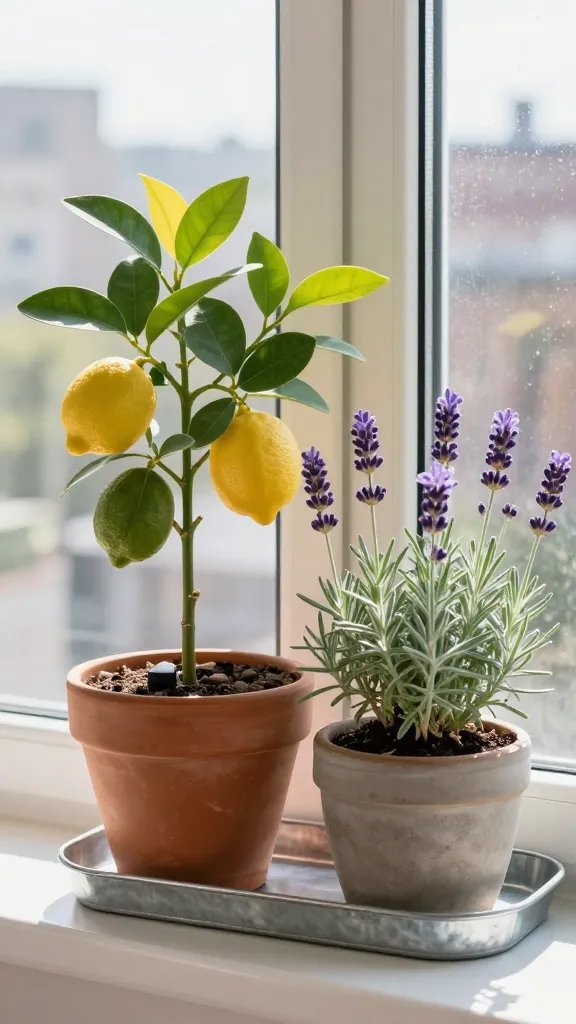
Mini citrus love bright windowsills and crave company that boosts airflow and guards against fungus gnats. Add herbs that appreciate the same light but won’t hog nutrients.
Pairing D: Dwarf Lemon + Lavender
- Why it works: Lemon sips steady moisture; lavender tolerates slightly drier edges and releases scent that can discourage pests.
- How to pot: Separate pots for control, nestled together on a tray. Use a citrus mix for lemon; gritty mix for lavender.
- Care notes: Brightest window, ideally south or west. Mist the air lightly near lemon during dry winter (not directly on flowers).
Benefits: Pollinator attractor if you crack a window in warm seasons, and your kitchen smells like sunshine.
Pairing E: Calamondin Orange + Lemon Balm
- Why it works: Lemon balm’s gentle scent helps deter gnats; it also creates a humidity “buffer” without drenching roots.
- How to pot: Same saucer, different pots. Keep balm trimmed so it doesn’t shade the citrus canopy.
- Care notes: Fertilize citrus lightly every 4–6 weeks during active growth. Trim balm weekly and enjoy tea on the spot.
Good for: Bright apartments that need a mood lift and a low-key pest shield.
Pairing F: Kaffir Lime + Mint (Contained)
- Why it works: Mint’s strong aroma helps confuse indoor pests. Kaffir lime loves bright light and benefits from nearby humidity.
- How to pot: Mint in its own pot, always. Place behind or beside the lime to avoid encroachment.
- Care notes: Water mint more often; keep lime on the drier side between waterings. Prune mint hard to prevent legginess.
Use when: You’re cooking Thai-inspired dishes and want fragrant leaves at arm’s length. Seriously, it’s a joy.
3. Salad Bar In A Box: Greens That Thrive Together
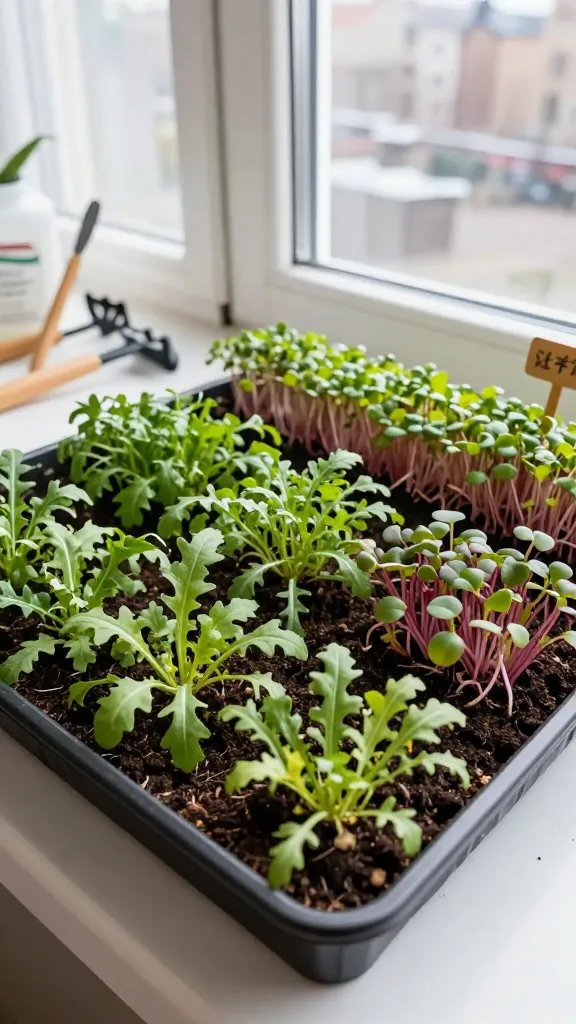
Greens love bright light but not baking heat. Your sunny window sill offers the perfect glow with less scorch, especially in cooler months. These combos give you steady cut-and-come-again harvests.
Pairing G: Arugula + Radish Microgreens
- Why it works: Arugula grows mid-speed; radish micros harvest fast. Staggered growth = constant salad drama (the good kind).
- How to pot: Shallow, wide tray with seed-starting mix. Sow arugula lightly; sprinkle radish thickly in a corner strip.
- Care notes: Bright light, cooler temps (60–70°F if possible). Bottom-water trays to avoid damping off.
Benefits: Peppery flavors play well together—perfect for sandwiches and flatbreads.
Pairing H: Baby Lettuce Mix + Nasturtium (Dwarf)
- Why it works: Lettuce enjoys mild light and consistent moisture; dwarf nasturtium adds edible flowers and mild pest deterrence.
- How to pot: 10–12 inch window box. Lettuce in the center, nasturtium at the edges to trail.
- Care notes: Keep evenly moist, never soggy. Rotate box weekly for even growth.
Best for: Instagram-worthy salads with edible blooms. FYI, it tastes as good as it looks.
Pairing I: Spinach + Chervil
- Why it works: Both enjoy cooler conditions and partial shade. Chervil’s delicate fronds help shade soil and keep moisture stable.
- How to pot: Deep pot for spinach roots, sprinkle chervil around the perimeter.
- Care notes: Morning sun, afternoon bright indirect light is ideal. Harvest outer spinach leaves first.
Use when: You want subtle, chef-y flavors and reliable indoor harvests without fuss.
4. Tomato Tiny-Housemates And Pepper Power Duos
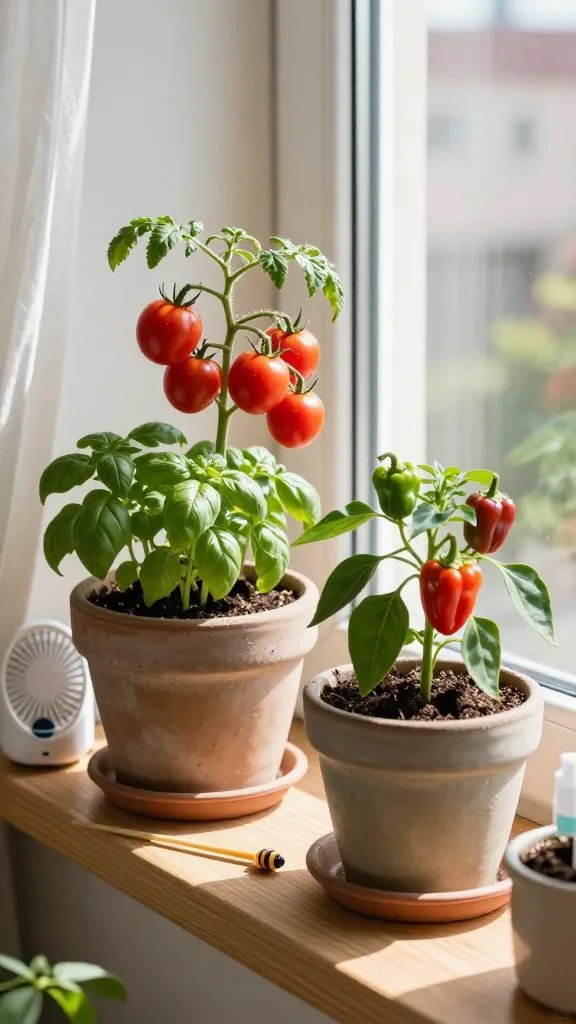
Yes, you can fruit tomatoes and peppers on a sunny sill if you choose compact varieties and give them helpful companions. You’ll need strong light, a little hand-pollination, and steady airflow. The payoff: snackable harvests right from the window.
Pairing J: Micro-Dwarf Tomato + Basil (Greek or Bush)
- Why it works: Tomato loves companionship with basil—aroma may help deter pests, and the flavors are obviously best friends.
- How to pot: 1–2 gallon pot for micro-dwarf tomato; tuck a small bush basil in the front or a separate 4–6 inch pot nearby.
- Care notes: 8+ hours of sun or a supplemental LED. Gently tap tomato flowers midday to pollinate. Feed lightly every 10–14 days.
Benefits: Sun-warmed cherry tomatoes with basil leaves on demand. IMO, peak window-sill flex.
Pairing K: Chili Pepper (Compact) + Marigold (Dwarf)
- Why it works: Marigolds look cute and help distract or deter some pests. Compact chilis fruit heavily in small spaces.
- How to pot: Shared 1–2 gallon rectangular planter with pepper centered and a dwarf marigold at one end.
- Care notes: Keep warm (70–80°F), water when top inch dries. Brush blossoms gently to encourage fruit set.
Best for: Colorful windows with heat on the plate and cheer for the eyes.
Pairing L: Sweet Pepper (Mini Bell) + Oregano
- Why it works: Oregano creeps as a living mulch, reducing splash and helping soil retain moisture. Pepper enjoys steady warmth and sun.
- How to pot: 2–3 gallon pot; pepper centered, oregano around the rim.
- Care notes: Prune oregano so it doesn’t hog nutrients. Fertilize peppers with a balanced formula once fruit sets.
Use when: You want pizza garden energy in one pot—snip oregano, stuff mini bells, live your best life.
5. Fragrant Defenders And Low-Maintenance Legends
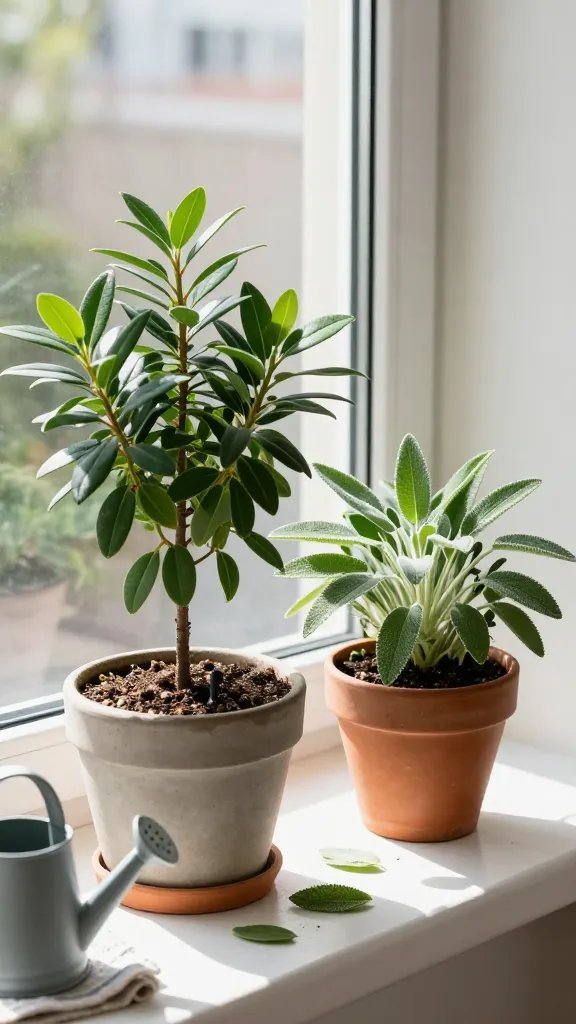
These pairings double as pest patrol and air fresheners, while staying chill about watering and care. Ideal for beginners or busy plant parents who still want that lush look.
Pairing M: Sage + Bay Laurel (Dwarf)
- Why it works: Both enjoy bright light and moderate watering. Bay brings structure; sage adds soft, aromatic foliage.
- How to pot: Separate pots to match each plant’s pace. Use gritty mix for sage; richer mix for bay.
- Care notes: Let sage dry more between drinks. Wipe bay leaves occasionally to prevent dust and scale.
Benefits: Kitchen-ready flavor with a sculptural vibe that looks high-end and grounded.
Pairing N: Aloe Vera + Snake Plant (Compact)
- Why it works: Both tolerate bright sun and forgetful watering. The forms play well—spiky meets sleek.
- How to pot: Share a wide, shallow bowl with gritty cactus mix, or keep in adjacent pots.
- Care notes: Water deeply but infrequently. Rotate monthly for even growth.
Best for: Sun-baked windows where herbs sulk. Plus, aloe = first-aid bonus.
Pairing O: Geranium (Scented) + Lemon Thyme
- Why it works: Scented geranium leaves release oils that can deter pests, while lemon thyme trails to cover soil and add edible zing.
- How to pot: 8–10 inch pot with geranium centered, thyme spilling over.
- Care notes: Bright sun, light feed every 3–4 weeks. Pinch geranium tips for bushiness.
Use when: You want cottage-garden charm with practical pest resistance. FYI, it smells like happiness.
Quick Setup Tips
- Light: Aim for south or west windows. Supplement with a small LED grow bulb during short winter days.
- Drainage: Always use pots with holes and matching saucers. No plant likes wet socks.
- Airflow: Crack a window on mild days or run a mini fan on low to reduce mildew and help pollination.
- Soil: Use fresh, well-draining potting mix; add perlite for herbs that prefer drier roots.
- Watering: Group plants by thirst. Touch test beats schedules—water when the top inch feels dry (or almost dry for Mediterranean herbs).
- Feeding: Light, regular feeding beats feast-or-famine. Half-strength every 2–4 weeks during active growth.
Companion planting on a sunny windowsill turns random pots into a tiny ecosystem that works smarter, not harder. Pick a duo (or three), match their light and water vibes, and let them help each other shine. You’ll get prettier plants, better flavors, and a window view that makes you smile every morning—trust me, it’s addictive.