
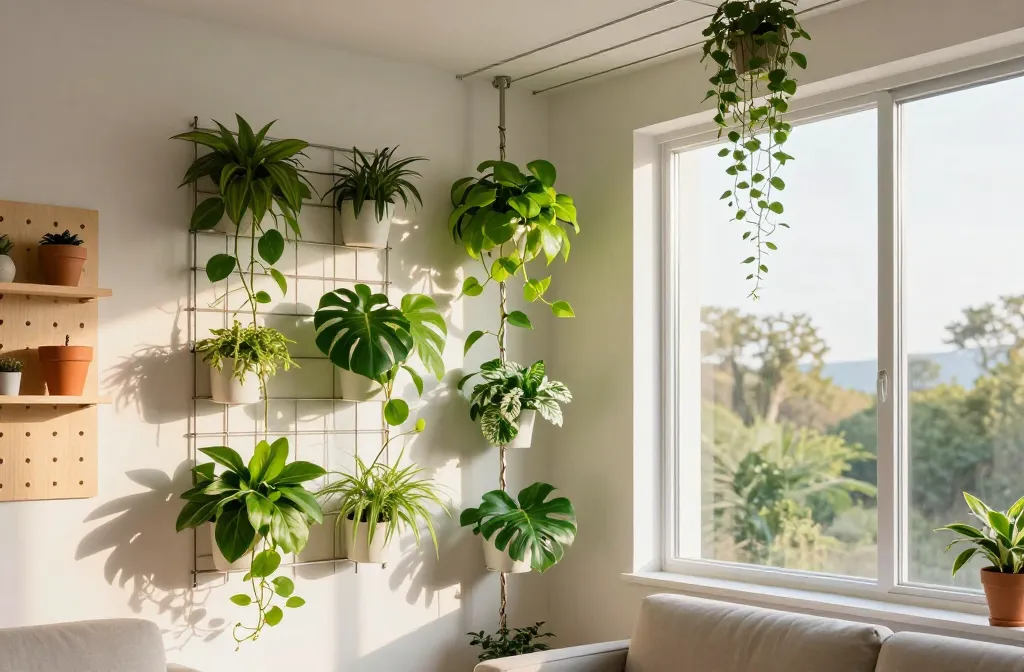
Short on square footage but big on plant dreams? Meet the vertical garden: your wall’s new job and your window’s favorite coworker. Climbing plants give you lush, jungly vibes without hogging floor space. Ready to turn that boring corner into a living sculpture? Let’s scale up—literally.
1. Build a Space-Savvy Vertical Framework
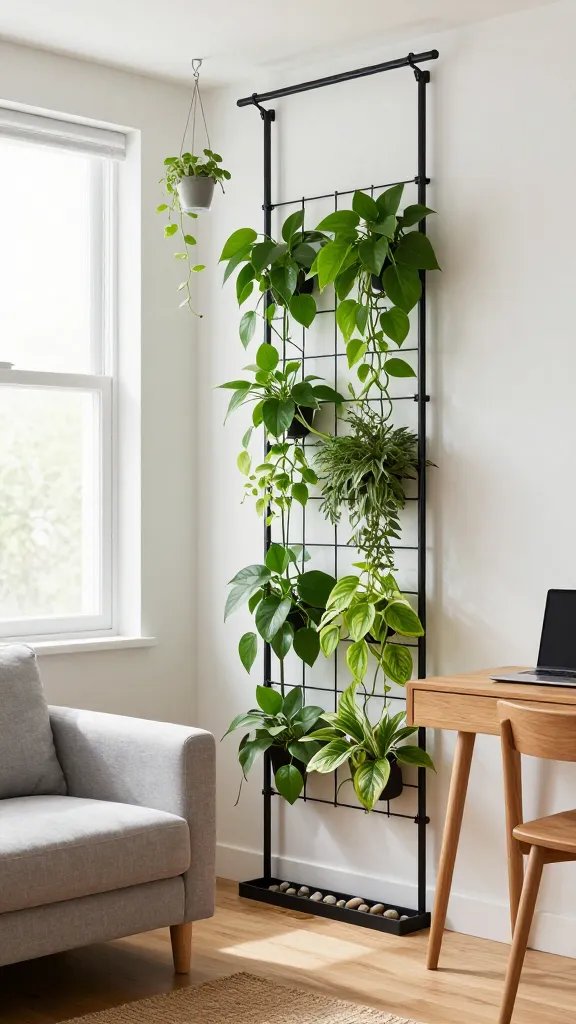
Start with the backbone of your indoor garden: a framework that lets vines climb without chaos. You don’t need a yard—just a wall, a sunny-ish window, and a plan that keeps leaves off your laptop and water off your floors.
Smart Structures That Actually Fit
- Wall trellis panels: Lightweight wood or powder-coated metal grids mount with 2–4 anchors. Great behind sofas or in hallways.
- Tension pole trellis: Floor-to-ceiling poles with crossbars = zero drilling. Perfect for renters.
- Ceiling hooks + wire: Run stainless wires across a window for discreet, airy support.
- Pegboards: Add hooks and mini shelves for vines and trailing plants. Super modular.
- Magnetic shelf rails: For steel support columns or kitchen areas—clip on and go.
Key Tips
- Map your light: South/west windows for sun-lovers, north/east for shade champs.
- Keep it breathable: Leave 1–2 inches between wall and trellis to prevent mildew.
- Water without drama: Use saucers or cachepots; add a microfiber mat below.
- Plant spacing: Start with 6–8 plants for a 4-foot-wide wall. Let them fill in.
Set this right and everything else becomes easy. You’ll optimize light, airflow, and maintenance from day one—no plant hospital required.
2. Choose 15 Climbing All-Stars (For Every Light Level)
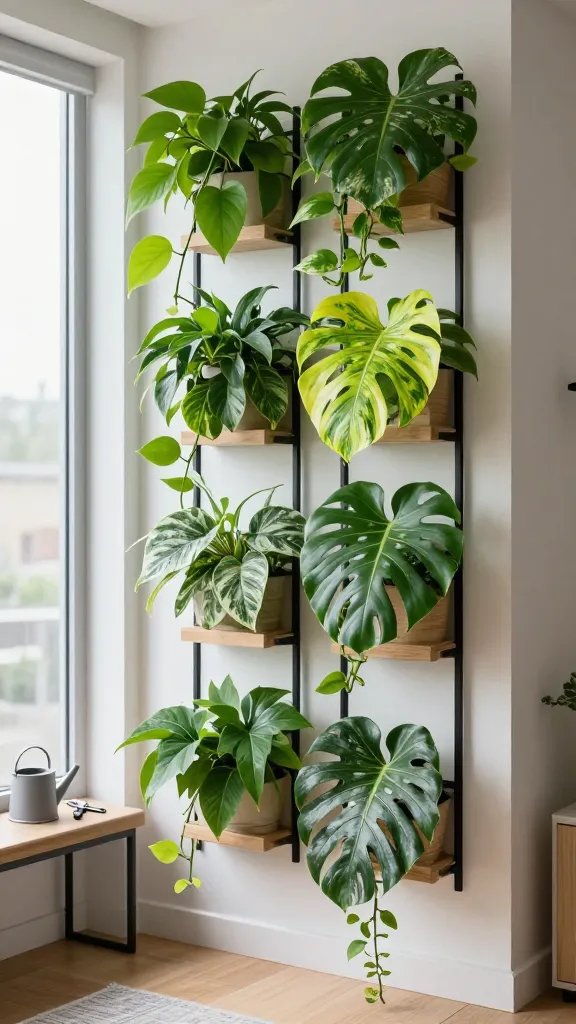
You want climbers that thrive indoors, won’t bully your space, and reward you with fast growth. Mix a few statement vines with steady growers so your wall looks intentional—not feral.
Best For Low To Medium Light
- Pothos (Epipremnum aureum): Tough as nails; N’Joy and Marble Queen add variegation.
- Heartleaf Philodendron (Philodendron hederaceum): Fast, forgiving, lush. The classic apartment vine.
- Philodendron ‘Brasil’: Neon lime streaks that pop on dark walls. Chef’s kiss.
- Monstera adansonii (Swiss Cheese Vine): Holes = texture royalty. Loves to climb on a moss pole or grid.
- Hoya australis/krimson queen: Thick leaves, slow-ish, but stunning once established.
Best For Bright, Indirect Light
- English Ivy (Hedera helix): Classic climber; keep soil slightly moist and air moving.
- Jasmine (Jasminum polyanthum): Fragrant blooms with winter light—train gently and prune.
- Mandevilla (Dipladenia): Tropical flowers indoors with strong light. Summer star, winter rest.
- Star Jasmine (Trachelospermum jasminoides): Needs bright light; rewards with glossy leaves and dreamy scent.
- Clerodendrum thomsoniae (Bleeding Heart Vine): Dramatic blooms; keep humidity up for best show.
Compact And Apartment-Friendly Climbers
- Cebu Blue Pothos: Silvery-blue leaves, elegant and easy. Climbs flattish—great for grids.
- String of Hearts (Ceropegia woodii): Dainty trailing vine; will wrap small trellises beautifully.
- Hoya pubicalyx/carnosa: Wax vines with starry flowers; low-maintenance once established.
- Black-Eyed Susan Vine (Thunbergia alata): Seasonal indoor color under bright light or grow lights.
- Passionflower (Passiflora caerulea): For the bold—needs strong light and pruning, but those blooms? Wow.
Pro Selection Tips
- Mix textures: Pair glossy philodendrons with airy adansonii and fine-leaf jasmine.
- Stagger growth rates: Fast growers fill gaps while slow beauties mature.
- Choose non-adhesive climbers: Avoid wall-clinging aerial roots that can damage paint.
With this lineup, you’ll get steady green coverage, seasonal flowers, and minimal drama. FYI: If you’re a newbie, start with pothos and heartleaf philodendron and build from there.
3. Train, Prune, And Prop Like A Plant Whisperer
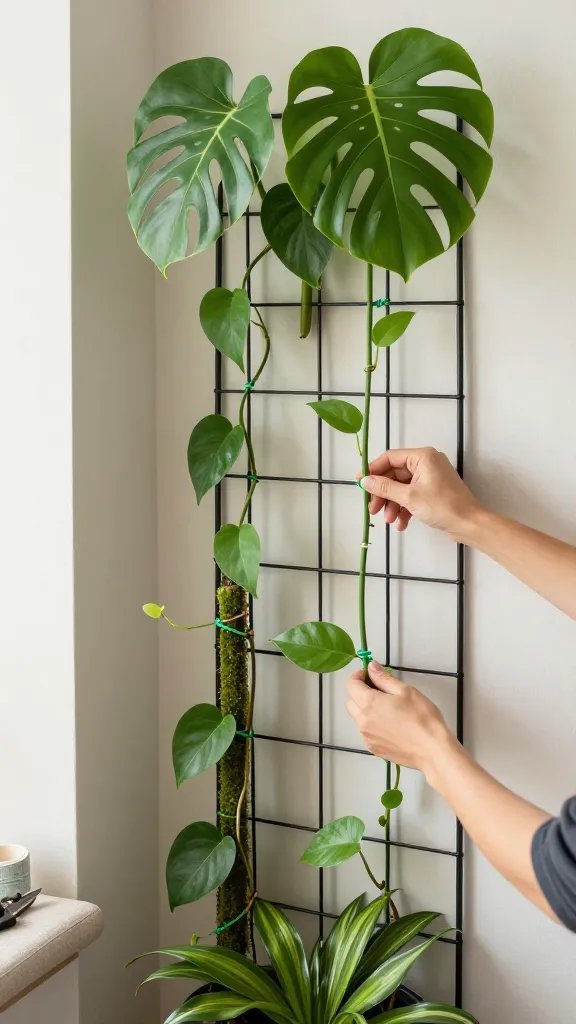
Climbers love guidance. A little training turns spaghetti vines into living art. You’ll control shape, prevent tangles, and keep airflow happy.
Training Moves That Work
- Soft ties and clips: Use garden tape or silicone ties every 6–8 inches. Gentle, not strangling.
- Wrap-and-weave: Coil vines around grid lines for an instant “filled” look.
- Tip pinning: Pin growth tips toward empty zones to encourage coverage.
- Moss pole hack: Zip-tie a slim moss stick to your trellis for adansonii and philodendron.
Pruning = Power
- Pinch tips: Snip 1–2 nodes to make bushier side shoots.
- Control length:
- Keep everything within reach for easy watering and dusting.
- Sanitize shears: Wipe with alcohol to avoid spreading issues. Simple, crucial.
Propagation For Free Plants (Because Why Not)
- Node cuttings: Cut below a node; root in water or perlite.
- Water-to-soil transfer: Pot up once roots hit 1–2 inches.
- Backfill your wall: Replant cuttings into bare spots for thicker coverage.
Regular training turns maintenance into a 10-minute weekly ritual. You’ll get tidier growth, better airflow, and a wall that looks curated, not chaotic—seriously.
4. Nail Light, Water, And Humidity (So They Actually Thrive)
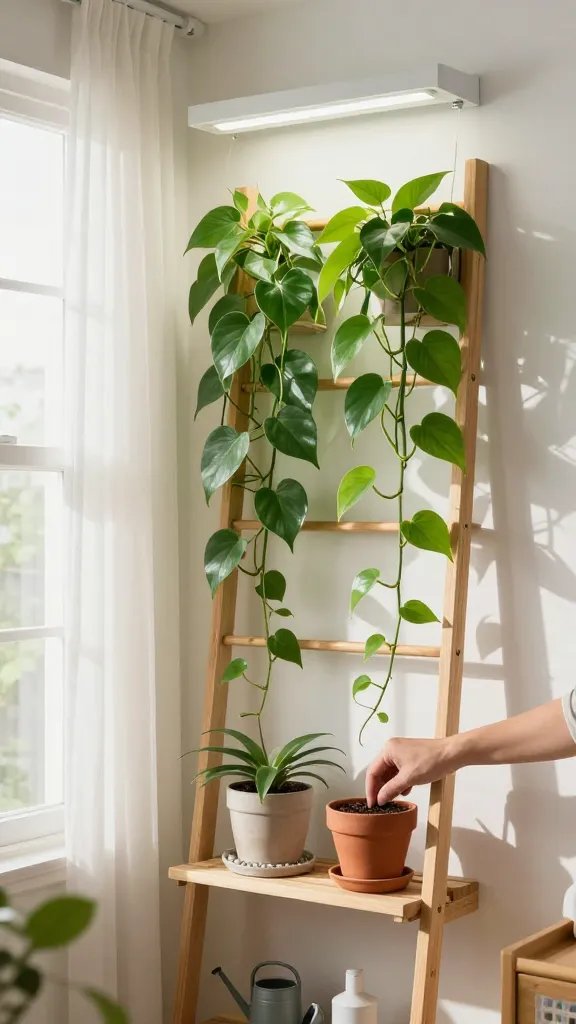
Indoor climbers can’t tell you what they need, but their leaves will. Dial in light, water, and humidity and you’ll avoid 90% of plant problems.
Light = The Make-Or-Break Factor
- Bright, indirect: 2–5 feet from a sunny window or filtered by sheer curtains.
- Grow lights: 12–14 hours/day for darker rooms. Use 4000–6500K full-spectrum bars.
- Rotate monthly: Turn pots so both sides climb evenly and don’t get leggy.
Watering Without Regret
- Finger test: Water when top inch is dry for philodendron/pothos; keep hoyas drier.
- Bottom watering: For wall setups, occasionally soak pots in a tub to hydrate evenly.
- Drainage is non-negotiable: Pots with holes + saucers = happy roots, dry floors.
Humidity And Airflow
- Target 45–60% humidity: Small humidifier nearby or pebble trays under clusters.
- Micro-fan magic: A silent clip fan prevents fungus and encourages sturdier growth.
- Dusting day: Wipe leaves monthly. Clean leaves = better photosynthesis and prettier selfies.
Soil And Feeding
- Soil mix: 2 parts high-quality potting mix, 1 part perlite, 1 part orchid bark.
- Fertilizer: Half-strength balanced liquid every 3–4 weeks spring–summer; pause in winter.
Dial these in and your vertical garden turns predictable. Less guesswork, more growth, and way fewer “why is this yellow” moments.
5. Style It Like A Design Nerd (Without Spending A Fortune)
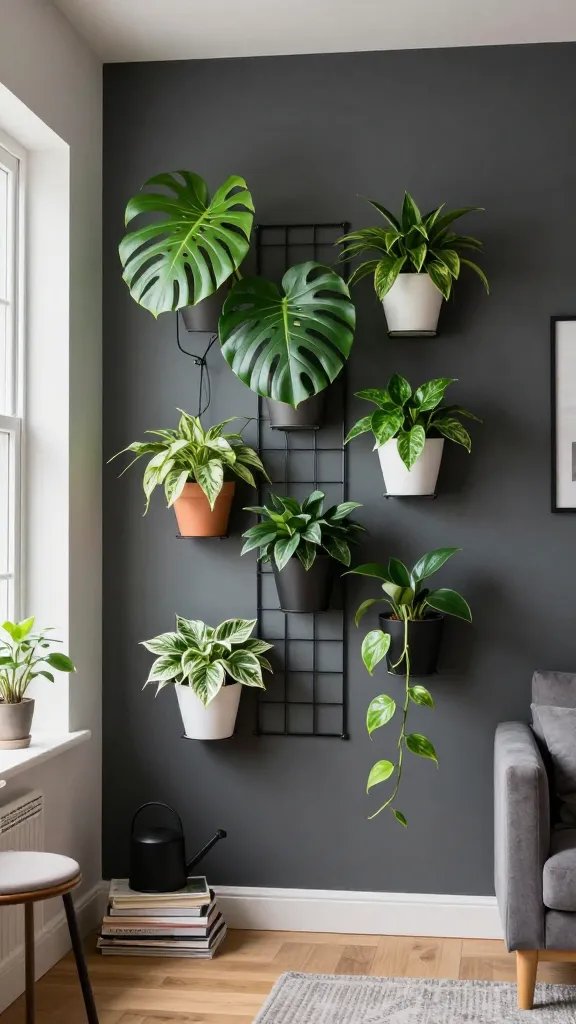
Your indoor vertical garden should look intentional, not like you lost a fight with a jungle. Style choices make the difference between cute and magazine-level stunning.
Color And Texture Play
- Contrast the wall: Dark walls make variegation pop; light walls love deep-green vines.
- Leaf shapes as decor: Mix large perforations (adansonii) with small hearts (philodendron).
- Pot palette: Stick to 2–3 finishes—matte white, terracotta, black—for cohesion.
Layout That Grows With You
- Triangle clusters: Place taller supports off-center and cascade shorter vines around.
- Rule of thirds: Keep the densest growth in the middle third for balance.
- “Water zone” shelf: Install one narrow shelf at hip height for easy care days.
Small-Apartment Tricks
- Doorframe trellis: Run a slim arch above a doorway. Zero floor footprint.
- Window wire grid: Train vines to frame the glass without blocking all the light.
- Ceiling-to-sofa climb: Drop a wire behind your couch; let vines climb and cascade.
Safety And Practical Notes
- Pets and kids: Many philodendrons and pothos are toxic if ingested. Place out of reach.
- Waterproof base: Add a vinyl runner or tray beneath the setup in rentals. Trust me.
- Move-friendly: Choose snap-on trellis clips and tension poles for painless rearranging.
Done right, your vertical garden doubles as art, scent diffuser, and mood lifter. It also becomes the most complimented “wall decor” you own—IMO.
Ready to go vertical? Pick 5–6 starter vines, set up a simple trellis, and train a little each week. You’ll watch blank walls turn into living tapestries—and your apartment will feel bigger, calmer, and wildly more stylish. Go grow that glow-up.