
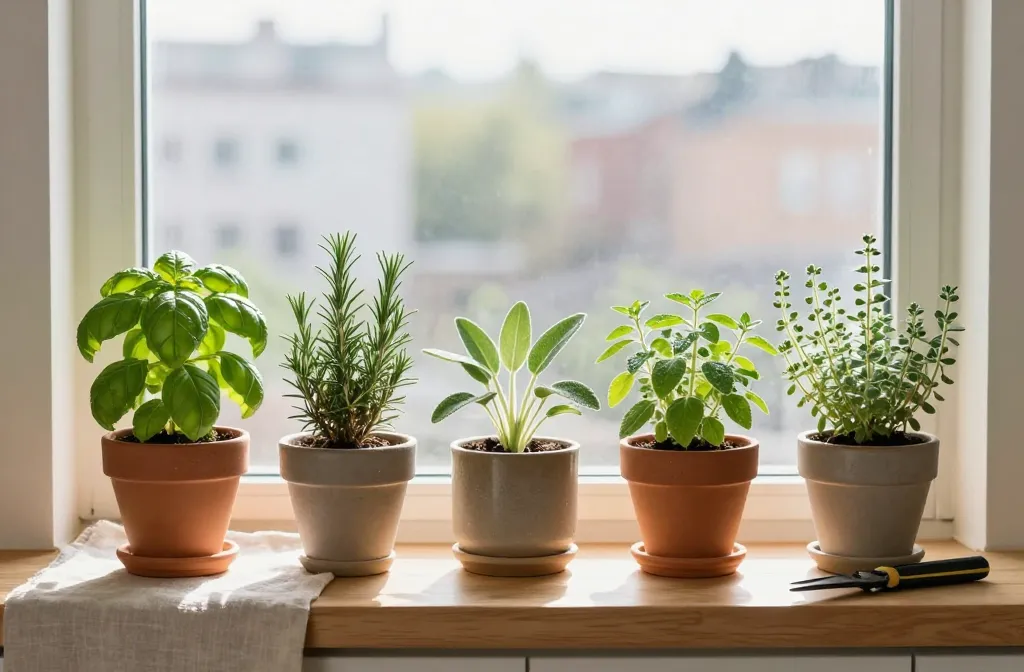
Your windowsill can moonlight as a flavor factory. A tiny tray of herbs turns weeknight pasta into chef-level magic and makes your place smell like a Mediterranean vacation. You don’t need a backyard or a green thumb—just sunlight, a few pots, and the willingness to snip what you eat. Ready to grow a mini produce aisle at home?
1. Sun-Kissed Stars: The Mediterranean Dream Team
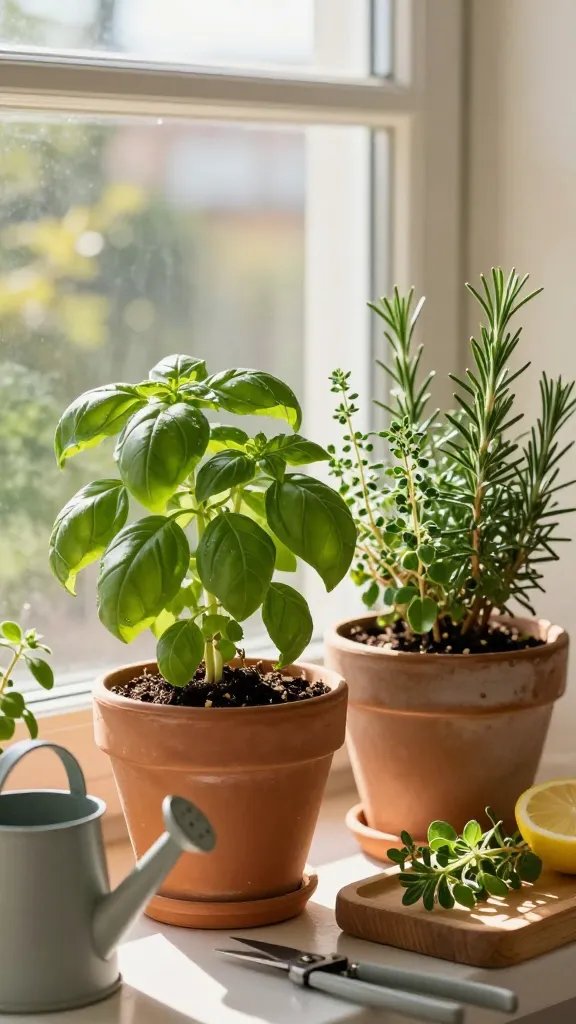
These herbs adore bright light, warm rooms, and a quick drink—then they want their roots to chill. If your window faces south or west, you’re basically giving them front-row seats at a sun concert. Expect big flavor, lush growth, and unlimited bragging rights.
Who’s In This Squad?
- Basil: Sweet, slightly peppery, the crown jewel for pesto and caprese.
- Oregano: Earthy and bold—pizza’s best friend.
- Thyme: Woodsy, lemony, and ridiculously versatile.
- Rosemary: Piney and robust—perfect for potatoes, breads, and roasts.
- Sage: Savory and cozy; hello, brown butter sauce.
- Marjoram: Oregano’s softer cousin with a floral twist.
Tips To Keep Them Thriving
- Light: 6–8 hours of bright sun. No sun? Use a small LED grow light, 6–8 inches above.
- Soil: Fast-draining potting mix. Add perlite if it stays soggy.
- Water: Let the top inch dry between waterings. Basil likes slightly more moisture; rosemary likes slightly less.
- Harvest: Snip frequently to prevent bolting. For basil, pinch above a pair of leaves to encourage bushiness.
Use this crew when you want immediate, restaurant-level flavor with minimal effort. They shine in everyday cooking and look gorgeous on the sill, too—seriously, it’s edible decor.
2. Fresh And Zesty: Bright Herbs That Wake Up Any Dish
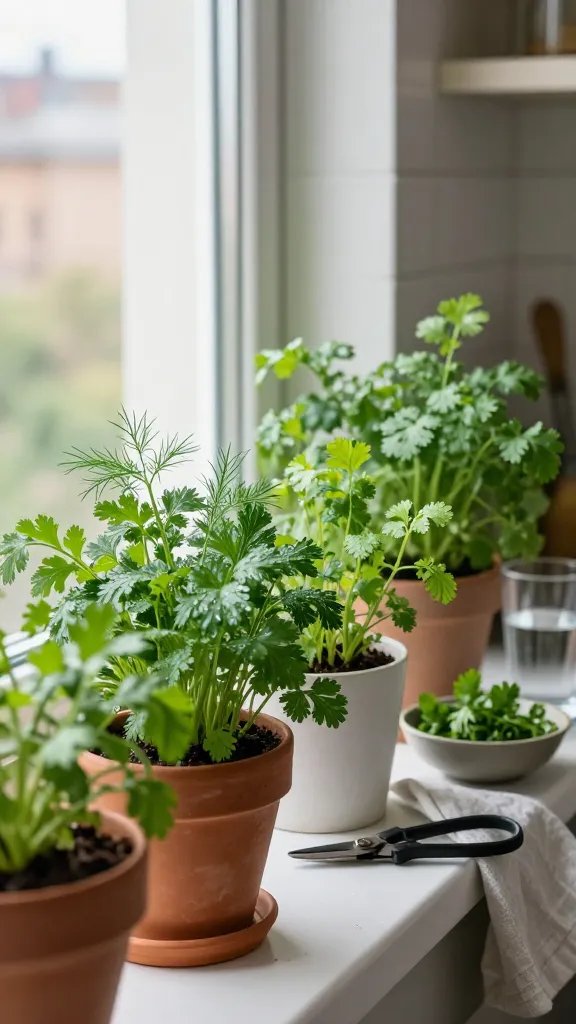
These herbs bring zing, lift, and brightness to everything from soups to tacos. They grow fast, forgive your learning curve, and keep producing when you harvest gently and often. If you love fresh, vibrant flavors, start here.
The Zest Pack
- Parsley (flat-leaf): Clean, slightly peppery, the backbone of chimichurri and tabbouleh.
- Cilantro: Citrusy and bold—tacos, salsas, pho. If it tastes like soap to you, skip it, IMO.
- Dill: Feathery, grassy, a natural with salmon, yogurt sauces, and pickles.
Windowsill Wisdom
- Light: 4–6 hours of sun works, but more equals better flavor.
- Containers: Wider, shallow pots let these herbs spread comfortably.
- Water: Keep evenly moist but never waterlogged. Cilantro sulks if it dries out too hard.
- Regrowth: Harvest outer stems first, leaving the center to keep pushing new growth.
Use these when your dish needs a pop—think garnish, finishing oil, or tossed into salads. They’re weeknight heroes and brunch MVPs.
Quick Flavor Moves
- Stir chopped dill into Greek yogurt with lemon and salt for instant sauce.
- Blend parsley, garlic, olive oil, and red wine vinegar for a speedy chimichurri.
- Toss cilantro into rice with lime zest for a fresh side in 30 seconds.
3. Fragrant Comforts: Cozy Herbs For Soups, Stews, And Breads
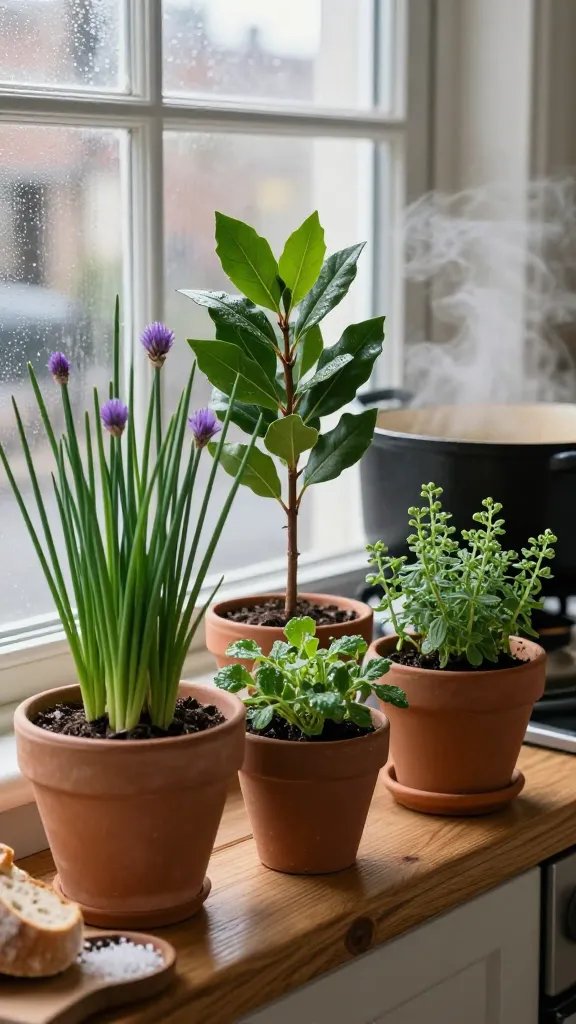
When you want your kitchen to smell like you know what you’re doing, these aromatics deliver. They bring depth, warmth, and a little drama to slow-cooked meals and fresh bakes. Bonus: most of them handle a slightly cooler windowsill like champs.
The Comfort Crew
- Chives: Mild onion flavor with adorable purple blooms if you let them flower.
- Bay (Bay Laurel): Subtle but essential for soups and sauces; grows into a tidy little tree.
- Savory (Winter or Summer): Peppery, thyme-adjacent, fantastic with beans and roasted veg.
Care & Feeding
- Light: 4–6 hours minimum; chives tolerate slightly less.
- Water: Keep evenly moist for chives. Bay prefers light moisture with excellent drainage.
- Pot Size: Bay needs a deeper pot and steady pruning to stay compact indoors.
- Harvest: Snip chives with scissors close to the base; pick bay leaves as needed (fresh or dried).
Use these when you want that homey, slow-simmered vibe without babysitting a recipe. They’re subtle but mighty—like the friend who always brings snacks and never makes it a big deal.
Flavor Hacks
- Stir chopped chives into softened butter with lemon zest for next-level toast.
- Add one bay leaf to lentils or stock—remove before serving.
- Rub savory with olive oil onto mushrooms before roasting. Thank me later.
4. The Citrus And Sweet Set: Bright, Floral, And Unexpected
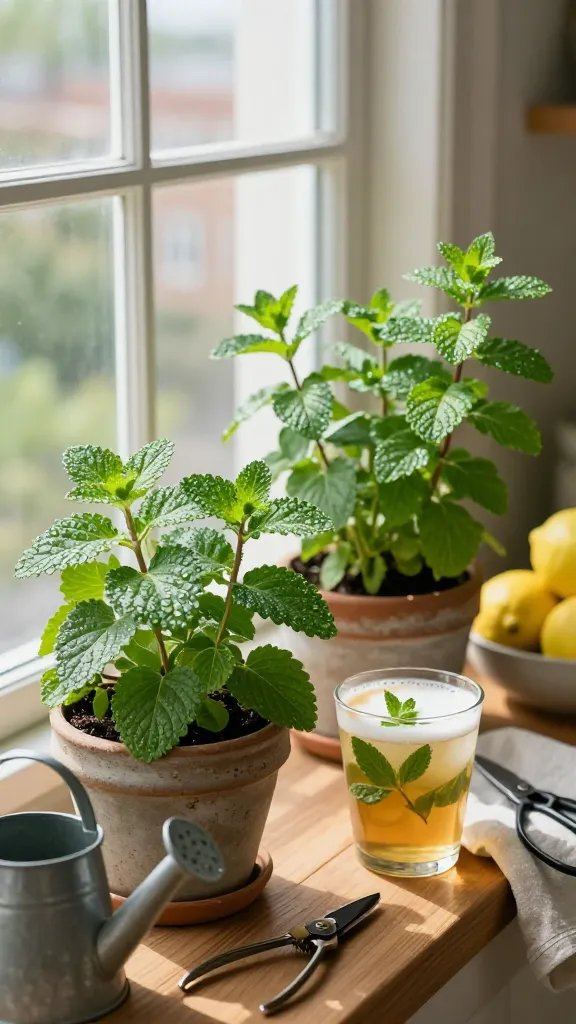
These herbs dance between savory and sweet. They love sunlight, release gorgeous aromas when you brush by, and make you feel like you live inside a fancy café. They’re also perfect for drinks and desserts—FYI, your latte wants in.
The Aromatic All-Stars
- Lemon Balm: Soft lemon scent, calming, dreamy in teas and fruit salads.
- Lemon Verbena: Pure lemon perfume—uses: syrups, sorbets, cocktails, marinades.
- Mint (Spearmint or Peppermint): Fresh and cooling. Mojitos, tabbouleh, iced tea—done.
Keep Them Happy
- Light: 4–6 hours minimum; verbena loves 6–8 to stay vigorous.
- Water: Mint likes more consistent moisture; lemon balm moderate; verbena slightly drier.
- Contain: Mint spreads like gossip. Give it its own pot so it doesn’t bully neighbors.
- Prune: Regular snips keep plants bushy and prevent legginess.
Use these herbs when you want to brighten desserts, whip up herby syrups, or add spa-water vibes to your day. They’re also great for calming teas and post-work wind-downs—seriously soothing.
Sweet & Sassy Uses
- Simmer equal parts sugar and water with lemon verbena leaves for a killer syrup.
- Muddle mint with lime and a pinch of sugar for a five-second mocktail base.
- Steep lemon balm in hot water with honey for bedtime tea.
5. Grow Like A Pro: Setup, Care, And Harvest Secrets
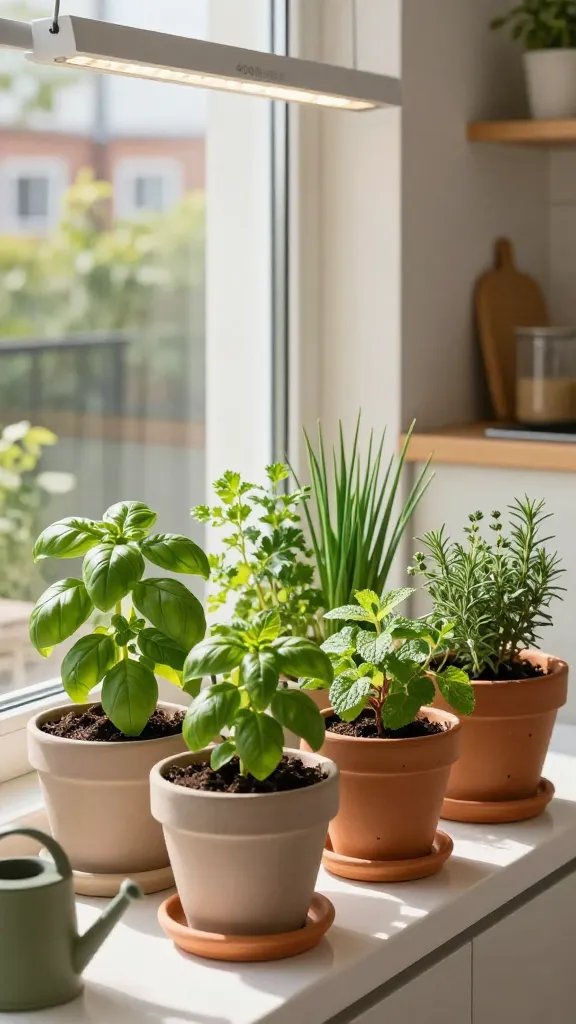
You’ve got the herbs. Now set up your windowsill so they thrive without drama. A few simple tweaks mean bigger harvests, fewer pests, and plants that don’t just survive—they flex.
Smart Setup
- Light Positioning: South- or west-facing windows rule. Rotate pots weekly so plants don’t lean.
- Supplemental Light: Use a small, full-spectrum LED (4000–6500K) 12–14 hours/day in winter.
- Containers: 4–6 inch pots with drainage holes. Trays underneath to catch excess water.
- Soil: High-quality potting mix, not garden soil. Add perlite for herbs that hate wet feet.
Watering Without Guesswork
- Finger Test: If the top inch feels dry, water slowly until it drains.
- Morning Watering: Reduces mold and fungus gnats.
- Humidity: Most herbs don’t need much, but avoid blasting them with heat vents.
Feeding And Pruning
- Fertilizer: Half-strength liquid fertilizer every 3–4 weeks during active growth.
- Prune For Shape: Pinch growing tips—especially basil and mint—to encourage bushy plants.
- Avoid Flowering: Remove flower buds on basil, mint, and lemon balm to keep flavor strong.
Pest Patrol (Because It Happens)
- Aphids/Spider Mites: Shower leaves gently, then spray with diluted neem oil if needed.
- Fungus Gnats: Let soil surface dry, add a layer of sand, or use yellow sticky traps.
- Airflow: A small fan on low keeps mildew at bay—subtle breeze, not hurricane.
Harvest Like You Mean It
- Never Strip Bare: Take no more than a third at a time so plants rebound quickly.
- Cut Above Nodes: For basil, mint, and lemon balm, cut just above leaf pairs to double new growth.
- Woody Stems: For rosemary and thyme, harvest tender tips, not thick, woody parts.
Dial in these basics and your herbs will reward you with flavor on demand. It’s the easiest way to cook better without trying harder—win-win.
Windowsill Herb Cheat Sheet
- Full Sun Lovers: Basil, rosemary, thyme, oregano, sage, lemon verbena.
- Moderate Light OK: Parsley, chives, dill, cilantro, lemon balm, savory.
- Thirstier Types: Basil, cilantro, mint, chives.
- Drier Preference: Rosemary, thyme, sage, oregano, lemon verbena, bay.
That’s your windowsill herb empire, ready to grow. Start with two or three favorites, get comfortable, then add more as you go—no need to plant the entire produce aisle on day one. Your future self will thank you when dinner tastes like you hired a private chef, and your kitchen smells like vacation.