
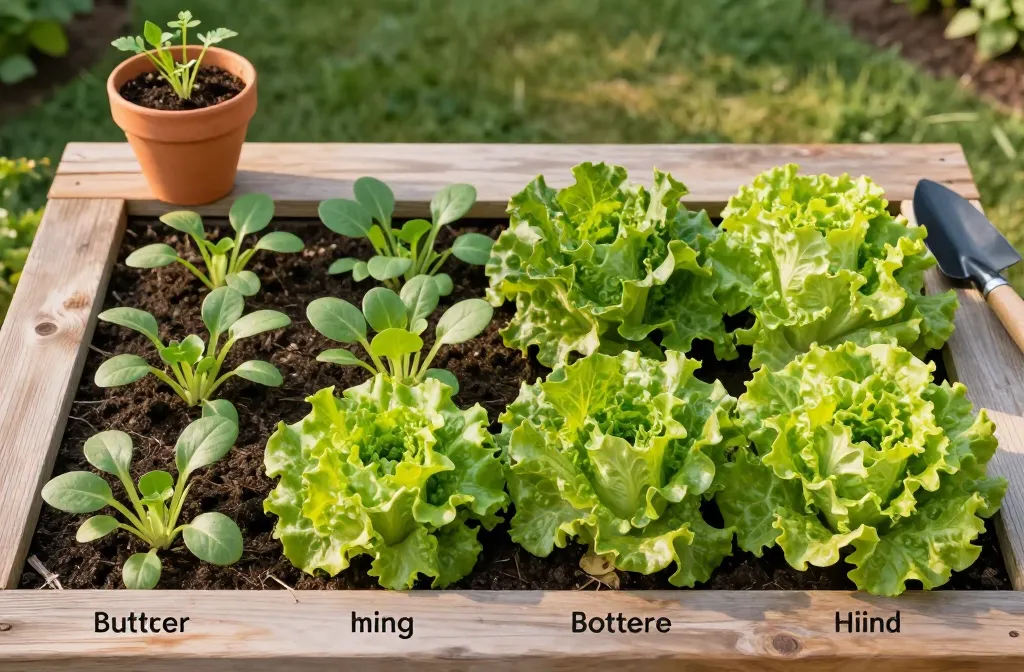
You want crunchy salads in January and buttery leaves in July? You can have them. Succession planting lets you harvest nonstop without growing a jungle you can’t eat in time. We’ll map out the timing, varieties, and tricks so your bowls stay full and your greens stay sweet. Ready to become the friend who “always” has lettuce? Let’s go.
1. Plan Like A Salad Architect
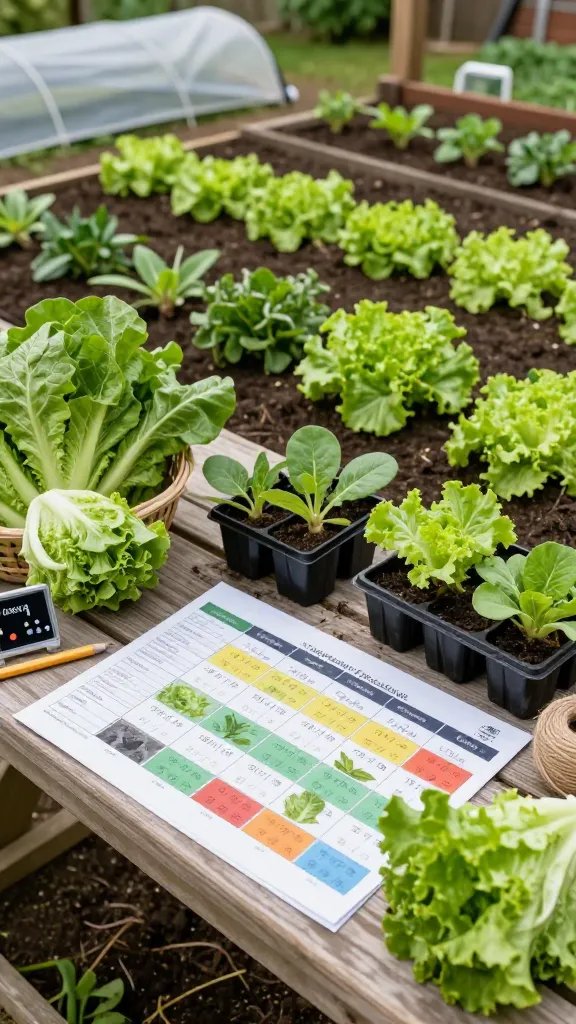
Great lettuce isn’t an accident—it’s a calendar superpower. When you plan your sowings in waves, you dodge the slump where everything bolts or nothing’s ready. A simple schedule turns your garden into a leafy conveyor belt.
Key Moves
- Map your seasons: Cool spring, warm early summer, hot high summer, cool fall, and protected winter.
- Set a cadence: Sow every 10–14 days in cool weather and every 7–10 days in heat.
- Stagger types: Mix cut-and-come-again baby greens with full heads for layered harvests.
Create a small rotation: one bed planted, one maturing, one harvested, one resting. Label rows with sowing dates and use a phone reminder so you don’t “forget.” FYI, you’ll feel like a genius every time a fresh batch is ready right as the last one runs out.
Quick Calendar (Adjust To Your Zone)
- Late Winter: Start seeds indoors for early transplants; sow cold frames.
- Spring: Sow every 10–14 days; favor crispheads and romaines.
- Early Summer: Short days-to-maturity loose-leaf types; use shade cloth.
- High Summer: Focus on heat-tolerant varieties and baby cuts.
- Fall: Ramp up again with romaine, butterhead, and mixes.
- Winter: Unheated tunnels/cold frames for hardy picks; harvest slowly.
Use this rhythm when you want consistent, reasonable harvests instead of boom-and-bust chaos.
2. Pick The Right Lettuce For The Right Season
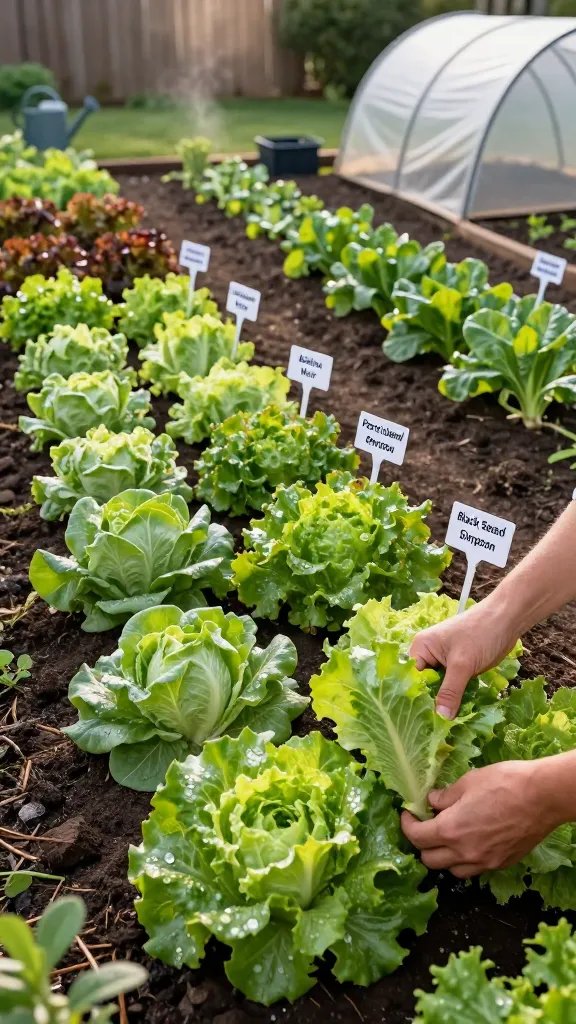
Lettuce isn’t one-size-fits-all. Some types bolt the minute the sun looks at them wrong; others shrug off frosts like a champ. Choose varieties that match your weather and your patience level.
Seasonal All-Stars
- Cool Season (Spring/Fall): Butterhead: ‘Adriana’, ‘Buttercrunch’. Romaine: ‘Little Gem’, ‘Parris Island Cos’. Loose-leaf: ‘Red Salad Bowl’, ‘Oakleaf’.
- Heat-Tolerant (Summer): Romaine: ‘Jericho’. Batavian/Summer Crisp: ‘Muir’, ‘Nevada’. Loose-leaf: ‘Black Seeded Simpson’ (quick baby cuts).
- Cold Hardy (Late Fall/Winter, Protected): Romaine: ‘Winter Density’. Loose-leaf: ‘Hyper Red Rumpled’. Specialty: ‘Valdor’ (greenhouse favorite), ‘North Pole’ (mild cold).
Mix textures for better salads and better insurance. If one type sulks, another thrives—no dramatic lettuce breakups needed.
What To Grow For Your Style
- Big head lovers: Stagger butterheads and romaines; transplant for uniform heads.
- Daily salad people: Sow a baby leaf mix weekly; cut at 21–30 days.
- Minimal fuss gardeners: Summer crisp types (Batavians) forgive uneven watering and heat.
Dialing in varieties means sweeter leaves, fewer bitter surprises, and harvests that actually match your cravings.
3. Sow Smart: Direct Seed, Transplant, Or Cut And Come Again
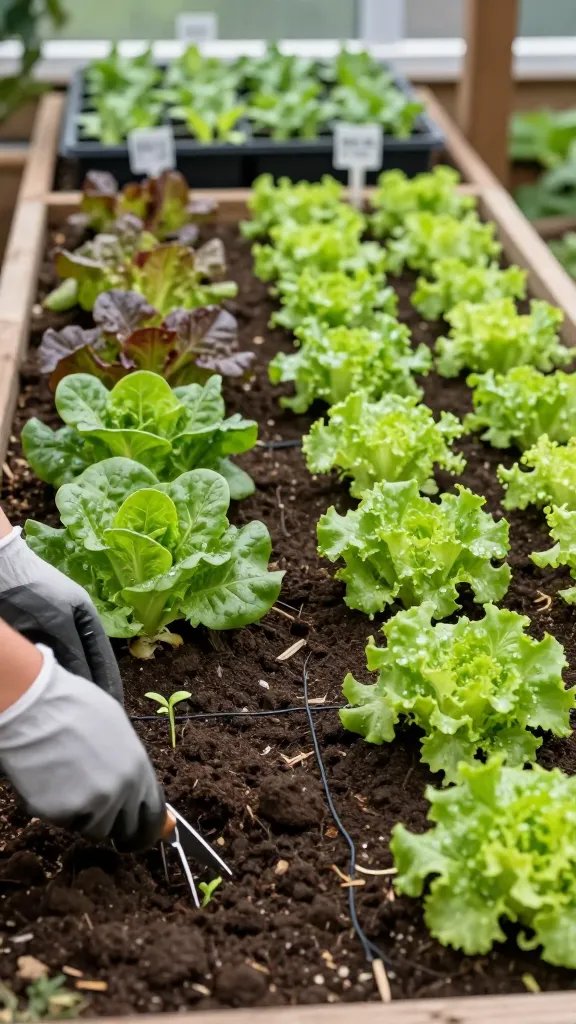
How you plant can make or break your rhythm. Direct seeding gets you speed, transplants give you control, and baby greens fill the gaps. Use all three to keep the conveyor belt moving.
Direct Seeding
- Best for: Baby leaf mixes, quick loose-leaf varieties.
- How: Shallow furrows (1/8–1/4 inch), dense row for baby cuts or 4–6 inch spacing for heads.
- Pro tip: In heat, germinate seeds indoors in a cool spot for 24–48 hours, then sow.
Transplanting
- Best for: Uniform heads and predictable timing.
- How: Start in cell trays, 2–3 seeds per cell, thin to the strongest. Transplant at 3–4 true leaves.
- Spacing: 10–12 inches for romaine/butterhead, 8–10 for loose-leaf.
Cut-And-Come-Again Baby Greens
- Harvest: First cut at 21–30 days, leave 1 inch to regrow.
- Second act: Regrowth gives another harvest in 10–14 days if temps cooperate.
- Blend idea: Mix lettuces with spinach, mustards, and arugula for punchy bowls.
Use transplants for reliability, direct seed for speed, and baby cuts to fill your salad bowl while heads mature. That combo keeps the fridge full and your patience intact.
Germination And Seed Handling
- Ideal soil temp: 55–70°F for fast, reliable germination.
- Heat hack: Pre-chill seeds in the fridge 2–3 days during summer to combat dormancy.
- Moisture: Keep the top 1/2 inch consistently damp until emergence; use a light mulch of vermiculite.
When you want consistent stands and fewer empty patches, sow shallow, keep it cool, and baby those seeds for the first week.
4. Beat Heat, Frost, And Pests Without Losing Your Mind
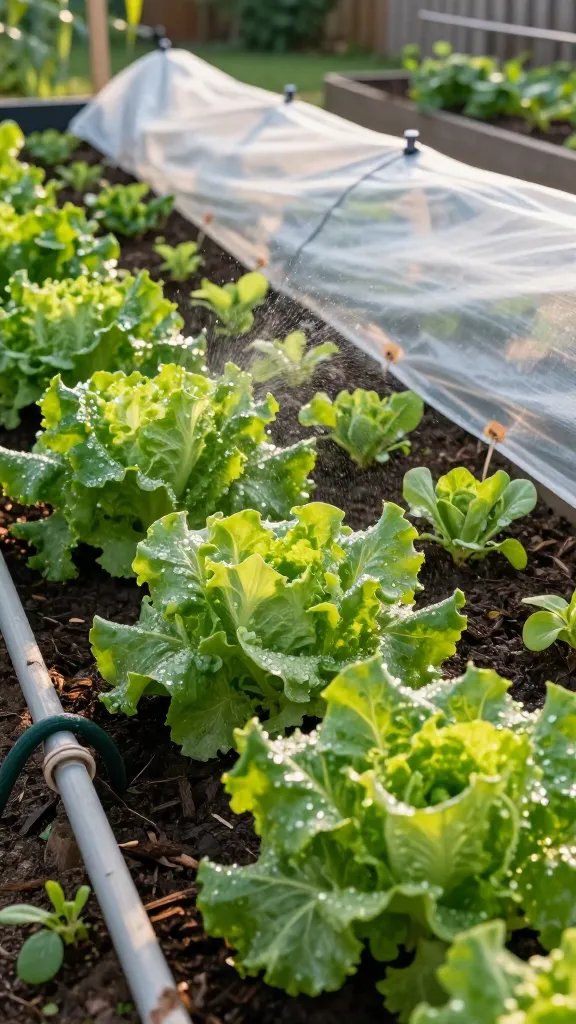
Lettuce loves mild weather, and your climate probably doesn’t. Good news: a few cheap tools level the playing field. You’ll protect flavor, prevent bolting, and keep hungry critters from snacking first.
Heat And Sun Management
- Shade cloth (30%): Stretch over hoops in summer; drops leaf temps and bitterness.
- Watering rhythm: Morning deep soak, then light midafternoon mist in heat waves.
- Mulch: Fine compost or leaf mold to keep roots cool and steady.
Cold Protection
- Row cover (0.5–0.9 oz): Adds 2–6°F; combine with low tunnels for real wintering.
- Cold frames/mini tunnels: Vent on sunny days to avoid stew-your-salad syndrome.
- Timing: Plant fall successions 4–8 weeks before first frost to size up before deep cold.
Pest Control
- Slugs/snails: Beer traps, iron phosphate baits, and copper tape around beds.
- Aphids: Blast with water, invite lacewings, and spray diluted neem or insecticidal soap.
- Cutworms: Collars around transplants; keep beds weed-free before planting.
Bitter Or Bolting Plants?
- Signs: Central stem elongates, leaves narrow or taste sharp.
- Fix: Harvest young, provide shade, water consistently, and switch to heat-tolerant types.
These little interventions keep your greens sweet and your sanity intact—seriously, a $15 shade cloth can save your entire July.
Soil And Feeding Basics
- Soil: Loose, well-drained, high organic matter; aim for pH 6.2–6.8.
- Fertilizing: Lettuce loves nitrogen. Side-dress with compost or fish emulsion every 2–3 weeks.
- Water: 1–1.5 inches per week; steady moisture avoids bitterness.
Healthy soil and steady water mean tender leaves and fewer complaints from your taste buds. IMO, it’s the easiest flavor upgrade.
5. Harvest Like A Pro And Keep The Train Rolling
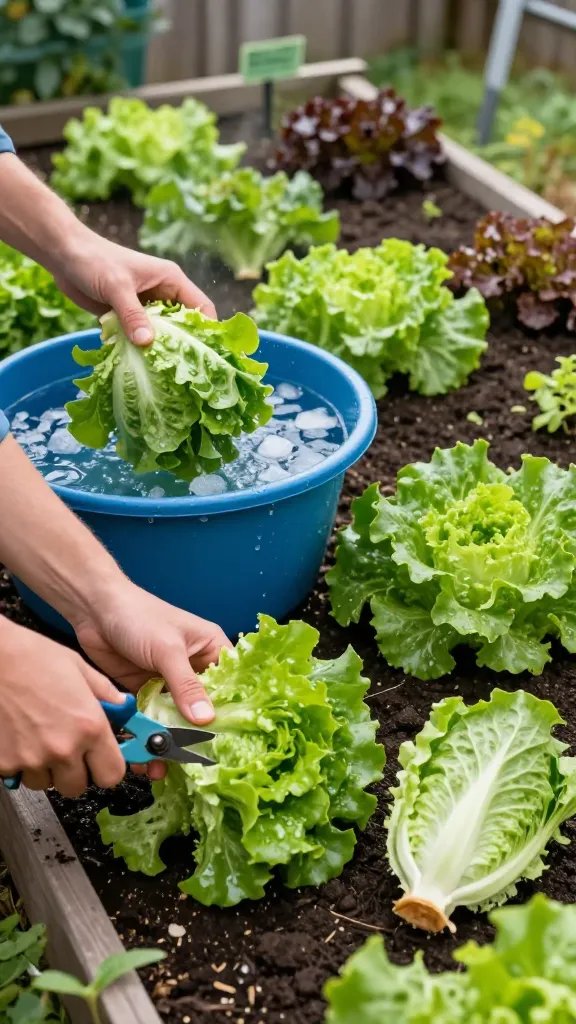
Perfect timing makes lettuce magical. Harvest right, and your leaves stay crisp, sweet, and Instagram-bright. Plus, you can re-seed the same spot and keep the salad parade going.
Harvest Techniques
- Cut-and-come-again: Shear baby greens above the crown; rinse and spin immediately.
- Outer-leaf method: For loose-leaf and romaine, pick outer leaves and let centers keep growing.
- Whole head: Cut at the base in the cool morning; dunk in cold water to stop wilting.
Post-Harvest Tips
- Hydro-cool: Submerge leaves in cold water 3–5 minutes, then spin dry.
- Storage: Airtight container with a paper towel; 34–38°F keeps crispness for a week+.
- No ethylene neighbors: Keep away from apples, tomatoes, and melons to prevent sliminess.
Keep The Cycle Going
- Re-seed immediately: After a harvest, scratch in compost and re-sow the same day.
- Bed rotation: Rotate families yearly to reduce disease; lettuce plays nice after peas or beans.
- Scale your sowings: Grow only what you’ll eat in 7–10 days, then plant again.
This rhythm gives you fresher salads, less waste, and a garden that always has something ready. Trust me, your future self will thank you every lunchtime.
Ready to grow the salad bar of your dreams? Start small, sow often, and lean on shade cloth and row cover when the weather gets dramatic. You’ll nail the timing faster than you think—and your lettuce will never ghost you again.