
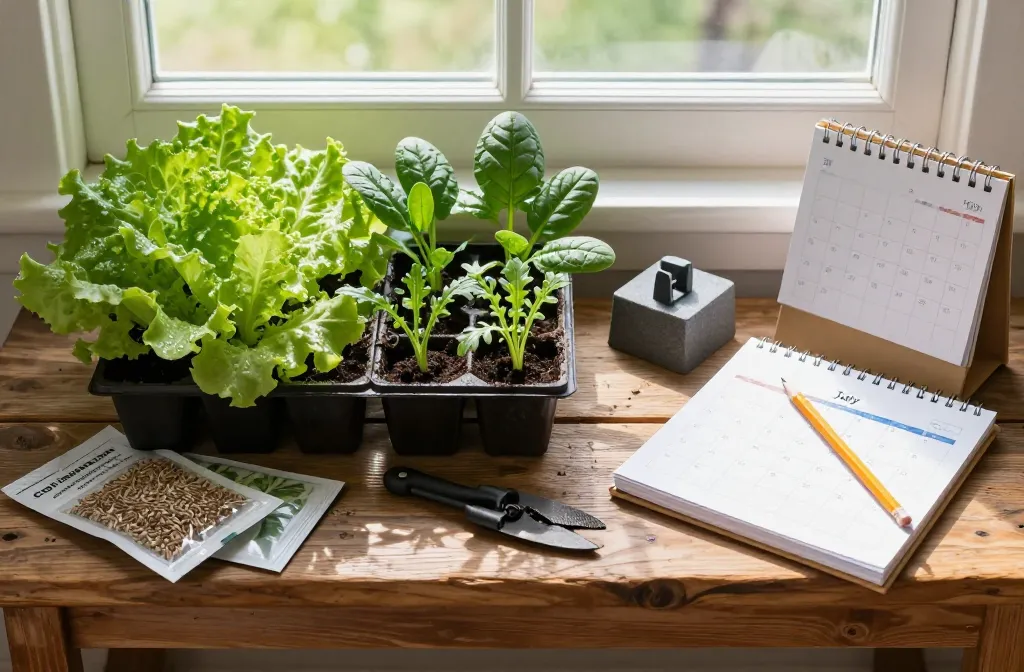
Fall gardens don’t start in fall—they start now. July is prime time to sneak in a second season by sowing cool-loving crops indoors, then planting them out as summer heat chills. Want crisp salads in October and sweet roots in November? Start these 12 MVPs inside this month and you’ll be munching when everyone else thinks the season is over.
You’ll dodge summer pests, beat midsummer scorch, and time your harvests perfectly with shorter fall days. Bonus: seedlings grown indoors look smugly perfect compared to their sun-fried outdoor cousins. Let’s get you set up for a ridiculously good fall harvest.
1. Leafy Legends: Lettuce, Spinach, And Arugula That Laugh At Frost
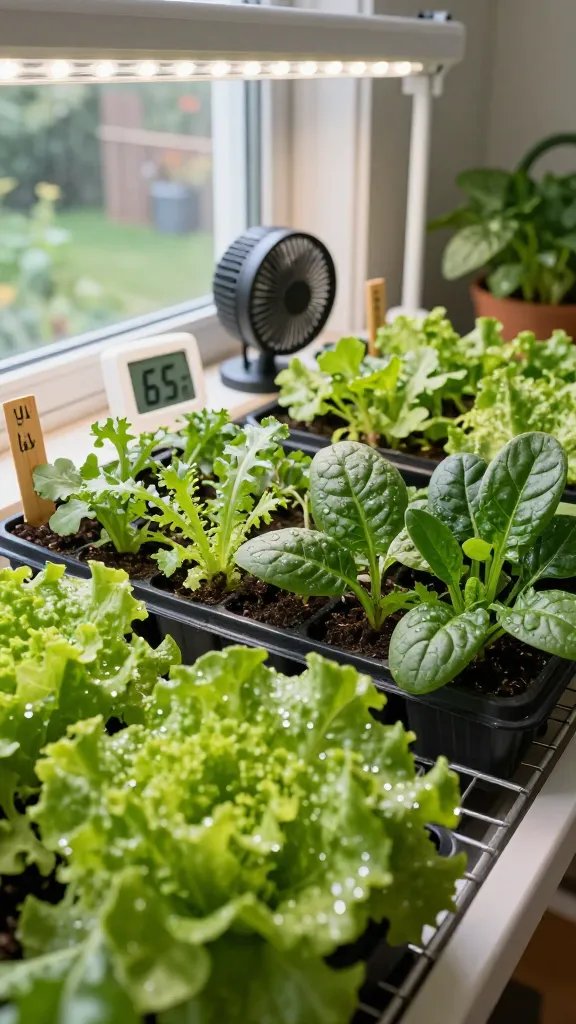
These greens love cool temps and short days, which makes them ideal for fall. Starting them indoors in July gives you sturdy transplants that won’t bolt the second you plant them out. You’ll get tender leaves with better flavor and fewer bugs—aka salad bowl domination.
Why Start Indoors?
- Heat shield: Germinate at controlled temps (60–70°F) to avoid failed sprouting in summer heat.
- Speed: Transplants shave 2–3 weeks off your timeline vs direct sowing later.
- Pest control: Bypass flea beetles and leaf miners that thrive mid-summer.
Quick Start Specs
- Lettuce: Sow 4–6 weeks before transplant; 10–14 days to size up. Spacing 8–10 inches, or tighter for baby cuts.
- Spinach: Sow 3–4 weeks before transplant. Prefers cooler germination (try a cool corner or basement).
- Arugula: Sow 2–3 weeks before transplant or direct seed later for speedy harvests.
Plant out in late August or early September once nights cool. Harvest as baby leaves in 20–30 days or let them bulk up. FYI: choose cold-tolerant varieties like ‘Winter Density’ lettuce and ‘Giant Winter’ spinach for maximum fall stamina.
Best for quick, repeat harvests and anyone who wants fast wins without fuss.
2. Brassica Dream Team: Broccoli, Cauliflower, Cabbage, And Kale (Yes, The Crowd Favorites)
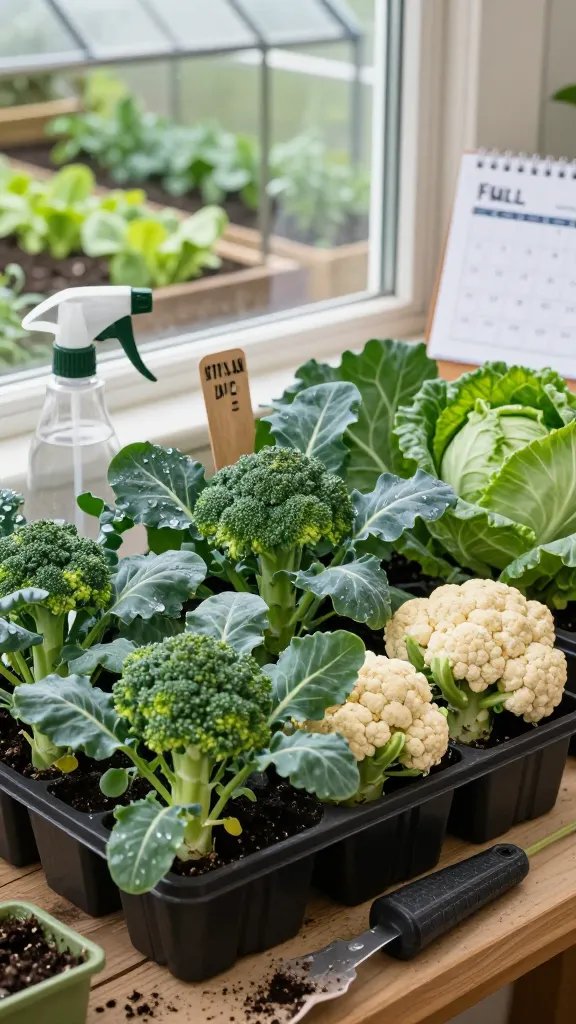
These classic fall crops deliver hefty yields and sweeter flavor after a light frost. Start them indoors in July to build strong roots, then transplant into cooling beds that won’t stress them out. You’ll dodge heat-triggered bolting and get those tight heads and glossy leaves you actually want.
Key Timing
- Broccoli & Cauliflower: Start 6–8 weeks before transplant; move out 60–80 days before first frost.
- Cabbage: 6–8 weeks before transplant; harvest in 75–100 days depending on type.
- Kale: 4–6 weeks before transplant; harvest baby leaves in 30 days, full size later.
Pro Tips
- Light matters: Give seedlings 14–16 hours of strong light to prevent leggy stems.
- Harden off: One week outdoors in shade-to-sun shifts toughens them up.
- Row cover: Use lightweight fabric right after transplant to block cabbage worms. Trust me, it’s a game changer.
- Varieties: ‘DeCicco’ broccoli for reliable side shoots, ‘Snow Crown’ cauliflower for speed, ‘Napa’ cabbage for quick fall slaws, ‘Winterbor’ or ‘Red Russian’ kale for frost sweetness.
These crops reward patience with big payoffs—perfect for meal prep and cozy fall dinners.
3. Root Royalty: Beets, Turnips, And Radishes For Candy-Sweet Crunch
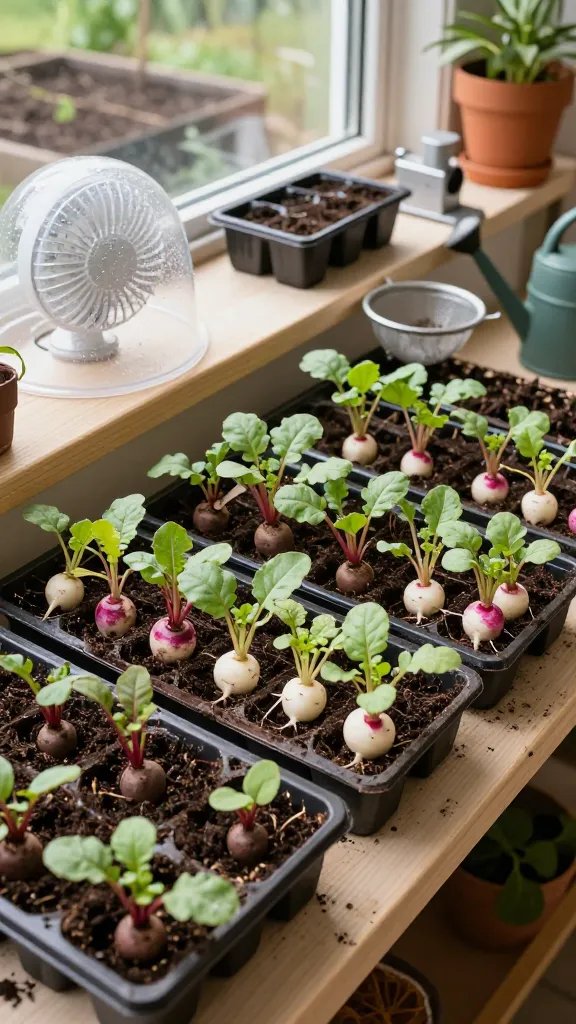
Roots grown into fall taste sweeter because cool temps push plants to store sugars. While you usually direct sow these, starting a tray indoors in July gives you a jump when garden space just opened up. That means uniform stands and fewer gaps caused by scorching soil.
What To Start Indoors (And How)
- Beets: Multi-germ “seeds” send up clusters—start 3–4 weeks before transplant in deep cells or soil blocks.
- Turnips: Baby salad types (like ‘Hakurei’) handle transplanting well; sow 2–3 weeks before.
- Radishes: Usually direct sow, but you can start 1–2 weeks in advance for a head start.
Transplanting Tricks
- Minimal root disturbance: Use plugs or soil blocks; plant gently at true leaf stage.
- Spacing: Beets 3–4 inches, turnips 4–6 inches, radishes 2 inches.
- Water well: Keep soil evenly moist to prevent woody roots or splits.
Harvest windows: radishes 22–30 days, turnips 35–45 days, beets 55–65 days. Bonus: beet greens and turnip tops make killer sautés—zero waste, all flavor.
4. The Soup Squad: Carrots, Parsnips, And Leeks For Deep, Cozy Flavor
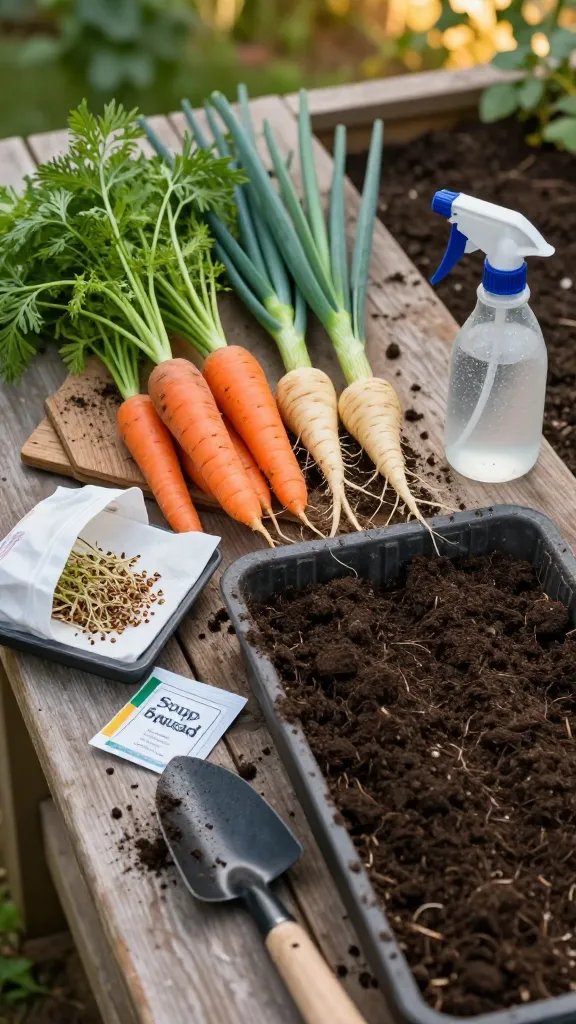
These are the cold-weather heroes you’ll crave when sweaters come out. They need time, so July is perfect for getting them established. While most people direct sow carrots and parsnips, strategic indoor starts or nursery hacks can massively boost success.
How To Handle Each
- Carrots: Best direct sown, but here’s the July trick—pre-sprout seeds on damp paper towels in a sandwich bag in the fridge for 5–7 days. Then sow into cool evening soil. Cover with a board for 3–4 days to hold moisture, then remove when you see sprouts.
- Parsnips: Germinate slowly. Use fresh seed only. Pre-sprout like carrots, then sow. Expect 100–120 days but worth it—the frost makes them taste like candy.
- Leeks: Excellent for indoor starts. Sow thickly in trays 8–10 weeks before transplant; plant out late August. Trim tops to 3 inches when leggy to strengthen stems.
Soil And Spacing
- Carrots/Parsnips: Deep, stone-free soil; keep top 1 inch moist until established.
- Leeks: Space 6 inches; plant in 6–8 inch deep dibbled holes, don’t backfill—rain will settle soil and blanch stems.
Use these for roasts, stews, and pureed soups. They store beautifully and make your kitchen smell like fall happiness, IMO.
5. The Flavor Finishers: Cilantro, Dill, Parsley, And Green Onions For Peak Freshness
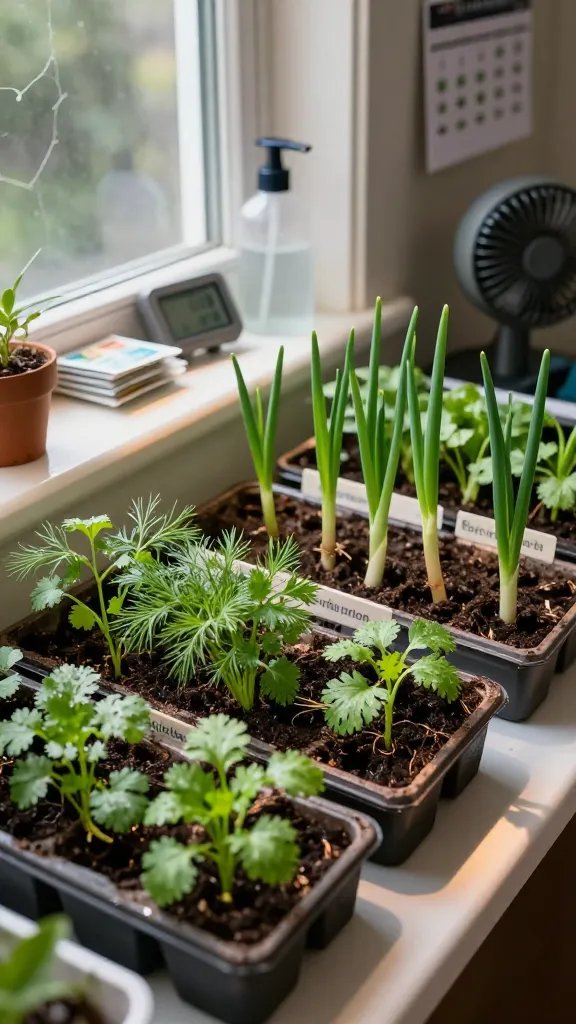
Cool-season herbs and bunching onions bring brightness to heavy fall meals. Starting indoors in July helps them skip germination drama and hit the garden strong as nights cool. You’ll get lush herbs that don’t bolt immediately and scallions that keep coming.
What To Start And When
- Cilantro: Sow 3–4 weeks before transplant. Likes cool roots and short days—perfect for fall salsa and curries.
- Dill: 2–3 weeks before transplant. Sensitive to root disturbance, so use plugs or soil blocks.
- Parsley: Slow germinator (can take 14–28 days). Start 8–10 weeks before transplant and be patient.
- Green Onions (Bunching): Start 6–8 weeks before transplant; clump 4–6 per hole for easy harvests.
Care Essentials
- Light: 14–16 hours under grow lights to prevent floppy stems.
- Moisture: Even watering; let trays dry slightly between sessions to avoid damping-off.
- Harvesting: Snip outer leaves first; for scallions, cut-and-come-again by trimming above the white base.
These add fresh zing to roasted veggies, soups, and grain bowls. They’re small-space friendly and make you feel like a pro chef with zero effort, seriously.
Starter Gear (If You Need A Quick Checklist)
- Seeds: Choose fall-tolerant or overwintering varieties when possible.
- Containers: 72-cell trays for small crops; 50s or soil blocks for roots/brassicas.
- Mix: Sterile seed-starting blend; pre-moisten to “wrung-out sponge” texture.
- Light: LED shop lights 2–4 inches above tops; raise as seedlings grow.
- Fertilizer: Mild, organic liquid feed at half-strength once true leaves appear.
- Row Cover/Hoops: For shade during late-summer transplants and frost protection later.
Transplant Timing Cheat Sheet
- Count backward from your average first frost date.
- Fast greens: Plant out 30–45 days before frost.
- Roots: 50–80 days before frost; radishes need less, beets more.
- Leeks/Parsley: Long season—get them out by late August for size.
li>Brassicas: 60–80 days before frost depending on variety.
Common Pitfalls (And Easy Fixes)
- Leggy seedlings? More light, closer to tops, and a gentle fan for sturdier stems.
- Heat-stressed transplants? Plant in late afternoon and shade with row cover for 3–4 days.
- Bug pressure? Cover brassicas immediately; remove only for weeding and watering.
- Slow growth in September? Short days—don’t panic. Harvest smaller, more often.
Ready to play the long game and win? July indoor starts set you up for crunchy, sweet, cool-weather perfection when everyone else is pulling tomatoes and calling it quits. Pick a few crops from each section, get those trays going, and future-you will be bragging about your fall harvests. Let’s make sweater-weather salads and soups a reality, shall we?