
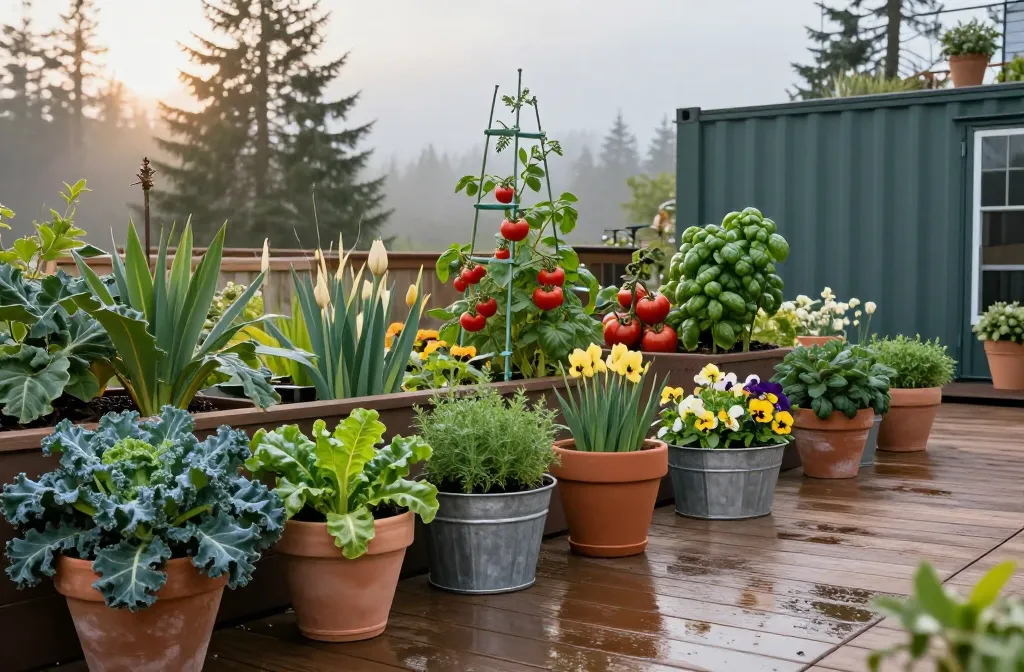
Your deck can crank out herbs, veggies, and flowers year-round in the Pacific Northwest—yes, even with drizzle and surprise sunbursts. Containers make it easy to control soil, dodge slugs, and pivot when the weather goes rogue. Here’s a month-by-month plan that keeps your pots productive and pretty, from January chill to July tomato glory. Let’s map it out so you always have something sprouting, blooming, or ready to eat.
1. Winter Wake-Up: January–February — Prep, Plan, And Sneak In Early Starts
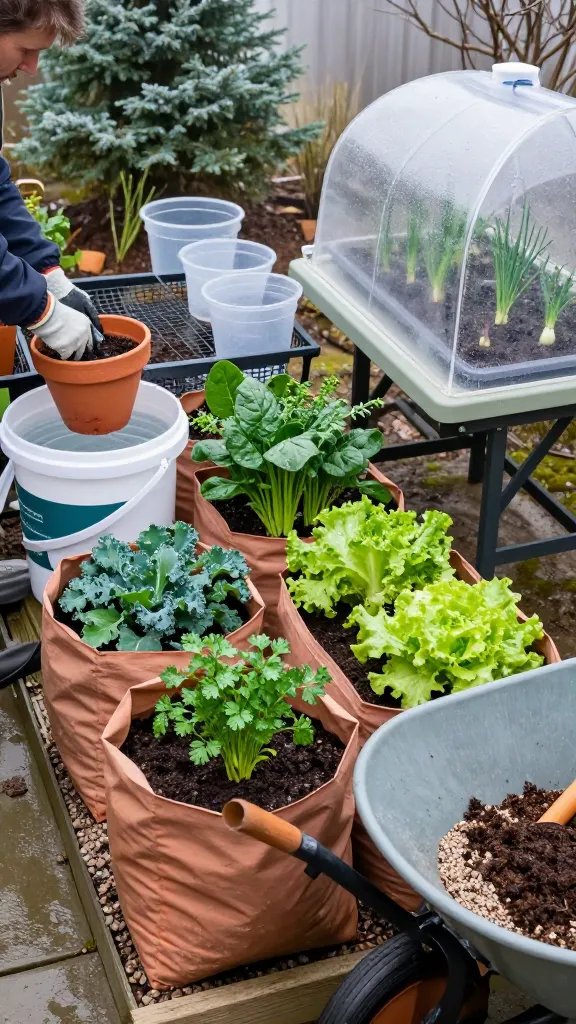
Winter doesn’t mean you sit out. You prep containers, build soil health, and start the earliest seeds inside. Think of this as laying the runway for spring takeoff.
Cold-loving herbs and greens tolerate PNW gloom like champs. You’ll set up your pots, fix drainage, and sneak in hardy transplants whenever the soil isn’t frozen.
Key Moves
- Clean and sanitize containers: Scrub pots, rinse, and soak in 1:9 bleach-water. Rinse again. Bye, fungal drama.
- Upgrade your potting mix: Use high-quality, peat-free potting soil plus 10–20% fine compost. Mix in slow-release organic fertilizer.
- Drainage is non-negotiable: At least one 1/2″ hole per 10″ pot. Elevate pots on feet to avoid soggy bottoms.
- Start seeds indoors (bright window or grow lights): Scallions, chives, parsley, cilantro, kale, and Swiss chard. If you’re impatient, seed arugula and mache in outdoor pots during mild spells.
- Plant now outdoors if temps stay above freezing: Lettuces (winter-hardy types), spinach, claytonia, and mache under a cloche or frost blanket.
Container Sizes That Work
- Greens/herbs: 10–14″ wide, 10–12″ deep
- Root crops: 14–16″ wide, 12–16″ deep
- Small fruits (blueberries, strawberries): 16–20″ wide, 16–20″ deep
Why now? You get a jumpstart, you avoid soggy garden beds, and you’re growing food when everyone else whines about rain. Win.
2. Spring Sprint: March–May — Sow, Transplant, And Build Momentum
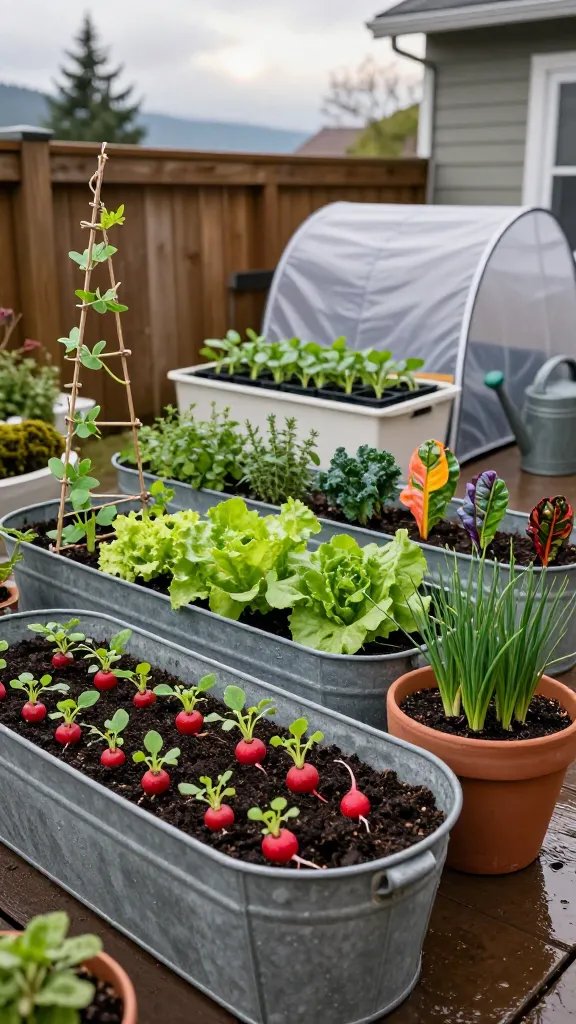
This is prime time. You’ll direct-sow cool crops while you harden off warm-season babies. The PNW can swing from sunny to moody fast, so you’ll keep covers handy.
Containers heat up more quickly than garden beds, which speeds growth. Just don’t let them dry out on those deceptive bright days.
What To Plant Each Month
- March:
- Direct sow: Peas (sugar snap), radishes, spinach, arugula, cilantro, dill.
- Transplant: Lettuces, kale, chard, perennial herbs (thyme, oregano, chives).
- Start indoors: Tomatoes, peppers, basil (use heat mat if you have one).
- Flowers for pollinators: Calendula, pansies, violas.
- April:
- Direct sow: Carrots (short varieties for pots), beets, turnips, spring onions.
- Transplant: Broccoli, cauliflower, more lettuces.
- Prepare warm-season containers: Add fresh compost and slow-release fertilizer. Set up sturdy stakes/cages now.
- May:
- Transplant after last frost risk (typically mid-May in low elevations): Tomatoes, peppers, eggplant, basil.
- Direct sow: Bush beans in larger tubs, more carrots and beets for staggered harvests.
- Strawberries: Plant or refresh runners in hanging baskets or wide bowls.
Tips
- Harden off seedlings for 5–7 days: shade to partial sun, then full sun.
- Support early: Install tomato cages and pea trellises at planting time.
- Frost insurance: Keep a floating row cover ready. The PNW loves a surprise cold snap.
By late spring you’ll harvest cut-and-come-again greens weekly. You’ll also feel smug about your peas. You earned it.
3. Summer Show-Off: June–August — Harvest Heavy And Keep The Party Going
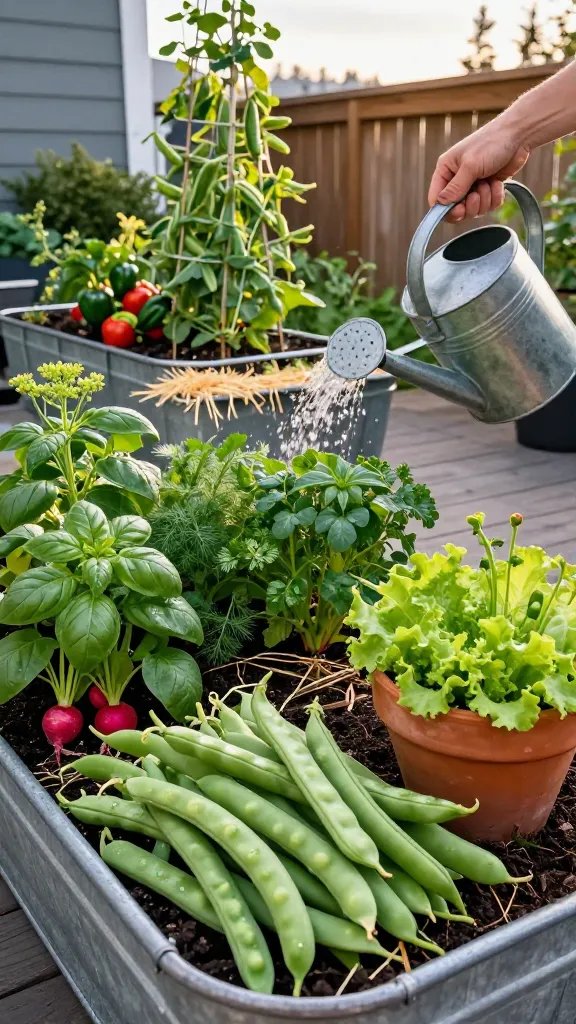
Now the containers hit beast mode. Warmth pushes growth, and your job is to water, feed, and harvest like you mean it. You’ll also sneak in successions to keep things fresh.
Sun plus containers equals fast results. But evaporation hits hard, so consistent watering and mulching matter, seriously.
Monthly Checklist
- June:
- Harvest: Peas, lettuce, spinach (before it bolts), herbs nonstop.
- Plant: More bush beans, basil, summer dill, and quick radishes in gaps.
- Mulch: Add 1–2″ of fine bark, straw, or shredded leaves to conserve moisture.
- July:
- Tomatoes hit stride: prune lightly for airflow, remove bottom leaves touching soil.
- Fertilize fruiting crops every 10–14 days with a liquid organic feed (tomato/veg blend).
- Sow late-season crops: More carrots, beets, and a fresh round of lettuce in dappled shade.
- August:
- Harvest peak: Tomatoes, peppers, beans, cucumbers (patio types thrive in pots).
- Start fall crops: Direct sow kale, chard, spinach; start cilantro again (it loves cooler nights).
- Deadhead flowers to keep pollinators visiting and blooms rolling.
Watering And Feeding
- Water deeply until it drains from the bottom. Morning is best.
- Frequency: Daily during heat, every 2–3 days on mild weeks. Use your finger test—top 1–2″ dry? Water.
- Fertilizer rhythm: Leafy greens monthly with balanced organic feed; fruiting crops biweekly with higher K.
Compact Varieties That Love Pots
- Tomatoes: ‘Sungold’, ‘Tumbling Tom’, ‘Oregon Spring’, ‘Totem’
- Peppers: ‘Gypsy’, ‘Lunchbox’, ‘Patio Snacker’ (cuke), ‘Shishito’
- Beans: Bush types like ‘Provider’ or ‘Tavera’
- Herbs: Basil, thyme, oregano, mint (contain that thug in its own pot)
Summer containers give maximum flavor per square foot. You’ll pick dinner five feet from your door. IMO, that’s living.
4. Fall Flip: September–November — Transition To Cool-Season Abundance
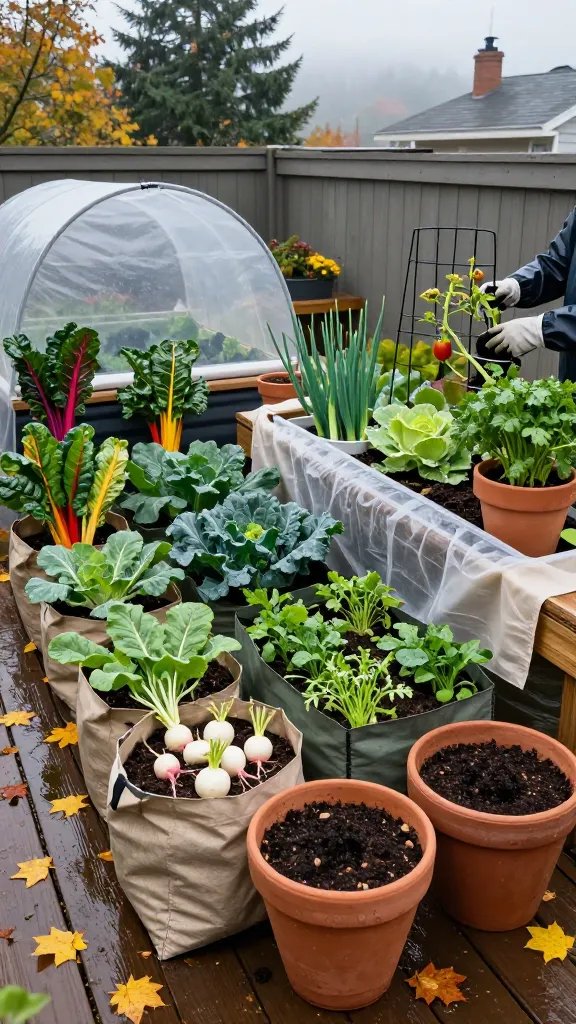
When nights cool, you pivot to greens, roots, and herbs that shrug off drizzle. This is the PNW’s secret season for containers.
You’ll pull tired summer crops, refresh soil, and plant for steady harvests until frost—and often beyond with a cover.
September
- Clear and refresh: Remove spent plants. Top off with 3–4″ of compost and remix.
- Plant/transplant: Kale, chard, cabbage, broccoli raab, green onions, parsley.
- Direct sow: Spinach, arugula, radish, Tokyo turnips, cilantro.
- Protect: Set up low hoops or stash frost cloth nearby for quick covers.
October
- Keep sowing spinach, mache, and claytonia for winter bowls.
- Pot up garlic in deep containers (10–12″ minimum). Plant cloves 3–4″ deep, 6″ apart.
- Add perennials like rosemary and thyme in larger pots so they root before hard cold.
November
- Mulch exposed soil with leaves or straw to buffer temperature swings.
- Fertilize lightly: A final organic feed for overwintering greens helps slow steady growth.
- Reduce water: Rain helps, but check under eaves and covered decks—dry pockets happen.
Easy Wins
- Cut-and-come-again lettuces keep producing when you harvest outer leaves.
- Cold-hardy rockstars: Mache, spinach, kale, parsley, chives—flavor actually improves with chill.
- Blueberries in pots: Plant two varieties (acidic mix, pH 4.5–5.5) for cross-pollination and fall color.
Fall containers feel low-effort and high-reward. You’ll get salads and sides while everyone else retires their garden. FYI: bragging rights included.
5. Year-Round Rhythm: December — Maintenance, Micro-Harvests, And Smart Gear
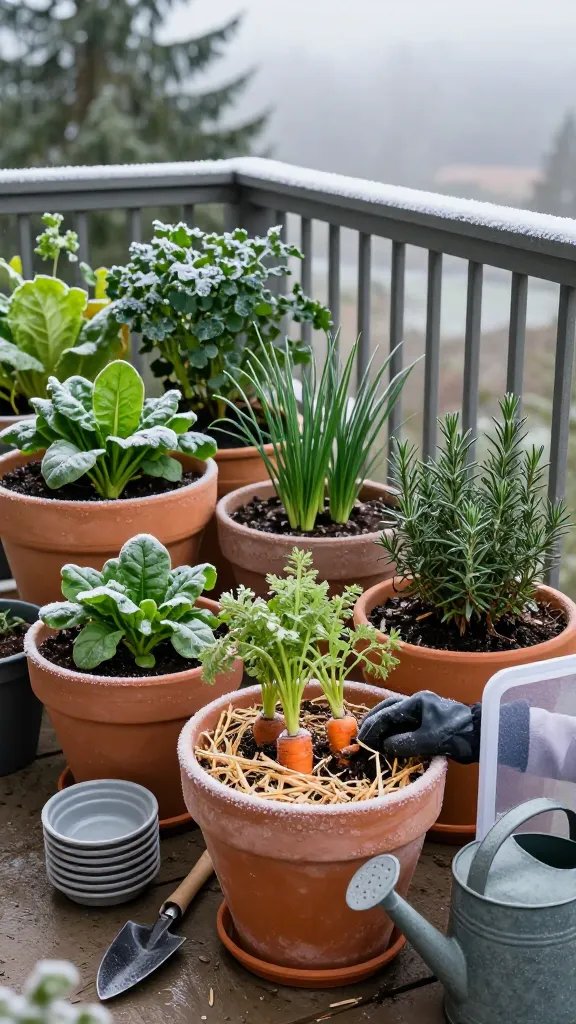
December is quieter, but you’re not done. You’ll still harvest herbs and hardy greens, protect pots, and prep for the next cycle.
Healthy containers last longer and perform better. A little care now saves you money and headaches later, trust me.
Winter Harvest Bingo
- Pickable now: Mache, spinach, kale tips, parsley, chives, thyme, rosemary.
- From storage: Carrots and beets kept in the pot under mulch—pull as needed on mild days.
Maintenance Checklist
- Drainage check: Clear saucers; never let pots sit in standing water.
- Wind-proofing: Cluster pots against a wall, strap tall cages, and move delicate containers under cover.
- Soil health: Top-dress with 1–2″ compost around perennials and overwintering beds.
- Tool refresh: Clean pruners, replace worn gloves, and label seed bins. Future you will applaud.
- Seed audit: Make a list of what you loved (Sungold, obviously) and what to skip.
Gear That Makes It Easier
- Floating row cover (0.5–0.9 oz): For frost dips and pest pressure.
- Self-watering planters: Game changer for vacations and heat spikes.
- Lightweight grow bags (10–20 gallons): Great drainage, easy storage, roots love the air pruning.
- Wireless moisture meter or the classic finger test: Either way, avoid overwatering.
With a little protective gear and a compost top-up, your December garden still delivers flavor and keeps momentum for spring.
Monthly Cheat Sheet (At-A-Glance)
- January–February: Clean pots, build soil, start hardy herbs/greens indoors, sow mache/spinach outdoors under cover.
- March: Sow peas, radishes, greens; transplant lettuces and herbs; start tomatoes/peppers indoors.
- April: Sow carrots and beets; set brassicas; prep warm-season containers and supports.
- May: Plant tomatoes, peppers, basil; start beans and cukes; hang strawberries.
- June: Harvest greens, sow successions, mulch, and feed.
- July: Peak harvest; prune for airflow; sow late crops in shade.
- August: Keep feeding; start fall greens; deadhead flowers.
- September: Refresh soil; plant fall crops; set up frost covers.
- October: Sow spinach/mache; plant garlic; add perennials.
- November: Mulch, water less, protect from wind; light feeding.
- December: Harvest hardy herbs/greens; maintain gear; plan next year.
Smart Combos For Containers
- Salad Bowl: Cut-and-come-again lettuces + arugula + chives. Harvest weekly.
- Salsa Tub: Patio tomato + jalapeño + cilantro (re-sow cilantro mid-summer).
- Shady Edge: Mint (own pot!) + parsley + mache for cooler spots.
- Pollinator Party: Lavender, calendula, alyssum around your veg pots for better fruit set.
<liPizza Pot: Basil + oregano + thyme + dwarf tomato. Aromatic and compact.
Pest And Problem Solver
- Slugs/snails: Copper tape bands or iron phosphate bait. Elevate pots.
- Aphids: Blast with water, then introduce ladybugs or use insecticidal soap.
- Powdery mildew (hello, August): Improve airflow, prune, water soil not leaves, remove worst leaves.
- Blossom end rot: Keep moisture consistent and use a balanced fertilizer; avoid extreme dry/wet cycles.
- Bolting cilantro/spinach: Re-sow in part shade and cooler months. It’s not you, it’s the heat.
Sun And Microclimate Hacks
- Chase the sun: Move pots seasonally—south-facing in spring, slight afternoon shade in peak summer.
- Heat lovers: Park tomatoes/peppers near a south-facing wall for reflected warmth.
- Cool lovers: Tuck greens behind taller pots for dappled shade in July–August.
- Breezy balconies: Use heavier ceramic or weighted grow bags; stake early.
Soil Reuse, Without The Yuck
- Annuals: Refresh with 30–50% new mix + compost each season; add organic fertilizer.
- Disease issues: Don’t reuse that soil for nightshades (tomatoes/peppers) next year. Move it to flowers or herbs.
- Perennials in pots: Top-dress annually; full repot every 2–3 years.
Ready to turn your patio into a four-season buffet? This schedule keeps your Pacific Northwest container garden humming along with minimal guesswork and maximum payoff. Start small, plant what you actually eat, and tweak as you go—your future self (and your dinner plate) will be thrilled.