
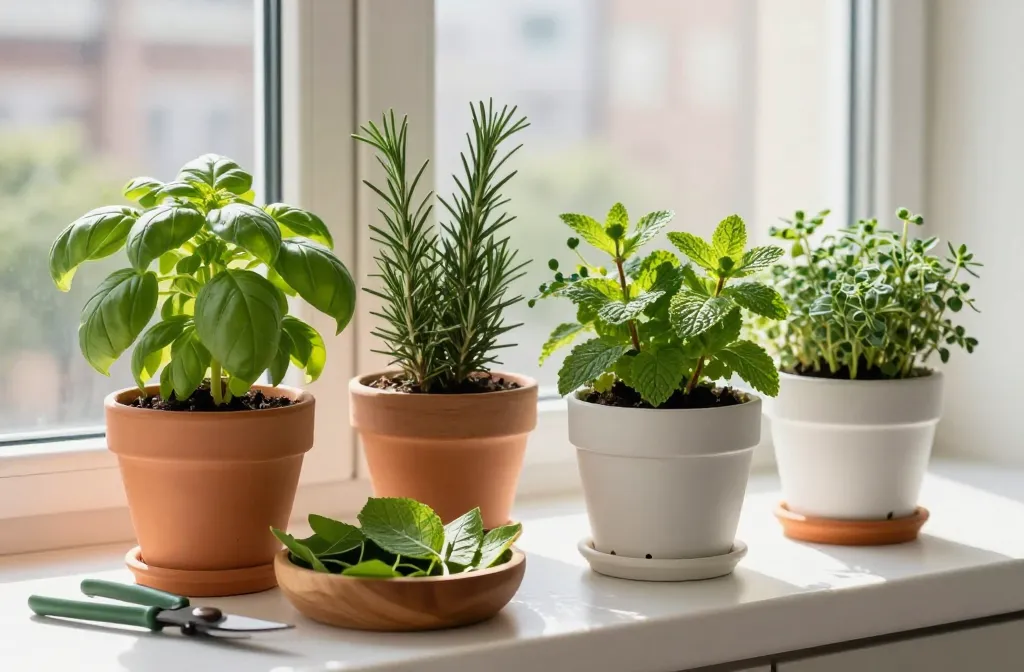
Craving fresh flavor without a garden? You can grow a mini spice rack right on your windowsill. These five plants thrive in pots, pump out intense aroma, and make grocery-store herbs taste like cardboard. Ready to snip your own seasoning—no backyard, no excuses?
We’ll keep it simple, give you the real talk, and show you exactly how to keep these little flavor factories alive. You’ll get tips, tools, and how to harvest so your plants keep giving. Let’s pot up your pantry.
1. Basil: The Instant-Upgrade Leaf You’ll Use On Everything
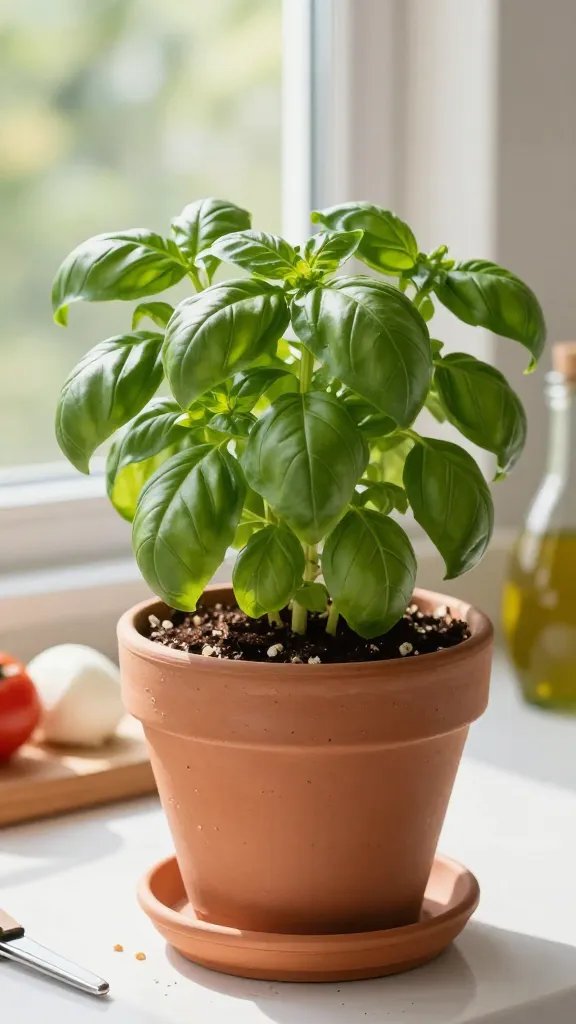
Basil turns basic meals into “wow” meals fast. It grows quickly, loves containers, and produces like a champ when you treat it right. Pesto? Caprese? Tossed on eggs? Basil makes you look fancy with minimal effort.
It needs warmth, bright light, and regular snips to stay bushy. If you’ve only met sad, wilted basil from the store, prepare for redemption.
Container And Soil
- Pot: 8–12 inches wide with drainage holes
- Soil: Light, airy potting mix with compost; avoid heavy garden soil
- Bonus: Add a pinch of slow-release organic fertilizer
Light And Water
- Light: 6–8 hours of direct sun or a bright grow light
- Water: Keep evenly moist, not soggy; water when the top inch feels dry
- Air: Warmth matters—keep above 60°F at night
How To Harvest
- Pinch above a leaf pair to encourage branching—never pluck single giant leaves from the bottom only
- Remove flower buds ASAP to keep flavor sweet
- Harvest small amounts frequently; the more you snip, the more it grows
Use it when you want bright, sweet, peppery flavor—pasta, pizza, Thai curries, or blended with olive oil and lemon for a fast drizzle. IMO, basil earns a permanent pot on any sunny sill.
2. Cilantro: The Love-It-Or-Leave-It Herb That’s Totally Worth It
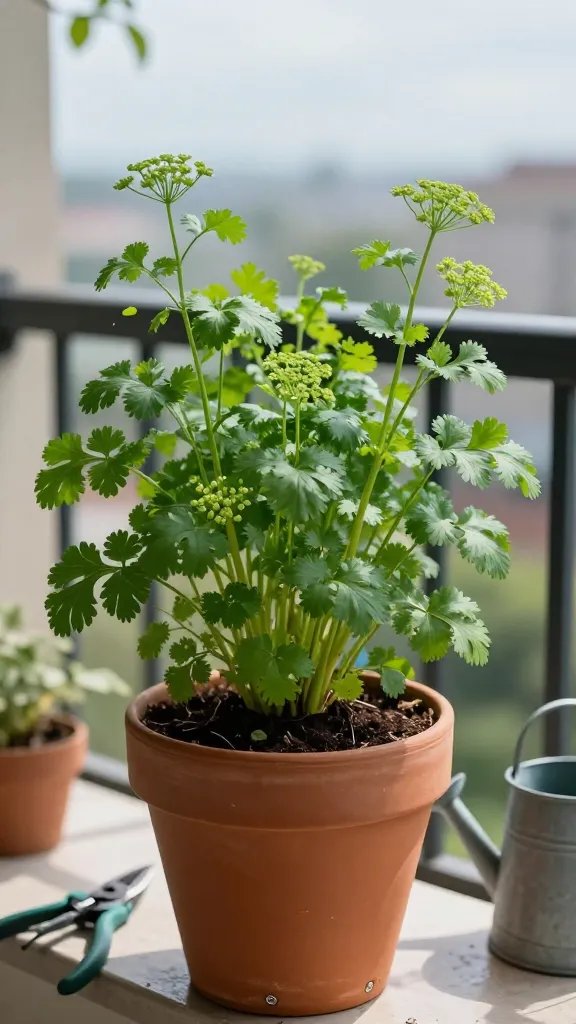
Yes, cilantro divides families. But if you’re a fan, growing your own beats every limp bunch you’ve ever bought. It bolts when it gets hot, so treat it like your cool-weather, fast-use plant. No drama if it flowers—those seeds are your next spice win: coriander.
It grows fast in pots, gives you leaves, stems, and seeds, and doesn’t need a huge container. The trick? Keep it cool and snip often.
Container And Soil
- Pot: 8–10 inches deep for taproot comfort, with solid drainage
- Soil: Rich, well-draining potting mix; add compost for steady growth
- Tip: Sow seeds directly in the pot—they don’t love transplanting
Light And Water
- Light: Bright sun, but give afternoon shade in hot climates
- Water: Keep consistently moist; don’t let it dry out completely
- Temperature: Best around 50–70°F; grows slower but tastier in cool weather
How To Harvest And Get Coriander
- Cut outer leaves first, leaving the center to keep producing
- For continuous harvest, sow a fresh batch every 3–4 weeks
- Let some plants bolt—collect the round seeds (coriander), dry them, and grind
Use it when you want bright, citrusy lift in salsas, pho, curries, and salads. FYI: even if your cilantro bolts, those coriander seeds taste warm and lemony in rubs and roasted veg. Zero waste, maximum flavor.
3. Mint: The Overachiever That Thrives On Neglect (Almost)
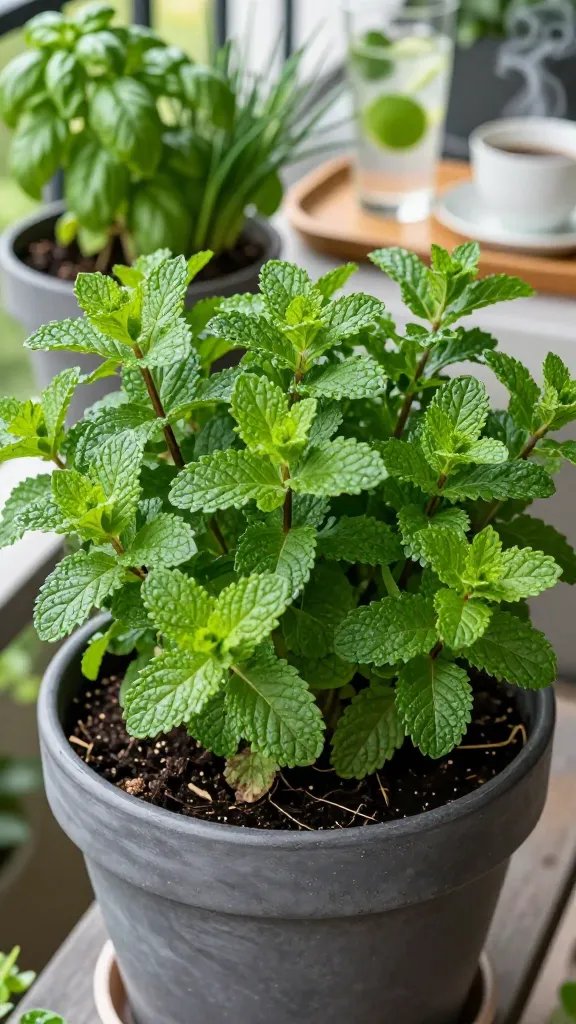
Mint acts like the friend who shows up early and brings snacks—it’s generous, forgiving, and a little wild. In a pot, you control the chaos and get endless mojitos, tea, and summer salads. Choose a variety you love: spearmint for classics, peppermint for bold and menthol-y.
It tolerates partial shade and bounces back fast from heavy harvests. Just don’t let it invade other pots like it pays rent there.
Container And Soil
- Pot: 10–12 inches wide; mint spreads via runners
- Soil: Moist, loamy potting mix with good drainage
- Note: Keep mint in its own container to prevent takeover
Light And Water
- Light: 3–6 hours of sun; afternoon shade helps in hot climates
- Water: Likes consistently moist soil; droop = thirsty
- Air: Tolerates a range, but keep it away from hot, dry vents
Harvest And Care
- Snip stems just above a leaf node to encourage bushiness
- Cut back hard a few times a season—new growth tastes best
- Fertilize lightly; too much = bland flavor
Use it when you want fresh, cool lift—tabbouleh, yogurt sauces, spring rolls, cocktails, and desserts. Seriously, fresh mint turns plain water into spa water and you into “that host.”
4. Rosemary: The Woody Wonder You’ll Use Year-Round
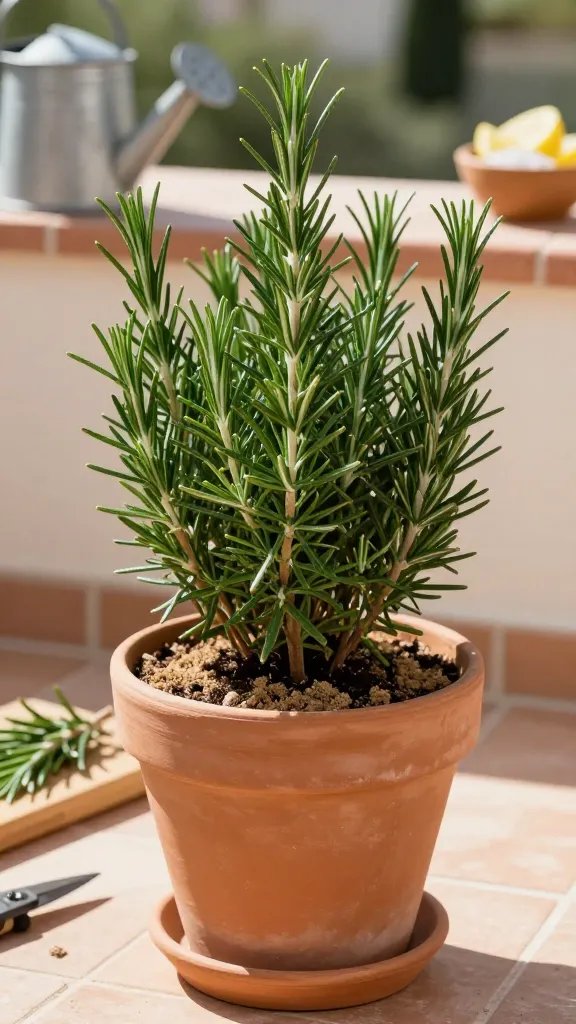
Rosemary is your hardy, drought-tolerant, flavor-packed shrub that looks like a tiny pine tree and smells like a Tuscan holiday. It thrives in pots, loves sunshine, and forgives missed waterings. Plus, it doubles as decor—instant Mediterranean vibes.
It grows slowly at first, then becomes a long-term kitchen staple. Treat it like a succulent with better manners.
Container And Soil
- Pot: 10–14 inches with excellent drainage (terracotta is ideal)
- Soil: Sandy, well-draining mix (cactus mix + compost works great)
- Drainage: Elevate the pot on feet or pebbles to avoid wet feet
Light And Water
- Light: 6–8 hours of direct sun; a south-facing window is perfect
- Water: Let soil dry out between waterings; water deeply, then drain
- Air: Likes airflow; avoid stagnant, humid corners
Harvest And Flavor Tips
- Snip young, flexible stems for better flavor
- Trim lightly all over rather than scalping one branch
- Infuse stems in oil or butter, or strip leaves and chop for rubs
Use it when you want savory, piney oomph—potatoes, grilled chicken, focaccia, and roasted veggies. It’s your winter MVP when softer herbs take a nap.
5. Thyme: The Tiny-Leaf Powerhouse That Earns A Permanent Spot
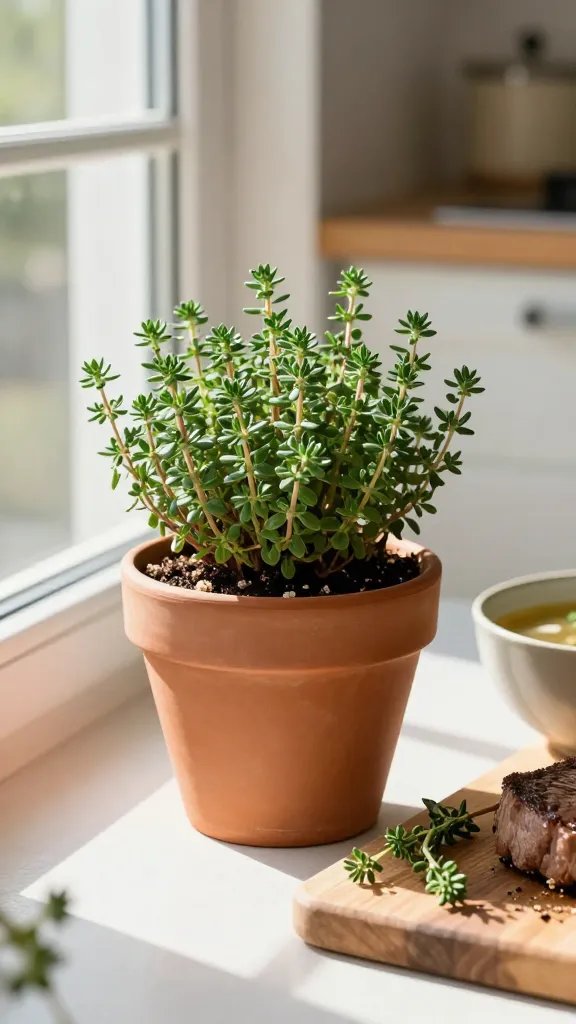
Thyme gives you huge flavor in tiny leaves and thrives in compact pots. It loves sun, handles drought, and sneaks into everything from soup to steak. If you want a plant that looks refined and acts tough, thyme checks every box.
It stays evergreen in mild climates and dries beautifully, so you get year-round seasoning. And those delicate stems? They’re hard to overuse—sprinkle with confidence.
Container And Soil
- Pot: 8–10 inches, shallow is fine; great for window boxes
- Soil: Gritty, well-drained mix—think Mediterranean hillside vibes
- Companions: Pairs well with rosemary and oregano in one pot (all like it dry)
Light And Water
- Light: 6+ hours of sun
- Water: Let the top 1–2 inches dry before watering
- Fertilizer: Go easy—too much and flavor drops
Harvest And Kitchen Use
- Snip sprigs from the tips; new growth follows
- Strip leaves by pinching and pulling opposite the stem growth
- Add early in cooking to release aroma, or finish with fresh for brightness
Use it when you want earthy, lemony depth—pan sauces, roasted mushrooms, beans, and compound butter. FYI, thyme plus lemon and garlic turns simple chicken into “I cooked, you’re welcome.”
Quick Setup Guide: Gear And Basics
- Pots With Drainage: Non-negotiable. If your pot has no hole, it’s a vase.
- Quality Potting Mix: Use mixes labeled for containers; skip garden soil in pots.
- Light Source: Sunny sill or a small LED grow light (12–14 hours for most herbs).
- Watering Routine: Check soil with your finger; water deeply, then let excess drain.
- Fertilizer: Light, organic feed every 3–4 weeks during active growth.
Pro Tips For Pot-Grown Spices
- Rotate The Pot: Quarter-turn weekly so plants grow evenly and don’t lean.
- Prune With Purpose: Regular pinching = bushy plants and steady harvests.
- Group By Needs: Basil and cilantro like more water; rosemary and thyme prefer drier soil. Mint sits in its own kingdom.
- Watch For Pests: Aphids and spider mites hate a monthly shower and a dab of insecticidal soap.
- Seasonal Shuffle: Move pots to chase sun in winter; protect basil and cilantro from cold drafts.
How To Dry Or Preserve Your Harvest
- Air-Dry: Tie small bundles of thyme or rosemary; hang in a dry, dark spot for 1–2 weeks.
- Freeze: Chop basil or cilantro, pack into ice cube trays with olive oil or water; pop out cubes for instant flavor.
- Infusions: Steep rosemary sprigs in olive oil for 1–2 weeks; strain and drizzle on everything.
Common Oops Moments (And Fixes)
- Leggy Basil: Not enough light. Move it closer to a window or add a grow light.
- Yellowing Leaves: Overwatering or poor drainage. Check the pot’s hole and ease up on the watering can.
- Mint Collapse: Dried out too long. Water thoroughly and cut back; it often rebounds.
- Cilantro Bolting Immediately: Too hot. Provide shade in afternoons and sow again.
Ready to taste the difference? These five “spice rack” plants don’t just survive in pots—they thrive, and they make every meal taste fresher, brighter, and more you. Start with one, then build your mini flavor farm one container at a time. Trust me, once you snip from your own plants, supermarket bundles won’t cut it again.