
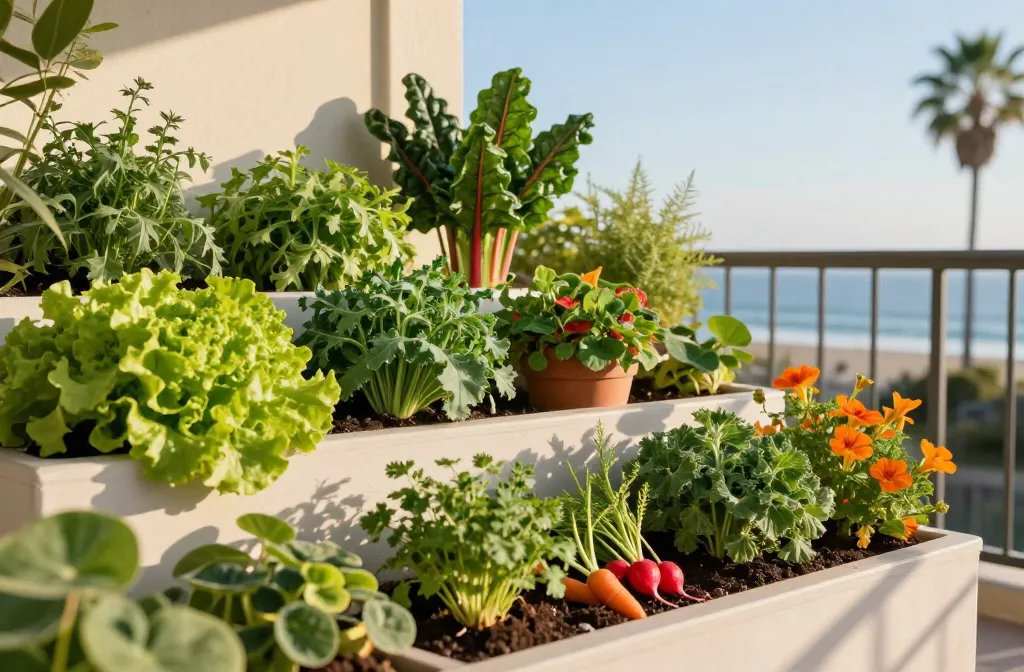
You’ve got a balcony, some sun, and big garden dreams—perfect. Southern California’s mild climate lets you grow something delicious or gorgeous every month, even in tight spaces. This guide lays out exactly what to plant, when to plant it, and how to keep your balcony popping with color and harvests all year. Ready to turn your railing into a jungle (the good kind)? Let’s go.
1. January–March: Kickstart With Cool-Season Winners
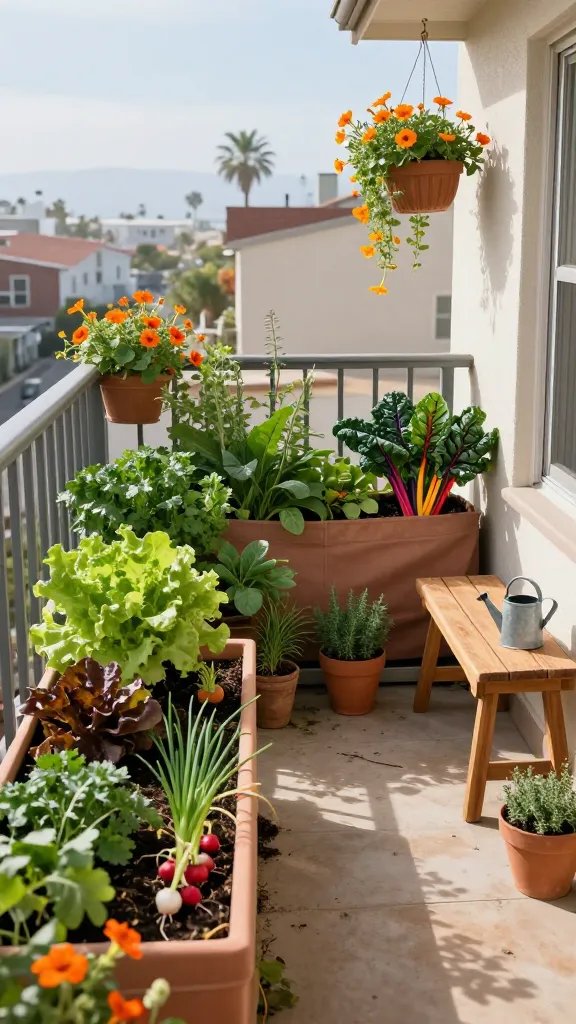
Winter isn’t downtime here—it’s prime time for salads and herbs. Cool temperatures mean tender growth, fewer pests, and a head start before spring heat. You’ll plant fast-growing greens, sturdy herbs, and some early flowers to invite pollinators.
What To Plant
- Leafy greens: lettuce mixes, arugula, spinach, kale, Swiss chard
- Herbs: parsley, cilantro, dill, chives, thyme
- Roots: radishes, baby carrots (choose “short” varieties), green onions
- Edible flowers: nasturtium, calendula
Balconies often get microclimates. North-facing? Prioritize leafy greens that appreciate less direct sun. South- or west-facing? Give tender seedlings afternoon shade using a simple clip-on shade cloth.
Tips
- Use wide, shallow containers (6–10 inches deep) with high-quality potting mix.
- Sow radishes every 2 weeks for non-stop crunch.
- Water in the morning. Cool months still dry out pots thanks to wind.
- Fertilize lightly with fish emulsion or seaweed every 2–3 weeks.
Benefits: You’ll harvest in weeks, not months. Early wins keep your momentum high and your salads exciting.
2. April–June: Go Big With Warm-Season Stars
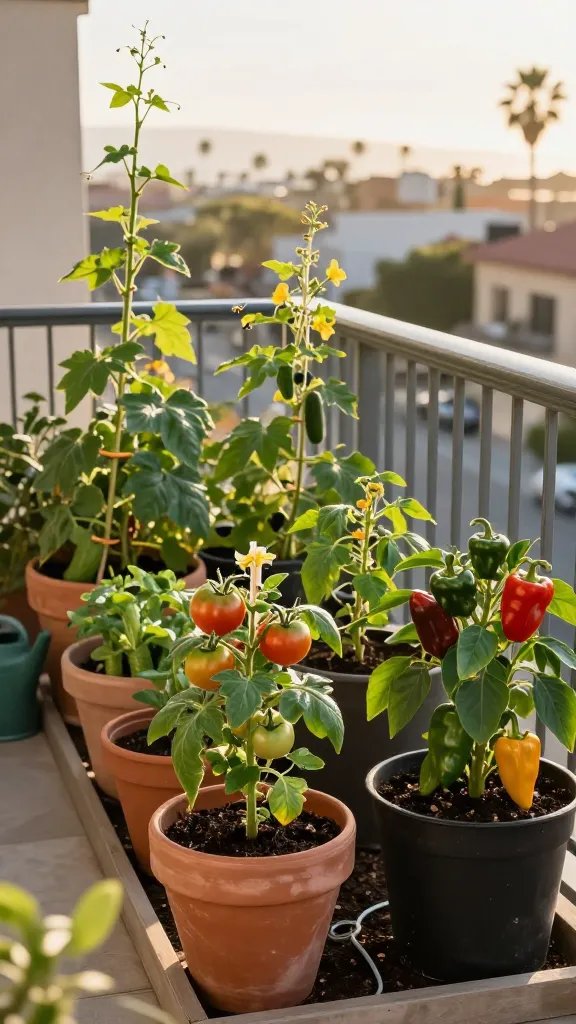
Spring flips the switch—now’s your moment for tomatoes, peppers, and cucumbers. The days warm up, pollinators wake up, and your balcony becomes a tiny farm. Plant in April, then succession-plant every 2–3 weeks for continuous harvests.
Balcony MVPs
- Tomatoes: dwarf or determinate types (Patio, Tiny Tim, Tasmanian Chocolate). Use 5–10 gallon pots.
- Peppers: jalapeño, shishito, mini bell—compact and prolific in heat.
- Cucumbers: bush or patio varieties; trellis them to save floor space.
- Beans: pole beans on a twine teepee or balcony railing.
- Herbs that love heat: basil, mint (container only—mint will take over), oregano.
- Flowers for pollinators: marigold, alyssum, salvia; they also look cute, FYI.
Container Setup
- Soil depth: 10–14 inches for fruiting crops.
- Drainage: make sure every pot drains fast; add pot feet or bricks.
- Trellising: bamboo stakes, mesh panels, or a simple string lattice anchored to railings.
Water deeply but less often—aim for moist, not soggy. Tomatoes especially hate wet feet. Pinch off early flowers on tiny seedlings for stronger plants later. It feels wrong, but trust me.
Quick Troubleshooting
- Leaf curl or pale growth: likely underwatering or nutrient deficiency—add a balanced organic fertilizer.
- Aphids: blast with water, then use insecticidal soap. Ladybugs help if you’re feeling extra.
- Blossom drop in heat: provide afternoon shade and consistent moisture.
Benefits: High-impact, high-reward harvests that make balcony gardening feel legit. Fresh caprese on demand? Yes, chef.
3. July–September: Beat the Heat and Keep Harvesting
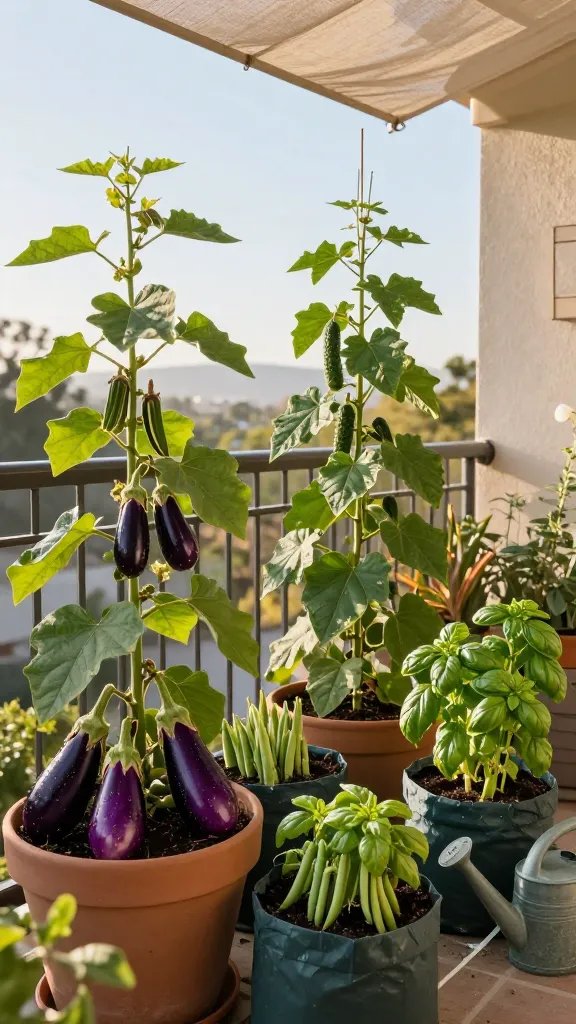
Summer turns intense, especially on west-facing balconies. You’ll protect what you planted, sneak in late crops, and keep herbs from bolting out of spite. Shade and smart watering win the season.
Heat-Smart Planting
- Succession cucumbers and beans: plant a new round in early July for late summer crunch.
- Okra and eggplant: heat-lovers that thrive in containers (5+ gallons).
- Malabar spinach: a vining green that loves heat and doesn’t wilt like regular spinach.
- Basil, again: replant if it flowers; keep pinching tips for bushy growth.
Shade, Water, Mulch
- Add 2 inches of mulch (shredded bark, straw, or coco coir) to reduce evaporation.
- Install a clip-on shade cloth (30–40%) for afternoons.
- Water early morning; on scorchers, add a light evening check-in for containers that dry fast.
Practical Moves
- Harvest cucumbers small and often—they turn bitter when stressed.
- Choose self-pollinating or parthenocarpic varieties if wind pollination is weak.
- Rotate containers slightly each week to keep growth even and prevent one-sided plants.
Benefits: You’ll extend your peak harvests through brutal heat while keeping plants healthy and productive. Also, homegrown okra fries? Unreal.
4. October–November: The Great Transition (Fall Planting Round Two)
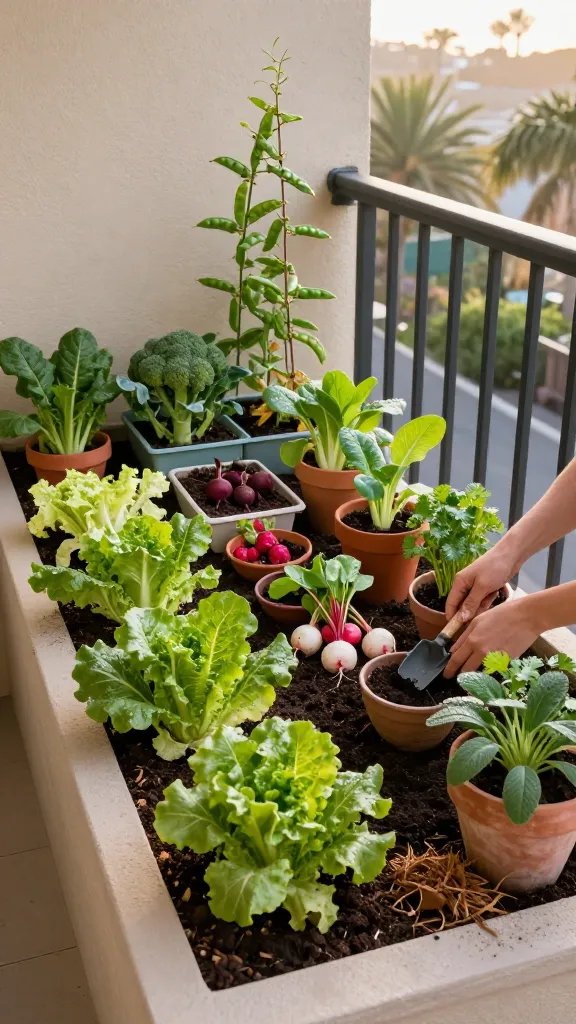
As the heat backs off, you reset your balcony with cool-season crops again—round two. Your containers still hold nutrients, so you’ll top off soil, swap plants, and sow for crisp weather.
What To Plant Now
- Leafy greens (again): romaine, butterhead, mizuna, tatsoi, bok choy
- Broccoli rabe and baby broccoli: compact and fast for containers
- Peas: sugar snap and snow peas love cool temps and trellises
- Roots: beets, turnips, radishes (do quick successions)
- Herbs: cilantro thrives now; also sage and rosemary for winter stews
Soil Refresh
- Remove summer roots and add 2–3 inches of fresh potting mix or compost on top.
- Mix in a slow-release organic fertilizer for steady fall growth.
- Rinse pots thoroughly to flush salts if you used synthetic fertilizers earlier.
Light And Timing
- Shorter days mean slower growth—start earlier in October for bigger fall yields.
- Move containers to capture maximum sun; every hour counts now.
- Peas need a trellis again—recycle your summer setup.
Benefits: Fall gives you cleaner, sweeter flavors with less pest pressure. It’s the cozy soup-and-salad season, but grown five feet from your kitchen.
5. December: Maintenance, Microgreens, And Cozy Harvests
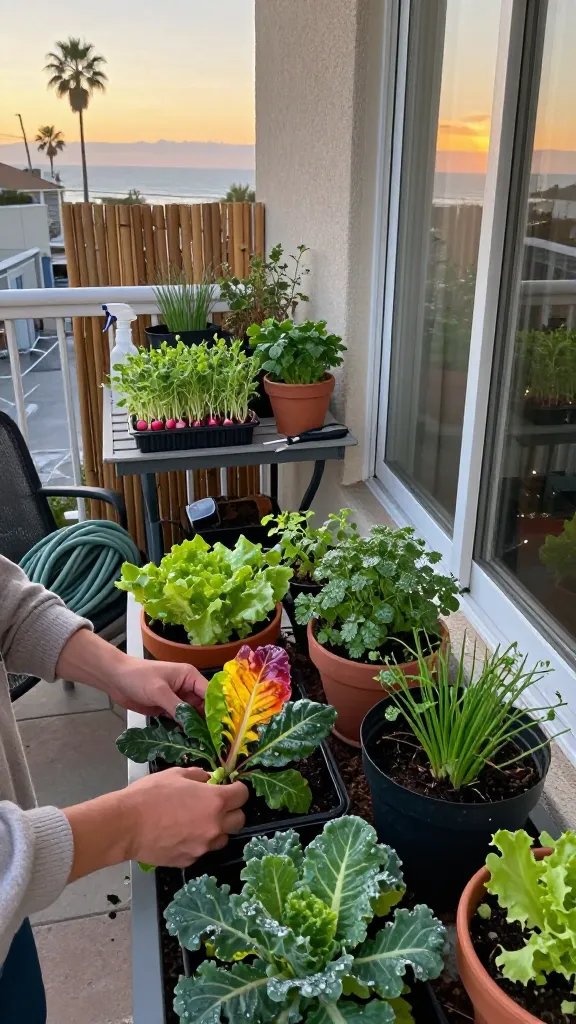
December brings chill mornings and quick sunsets, but your balcony still works. You’ll harvest greens, start microgreens indoors, and prep for January’s restart. Think low-effort, high-reward vibes.
Grow Right Now
- Cut-and-come-again greens: snip outer leaves of kale, chard, and lettuces.
- Herbs: parsley, thyme, and chives keep giving in cool weather.
- Microgreens indoors: radish, broccoli, pea shoots—7–14 day turnaround.
Simple Care
- Water sparingly—cool air means pots dry slower, but wind still steals moisture.
- Use frost cloth on rare chilly nights inland; coastal balconies usually don’t need it.
- Check for slugs after rains; copper tape on pot rims helps a ton.
Reset For January
- Note what thrived and what sulked (IMO, keep winners and ditch divas).
- Clean pruners, stakes, and saucers to avoid spreading pests.
- Order seeds for January greens and March tomatoes—popular varieties sell out early, seriously.
Benefits: You keep harvesting without breaking a sweat, and your balcony stays lively through the holidays. Nothing beats tossing fresh parsley on roasted veggies you just cooked.
Handy Balcony Essentials (Quick Reference)
- Containers: 2–3 gallons for greens and herbs; 5–10 gallons for fruiting crops
- Soil: high-quality potting mix; avoid garden soil in containers
- Fertilizer: balanced organic for general use; add calcium for tomatoes to prevent blossom end rot
- Watering: finger test daily; water deeply until you see drainage
- Sun: 6+ hours for fruiting crops; 3–5 hours works for many greens
- Trellis: vertical support saves space and boosts yield
Sample Year-Round Planting Calendar (At A Glance)
- Jan–Mar: greens, roots, cool herbs, edible flowers
- Apr–Jun: tomatoes, peppers, cucumbers, beans, basil
- Jul–Sep: okra, eggplant, basil, beans/cukes round two, heat-tolerant greens
- Oct–Nov: greens 2.0, peas, roots, cilantro
- Dec: maintenance, microgreens, ongoing greens and herbs
You don’t need a backyard to grow like a pro—you just need a sunny railing and a plan. Start with one pot, then add more as you get comfortable. Soon you’ll have salads, salsas, and smug satisfaction on your balcony year-round. Now go plant something and make your future self proud.