
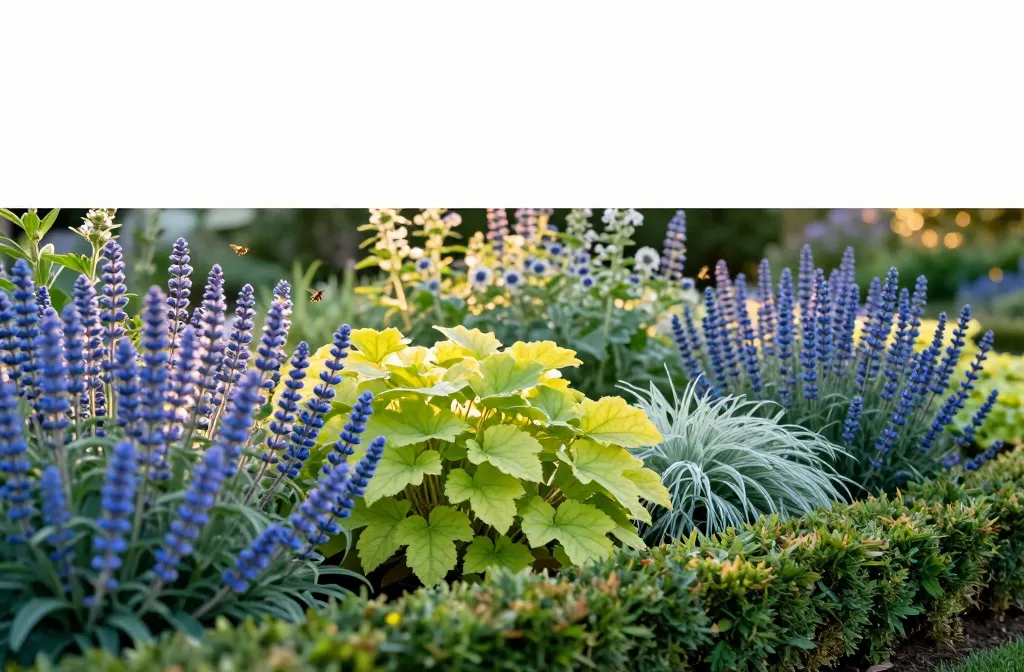
Color isn’t just pretty in the garden—it’s strategy. Pairing blue, purple, and green plants creates calming, high-contrast beds that also attract pollinators and confuse pests. These combos look designer-level with zero snobbery required. Ready to plant like you meant it?
1. Moody Blues + Lime Pops: Calm Meets Electric
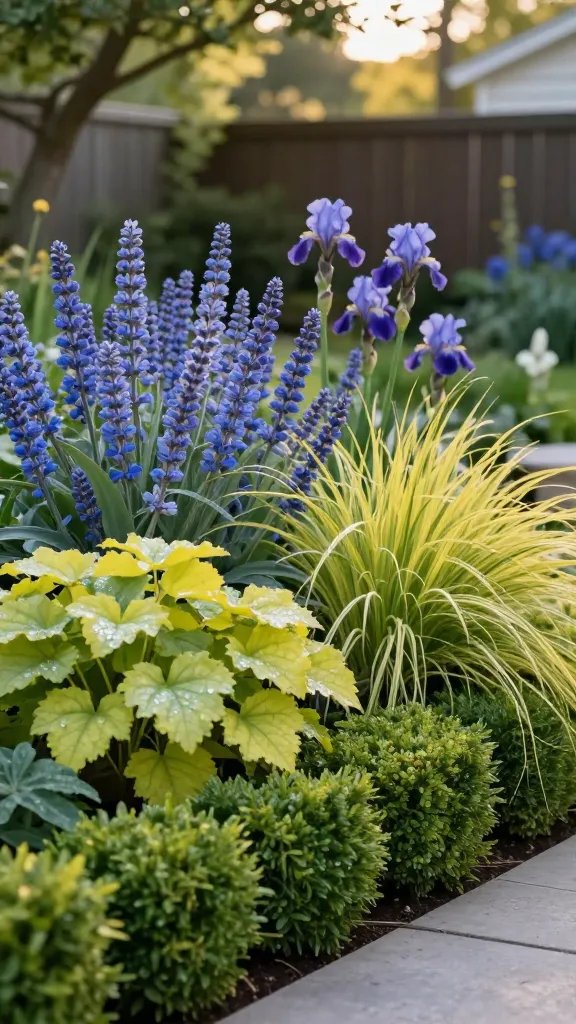
Blue tones soothe the eye while lime-green foliage brings the zing. This contrast reads modern and lush without trying too hard. It also shines in shade-to-part-sun spots where brighter flowers fade out.
Plant Combo:
- Blue: Salvia ‘Blue Hill’, Nepeta (catmint), or Siberian iris
- Lime-Green: Heuchera ‘Lime Rickey’, Hakonechloa ‘Aureola’, or Alchemilla mollis (lady’s mantle)
- Green Structure: Boxwood or dwarf arborvitae edging
Use the blue bloomers as your soft, cloud-like layer, then plug in lime foliage to wake it up. Boxwood or another evergreen anchors it so it doesn’t look seasonal or flimsy.
Tips:
- Repeat in odd numbers for rhythm—think 3 salvias, 5 catmints.
- Edge a path with lime heuchera to make blues pop in evening light.
- Deadhead salvia to keep the blue waves coming.
Best for front-of-border calm with serious curb appeal. FYI, the lime foliage glows at dusk, which makes your neighbors think you hired a landscaper.
2. Lavender Fields + Green Waves: Cottage Vibes, Zero Fuss
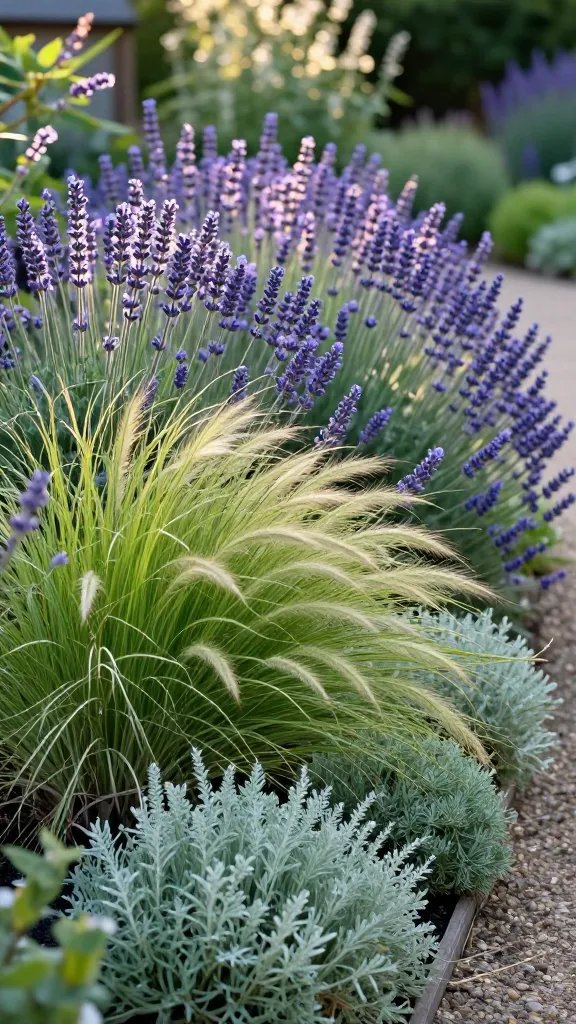
Lavender and airy ornamental grasses deliver those Provence feelings without a plane ticket. The blue-purple spires play beautifully against soft green motion. Bonus: it’s drought-smart and bee-approved.
Plant Combo:
- Purple-Blue: English lavender ‘Hidcote’ or ‘Munstead’, Russian sage (Perovskia)
- Green Grasses: Stipa tenuissima (Mexican feather grass), Pennisetum ‘Hameln’
- Understudies: Sage ‘Berggarten’ (silvery-green), thyme groundcover
Layer the shrubs (lavender) in a loose row, then thread grasses between to break up the line. The result? Movement, fragrance, and that hazy blue-purple that melts in summer sun.
Key Points:
- Full sun and lean soil keep everything tight and floriferous.
- Prune lavender lightly after bloom to maintain shape.
- Use gravel mulch to boost drainage and heighten the color contrast.
Perfect for paths, terraces, and hellstrips where water is scarce. It’s low-maintenance and looks expensive—seriously.
3. Jewel-Tone Shade: Hosta Greens With Purple Drama
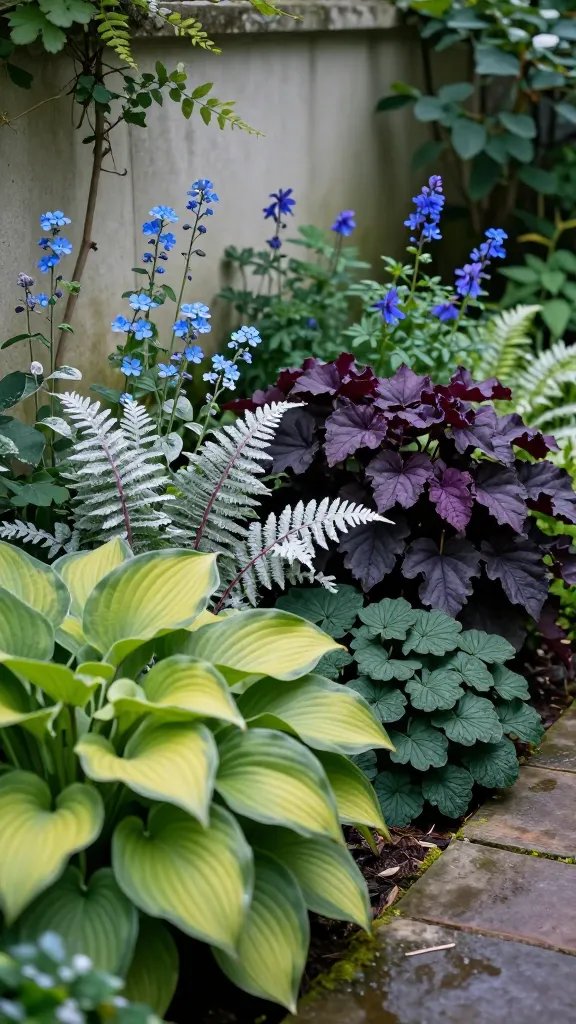
Shade gardens don’t need to be boring. Deep purples and layered greens create moody magic under trees and along north walls. Think botanical speakeasy, not gloomy corner.
Plant Combo:
- Greens: Hosta ‘Sum and Substance’ or ‘June’, ferns (Japanese painted fern adds sheen)
- Purples: Heuchera ‘Obsidian’ or ‘Plum Pudding’, Ajuga ‘Black Scallop’
- Blue Accents: Brunnera ‘Jack Frost’ (tiny blue flowers + silvery leaves), Corydalis ‘Blue Heron’
Start with bold green hostas as your foundation. Slide in purple heuchera for contrast, then light it up with brunnera’s sky-blue blooms in spring. Add ferns for texture and you’ve got instant depth.
Tips:
- Mix leaf sizes—big hosta, lacy fern, medium heuchera—to create layers.
- Keep soil consistently moist; mulch to protect heuchera crowns.
- Spot a few chartreuse hostas (like ‘Guacamole’) if you want extra pop.
Best in part to full shade beds that need personality. It looks lush from spring frost to fall color, IMO one of the best long-season combos.
4. Pollinator Party: Purple Spires, Blue Disks, Green Backdrops
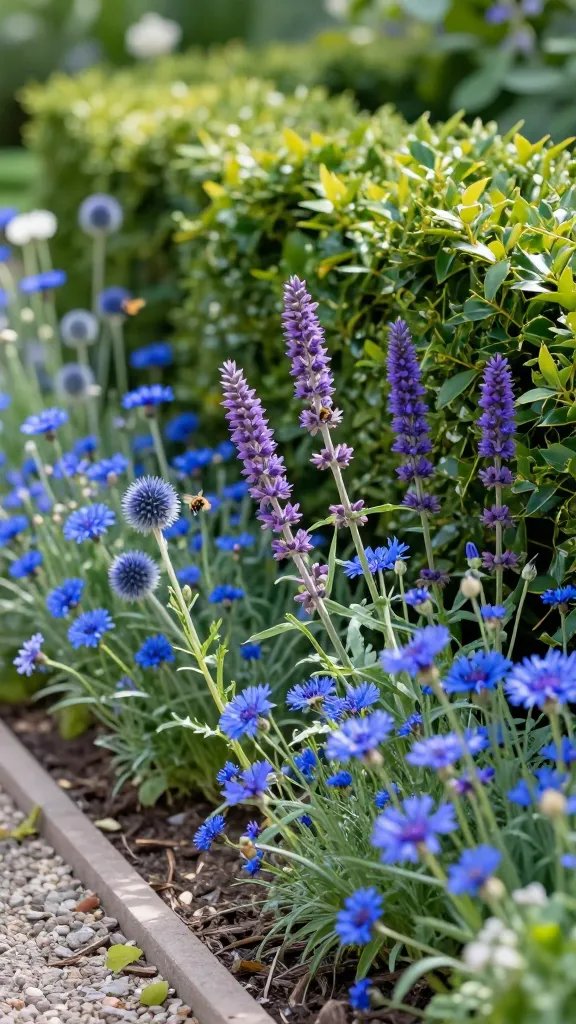
If you want butterflies and bees clocking in daily, go for shapes they love: spires and disks. Purple and blue flowers bring them in, and tidy green shrubs keep the scene from going feral. You get wildlife and structure—win-win.
Plant Combo:
- Purple Spires: Veronica spicata, liatris, or salvia ‘Caradonna’
- Blue Disks: Echinops (globe thistle), bachelor’s buttons, cornflower
- Green Backdrop: Inkberry holly, boxwood, or ink-green yew
Alternate spires with disks so the eye bounces along the border. Shrubs behind act as a calm canvas and windbreak, which keeps tall stems upright.
Key Notes:
- Stagger bloom times: spring veronica, summer salvia, late liatris.
- Leave seedheads in fall—goldfinches will thank you.
- Don’t overfertilize; too much nitrogen = floppy plants.
Great along fences and sunny borders. It’s also an easy way to teach kids “look—bees!” without, you know, inviting them into the kitchen.
5. Cool Kitchen Rows: Edible Blues, Purples, And Greens
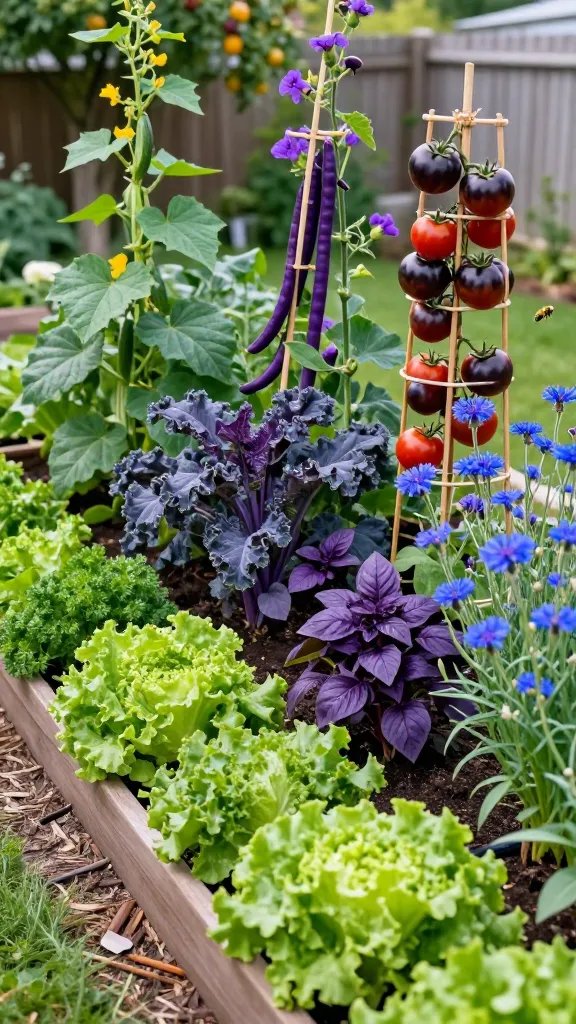
Veggie beds can look as chic as flower borders. Mix edible blues and purples with crisp greens for a plot you’ll actually show off. Flavor, color, and function—garden trifecta achieved.
Plant Combo:
- Purple: Purple basil, ‘Indigo Rose’ tomatoes, purple kale, and purple pole beans
- Blue: Borage (blue blooms), blue cornflowers as companions
- Green: Butterhead lettuce, parsley, and cucumber vines
Use greens as edging and fillers, then stack taller purples in the back. Borage brings bees for better pollination and looks like tiny sapphire fireworks.
Layout & Tips:
- Plant in blocks for color impact: a square of purple kale next to a drift of lettuce.
- Interplant basil with tomatoes to improve flavor (garden myth or not, it smells amazing).
- Mulch with straw to keep feet clean and colors crisp.
Ideal for raised beds and patio planters. You’ll harvest salads and compliments at the same time—trust me.
Bonus Mini-Combos (To Hit 13 Total, You Overachiever):
- Blue hydrangea + green hosta + purple allium
- Blue fescue grass + purple coneflower + green daylilies
- Blue delphinium + purple verbena + green euphorbia
Drop these into any section to round out color and bloom time. They play nicely with most soils and sun levels—just match the light.
Ready to dig in? Start with one combo and repeat it across your beds for cohesion, then sprinkle in a few accent plants for personality. Keep it watered, deadhead when needed, and let color do the heavy lifting. Your garden’s about to look cool, collected, and wildly alive.