
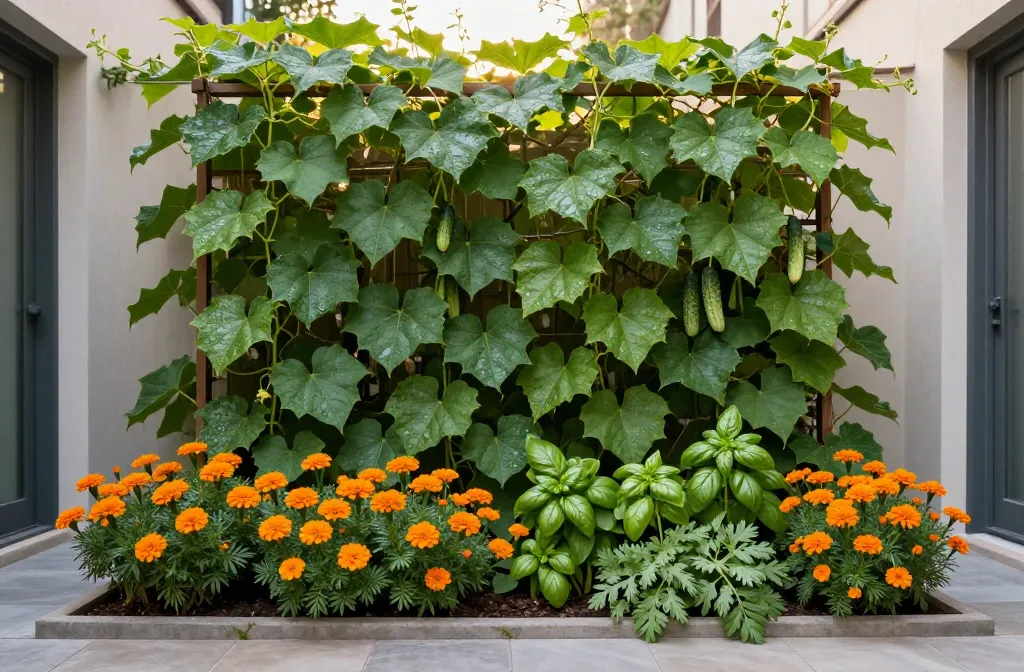
Short on square footage but hungry for wall-to-wall harvests? Vertical cucumbers and climbing vines turn tiny patios into snack factories. Pair them with the right companions and you’ll boost yields, block pests, and keep soil happy. Let’s stack flavors, flowers, and foliage so every inch earns its keep.
1. Marigolds On Pest Patrol
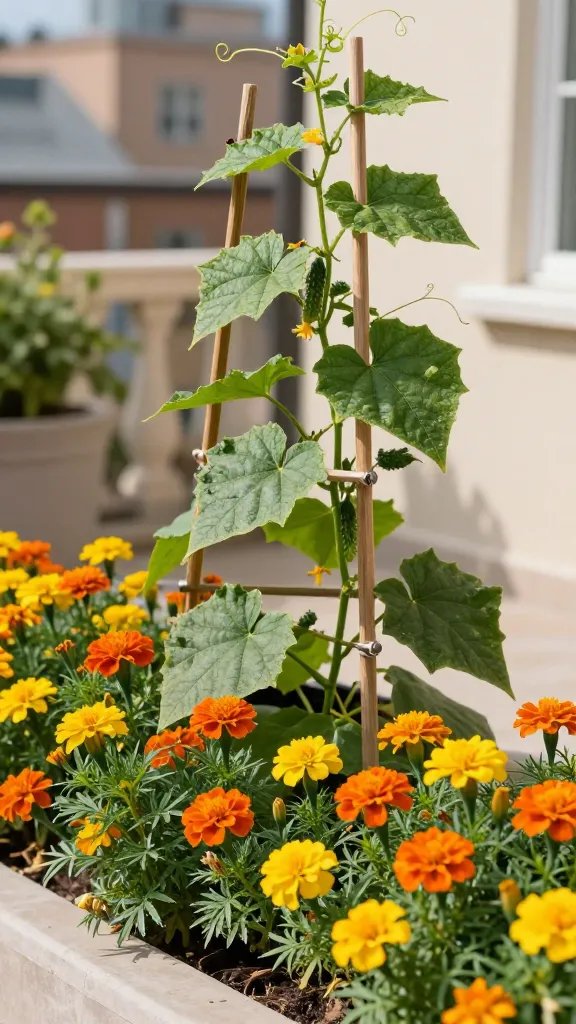
Marigolds bring the heat to pest management. Their scent confuses nematodes and repels a grab bag of bad bugs. Plus, they bloom nonstop and love hanging out at the base of trellised vines.
Key Points
- Plant low-growing French marigolds around the trellis base so they don’t compete for light.
- Deadhead spent flowers to keep blooms coming.
- They attract beneficial insects that snack on aphids and whiteflies.
Use marigolds when you want a fuss-free, colorful border that helps protect tender cucumber vines naturally.
2. Nasturtiums As Living Aphid Traps
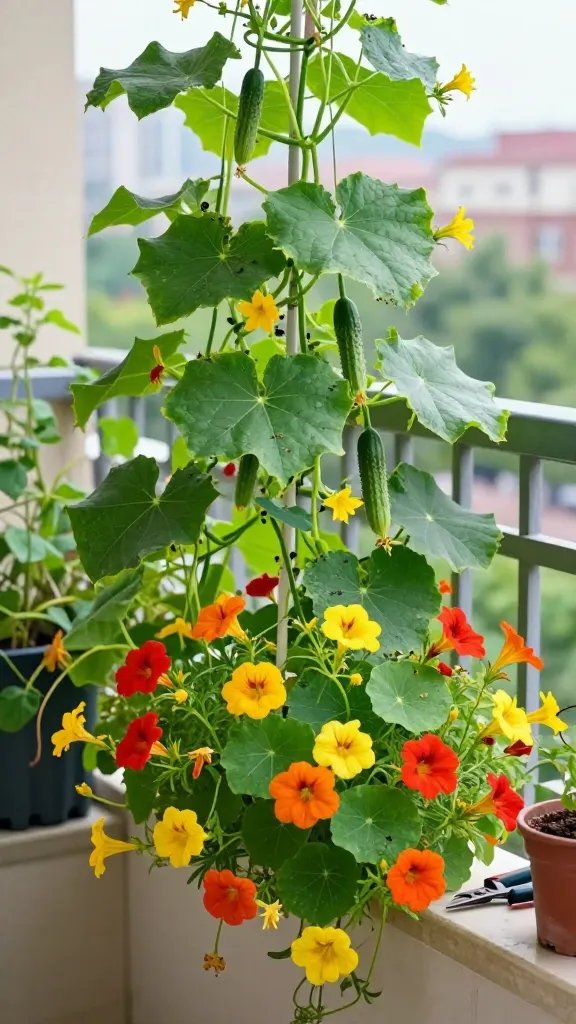
Nasturtiums do double duty: they lure aphids away from your cucumbers and they trail beautifully. They don’t mind a bit of neglect, and they tumble over container edges like edible waterfalls.
Tips
- Let nasturtiums cascade from the sunny side of your container or raised bed.
- Pinch back runners to keep airflow high around cucumber stems.
- Harvest the peppery leaves and blooms for salads—free flavor!
Lean on nasturtiums if aphids always crash your garden parties. They’ll take the hit and still look gorgeous.
3. Basil For Flavor And Fly-Fighting
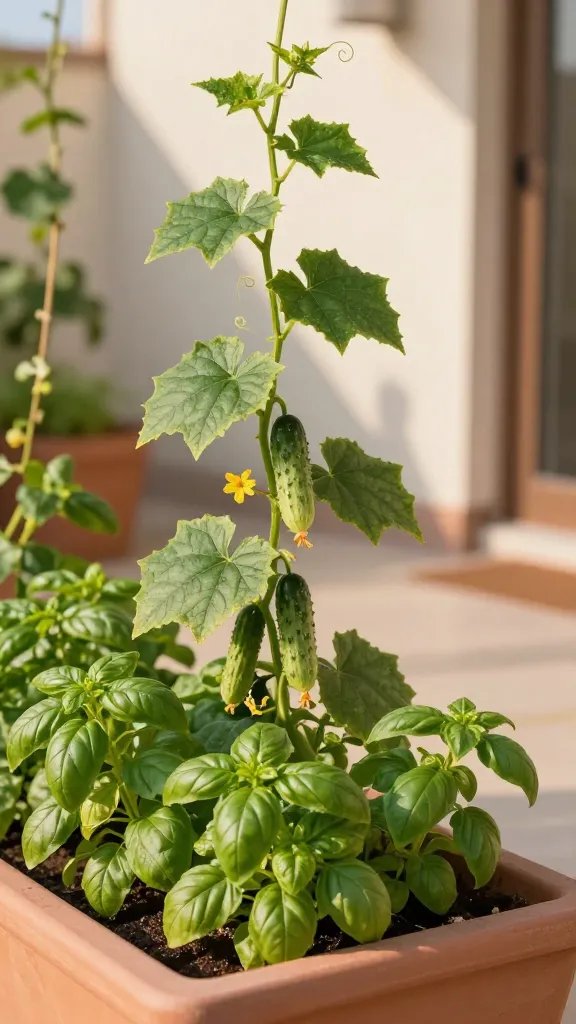
Basil screams summer and helps repel flies and mosquitos around your cucumbers. Its compact habit suits small spaces, and it enjoys the same warm, sunny vibes as climbing vines.
Key Points
- Plant basil at the sunny front of containers; keep it below the trellis line.
- Water consistently; basil sulks if it dries out completely.
- Pinch flowers to keep leaves tender and the plant bushy.
Choose basil when you want a fragrant, edible border that won’t wrestle your cucumbers for the spotlight.
4. Dill For Predators And Pickles
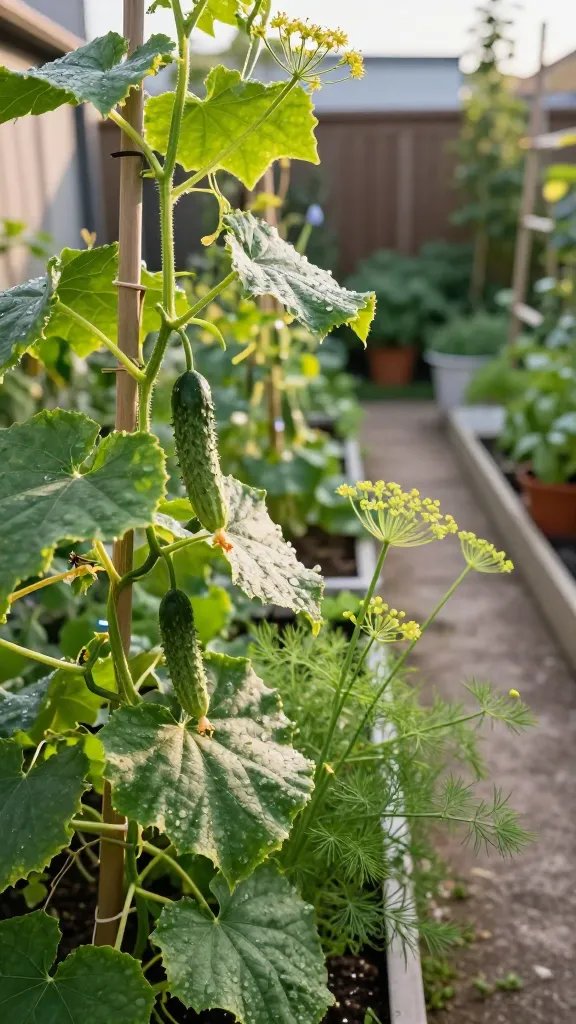
Dill attracts lacewings and parasitic wasps—the kind of visitors you want when cucumber beetles show up. As a bonus, dill fronds and seeds love your pickle jars almost as much as you do.
Tips
- Sow dill in small waves every few weeks for a steady supply.
- Give dill a sunny slice of soil away from heavy foot traffic; tall stems can flop.
- Stake lightly if it leans toward the trellis.
Bring in dill if you plan to pickle or if your garden needs more beneficial bug bodyguards, FYI.
5. Calendula For Constant Color And Gentle Pest Control
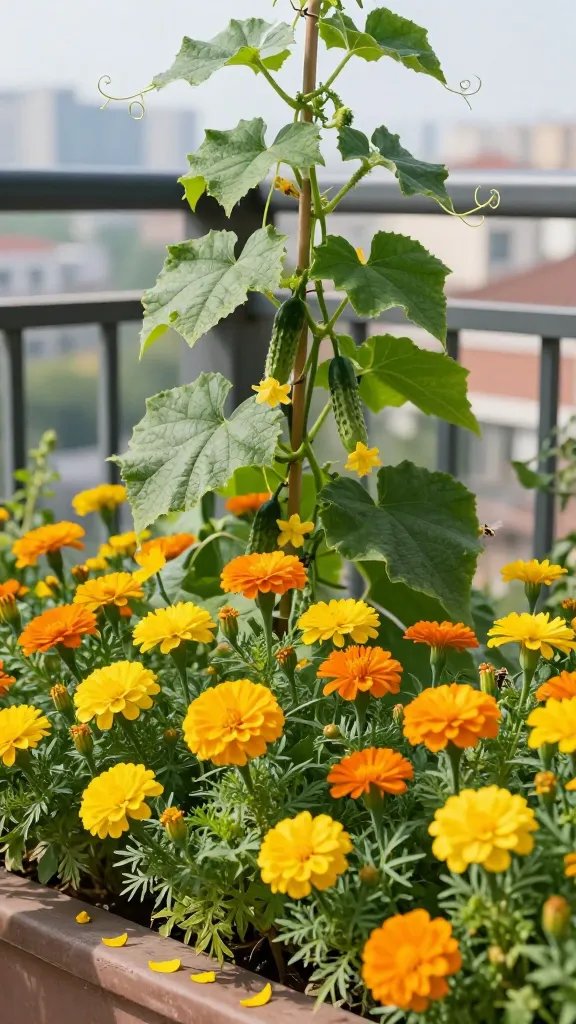
Calendula (pot marigold) blooms like it means it and brings pollinators running. Its resinous petals and scent also help confuse pests while adding a cheerful edge under your vines.
Key Points
- Deadhead often to keep the flower conveyor belt running.
- Grow in front of cucumbers to avoid shade competition.
- Petals are edible and look fancy in salads, IMO.
Use calendula when you want a sunny, low-stress pollinator magnet that keeps producing for months.
6. Radishes As Lightning-Fast Fillers
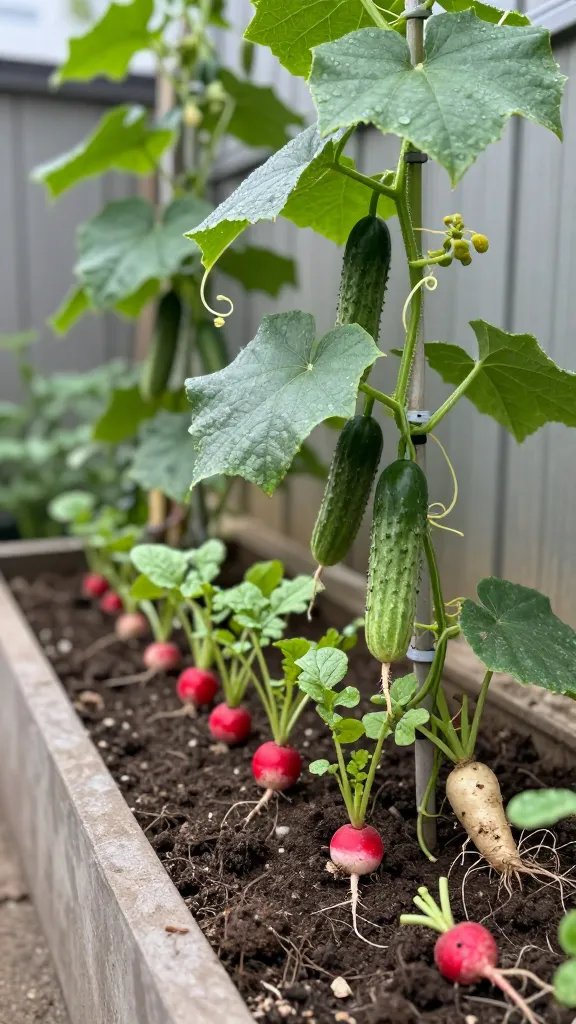
Radishes sprout and finish fast, which makes them perfect for the empty soil window while cucumbers climb. They loosen the topsoil and can distract flea beetles from more precious greens.
Tips
- Sow a quick row along the trellis base, then harvest within 25–35 days.
- Don’t overcrowd; keep a couple inches away from cucumber stems.
- Try daikon in deeper beds to break up compact soil.
Choose radishes when you want immediate gratification and better soil structure before the cucumber jungle sets in.
7. Bush Beans For Nitrogen And Neighborliness
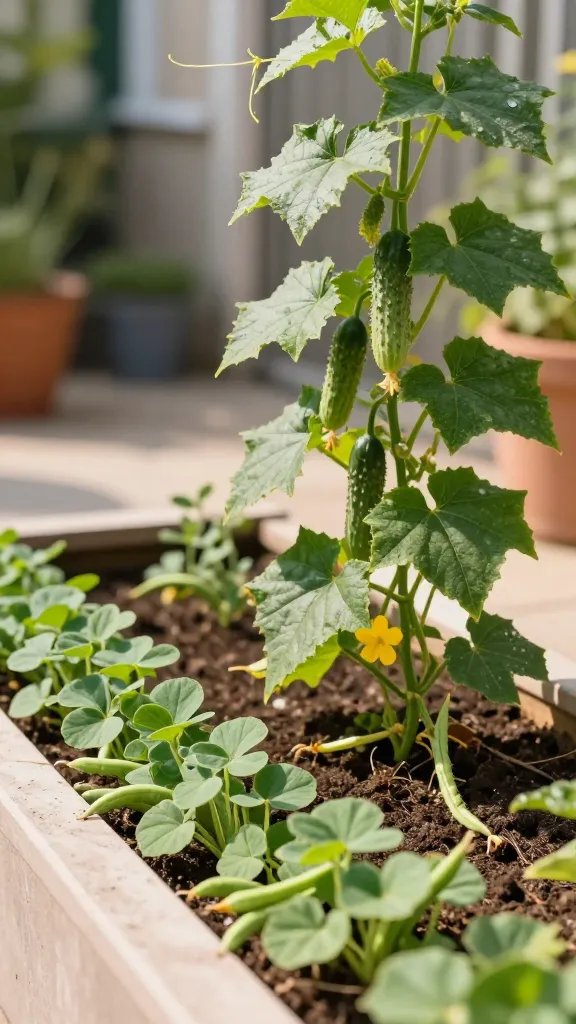
Beans fix atmospheric nitrogen, which your heavy-feeding cucumbers appreciate. Bush varieties stay compact, so they won’t tangle with your trellis like pole beans would.
Key Points
- Plant on the sunnier side and keep a small gap to avoid shading cucumber bases.
- Inoculate with rhizobia for extra nitrogen-fixing power.
- Succession plant every few weeks for steady pods.
Use bush beans when your soil needs a fertility boost and you want crunchy snacks that won’t hog vertical space.
8. Chives And Green Onions For Subtle Pest Defense
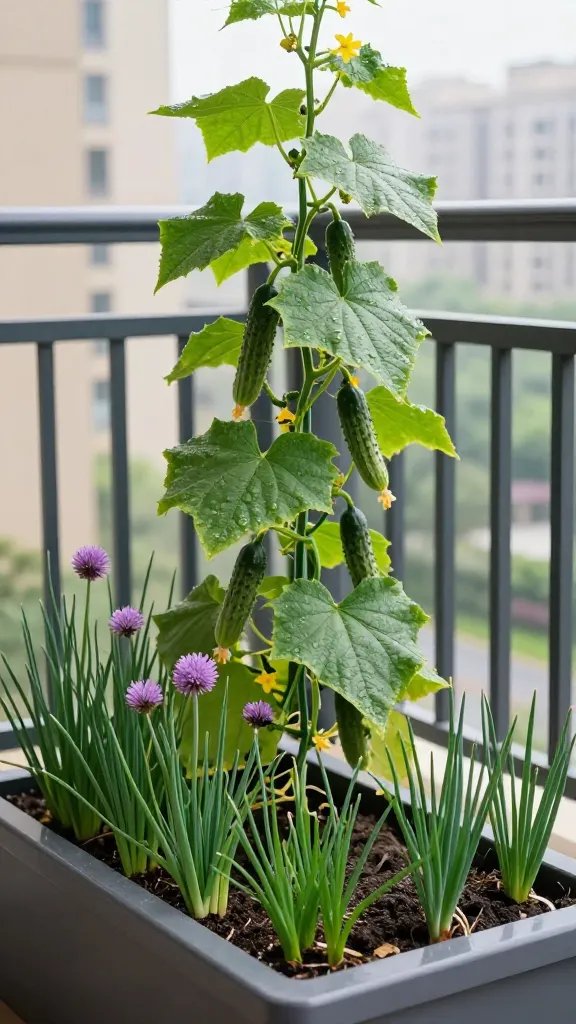
Members of the allium family, like chives and scallions, release a sulfurous scent that pests dislike. They slide neatly into tight spots and don’t compete hard with shallow cucumber roots.
Tips
- Edge containers with chives; trim often to keep them tidy and flavorful.
- Let some chives flower—pollinators love those purple pom-poms.
- Water evenly to avoid tough, spicy greens.
Plant chives or green onions when you need slim, low-profile companions that bring both flavor and subtle protection.
9. Oregano Or Thyme As Living Mulch
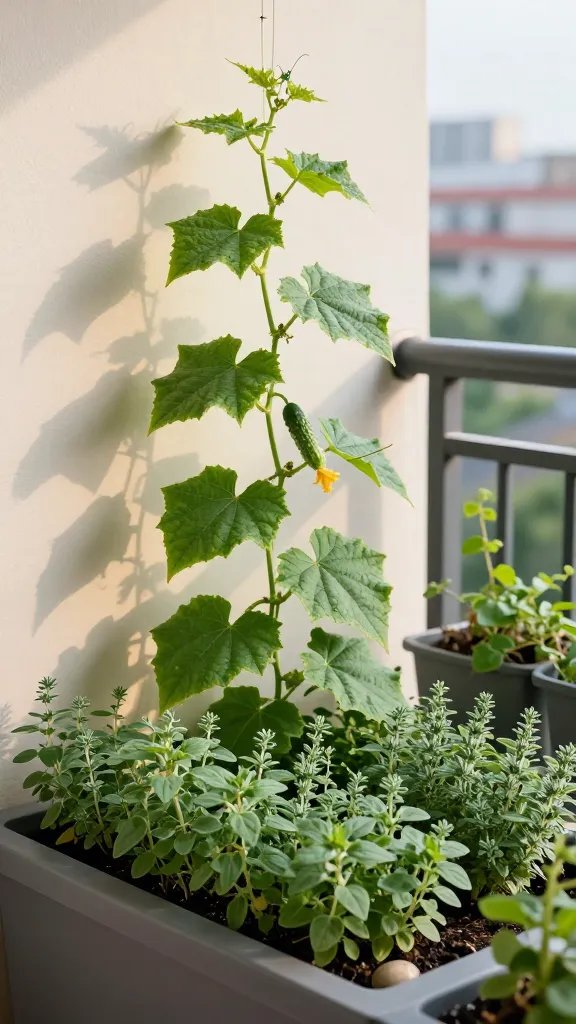
Low-growing herbs like oregano and thyme act like stylish mulch. They shade the soil, reduce evaporation, and perfume the whole setup while your vines climb skyward.
Key Points
- Choose compact cultivars to keep airflow at the soil line.
- Trim runners so they don’t creep into cucumber stems.
- Both herbs handle light foot traffic around containers.
Reach for oregano or thyme when you want a drought-tolerant, living mulch that looks good and tastes better.
10. Sunflowers As Living Trellis Buddies
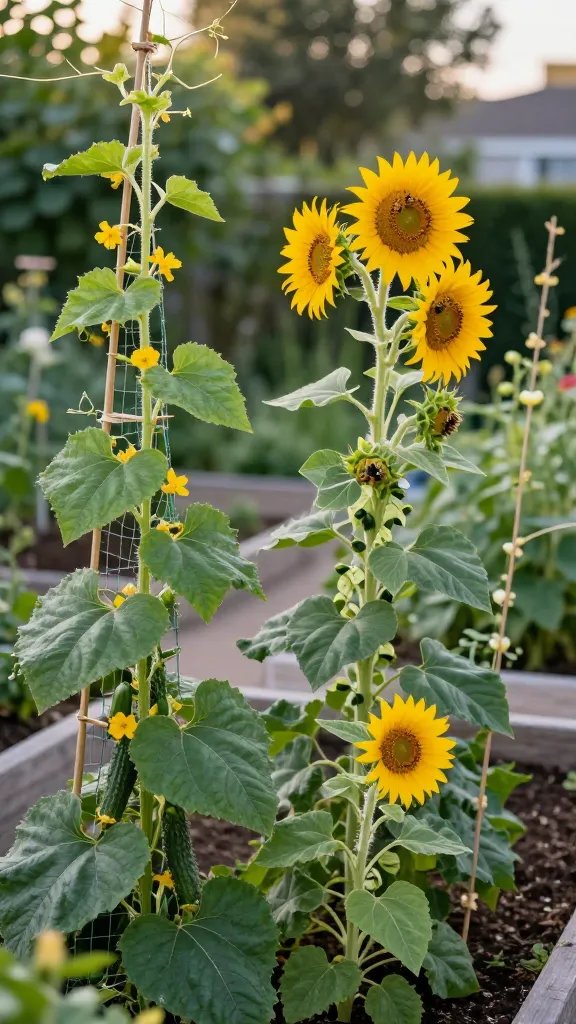
Tall, sturdy sunflowers give your climbing beans or light cucamelons a natural perch while drawing pollinators like magnets. They add a spectacular vertical accent that plays nicely with cucumber trellises nearby.
Tips
- Plant dwarf or branching types near the trellis, not directly in front of it.
- Stake if you’re in a windy area—no one enjoys a faceplant.
- Leave seed heads to feed birds at season’s end.
Grow sunflowers when you want instant drama, extra pollinators, and a friendly neighbor that doesn’t hog the trellis lane.
How To Arrange Everything In Tiny Spaces (Without Chaos)
Think layers: tall trellised cucumbers and vines in back, medium flowers and herbs in the middle, and ground-hugging herbs up front. Leave small pathways for airflow so powdery mildew doesn’t crash your party. Group plants with similar water needs so everyone stays happy.
Quick Layout Recipe
- Back row: cucumbers, cucamelons, or climbing beans on trellis.
- Middle: basil, calendula, dill, bush beans.
- Front: chives, oregano/thyme, radishes, nasturtiums spilling over the edge.
This setup maximizes sunlight, keeps soil covered, and makes harvests a two-step dance instead of a full workout.
Watering, Feeding, And Airflow (The Trio That Saves Your Harvest)
Cucumbers drink like it’s July even when it isn’t. Water deeply and mulch lightly around the base, then let companion herbs handle the rest. Feed with compost or a balanced organic fertilizer every few weeks once vines set fruit.
Pro Moves
- Water at the soil line, not over the leaves—mildew hates dry foliage.
- Prune bottom leaves for airflow once vines start climbing.
- Rotate containers 90 degrees weekly on balconies for even sun, seriously.
Nail this trio and your companions will do what they do best: protect, attract, and flavor.
Common Mistakes To Skip (Learned The Hard Way)
Planting tall companions in front of the trellis guarantees shade drama. Overcrowding turns your container into a humidity dome. And mixing water-hogs with drought lovers? That’s a no from me.
Avoid These
- Competing climbers on the same trellis (cucumbers + pole beans = tangled soap opera).
- Overfeeding nitrogen near fruit set—leaves explode, fruit lags.
- Skipping pest checks under leaves where cucumber beetles and mites hang out.
Keep it simple and intentional. Your vines will thank you with crisp, snackable cucumbers.
Seasonal Swaps And Successions
As spring cool-season companions wind down, cycle in heat lovers. When cucumbers slow late season, sow quick crops under the fading canopy for a final hurrah.
Easy Swaps
- Early: radishes and dill.
- Mid-season: basil, marigolds, nasturtiums, bush beans.
- Late: more basil, calendula, and fast greens where vines thin.
Succession planting keeps containers productive from first warm days to the last sunset lemonade.
Choosing Varieties That Play Nice
Small spaces demand compact, cooperative varieties. Look for cucumbers labeled “dwarf,” “patio,” or “pickling,” and companions bred for containers.
Good Picks
- Cucumbers: ‘Spacemaster’, ‘Lemon’, ‘Pick a Bushel’
- Basil: ‘Genovese Compact’, ‘Greek Columnar’
- Marigold: French types like ‘Bonanza’ or ‘Durango’
- Thyme/Oregano: creeping thyme, compact oregano
Choose compact genetics and everything fits better, grows faster, and looks cleaner—win-win.
Pollinators, Predators, And You
Flowers invite bees, hoverflies, and ladybugs, which means better fruit set and fewer pests. Skip broad-spectrum sprays that wipe out your garden’s A-team. Spot-treat with insecticidal soap only when needed.
Attractors
- Nasturtium and calendula for hoverflies.
- Dill and fennel nearby for beneficial wasps.
- Chive blooms for bees when cucumber flowers are slow.
Build a mini-ecosystem and your companions will do the heavy lifting while you sip iced tea.
Harvest Smarter, Not Harder
Pick cucumbers small and often to keep vines producing. Snip herbs in the morning for peak oils and flavor. And don’t be shy about thinning overcrowded areas—plants breathe better and fruits size up faster.
Quick Harvest Habits
- Use pruners to avoid tearing vines.
- Rotate your picking route so nothing hides and over-matures.
- Toss tired marigolds and replant a fresh batch mid-season.
Smart harvest routines keep your setup tidy, productive, and Instagram-ready—no filter needed.
Putting It All Together: A Tiny But Mighty Plan
Start with a sturdy trellis and a compact cucumber variety. Ring the base with marigolds and basil, tuck chives and thyme at the edges, and cascade nasturtiums over the front. Add a sprinkle of dill and a pocket of bush beans for nutrient bonus points.
Why It Works
- Defense: marigolds, chives, and nasturtiums deter pests.
- Attraction: calendula and dill bring pollinators and predators.
- Efficiency: radishes and herbs fill gaps without stealing the spotlight.
This combo stacks functions: beauty, flavor, protection, and yield—exactly what small spaces need.
Final Word: Grow Up, Not Out
Vertical cucumbers and climbing vines turn cramped corners into thriving food walls. Add these companions and you’ll get healthier plants, fewer pests, and way more flavor. Ready to mix, match, and harvest like a pro? Your tiny jungle awaits, trust me.