
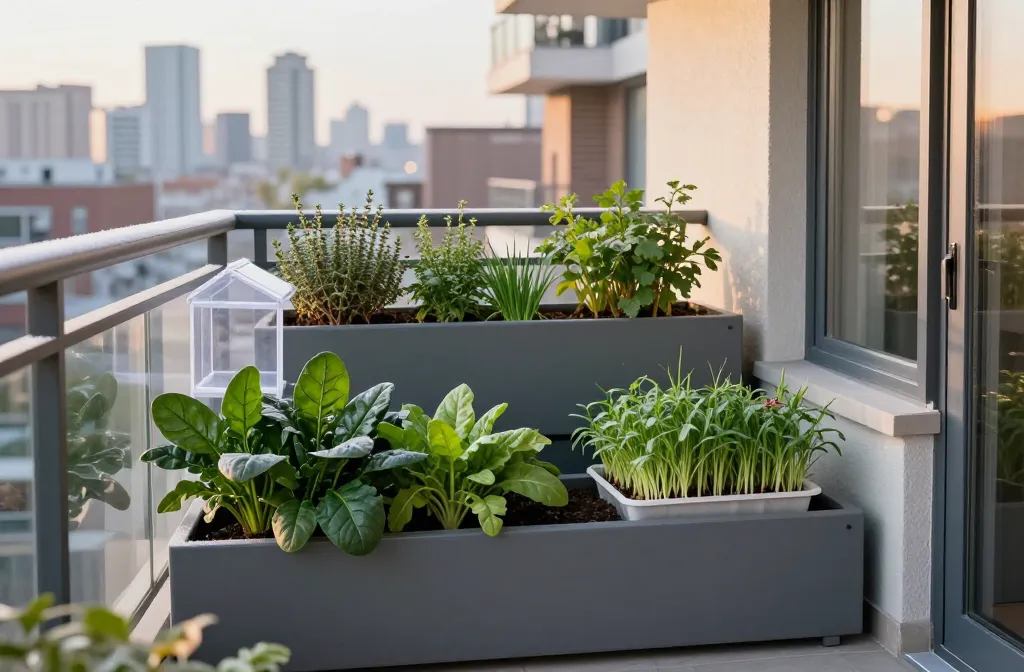
Your balcony can crank out herbs, flowers, and snacks 365 days a year—no backyard required. We’ll map exactly what to plant, when to plant it, and how to rotate crops so you’re always harvesting something. Expect quick wins, low-maintenance tricks, and a plan that won’t eat your weekends. Ready to turn that railing into a buffet?
1. Winter Warm-Up: Prep, Plan, And Sneaky Cold-Weather Harvests
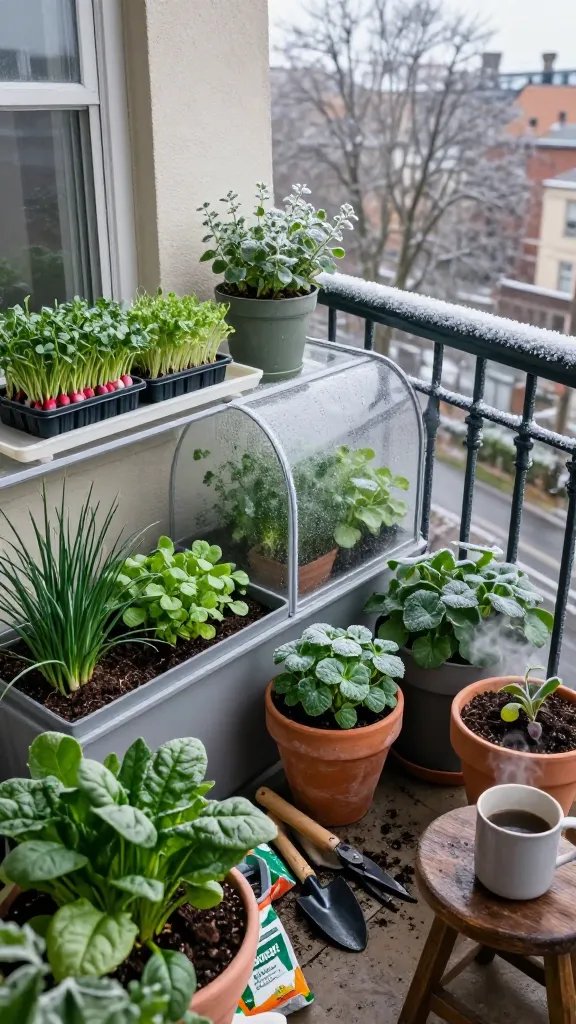
Winter doesn’t mean your balcony hibernates. It’s prime time to prep containers, refresh soil, and seed cold-hardy greens that shrug at frost. With a few quick upgrades, you can harvest baby leaves while everyone else stares at bare branches.
What To Plant (Dec–Feb)
- Cut-and-come-again greens: spinach, mache (corn salad), arugula, claytonia
- Herbs that handle chill: chives, thyme, sage, flat-leaf parsley
- Microgreens: radish, pea shoots, sunflower—near a bright window if temps dip hard
Use cold frames, clear storage bins, or frost cloth to create a mini greenhouse on the cheap. South-facing balcony? You’re golden. East or west works too—just tuck plants close to the building for a touch of warmth.
Winter Tasks That Pay Off
- Soil rehab: Top off containers with 1–2 inches of compost and a slow-release organic fertilizer.
- Container check: Make sure drainage holes aren’t iced shut. Elevate pots on feet to prevent freeze cracks.
- Seed audit: Sort what you have, reorder favorites, and choose compact varieties labeled “container” or “patio.”
- Tool tune-up: Clean pruners and grab fresh labels—you’ll forget what you planted by March, trust me.
Benefits: You’ll hit spring with healthier soil, happy perennials, and early greens for morale. Plus, microgreens deliver flavor bombs in 10–14 days when you need it most.
2. Spring Surge: Seed, Transplant, And Stack Your Space
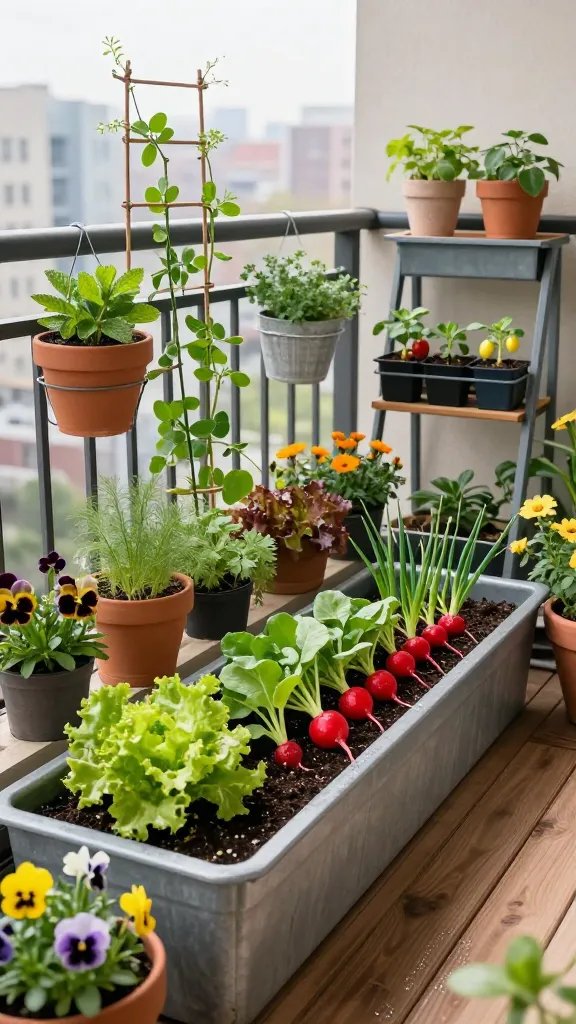
Spring brings longer light and warmer nights. This is your moment to start cool-season crops, then roll into early fruiting plants without wasting space. Think fast harvests first, followed by show-stopping containers.
What To Plant (Mar–May)
- Early cool-season winners: peas (dwarf/sugar snaps), radishes, baby lettuces, spring onions
- Herb all-stars: mint (in its own pot), cilantro, dill, oregano, lemon balm
- Hardy flowers: pansies, violas, calendula, sweet alyssum for pollinators
- Transplants late spring: compact tomatoes, peppers, and strawberries once frost passes
Layer crops like a pro. Underplant taller pots with leafy greens, and trellis peas along the railing. By the time peas slow down, your tomatoes and basil are ready to take the baton.
Space-Savvy Setup
- Vertical trellises: Use netting, bamboo, or a foldable ladder for peas and later cucumbers.
- Rail planters: Lettuces and herbs thrive in the shallow depth and look lush from the street.
- Grow bags: 5–10 gallon bags for tomatoes and peppers—lightweight and root-friendly.
- Self-watering pots: Reduce drought stress and weekend watering panic.
Benefits: Spring sets momentum. You’ll harvest radishes in 25 days and baby lettuce in 30–40. FYI, early wins keep you consistent when summer heat hits.
3. Summer Showstopper: Heat Lovers, Continuous Harvests, And Shade Games
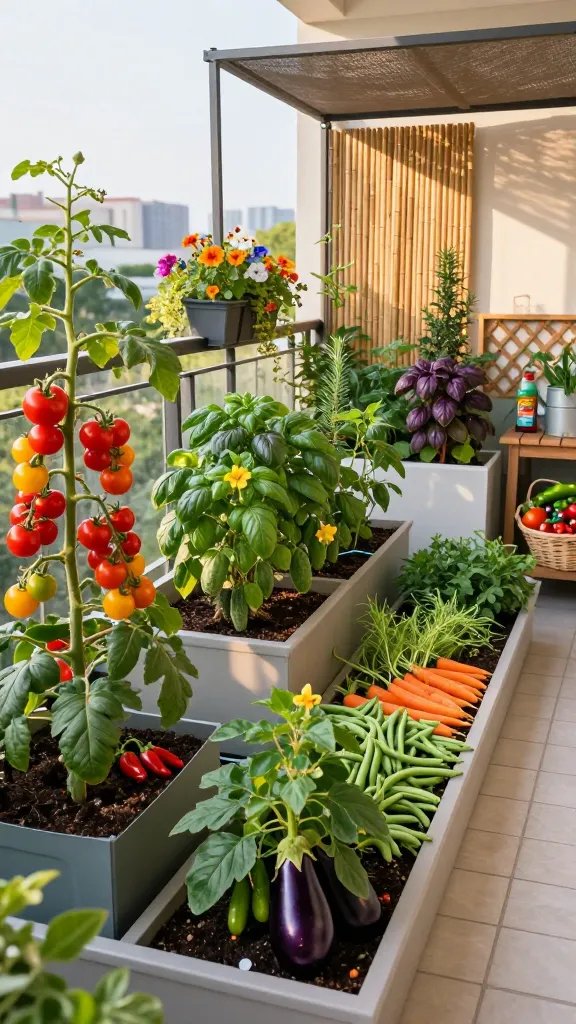
Summer is balcony garden prime time. Heat-loving crops explode with minimal effort if you keep them fed and watered. You’ll rotate greens into shadier nooks and focus on big flavors and frequent picking.
What To Plant (Jun–Aug)
- Fruiting stars: cherry tomatoes, patio peppers, bush cucumbers, eggplant (compact varieties)
- Herb heaven: basil (lots), Thai basil, rosemary, summer savory
- Quick crops to keep gaps filled: baby carrots (short varieties), bush beans, more arugula in partial shade
- Edible flowers: nasturtiums, marigolds—repel pests and look gorgeous
Pick daily. The more you harvest, the more fruits you get. Give tomatoes a sturdy stake and snip lower leaves for airflow. Mulch the top of containers with straw or shredded leaves to slow evaporation.
Watering And Feeding
- Water rhythm: Morning soak, aim for consistent moisture. On scorchers, check again late afternoon.
- Fertilizer cadence: Every 10–14 days with a balanced liquid feed; tomatoes enjoy a higher potassium formula once flowering.
- Shade hacks: Use a light shade cloth from 2–6 PM if your balcony bakes. Move greens behind taller pots for dappled light.
Benefits: Peak production meets low effort. You’ll snack straight off the vine and still have enough for pasta, salads, and salsa. Seriously, nothing beats balcony tomatoes warm from the sun.
4. Autumn Encore: Second Spring And Cozy Containers
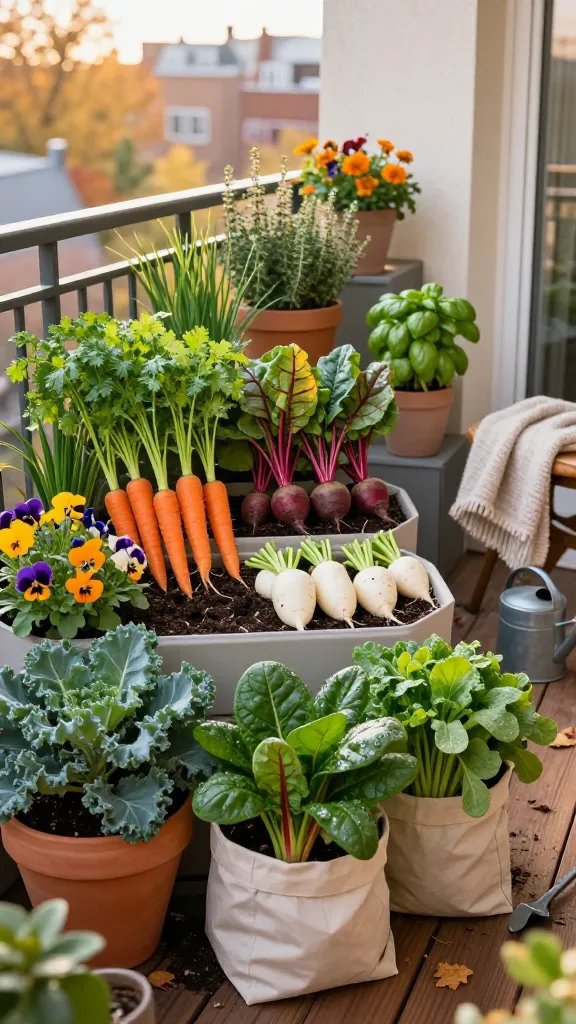
Fall feels like a bonus round for temperate climates. Cooler nights bring sweeter flavor and fewer pests. You’ll swap spent summer crops for crisp greens and late-season roots that love the chill.
What To Plant (Sep–Nov)
- Greens 2.0: kale (dwarf), spinach, Swiss chard, mizuna, tatsoi
- Roots for containers: round carrots, baby beets, radishes, turnips (Tokyo Cross)
- Herbs that persist: parsley, chives, thyme; pot up basil to bring indoors if frost threatens
- Pollinator holdouts: calendula and violas to keep bees visiting on warm days
Rip out tired tomato vines and refresh the top few inches of soil with compost. Add a sprinkle of organic fertilizer and replant immediately. Rotate containers so leafy crops get the best light angle as the sun shifts lower.
Frost-Flex Playbook
- First frost? Throw on frost cloth or a clear bin overnight. Remove in the morning for airflow.
- Windbreaks: Use clear corrugated plastic or even a DIY screen to block chilly gusts.
- Succession sow: Seed a small patch of greens every 2–3 weeks for steady salads.
Benefits: Fall gardens taste incredible and need less water. You’ll harvest through light frosts and keep containers productive instead of calling it quits early.
5. The Actual Calendar: Month-By-Month Moves For Temperate Balconies
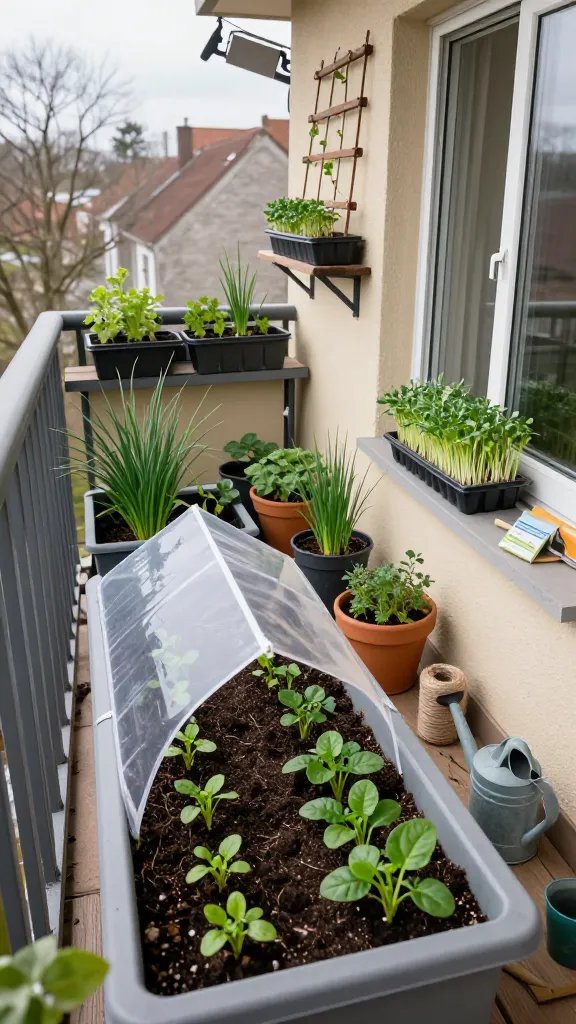
Here’s the simple, no-fuss calendar you can screenshot. Dates flex by location, but this works for most temperate zones with a typical last frost around April and first frost around October. Adjust a couple weeks either way based on your zip code.
January–February
- Do: Soil refresh, container checks, seed ordering, microgreens inside, prune perennial herbs
- Plant: Spinach, mache, claytonia under cover; chives and thyme outside near the wall
March
- Do: Set up trellises, fill rail planters, harden off early seedlings
- Plant: Peas, radishes, baby lettuce, cilantro, dill, pansies/violas
April
- Do: Keep sowing salad mixes every 2 weeks; pot up strawberries
- Plant: Spring onions, more arugula, compact kale; start basil indoors if nights are cold
May
- Do: After last frost, transplant tomatoes, peppers, bush cukes
- Plant: Oregano, mint (separate pot), rosemary; add marigolds and nasturtiums
June
- Do: Mulch pots, install drip or self-watering systems, stake tomatoes
- Plant: Bush beans, baby carrots, more basil; refresh rail planters with heat-tolerant lettuce
July
- Do: Harvest daily, prune tomatoes for airflow, feed every 10–14 days
- Plant: Second round of beans, late cucumbers, shade-grown arugula
August
- Do: Start fall seeds in a shadier spot; keep watering steady
- Plant: Kale (dwarf), Swiss chard, spinach for fall, radishes in open spaces
September
- Do: Remove tired summer plants, top up compost, set up light frost protection
- Plant: Turnips, beets, round carrots, mizuna, tatsoi, parsley seedlings
October
- Do: Cover on cold nights, sun-chase your pots as light shifts
- Plant: More spinach and lettuce; container garlic if you want spring greens and early scapes
November
- Do: Final tidy, pack away warm-season supports, keep harvesting greens
- Plant: Mache, claytonia under cover; hardy herbs stay put
December
- Do: Clean tools, dream up next year’s layout, keep microgreens cranking
- Plant: Parsley divisions, chives clumps, and any cold-frame greens
Container Sizes And Quick Picks
- Tomatoes/peppers/eggplant: 5–10 gallons, one plant per pot
- Cucumbers: 5–7 gallons with a trellis
- Greens and herbs: 6–10 inches deep rail planters or 2–3 gallon pots
- Roots: 10–12 inches deep; choose “baby” or “round” varieties
Benefits: A simple rhythm means fewer mistakes and more snacks. IMO, this calendar removes the guesswork so you can focus on the fun parts—like bragging about balcony-grown pesto.
You’ve got everything you need to grow a four-season balcony garden that actually feeds you. Start with one pot, then stack wins until your railing looks like a tiny urban farm. Plant the first seeds this week—future you will be very, very pleased with the harvests.