
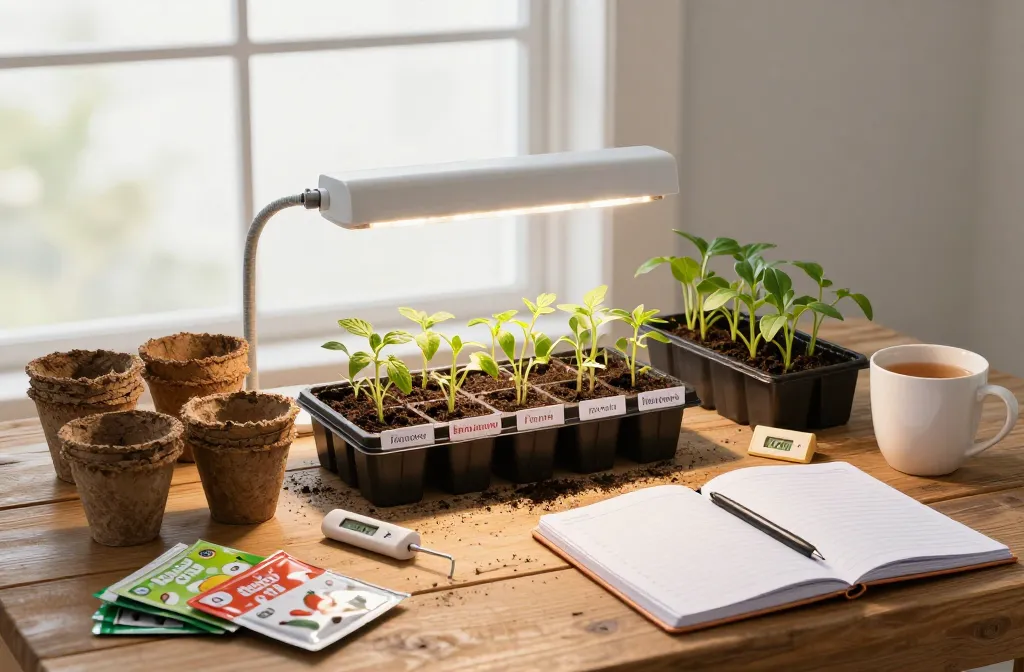
Tomato and pepper dreams start now, not in spring. February is your power month to jump-start seedlings, dial in your lighting, and lock in a harvest that actually arrives before your patience runs out. We’ll map out what to sow, when to sow it, and how to dodge the classic “leggy seedlings and sad peppers” saga. Grab your seed packets and a mug of something warm—let’s make your summer salsa happen.
1. Know Your Frost Date Like It’s Your Wi‑Fi Password
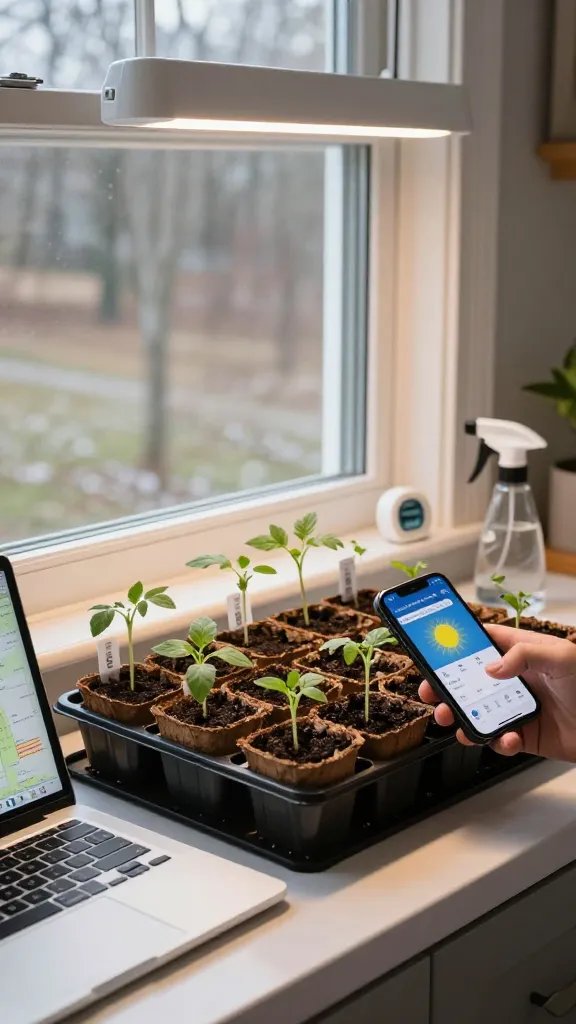
Your last spring frost date decides everything. Tomatoes and peppers hate cold feet, so your indoor start date counts backward from that day. Once you know the date, the calendar makes sense and your seedlings hit transplant size at the perfect moment.
How To Find It
- Look up your local “average last frost date” using your ZIP/postal code on a trusted garden site or extension service.
- Note your USDA Zone (or local equivalent) for general timing, but rely on the frost date for precision.
- Write it down where you’ll see it—seed-starting success loves a plan.
Why care? Because tomatoes and peppers need warm soil and consistent nights above 50°F. Plant too early and you’ll babysit shivering plants. Time it right and they explode with growth when you set them out.
Quick Countbacks (Bookmark This)
- Tomatoes: Start seeds indoors 6–8 weeks before last frost.
- Peppers (sweet & hot): Start seeds indoors 8–10 weeks before last frost. Super-hots can take 10–12 weeks.
- Harden off: Start 7–10 days before transplanting outdoors.
- Transplant window: 1–2 weeks after last frost, when nights stay 50–55°F+.
Benefit: You align seedling maturity with garden readiness. Translation: sturdier starts, faster first fruit, and fewer heartbreaks.
2. Your February Game Plan, By Climate (No Guessing Required)
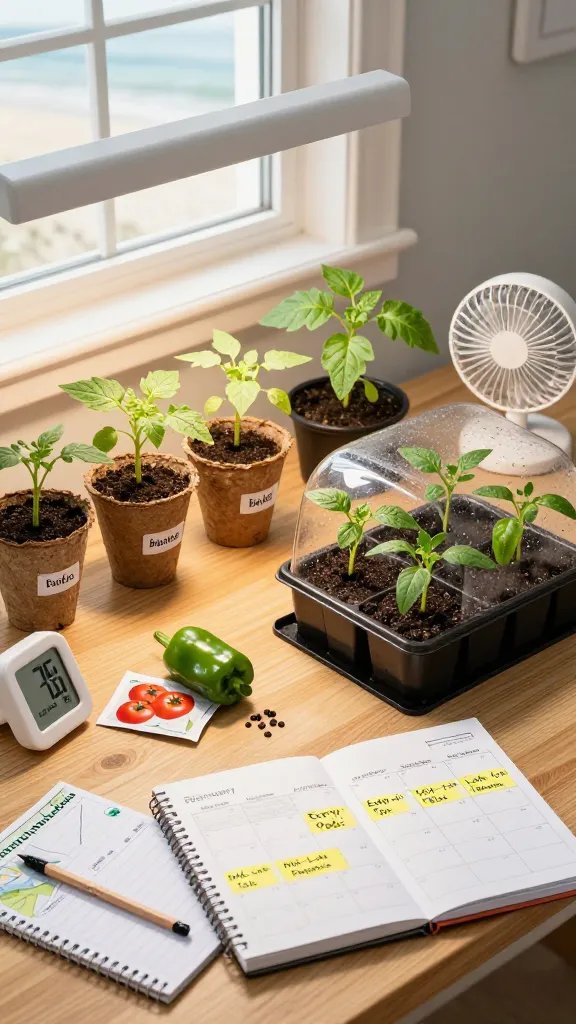
Everyone says “it depends,” which is annoying but true. So here’s the February breakdown by region so you can act now. Adjust a week either way based on your exact frost date.
If You’re In Warm Zones (USDA 9–10+; Coastal South, SoCal, Gulf)
- Early–Mid February: Start peppers now (8–10 weeks pre-transplant). They crave a head start.
- Mid–Late February: Start tomatoes (6–8 weeks pre-transplant).
- Transplant timing: Often March–early April once nights stabilize above 50–55°F.
Use this timing if your last frost lands in early March or you basically don’t get frost. You can even succession start a second wave in late February for staggered harvests.
If You’re In Moderate Zones (USDA 7–8; Mid-Atlantic, Pacific NW Lowlands, Much Of South)
- Early February: Start slow peppers—super-hots, habaneros, and stubborn varieties (10–12 weeks).
- Mid February: Start standard peppers (8–10 weeks).
- Late February: Start early tomatoes (6–8 weeks).
- Transplant timing: Late April–mid May depending on your frost date.
This schedule hits the sweet spot where peppers don’t stall and tomatoes don’t outgrow their pots by April.
If You’re In Cool/Cold Zones (USDA 3–6; Upper Midwest, Rockies, Interior Northeast)
- Mid–Late February: Start peppers (8–10 weeks). Super-hots need the earlier end.
- Late February–Early March: Start tomatoes (6–8 weeks).
- Transplant timing: Mid–late May (sometimes early June). Warm your soil with black plastic or fabric if you can.
Short seasons benefit from efficient timing. Don’t start tomatoes too early, or you’ll be potting up twice and resenting your windowsills.
FYI: Indoor vs. Protected Starts
- Greenhouse/Hoop House: You can start 1–2 weeks earlier, but still respect nighttime temps.
- Heat-Loving Mulches: Black plastic or landscape fabric lets you transplant a smidge earlier by warming soil faster.
Bottom line: February is prime pepper month almost everywhere, and a great time to kick off tomatoes in warmer zones or prep for early March in colder ones.
3. Seed-Starting Setup That Actually Works (No Fancy Gear Required)
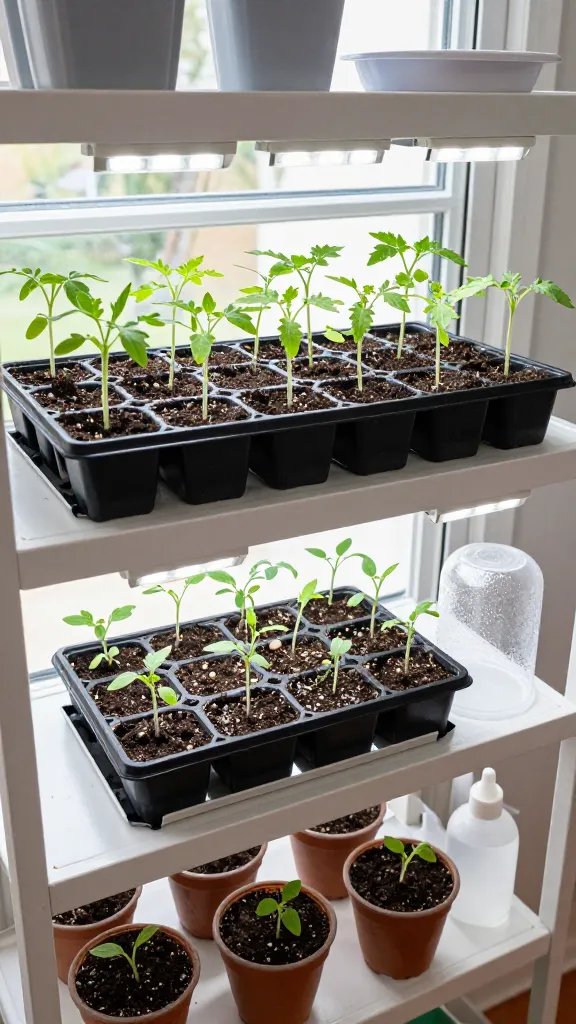
You don’t need a lab. You need consistent warmth, bright light, and breathable soil. Nail these three, and your seedlings look like they hit the gym.
Core Gear Checklist
- Heat Mat + Thermostat: Peppers germinate best at 80–85°F; tomatoes at 75–80°F. Off the mat after they sprout.
- Lights: LED shop lights or grow lights, 2–4 inches above the canopy, 14–16 hours daily. Keep them close to prevent legginess.
- Containers: 72-cell trays for volume or 4-inch pots for fewer plants. Ensure good drainage.
- Medium: Sterile seed-starting mix, not garden soil. Light, airy, and pathogen-free.
- Humidity Dome: Optional for germination only. Remove once most seeds sprout.
- Labels: Trust me, you won’t remember which mystery pepper is which.
Sowing Basics
- Depth: 1/4 inch for both tomatoes and peppers.
- Moisture: Evenly moist, never soggy. Bottom-water once sprouted to protect stems.
- Spacing: One or two seeds per cell. Thin to the strongest seedling with scissors.
Keep air moving with a small fan to build sturdy stems and reduce disease. A gentle breeze today prevents floppy plants tomorrow.
First Two Weeks After Sprout
- Drop heat to room temps: tomatoes 65–75°F; peppers 70–80°F days, slightly cooler nights.
- Keep lights close and bright. Raise as plants grow.
- Fertilize lightly after the first true leaves with a diluted, balanced liquid feed (1/4 strength).
Setups like this deliver stout, dark-green starts that settle into the garden fast. No spindly drama.
4. Tomato Tactics vs. Pepper Patience (Because They’re Not The Same)
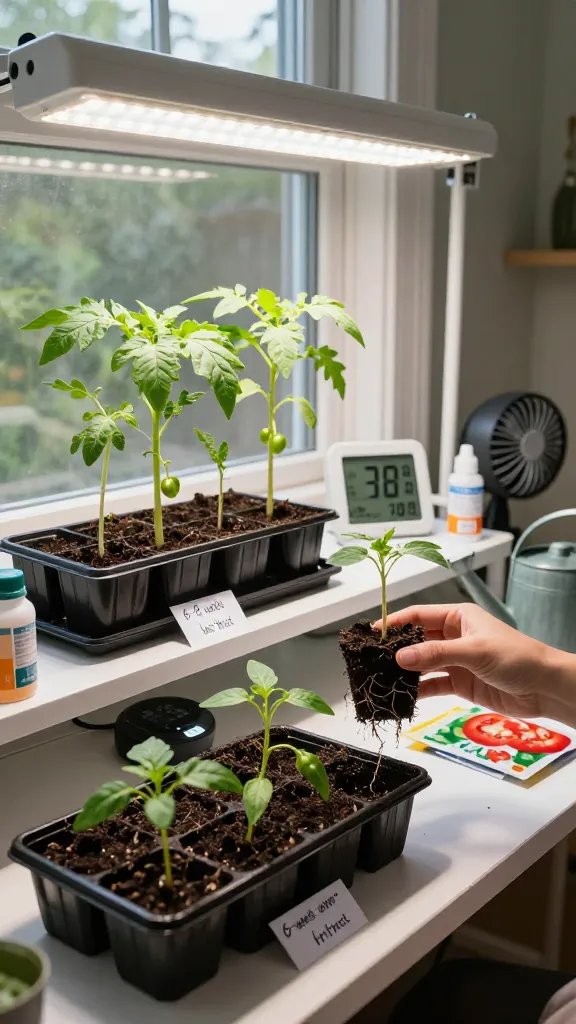
Tomatoes sprint. Peppers meditate. Treat them the same and you’ll either stunt peppers or wrestle unruly tomatoes. Here’s how to play to each crop’s personality.
Tomatoes: Fast And Hungry
- Timing: 6–8 weeks before last frost.
- Germination: 3–7 days at 75–80°F.
- Light: Intense and close. They stretch fast if underlit.
- Potting Up: Bury stems deeper when up-potting. Tomatoes grow roots along buried stems, creating a powerhouse root system.
- Feeding: Start light feed after true leaves; increase to 1/2 strength every 7–10 days as growth accelerates.
- Variety Notes: Determinate types stay compact; indeterminates need early stakes and more frequent pot-ups.
Use tomatoes to build confidence—they forgive small mistakes and still perform like champs.
Peppers: Slow, Particular, Totally Worth It
- Timing: 8–10 weeks before last frost; 10–12 for super-hots (ghost, scorpion, reaper).
- Germination: 7–21+ days; many need 80–85°F to wake up. Don’t panic if they’re slow.
- Potting Up: Do not bury stems deep like tomatoes. Keep the original crown at soil level.
- Heat Matters: Peppers sulk under 65°F nights. Keep starts warm and bright or they stall.
- Feeding: Gentle and steady. Overfertilizing early gives lush leaves but weak roots.
- Variety Notes: Bell peppers lag compared to jalapeños; super-hots are basically introverts—give them time.
Watering And Disease Control
- Bottom-water to avoid damping-off. Let the top 1/2 inch dry slightly between waterings.
- Run a fan for airflow. Sturdy stems and fewer fungal issues.
- If stems narrow at soil line, that’s damping-off. Start over with fresher mix and sterilize trays.
Dialed-in care now means fewer transplants lost later and earlier fruit set once heat arrives.
5. Hardening Off, Transplant Day, And The Post-Move Glow-Up
The transition outdoors makes or breaks your season. Rush it and leaves scorch, roots sulk, and growth stalls. Ease them out and they’ll thank you with unstoppable vigor.
Hardening Off: 7–10 Days
- Days 1–2: 1–2 hours of bright shade, protected from wind. Bring them in at night.
- Days 3–5: 3–4 hours of morning sun, then shade. Increase airflow exposure.
- Days 6–7: 6+ hours of sun. Start leaving them out longer if nights stay above 50–55°F.
- Day 8–10: Full sun all day, one overnight outside if conditions are warm.
Skip this and you’ll watch leaves bleach in a single afternoon. Seriously—sun is harsher than indoor lights.
Transplant Timing And Technique
- Soil temp: Aim for 60°F+ for tomatoes, 65°F+ for peppers. Cold soil = growth stall.
- Spacing: Tomatoes 18–24 inches; big indeterminates up to 30–36 inches with strong staking. Peppers 14–18 inches.
- Planting depth: Tomatoes go deeper, remove lower leaves. Peppers at same depth as the pot.
- Watering-in: Thoroughly drench the hole with a mild starter fertilizer or compost tea.
- Mulch: Add 2–3 inches after soil warms to maintain moisture and reduce disease splash.
Transplant on a cloudy day or late afternoon to reduce shock. Add shade cloth for a couple days if the sun feels spicy.
Early Outdoor Care (First 2–3 Weeks)
- Support: Stake tomatoes immediately; cage peppers to prevent wind whip.
- Fertilizer: After 10–14 days, start a balanced feed every 2–3 weeks, or top-dress with compost.
- Frost back-up: Keep row cover or buckets ready for surprise cold snaps. IMO, a cheap floating row cover is priceless.
Do this right and plants root fast, set flowers earlier, and cruise into summer with momentum.
You’ve got this. February seed starting isn’t about perfection—it’s about momentum. Start your peppers now, time your tomatoes smartly, and set up lights and warmth like a pro. Come June, you’ll be swimming in salsa ingredients and wondering why you didn’t start even more. FYI: extra seedlings make amazing gifts.