
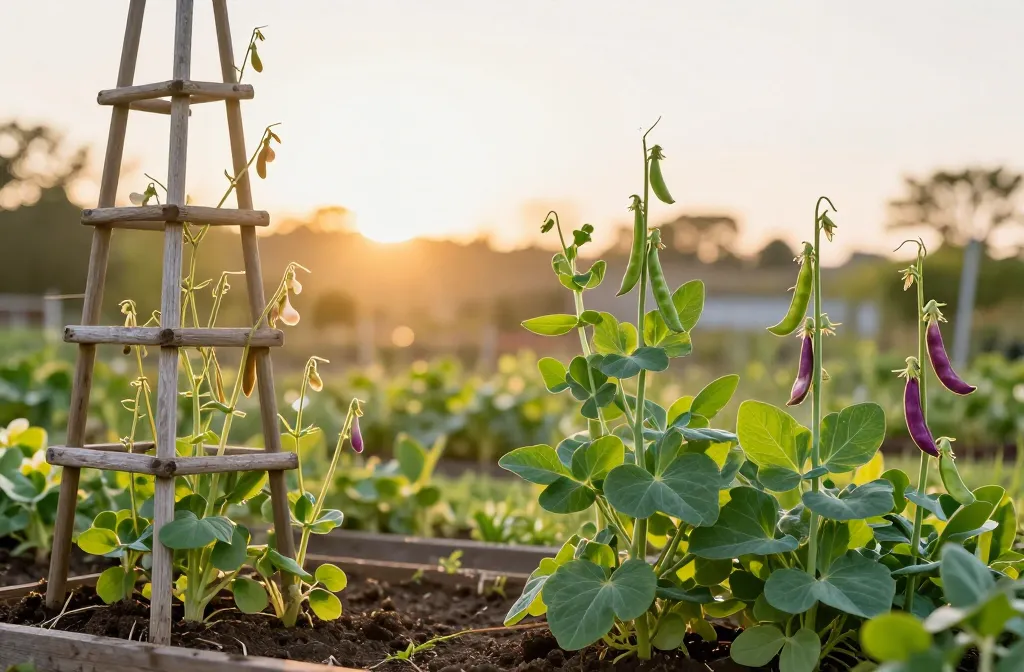
Your spring garden crushed it. The peas popped, the lettuce was crisp, and now those beds look a little… empty. Perfect. That’s your sign to flip the space and keep the harvest going without missing a beat.
We’re talking plug-and-play plant swaps that love heat, grow fast, and make you look like a pro. Ready to turn cool-season leftovers into summer glory? Let’s tag in the next MVPs.
1. Swap Peas For Climbing Beans That Don’t Quit
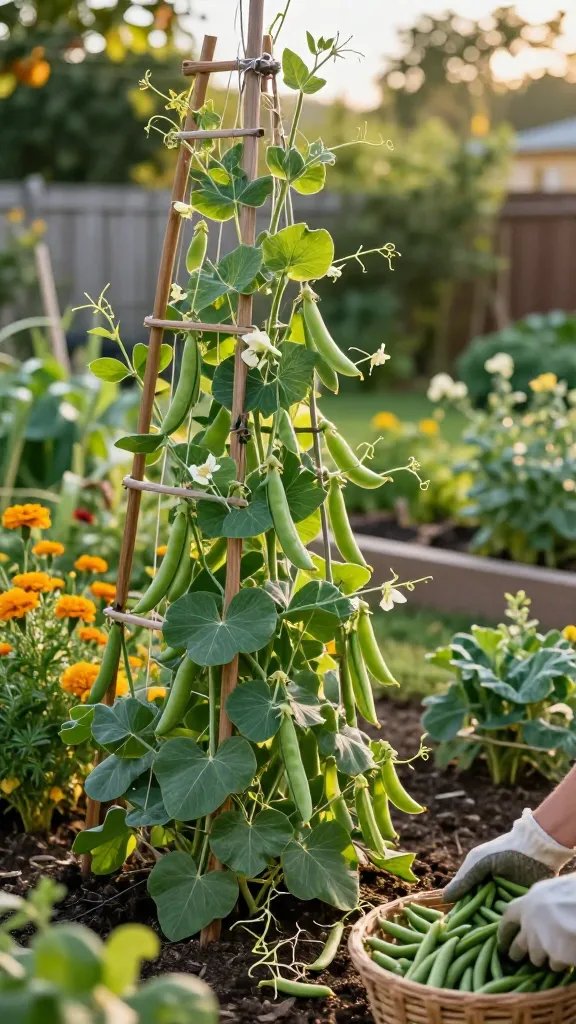
Peas bow out as soon as temps climb, but beans step in and absolutely thrive. You can even reuse the trellis the peas just vacated—recycling for the win. Pole beans bring steady harvests for weeks, while bush beans deliver fast, compact abundance.
Why It’s Awesome
- Heat lovers: Beans embrace warm soil and long days.
- Quick turnaround: Many bush types produce in 50–60 days.
- Soil-friendly: Legumes help with nitrogen—your soil will thank you.
Best Choices
- Pole beans: ‘Kentucky Wonder’, ‘Blue Lake’, purple ‘Trionfo Violetto’ for flair.
- Bush beans: ‘Provider’ for reliability, ‘Dragon Tongue’ for flavor and color.
- Yardlong beans: If summers get hot-hot, these crush it on trellises.
Planting Tips
- Pull pea vines and leave roots in the soil to feed microbes.
- Direct sow beans once soil hits ~65–70°F.
- Water deeply the first week, then regularly—beans hate drying out mid-flower.
Use this when you want a long, steady harvest that climbs or fits tight spaces. Bonus: beans freeze like a dream.
2. Trade Lettuce Beds For Salsas And Salads: Tomatoes + Basil + Marigolds
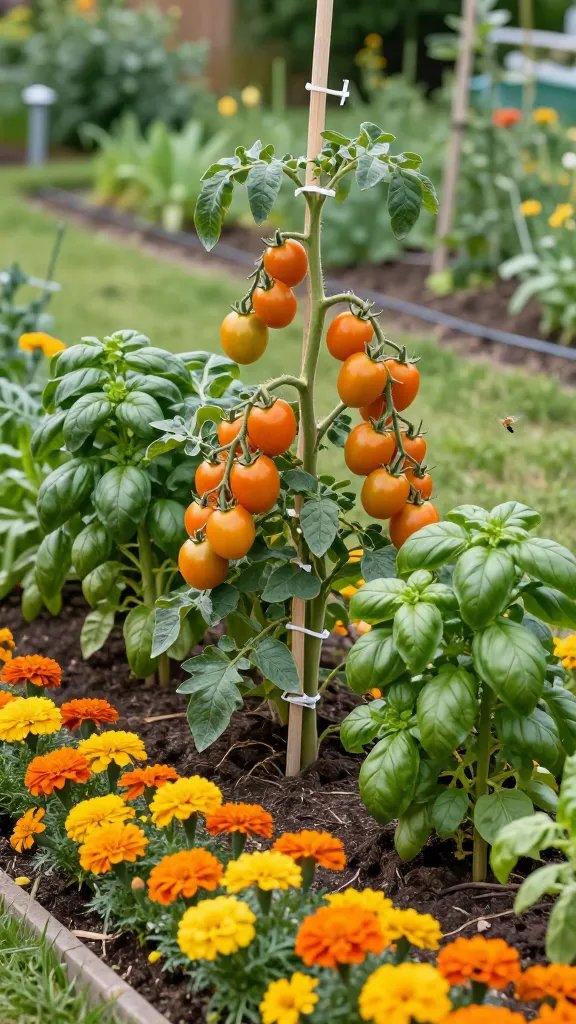
As lettuce gets bitter, swap the salad bed for a Mediterranean trio that screams summer. Tomatoes anchor the show, basil boosts flavor and growth, and marigolds add color and some pest pressure relief. It’s a vibe and a strategy.
Why It’s Awesome
- Companion power: Basil pairs well with tomatoes for taste and pollinator traffic.
- Continuous harvest: Cherry tomatoes produce like overachievers.
- Pretty + practical: Marigolds draw beneficials and create a tidy border.
Best Choices
- Tomatoes: ‘Sungold’, ‘Juliet’, ‘Black Cherry’ for nonstop snacking; ‘Celebrity’ for slicers.
- Basil: ‘Genovese’ for pesto, ‘Thai’ for heat lovers, ‘Lemon’ for zing.
- Marigolds: French types like ‘Bonanza’ for compact edging.
Planting Tips
- Amend lettuce beds with compost—leafy greens often leave soil a bit tired.
- Plant tomatoes deep, burying stems to encourage extra roots.
- Space basil 10–12 inches apart; pinch regularly to prevent flowering.
- Mulch to keep roots cool and reduce blossom end rot risk.
Use this when you want garden-to-table salads and sauces all summer. FYI: cherries will turn you into a snacker every time you walk by.
3. Turn Spinach And Arugula Rows Into Pepper Paradise
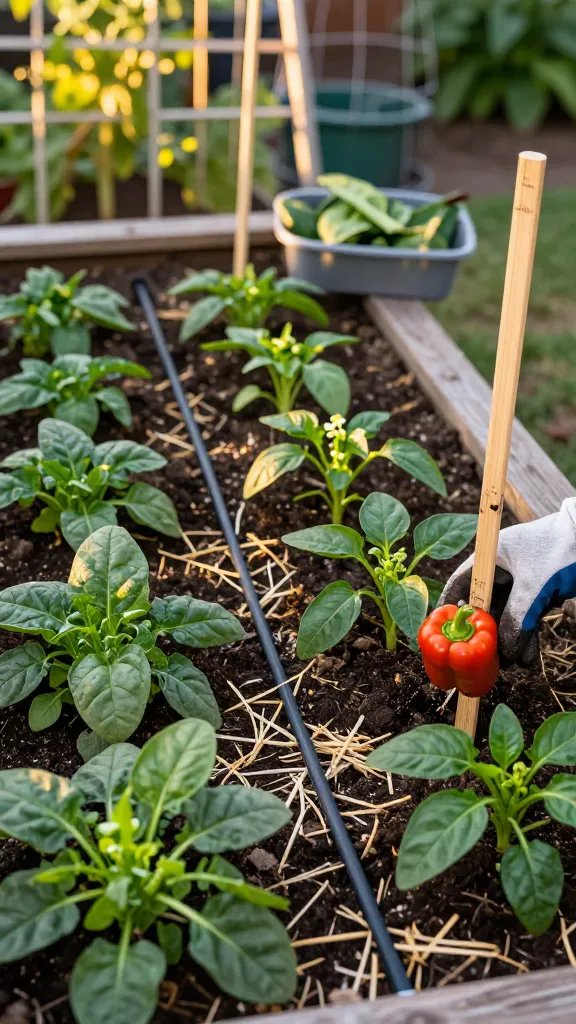
Spinach peaces out the moment it gets warm. Peppers, on the other hand, adore heat and repay patience with buckets of fruit. From sweet bells to fiery habaneros, these plants love the sunny real estate your greens just freed up.
Why It’s Awesome
- Heat synergy: Pepper roots love warm, stable soil.
- Compact plants: Great for raised beds and small gardens.
- Flavor upgrade: Fresh peppers level up every meal—no contest.
Best Choices
- Sweet: ‘Ace’, ‘Gypsy’, ‘Lunchbox’ minis for fast color.
- Hot: ‘Jalapeño M’, ‘Serrano’, ‘Cayenne’ for drying.
- Specialty: ‘Shishito’ for pan blistering, ‘Padrón’ for tapas nights.
Planting Tips
- Wait for nighttime temps above 55°F—peppers sulk if cold. Seriously, they’ll just sit there.
- Add compost and a handful of slow-release organic fertilizer.
- Stake early to prevent floppy plants once fruit sets.
- Mulch to retain moisture and keep soil temps steady.
Use this when you want a colorful, compact powerhouse bed that keeps producing into fall. IMO, shishitos will convert even pepper skeptics.
4. After Broccoli And Kale, Go Big With Squash, Cucumbers, Or Melons
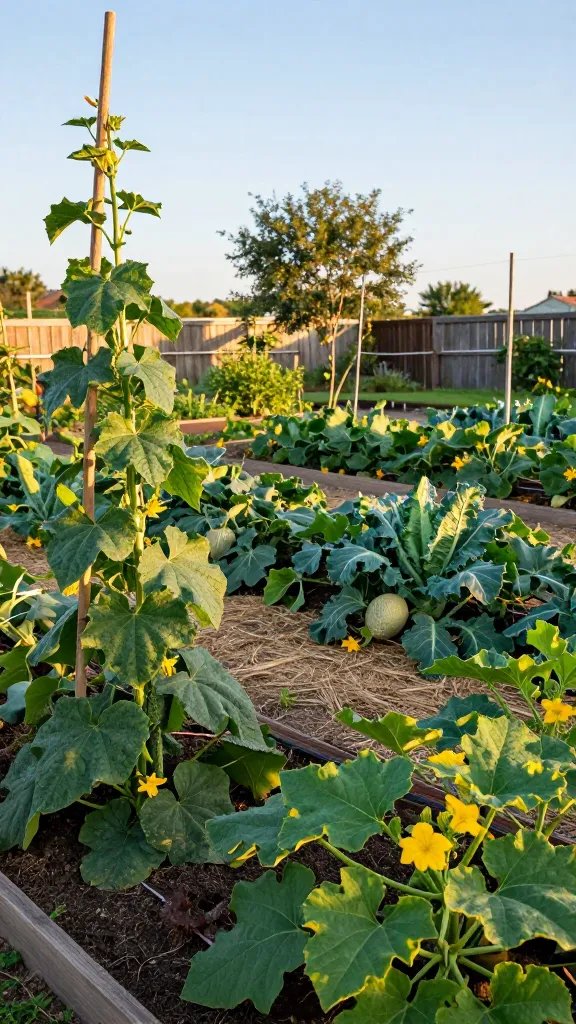
Brassicas take a lot out of the soil, so once they’re done, switch to heavy-fruiting vines that love warmth and sun. Think cucumbers for crisp crunch, summer squash for reliability, and melons if you want to flex. These plants cover ground fast and shade out weeds—double win.
Why It’s Awesome
- High reward: Massive yields with minimal fuss once established.
- Weed suppression: Big leaves, less weeding. Amen.
- Diverse options: Pick for speed (cukes) or glory (melons).
Best Choices
- Cucumbers: ‘Marketmore 76’ for slicing, ‘Little Leaf’ for pickling, or parthenocarpic greenhouse types.
- Summer squash: ‘Costata Romanesco’ for texture, yellow crookneck for speed.
- Melons: ‘Minnesota Midget’ for small spaces, ‘Sugar Baby’ for compact watermelons.
Planting Tips
- Remove brassica residues and add compost to recharge nutrients.
- Use a trellis for cucumbers to save space and improve airflow.
- Hand-pollinate early melon flowers if pollinators lag.
- Watch for squash vine borers; wrap stems with foil or plant resistant/thin-stem varieties.
Use this when you want major summer volume. Trellised cucumbers shine in small gardens, while sprawling melons are perfect for that sunny corner.
5. Fill Carrot, Beet, And Radish Gaps With Fast-Blooming Herbs And Cut Flowers
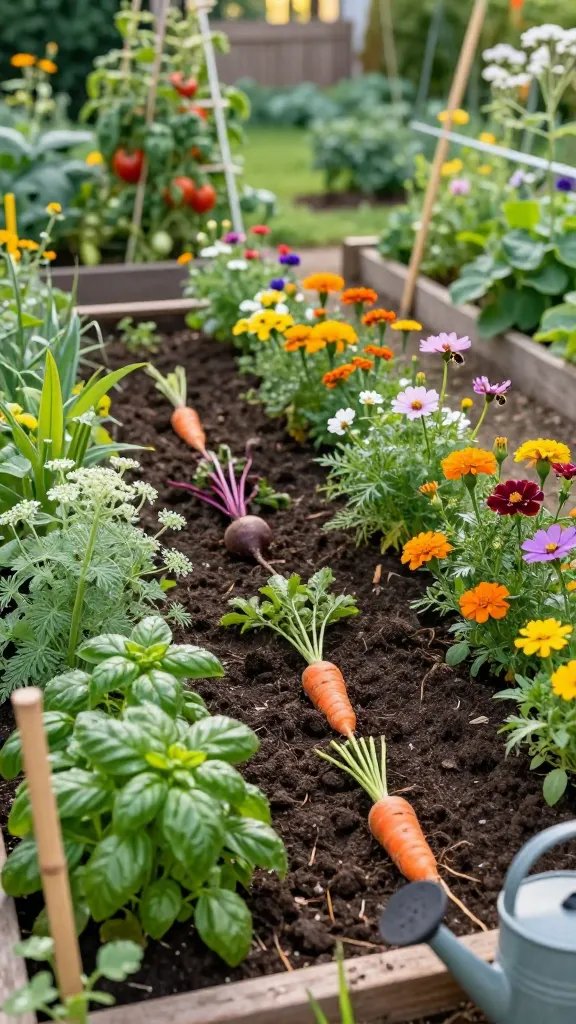
Root crops leave neat, open soil that’s begging for something quick and gorgeous. Enter herbs and flowers that explode in summer heat, bring pollinators, and make your garden look staged for a magazine. You’ll harvest bouquets and seasoning while attracting all the good bugs.
Why It’s Awesome
- Speedy gratification: Many herbs and flowers take off in weeks.
- Pollinator magnet: More bees = better fruit set everywhere.
- Edible + ornamental: Pretty and practical… we love a multitasker.
Best Choices
- Herbs: Dill, cilantro (succession sow for heat-tolerant types), parsley, chives, thyme.
- Heat-tolerant stars: ‘Everleaf’ basil (slow to bolt), lemon verbena, rosemary in warm zones.
- Cut flowers: Zinnias, cosmos, calendula, sunflowers, nasturtiums (edible flowers, spicy leaves).
Planting Tips
- Loosen soil lightly after root harvest—don’t overwork it.
- Direct sow zinnias and cosmos; they hate transplant drama.
- Stagger sowings every 2–3 weeks for continuous blooms and fresh herbs.
- Pinch cosmos and zinnias at 8–10 inches for bushier plants and more stems.
Use this when you want instant color, pollinator traffic, and low-effort harvests. FYI: a quick bouquet on the table makes every meal feel fancy.
You don’t need more space to get more harvest—you just need the right handoff from spring to summer. Clear those cool-season champs, amend with a little compost, and plug in one of these swaps. Your midsummer self will be sending thank-you notes from the hammock, trust me.