
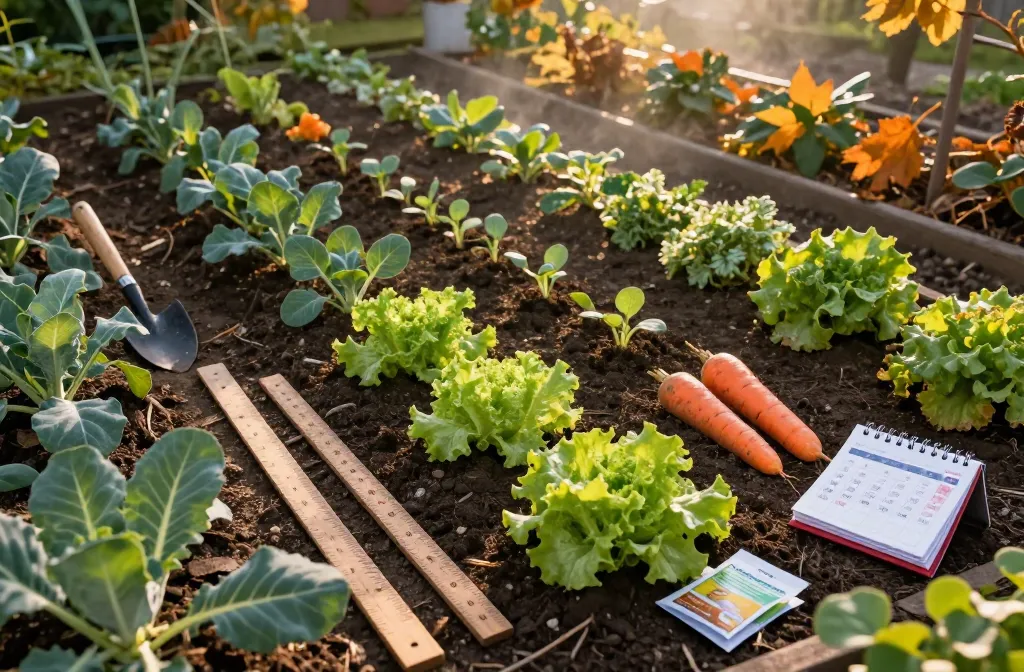
Want a fall garden that actually produces before frost hits? You can get a second wave of crunchy greens, sweet carrots, and herbs if you time your transplants right. Think of fall as your garden’s encore—cool nights, fewer pests, and better flavors. Let’s map out exactly what to move, when to move it, and how to make it thrive.
1. Count Backwards Like a Boss: Timing Your Transplants
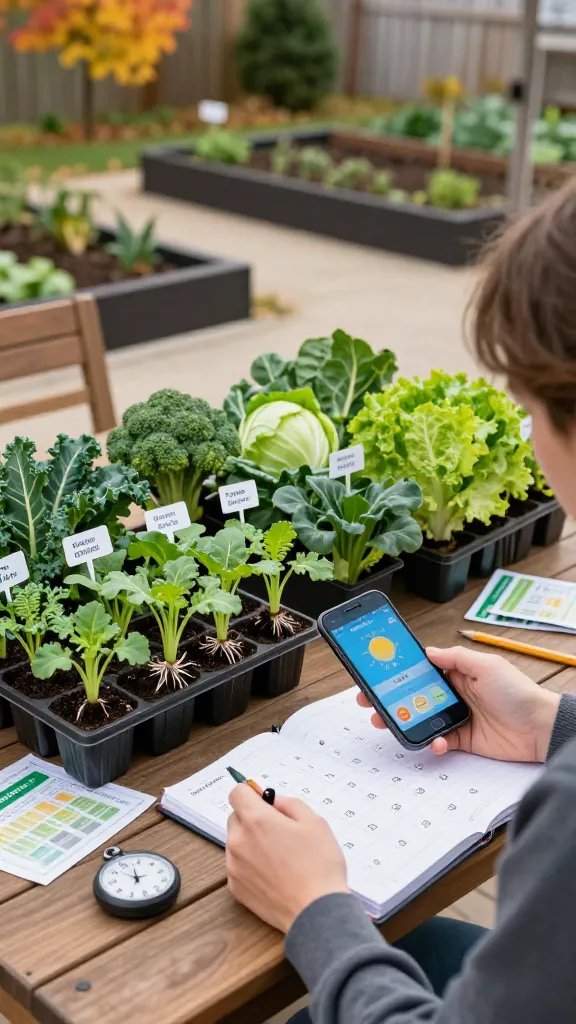
Fall success starts with a calendar, not a guess. You’ll work backward from your area’s average first frost date to decide when to move seedlings outdoors. Do that and you’ll hit harvest windows without the panic.
Key Steps:
- Find your frost date: Search your zip code + “first frost date.” Jot it down.
- Check days to maturity (DTM): Use the seed packet or variety page. For fall, add 7–14 “slowdown days” because cooler weather stretches growth.
- Count backward: Frost date minus (DTM + 7–14 days). That’s your latest safe transplant date.
Example: If first frost is Oct 20 and your lettuce takes 30 days, plan to transplant by roughly mid-September (30 + 10 buffer = 40 days). You’ll be salad-rich before Halloween, easy.
General Transplant Windows (By Crop Type)
- Brassicas (broccoli, cauliflower, cabbage, kohlrabi): Transplant 8–10 weeks before frost.
- Leafy greens (lettuce, spinach, mizuna, chard): Transplant 4–8 weeks before frost.
- Roots (beets, turnips): Mostly direct sow, but you can transplant 6–8 weeks before frost if started in cells.
- Herbs (parsley, cilantro, dill): Transplant or direct sow 6–8 weeks before frost; cilantro loves the chill.
- Overwintering crops (garlic, onions/scallions): Plant 2–4 weeks before ground freeze, harvest spring/summer.
Dialing in these windows means your garden won’t stall out just when dinner gets cozy. FYI, you’ll taste the difference—cool-grown produce slaps.
2. Pick Winners: Crops That Love A Second Season
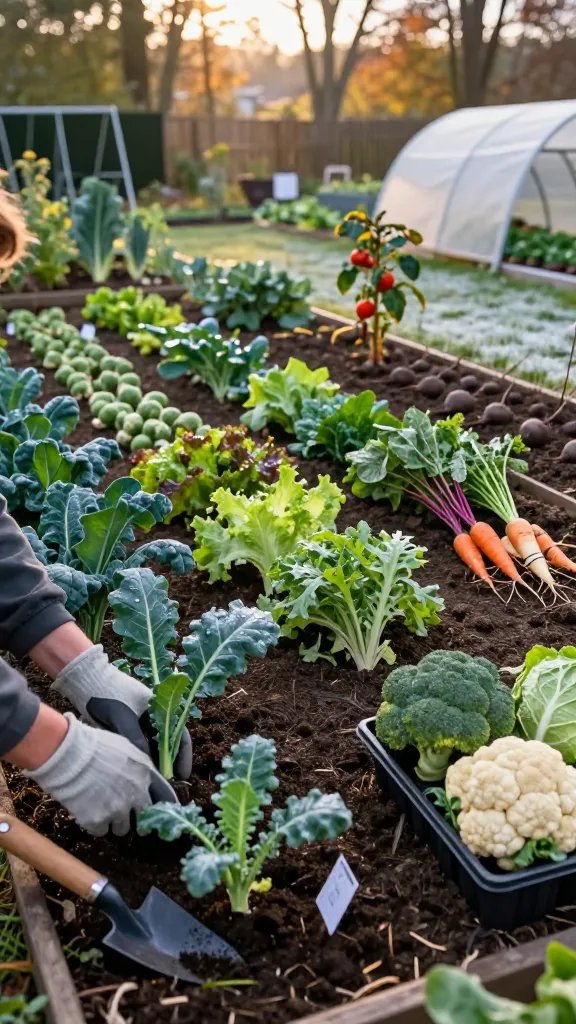
Not every plant vibes with fall. Tomatoes and peppers hate the party once nights drop under 55°F, but hardy greens and brassicas thrive. Choose cold-tolerant varieties and you’ll harvest even after light frost.
Cool-Season MVPs
- Brassicas: Broccoli, cauliflower, cabbage, kale, collards, kohlrabi, Brussels sprouts (start earlier).
- Salad greens: Lettuce, spinach, arugula, mache, mizuna, tokyo bekana.
- Roots: Carrots (direct sow), beets, turnips, radishes, daikon (direct sow), rutabaga (earlier).
- Herbs: Cilantro, dill, parsley, chives. Basil? Not a fall friend—skip it.
- Alliums: Scallions, bunching onions; plant garlic for next summer.
Variety Tips
- Kale: ‘Winterbor’, ‘Red Russian’—sweetens after frost.
- Lettuce: ‘Winter Density’, ‘Rouge d’Hiver’, ‘Salad Bowl’—strong in cool temps.
- Spinach: ‘Bloomsdale’, ‘Giant Winter’—great for late fall and overwintering under cover.
- Broccoli: ‘Arcadia’, ‘Green Magic’—reliable heads in cool weather.
- Carrot: ‘Napoli’, ‘Bolero’, ‘Yaya’—sweet, stores in-ground with mulch.
Choosing the right cast means fewer meltdowns and more harvests. Cool weather concentrates sugars—hello, sweeter carrots and richer kale. Seriously, fall flavors just hit different.
3. Transplant Like You Mean It: Prep, Hardening Off, And Spacing
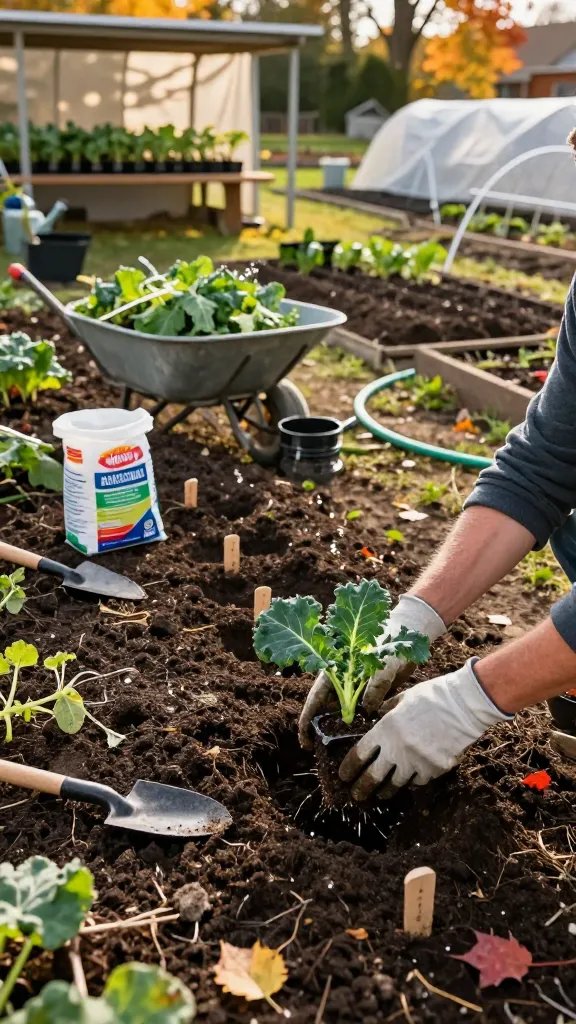
Perfect timing doesn’t matter if the move shocks your seedlings. Give them a smooth transition and they’ll root fast and start growing again. This is where technique pays off.
Before You Move Them
- Harden off 5–7 days: Gradually increase outdoor time—shade to partial sun, then full sun. Cut water slightly the day before transplanting to reduce shock.
- Prep beds: Clear summer crops, pull weeds, and add 1–2 inches of compost. Lightly mix in a balanced organic fertilizer if your soil needs it.
- Water the cells before planting: Moist roots slide out clean and stay intact.
Transplant Day Playbook
- Pick a cool, cloudy afternoon or evening. Hot midday sun = sulking seedlings.
- Soak the planting hole. Mud-in method reduces air pockets.
- Plant at the right depth:
- Brassicas: Slightly deeper for sturdier stems.
- Lettuce and greens: Same depth as in the cell.
- Leeks/scallions: In shallow trenches for easy hilling.
- Spacing (typical):
- Broccoli/cauli/cabbage: 18–24 inches apart, 24–30 inches between rows.
- Kale/collards: 12–18 inches apart.
- Lettuce heads: 10–12 inches; baby cut-and-come-again: 6–8 inches.
- Beets/turnips (if transplanted): 3–4 inches apart.
- Water in with starter solution (kelp + compost tea or diluted fish emulsion) to reduce stress.
Aftercare That Actually Works
- Shade cloth or an umbrella for 2–3 days during heat spikes.
- Mulch with straw, shredded leaves, or compost to keep roots cool and moist.
- Row cover over hoops to block pests and boost growth a few degrees.
Do this and your transplants won’t even flinch. You’ll see new growth in a week, which is basically a standing ovation in plant language.
4. Beat The Heat, Dodge The Frost: Weather Hacks For Fall
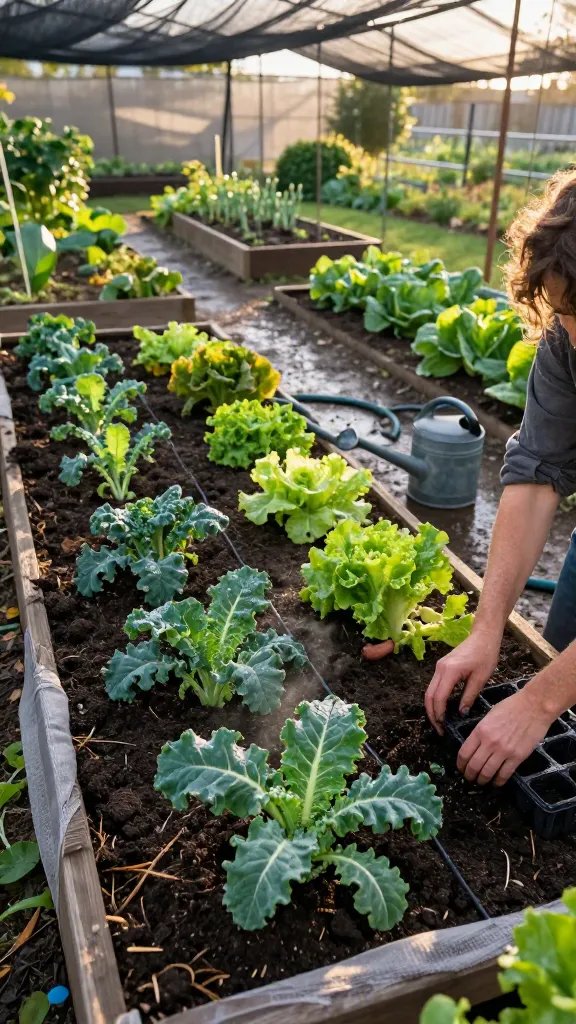
Fall gardening is a dance between late-summer heat and early-winter chill. Work with the weather, not against it, and your second season stays on track. Small microclimate tweaks make huge differences.
When It’s Still Hot
- Seed under shade cloth (30–50%) or in nursery trays indoors, then transplant.
- Water deeply every 2–3 days until established; then switch to 1 deep soak weekly, weather permitting.
- Use evaporative cooling: Water paths and mulch early morning during heat waves.
When Nights Turn Chilly
- Row cover/frost cloth (0.5–1.0 oz): Adds 2–6°F. Keep it on at night, vent by day to avoid overheating.
- Low tunnels with clear plastic: Use once highs drop below 60°F regularly. Always vent on sunny days.
- Mulch roots of carrots, beets, and leeks with 3–6 inches of straw or leaves. Harvest as needed, even after freezes.
Frost Tolerance Snapshot
- Frost hardy: Kale, collards, spinach, mache, carrots, beets, parsley, scallions.
- Light frost tolerant: Broccoli, cabbage, kohlrabi, lettuce (some varieties), cilantro.
- Tender (protect or harvest early): Cauliflower heads, baby lettuces, celery.
With a bit of cover and timing, you’ll stretch harvests well past the first frost. IMO, the first sweet post-frost carrot will convert any skeptic.
5. Succession Wins: Staggered Planting And Quick Harvest Tricks
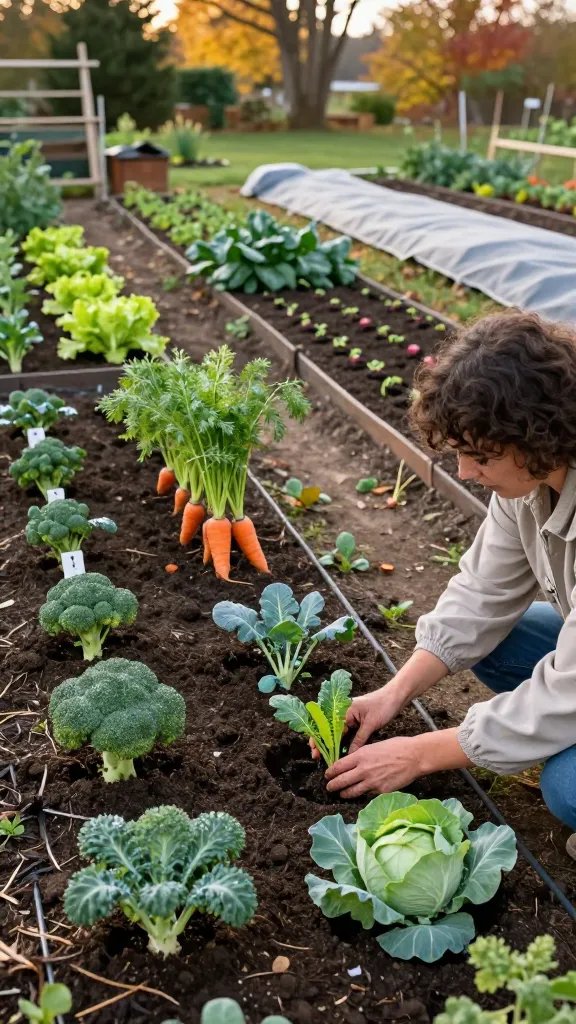
Don’t bet everything on one planting day. Staggering transplants and sowings guarantees steady harvests instead of a single overwhelmed week. It also hedges against weird weather or a random pest invasion—because those happen.
Simple Succession Plan (6–10 Weeks Before Frost)
- Week 10–8: Transplant broccoli, cabbage, kale; direct sow carrots and beets.
- Week 8–6: Transplant lettuce and chard; sow radishes and turnips.
- Week 6–4: Second wave of lettuce; transplant cilantro and dill; sow spinach.
- Week 4–2: Baby greens galore—mustards, arugula, fast lettuces; start scallions.
- Week 2–0: Overwinter spinach under row cover; plant garlic; mulch carrots for in-ground storage.
Speed Hacks For Faster Harvest
- Go small: Harvest lettuce as mini-heads at 35–45 days.
- Use denser spacing for cut-and-come-again beds (4–6 inches). Shear, water, regrow, repeat.
- Leaf harvest on brassicas: Pick outer leaves of kale/collards weekly and leave the center to keep producing.
- Warm the soil with black landscape fabric or plastic for faster establishment in cool nights.
- Feed lightly with liquid kelp or fish every 2–3 weeks for steady growth without bitterness.
Common Pitfalls (And Easy Fixes)
- Transplanting too late? Add row cover immediately and choose baby-leaf harvests.
- Bugs still around? Cover beds at transplant. Use Bt on caterpillars; remove damaged leaves.
- Slow growth? Check soil moisture and sunlight. Trim nearby plants to boost fall sun exposure.
Stack these tactics and you’ll harvest something every week until deep winter. Your future soups and salads say thanks.
Ready to give your garden a glorious encore? Grab your calendar, pick a few cool-season rockstars, and start transplanting on schedule. With a little planning and a touch of protection, your second season will feel like you unlocked a cheat code for fall food. Trust me, you’ll wonder why you didn’t start sooner.