
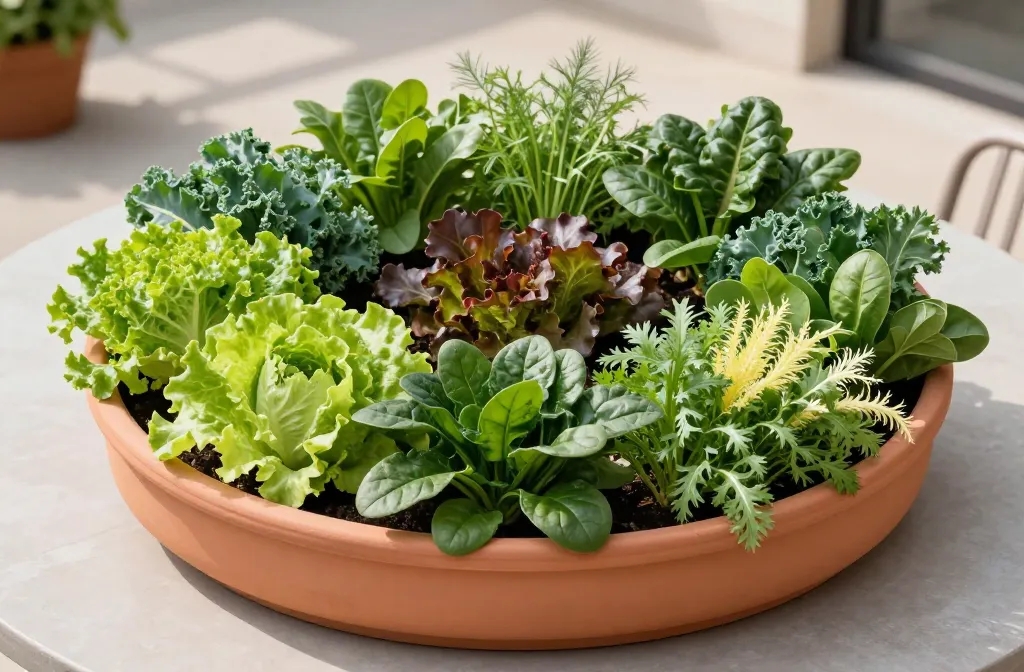
Craving crunchy, homegrown greens without a backyard? Build a salad bowl garden and harvest a full produce aisle from a single pot. It’s fast, compact, and ridiculously satisfying. Grow a variety of textures and flavors in one container and snip your way to endless salads, wraps, and garnish glory.
You don’t need fancy gear or a greenhouse—just a big container, good soil, and a smart layout. Let’s pack 15 greens into one lush bowl that keeps producing for weeks. Ready to grow your own salad bar? Let’s plant it.
1. Choose the Right Container and Layout (Your “Bowl” Matters)
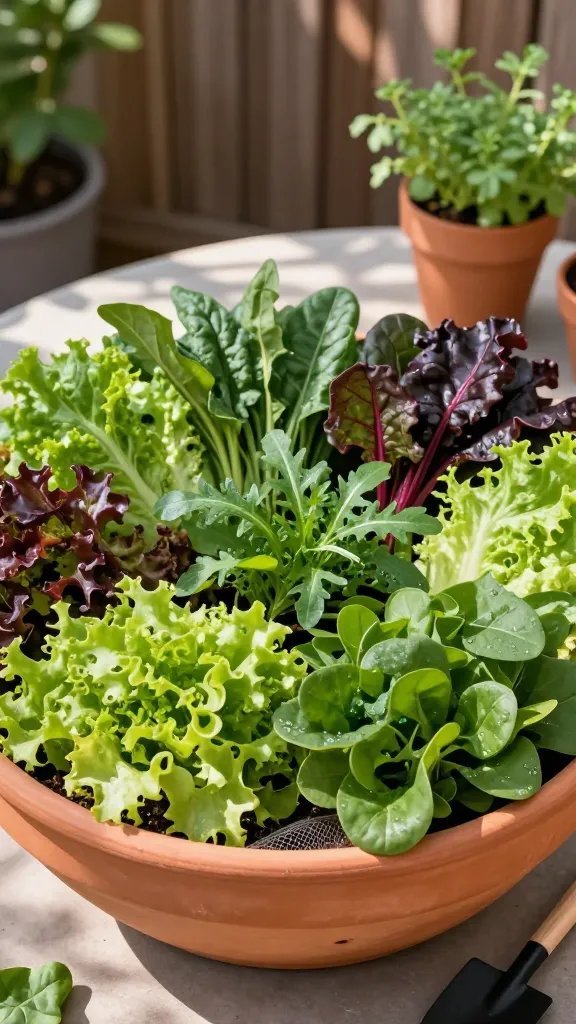
A thriving salad bowl starts with the right home. Go wide rather than deep so every plant gets light and air. A 16–20 inch diameter container with drainage works beautifully—think large terracotta, fabric grow bag, or a lightweight resin pot.
Key Specs:
- Size: 16–20 inch diameter, 10–12 inches deep
- Drainage: At least 4 holes; add a mesh or coffee filter to keep soil in
- Soil: High-quality potting mix with compost; avoid heavy garden soil
- Light: 4–6 hours sun for cool-season greens; bright shade in hot climates
Use a “rings and clusters” layout to maximize space and airflow. Place taller or cut-and-come-again types near the center, with low, quick growers on the outer ring. This keeps everyone happy and harvestable.
Suggested 15-Green Plant List (Cut-and-Come-Again Champions):
- Leaf lettuces: Green leaf, Red leaf, Oakleaf, Romaine baby
- Loose-leaf specialty: Lollo Rossa, Butterhead baby, Little Gem
- Spicy greens: Arugula, Mizuna, Mustard greens
- Hearty leaves: Kale (dwarf), Swiss chard (bright lights)
- Asian greens: Tatsoi, Pak choi (baby bok choy)
- Herb bonus: Flat-leaf parsley or cilantro for zip
Benefits? A wide pot reduces crowding, roots stay cooler, and you get a visually lush bowl that produces constantly. Efficiency plus aesthetics FTW.
2. Mix, Match, and Stagger (Flavor + Texture + Timing)
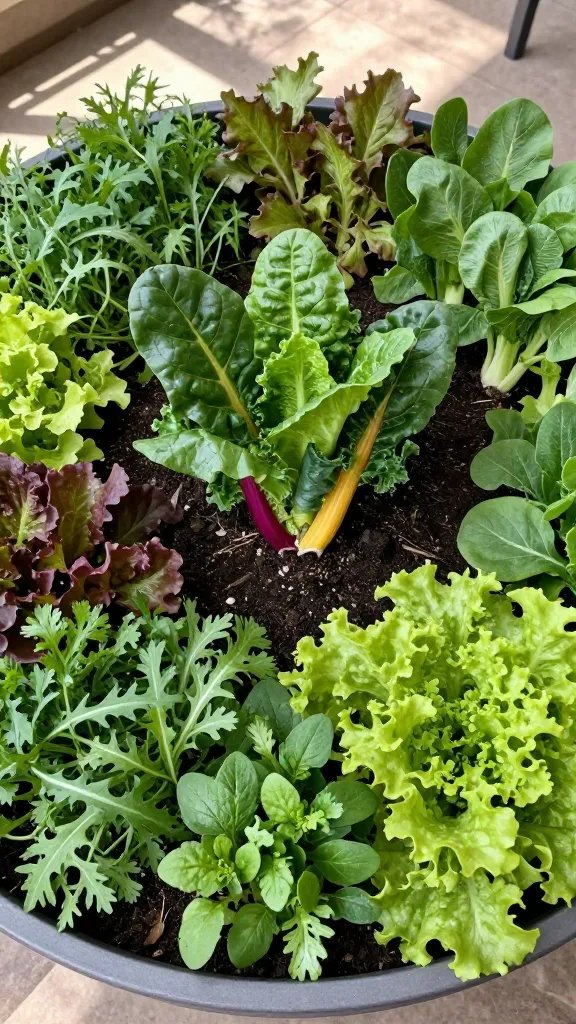
Salads taste better when you mix textures and flavors. You want crisp romaine, tender butterhead, peppery arugula, and frilly Lollo Rossa all in one bite. Diversity also keeps pests less excited about your buffet.
Flavor Zones:
- Center (tall and steady): Baby romaine, dwarf kale, Swiss chard
- Mid-ring (leafy stars): Butterhead baby, Oakleaf, Lollo Rossa, Little Gem
- Outer ring (quick snippers): Arugula, Mizuna, Mustard, Tatsoi, Parsley/Cilantro, Pak choi
Stagger your plantings so everything doesn’t mature at once. Sow half the arugula now, half in two weeks. Same with mizuna and mustard. You’ll always have fresh, tender leaves and avoid the dreaded “all at once” harvest chaos.
Tips:
- Sow dense, harvest young: Sprinkle seeds for baby leaves, then thin by eating.
- Transplant the showpieces: Place starter plants of romaine, kale, or chard for instant structure.
- Mind spacing: 4–6 inches between larger plants; sow cut-and-come-again greens closer.
This approach gives you layered flavor and a continuous harvest schedule. It’s like meal prep, but in soil.
3. Planting, Watering, and Feeding (Set It Up for Success)
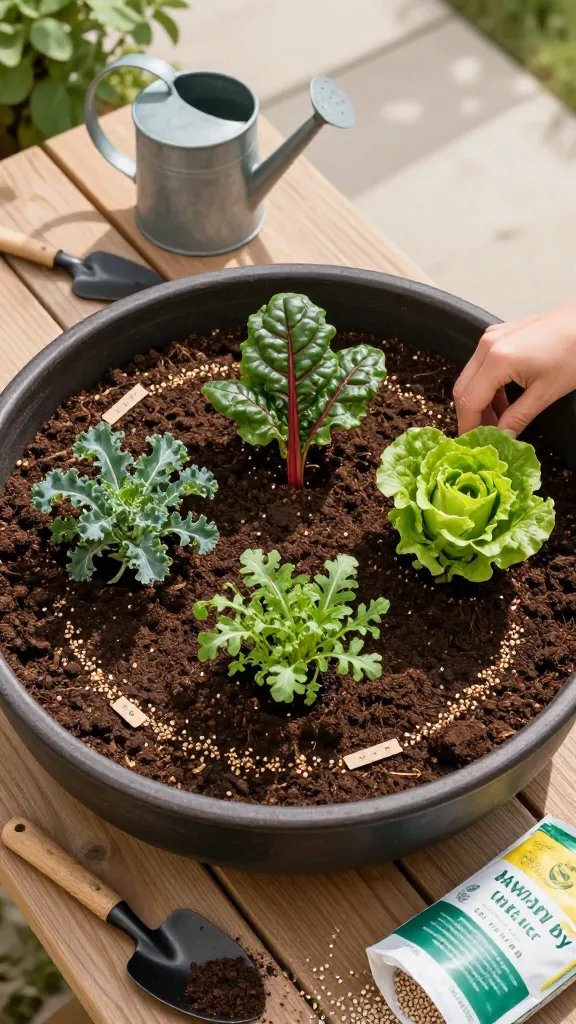
Good planting technique makes the difference between meh and magnificent. You don’t need fancy fertilizers—just consistent moisture and a little slow-release nutrition. Greens grow fast and tell you quickly when they’re happy.
Planting Steps:
- Fill: Pot 90% full with potting mix + compost (about 3:1). Top with 1 inch fine mix.
- Pre-soak: Water until evenly moist, not soggy.
- Place transplants: Center your kale/chard/romaine babies first.
- Sow seeds: Scatter arugula, mizuna, mustard, tatsoi in arcs. Cover lightly (¼ inch).
- Label: Trust me, you’ll forget which frilly thing is which.
Watering:
- Keep consistently moist: Aim for evenly damp soil, never bone-dry or swampy.
- Morning water: Reduces disease and gives plants a good day start.
- Finger test: If the top inch feels dry, water thoroughly until it drains.
Feeding:
- At planting: Mix in a balanced slow-release fertilizer or compost.
- Every 10–14 days: Give a diluted liquid feed (fish/seaweed) for tender leaves.
- pH sweet spot: Around 6.0–6.8 keeps nutrients available and leaves vibrant.
Do this and your bowl grows fast, lush, and flavorful. Plus, you’ll avoid bitterness and bolting caused by stress.
Smart Sun and Heat Management:
- Cool seasons: Full sun is perfect.
- Warm climates: Provide afternoon shade or use 30–40% shade cloth.
- Heat tricks: Light-colored pots, mulch with fine straw/coco coir, and water earlier on hot days.
Dial in water, food, and light, and your greens will practically leap into your salad bowl. Seriously.
4. Harvest Like a Chef (And Keep It Producing)
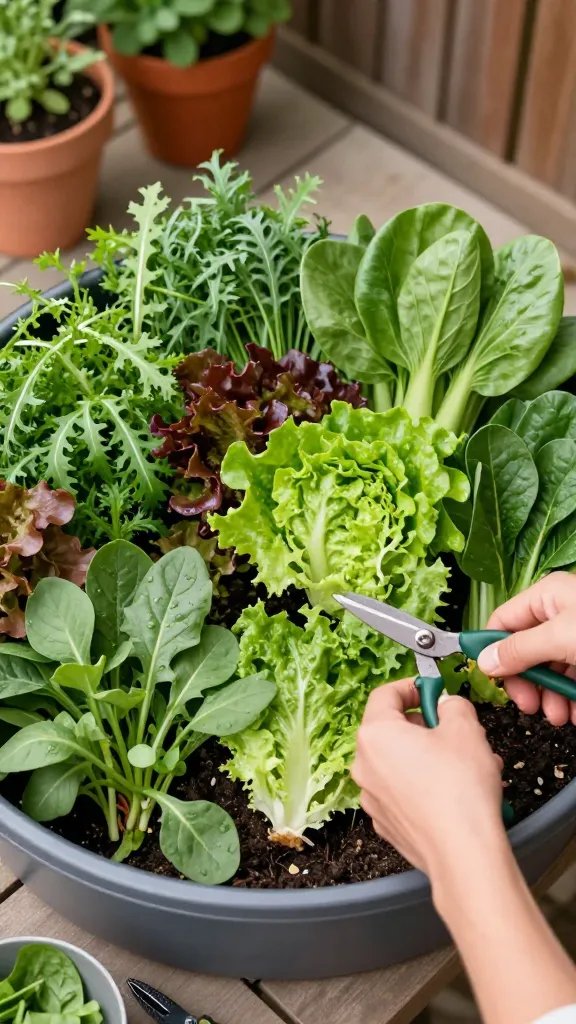
The magic of a salad bowl garden? Nonstop harvests. Use cut-and-come-again techniques to get weeks of fresh greens from the same plants. Clip, eat, repeat.
Cut-and-Come-Again Basics:
- Outer-leaf method: Snip outer leaves 1 inch above the crown; leave the center to regrow.
- Haircut method: For arugula/mizuna/mustard, shear the patch to 2 inches; it will regrow fast.
- Baby head harvest: Take a whole Little Gem or baby bok choi once it’s palm-sized.
When to Harvest Each:
- Arugula, mizuna, mustard, tatsoi: 3–4 weeks to baby leaves.
- Lettuce (leaf/butterhead/oakleaf): Snip at 4–6 inches tall.
- Romaine/Little Gem: Baby leaves in 30 days; mini heads in 45–55 days.
- Kale/chard: Start harvesting when leaves reach 4–6 inches.
Pro Moves:
- Morning harvest: Leaves are crisper and sweeter.
- Clean cuts: Use scissors; ragged tears invite disease.
- Rotate snips: Don’t over-harvest one area; let sections rest and rebound.
- Ice bath rescue: Wilted leaves perk up in cold water. IMO, game-changer.
Done right, a single container can feed salads 2–4 times a week for a month or more. That’s an ROI your grocery store can’t touch.
5. Troubleshoot, Replant, and Upgrade (Keep the Salad Train Rolling)
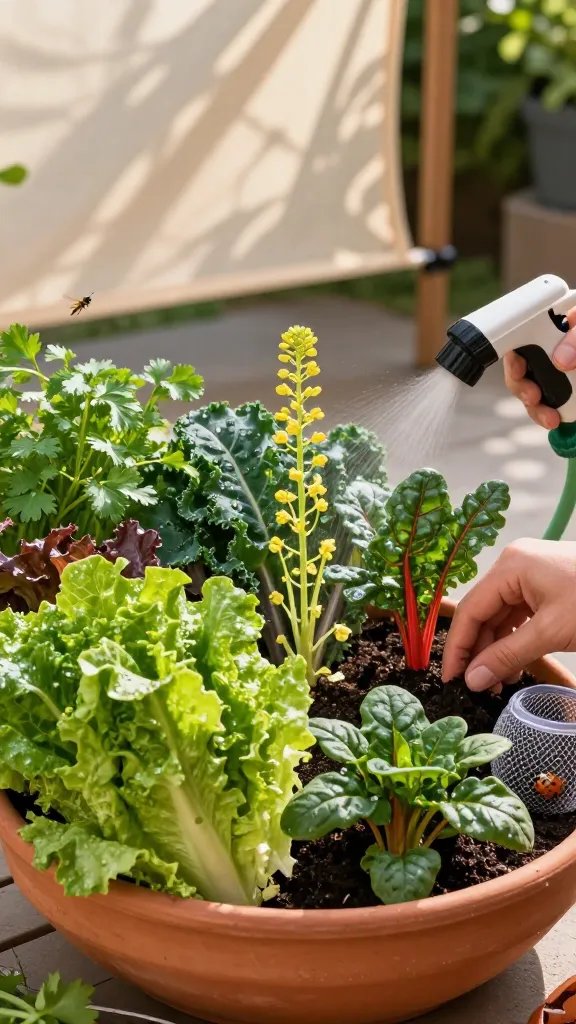
Things happen—aphids arrive, heat spikes, or a mustard patch bolts. No stress. You can fix most issues fast and keep your bowl thriving with quick swaps and smart maintenance.
Common Issues and Fixes:
- Bolting (tall, bitter): Heat or stress causes it. Pull and replace with heat-tolerant greens like Swiss chard, New Zealand spinach, or Malabar spinach. Provide shade.
- Aphids: Blast with water, release ladybugs, or spray diluted soapy water (rinse after). Plant parsley/cilantro to lure beneficials.
- Slugs/snails: Hand-pick at dusk, use beer traps, or sprinkle iron phosphate bait safely.
- Fungal spots/mildew: Improve airflow, avoid evening watering, thin crowded patches. Remove affected leaves.
- Bitter leaves: Harvest younger, water consistently, and provide shade during heat.
Seasonal Swaps:
- Cool weather (spring/fall): Lettuce, arugula, mizuna, tatsoi, pak choi, kale.
- Warmer weather: Swiss chard, perpetual spinach, Malabar spinach, New Zealand spinach, bronze fennel fronds for garnish.
- Shoulder seasons: Add dill and cilantro early; basil later for a herby upgrade.
Replant Rhythm:
- Every 2–3 weeks: Resow quick greens along the outer ring.
- Every 6–8 weeks: Refresh top inch of soil with compost and refeed lightly.
- After heavy harvests: Mulch with fine compost to keep moisture steady.
Next-Level Upgrades:
- Self-watering insert: Reduces stress and bitterness by keeping moisture consistent.
- Microgreen strip: Dedicate a 3-inch arc for rapid microgreen harvests between larger plants.
- Color pop: Rainbow chard, red romaine, and purple mustards make it Instagram-pretty. FYI, they taste great too.
With simple swaps and a steady resow habit, your salad bowl stays productive and photogenic. Minimal effort, maximum crunch.
Ready to build your personal salad factory? Grab a big pot, pack it with variety, and start snipping in a few weeks. Keep it watered, harvest often, and refresh as you go—your future self (and lunch) will thank you. Go plant that bowl and eat like a gardener, not a grocery cart warrior.