
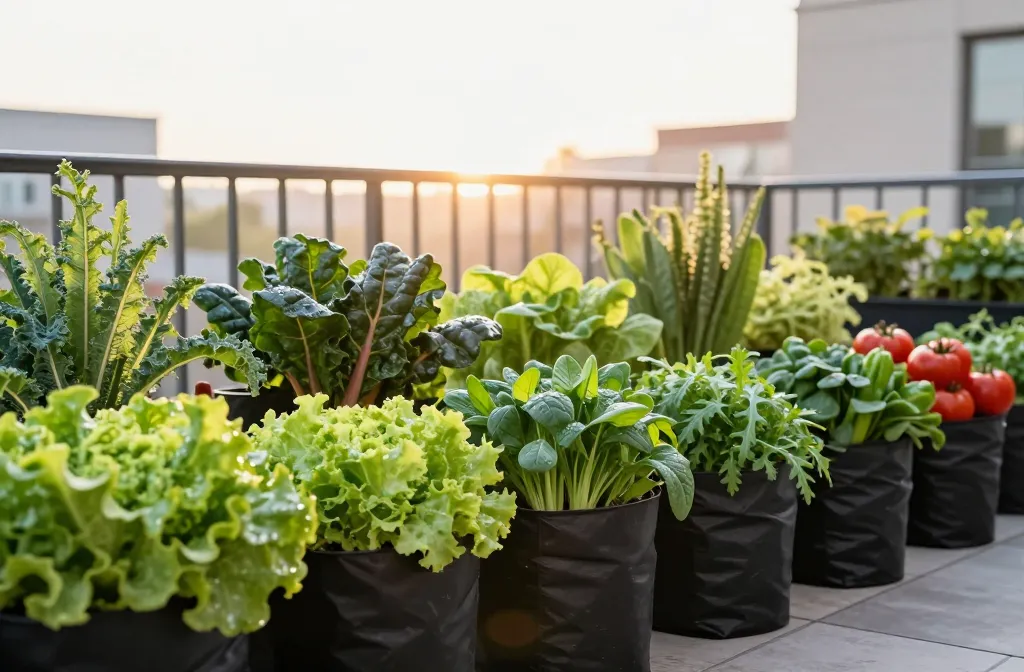
Think you need a massive backyard to grow ridiculous amounts of food? Spoiler: you don’t. Fabric grow bags turn balconies, driveways, and teeny patios into productive mini-farms with zero fuss. They drain well, roots breathe, and you can drag them around to chase the sun like a plant paparazzi. Ready to grow 25 superstar veggies that love life in fabric? Let’s do this.
1. Salad Bar Stardom: Cut-and-Come-Again Greens
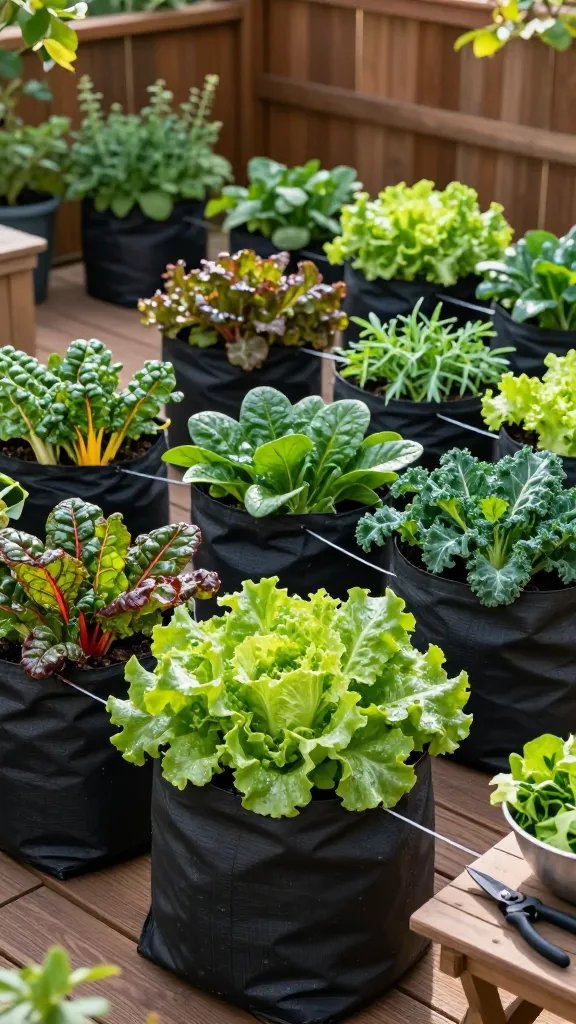
Want fast wins? Leafy greens explode in fabric bags thanks to airy roots and consistent moisture. You’ll harvest in weeks, not months, and keep snipping for salads all season. It’s the easiest way to feel like a kitchen garden wizard.
All-Stars In This Crew (25-count begins here!)
- Lettuce (leaf, romaine, butterhead)
- Arugula
- Spinach
- Swiss chard
- Kale
Bag Sizes & Spacing
- 3–5 gallon bags for individual heads or tight mixes.
- Plant 6–8 seedlings per 5-gallon bag for cut-and-come-again harvests.
- Keep bags in partial sun during heatwaves to prevent bitter greens.
Soil & Feeding Tips
- Use a light potting mix with 25–30% compost for steady nutrition.
- Water daily in hot weather; bags dry faster (that’s the point—better roots!).
- Feed with a diluted fish/kelp fertilizer every 10–14 days.
Harvest outer leaves repeatedly and the plants keep producing. Perfect for quick wins, small spaces, and anyone who eats salad like it’s a personality trait.
2. Root Rookies to Pros: Tubers That Actually Bulk Up
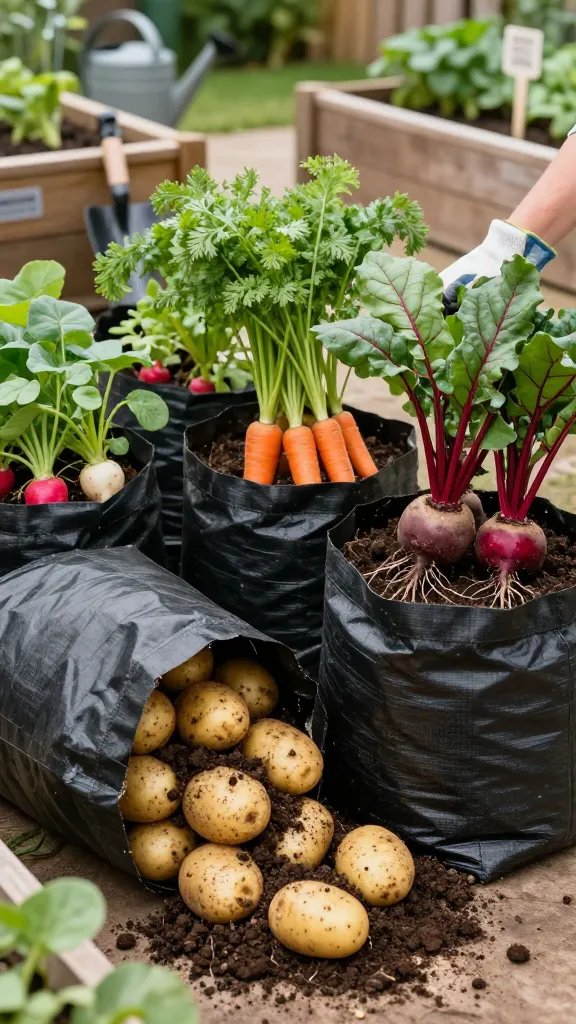
Worried roots will curl or stunt? Fabric bags air-prune and prevent circling, so roots fill the bag evenly. You get smooth carrots, hefty spuds, and juicy beets without fighting your soil. FYI, bag depth matters more than anything here.
Root MVPs
- Potatoes
- Carrots
- Beets
- Radishes
- Turnips
Bag Sizes, Varieties, and Tricks
- Potatoes: 10–15 gallon bags. Start with 6 inches of mix, lay seed potatoes, then “hill” by adding soil as stems grow. Harvest by tipping the whole bag—like treasure hunting, but tastier.
- Carrots: 12–18 inches deep. Choose short/flyaway types (Parisian, Napoli, Nantes). Keep soil loose and consistently moist until germination.
- Beets & Turnips: 5–7 gallon bags. Thin to 4 inches. Eat greens and bulbs—two harvests, one plant.
- Radishes: 3–5 gallon bags. Ready in 25–30 days. Sow every two weeks for a constant crunch.
Soil Mix That Wins
- 40% high-quality potting mix, 30% compost, 20% coconut coir, 10% perlite.
- Add a handful of granular organic fertilizer at planting for slow, steady growth.
Root crops in bags shine because you control texture, moisture, and depth—no rocks, no stress, just pretty produce. Great for first-timers who want visible results fast.
3. Patio Powerhouses: Compact Fruiting Veggies With Big Yields
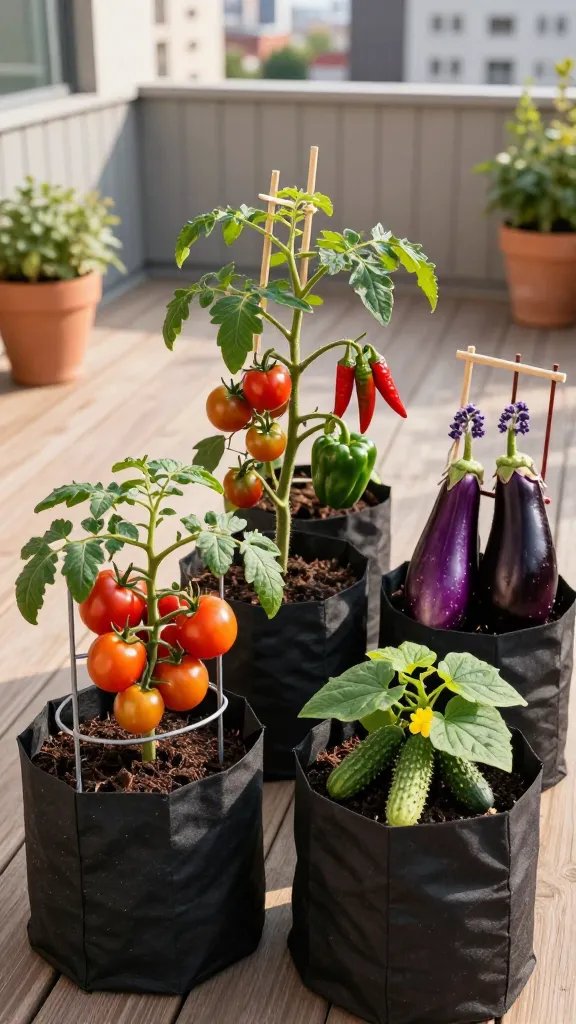
These plants serve drama and produce on compact footprints. Give them sun, a sturdy bag, and a little support, and they’ll reward you with weekly harvests. You’ll snack straight off the vine like a backyard gremlin. Relatable?
Fruiting Favorites
- Cherry tomatoes
- Bush tomatoes
- Peppers (sweet and hot)
- Eggplant
- Cucumbers (bush or dwarf)
Bag Sizes & Support
- Tomatoes: 7–10 gallon bags for cherries and compacts. Cage or stake immediately. Choose determinate or dwarf indeterminate types.
- Peppers: 5–7 gallon bags. They love heat, so place near a sunny wall. Stake if fruits get heavy.
- Eggplant: 7–10 gallon bags. Mulch the surface to keep roots warm and moist.
- Cucumbers: 7–10 gallon bags. Use a trellis or fence; choose bush varieties like ‘Bush Champion’ or ‘Spacemaster.’
Watering & Feeding
- Keep an eye on moisture—fruiting plants hate rollercoaster watering.
- Feed weekly with a bloom fertilizer once flowers appear for better fruit set.
- Prune lightly for airflow and to reduce disease.
Use this group when you want the biggest wow-to-space ratio. Great for sunny patios, south-facing driveways, and anyone who loves snacking outside.
4. Aromatic Overachievers: Alliums, Herbs, and Fast Flavor
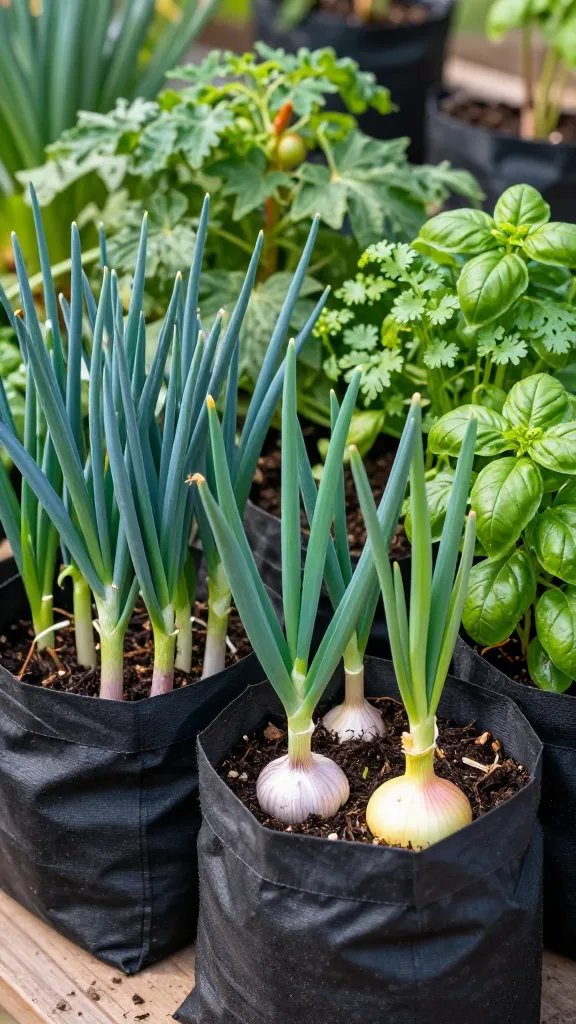
Flavor lives here. These plants don’t hog space, they grow fast, and they make everything you cook taste chef-level. Plus, you can tuck them around larger plants as fragrant bodyguards against pests.
Herby And Allium Wins
- Green onions (scallions)
- Garlic
- Onions (bulbing or bunching)
- Basil
- Cilantro
Bag Sizes & Timing
- Scallions: 3–5 gallon bags. Sow thickly and harvest as needed. So easy it feels like cheating.
- Garlic: 7–10 gallon bags. Plant cloves in fall, harvest midsummer. Use a rich mix and keep evenly moist in spring.
- Bulbing onions: 7–10 gallon bags. Choose short-day or long-day types based on your region.
- Basil & Cilantro: 3–5 gallon bags. Basil loves heat and sun; cilantro prefers cool weather and morning sun.
Pro Tips
- Pinch basil regularly to keep it bushy and delay flowering.
- Succession sow cilantro every 2–3 weeks because it bolts faster than you can say salsa.
- Mulch with straw or shredded leaves to keep moisture stable in hot spells.
Herbs and alliums shine in bags because they don’t need deep soil and they thrive with good drainage. Perfect for cooks, cocktail enthusiasts, and anyone who likes meals that taste “extra.”
5. Climbers, Cool-Weather Champs, And Underrated Heroes
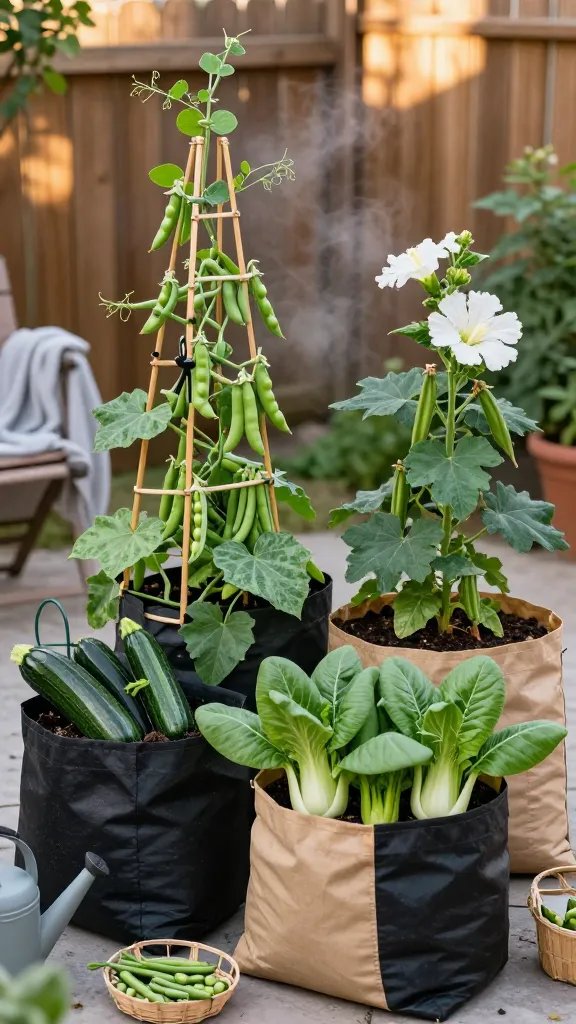
This is the grab-bag of growers that do surprisingly well in fabric. Some climb, some love chill temps, and some get ignored until they become your new favorites. Variety keeps your garden interesting—and your meals, too.
More Bag-Friendly Winners
- Bush beans
- Peas (bush or dwarf)
- Zucchini (compact/bush)
- Okra
- Bok choy
Bag Sizes, Supports, and Strategies
- Bush beans: 7-gallon bags. Sow directly and keep evenly moist until flowering. Pick often for more pods.
- Peas: 5–7 gallon bags with a short trellis. Plant early; they like cool weather. Sweet, crunchy, and addictive.
- Zucchini: 10–15 gallon bags. Choose compact types like ‘Bush Baby’ or ‘Raven.’ Mulch and water deeply to avoid blossom-end rot.
- Okra: 7–10 gallon bags in full sun. Loves heat; harvest pods young for tender texture.
- Bok choy: 5–7 gallon bags. Grow in spring or fall; provide afternoon shade in summer.
General Grow Bag Rules That Make Life Easier
- Sunlight: Most veggies want 6–8 hours. Rotate or drag bags to chase light—mobility is your secret weapon.
- Watering: Bags drain fast. Use a moisture meter or the finger test. Add a saucer in extreme heat if needed, but don’t let water stagnate.
- Mulch: A 1–2 inch layer reduces watering by a third and prevents soil splash.
- Fertilizer: Slow-release at planting + light liquid feeds keeps nutrients flowing without burn.
- Reuse: Refresh the top third of soil and add compost between plantings. Rotate crops to dodge pests and diseases.
Use this set when you want reliable yields across seasons. Climbers and compact bush types thrive in bags and keep your garden dynamic and productive, IMO.
Ready to turn that patio into a harvest machine? Grab a few fabric bags, a solid potting mix, and start with two or three of these veggies. You’ll taste the difference, see the growth fast, and probably end up rearranging your furniture to make room for more—seriously, it’s addictive. Happy growing!