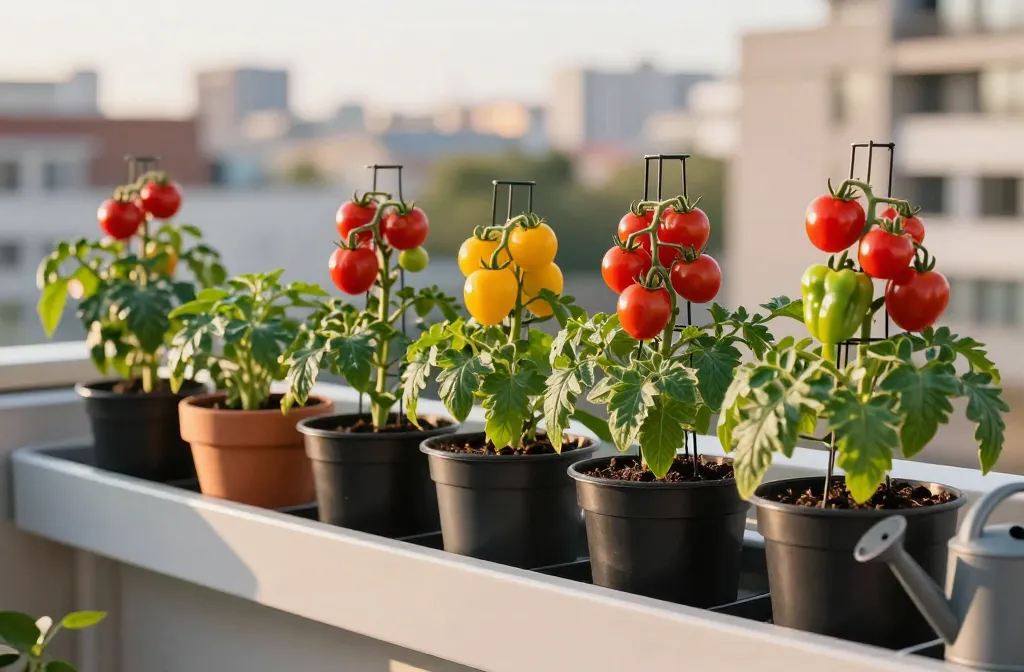
Want fresh veggies without turning your balcony into a full-time job? Same. These low-effort plants thrive in pots, take heat like champs, and forgive the occasional missed watering. Set them up right once, then let them cruise while you do literally anything else. Ready to grow more with less sweat?
1. The “Set-It-And-Forget-It” Duo: Cherry Tomatoes & Peppers
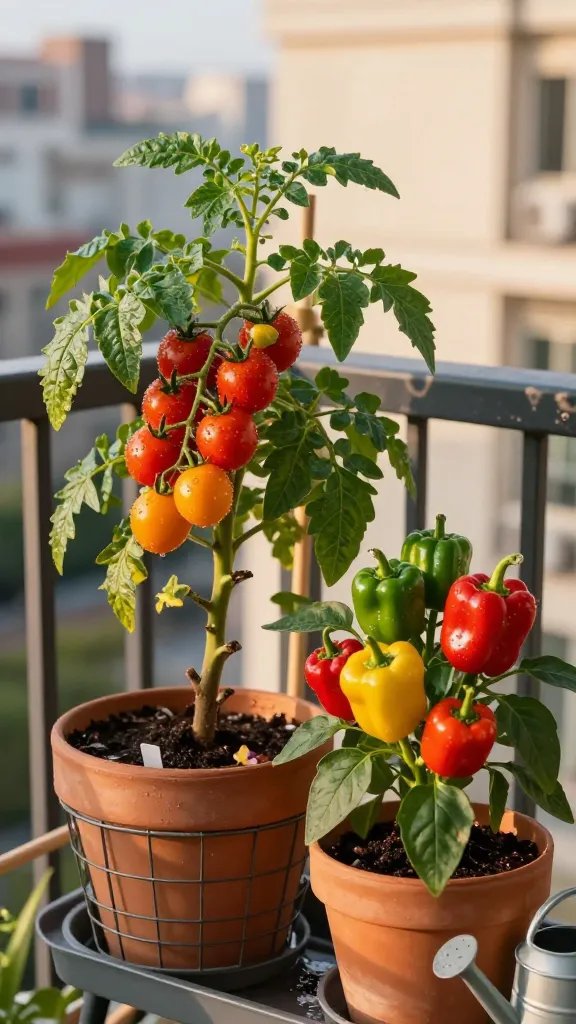
Cherry tomatoes and compact peppers practically grow themselves in containers. They love sun, tolerate a little neglect, and reward you with bowls of colorful produce. Give them a decent pot and consistent moisture, and they’ll show off all season.
Why They’re Awesome
- High yield in small space: One plant can keep you in salads and snacking.
- Disease-tolerant varieties: Look for “patio,” “bush,” or “dwarf” labels.
- Forgiving watering needs: Slight dips in moisture won’t doom them.
For cherry tomatoes, choose determinate or dwarf types like ‘Tiny Tim,’ ‘Tumbler,’ or ‘Patio Choice.’ For peppers, try ‘Lunchbox,’ ‘Shishito,’ or compact jalapeños. They all thrive in warm weather and don’t need constant pampering.
Container & Setup
- Pot size: 5–10 gallons per plant (tomatoes on the larger end).
- Soil: High-quality potting mix with added compost or slow-release fertilizer.
- Support: A small cage or stake for tomatoes; peppers may need a single stake in windy spots.
Water deeply, then let the top inch dry before watering again. A layer of mulch (shredded leaves or straw) reduces watering frequency and keeps roots happy.
Tips
- Pick tomatoes when they color up; it encourages more fruit.
- Peppers sweeten the longer they stay on the plant—choose your spice level by harvest time.
- Use a self-watering container if your schedule gets wild—seriously, game-changer.
Grow these when you want steady harvests with minimal fuss. They’re the MVPs of sunny balconies and patios.
2. Salad Bar Without The Drama: Leafy Greens & Swiss Chard
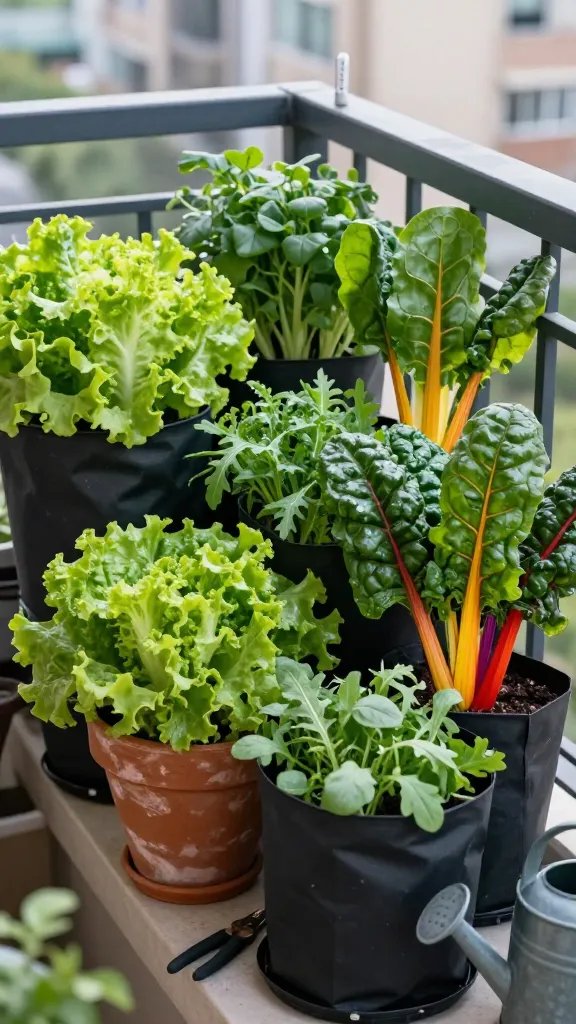
Leafy greens make you feel like a gardening genius. They grow fast, bounce back after harvest, and don’t need full sun to thrive. If you like instant gratification, you’ll love these.
Why They’re Awesome
- Cut-and-come-again: Harvest outer leaves and the plant keeps producing.
- Shade tolerant: 3–5 hours of sun still works for many varieties.
- Cool-season champs: You’ll harvest sooner than tomatoes even think about flowering.
Try loose-leaf lettuce mixes, romaine baby leaves, arugula, spinach, and kale. Add Swiss chard for color and durability—it laughs at heat more than most greens and keeps going for months.
Container & Setup
- Pot size: 6–10 inches deep for lettuce; 10–12 inches for kale and chard.
- Density: Sow thickly and thin by eating baby greens.
- Soil: Light, moisture-retentive potting mix with compost.
Keep the soil consistently damp, not soggy. Morning sun with afternoon shade gives you sweet leaves without bitterness. FYI: chard and kale handle heat like pros compared to lettuce and spinach.
Low-Maintenance Harvesting
- Snip outer leaves weekly; leave the center to regrow.
- For baby greens, shear the surface and let it regrow for another round.
- Bolting? Pinch off flower stalks to extend the season a bit longer.
Perfect for quick salads, smoothies, and sauté nights. Grow these if you want near-instant results with minimal commitments.
3. Roots That Don’t Revolt: Radishes, Carrots & Green Onions
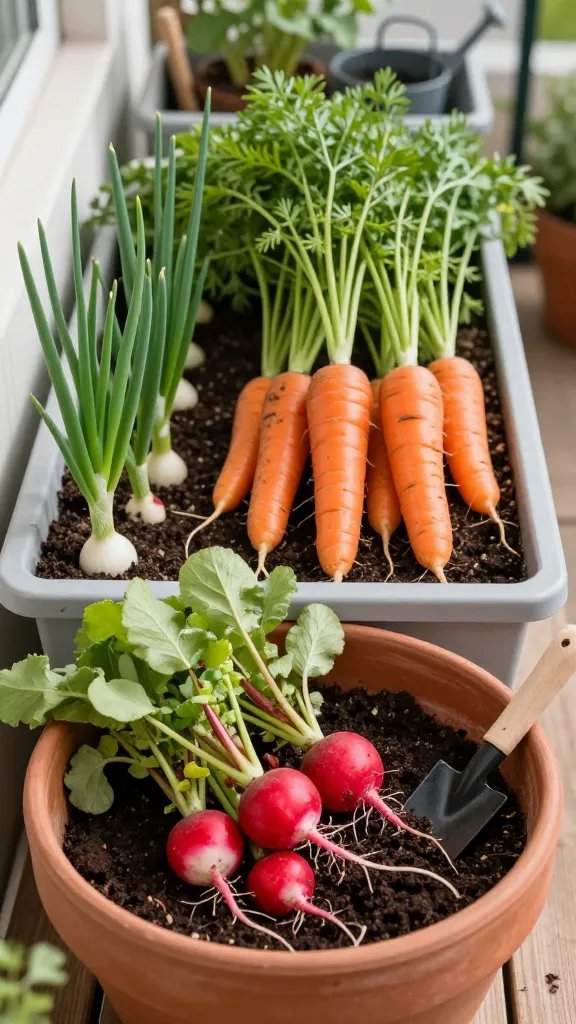
Root veggies in containers? Totally doable—and surprisingly low effort. You avoid soil pests, get uniform shapes, and harvest faster than you think.
Why They’re Awesome
- Quick turnaround: Radishes can finish in 25–30 days.
- Space-efficient: Green onions fit anywhere and regrow after cutting.
- Tidy: Container soil stays loose, which roots love.
Choose varieties bred for containers: round carrots like ‘Parisian’ or short types like ‘Nelson’; quick radishes like ‘Cherry Belle’; and bunching onions like ‘Ishikura’ or ‘Evergreen.’ These don’t need perfect conditions to perform.
Container & Setup
- Pot size: 8–12 inches deep for carrots; 6–8 inches for radishes and onions.
- Soil: Fluffy potting mix—no garden soil. Add perlite for extra drainage.
- Sowing: Direct-seed. Do not transplant carrots or radishes.
Water evenly to avoid cracking or pithy roots. Thin seedlings early—yes, it hurts, but crowding stunts growth. In warmer climates, give light afternoon shade to keep roots sweet and crisp.
Harvest Hints
- Radishes: Pull when the shoulders look plump; don’t wait—they get spicy fast.
- Carrots: Test one at maturity; if it tastes good, harvest the rest over a week.
- Green onions: Snip greens and let them regrow, or pull whole plants as needed.
These shine when you want easy, fast wins and zero babysitting. Bonus: they rarely attract pests in pots.
4. The “I Forgot You Existed” Crowd: Bush Beans & Zucchini
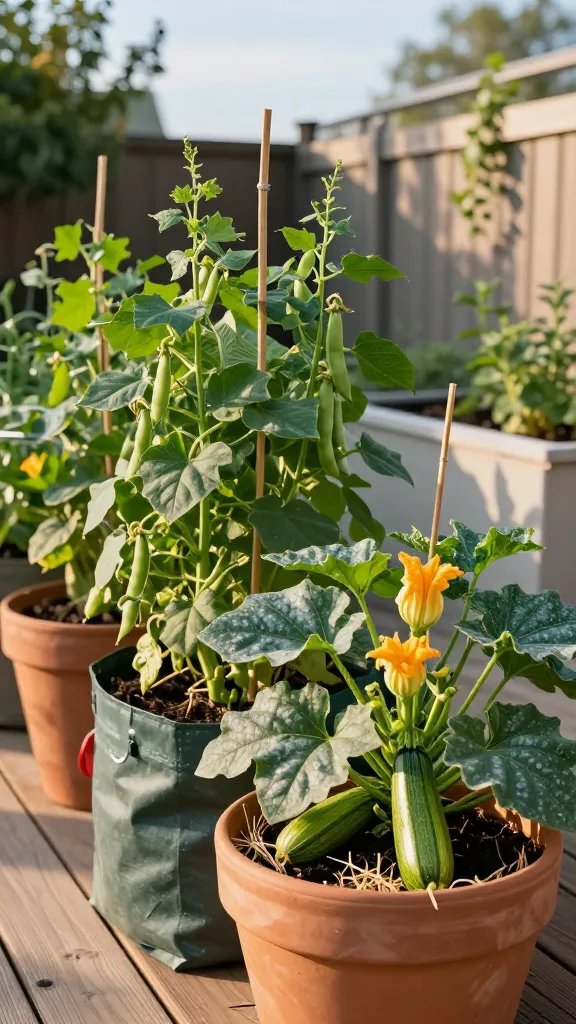
If you want big yields with laid-back care, plant bush beans and compact zucchini. They germinate fast, handle heat, and produce like they have something to prove. Keep them watered and they’ll do the rest.
Why They’re Awesome
- Minimal staking: Bush beans often need none; compact zukes manage with a single stake.
- Heavy producers: A few plants can feed you—and the neighbors.
- Drought-tolerant-ish: They don’t demand constant attention.
Look for “bush” beans like ‘Provider’ or ‘Contender’ and container-friendly zucchini like ‘Raven,’ ‘Astia,’ or ‘Bush Baby.’ These varieties stay tidy enough for patios while still pumping out pods and squash.
Container & Setup
- Pot size: 3–5 gallons for bush beans; 10–15 gallons for zucchini.
- Soil: Rich, well-drained mix with slow-release fertilizer.
- Spacing: Beans: 4–6 inches apart. Zucchini: 1 plant per pot, trust me.
Water at the base to avoid powdery mildew on zucchini leaves. Mulch helps keep splash and disease down. Beans fix their own nitrogen, so don’t overfertilize—leafy jungle, zero pods.
Easy Care & Harvest
- Pick beans young and often to keep plants producing.
- Harvest zucchini at 6–8 inches—smaller tastes better and prevents giant baseball bats.
- Remove any yellowing leaves to improve air flow and sanity.
Use these when you want impressive yields with weekend-level maintenance. They reward consistency, not perfection.
5. The Chill Herbalists: Scallions, Garlic, and Herbs That Actually Behave
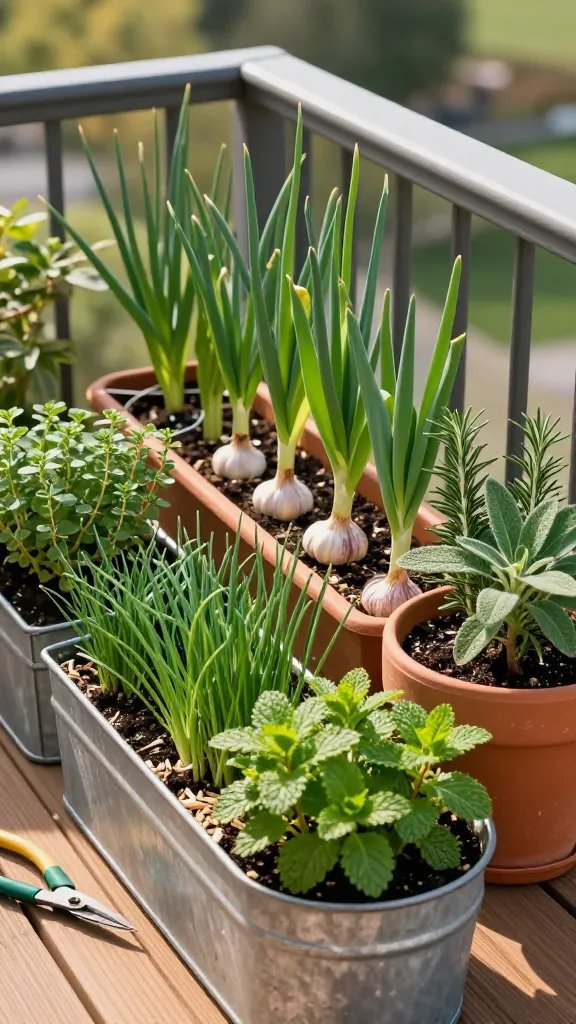
You want flavor with zero drama? Go for scallions, garlic, and unfussy herbs. They’re resilient, compact, and thrive even when you forget to check on them for a few days.
Why They’re Awesome
- Low water needs: Many herbs prefer drier soil and full sun.
- Cut-and-come-again: Harvest a little, get a lot back.
- Perennial or long-season: Some come back each year or last multiple seasons in mild climates.
Plant chives, thyme, oregano, rosemary, sage, and mint (in its own pot—mint is a lovable bully). Add scallions from seed or sets, and garlic from individual cloves for a slow-burn win you’ll harvest next season.
Container & Setup
- Pot size: 8–12 inches for most herbs; 12–16 inches for rosemary or mint.
- Soil: Well-drained potting mix; add sand or perlite for Mediterranean herbs.
- Sun: 6+ hours for best flavor; partial shade works for chives and mint.
Water herbs when the top inch dries. Overwatering kills more herbs than drought, IMO. For garlic, plant cloves pointy side up in fall (or very early spring), keep evenly moist, and wait until leaves brown to harvest bulbs.
Harvest & Use
- Snip herbs in the morning for peak oils and flavor.
- Cut scallions an inch above the crown for regrowth.
- Dry oregano and thyme by hanging small bundles—effortless pantry gold.
Grow these when you want big flavor with tiny effort. Your dinners will taste like you tried way harder than you did.
Here’s the fun part: you don’t need a yard, a greenhouse, or a horticulture degree. Pick a few of these hands-off vegetables, grab decent containers, and set them up with good soil and mulch. Then sit back, sip something cold, and wait for the harvest to roll in—seriously, it’s that doable. Ready to plant your laziest garden ever?