Want a water-wise garden that still looks designer? Pair your succulents and cacti like you’re styling a coffee table, and boom—instant curb appeal. These combos thrive in heat, shrug off drought, and look sculptural year-round. Ready to create a low-maintenance oasis that neighbors keep peeking at?
1. Sculptural Drama: Golden Barrel + Blue Chalksticks
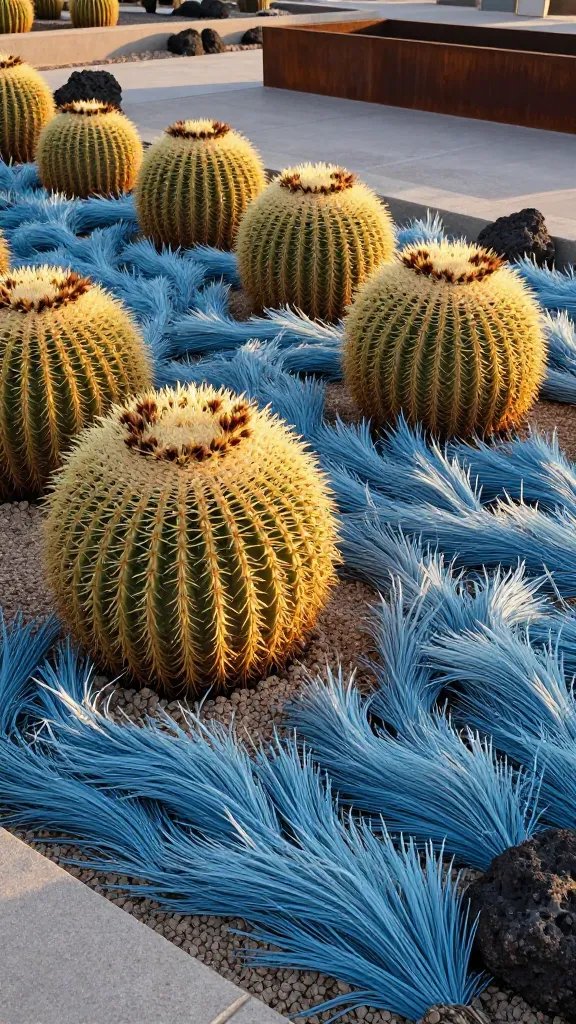
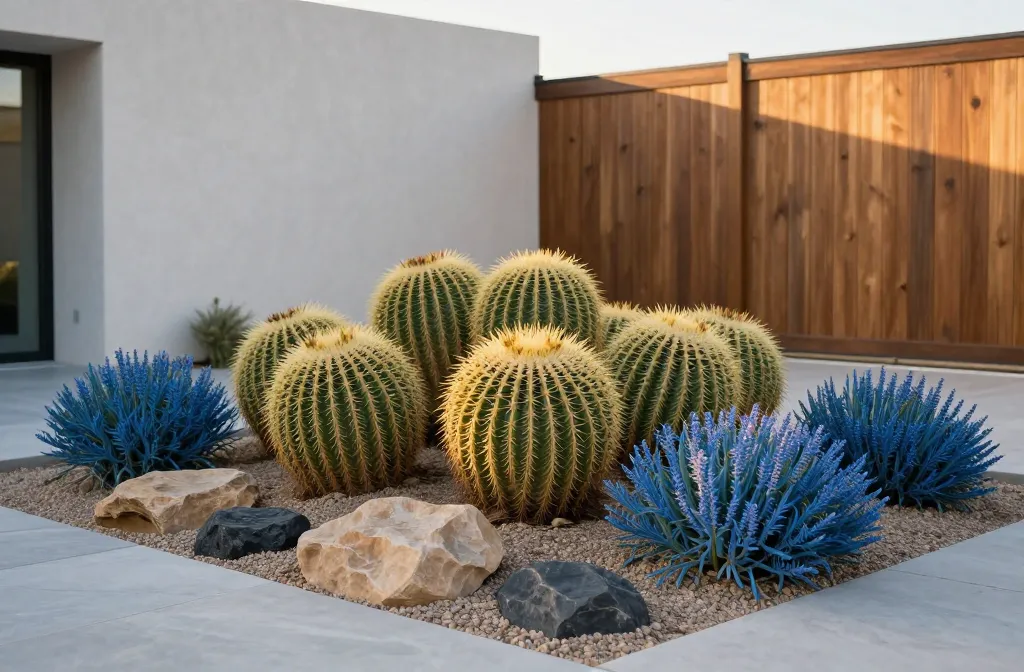
When you want bold form and instant contrast, pair Golden Barrel cactus (Echinocactus grusonii) with ribbons of Blue Chalksticks (Senecio serpens or S. mandraliscae). The round, spiny barrels pop against those low, icy-blue clumps like modern art meets desert moonlight. It’s a showstopper that loves sun, heat, and stingy watering.
Why It Works
- Contrast in shape: Round barrel vs. linear, flowing chalksticks.
- Color play: Warm gold spines against cool blue foliage.
- Spacing: Low-growing chalksticks frame barrels without stealing light.
Use rocky mulch in tan or charcoal for serious gallery vibes. FYI, both appreciate excellent drainage and infrequent but deep watering.
Quick Tips
- Full sun for at least 6–8 hours.
- Space barrels 3–4 feet apart to let them grow into their glow.
- Trim chalksticks lightly to keep edges clean.
Best for front entries and street-side plantings where you want sculptural impact with almost zero fuss.
2. Soft Meets Spiky: Parry’s Agave + Mexican Feather Grass
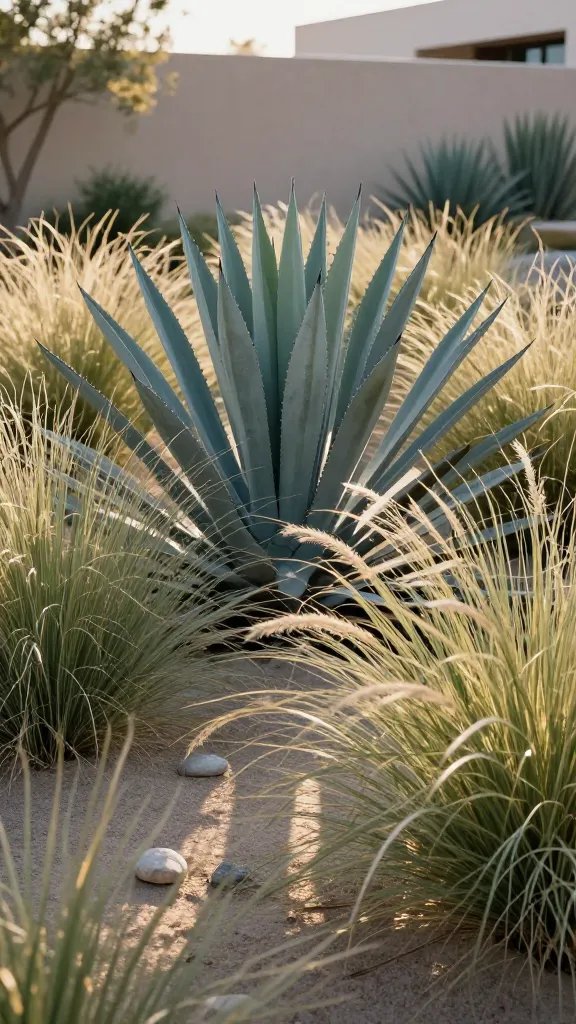
If you love movement with structure, this pairing delivers. Parry’s Agave (Agave parryi) brings that geometric rosette while Mexican Feather Grass (Nassella tenuissima) whispers around it like desert fog. The contrast makes both look intentional and chic.
Why It Works
- Texture: Rigid agave leaves vs. wispy grass plumes = drama.
- Scale: One strong focal point surrounded by a soft, repeating ground layer.
- Shade sharing: Grass doesn’t mind partial shade from mature agaves.
Keep things neat by massing the grass in arcs or drifts around a single agave, not planted randomly. This creates that crisp desert-modern feel you see in design magazines.
Care Notes
- Full sun to light shade; hot climates welcomed.
- Cut back feather grass lightly in late winter to refresh.
- Agave needs sharp drainage; mound if soil is clay-heavy.
Use this combo along paths and patios where the grass movement catches the breeze and the agave anchors the scene.
3. Color Echoes: Purple Prickly Pear + Ghost Plant
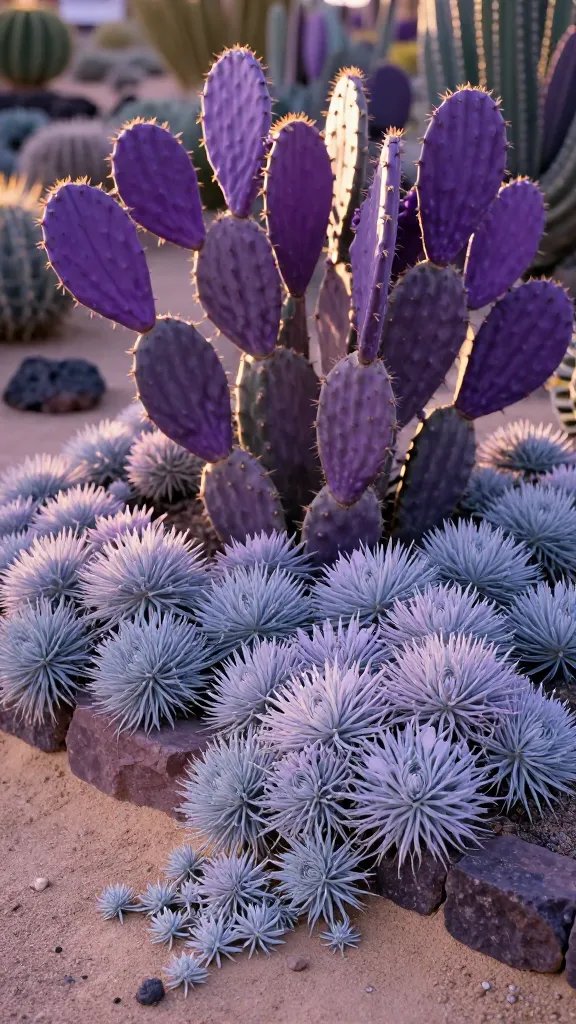
Want color without flowers? Try Purple Prickly Pear (Opuntia violacea or O. macrocentra) with Ghost Plant (Graptopetalum paraguayense). The cactus pads blush purple in bright sun, while the ghost plant’s pastel rosettes echo that cool, ethereal tone.
Key Points
- Seasonal interest: Purple intensifies in winter and stress conditions; ghost plant always looks dreamy.
- Low profile support: Ghost plant fills gaps and cascades over edges, softening the cactus pads.
- Water savvy: Both tolerate neglect and reward you with better color when kept on the dry side.
Plant prickly pear as your upright backbone, then tuck ghost plant along the front and sides. Add a few chunky rocks to mirror the rosette shapes—seriously, it ties the whole look together.
Planting Tips
- Full sun for best color; some afternoon shade if you’re in extreme heat.
- Use tongs when handling opuntias—spines and glochids mean business.
- Choose a pale decomposed granite mulch to amplify the pastels.
Ideal for raised beds, modern planters, and spots where you want drama with minimal care. IMO, this is the Instagram darling of the bunch.
4. Architectural Rhythm: Totem Pole Cactus + Firesticks
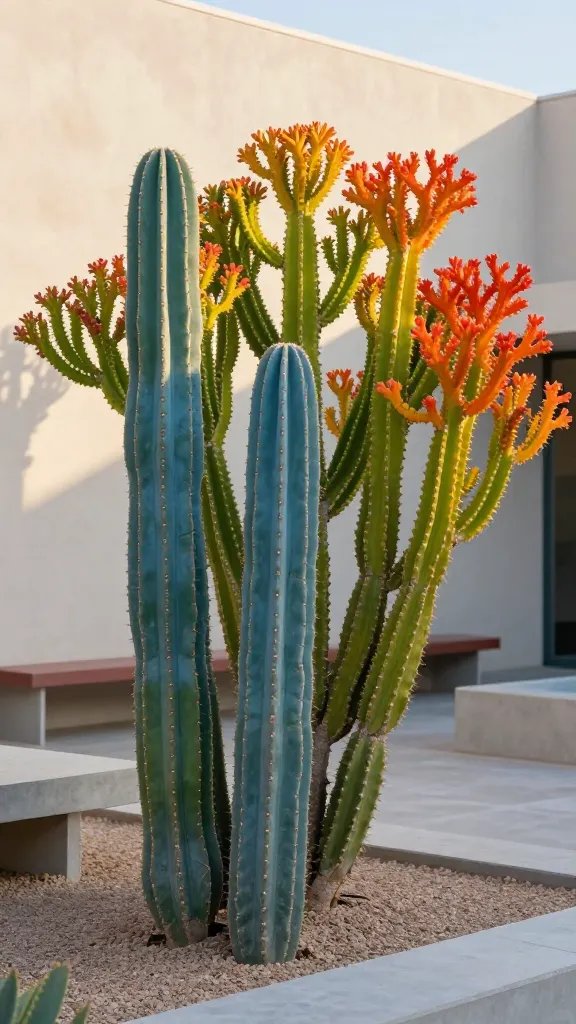
This duo looks like someone built it for a museum courtyard. The smooth, lumpy columns of Totem Pole Cactus (Lophocereus schottii ‘Monstrosus’) pair insanely well with the branching, color-changing Firesticks (Euphorbia tirucalli ‘Sticks on Fire’). It’s vertical vs. coral-branch chaos—in the best way.
Why It Works
- Line variation: Clean, upright totems contrast with branching fireworks.
- Color shift: Firesticks go lime to orange to coral in cool seasons, adding seasonal pop.
- Scale: Both can get tall—use them as a layered backdrop.
Place Firesticks in clusters to create a glowing thicket, then punctuate with two or three totem poles. The rhythm feels intentional and modern.
Safety + Care
- Full sun; protect Firesticks from hard frost.
- Important: Firesticks are a euphorbia with caustic sap—wear gloves and eye protection when pruning.
- Excellent drainage is non-negotiable; plant on berms if needed.
Use this pairing for architectural lines along fences, poolside accents, or as a focal hedge. It screams “desert modern” without saying a word.
5. Groundcover Glow-Up: Aloe ‘Blue Elf’ + Red Yucca
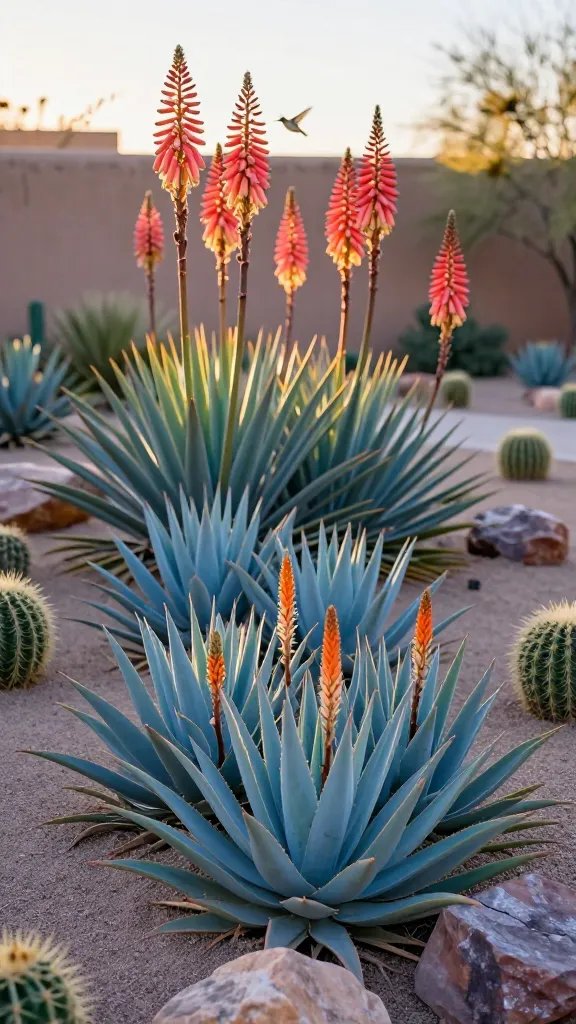
For color, texture, and pollinator love, pair Aloe ‘Blue Elf’ with Red Yucca (Hesperaloe parviflora). Blue Elf forms tidy clumps with blue-gray leaves and frequent orange blooms, while Red Yucca throws up long coral flower spikes that hummingbirds treat like a buffet.
What Makes It Great
- Bloom synergy: Aloe flowers in cool months; Red Yucca spikes from spring to fall.
- Layering: Low mounds of aloe at the front, vertical wands of hesperaloe behind.
- All-season presence: Both look sharp without flowers, so no awkward downtime.
Plant Blue Elf in repeating clusters and weave Red Yucca through like exclamation points. The effect reads cohesive, not chaotic.
Care + Placement
- Full sun to light shade; both tolerate reflected heat near walls and driveways.
- Deep, infrequent watering once established; more during first growing season.
- Trim spent Red Yucca stalks at the base; remove aloe pups to control spread.
Perfect along driveways, around mailboxes, and in parkway strips where you want color with almost no maintenance. Trust me, the hummingbirds will send thank-you notes.
Ready to give your desert garden serious main-character energy? Pick one pairing you love and start small—one focal plant, one supporting act, killer drainage, done. Keep it simple, repeat your winners, and your space will look curated, not chaotic. Go plant it—you’ve got this.