
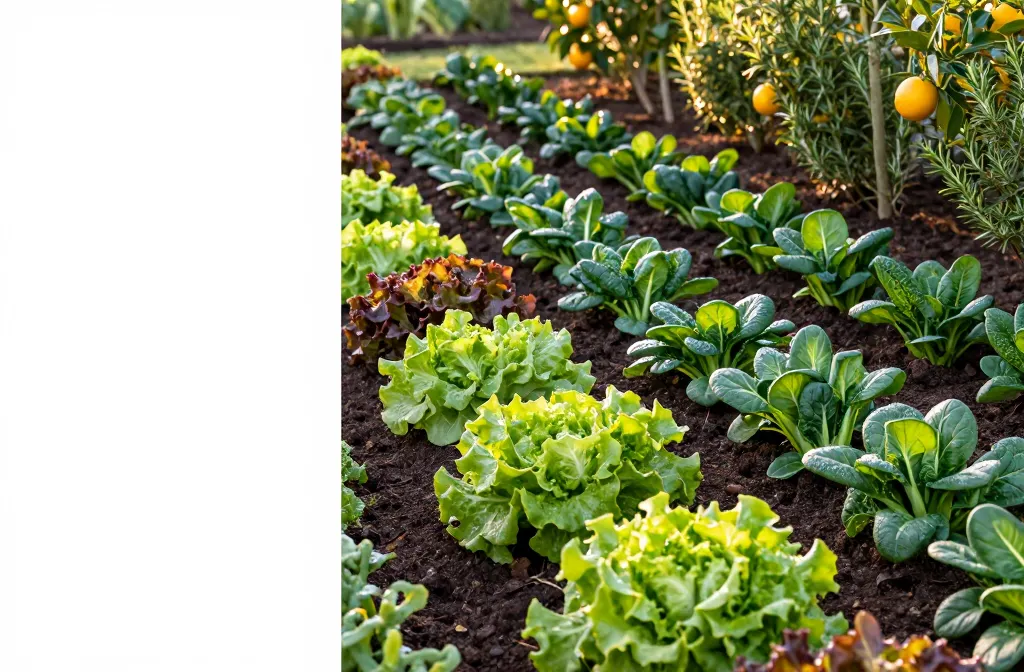
Warm winters don’t mean you take a gardening nap. December in mild climates delivers crisp greens, sweet roots, and herbs that thrive when bugs take a vacation. Ready for crunchy salads and cozy stews straight from your garden? Let’s plant smart now and enjoy kitchen wins all winter long.
1. Leafy Greens That Don’t Flinch: Lettuce, Spinach, And Asian Greens
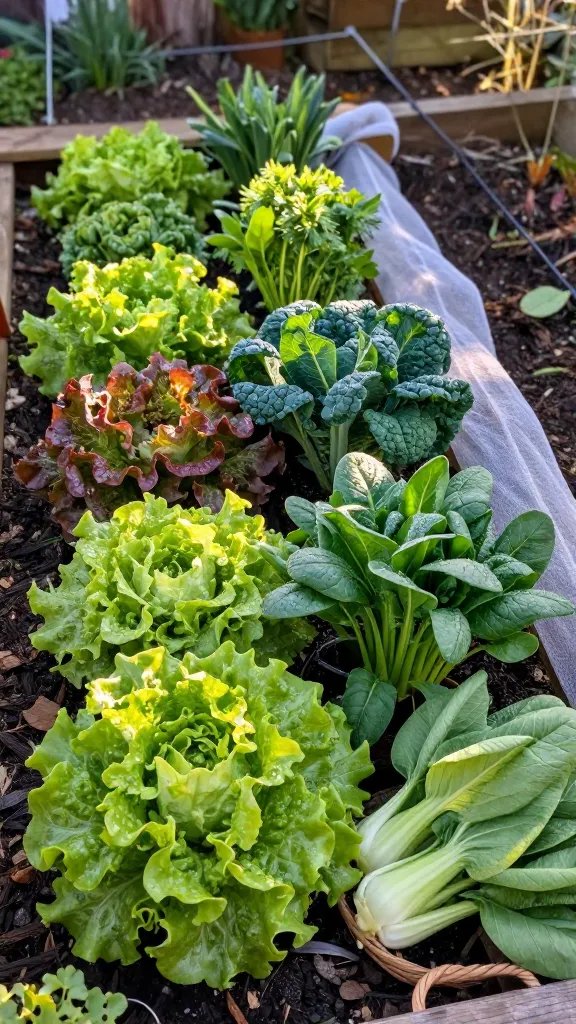
These greens adore cool air and shorter days. They germinate quickly, taste sweeter after a light chill, and give you fast, generous harvests. If you want near-instant gratification, start here.
Best Varieties For Warm-Winter Success
- Lettuce: loose-leaf and romaine types (Red Sails, Buttercrunch, Little Gem)
- Spinach: savoy or semi-savoy (Bloomsdale, Space)
- Asian greens: bok choy, tatsoi, mizuna, komatsuna
Loose-leaf lettuces bounce back after cutting. Spinach loves short days—big win in December. Asian greens give you stir-fry magic in two words: quick harvest.
Planting And Spacing
- Soil prep: Mix in compost and a balanced organic fertilizer. Aim for fluffy, well-drained soil.
- Spacing: Lettuce 6–10 inches; spinach 4–6 inches; Asian greens 8–10 inches (or closer for baby leaves).
- Sun: 4–6 hours minimum. More sun = faster regrowth.
Sow directly or transplant nursery starts for speed. Water gently but consistently; shallow roots dry out faster than your phone battery at 2%.
Care And Harvest
- Water: Keep evenly moist. Mulch lightly to steady temps.
- Feeding: Side-dress with nitrogen every 2–3 weeks for lush growth.
- Harvest: Cut-and-come-again—snip outer leaves, leave the crown. You’ll get multiple rounds.
Greens earn their keep: salads, sautés, smoothies, and soup toppers. Plus, they’re perfect if you want steady, low-effort harvests through winter.
2. Sweet Roots For Cozy Dinners: Carrots, Beets, And Radishes
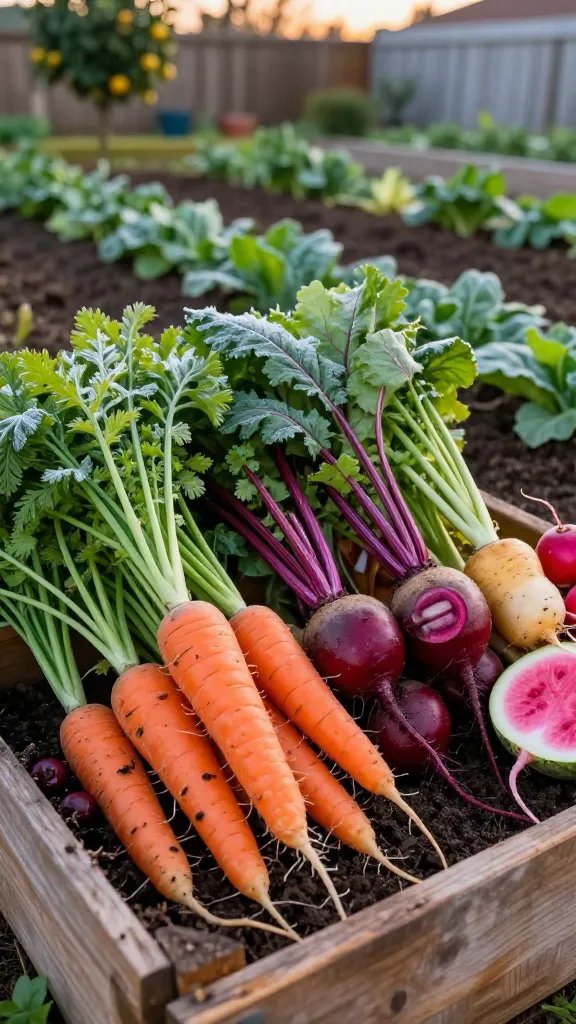
Roots love brisk weather because chill turns starches into sugar. December sowing in warm climates gives you flavorful crunch in a few weeks (radishes) and deep sweetness later (carrots and beets). You’ll taste the difference—seriously.
Varieties That Shine In Cool Weather
- Carrots: Nantes, Chantenay, or Kuroda for shorter, stocky roots
- Beets: Detroit Dark Red, Chioggia, Golden
- Radishes: Cherry Belle, French Breakfast, Watermelon (longer season but worth it)
Choose shorter carrots if your soil is heavy. Beets give you edible roots and greens—two-for-one. Radishes are your quick win when patience runs thin.
Planting Basics
- Soil: Loose, stone-free, and deeply worked. Add compost, skip fresh manure.
- Sowing: Direct seed only. Carrots and beets hate transplant drama.
- Spacing: Carrots 2 inches; beets 3–4 inches; radishes 1–2 inches. Thin early.
Keep the seedbed evenly moist for steady germination. Pro tip: Lay a board or burlap over carrot rows for 3–4 days to hold moisture, then remove as sprouts appear.
Care, Timing, And Harvest
- Water: One deep soak weekly; roots fork if soil swings between desert and swamp.
- Feeding: Light on nitrogen; roots get leggy leaves if you overdo it.
- Harvest: Radishes in 25–35 days, baby carrots in 40–50, beets in 50–65.
Use roots in roasts, salads, and pickles. Grow them when you want low-maintenance crops with serious flavor upgrades after cool nights.
3. Brassica Powerhouse Row: Broccoli, Cauliflower, And Cabbage
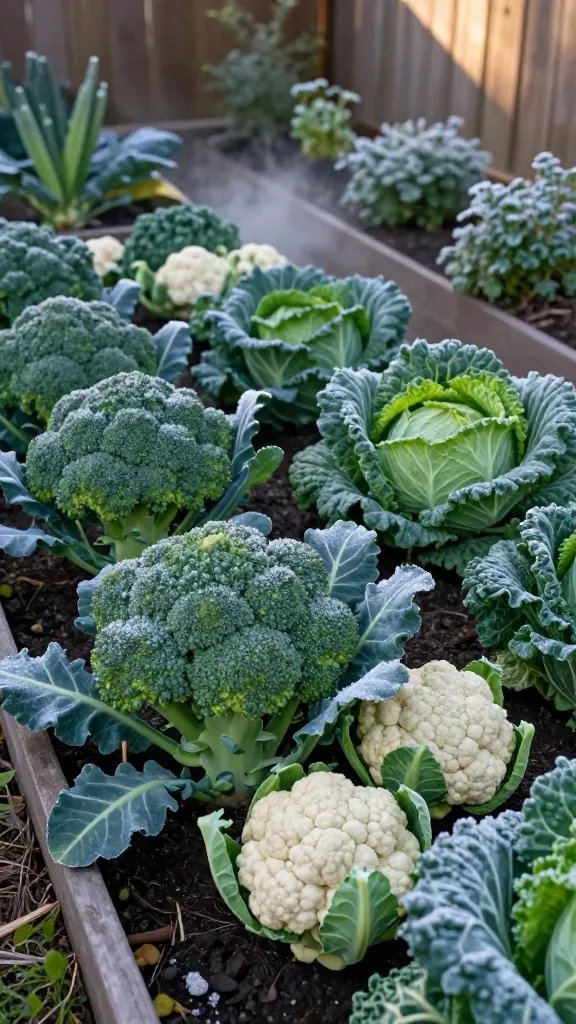
If you want that “I grew a whole dinner” moment, brassicas deliver. They love cool weather and shrug off light frost, which boosts flavor. Start with quality transplants in December and you’ll eat like royalty by late winter.
Top Picks For Mild Winters
- Broccoli: De Cicco (early), Green Magic (reliable heads + side shoots)
- Cauliflower: Snowball, Amazing (self-wrapping leaves help blanch heads)
- Cabbage: Early Jersey Wakefield, Savoy types for gorgeous texture
Broccoli keeps giving with side shoots—garden MVP. Cauliflower needs steadier moisture but rewards you with chef-kiss heads. Cabbage stores well and makes slaws and soups sing.
Planting And Spacing
- Transplant spacing: 18 inches for broccoli and cabbage; 20–24 for cauliflower.
- Soil prep: Compost-rich, slightly acidic to neutral pH (6.2–7.0).
- Timing: December is prime in zones 9–11; earlier in 8a/8b if heavy frost threatens.
Plant on raised beds for drainage, especially after holiday rainstorms. Mulch to reduce swings in soil temperature and moisture.
Care, Pests, And Harvest
- Feeding: Heavy feeders. Side-dress with compost or fish emulsion every 3–4 weeks.
- Pests: Cabbage worms slow down in winter but don’t vanish. Use row cover and inspect undersides of leaves.
- Harvest: Broccoli heads when tight; cauliflower when heads are full but still compact; cabbage when heads feel solid.
Brassicas shine in sheet pans, stir-fries, and slaws. Plant them when you want big, satisfying harvests that feel like meal prep straight from the soil, FYI.
4. Peas Please: Snap, Snow, And Shelling Peas
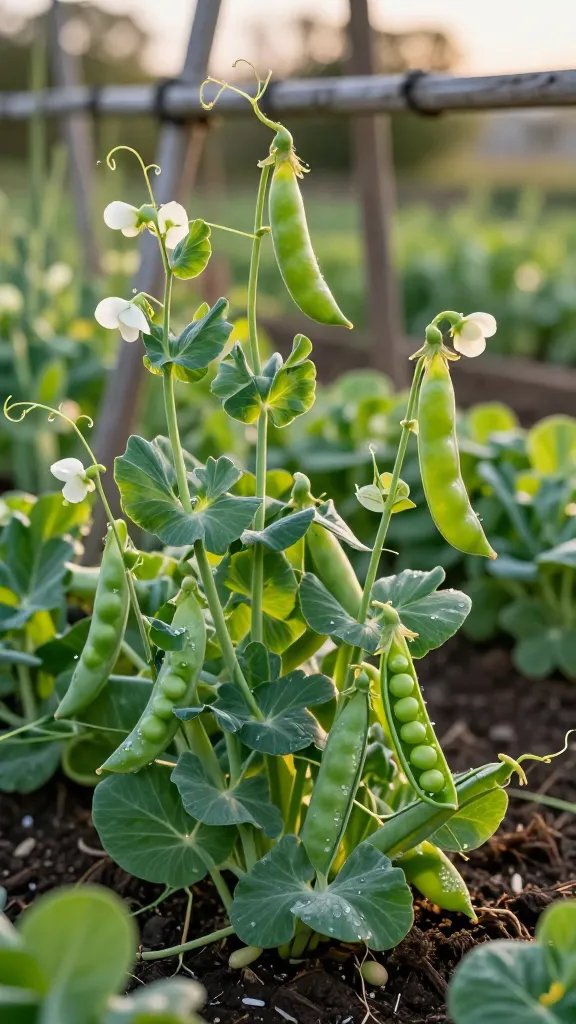
Peas thrive in cool weather and climb like polite acrobats on a trellis. They fix nitrogen, so they boost soil health while feeding you sweet crunch. If you want a feel-good crop that looks cute and tastes amazing, peas are it.
What To Grow
- Snap peas: Sugar Snap, Cascadia (eat the whole pod)
- Snow peas: Oregon Sugar Pod II (flat pods for stir-fries)
- Shelling peas: Little Marvel, Wando (classic peas you pop from pods)
Snap and snow peas give you repeat harvests and instant snacks while you weed. Shelling peas take a bit longer but reward patience with sweet little gems.
Planting And Support
- Sowing: Direct seed 1 inch deep, 2 inches apart.
- Trellis: Install netting, string lines, or a simple cattle panel at planting.
- Sun and soil: Full sun, well-drained soil. Mix in compost but skip heavy nitrogen.
Water consistently for plump pods. Mulch to keep soil cool and damp between rains.
Care And Harvest
- Water: Even moisture is key—dry spells = stringy pods.
- Harvest: Every 2–3 days. The more you pick, the more they produce—garden economics 101.
- Aftercare: Chop vines at soil level when done; leave roots to decompose and feed the bed.
Use peas in salads, stir-fries, and risottos. Plant them when you want a cheerful crop with sweet, snackable returns and a soil-health bonus.
5. Herbs And Quick Flavor Boosters: Cilantro, Dill, Parsley, And Green Onions
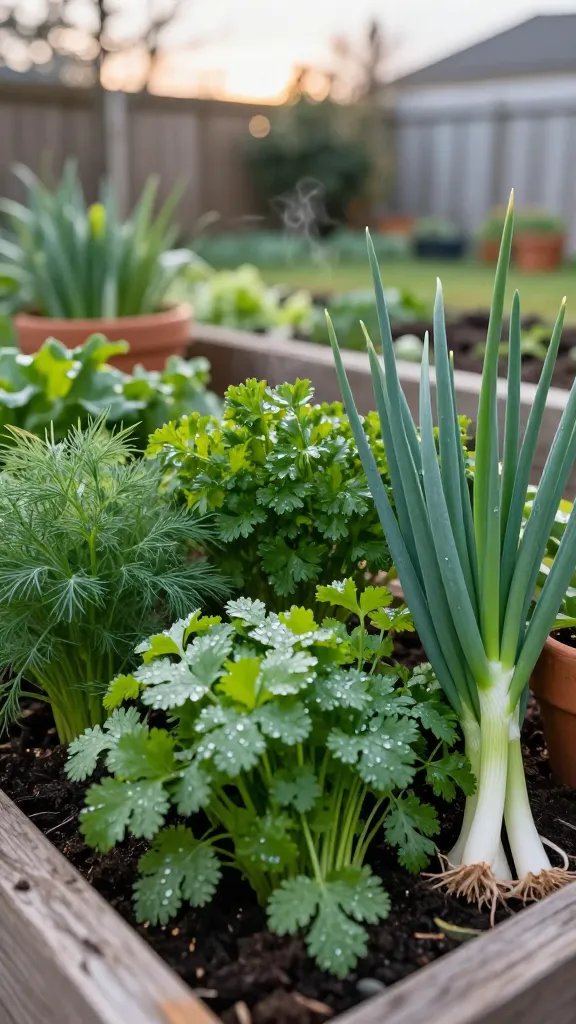
Winter herbs in warm climates grow like they finally found their happy place. No bolting drama, big flavors, and constant harvests. Add them to everything and your cooking instantly levels up—IMO, this is the easiest win.
Best Cool-Season Herb Crew
- Cilantro: Slow-bolt types like Santo or Calypso
- Dill: Bouquet or Fernleaf (compact for containers)
- Parsley: Flat-leaf (Italian) or curly—both cold-tolerant
- Green onions (scallions): Evergreen Hardy White, Ishikura
These herbs handle December vibes beautifully. Cilantro finally behaves. Dill brings feathery charm. Parsley laughs at chilly nights. Scallions give you endless snips.
Planting And Care
- Containers or beds: Both work. Use a high-quality potting mix for containers.
- Sowing: Direct seed cilantro and dill; transplant parsley; bunch-sow scallions.
- Spacing: Herbs 8–12 inches; scallions 1 inch in clusters for easy thinning.
Keep soil evenly moist and feed lightly every few weeks with fish/seaweed fertilizer. Harvest often to encourage new growth. Yes, you can be “that person” who brings chimichurri to everything.
Uses And Harvest Tips
- Cut-and-come-again: Snip outer stems, leave the center intact.
- Flavor hacks: Cilantro stems = extra punch. Dill fronds + potatoes = perfection.
- Quick pickle magic: Dill + scallions + vinegar + salt = instant zing.
Herbs deliver big flavor with tiny effort. Plant them when you want low-commitment gardening that pays off every single meal.
Ready to dig in? December in warm climates is your chance to grow crisp greens, sweet roots, powerhouse brassicas, cheerful peas, and ridiculously useful herbs. Plant a little of each, and you’ll cruise through winter with fresh harvests and bragging rights—trust me, your future self will say thanks.