
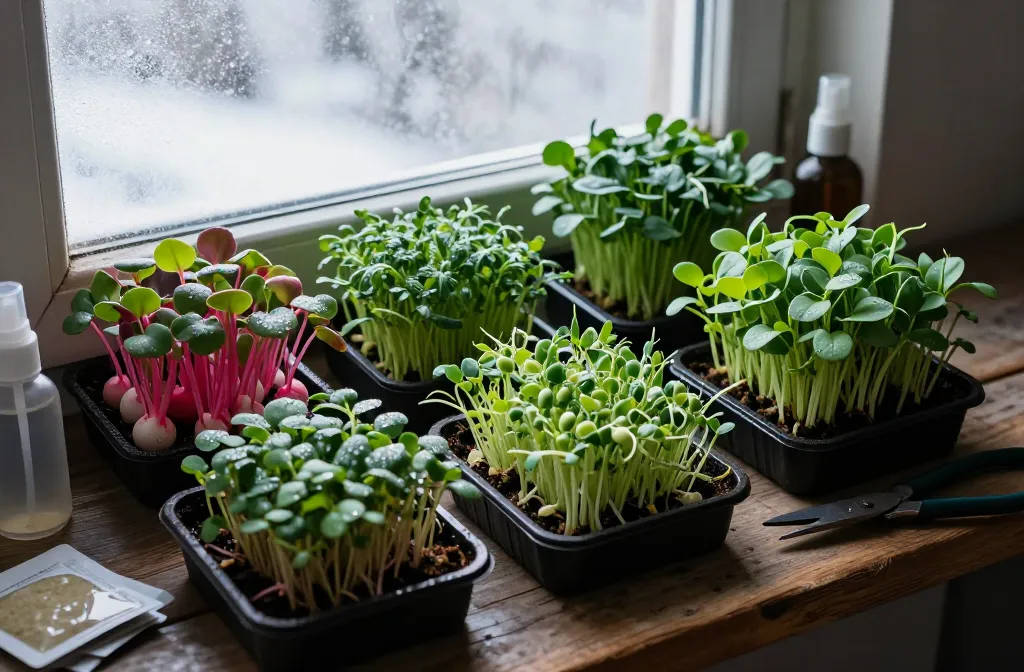
Craving garden-fresh flavors when the world outside looks like a freezer? Microgreens deliver fast, vibrant harvests in 7–21 days, no frostbite required. You don’t need a greenhouse, just a tray, some light, and a little patience. Ready to grow 15 miniature flavor bombs all December long? Let’s make your windowsill work overtime.
1. Peppery Powerhouses: Radish, Mustard, Arugula
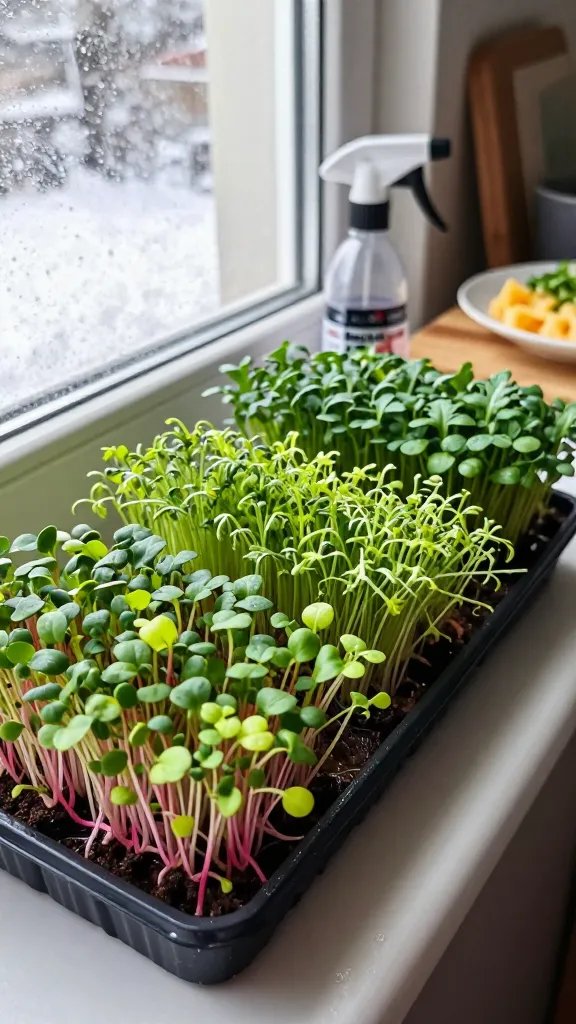
Want flavor with a kick and harvests in under two weeks? These three bring bold, spicy energy that wakes up any winter plate. They germinate fast in cool rooms and forgive a few newbie mistakes.
Why These Rock
- Radish pops in 6–10 days with crunchy stems and neon leaves.
- Mustard brings wasabi vibes without tears (usually).
- Arugula tastes gourmet even if you’re eating boxed mac and cheese.
Quick Grow Tips
- Soil or coco coir works great; keep the top layer evenly moist, not soggy.
- Sow densely, then bottom water after day 3 to avoid damping off.
- Harvest at first true leaf for peak punch.
Use these when you need instant salad drama, sandwich swagger, or a spicy omelet finisher. Seriously, they turn “meh” into “whoa.”
2. Sweet & Mild Crowd-Pleasers: Pea, Sunflower, Corn
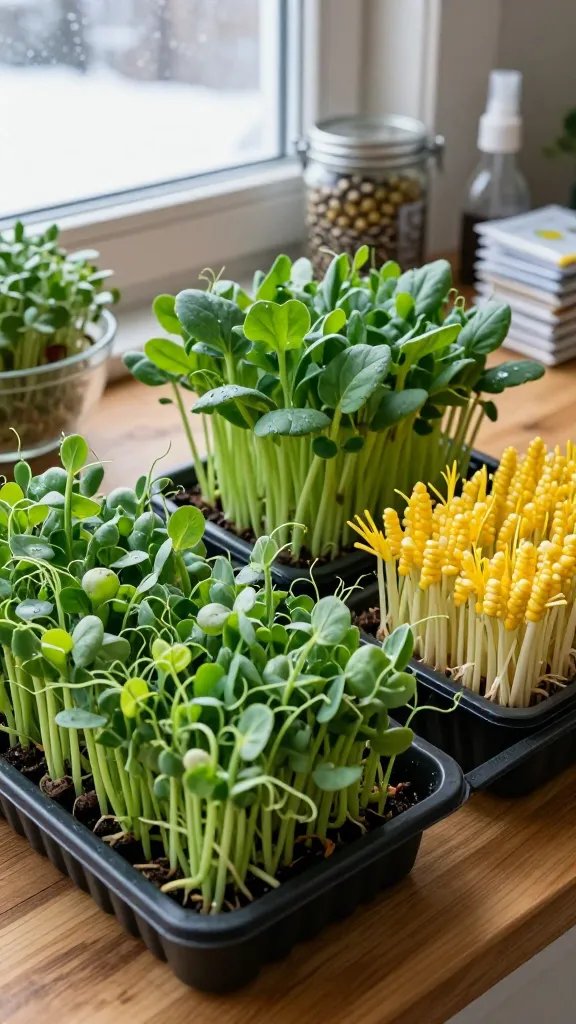
If you’re feeding skeptics (or kids), start here. These microgreens taste familiar—sweet, nutty, and ridiculously snackable. Larger seeds mean you harvest thicker stems and get that satisfying crunch.
Key Points
- Pea shoots (speckled or sugar snap): crisp, sweet tendril magic in 10–14 days.
- Sunflower: nutty, juicy, and packed with texture. Ready in 10–12 days.
- Corn: grow in low light for bright yellow, candy-sweet shoots. Harvest in 7–10 days.
How To Nail It
- Soak peas and sunflower seeds for 6–8 hours; drain well before sowing.
- Weight method: Stack a tray on top for 2–3 days to encourage strong stems.
- For corn, keep it dim to preserve sweetness and color; light turns it green and less sweet.
Perfect for bowls, stir-fry finishes, noodle soups, and snacky “I just need something crunchy” moments. Your winter menu just leveled up.
3. Nutrient-Dense Classics: Broccoli, Kale, Kohlrabi, Cabbage
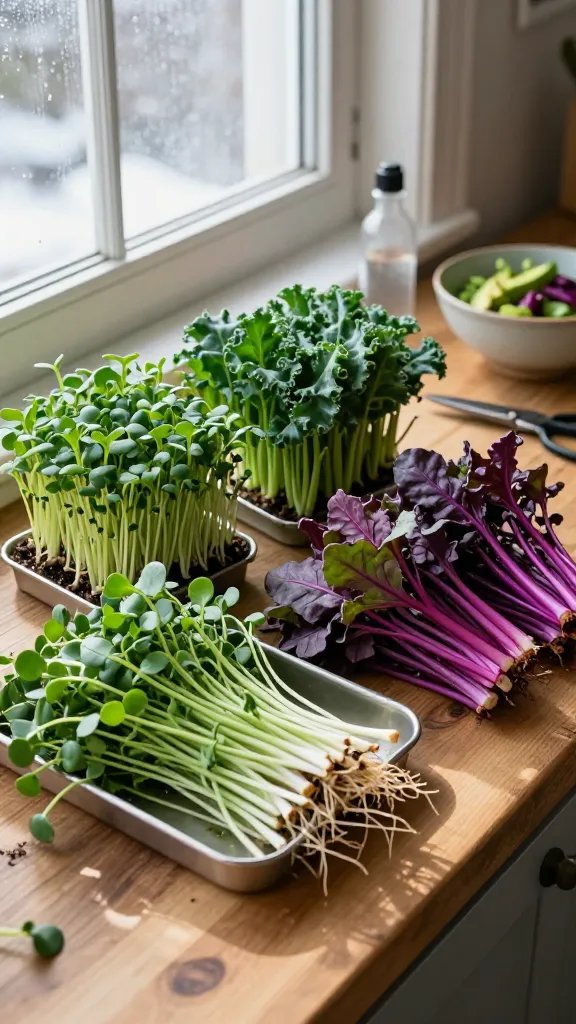
You came for vitamins? These Brassica all-stars deliver concentrated antioxidants and clean, mild flavor. They’re dependable, fast, and thrive in a cool room—December-friendly, for sure.
Standouts
- Broccoli: subtle, fresh flavor and famously high sulforaphane potential.
- Kale: tender with a gentle brassica bite—fantastic in smoothies.
- Kohlrabi: mild and slightly sweet; a sleeper hit on avocado toast.
- Red cabbage: vibrant stems add color plus crunch to tacos and grain bowls.
Growing Notes
- No soaking needed. Sow evenly and keep a thin layer of medium over seeds.
- Germination hits fast at 68–72°F, but they still do well cooler.
- Harvest at 8–12 days; don’t overwater or you’ll invite mold. Bottom water only.
Use these when you want an everyday, goes-with-everything green that quietly boosts nutrition. FYI, they store well if dried post-harvest.
4. Herbaceous Flavor Blasts: Cilantro, Basil, Dill
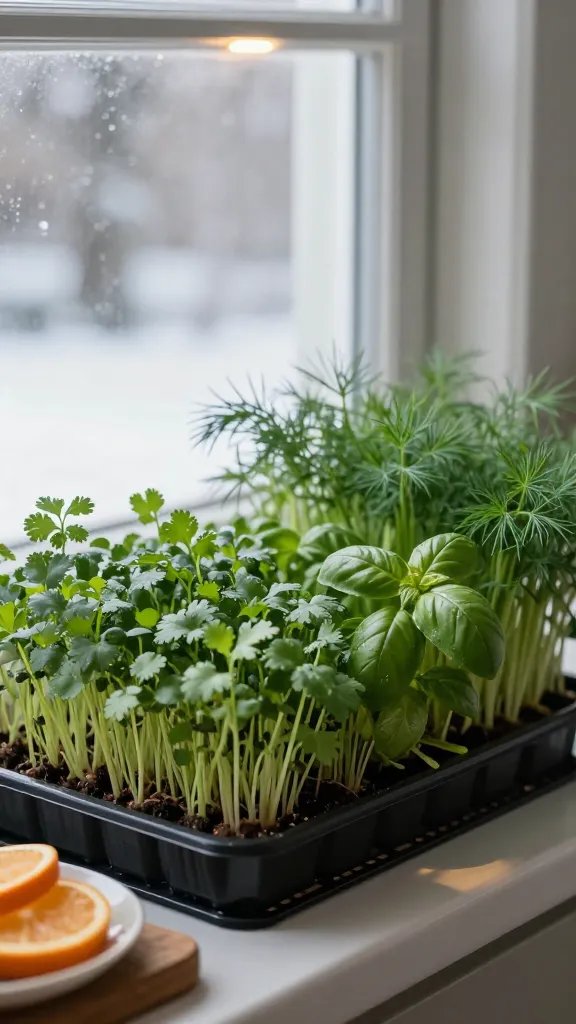
These bring fragrance and finesse when winter meals feel dull. They grow slower than the speed demons, but the payoff? Pure flavor fireworks.
What To Expect
- Cilantro: citrusy and bright; germinates slower (7–10 days), harvest 16–21 days.
- Basil: sweet, aromatic, and tender; prefers warmer spots and gentle light.
- Dill: feathery, fragrant, and fancy-looking on literally everything.
Pro Tips
- For cilantro, split the seeds (coriander) gently to speed germination.
- Keep basil warm (70–75°F) and avoid cold drafts; it pouts otherwise.
- Harvest with clean scissors; avoid bruising delicate leaves.
Perfect for soups, curries, holiday roasts, and last-minute “I cooked” garnish energy. IMO, dill microgreens make salmon feel restaurant-level.
5. Zesty Extras & Quick Wins: Beet, Swiss Chard, Purple Radish, Amaranth, Pak Choi
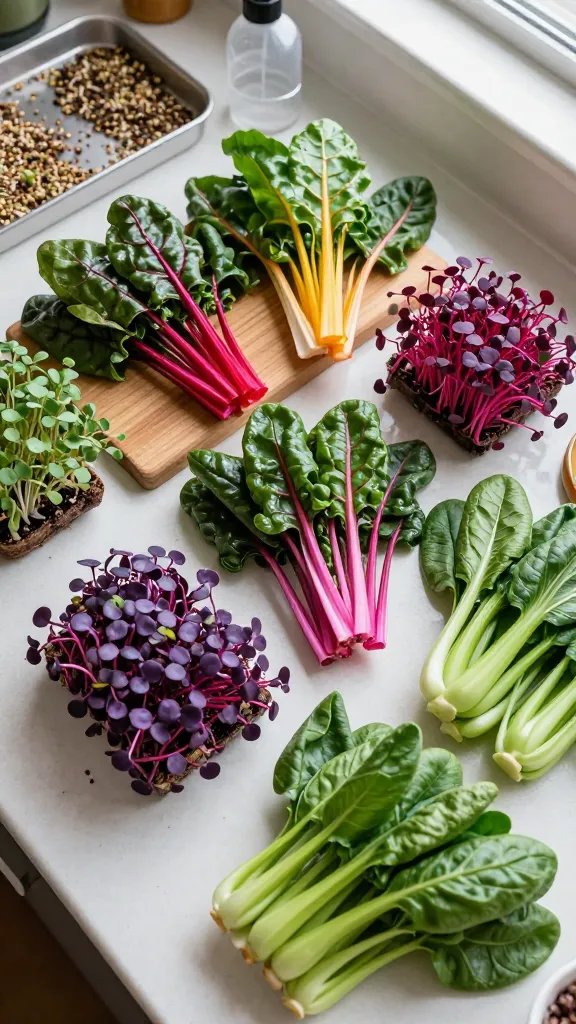
Want color and flair without fuss? This mix covers neon reds, pretty pinks, and elegant leaves that make every plate look chef-y. They’re fast enough to keep you harvesting all December.
Meet The Stars
- Beet: ruby stems, earthy-sweet flavor. Slightly slower germination; worth it.
- Swiss chard: rainbow stems scream “festive” on winter dishes.
- Purple radish: spicy, vivid, and lightning-fast—7–10 days.
- Amaranth: shocking magenta leaves; delicate, so handle gently.
- Pak choi: crunchy, mild, and versatile for soups and bowls.
How To Grow Like A Pro
- Pre-soak beet seeds for 2–4 hours to help even germination.
- Use bright, indirect light to keep colors vivid and stems sturdy.
- Harvest when cotyledons fully open; amaranth benefits from a tad less light to stay tender.
Use these when presentation matters—holiday dinners, brunch boards, or that Instagram shot you “accidentally” nailed. They bring the vibes and the crunch.
Setup Basics That Keep Everything Alive
- Trays: 10x20s with drainage on top, solid tray beneath for bottom watering.
- Medium: Sterile seed-starting mix or coco coir; level it before sowing.
- Light: LED shop lights 2–6 inches above canopy, 12–16 hours daily.
- Airflow: Small fan nearby to reduce mold and strengthen stems.
- Water: Mist for 2–3 days, then bottom water only. Drain excess.
- Harvest: Cut above the medium with sharp scissors. Rinse only if needed; dry well.
December-Friendly Scheduling
- Sow twice weekly to stagger harvests and keep a steady supply.
- Run one spicy tray (radish/mustard), one mild tray (pea/sunflower), and one nutrient tray (broccoli/kale) at all times.
- Herbs take longer—start them now for peak flavor mid-month.
Flavor Pairings You’ll Use On Repeat
- Radish + avocado toast with lemon and chili flakes.
- Pea shoots + ramen for snap and sweetness.
- Sunflower + grain bowls with tahini or miso dressing.
- Broccoli + smoothies (yes, really)—mild and nutrient-dense.
- Cilantro + tacos because you’re a person of taste.
- Basil + tomato soup when it’s snowing and you need comfort.
Common Oops Moments (And Fixes)
- Mold? Increase airflow, bottom water, and don’t over-sow. Add a fan, trim density next time.
- Leggy greens? Move lights closer and give more hours. They’re reaching, not thriving.
- Yellow leaves? Totally normal before light exposure. Give them sun (or LEDs) and chill.
- Sour smell? Overwatering alert. Let trays dry slightly between waterings.
Why Microgreens Hit Different In December
- Speed: Most are harvest-ready in 7–14 days.
- Space: Windowsill or shelf works fine—no yard needed.
- Flavor: Concentrated tastes that make simple winter meals pop.
- Nutrition: Dense in vitamins, antioxidants, and minerals. Tiny but mighty, etc.
Ready to turn your kitchen into a mini-farm? Start with one tray, taste the difference, then scale up when you inevitably get hooked. Fresh, crunchy, colorful greens in December? Yes, chef—your winter just got brighter.