
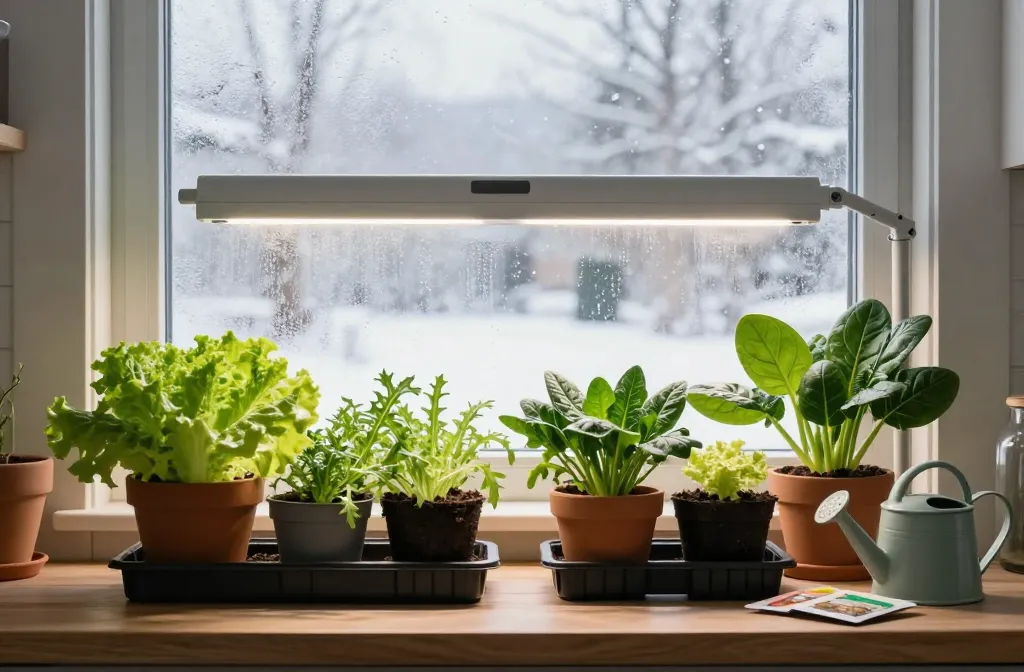
Cold outside, lush inside. That’s the December mood we’re going for. These 12 veggies thrive under grow lights, on sunny sills, and in tucked-away corners—no greenhouse required. Ready to harvest salads, stir-fry add-ins, and flavor bombs while it snows? Let’s build an indoor garden that actually earns its counter space.
1. Leafy Legends That Grow Fast (Lettuce, Arugula, Spinach)
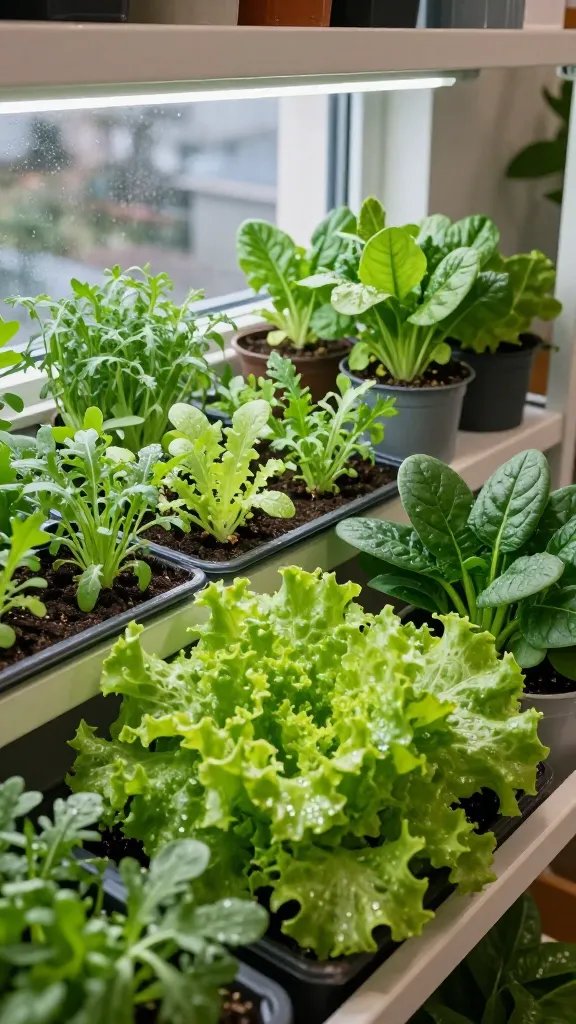
Want wins in two weeks? Go leafy. Lettuce, arugula, and spinach don’t need deep pots, and they handle cooler rooms like champs.
Plant them thick for baby greens or space them a bit for fuller leaves you can cut and come again. You’ll get that soft, tender bite that grocery greens lose by day two.
Tips For Speed And Flavor
- Light: 12–14 hours under a full-spectrum LED. A bright south window works, but grow lights give that reliable “no drama” growth.
- Containers: Shallow trays or 4–6 inch pots. Drainage holes are non-negotiable.
- Soil: Fluffy potting mix + a little compost for trace nutrients.
- Water: Keep evenly moist, never soggy. Bottom-water to avoid lanky stems.
- Varieties: ‘Buttercrunch’ lettuce, ‘Astro’ arugula, ‘Bloomsdale’ spinach. Speedy and sweet.
Harvest in handfuls every few days and watch them bounce back. Perfect for quick salads and sandwich greens when you refuse to leave the house.
2. Microgreens For Instant Gratification (Radish, Broccoli, Pea Shoots)
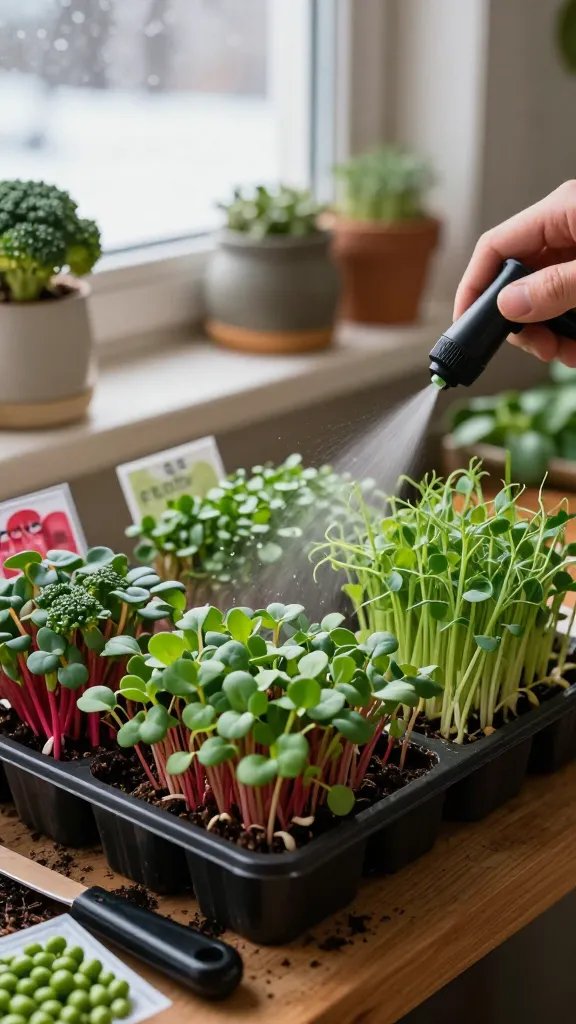
Microgreens are the “I want results yesterday” crop. They go seed-to-plate in 7–14 days and taste way more intense than their adult selves.
No fancy gear needed—just shallow trays, seeds, and a sunny spot or lights. You’ll feel like a culinary genius with minimal effort, FYI.
How To Nail Microgreens
- Seeds: Buy microgreen-specific radish, broccoli, mustard, and peas. They germinate evenly.
- Tray Setup: 1–2 inches of potting mix, scatter seeds thickly, press in, and mist.
- Light: Moderate to bright. 10–12 hours keeps them sturdy.
- Water: Bottom-water once roots reach the tray holes. No soggy soil on top.
- Harvest: Snip at first true leaves. Rinse, spin dry, flex like a chef.
Use on eggs, noodles, grain bowls—everything tastes fancier. Also makes a killer gift if you want to look thoughtful with almost zero planning.
3. Root Veggies, But Make Them Tops (Carrot Greens, Beet Greens, Scallions)
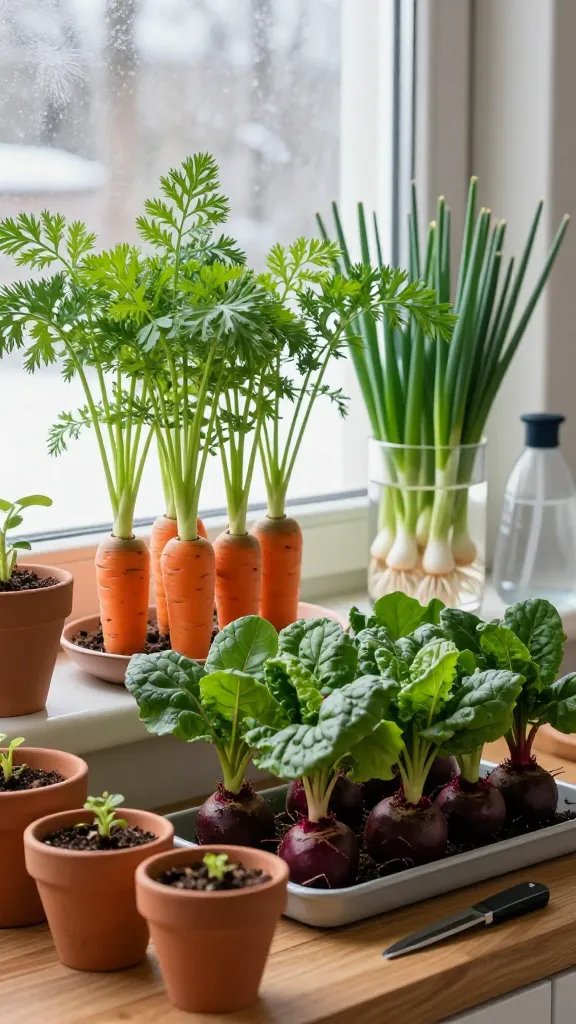
Full-sized carrots and beets indoors? Not worth the fight. But their greens are spectacular and regrow like magic. Plus, scallions might as well be the indoor gardener’s training wheels.
Cooking with carrot tops and beet greens gives soups and pestos a fresh, herbaceous kick. And scallions? They basically refill themselves after each haircut.
What To Grow And How
- Carrot Tops: Plant short, round varieties in 6–8 inch deep pots if you want baby roots, or just sprout tops from kitchen carrots for leafy greens. Bright light keeps them lush.
- Beet Greens: Sow beets in wide, 6–8 inch deep containers. Thin seedlings and eat the thinnings. You can harvest leaves for weeks.
- Scallions: Use seed or regrow from grocery root ends. A narrow window box works great.
Care Cheat Sheet
- Light: Bright window or 12 hours under LEDs.
- Water: Consistent, even moisture to avoid bitterness.
- Feeding: Light liquid fertilizer every 2–3 weeks—roots and greens appreciate the boost.
Use the greens in omelets, ramen, and salads. You’ll save money and snag flavor you can’t buy in a plastic clamshell, seriously.
4. Cold-Tolerant Herbs You’ll Actually Use (Parsley, Cilantro, Chives, Mint)
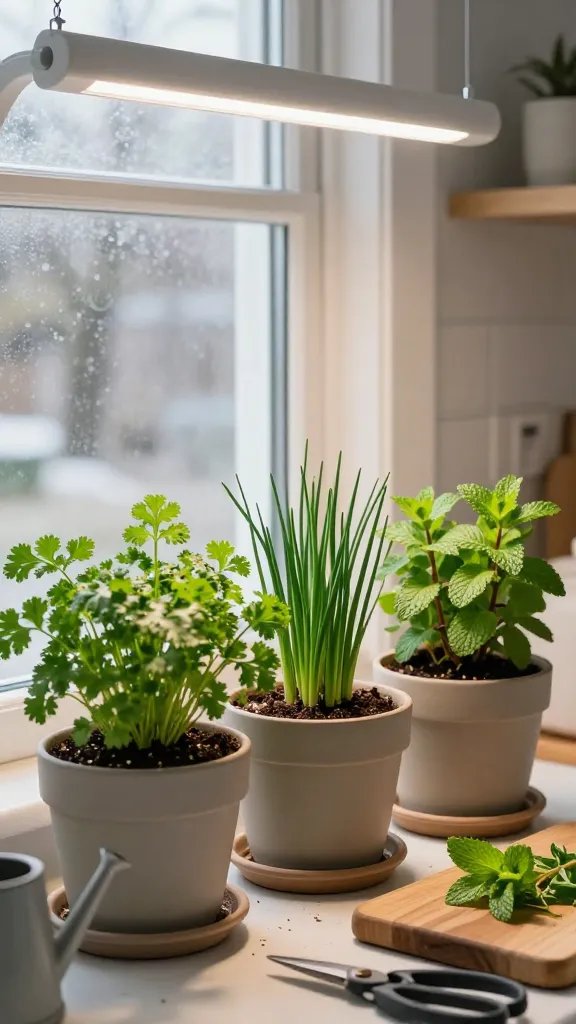
Winter herbs are all about the cool kids: parsley, cilantro, chives, and mint. They don’t sulk in cooler rooms and they taste bright enough to wake up any winter dish.
Most herbs need consistent light and careful watering. Nail those two and you’ll skip sad supermarket bunches that wilt in a day.
Best Practices For Indoor Herb Glory
- Light: 12–14 hours under LEDs or the brightest window you own. Cilantro and parsley forgive lower light better than basil, IMO.
- Pots: 6–8 inch containers with drainage. Clay pots help prevent overwatering.
- Soil & Water: Light potting mix. Water when the top inch dries. Mint likes it a bit more moist.
- Harvest: Snip often. For parsley and cilantro, cut outer stems first and leave the center to keep growing.
- Varieties: Flat-leaf parsley, slow-bolt cilantro, garlic chives, spearmint or peppermint.
Use in chimichurri, pho, herby omelets, and hot chocolate mint garnish if you’re extra. Fresh herbs make winter cooking taste like you tried.
5. Compact Fruity Workhorses (Dwarf Tomatoes, Peppers, And Bush Beans)
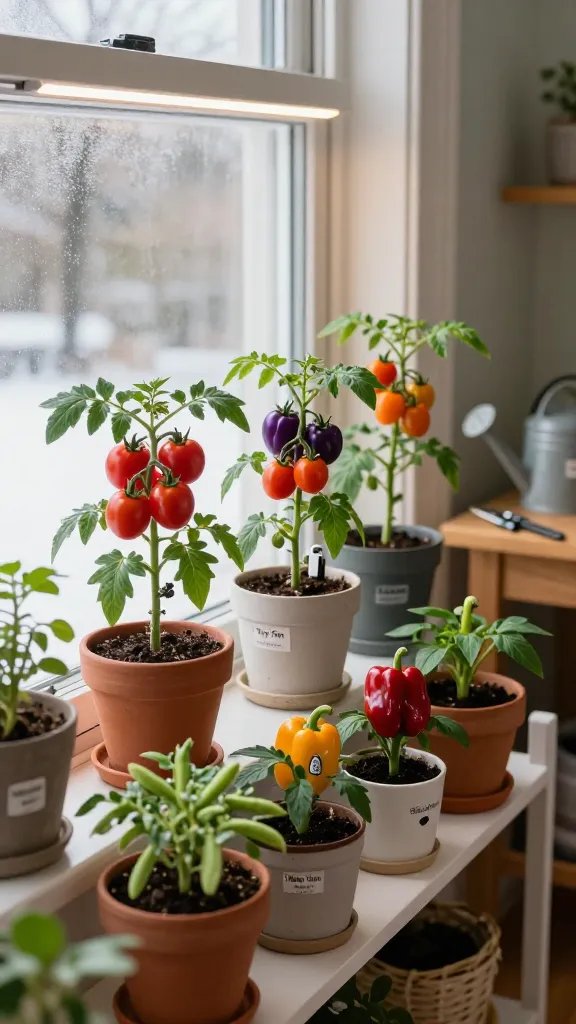
Yes, you can grow fruiting veggies indoors in December—if you pick the right varieties. Go dwarf, go compact, go daylight supplementation or bust.
Tomatoes and peppers need more light and warmth than leafy greens, but the payoff? A handful of sweet cherry tomatoes in January is peak main-character energy.
Choose The Right Cultivars
- Dwarf Tomatoes: ‘Tiny Tim,’ ‘Micro Tom,’ ‘Red Robin’—short, prolific, windowsill-friendly.
- Peppers: ‘Filius Blue,’ ‘Basket of Fire,’ or mini bells. They love steady warmth.
- Bush Beans: ‘Mascotte’ or ‘Provider’ in a bright spot. Fun, fast, and surprisingly decorative.
Setup And Care
- Light: 14–16 hours under strong LEDs. Aim for the brightest setup you can manage.
- Temperature: 68–75°F by day. Peppers sulk below 60°F—keep them cozy.
- Pollination: Gently shake the plant or tap flowers daily. A soft paintbrush also works.
- Feeding: Balanced fertilizer every 1–2 weeks once flowering starts.
- Containers: 1–3 gallon pots with excellent drainage. Tomatoes appreciate a stake.
Expect small but steady harvests. Add cherry tomatoes to sheet-pan dinners, toss peppers into tacos, and snack on crisp beans straight from the plant—zero regrets.
Bonus Setup Essentials (Because Success Loves A Plan)
- Grow Lights: Full-spectrum LEDs with adjustable height. Keep them 6–12 inches above leaves.
- Timers: Automate 12–16 hour cycles so you never forget.
- Airflow: Small fan on low prevents mildew and strengthens stems.
- Humidity: Aim for 40–50%. A tray of pebbles with water under pots adds a gentle boost.
- Pests: Check undersides of leaves weekly. Use insecticidal soap or neem at first sign of trouble.
Dial in these basics once and everything on this list gets easier. Think of it as your indoor garden’s cheat codes.
There you go—12 winter-friendly veggies that make December feel deliciously green. Start with leafy legends, sprinkle in microgreens, and level up to compact tomatoes when you’re feeling bold. Your future self snacking on fresh greens while it’s snowing outside? They say thanks, trust me.