
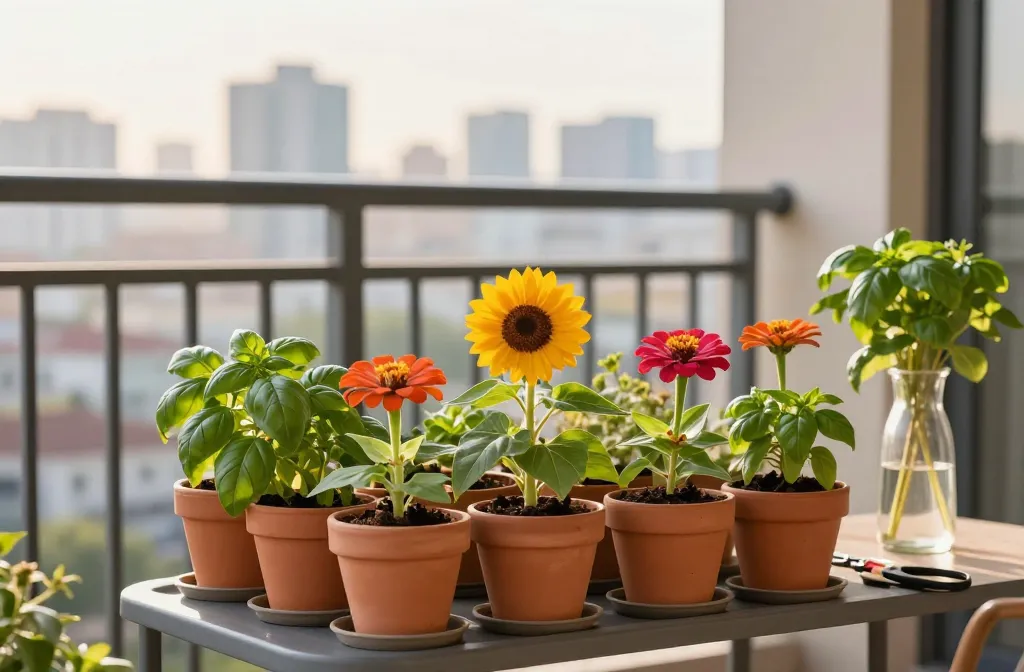
Want bouquets on repeat without a backyard? Balcony companion planting is your secret power. Pair the right flowers and herbs, and you’ll get more stems, fewer pests, and vases that look straight out of a flower market. We’re talking compact combos that thrive in pots and look gorgeous doing it. Ready to turn that railing into a bouquet factory?
1. Sunlit Showstoppers: Zinnias + Basil + Dwarf Sunflowers
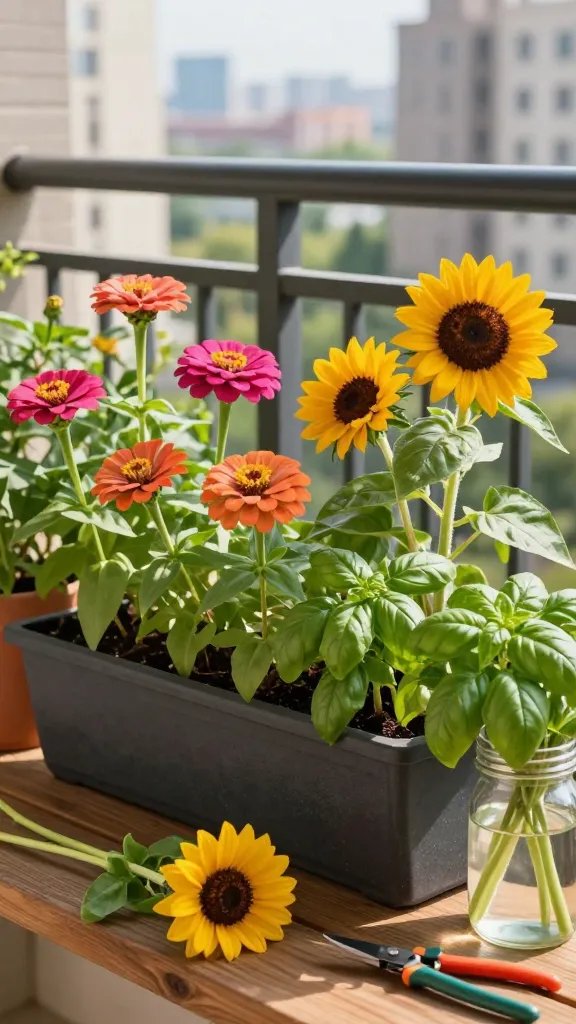
If your balcony gets serious sun, this trio slays. Zinnias deliver nonstop color, dwarf sunflowers add bold faces for dramatic bouquets, and basil boosts growth while fending off pests. Also, basil makes your hands smell incredible when you cut.
Why This Works
- Zinnias (any Profusion or Zahara series) pump out cut-and-come-again blooms.
- Dwarf sunflowers (like ‘Teddy Bear’ or ‘Sunny Smile’) stay compact in containers.
- Basil confuses pests and improves vase life when you tuck a few stems into arrangements.
Use a 12–16 inch pot and plant one sunflower in the center, three zinnias around it, and two basil plants at the edges. Keep deadheading zinnias and snipping basil often to push more growth.
Tips
- Use a lightweight potting mix and add slow-release fertilizer for the long haul.
- Pinch zinnias and sunflowers at 6–8 inches to encourage branching.
- Harvest in the morning and condition stems in cool water for longer vase life.
When to use: Anytime you want loud color and sturdy stems for cheerful, sun-drenched bouquets. FYI, this combo is basically summer in a pot.
2. Moody Romance: Dahlias + Sweet Alyssum + Trailing Nasturtiums
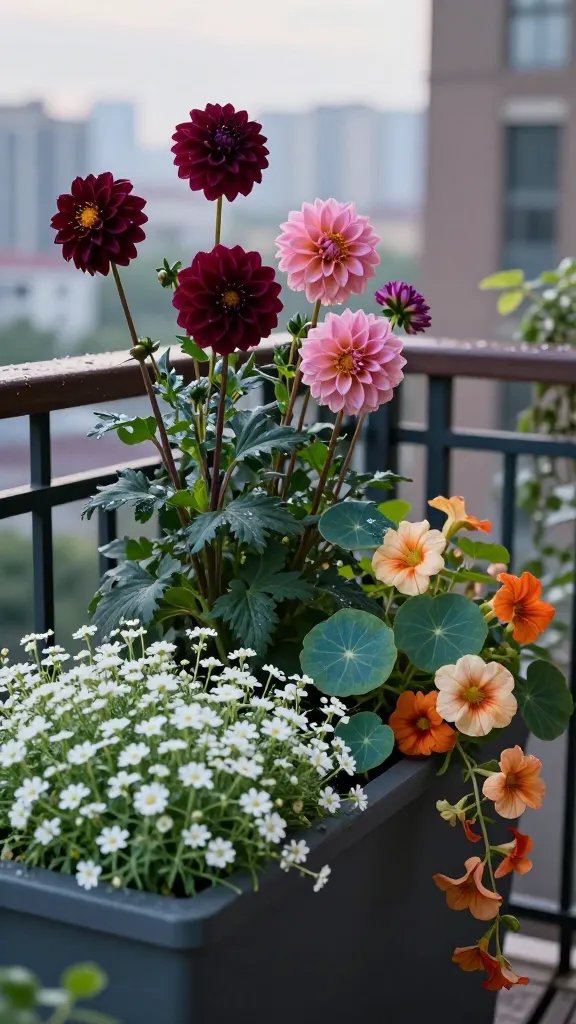
Craving plush, moody bouquets without yard space? Dahlias bring the drama, while sweet alyssum carpets the soil and attracts beneficial insects. Trailing nasturtiums spill over the pot with edible, peppery blooms that pop in arrangements.
Why This Works
- Dahlias (ball or pom types like ‘Cornel’ or ‘Wizard of Oz’) give long, straight stems in containers.
- Sweet alyssum draws hoverflies that prey on aphids and looks delicate as filler.
- Nasturtiums provide bonus foliage and trailing flowers for cascading bouquet edges.
Use a 16–20 inch pot for one dahlia tuber. Plant alyssum as a living mulch around the base. Add two nasturtium starts at the edge to trail. Keep the dahlia consistently moist and feed with a low-nitrogen fertilizer to avoid floppy stems.
Care Notes
- Stake dahlias early with bamboo canes; balcony winds get dramatic fast.
- Deadhead like it’s your job; dahlias reward the hustle with more blooms.
- Harvest when outer petals unfurl; condition in warm water for best vase life.
Best for: Romantic, full-bodied bouquets with a touch of cottage chaos. IMO, this pairing makes even tiny balconies feel luxe.
3. Scented Power Duo: Roses (Patio Varieties) + Lavender + Feverfew
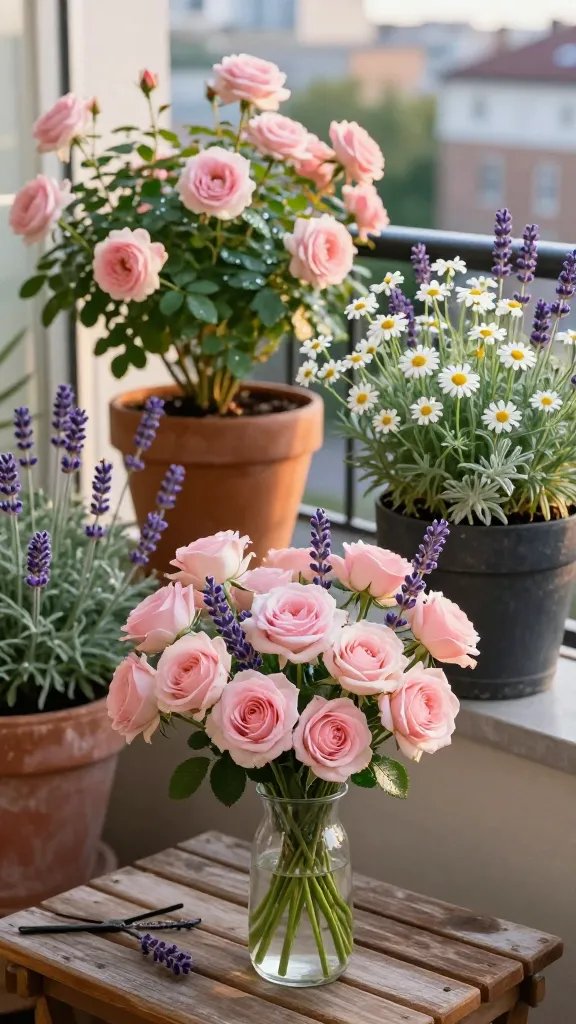
Compact roses can absolutely thrive in containers, and yes, you can cut them. Pair with lavender to attract pollinators and create fragrant filler, and add feverfew for airy, daisy-like sprays that make every bouquet look intentional.
Why This Works
- Patio roses (look for ‘Drift’, ‘Patio Hit’, or mini floribundas) bloom repeatedly and handle pruning.
- Lavender helps deter pests, loves dry edges of pots, and offers aromatic spikes.
- Feverfew (Tanacetum parthenium) adds whimsical filler and blooms like crazy.
Choose a large container with excellent drainage. Plant one rose in the center, lavender on the sunnier side, and tuck feverfew along the front. Keep soil on the drier side for lavender, slightly richer for roses—compromise with well-draining mix and targeted watering at the base of the rose.
Pro Moves
- Use a rose-specific fertilizer monthly during bloom season.
- Prune out crossing canes and spent clusters to keep energy focused.
- Strip lower foliage before arranging to reduce bacteria in vase water.
Use when: You want that classic, perfumed bouquet with texture and movement. Seriously, one pot can churn out gift-worthy arrangements all season.
4. Cool-Season Color Machine: Snapdragons + Sweet Peas + Dill
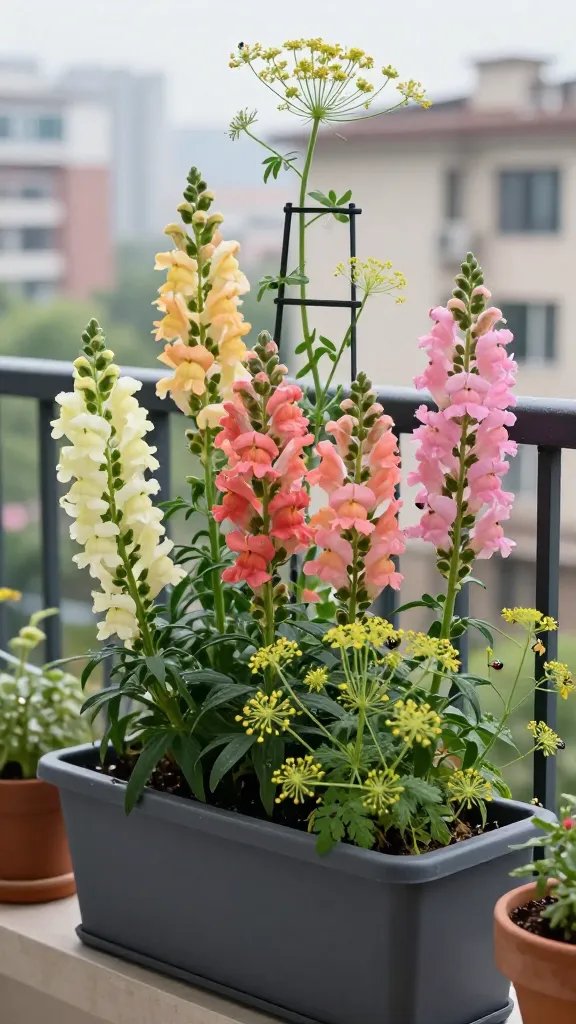
Got a spring-fall balcony or cooler microclimate? This trio thrives in shoulder seasons. Snapdragons bring structure, sweet peas add scent and romantic tendrils, and dill attracts beneficials while giving feathery filler for days.
Why This Works
- Snapdragons (Chantilly or Potomac types) supply tall spires for height and drama.
- Sweet peas climb a small trellis and perfume your entire balcony.
- Dill lures lacewings and ladybugs, plus the umbels look designer in bouquets.
Use a rectangular planter. Install a mini trellis at the back for sweet peas. Plant snapdragons in the middle row and dill along the front. Keep everything evenly moist and give them morning sun if afternoons scorch.
Grower Tips
- Pinch snapdragons at 4–6 inches for branching.
- Harvest sweet peas early and often; short stems still look chic in posies.
- Succession sow dill every 3–4 weeks for continual filler.
Best for: Shoulder-season bouquets with fragrance and vertical lines. This combo proves balconies can do “English cutting garden” vibes without the country estate.
5. Heat-Proof Tropic Vibes: Cosmos + Marigolds + Ornamental Millet
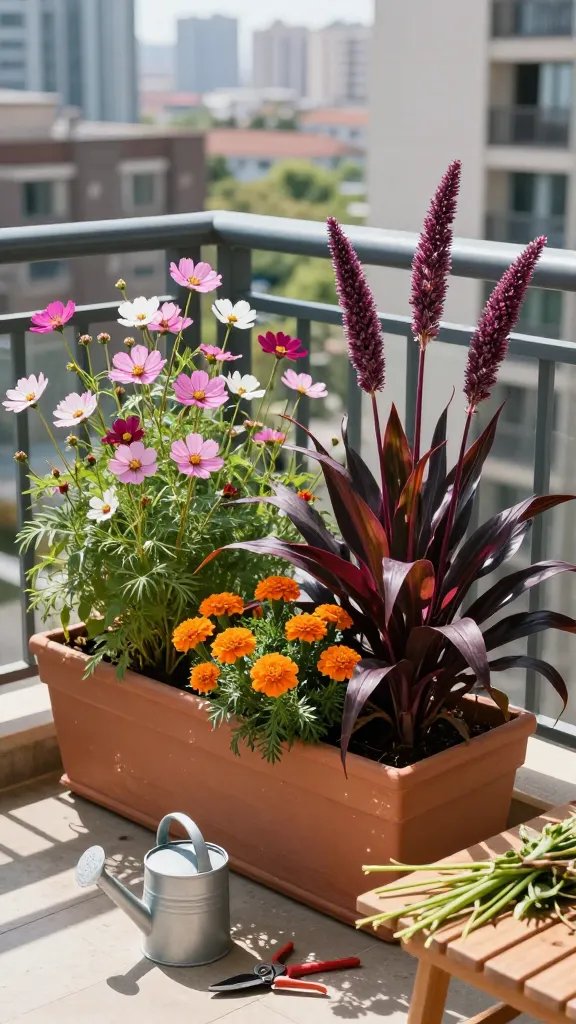
Balcony turns into a toaster by noon? Lean into it. Cosmos thrive on neglect, marigolds repel pests, and ornamental millet adds dramatic, dusky plumes that make every arrangement look editorial.
Why This Works
- Cosmos (Double Click or Sensation) deliver clouds of airy flowers all summer.
- Marigolds (French types for compact form) help manage whiteflies and add bright accents.
- Ornamental millet (like ‘Purple Baron’) gives height, color contrast, and sculptural seedheads.
Plant in a large, sun-baked pot with good drainage. Put millet at the back, cluster three cosmos in the middle, and dot marigolds at the edges. Don’t overfeed—cosmos flower better in leaner soil.
Quick Wins
- Pinch cosmos early; then deadhead like a machine for endless blooms.
- Rotate the container weekly so stems grow straight, not all toward the railing.
- Cut millet plumes when fully colored for long-lasting texture in vases.
Perfect for: Bold, summer-proof arrangements with movement and contrast. Trust me, these stems make simple grocery-store greenery look fancy.
Bonus Mini-Guide: 16 Balcony-Friendly Pairings For Bouquets
- Zinnias + Basil — Color plus scent; pest help included.
- Dwarf Sunflowers + Cosmos — Big faces with airy companions.
- Dahlias + Sweet Alyssum — Drama meets pollinator magnet.
- Nasturtiums + Feverfew — Trailing color with airy filler.
- Patio Roses + Lavender — Classic romance, low-key maintenance.
- Snapdragons + Dill — Spires plus feathery, designer filler.
- Sweet Peas + Marigolds — Fragrance with pest defense.
- Cosmos + Ornamental Millet — Movement and moody texture.
- Strawflowers + Thyme — Everlasting blooms with edible herb.
- Scabiosa + Baby’s Breath (Gypsophila) — Button blooms and frothy clouds.
- Calendula + Borage — Long bloomers with starry, bee-loved filler.
- Anemones + Ranunculus — Spring showstoppers for cool balconies.
- Amaranth (Dwarf) + Celosia — Sculptural plumes for modern arrangements.
- Lisianthus (Pot Varieties) + Sage — Luxe blooms with silvery foliage.
- Verbena (Tall) + Yarrow (Dwarf) — Airy purple with flat-topped filler.
- Statice + Lavender Cotton (Santolina) — Long-lasting color with silvery greens.
Mix and match based on your light and vibe. You’ll cover focal flowers, fillers, and foliage without needing a single garden bed.
Container and Care Cheat Sheet
- Sun: Most cut flowers want 6–8 hours. Morning sun = chef’s kiss; harsh afternoon sun needs extra watering.
- Soil: Use high-quality potting mix, not garden soil. Add compost for heavy feeders like dahlias and roses.
- Water: Deep soak, then let the top inch dry. Balcony wind dries pots fast—check daily in heat waves.
- Feeding: Slow-release fertilizer at planting + liquid bloom booster every 2–3 weeks for repeat bloomers.
- Pinch & Deadhead: Pinch early for branching; remove spent blooms to keep the conveyor belt going.
- Harvest Smart: Cut in the cool of morning, strip lower leaves, recut stems under water, and use clean vases.
Space-Saving Tricks
- Go vertical with trellises for sweet peas and compact climbers.
- Stagger heights: tall anchors in back, mid-bloomers in center, trailers up front.
- Use railing boxes for filler plants (alyssum, dill, feverfew) to free big pots for focal flowers.
- Group pots for a microclimate—plants shield each other from wind and heat.
Bouquet Builder Basics
- Focals: Dahlias, roses, sunflowers, lisianthus, ranunculus.
- Secondary: Zinnias, snapdragons, cosmos, anemones.
- Filler: Feverfew, dill, statice, alyssum, baby’s breath.
- Foliage: Basil, sage, santolina, nasturtium leaves, thyme.
Start with foliage, add focal flowers in a triangle, tuck in secondaries, then sprinkle filler where the bouquet needs air. Rotate the vase as you build—florist move.
Pest and Wind Reality Check
- Aphids? Blast with water, then release ladybugs or use insecticidal soap.
- Whitefly? Add marigolds nearby and sticky traps under the canopy.
- Wind tunnels? Use heavier containers or add stones in the base, and stake tall stems early.
Balcony gardening isn’t fragile—it’s strategic. A few tweaks make the difference between “meh” and “wow, you grew that?”
You’ve got everything you need to turn your balcony into a bouquet bar. Pick one section, plant a pot this weekend, and start snipping stems in a few weeks. Your future self (and your coffee table) will thank you.