
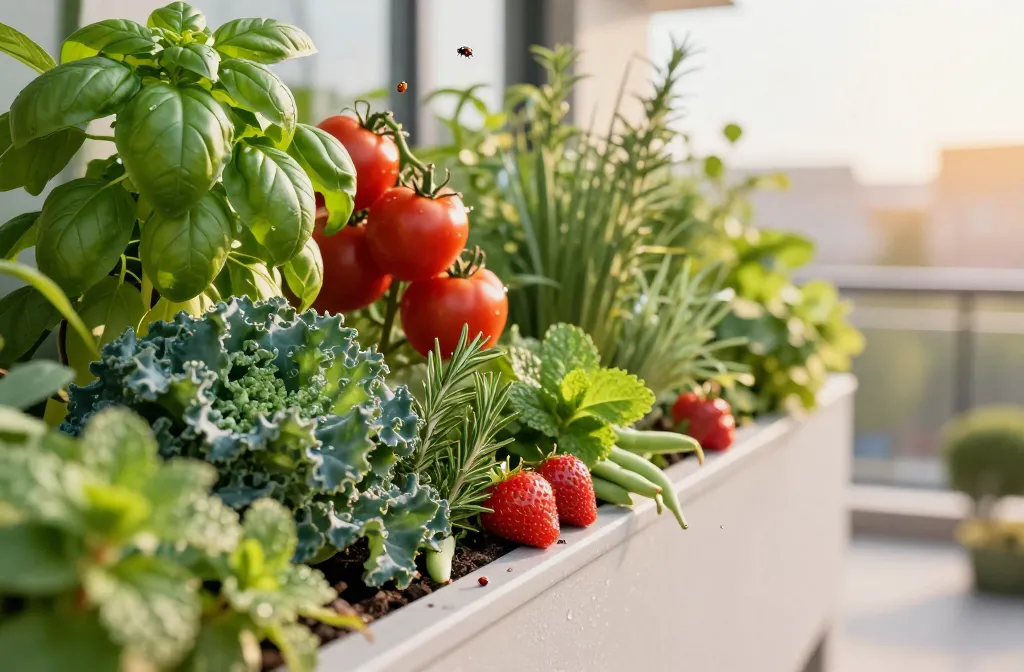
Your vertical garden looks cute until aphids throw a block party on your kale. Let’s fix that with plants that do the dirty work for you. Companion planting can shield your greens, confuse pests, and attract predators—all while making your wall look lush. Ready for a living pest-defense system that smells great and tastes better?
We’ll stack smart plant combos, lure beneficial bugs, and create micro-barriers pests can’t stand. No chemicals, no drama. Just five dead-simple strategies with 12 plant pairings you can plug into pockets, towers, or trellises.
1. The Aromatic Shield: Strong Scents That Confuse and Repel
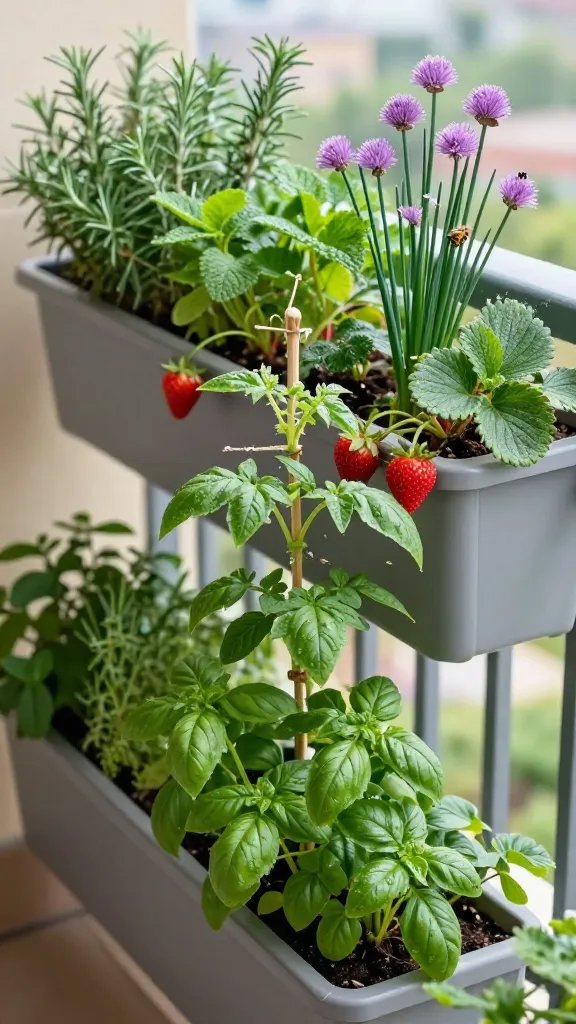
Pests navigate by smell, so you can scramble their GPS with strongly scented herbs. In a vertical setup, those aromas concentrate and create a fence around tender crops. Think of it as perfume with a purpose—minus the headache.
Try These Combos (12 Natural Solutions, Part 1–4):
- Basil + Tomatoes: Basil repels thrips, whiteflies, and mosquitoes while helping tomatoes taste better. Tuck basil in side pockets around a tomato trellis.
- Chives + Strawberries: Chives deter aphids and leafhoppers; strawberries gratefully accept the protection and the subtle oniony neighbor.
- Mint + Brassicas (kale, cabbage): Mint confuses cabbage moths and flea beetles. Keep mint in a contained pocket—she’s a runner.
- Rosemary + Beans: Rosemary’s resinous oils repel bean beetles and some leaf-chewing pests. Place near the top tier for max scent spread.
Tips
- Place aromatic herbs on the outermost edges and top rows to form a scent “curtain.”
- Snip often. Frequent pruning turbocharges aroma production.
- Water at the base to avoid washing off essential oils.
Use this when pests first appear or as a preventive perimeter. It’s easy, pretty, and doubles as your dinner’s flavor boost.
2. Decoy & Trap Plants: Sacrifice a Few Leaves, Save the Harvest
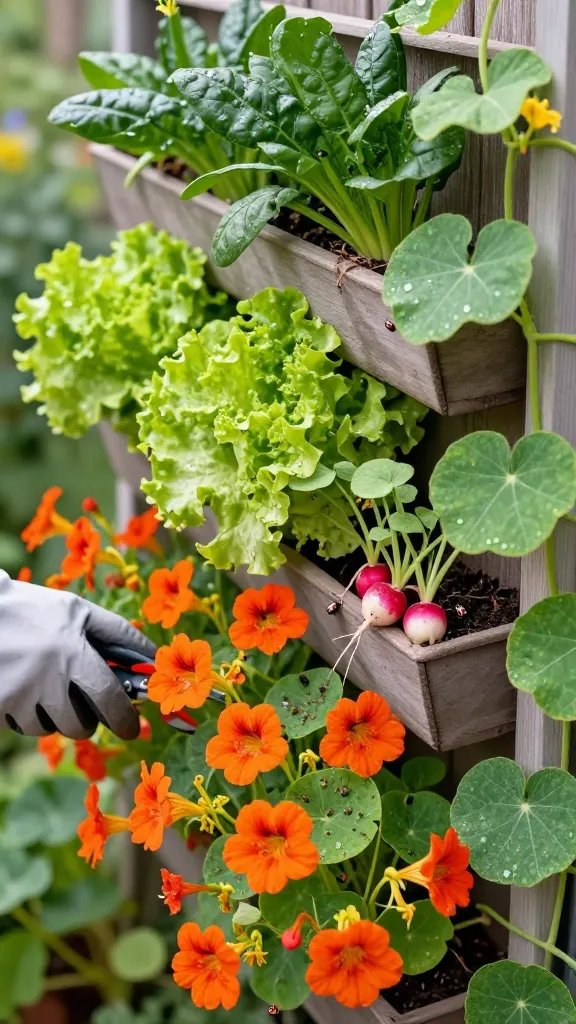
Some plants are pest magnets. Use them on purpose to lure the bad guys away from your prized greens. In a vertical garden, trap plants fit neatly in sacrificial pockets you can monitor—and ruthlessly prune.
Try These Combos (12 Natural Solutions, Part 5–7):
- Nasturtiums + Lettuce/Spinach: Aphids and flea beetles flock to nasturtiums, leaving your salad alone. Hang nasturtiums from lower pockets to draw pests down and away.
- Radish + Cucumbers: Radishes attract cucumber beetles that would otherwise chew young cukes. Quick-growing radishes also keep soil active.
- Mustard Greens + Brassicas: Mustards lure flea beetles, so your kale and broccoli stay happier. Harvest or yank mustard leaves when pests cluster.
How To Manage Trap Plants
- Inspect daily. If you see a clump of aphids, blast with water or remove that leaf entirely.
- Re-seed fast-maturing traps (radish, mustard) every 2–3 weeks for constant coverage.
- Place traps one row below your main crop to funnel traffic away.
Use this when a specific pest keeps returning. You’ll lose a little foliage, but you’ll save the crop that matters—worth it, trust me.
3. Predator Magnets: Flowers That Recruit the Good Bugs
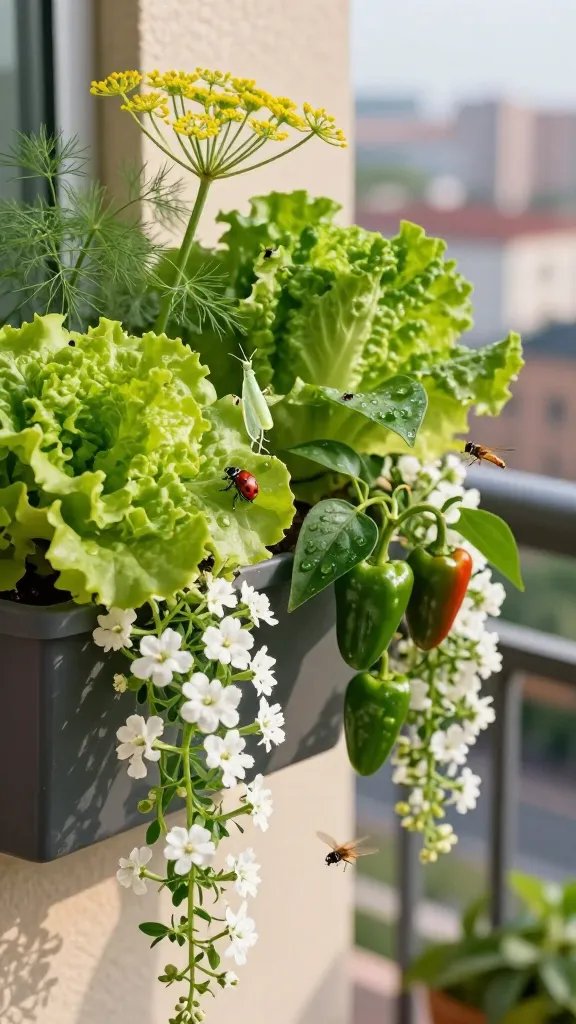
You don’t need pesticides if you hire tiny assassins. Lacewings, lady beetles, hoverflies, and parasitic wasps eat aphids, caterpillars, and whiteflies. They work for nectar, shelter, and vibes—give them that, and they’ll patrol your wall garden nonstop.
Try These Combos (12 Natural Solutions, Part 8–10):
- Dill + Lettuce: Dill flowers attract hoverflies and lacewings that demolish aphids on lettuce. Let a few dill stems bolt for steady blooms.
- Sweet Alyssum + Peppers: Alyssum’s tiny flowers feed parasitic wasps; they in turn target caterpillars and whiteflies on peppers.
- Calendula + Zucchini: Calendula brings in lady beetles and syrphid flies. Place near squash blossoms to protect baby fruits.
Placement & Care
- Stagger nectar plants every 2–3 pockets vertically for a stair-step buffet.
- Deadhead flowers lightly to keep blooms coming.
- Avoid broad-spectrum sprays—don’t evict your best employees.
Use this when you want long-term balance. With the right flowers, predators set up shop and keep pest populations in check—seriously, it’s garden magic.
4. Living Barriers: Textures, Layout, and “Scent Walls” That Block Pests
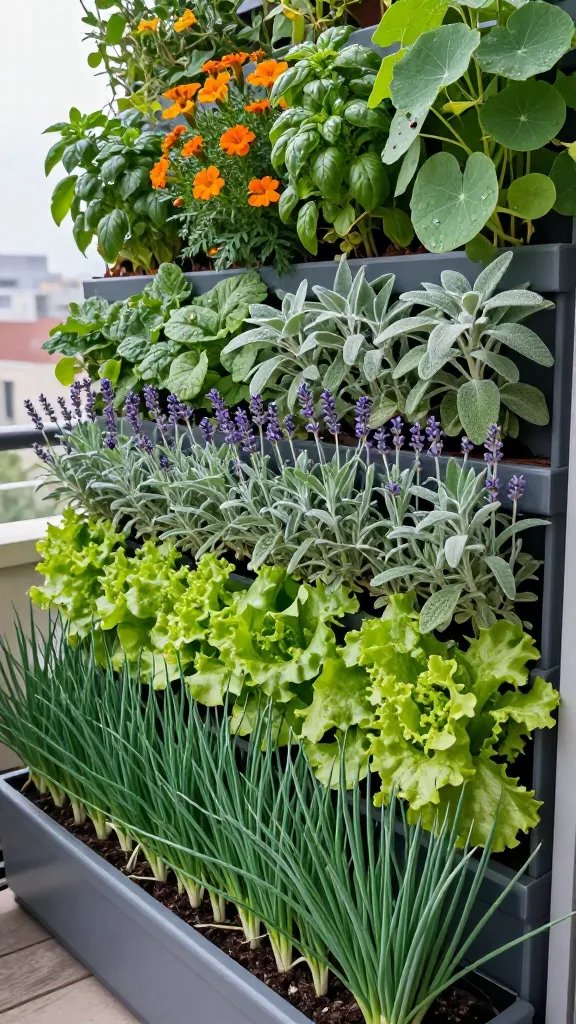
Vertical gardens give you control over airflow, spacing, and plant order. Use that to create physical and sensory barriers that slow or stop pests before they reach your VIP crops. It’s basically tower defense, gardening edition.
Planting Patterns That Work
- Onion Family Borders: Add garlic chives or spring onions as a border around leafy greens. Their sulfur smell discourages aphids and mites.
- Fuzzy Foliage Speed Bumps: Interplant sage or lavender between tender crops. Hairy leaves and strong oils deter many chewing insects.
- Scent Walls: Stack thyme and oregano in a horizontal band across the middle tier. Their low, dense growth and aroma form a barrier layer.
Microclimate Moves
- Increase spacing by one pocket between same-species plants to reduce pest leaps.
- Alternate leaf shapes: frilly (lettuce) next to spiky (rosemary) next to round (oregano). Visual diversity confuses pests.
- Keep good airflow with a small fan in humid corners—whiteflies hate a breeze.
Use this when your garden feels like a pest highway. A few layout tweaks can turn it into a maze they never finish.
5. The Nightwatch: Timing, Maintenance, and Quick-Action Herbal Spritzes
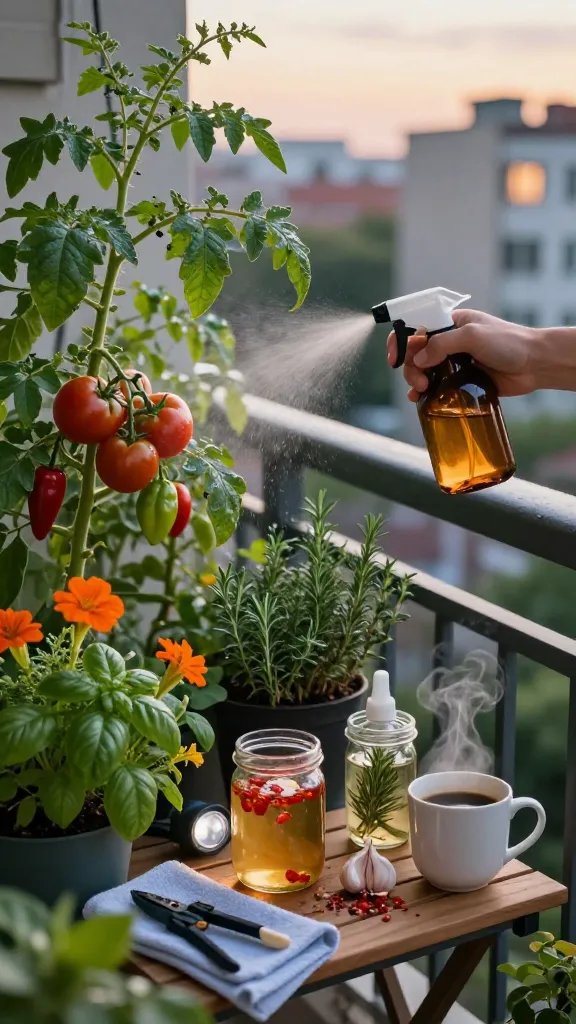
Companion planting does the heavy lifting, but you still need a light security routine. Quick checks and gentle interventions keep outbreaks from snowballing. Think five minutes with coffee in one hand and a spray bottle in the other.
Fast Action Sprays (Use Sparingly)
- Garlic-Chili Tea: Steep crushed garlic and a pinch of chili in warm water, strain, add a drop of mild soap. Spray undersides for aphids and mites. FYI: Do this at dusk to avoid leaf burn.
- Rosemary or Thyme Infusion: Simmer sprigs, cool, and strain. Great for soft-bodied pests, and it reinforces your scent wall.
- Neem + Aloe Mix: A touch of neem with aloe water can deter chewing and sucking pests. Keep off flowers to protect pollinators.
Routine That Works
- Morning Patrol: Flip leaves, look for honeydew, frass, or stippling. Spot it early, win the week.
- Prune On Sight: Remove infested leaves immediately and compost hot, or bag-and-bin if heavy.
- Refresh Companions: Replace leggy herbs every few months. Young plants push more aroma.
Bonus Companion Pairings (12 Natural Solutions, Part 11–12)
- Marigolds + Eggplant: French marigolds deter nematodes in soil-based pockets and help with whitefly pressure on eggplant.
- Borage + Strawberries: Borage attracts pollinators and predatory wasps while improving strawberry yield and resilience.
Use this when you want insurance. A tiny routine plus herbal spritzes keeps your companion web strong and your harvest drama-free, IMO.
Ready to turn your vertical garden into a pest-proof jungle? Mix a few of these combos, keep your layout playful, and let the good bugs clock in. You’ll snack straight off the wall and feel smug about skipping the chemicals. Go plant your defense squad—your future salads say thanks.