
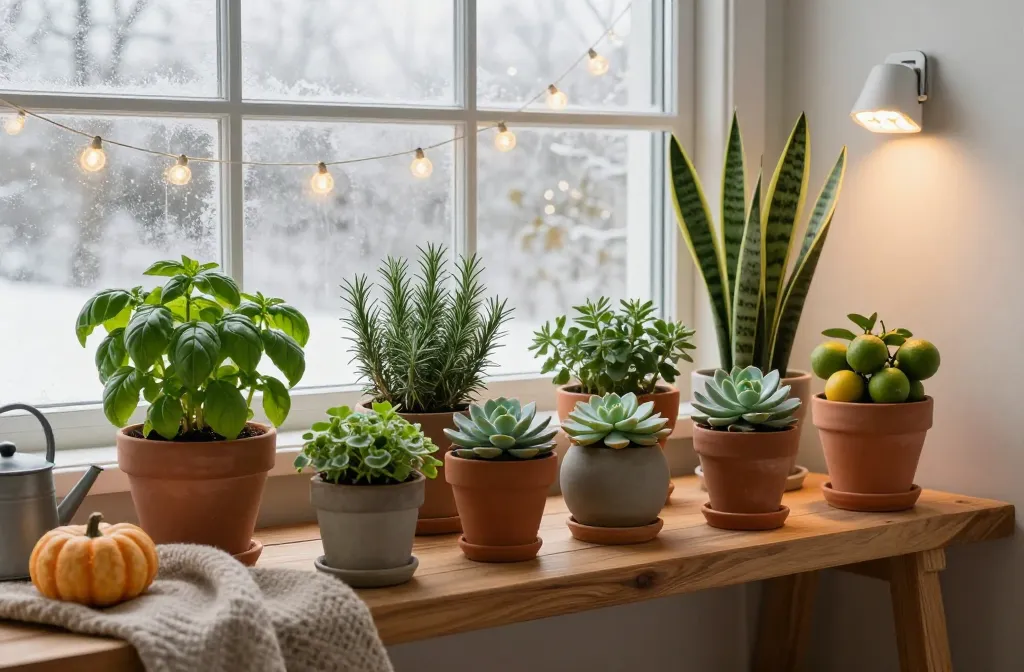
Your plants feel the season shift just like you do—shorter days, cooler rooms, and drier air. Want them thriving instead of sulking? Dial in a few smart tweaks and your containers will cruise from pumpkin spice to snowflake season. We’ll talk lights, soil, watering, pests, and styling—because yes, your basil wants to look cute next to your string lights.
These five moves keep your indoor jungle lush when temperatures drop. Ready to swap summer vibes for winter wins without losing a single leaf? Let’s go.
1. Audit Your Plant Crew And Make A Roster
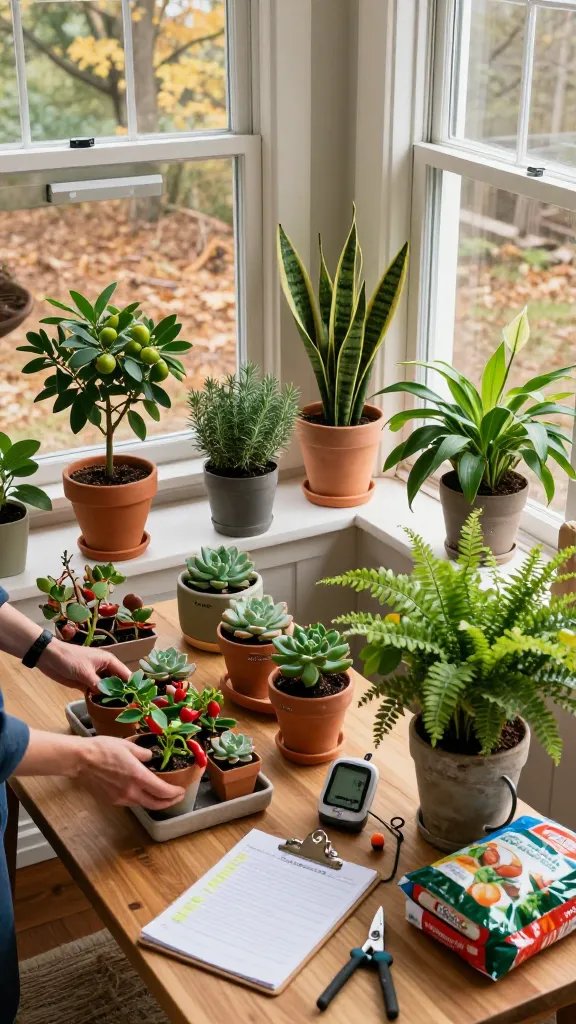
Before you change anything, figure out who’s who. Some plants nap in winter, others sprint. Knowing each plant’s habits helps you transition containers more smoothly and avoid drama.
Create a quick roster so you don’t guess every time you water or move pots. It’s like fantasy football, but for plants and with fewer injuries.
Quick Categories To Sort:
- Sun Lovers: Citrus, rosemary, peppers, succulents—they crave light even in January.
- Easy Chillers: Snake plant, ZZ, pothos—happy with less light and fewer waterings.
- Cool-Season Edibles: Lettuces, spinach, parsley—lower temps make them sweeter and less bitter.
- Dormant Divas: Geraniums, some bulbs, and fig trees—expect leaf drop and reduced watering.
How To Use The Roster:
- Note light needs (high/medium/low).
- Track watering frequency (weekly/biweekly/monthly).
- Mark temperature tolerance (cool room vs warm, 55–65°F vs 65–75°F).
Benefit: You’ll make targeted moves instead of blanket changes that stress plants. Efficiency and happier leaves—win-win.
2. Upgrade Light And Placement Without Turning Your Home Into A Grow Lab
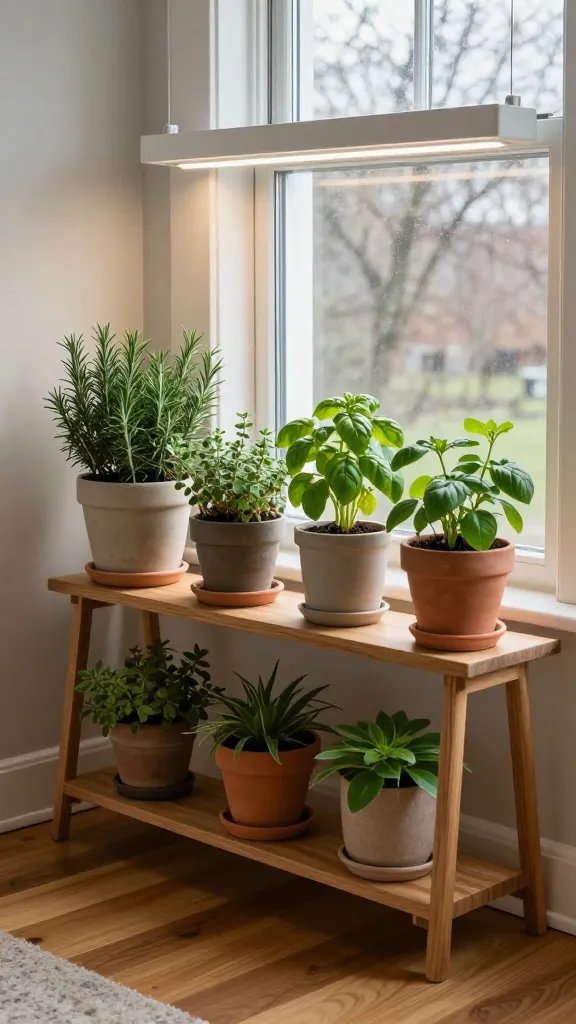
Winter steals daylight, and windows act like sunglasses. Your plants need more photons, period. Luckily, a few tweaks can deliver the glow without a NASA budget.
Move containers into microclimates with steadier temps and better light, then supplement just enough to prevent leggy growth. Your Instagram shelf will thank you.
Placement Moves:
- Shift closer to windows—south or west gets the most winter light. Keep leaves 6–24 inches away from cold glass.
- Rotate weekly for even growth. Quarter turn, that’s it.
- Avoid drafts from doors, vents, and leaky windows—many plants sulk below 55°F.
- Use reflective surfaces—light-colored walls or a simple foil board behind plants boosts brightness.
Supplemental Light Tips:
- LED grow lights with full spectrum (400–700 nm) are the sweet spot.
- Distance: 8–12 inches above herbs/seedlings, 12–18 inches above foliage plants.
- Schedule: 10–12 hours daily for edibles and sun lovers; 8–10 for foliage plants.
- Use timers so you don’t babysit switches. FYI, consistency beats intensity.
Best for: Citrus, herbs, succulents, and any plant that stretched last winter. If stems look spaghetti-thin, it’s a light problem, not a personality flaw.
3. Refresh Soil, Repot Smart, And Feed With Winter Rules
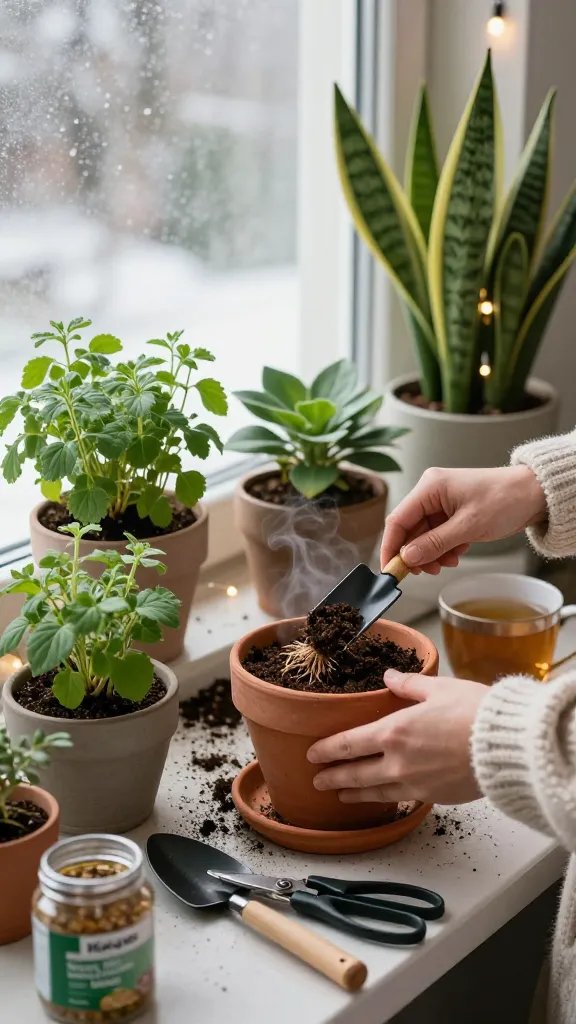
Summer containers compact and accumulate salts, which makes winter watering tricky. Refresh the top layer and repot only if a plant screams for it. Then adjust feeding to match slowed growth—because overfeeding in winter is basically plant sabotage.
Think of this as a mini spa treatment: gentle exfoliation, a cozy new outfit if needed, and a lighter diet.
Soil Refresh (Low Effort, High Impact):
- Remove 1–2 inches of spent mix from the top of each container.
- Replace with fresh, airy mix: 60% high-quality potting soil, 20% fine bark, 20% perlite or pumice.
- For herbs/edibles, add a handful of compost or worm castings for a slow nutrient drip.
Repot Or Not?
- Repot now only if roots circle tightly or water runs straight through. Go just 1–2 inches wider.
- Wait until spring for most plants, especially bloomers. Disturbed roots + low light = tantrum.
Feeding Rules:
- Cut fertilizer by half from November to February.
- Feed monthly for active growers (herbs, citrus). Skip for dormants.
- Use gentle formulas: seaweed, fish emulsion, or diluted balanced liquid (e.g., 3-1-2). Avoid heavy salts.
Benefit: Better drainage, fewer salt burns, and steady but calm growth. Your plants won’t bolt or sulk—ideal winter energy.
4. Dial In Water, Humidity, And Airflow (AKA The Winter Trifecta)
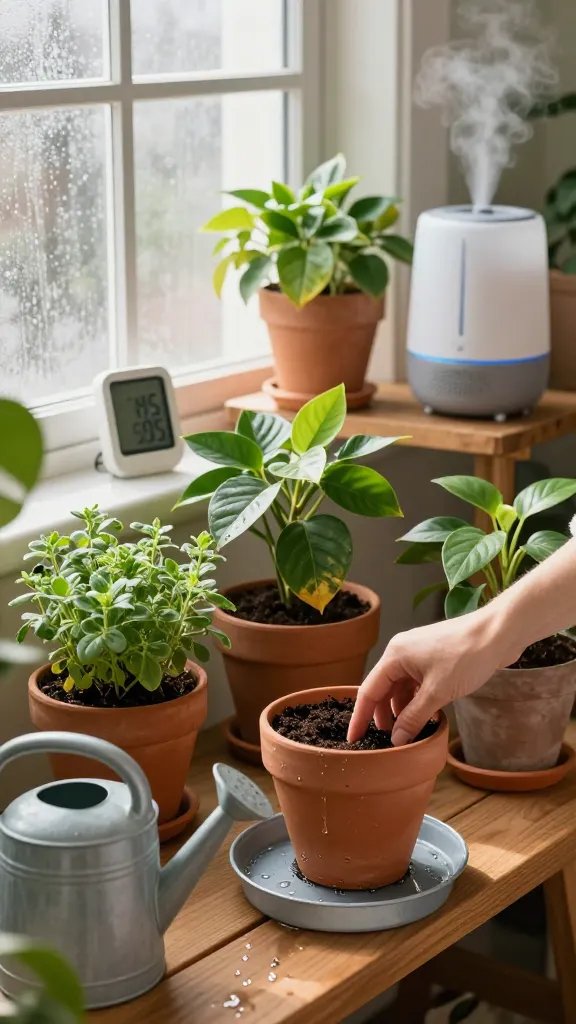
Most winter plant problems come from watering like it’s July. Cold rooms and short days slow uptake. Add dry heat from furnaces and you’ve got crispy tips and fungus gnats. Fun combo, right?
Tune your water schedule to the plant and the room, then balance humidity without inviting mold. It’s simpler than it sounds, promise.
Watering Strategy:
- Test before you pour: Press a finger 1–2 inches into soil. If it’s dry, water; if not, wait.
- Water deeply, less often. Let excess drain fully—no soggy saucers.
- Use room-temp water to avoid root shock.
- Scale frequency: Succulents/cacti every 3–4 weeks; foliage every 1–2 weeks; thirsty herbs weekly under lights.
Humidity Without Chaos:
- Target 40–50% RH for most indoor plants; 50–60% for tropicals.
- Group plants to create a humid microclimate.
- Use pebble trays under pots (water below pot base, not touching it).
- Run a small humidifier near tropical shelves. Clean weekly to avoid funk.
Airflow And Cleanliness:
- Wipe leaves monthly with a damp cloth for better photosynthesis and pest prevention.
- Use a small fan on low, pointed nearby but not directly at leaves, to reduce mildew.
- Top with a thin layer of horticultural sand on edibles and houseplants to deter fungus gnats.
Best for: Houseplant corners, kitchen herb stations, and any container near a heating vent. Once you nail this trifecta, everything looks perkier—seriously.
5. Pest Patrol, Pruning, And Cozy Styling For The Win
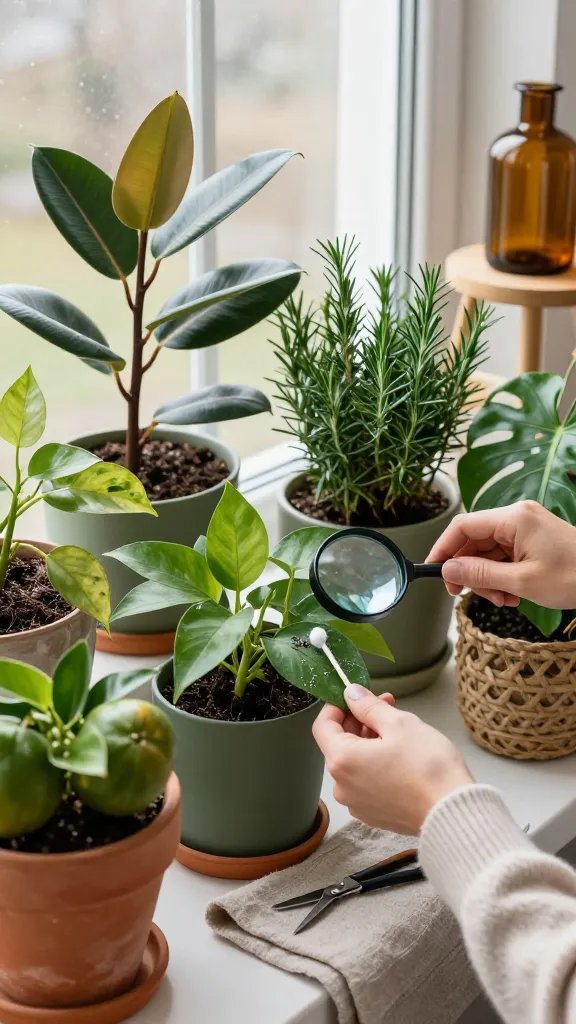
Winter brings hidden hitchhikers and sleepy growth. Catch pests early, prune with intention, and style containers so your garden feels like part of your home—because plants deserve a seasonal glow-up too.
Fast checks and small edits beat emergency rescues. Plus, your windowsill is about to look like a boutique plant shop.
Weekly Pest Patrol:
- Inspect leaf undersides and stems for webbing, sticky residue, or dots that move. Spider mites, mealybugs, scale—usual suspects.
- Spot-treat with cotton swabs and 70% isopropyl alcohol for mealybugs/scale.
- Shower rinse sturdy foliage monthly to dislodge mites and dust.
- Neem oil or insecticidal soap every 7–10 days for minor outbreaks. Repeat 3 times to catch life cycles.
Pruning And Training:
- Snip leggy stems just above a leaf node to encourage branching.
- Remove yellowing leaves to redirect energy and reduce disease risk.
- Stake or trellis vining edibles (peas, tomatoes under lights) and climbing houseplants.
- Propagate healthy cuttings in water or perlite to fill gaps and share with friends. IMO, free plants are the best plants.
Cozy Styling Touches:
- Cachepots and baskets hide nursery pots for easier watering and winter chic.
- Warm-toned containers—terracotta, wood, copper—make winter corners feel welcoming.
- Tiered shelves or adjustable racks maximize light zones and make care simpler.
- String lights on a timer add cheer and a tiny bit of warmth (just keep them off leaves).
Use this when: You want plants that look as good as they grow. A tidy, styled garden is easier to maintain and way more fun to show off—trust me.
You’ve got the playbook: identify your plant needs, boost light, refresh soil, master the trifecta, and keep pests in check while you style. Pick one section to start today and you’ll see happier growth within a week. Your fall to winter indoor garden is about to feel effortless—and ridiculously good-looking.