
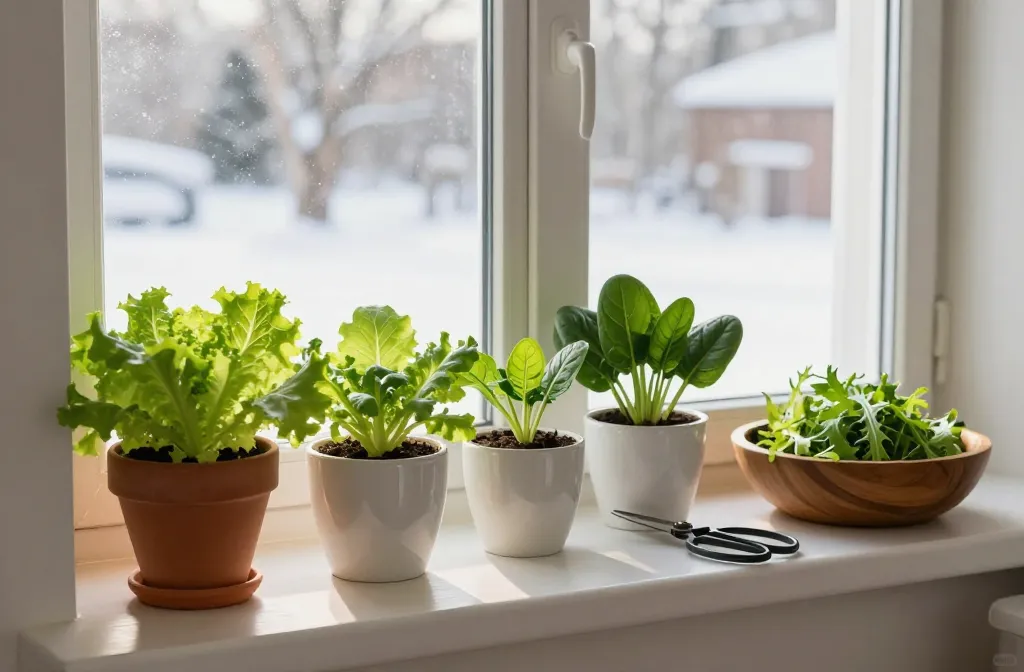
Your windowsill can do more than hold a dusty candle. January might be frosty, but your kitchen can still pump out fresh veggies like a tiny, leafy factory. These picks grow quickly, love cool weather, and won’t throw a tantrum if you forget them for a day. Ready to turn winter gloom into crunchy greens and crisp herbs you actually want to eat?
Grab a sunny window, a few pots, and a sprinkle of patience. We’re keeping it simple, low-mess, and totally doable—even if your last plant was a cactus that “moved on.” Let’s grow a snack-worthy garden without leaving the couch.
1. Leafy MVPs: Lettuce, Spinach, And Arugula
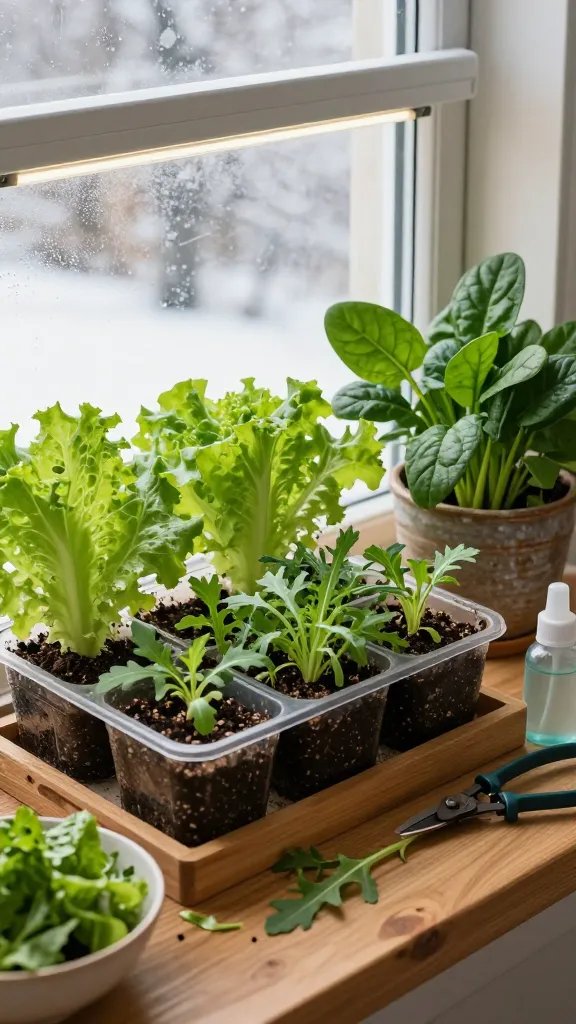
Want instant salad power? Grow these fast sprouters. They don’t need deep containers, they adore cool rooms, and you can harvest leaf-by-leaf for weeks. Think tender butterhead, peppery arugula, and superfood spinach—your sandwiches just upgraded themselves.
Best Setup
- Container depth: 4–6 inches with drainage
- Light: 4–6 hours of bright window light or a simple LED grow light
- Soil: Loose potting mix with added perlite for drainage
Sow seeds thickly, then thin seedlings to give them space to fluff up. Water when the top inch feels dry—no swamp vibes. Snip outer leaves and let the centers keep churning out greens.
Pro Tips
- Choose “cut-and-come-again” varieties like ‘Black-Seeded Simpson’ (lettuce) and ‘Baby Leaf’ mixes.
- Keep temps 60–70°F. Cooler = sweeter leaves.
- Rotate the pot every few days for even growth.
Great for daily salads, tacos, and emergency “I-need-vegetables-now” moments. Seriously, you’ll wonder why you ever bought bagged greens.
2. Microgreens & Sprouts: Tiny Plants, Big Flavor
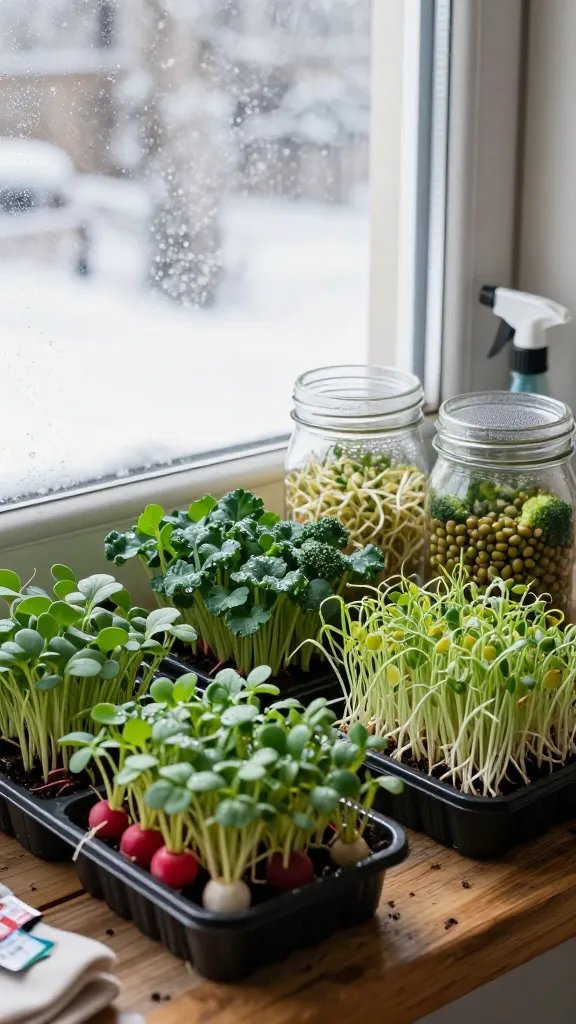
Need fast gratification? Grow microgreens and sprouts—harvest in 5–14 days, tops. They pack intense flavor and nutrients without needing full sunlight or much space. If you can rinse a jar, you can grow these.
What To Grow
- Microgreens: Radish, broccoli, mustard, kale, pea shoots
- Sprouts (jar-friendly): Alfalfa, mung bean, lentil, broccoli
How To Do It
- Microgreens: Scatter seeds on moist soil in a shallow tray, press gently, mist, cover for 2–3 days, then uncover and place in bright light.
- Sprouts: Soak seeds overnight in a jar with a mesh lid, then rinse and drain twice daily until ready.
Harvest with scissors when first true leaves appear (microgreens) or when crunchy and plump (sprouts). FYI: Use clean equipment and fresh water; food safety still matters even when it’s cute and tiny.
Perfect for topping avocado toast, soups, and grain bowls. Big flavor, small commitment—IMO the best entry point for indoor growing.
3. Root Veggies, But Make Them Baby-Sized: Radishes, Green Onions, And Baby Carrots
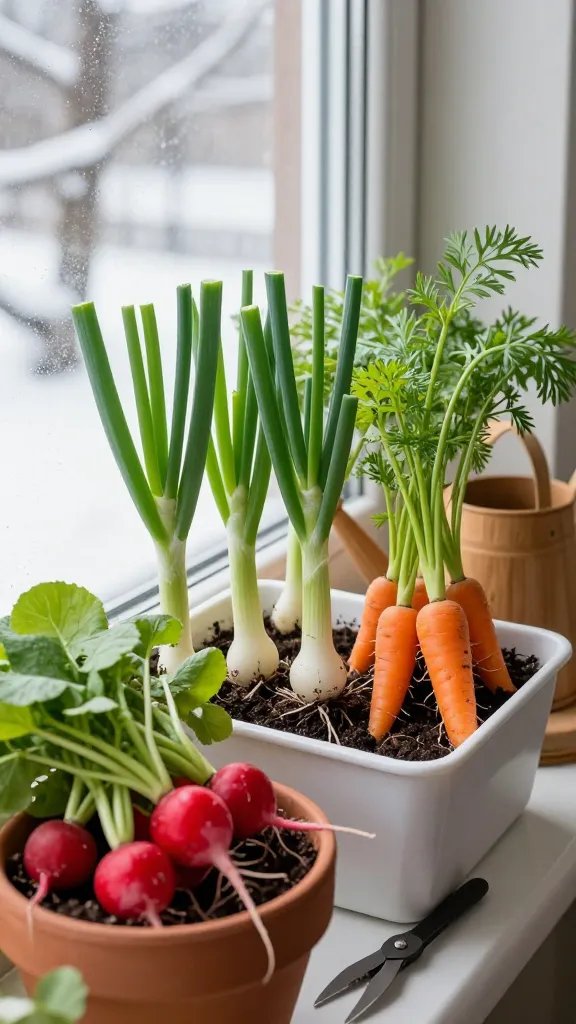
Yes, you can grow roots indoors—just pick compact varieties. Radishes and baby carrots mature fast, and green onions basically regrow forever. They bring crunch, color, and that smug “I grew this” feeling.
Radishes
- Container depth: 6–8 inches
- Varieties: ‘Cherry Belle’, ‘French Breakfast’
- Timeline: 25–35 days from seed
Sow seeds an inch apart, keep soil evenly moist, and thin early. Want extra mileage? Eat the radish greens sautéed with garlic. Double win.
Baby Carrots
- Container depth: 8–10 inches, loose soil with zero rocks
- Varieties: ‘Thumbelina’, ‘Parisian’
- Timeline: 35–55 days
Sprinkle seeds lightly, keep consistently moist, thin to a finger’s width. Harvest small for sweetness—patience is good, but tiny carrots are cuter.
Green Onions (Scallions)
- Method 1: Regrow from grocery store roots in water, then pot up
- Method 2: Sow seed thickly in a 4–6 inch pot
- Cut-and-come-again: Snip the tops, leave an inch to regrow
These shine in omelets, noodle bowls, and anything that begs for a fresh bite. Low effort, high reward—trust me on the green onions.
4. Hardy Herbs That Don’t Quit: Parsley, Cilantro, Chives, And Dill
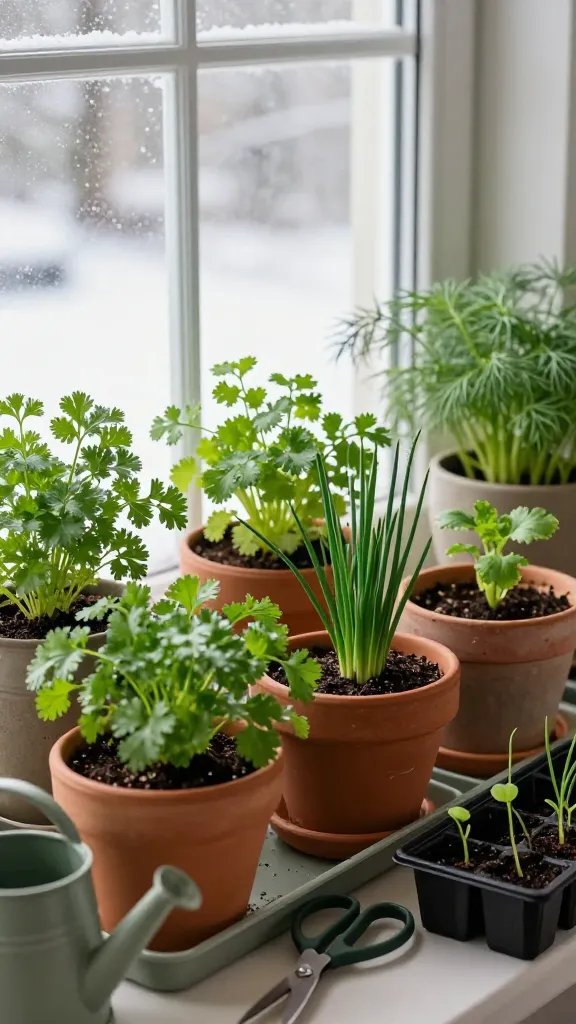
Winter herbs? Totally doable. These cool-weather champs thrive on a windowsill and turn boring meals into “wow, who cooked?” moments. They don’t need deep soil and they forgive the occasional missed watering.
Herb-by-Herb Cheatsheet
- Parsley: Slow to sprout but long-lived. Soak seeds overnight to speed things up. Likes steady moisture and bright light.
- Cilantro: Cool temps keep it from bolting. Succession-sow every 2–3 weeks for a constant supply.
- Chives: Nearly indestructible. Snip with kitchen scissors; they bounce back fast.
- Dill: Feathery, fragrant, and perfect for fish and yogurt sauces. Needs good light; grow in its own pot.
Potting And Care
- Container depth: 6–8 inches with drainage
- Light: 5–6 hours minimum or a small grow light bar
- Water: Even moisture; never soggy
Harvest often to encourage growth, but never take more than one-third at a time. These herbs bring freshness to winter stews, eggs, dips, and roasted veggies—kitchen confidence in plant form.
5. Indoor All-Stars With Extra Personality: Kale, Pea Shoots, And Bok Choy
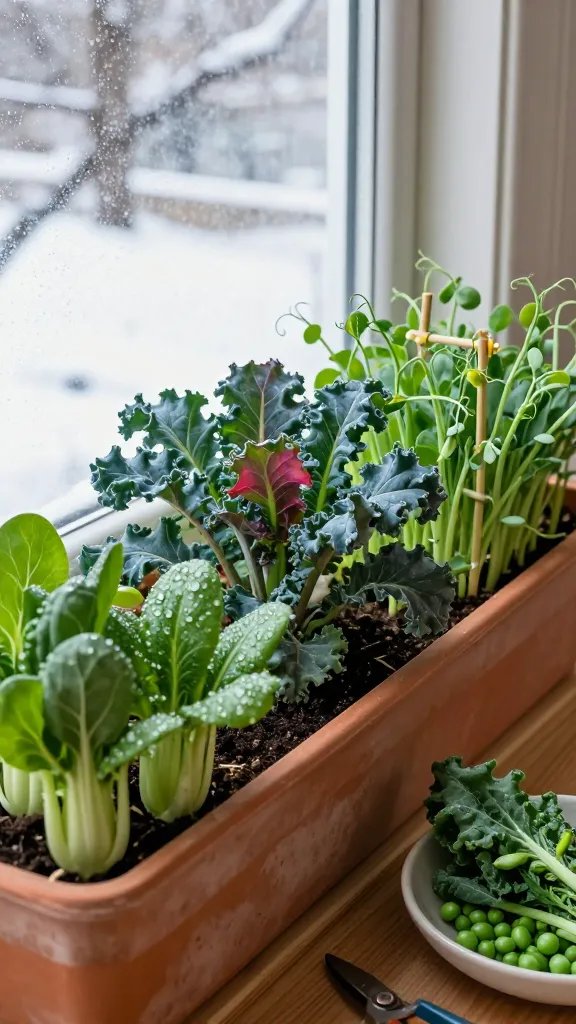
Want a little drama on your sill? These veggies look gorgeous and deliver big flavors. They handle cool temps, adapt to containers, and give you multiple harvests if you play it smart.
Kale (Baby Or Dwarf Varieties)
- Container depth: 8–10 inches
- Varieties: ‘Dwarf Blue Curled’, ‘Red Russian’
- Light: Bright window plus supplemental light for sturdier leaves
Grow densely for baby kale or space 6–8 inches for bigger leaves. Snip outer leaves and keep the center intact. Baby kale salads in January? Flex-worthy.
Pea Shoots
- Container depth: 3–4 inches shallow tray
- Seed type: Field peas or pea shoot seed blends
- Timeline: 10–16 days
Soak seeds overnight, scatter thickly, cover for 2–3 days, then give them light. Harvest when tendrils are 4–6 inches. Sweet, crunchy, and perfect for stir-fries and sandwiches.
Bok Choy (Pak Choi)
- Container depth: 6–8 inches
- Varieties: ‘Shanghai Green’, ‘Toy Choy’ (dwarf)
- Timeline: 30–45 days for baby heads
Cool air and bright light make bok choy happy. Harvest whole baby heads or pick outer leaves as needed. It shines in quick sautés with garlic and soy—weeknight magic.
These picks give you substance and style—lush greens that look like décor but taste like dinner. Win-win.
Lighting That Actually Works (Without Turning Your Home Into A Lab)
- South or west windows give the best natural light. East works too. North? Add a light.
- LED grow lights that list “full spectrum” or “400–700 nm” are plenty. Aim for 12–14 hours/day.
- Keep lights 6–12 inches above plants. If seedlings stretch, lower the light or add brightness.
Water, Soil, And The “Don’t Kill It” Basics
- Soil: Use a high-quality potting mix, not garden dirt. Add perlite for airflow.
- Water: Moisten thoroughly, then let the top inch dry before watering again.
- Fertilizer: Feed lightly every 2–3 weeks with a balanced liquid fertilizer at half strength.
- Airflow: Crack a window or run a small fan to prevent mildew and keep stems strong.
Smart Scheduling And Harvesting
- Sow small batches weekly for constant harvests.
- Harvest in the morning for crisp texture and sweeter flavor.
- Use clean scissors to avoid damaging tender stems.
Ready to grow your own groceries without stepping outside? Start with one section—microgreens for speed, or herbs for everyday flavor—and build from there. Your winter windowsill is about to become the tastiest real estate in the house. Go plant something now; future-you (and your lunch) will be thrilled.