
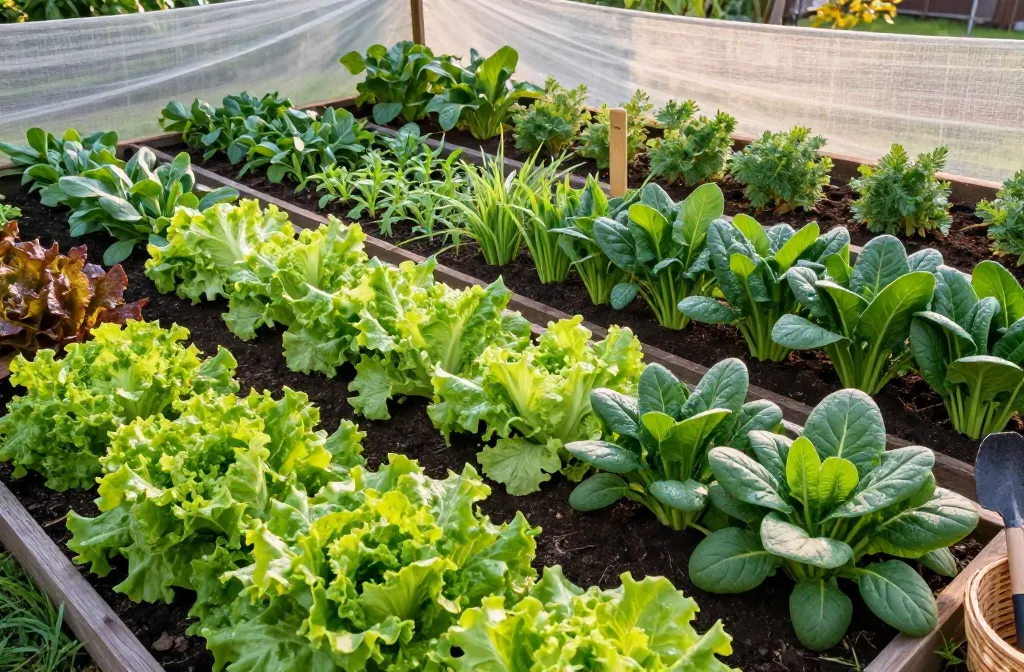
Want veggies rolling in nonstop instead of one sad glut and then crickets? Succession planting turns your garden into a conveyor belt of fresh produce. Space out sowings, rotate quick growers, and boom—salads, stir-fries, and tacos forever. Ready to plant smarter and snack happier?
1. Salad Factory Mode: Leafy Greens That Never Quit
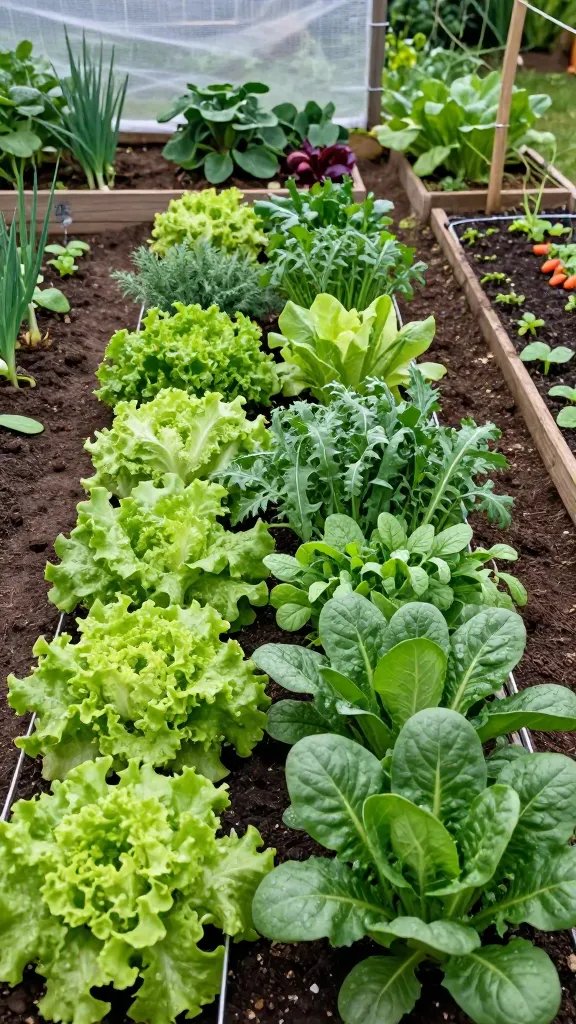
Leafy greens deliver the fastest wins and the most satisfying harvests. Plant them in waves every 2–3 weeks and you’ll always have something crisp to pick. They love cool temps, but many handle summer with shade and steady water.
All-Stars To Succession Plant
- Lettuce (butterhead, looseleaf, romaine): sow small patches every 2 weeks
- Spinach: cool-season king; switch to New Zealand spinach in heat
- Arugula: peppery, ready in 20–30 days
- Asian greens (tatsoi, mizuna, komatsuna, pak choi): quick, versatile, delicious
Quick Tips
- Staggered rows: Sow a short row now, another in 10–14 days, repeat monthly.
- Heat hacks: Use 30–40% shade cloth, mulch lightly, water at sunrise.
- Cut-and-come-again: Harvest outer leaves to keep plants producing.
- Bolting watch: When plants think it’s summer party time, they’ll flower. Replace fast.
Use this section to guarantee salad bowls year-round. From spring to fall, you’ll never reach for store-bought unless you want to compare how much fresher yours tastes.
2. Crunch On Repeat: Roots And Quick Crunchables
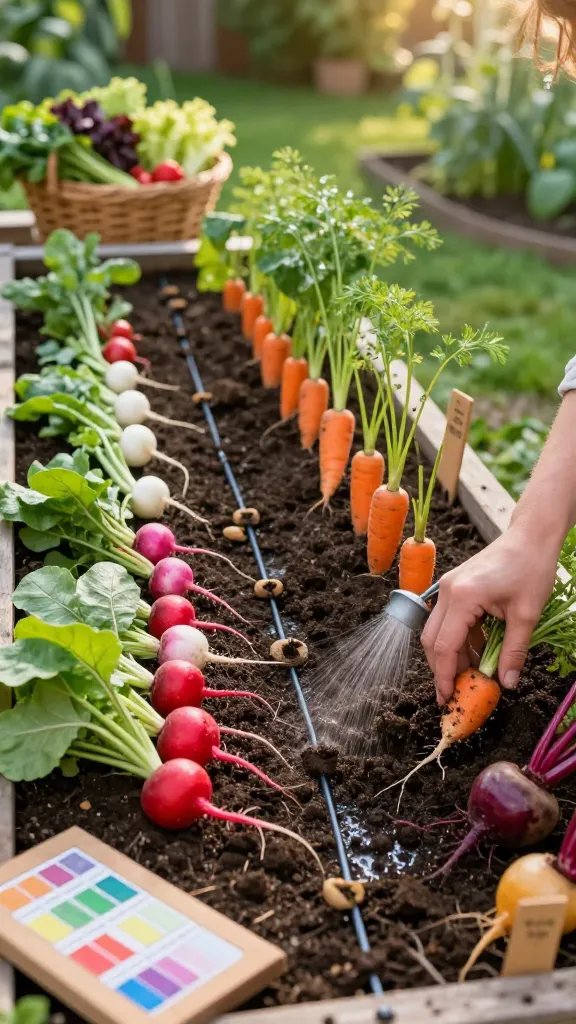
Roots are the ultimate pick-and-crunch crops. Many mature in a month or so, which makes them perfect for monthly sowings. Rotate varieties so you avoid gaps and keep flavors interesting.
Root MVPs To Rotate
- Radishes: 25–35 days; plant every 10–14 days spring and fall
- Carrots: 60–80 days; sow monthly, thin early, keep soil moist
- Beets: 50–70 days; eat roots and greens (double win)
- Turnips (salad types like Hakurei): 35–45 days; sweet and crisp
How To Keep Them Coming
- Moisture matters: Even moisture = straight roots. Dry spells = hairy, bitter drama.
- Thinning: Snip extras early and use as microgreens. Crowded roots sulk.
- Season swaps: Go heavy spring/fall; in peak heat, switch to heat-friendly varieties or pause radishes.
- Carrot trick: After sowing, cover the row with cardboard or a board for 3–4 days to keep soil damp. Remove when you see sprouts.
Succession roots solve the “what do I snack on while gardening?” problem. FYI: you’ll suddenly love thinning because it tastes like tiny salads.
3. Fast Flavor Boosters: Herbs You’ll Replant Without Thinking
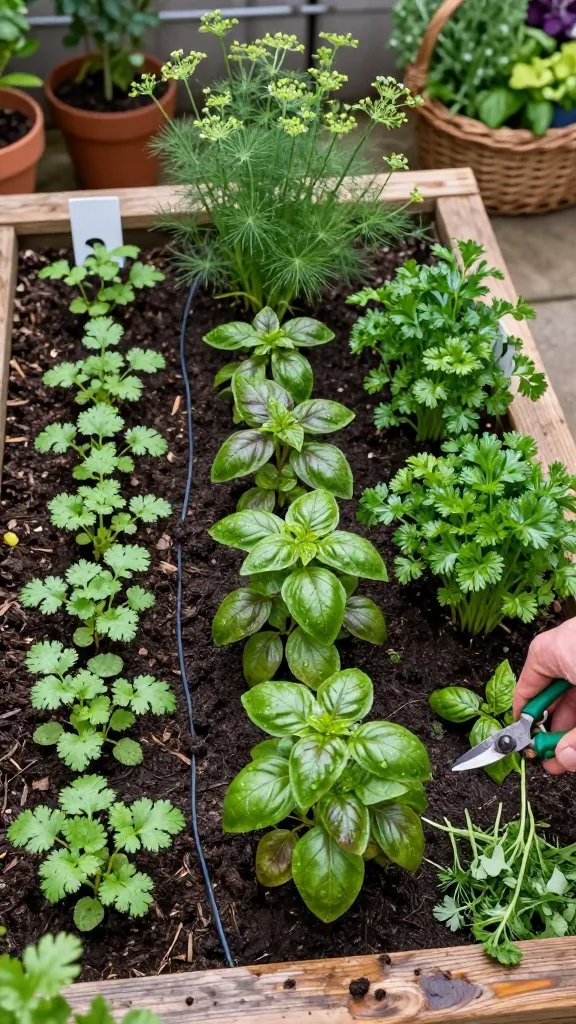
Herbs turn basic meals into chef moments, and many love quick, frequent sowings. You’ll replace bolted plants before you can say pesto, which keeps flavors bright and tender.
Herbs To Succession Plant
- Cilantro: bolts fast in heat; sow small patches every 2–3 weeks
- Basil (Genovese, Thai, lemon): sow or pinch regularly for bushy plants
- Dill: sow every month for nonstop fronds and pickles
- Parsley: slower but benefits from multiple start dates for continuous supply
Pro Moves
- Cut strategy: Harvest from the top on basil; from the outside on parsley/dill.
- Shade assists: In summer, tuck cilantro on the east side of taller plants.
- Pinch, don’t preach: Remove basil flower spikes fast or flavor fades.
- Windowsill insurance: Start backups in small pots so replacements are ready.
With monthly herb refreshes, every dish tastes like you planned it. You didn’t—your garden just has your back, IMO.
4. Steady Staples: Beans, Peas, And Fruiting Workhorses
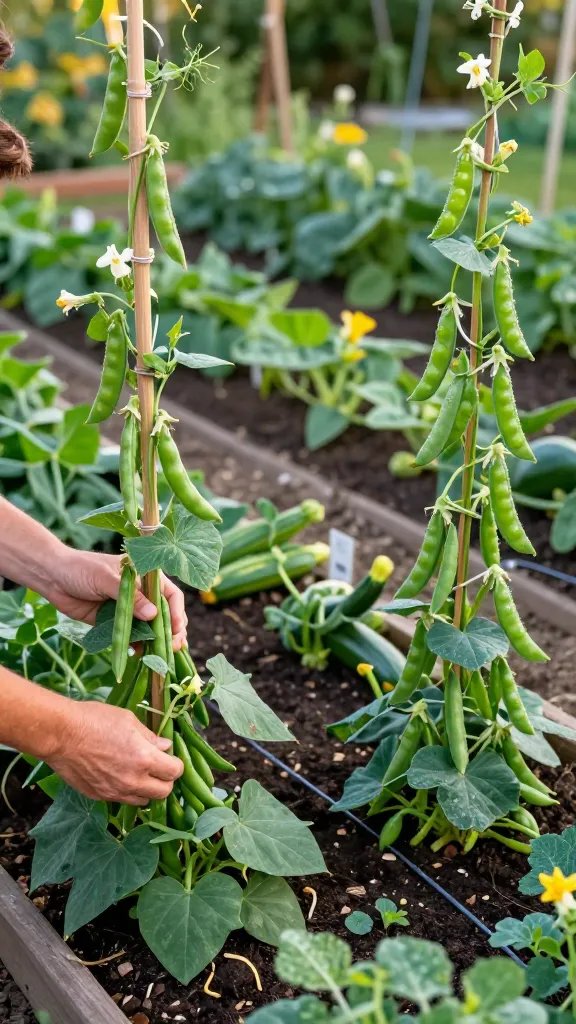
Fruiting crops take longer, but you can still stage them for a prolonged peak. Plant in waves, mix bush and pole types, and you’ll harvest for months without a dead zone.
What To Stagger
- Bush beans: 50–60 days; plant every 3–4 weeks for rolling flushes
- Pole beans: produce longer; start early and let them climb while bush types rotate
- Peas (snap, snow): spring and fall successions every 2–3 weeks; pause in high heat
- Summer squash (zucchini, patty pan): sow new plants monthly to outrun pests and powdery mildew
- Cucumbers: succession every 3–4 weeks; alternate slicers and picklers
Timing And Tricks
- Soil warmth matters: Beans and cukes sulk in cold soil. Wait until soil hits 60–65°F.
- Treasure the trellises: Trellised cukes stay cleaner and yield longer.
- Squash insurance: Start a new plant the moment you spot vine borer damage.
- Pea ladder: Plant fast radishes at the base; harvest them before peas fill in.
By staggering fruiting crops, you avoid the dreaded “ten zucchini today, none next week” swing. Your future self who doesn’t want 14 jars of pickles at once will say thanks.
5. The Game Plan: Monthly Succession Schedule And Smart Bed Management
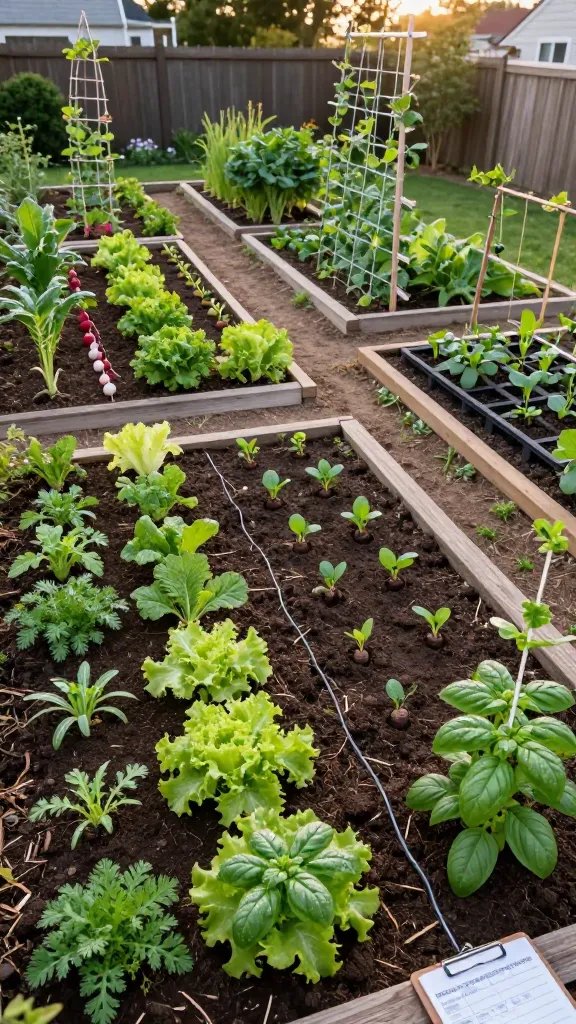
You’ve got the crops—now let’s make the calendar do the heavy lifting. Break your garden into mini-waves and pair fast crops with slow ones so no space sits idle. This is where your harvest goes from “nice” to “legendary.”
Monthly Planting Rhythm (Adjust To Your Zone)
- Early Spring: radish, arugula, spinach, peas, carrots, beets, cilantro, dill
- Mid–Late Spring: lettuce waves, Asian greens, parsley, second peas, early bush beans (if warm), beets
- Early Summer: basil waves, bush beans, cucumbers, summer squash, heat-tolerant lettuces, carrots in partial shade
- Midsummer: second/third beans and cukes, continuous basil and dill, arugula in shade, start fall carrots and beets
- Late Summer: fall peas, spinach return, lettuce waves, Asian greens, cilantro (bolts less now)
- Fall: keep sowing spinach, arugula, and radishes until frost; use row cover to stretch seasons
Bed Jigsaw: What Follows What
- Peas → Cucumbers: peas fix nitrogen; cucumbers love the leftovers
- Radish → Carrot: radishes break the crust; harvest as carrots establish
- Garlic/Early Onions → Summer Squash: clear space in time for a squash succession
- Early Lettuce → Beans: swap shallow-rooted greens for nitrogen-hungry beans
Practical Systems That Save Your Sanity
- Micro-succession blocks: dedicate a 2–3 ft section per crop and rotate within the bed.
- Sow small, sow often: plant what you’ll eat in 7–10 days, not a month’s worth at once.
- Start trays monthly: nursery six-packs of lettuce, basil, and Asian greens = instant gap fillers.
- Row cover rules: floating cover speeds germination, blocks pests, and extends shoulder seasons.
- Mulch lightly: keeps soil moisture stable so germination stays reliable.
- Journal it: note dates, varieties, and yield. Next year, your plan writes itself, seriously.
This playbook turns chaos into cadence. You’ll harvest continually, keep pests guessing, and squeeze the most flavor out of every square foot.
Ready to plant like a pro? Start small, set a reminder every two weeks, and tuck in a new row or a six-pack. Before long, you’ll stroll outside and “shop” dinner like it’s your private market. Happy planting and happy snacking!