
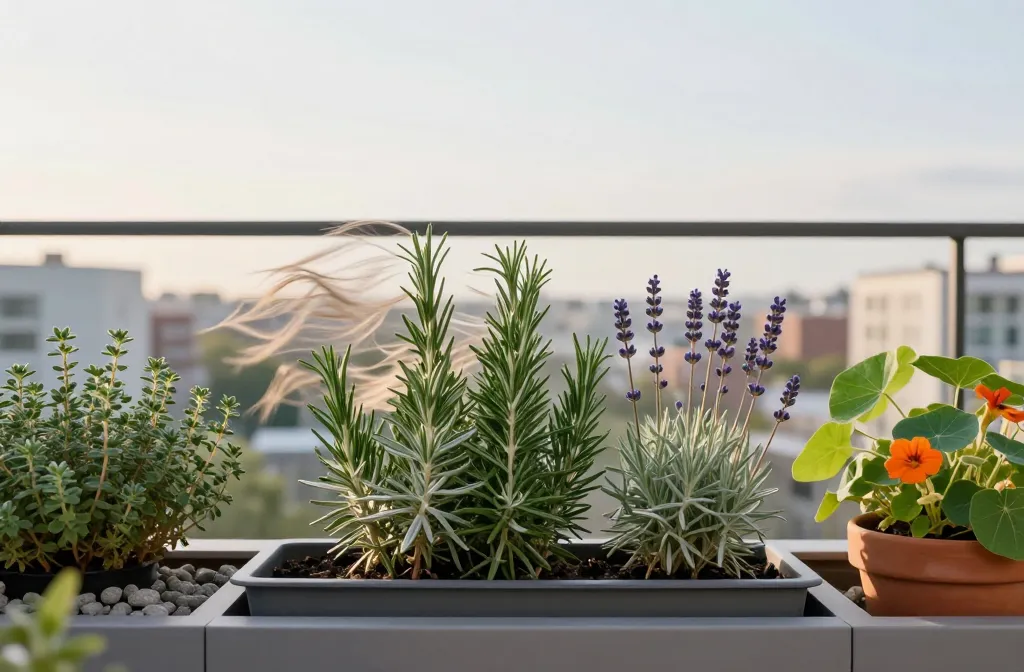
Your balcony turns into a wind tunnel every afternoon? Perfect. Let’s build a mini jungle that laughs at gusts and still looks gorgeous. These 11 plant pairings are tough, space-savvy, and pretty enough to make you forget the weather app. We’ll layer windbreaks with do-it-all herbs, flowers, and edibles so everything supports everything else. Ready to outsmart the breeze?
1. Aromatic Armor: Rosemary + Lavender
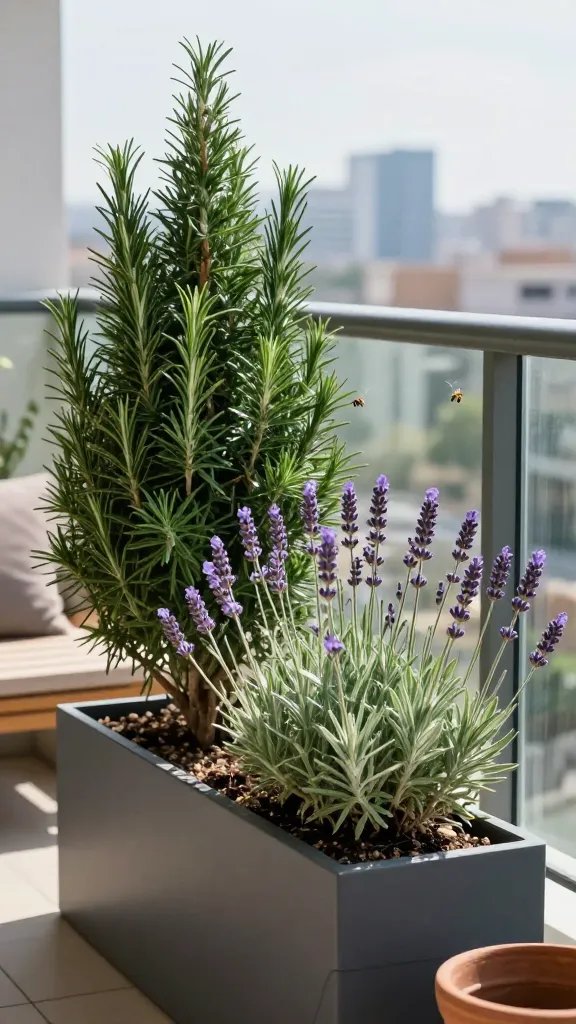
Think of this as the rugged, good-smelling wall your balcony needs. Rosemary’s woody stems act like mini windbreaks while lavender’s flexible stalks bend instead of snap. Together, they look chic, smell amazing, and feed pollinators.
Why It Works
- Structure + Sway: Rosemary’s upright frame buffers gusts; lavender’s airy growth wicks airflow.
- Drought-tolerant: Both thrive in fast-draining soil and full sun—less watering drama.
- Bonus: They repel pests and attract bees. Win-win.
Planting Tips
- Container: 12–16 inch wide terracotta or a long trough. Add heavy gravel at the bottom for ballast.
- Soil: Gritty mix—potting soil cut with 30–40% perlite or coarse sand.
- Spacing: One rosemary (upright variety) behind two to three lavender plants.
- Watering: Deep soak, then let the top 2 inches dry. Overwatering invites root rot.
Use this duo as a fragrant front-line wind buffer. It also sets the tone for a Mediterranean vibe that’s both low-maintenance and high-reward.
2. The Pollinator Power Duo: Salvia (Sage) + Nepeta (Catmint)
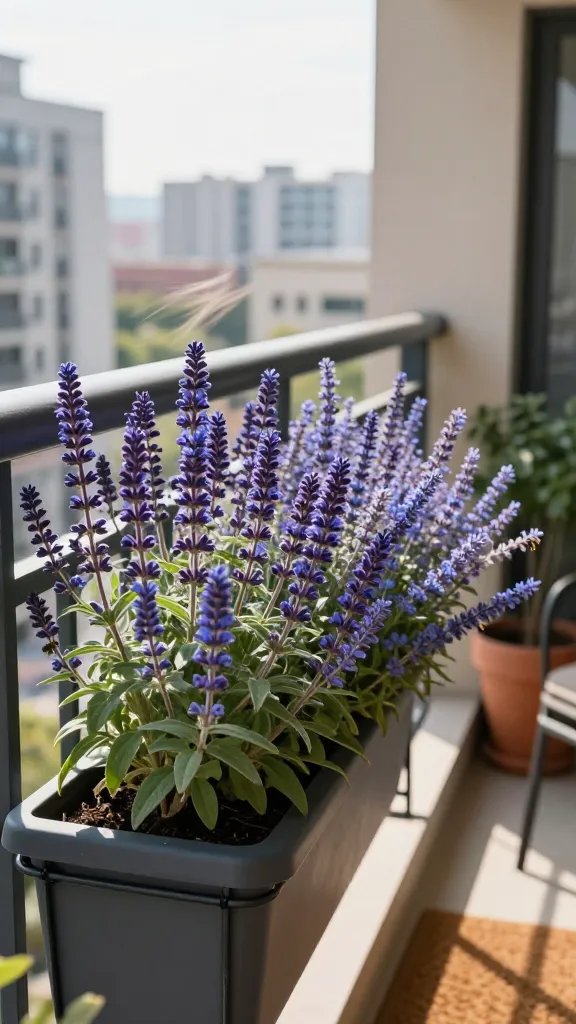
Want flowers that don’t quit and stems that won’t snap? Salvia and nepeta bring sprays of color and serious resilience. They handle gusts, heat, and the occasional neglect (no judgment).
Why It Works
- Flexible Growth: Both plants sway elegantly, so they don’t break in wind.
- Long Bloom: Weeks of color attract bees and butterflies, even in high-rise ecosystems.
- Low Fuss: They’re forgiving with watering and thrive in sun.
Planting Tips
- Container: Rectangular balcony box anchored with zip ties or brackets. Stability matters.
- Soil: Standard potting mix with a bit of perlite for aeration.
- Arrangement: One tall salvia in the back, two to three nepeta in front to spill and soften edges.
- Maintenance: Shear nepeta lightly after a bloom flush. Deadhead salvia to stretch the show.
Choose this pair when you want non-stop color that handles turbulence and still looks deliberately styled.
3. Edible Windbreak Trio: Chives + Thyme + Dwarf Bay Laurel
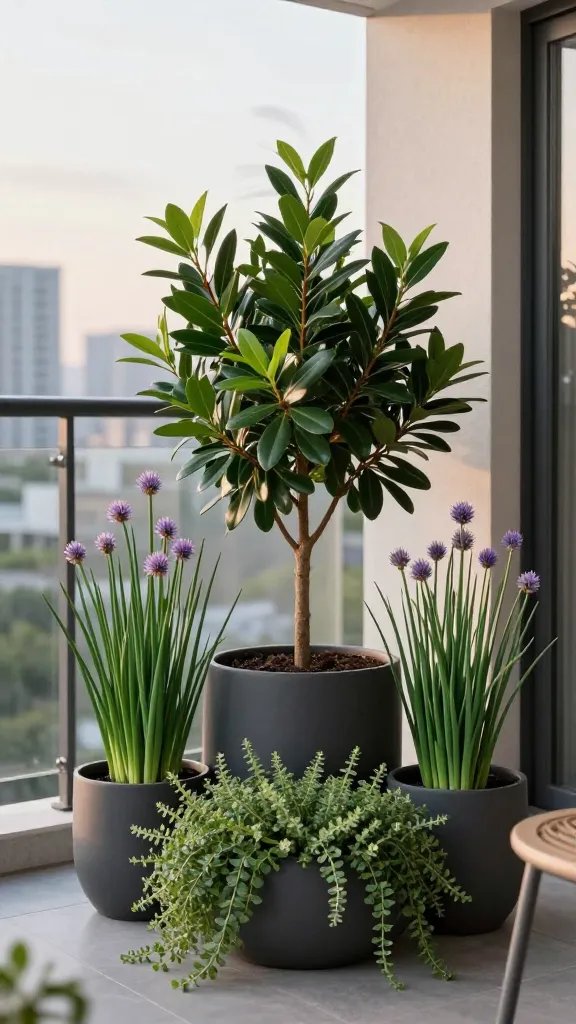
You can eat this windproof setup and it looks classy—like “I know what I’m doing” classy. Dwarf bay’s sturdy evergreen leaves slow wind, while chives and thyme fill in low and lush.
Why It Works
- Tiered Armor: Bay takes the brunt; chives’ tubular leaves slice wind; thyme forms a dense mat.
- Flavor City: Herbs that upgrade everything from eggs to pasta, IMO.
- Year-Round Interest: Bay stays evergreen; thyme often does too in mild winters.
Planting Tips
- Container: 14–18 inch pot for the bay; tuck chives and thyme around the base. Weight the pot if you’re on a very gusty floor.
- Soil: Well-draining potting mix; thyme prefers it a bit lean—don’t overfertilize.
- Sun: 5–8 hours. Partial sun works, but growth slows.
- Watering: Keep chives evenly moist; let thyme dry slightly between waterings; bay likes moderate moisture.
Use this combo where you want edible structure that doubles as a green privacy screen and a kitchen MVP.
4. Color That Can Take a Beating: Geranium (Pelargonium) + Dusty Miller + Creeping Jenny
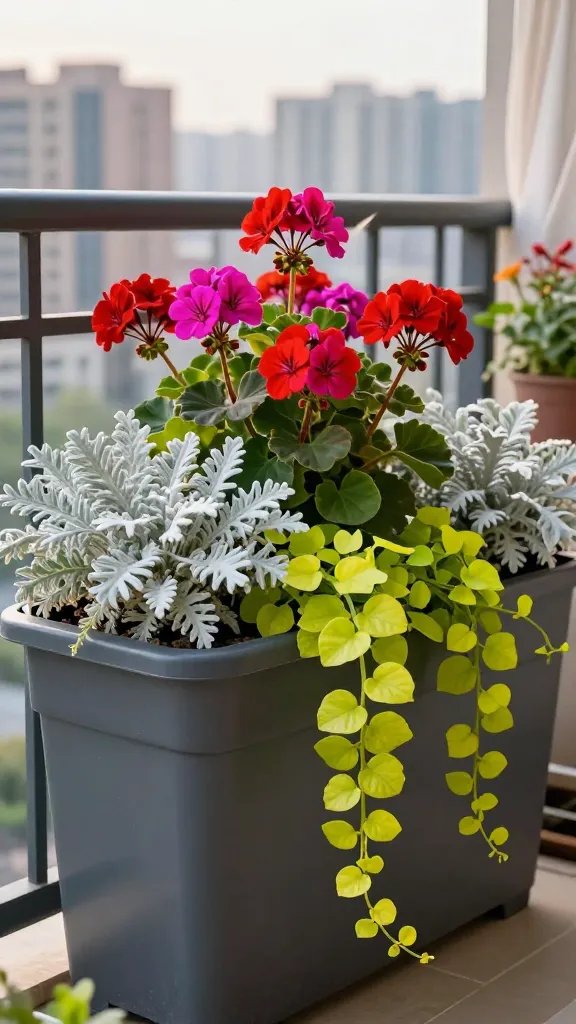
This trio serves bold color with a side of toughness. Pelargoniums bloom through wind and heat, dusty miller shrugs off gusts with sturdy silvery foliage, and creeping jenny spills over like a lime-green waterfall.
Why It Works
- Wind-Resistant Forms: Thick stems on geraniums, leathery leaves on dusty miller, and flexible vines on jenny.
- Visual Contrast: Bright blooms, silver foliage, and chartreuse trails—chef’s kiss.
- Low Fuss, High Impact: Great for renters who want instant curb appeal.
Planting Tips
- Container: Window box or round 12–14 inch pot with a heavy base.
- Soil: All-purpose potting mix; add a slow-release fertilizer at planting.
- Arrangement: Geraniums centered or rear; dusty miller as a buffer; creeping jenny at edges to cascade.
- Care: Deadhead geraniums for nonstop blooms; trim jenny if it gets unruly.
Choose this when you want a resilient statement planter that pops from the street and doesn’t flinch at wind.
5. Balcony Food Forest Lite: Dwarf Tomato + Basil + Marigold + Oregano + Nasturtium + Sage + Parsley + Mint + Kale + Strawberries + Scallions
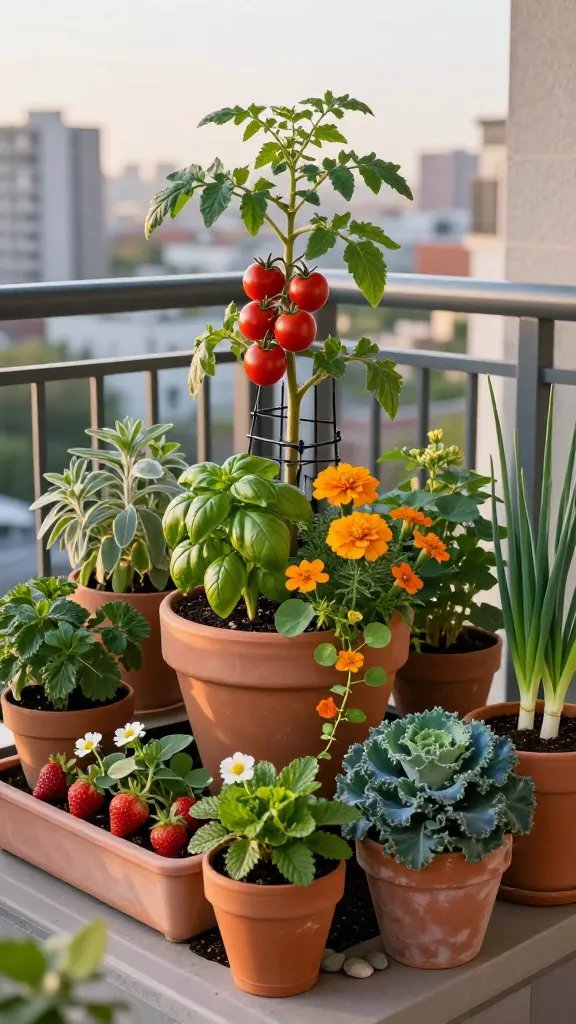
Here’s your full 11-plant pairing set, engineered for breezy balconies and tiny spaces. We’re stacking sturdy edibles with flexible herbs and companion flowers that reduce pests, stabilize soil, and keep your containers from tipping.
Why It Works
- Wind Logistics: Sturdier anchors (tomato, kale, sage) break gusts; flexible herbs and vines (basil, oregano, nasturtium) sway and fill gaps.
- Mutual Benefits: Marigold and nasturtium help deter pests; basil supports tomato flavor and growth (garden folklore, but hey, it works for many).
- Diverse Roots: Taproots, fibrous roots, and shallow spreaders reduce soil erosion in wind.
The 11 Plant Roles
- Dwarf Tomato: Choose a determinate or patio variety; sturdy cage to prevent wind whip.
- Basil: Plant leeward of tomato for slight shelter; pinch often for bushiness.
- Marigold: French types tuck at edges; they’re compact and wind-hardy.
- Oregano: Low, dense mat that stabilizes soil and smells amazing.
- Nasturtium: Trailing or dwarf forms; edible flowers; good sacrificial plant for aphids.
- Sage: Semi-woody leaves hold up in gusts; adds aromatic defense.
- Parsley: Curly forms cling tighter; great underplanting.
- Mint: Keep in its own pot (seriously) to prevent takeover; park it windward as a scent shield.
- Kale: ‘Dwarf Blue Curled’ or ‘Lacinato Baby’ handle wind and keep producing.
- Strawberries: Alpine or day-neutral varieties spill beautifully and fruit reliably.
- Scallions: Skinny leaves slice wind and fit anywhere as edible fillers.
Layout Options
- One Big Trough (36 inches+): Tomato at the back with a compact cage; basil to the lee; marigold and nasturtium at corners; oregano and parsley as groundcover; sage on a back corner; strawberries and scallions up front.
- Clustered Pots: Put heavier pots windward (sage, tomato, kale). Nest lighter pots (basil, parsley, strawberries) behind. Mint lives alone in a weighted pot.
Care and Wind-Proofing
- Staking: Soft ties on tomato and kale. Keep support slightly flexible to avoid snapping.
- Soil: High-quality potting mix with compost; add 10–20% perlite for drainage.
- Watering: Wind dries soil fast. Stick a finger in daily; water deeply when dry 1–2 inches down.
- Feeding: Slow-release granules at planting; supplement tomatoes and strawberries with liquid feed every 2–3 weeks.
- Wind Shields: Add a perforated reed screen or mesh on railing for 20–30% wind reduction without creating a sail.
Use this if you want maximum harvest, color, and built-in wind strategy. It’s a whole ecosystem in containers.
Ready to turn your gusty balcony into your favorite hangout? Pick a pairing, plant it tight, and let the wind do its worst—your mini garden will just shimmy and keep growing. FYI: once you nail one combo, you’ll want them all. Have fun, experiment, and send wind packing with style.