
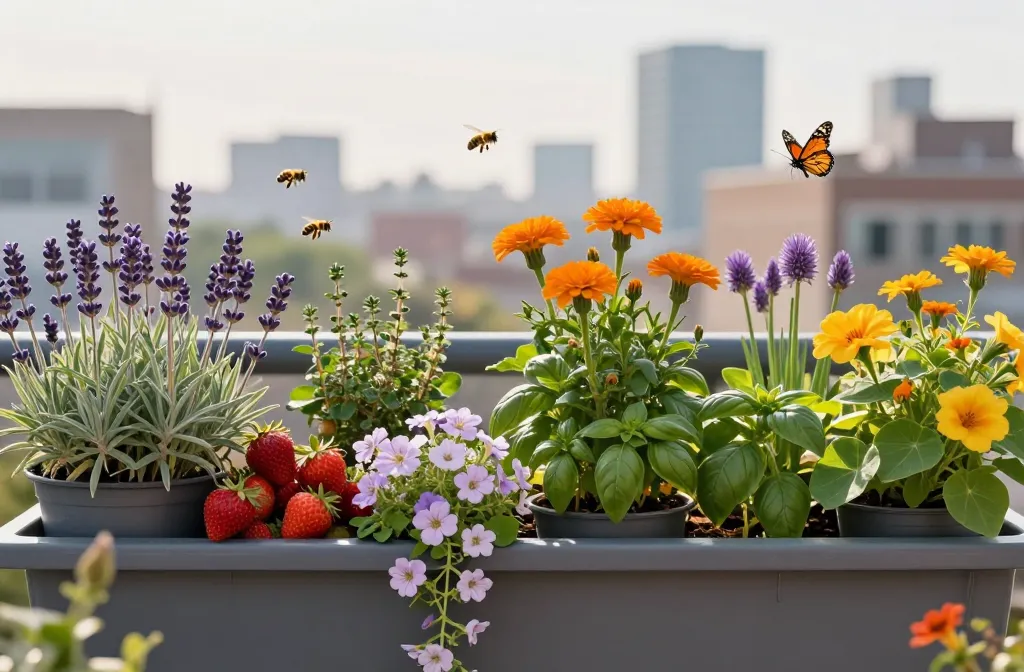
Want bees and butterflies visiting your balcony like it’s the hottest rooftop bar? Companion planting makes that happen, even in tiny spaces. We’ll group plants that boost blooms, scent, and nectar so pollinators can find you fast—and keep coming back. Ready to turn a boring railing into a buzzing micro-meadow?
These five strategies pack in color, fragrance, and food for pollinators while still leaving room for your herbs and tomatoes. Expect smoother harvests, fewer pests, and way more garden joy.
1. Build a Balcony “Pollinator Buffet” With Smart Trios
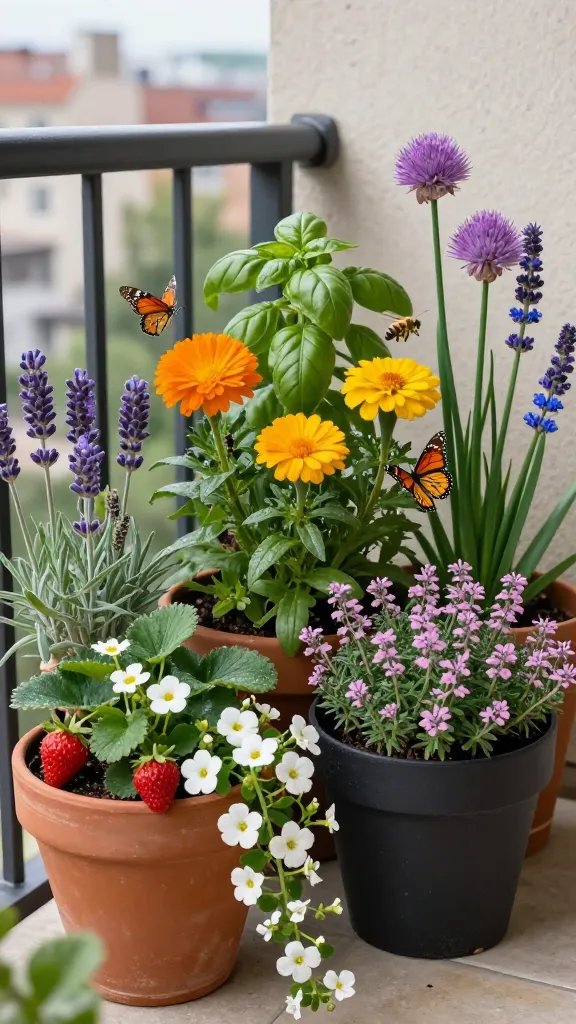
Companion planting shines when you mix bloom shapes, heights, and bloom times. Think of it as a tasting flight for bees and butterflies. You’ll serve nectar from spring to fall, no reservation required.
Go-To Trios That Just Work
- Lavender + Strawberries + Alyssum: Lavender draws bees, strawberries love the company, alyssum feeds hoverflies that eat aphids.
- Calendula + Basil + Marigold: Bright flowers lure pollinators while marigolds confuse pests; basil gets better pollination and flavor.
- Thyme + Chives + Nasturtium: Edible, fragrant, and magnetically attractive to bees and hoverflies; nasturtium also traps aphids.
Container Setup Tips
- Use 12–16 inch wide pots minimum for mixed plantings.
- Pick well-draining potting mix and add a thin layer of compost every 4–6 weeks.
- Group pots so flowers form a color block. Pollinators spot clusters better than scattered singles.
Do this first if you want instant results with minimal guesswork. You’ll see visits spike in a week or two, seriously.
2. Plant These 13 Bee And Butterfly Favorites (Small-Space Champions)
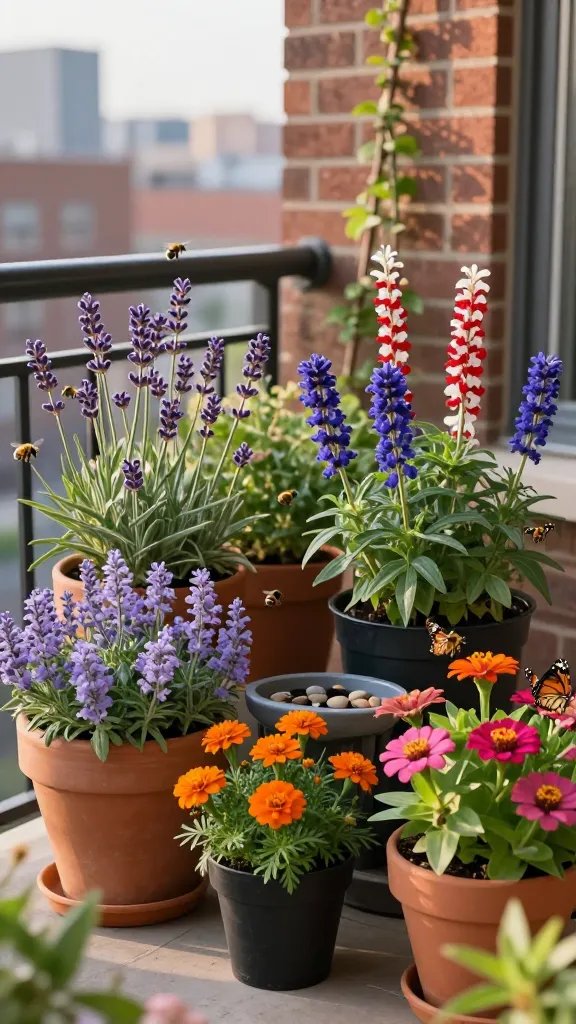
You need compact, container-friendly plants that crank out nectar. These 13 options bloom hard, shrug off city conditions, and look gorgeous doing it. Mix at least five for a reliable pollinator pipeline.
The Must-Grow List
- Lavender (English or French): Fragrant purple spikes; bees binge on it. Needs sun and good drainage.
- Catmint (Nepeta): Long bloom window, soft purple clouds. Drought-tolerant, pollinator magnet.
- Salvia (Blue or Hot Lips): Tubular flowers butterflies love; repeat blooms with deadheading.
- Alyssum: Honey-scented carpet; attracts beneficial insects and fits in planter edges.
- Calendula: Cheery orange/yellow; edible petals; blooms even in cool weather.
- Marigold (Tagetes): Strong scent confuses pests; bees and hoverflies still visit.
- Cosmos: Feathery foliage + long stems = balcony drama; bees and butterflies flock.
- Zinnia (Profusion or Zahara): Color bombs with flat landing pads for butterflies.
- Fennel or Dill: Umbel flowers feed pollinators; host plants for swallowtail caterpillars.
- Thyme: Tiny blossoms, huge bee appeal; happy in shallow planters.
- Chives: Purple pom-poms early in the season; edible and resilient.
- Nasturtium: Trailing, peppery leaves; hummingbirds and bees love the funnels.
- Bee Balm (Monarda): Firework blooms; great in a deep pot; butterflies can’t resist.
Quick Placement Guide
- Sunny railings: Zinnia, cosmos, salvia, lavender.
- Shallow planters: Thyme, alyssum, chives.
- Deep corner pots: Bee balm, fennel, catmint.
Pick varieties that bloom at different times and you’ll keep pollinators loyal all season. FYI: deadhead often to keep the nectar bar open.
3. Pair Flowers With Veggies And Herbs For Double Wins
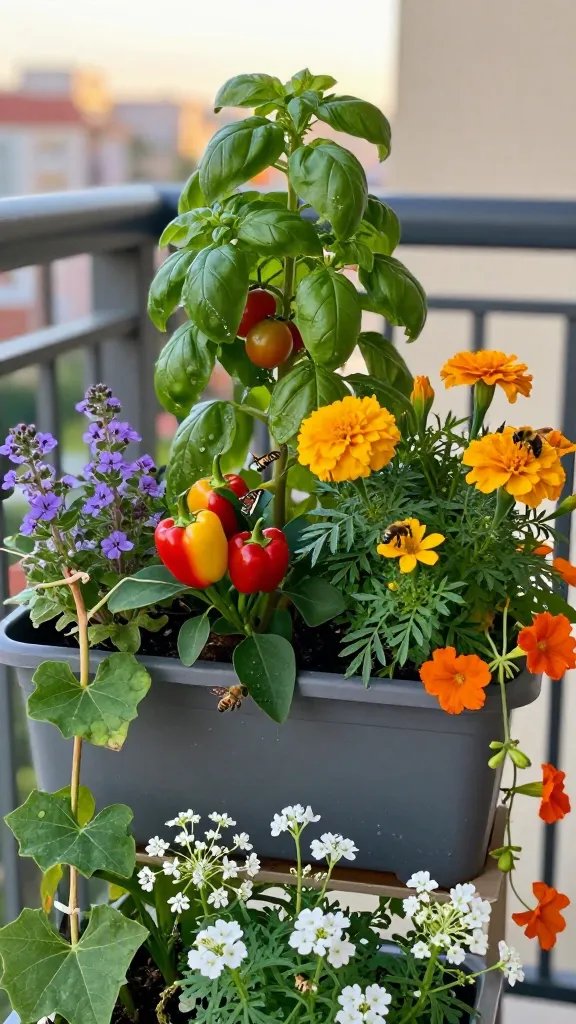
Want more tomatoes, peppers, and cukes? Give pollinators a reason to hang out right next to your crops. Companion flowers boost fruit set while herbs keep pests from crashing the party.
Winning Combos For Tiny Spaces
- Tomatoes + Basil + Marigold: Classic for a reason. Better pollination, fewer whiteflies, superior pizza nights.
- Peppers + Catmint + Nasturtium: Peppered blooms benefit from nearby nectar; nasturtium traps aphids before they find your leaves.
- Cucumbers + Dill + Alyssum: Bees hit the dill first, then the cukes. Alyssum invites predator insects.
- Strawberries + Chives + Thyme: Edges stay tidy, blooms attract bees early, berries set more reliably.
How To Arrange The Pot
- Put the crop in the center or back of the pot for support and sun.
- Ring it with low-flowering companions (alyssum, thyme, chives).
- Add a mid-height pop like calendula or marigold for color and pest control.
Use this when you want beauty and a bigger harvest from the same square foot. It’s the small-space superpower, IMO.
4. Design A Bloom Calendar: Early, Mid, And Late-Season Nectar
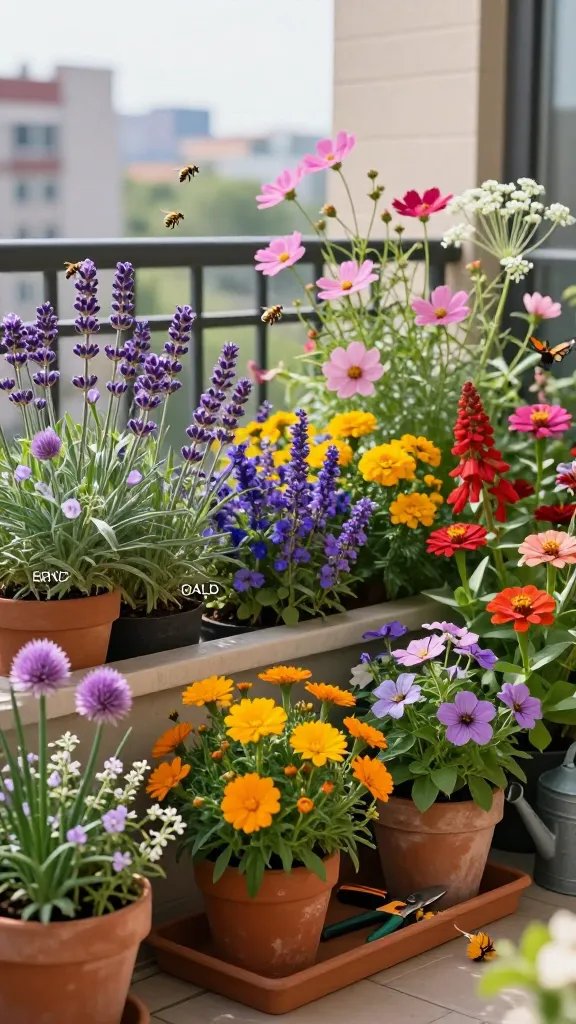
Pollinators need consistent food. If your balcony goes silent between bloom cycles, they bounce. Stagger bloomers so there’s always something on the menu.
Staggered Picks
- Early Season: Chives, thyme, calendula (cool weather troopers).
- Mid-Season: Lavender, catmint, salvia, marigold.
- Late Season: Cosmos, zinnia, bee balm, dill/fennel umbels.
Simple Care Moves That Extend Bloom
- Deadhead weekly. Snip fading blooms to trigger more flowers.
- Feed lightly every 3–4 weeks with a balanced, organic liquid fertilizer.
- Water in the morning so blossoms stand tall for visiting pollinators.
- Rotate pots a quarter turn weekly for even sun and growth.
Do this if you want steady visitors from spring to frost. Your balcony becomes the reliable spot on their daily commute, trust me.
5. Create A Pollinator-Friendly Vibe: Habitat, Water, And Zero-Nonsense Care
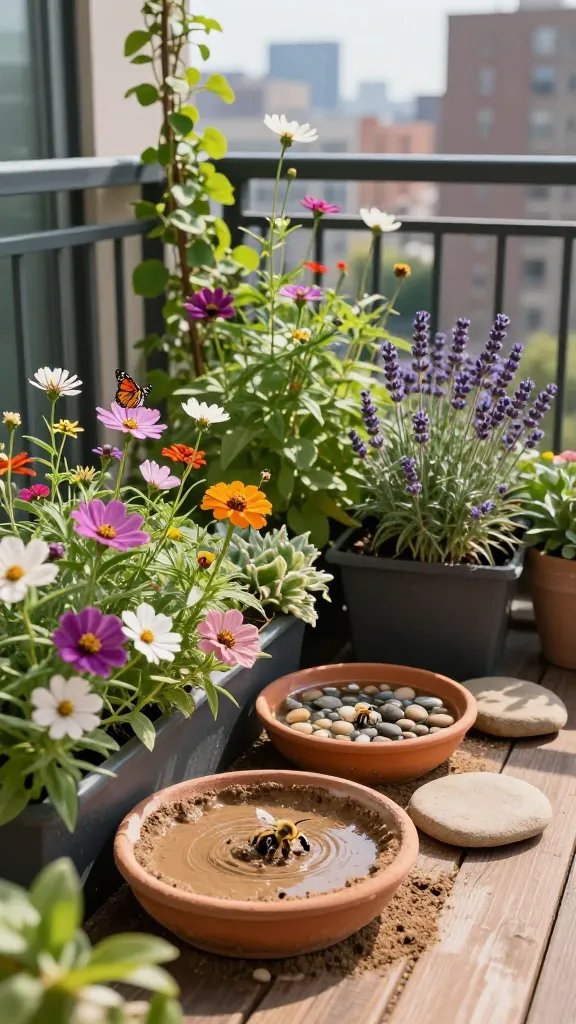
Flowers matter, but the “extras” seal the deal. Give pollinators a drink, a landing strip, and a safe spot, and they’ll move in. Bonus: these tweaks make your balcony feel like a mini oasis.
Easy Habitat Add-Ons
- Mud station: A shallow saucer with wet sand or soil helps bees collect minerals.
- Pebble water dish: Fill a saucer with stones and water so insects can sip without drowning.
- Wind buffer: Use a trellis or taller plants (cosmos, bee balm) as a gentle windbreak.
- Sunny perch: Flat stones warm up in the sun for butterfly basking.
Keep It Safe
- Avoid pesticides, especially systemic ones. If needed, use insecticidal soap at dusk when bees rest.
- Go organic with fertilizers; salts can stress container soils and blooms.
- Skip peat-heavy mixes when possible; choose sustainable blends that drain well.
Color And Scent Cues
- Color clusters: Plant in blocks of purple, blue, and yellow for bee targeting.
- Night fragrance: Add evening-scented plants like nicotiana if you enjoy twilight hangs (moths count too!).
- Varied flower shapes: Florets, funnels, and discs attract different species for higher diversity.
Use these tweaks when you want a low-maintenance, high-reward setup that hums with life. It turns a simple balcony into legit habitat.
Ready to host the best pollinator party in town? Mix a few of the 13 favorites, pair them with your edibles, and keep blooms rolling from spring to fall. Your harvest gets bigger, your balcony gets prettier, and the bees send their thanks—probably in tiny, buzzing Yelp reviews.