
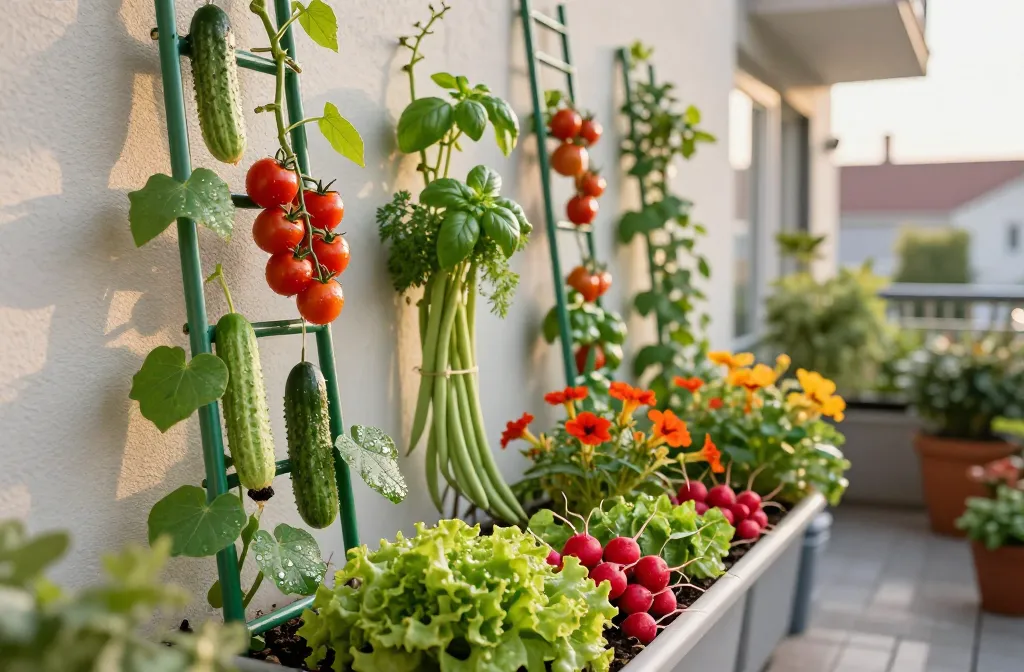
Your walls can grow dinner, repel pests, and look ridiculously lush. Companion planting makes tiny spaces act big, especially when you stack plants vertically. We’ll pair climbers, fillers, and root crops so every inch works overtime. Ready to grow more food in less space than your shoe rack?
1. Build “Green Ladders” With Vines, Fillers, and Root Crops
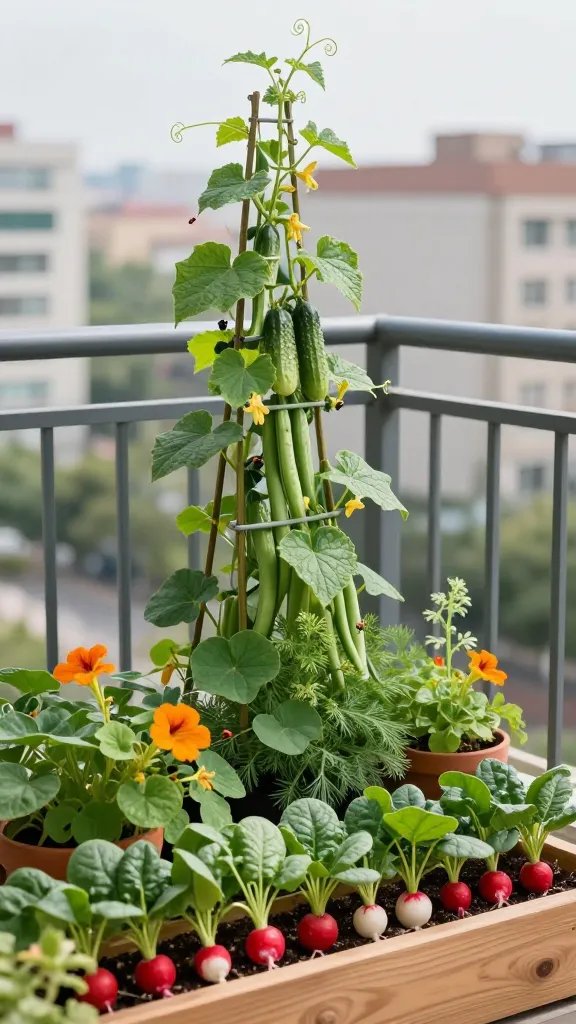
Think in layers: climbers on trellises, compact companions at their feet, and shallow roots in front. This “green ladder” uses airspace, light, and soil depth like a Tetris master. You’ll harvest multiple crops from one slim footprint, and yes, it looks fancy.
Winning Trios (Aka Your New Vertical Power Teams)
- Cucumbers + Dill + Radishes: Cukes climb, dill attracts beneficial insects, radishes fill quick gaps.
- Pole Beans + Nasturtium + Spinach: Beans fix nitrogen, nasturtium traps aphids, spinach loves the dappled shade.
- Tomatoes + Basil + Marigold: Basil boosts flavor and repels pests, marigold helps deter nematodes.
- Peas + Lettuce + Chives: Peas climb and cool lettuce, chives deter aphids.
Tips
- Run a narrow trellis or string grid up a wall or balcony rail.
- Plant fast growers (radishes, lettuce) in the front row to harvest before the climbers cast deep shade.
- Use 8–12 inch spacing for fillers; keep roots like radishes 3–4 inches apart.
Use this when you have a sunny wall or railing and want quick, layered harvests with minimal fuss. It’s basically a harvest escalator.
2. Stack Pests Against Themselves With Scent Shields
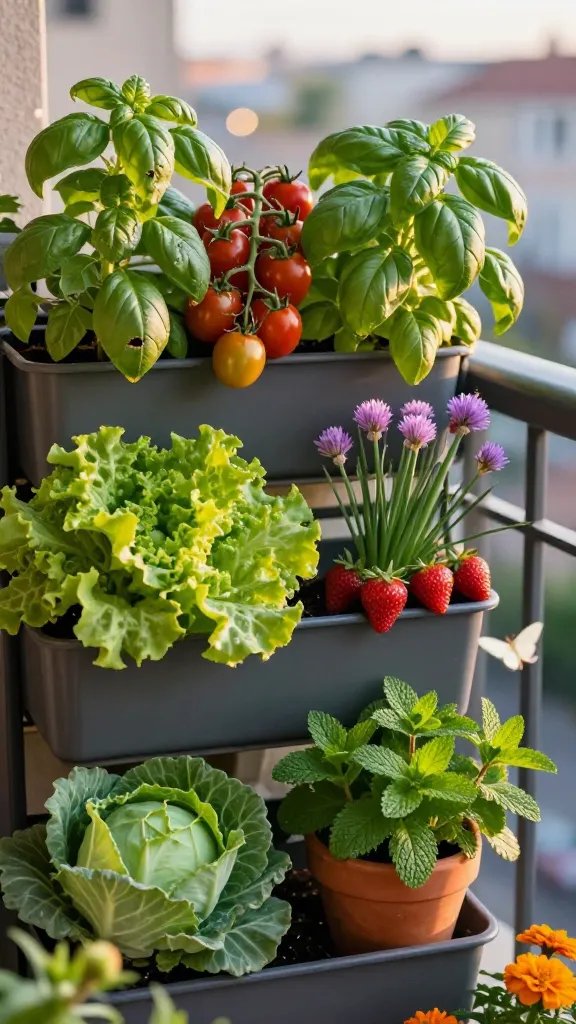
Strong-scented herbs and flowers act like tiny bodyguards for your vertical crops. They confuse pests, draw predators, and keep your greens feeling safe and fancy. Plus, you get free aromatherapy every time you water.
All-Star Defenders
- Basil around tomatoes to confuse hornworms and boost flavor (science says volatile oils help—also, pesto).
- Chives near lettuce or strawberries to deter aphids and leafhoppers.
- Mint near cabbages to repel moths—grow mint in its own pot, then hang that pot nearby so it doesn’t go feral.
- Marigold at the base of beans, tomatoes, or peppers to deter soil nematodes and flying pests.
- Nasturtium trailing from pockets as an aphid magnet—sacrifice a few leaves, save the main crop.
Placement Tricks
- Hang herb pots at nose level around the main trellis to form a scent ring.
- Alternate marigold or nasturtium in every third pocket on a vertical planter.
- Rotate pots slightly each week so scents spread across airflow paths.
Use scent shields when you want to avoid sprays and let the garden do the guarding. FYI, it also makes your garden smell like a chef’s kiss.
3. Shade-Smart Pairings That Beat Heat And Bolting
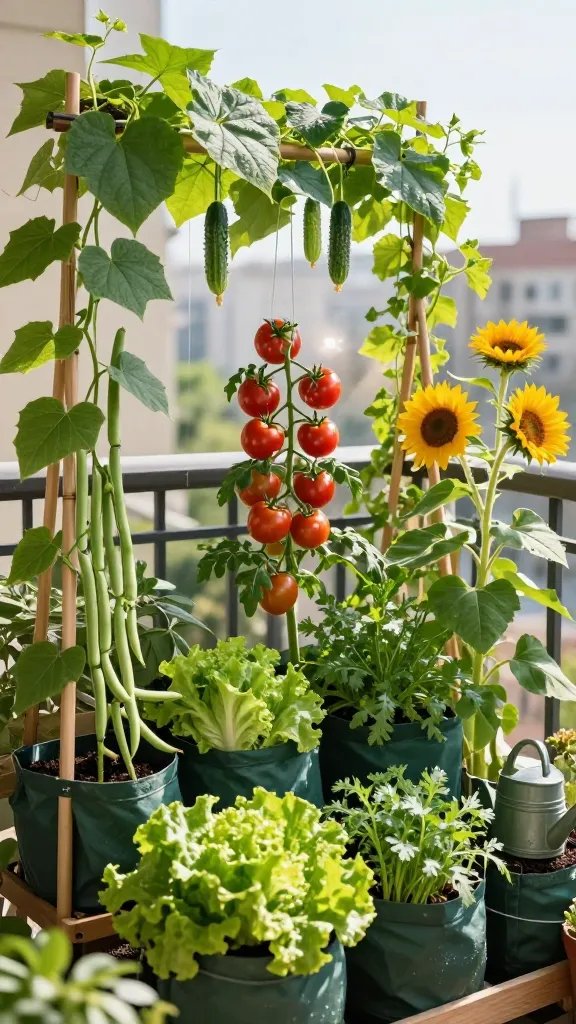
Vertical gardens create microclimates. You can use tall plants to cast partial shade for tender greens that hate summer scorch. Translation: fewer bitter leaves, more crunchy salads.
Pairs That Love Dappled Light
- Cucumbers up top + lettuce in pockets below. The cucumber canopy cools the lettuce, which stays crisp longer.
- Tomatoes on strings + cilantro tucked in shade. Cilantro bolts slower in cooler pockets.
- Pole beans + arugula beneath. Arugula keeps growing despite midsummer glare.
- Sunflowers (dwarf or multi-stem) + spinach at the base for a few extra weeks of spring/fall yield.
How To Tune The Shade
- Train vines horizontally across the top third of a panel to create a leafy awning.
- Stagger plantings: put bolt-prone greens on the north or back side of the structure.
- Harvest leaves from shade givers regularly so they don’t smother the understory.
Use this when summer turns your greens into divas. You’ll stretch the season and keep salads sweet, seriously.
4. Soil-Savvy Partners: Mix Roots, Feeders, And Fixers
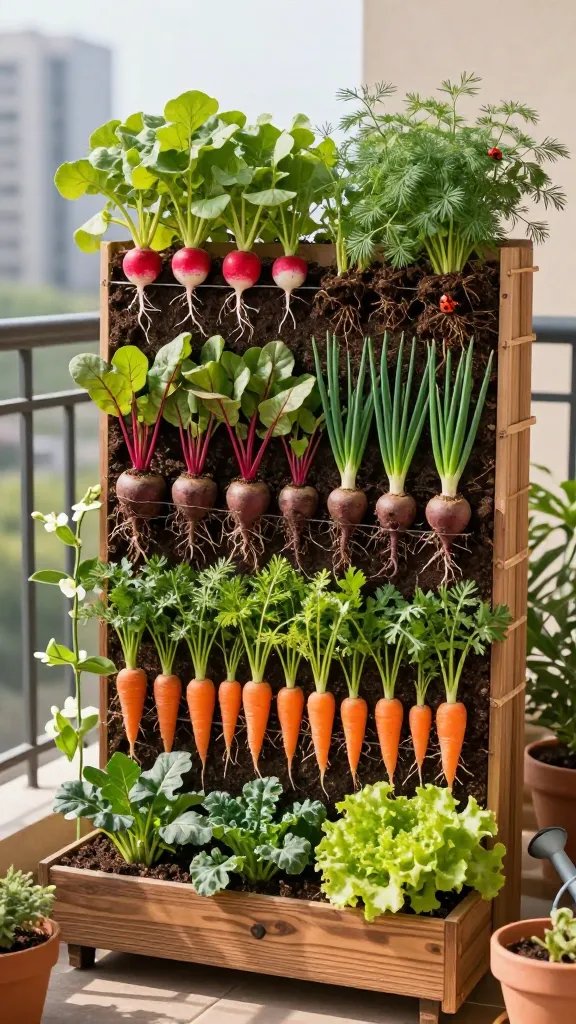
Companion planting shines when you pair different root depths and nutrient needs. Shallow crops harvest fast, deep ones mine minerals, and nitrogen fixers keep everyone fed. It’s garden symbiosis without the group chat drama.
Smart Root Combos
- Radish (shallow) + Carrot (deep) + Dill: Radish breaks crust for carrots; dill attracts beneficials.
- Garlic or Green Onions (shallow) + Beets (mid) + Arugula (shallow): All fit without elbowing each other.
- Bush Peas (fix nitrogen) + Leafy Greens (heavy feeders): Peas prime the soil; greens cash the check.
- Strawberries (surface runners) + Thyme (shallow mat) + Borage (deep tap): Pollinators love it, berries get bigger, thyme suppresses weeds.
Feeding And Watering
- Use a high-quality potting mix with compost and coco coir for moisture retention.
- Top-dress with worm castings monthly; follow with a gentle liquid feed every 10–14 days for heavy feeders like tomatoes and peppers.
- Install drip lines or a soaker hose snaked through tiers to avoid top-heavy splash and disease.
Space-Saving Structures
- Pocket planters: Tuck herbs in the sides, roots up front, climbers behind.
- Stacked crates or grow bags: Roots in the bottom layer, greens and flowers higher up.
- Gutter gardens: Perfect for shallow-rooted greens and strawberries under taller trellised crops.
Use this when you want to reduce fertilizer fuss and get more from each cubic inch of soil. IMO, it’s the secret sauce of vertical success.
5. Seasonal Swaps And Succession Tricks For Nonstop Harvests
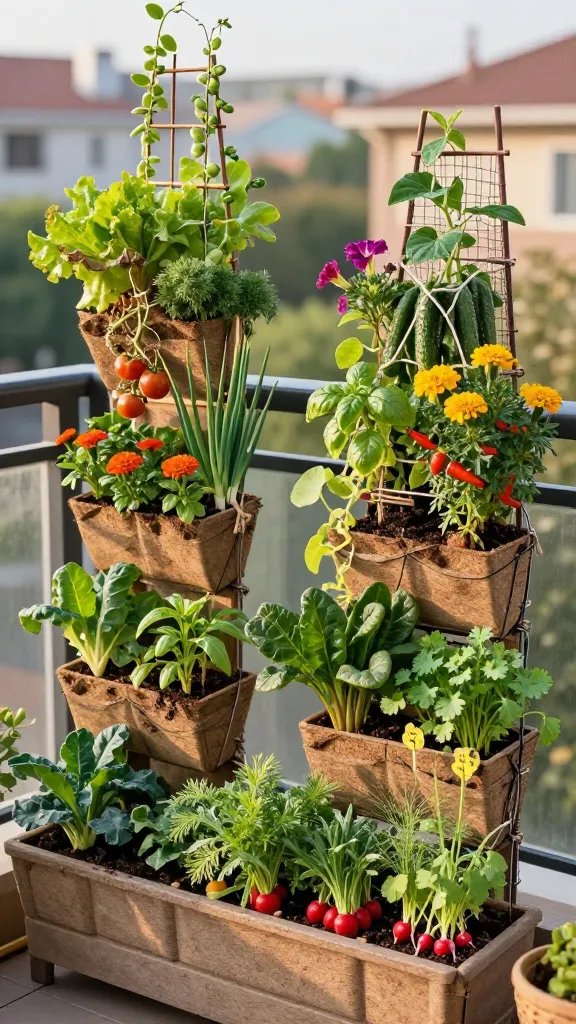
Small spaces need constant turnover to stay productive. Companion planting helps you swap crops efficiently and avoid pest buildup. Think of it like playlist shuffling, but for food.
Spring → Summer → Fall Rotations
- Rotation A: Peas + Lettuce + Chives → Cucumbers + Basil + Nasturtium → Arugula + Radish + Dill
- Rotation B: Spinach + Green Onions → Tomatoes + Marigold + Basil → Kale + Parsley
- Rotation C: Cilantro + Radish → Peppers + Oregano + Marigold → Swiss Chard + Chives
Quick Wins (Because Patience Is Overrated)
- Interplant radishes with slow crops like carrots or beets; pull radishes at 25 days, give the slowpokes room.
- Sow cut-and-come-again lettuces in empty pockets after you harvest peas or beans.
- Drop in fast herbs (dill, cilantro) whenever a gap appears to keep beneficials visiting.
Pest And Disease Reset
- Swap plant families each season to dodge repeat offenders (tomatoes/peppers/eggplant are one family; beans/peas another).
- Use a light compost refresh and a handful of fresh mix when you replant pockets.
- Remove old vines promptly so mildew doesn’t RSVP for next season.
Use this if you want steady harvests from March to frost without reengineering your whole setup every month. Trust me, momentum matters.
There you go—compact, productive, and pretty enough to flex on your group chat. Start with one layered ladder and one scent shield, then build out as your confidence sprouts. Your wall is about to become the tastiest square footage you own.