
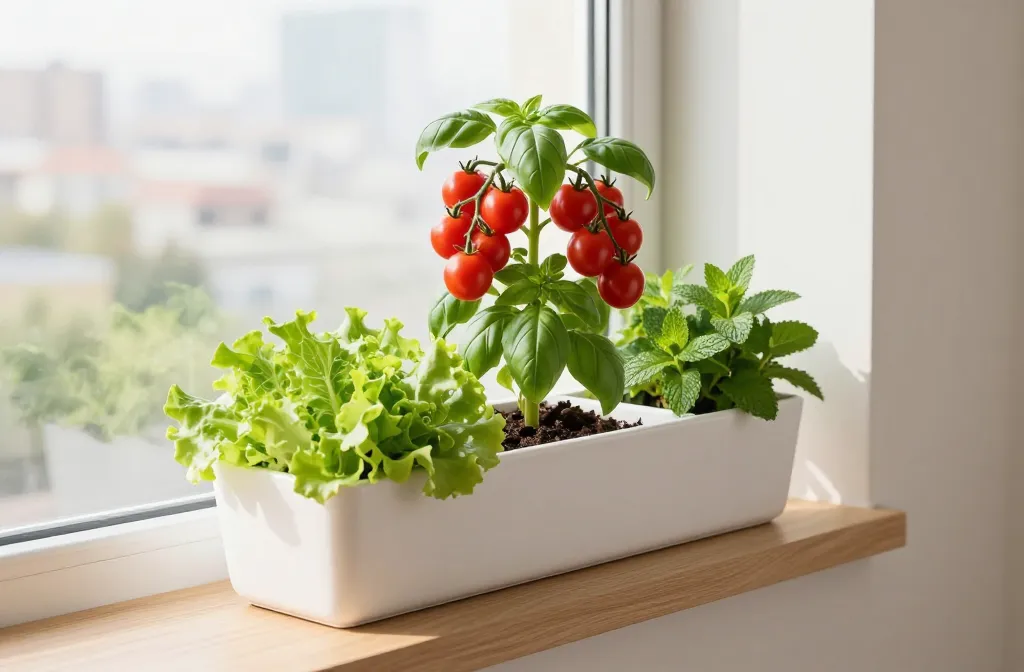
Small space, big plant dreams? You can stack your windowsill with smart pairings that practically take care of themselves. These combos save space, deter pests, boost flavor, and look ridiculously cute together. Ready to grow more with less fuss? Grab a watering can and let’s get your tiny jungle thriving.
1. Basil + Tomatoes: The Balcony Power Couple
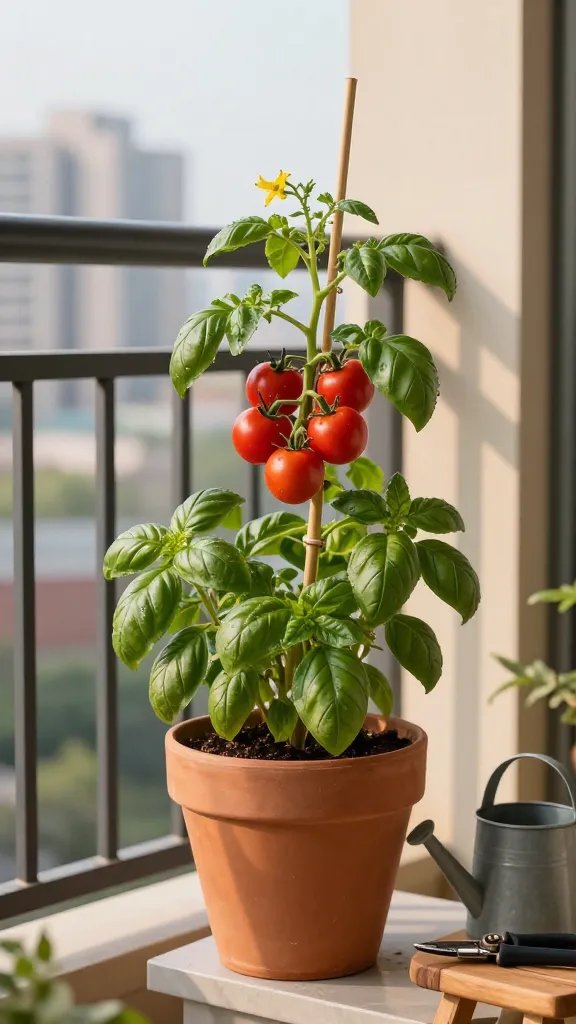
Classic for a reason: basil makes tomatoes taste better and helps keep pests away. They share similar light and water needs, so you won’t play plant referee. Plus, the smell of fresh basil next to ripening tomatoes? Chef’s kiss.
Why It Works
- Aroma armor: Basil’s scent confuses whiteflies and aphids that love tomato plants.
- Shared vibes: Both crave full sun and consistent moisture.
- Flavor boost: Anecdotal, but many growers swear basil sharpens tomato sweetness.
Set It Up
- Container: One deep 3–5 gallon pot for a dwarf cherry tomato; tuck 1–2 basil plants around the edge.
- Light: 6–8 hours of direct sun or a strong grow light.
- Water: Keep evenly moist; tomatoes sulk if you swing from drought to flood.
Snip basil often to prevent flowering and to keep it bushy. You’ll end up with caprese-level salads from a single pot, FYI.
2. Mint + Lettuce: The Refreshing Shade Team
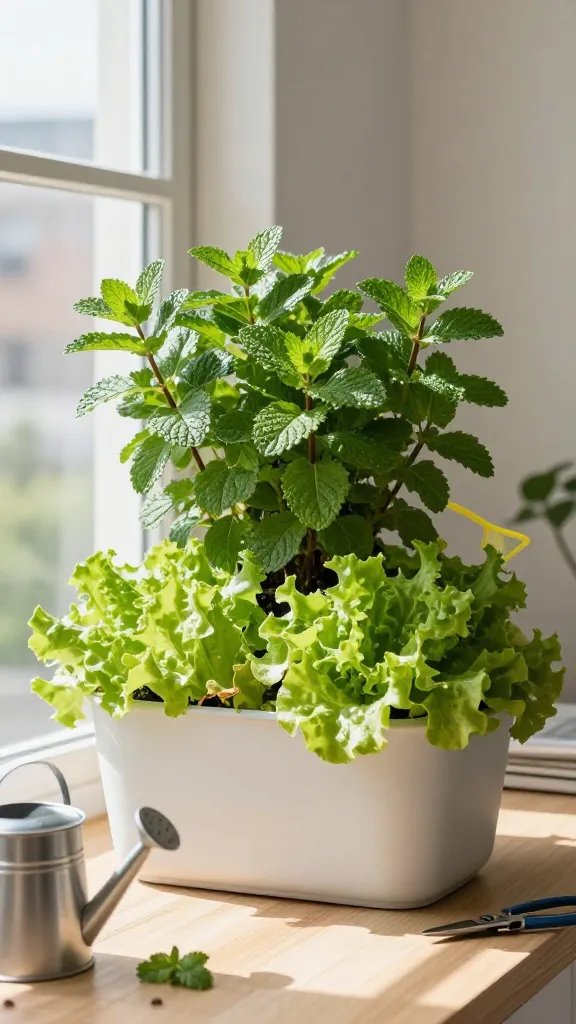
If your windows don’t get blasting sun, this combo shines. Mint grows like it has somewhere to be, and lettuce enjoys the filtered shade mint creates. Bonus: mint’s bold scent helps keep gnats and aphids less interested.
Why It Works
- Partial shade champs: Both do great with bright, indirect light.
- Gnat deterrent: Mint’s aroma makes pests think twice.
- Cut-and-come-again: Harvest lettuce and mint repeatedly for easy salads and teas.
Set It Up
- Container: A wide shallow planter (8–10 inches deep). Plant mint in a nursery pot inside the planter to prevent mint from taking over.
- Spacing: 3–4 lettuce starts around the mint insert.
- Water: Keep soil consistently damp but not soggy. Lettuce throws tantrums in drought.
Use this combo for low-light kitchens or a north-facing window. It’s a low-effort salad bar that stays cute and fresh.
3. Chives + Strawberries: The Sweet-And-Savory Window Box
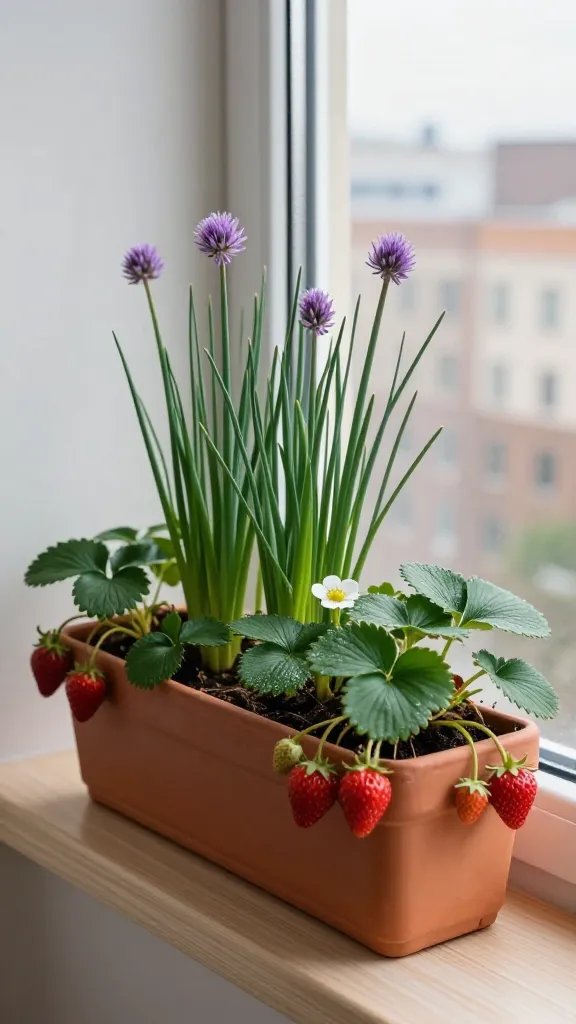
Strawberries bring the joy; chives bring the protection. Their upright, slender growth doesn’t crowd the strawberry crowns, and their mild onion scent helps deter pests like aphids and mites.
Why It Works
- Space-efficient: Chives stand tall; strawberries sprawl gently.
- Pest defense: Chives’ aroma offers a light shield without overpowering neighbors.
- Flavor synergy: Strawberries + chive blossoms look gorgeous and taste delicate and oniony—yes, really.
Set It Up
- Container: A long window box or 10–12 inch pot with 2–3 strawberry plants and one clump of chives.
- Light: 5–6 hours of sun minimum for decent fruiting.
- Water: Moist, well-drained soil. Strawberries hate wet feet; add perlite for drainage.
Clip chives frequently to prevent seeding and to keep energy on strawberry production. You’ll get spring flowers, summer berries, and year-round garnish vibes—seriously.
4. Parsley + Peppers: The Compact Flavor Duo
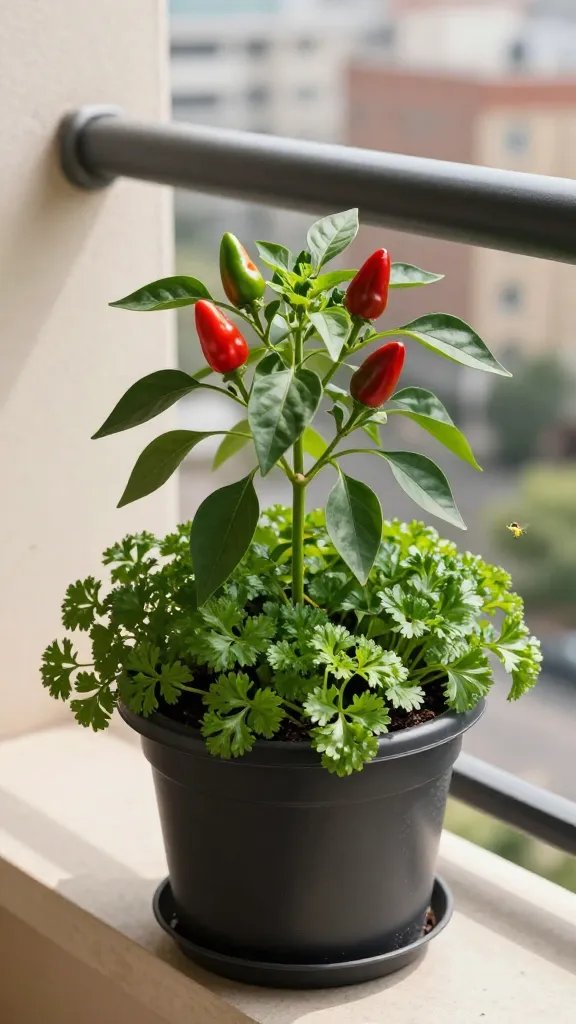
Dwarf pepper plants love a warm, sunny perch, and parsley hangs out happily at their feet. Parsley’s dense foliage helps shade soil, reducing water stress and making pests less bold.
Why It Works
- Microclimate magic: Parsley acts like a living mulch, keeping soil cool and moist.
- Pollinator appeal: Parsley flowers later and attracts beneficial insects, which peppers appreciate.
- Zero drama: Both like regular watering and decent sun. No diva demands.
Set It Up
- Container: 3–5 gallon pot with one compact pepper (jalapeño, shishito, or mini bell) and one parsley plant at the rim.
- Light: 6–8 hours of sun; peppers love heat. South-facing window or grow light is ideal.
- Feeding: Light monthly fertilizer once flowering starts; parsley stays chill with that schedule.
Great for spicy food fans who want fresh toppings on demand. You’ll harvest parsley all season while your peppers ripen like colorful confetti.
5. Dill + Cucumbers: The Pickle-Ready Trellis Pair
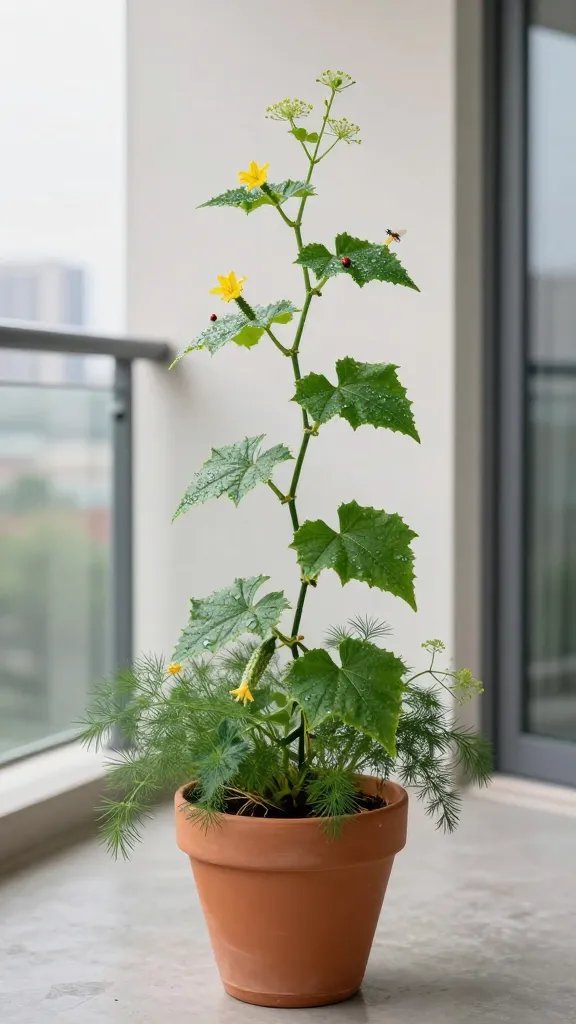
If you have even a sliver of vertical space, let cucumbers climb and let dill sway around them. Dill attracts beneficial insects and adds a wispy, airy look that won’t crowd the vines.
Why It Works
- Built-in pollinator trap: Dill flowers lure hoverflies and ladybugs that snack on aphids.
- Shared thirst: Both enjoy consistent moisture and at least moderate sun.
- Flavor destiny: Put your harvests straight into quick pickles. It’s predestined. IMO.
Set It Up
- Container: 5–7 gallon pot with a compact cucumber variety and a few dill seedlings along the edge.
- Trellis: A simple A-frame or vertical string support saves space and keeps fruit clean.
- Water: Deep watering 2–3 times a week; mulch the top with coco coir or shredded bark to prevent evaporation.
Use this pairing when you want vertical drama and steady snacking cucumbers. You’ll get fragrant fronds for sauces and a steady trickle of crisp cukes all summer.
Quick Apartment Garden Tips That Make All These Combos Easier
- Pick compact varieties: Look for words like “patio,” “bush,” or “dwarf” on seed packets.
- Right-sized pots: Too small and roots sulk; too big and you overwater. Aim for 3–7 gallons for fruiting plants, 1–2 gallons for herbs and greens.
- Soil matters: Use high-quality potting mix with perlite for drainage. Garden soil compacts in containers—hard pass.
- Water like a pro: Stick a finger in the soil up to your first knuckle. If it feels dry, water. If it feels cool and damp, chill.
- Rotate the pot: Quarter-turn weekly for even growth if your light comes from one direction.
- Fertilize smart: Use a gentle balanced liquid feed every 2–4 weeks during active growth.
- Pest patrol: Keep a spray bottle with water + a drop of mild soap. Spot-treat aphids and mites early.
Ready to mix and match? Start with one combo and watch your windowsill turn into a tiny, productive jungle. Small pots, big harvest energy—trust me, you’ve got this.