Craving a garden that lowers your shoulders two inches the moment you step in? Companion planting can turn your meditation or Zen space into a sensory retreat—no extra bells, whistles, or gnomes required. Pair plants for harmony, fragrance, and balance, and watch the mood (and your focus) improve. Ready to create a calm corner that actually stays low-maintenance? Let’s plant the vibe.
1. Fragrance + Form: Lavender & Rosemary With Dwarf Bamboo
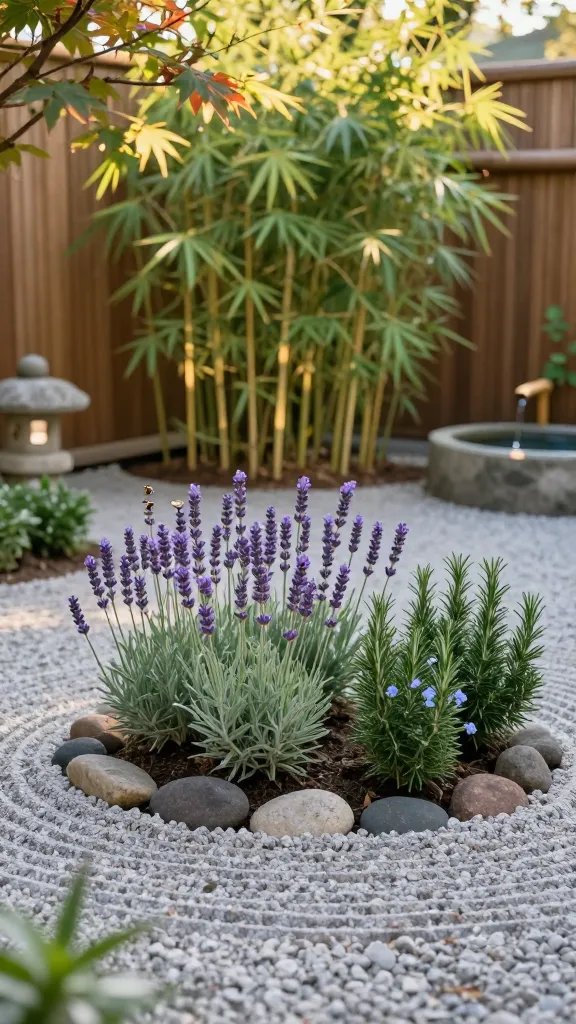
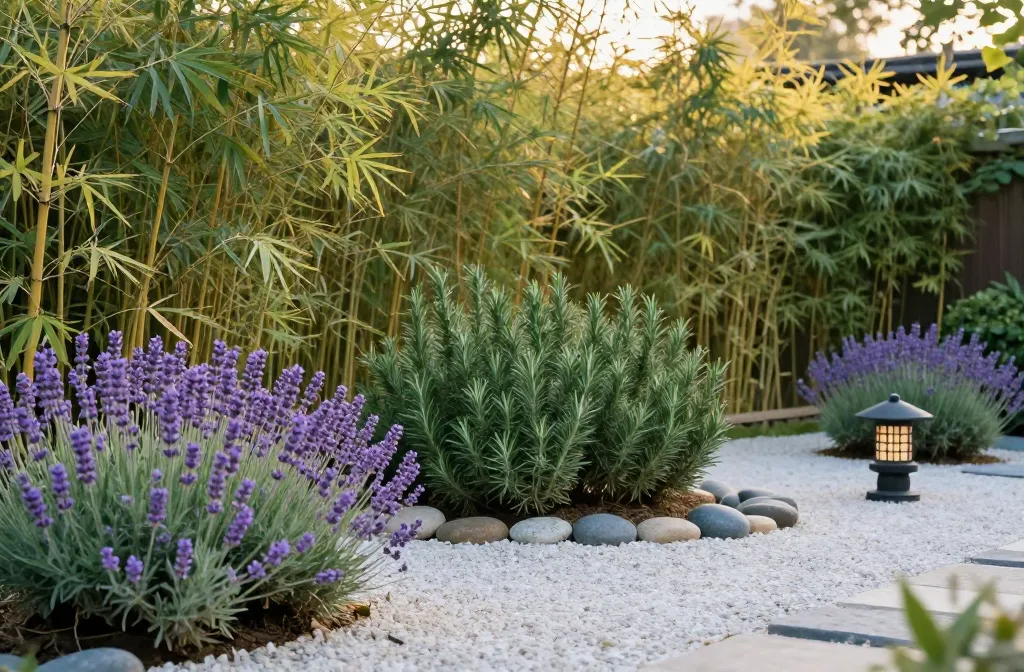
Calm your mind with scent while your eyes rest on soothing shapes. Lavender brings the soft aroma and pollinator magic, rosemary adds evergreen texture and culinary perks, and dwarf bamboo delivers vertical rhythm without taking over your life.
Why It Works
- Lavender attracts beneficial insects and deters pests.
- Rosemary thrives in similar dry, sunny conditions—easy care, year-round structure.
- Dwarf bamboo creates a sound-buffering screen and a gentle rustle for meditative focus.
Keep spacing generous so air circulates, especially around lavender. Aim for a sunny spot with lean, well-draining soil—overwatering turns lavender grumpy, FYI.
Tips
- Choose clumping Fargesia bamboo to avoid spread (your neighbors will thank you).
- Shear lavender lightly after bloom to keep mounding shape.
- Use gravel mulch for a tidy, Zen-friendly finish.
Use this trio to frame a seating area or flank a path near your meditation cushion. You’ll get a tranquil scent cloud and a simple, sculptural look year-round.
2. Grounded Calm: Moss Carpets With Japanese Forest Grass & Ferns
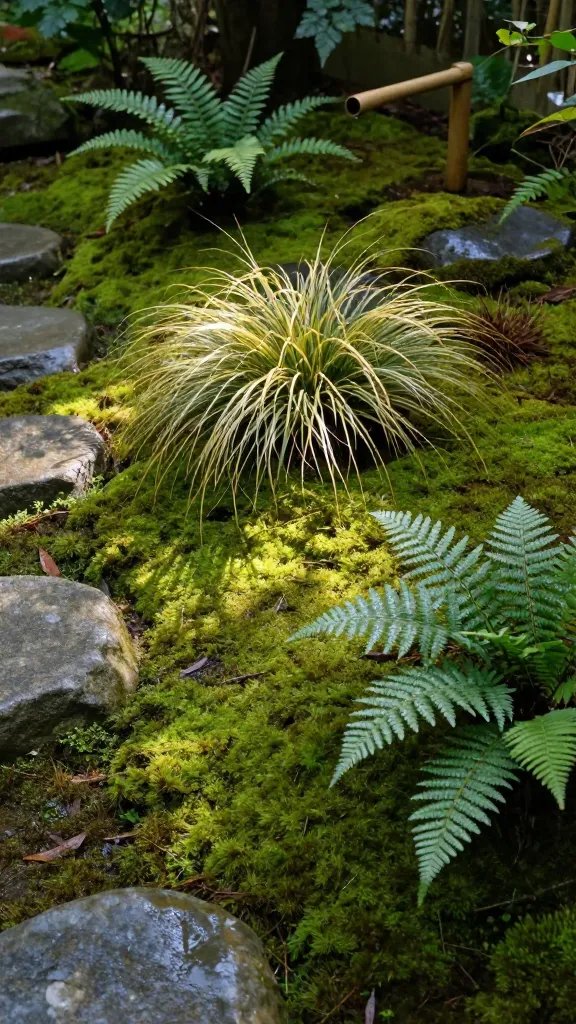
If you want instant serenity, go low and lush. Moss offers a living velvet carpet, Japanese forest grass brings a soft cascade, and ferns add graceful fronds that whisper “breathe.” It’s textural therapy.
Why It Works
- Moss thrives in shade and consistent moisture—no mowing, no fuss.
- Hakonechloa (Japanese forest grass) drapes elegantly and tolerates partial shade.
- Ferns love the same filtered light and cool soil, so everyone plays nice.
Think woodland Zen. This combo settles around stones, under trees, or beside a water basin. The layered greens quiet visual noise and soften hard lines.
Tips
- Encourage moss by clearing debris and lightly compacting soil; keep pH slightly acidic.
- Water deeply but infrequently; let topsoil barely dry between sessions.
- Choose ferns like Athyrium or Dryopteris for reliable structure.
Ideal near stepping stones and meditation stools where you want natural hush and gentle texture. IMO, this is your under-tree dream team.
3. Serenity With Motion: Japanese Maple, Heuchera, and Blue Fescue
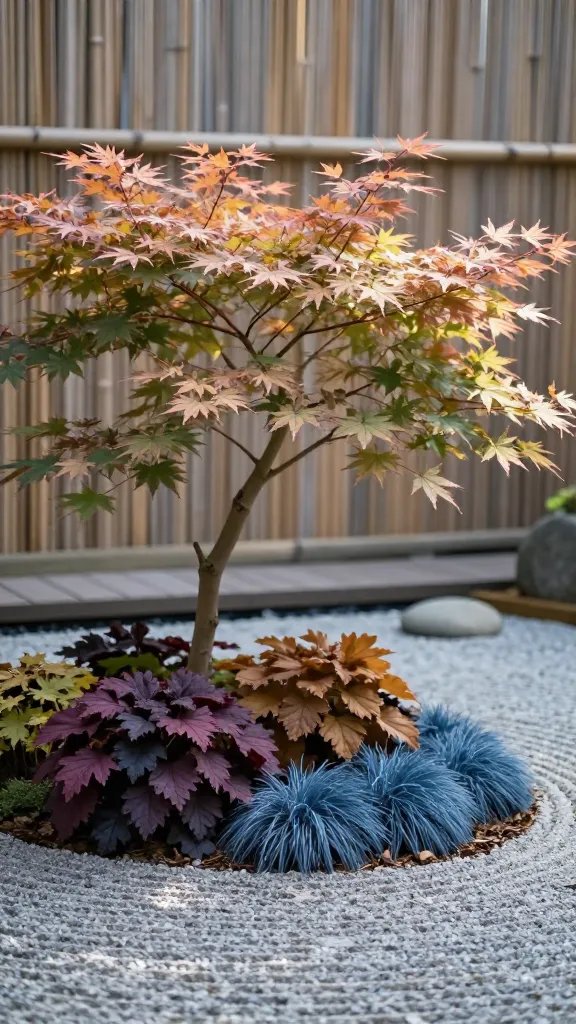
This trio mixes a graceful canopy with jewel-toned leaves and calming blue tufts. The result? A quiet, layered vignette that looks expensive but behaves like a minimalist.
Why It Works
- Japanese maple (Acer palmatum) sets the tone with dappled shade and delicate movement.
- Heuchera adds evergreen-ish mounds in many shades—plum, caramel, obsidian.
- Blue fescue contrasts with cool-toned, tidy clumps for balance.
All three prefer decent drainage and benefit from a light mulch to regulate moisture. The maple filters harsh light, which keeps heuchera colors rich and reduces fescue stress.
Placement & Care
- Position maple slightly upwind to catch breezes—moving leaves help focus breathing.
- Cluster heuchera in threes for visual rhythm.
- Keep fescue neat with a quick spring comb-out to remove dead blades.
Use this near the entrance to your garden or as a framed view from a bench. The layered motion turns your sitting practice into a mini retreat, seriously.
4. Scented Stillness: Jasmine, Gardenia, and Boxwood Bones
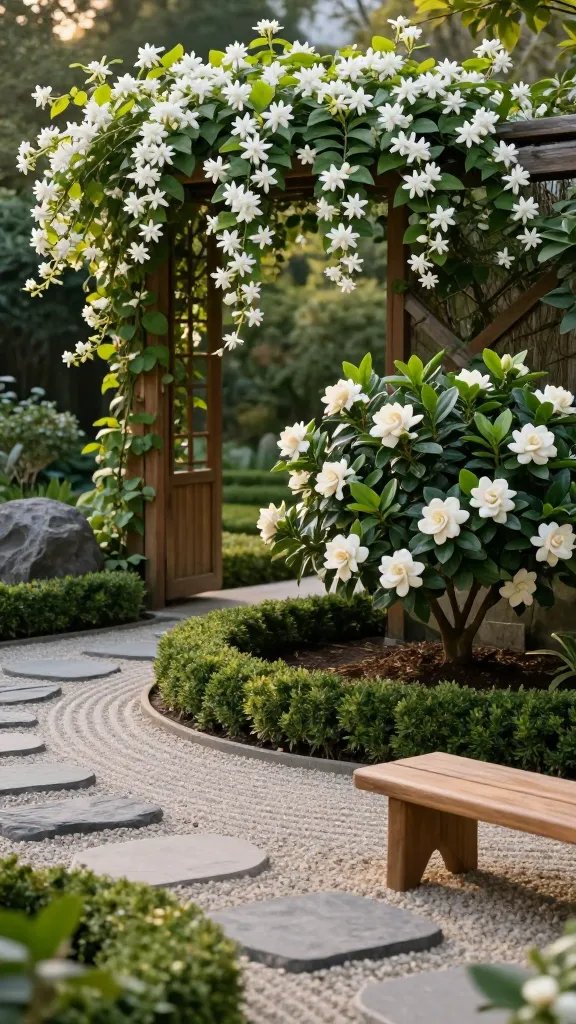
Want a scent that cues your brain to wind down instantly? This pairing blends intoxicating blooms with evergreen structure, so your space looks tidy even when nothing flowers.
Why It Works
- Star jasmine (Trachelospermum jasminoides) or jasmine sambac perfumes the air and can climb a trellis or frame a gate.
- Gardenia adds creamy blooms and glossy leaves—just plan for slightly acidic soil.
- Boxwood gives clipped edges and geometric calm that anchors the romance.
Think fragrance zones—plant near a seating nook, doorway, or water feature. Keep the look simple: one vine, two gardenias, a low boxwood hedge. Boom, instant sanctuary.
Care & Compatibility
- All three appreciate consistent moisture and protection from harsh afternoon sun.
- Use organic acidifying amendments for gardenia; jasmine and boxwood tolerate similar pH ranges.
- Prune jasmine after flowering to maintain shape and airflow.
Perfect for evening meditation or breathwork. The perfume feels like a gentle cue to relax—no meditation app required.
5. Ripple + Rock: Water-Loving Iris, Japanese Sweet Flag, and Dwarf Conifer
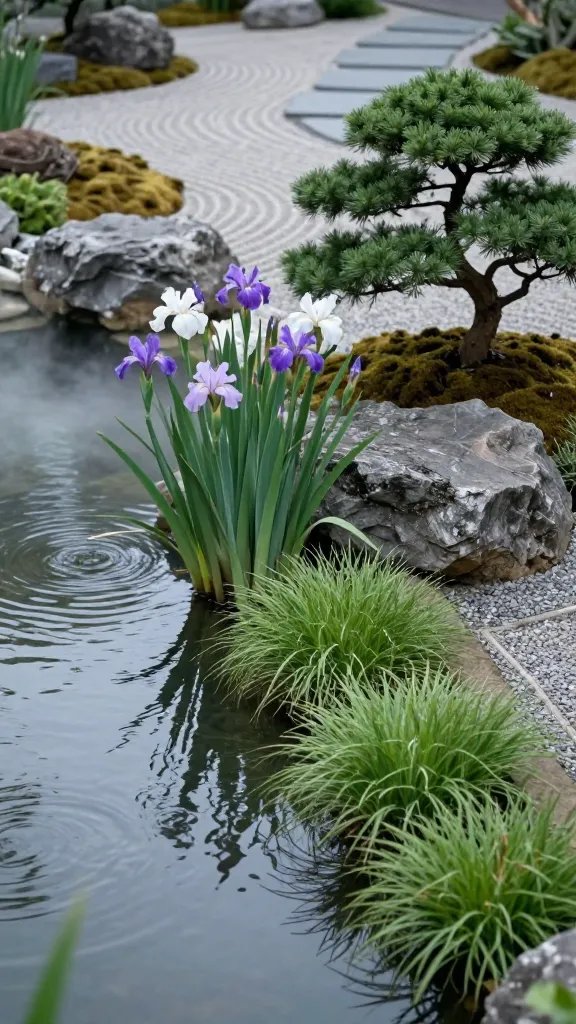
Balance water energy with strong, grounded forms. Plant iris and sweet flag near a basin or stream, then add a dwarf conifer to stabilize the scene with a quiet, evergreen anchor.
Why It Works
- Japanese iris (Iris ensata) loves moist soil and delivers elegant, painterly blooms.
- Japanese sweet flag (Acorus gramineus) thrives at water’s edge and adds fine, bright texture.
- Dwarf conifer (like Pinus mugo or Chamaecyparis) provides structure and year-round focus.
This combo unites movement and stillness—the water and grasses create soft motion, while the conifer and rocks hold the frame. It’s basically a moving meditation, just outdoors.
Setup Tips
- Place iris in rich, consistently moist soil; avoid drought stress for best blooms.
- Let sweet flag skim the waterline or sit in damp gravel for clean lines.
- Nestle the conifer slightly upslope with a large stone to echo natural topography.
Use this near a raked gravel area so you can contrast ripples in water with raked patterns. The result feels ancient, balanced, and wildly soothing.
Ready to breathe easier outside? Pair plants with intention, and your garden will do half the meditation for you. Start small with one area, tweak the spacing, and let the calm grow on you—literally. Trust me, once you sit in that quiet green, you’ll never want to meditate indoors again.