
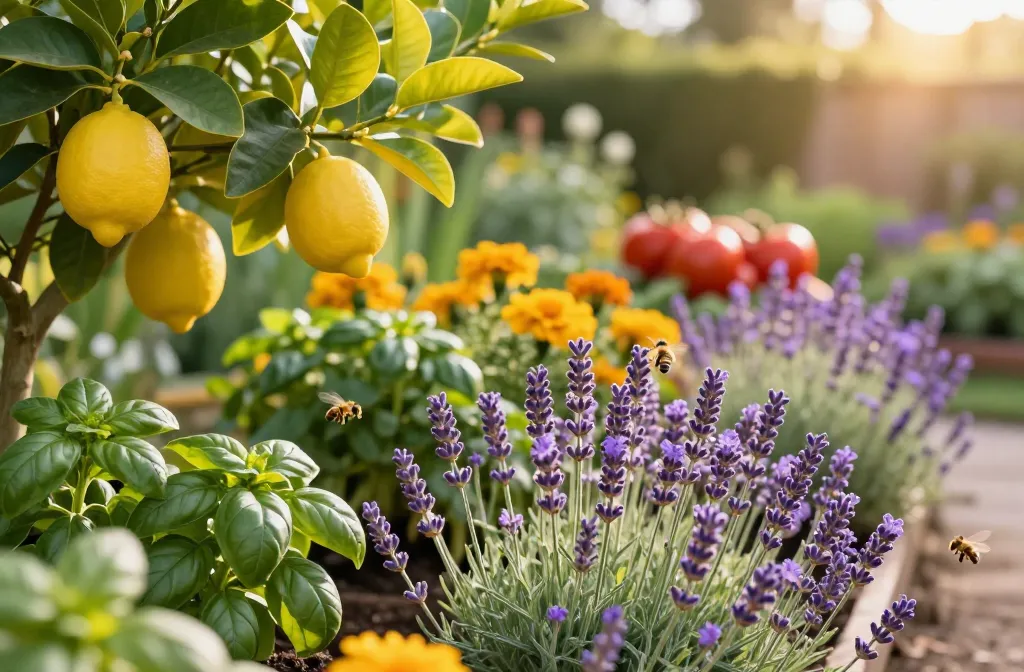
Want a garden that practically buzzes with feel-good vibes? Pair the right plants and you’ll turbocharge growth, flavor, pollinators, and your own energy levels. These combos attract beneficial insects, deter pests, and deliver powerhouse harvests that make your morning smoothie sing. Ready to grow a garden that gives you a legit pep in your step?
1. Citrus + Lavender: Zesty Sunshine Meets Calming Power
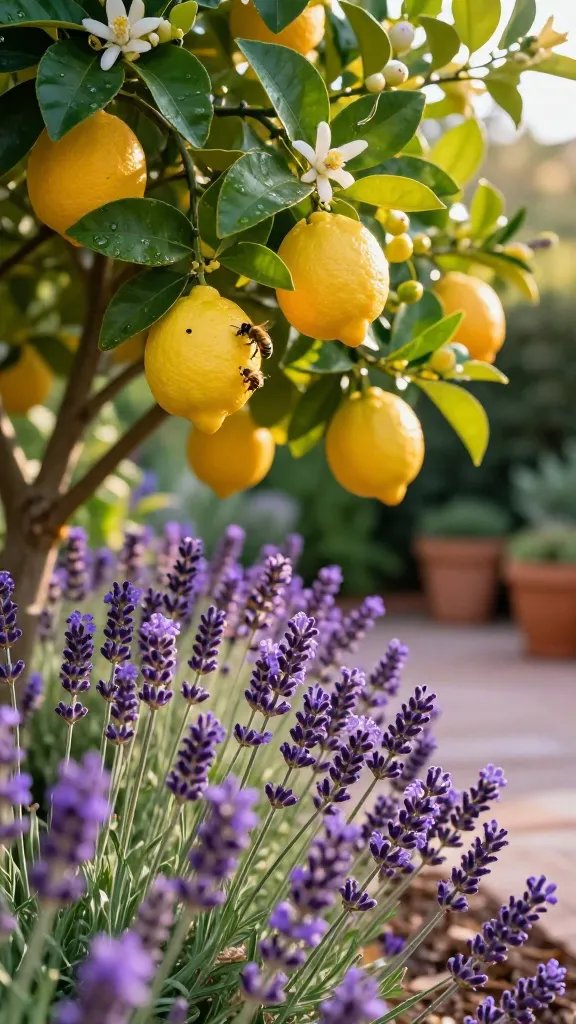
This duo brings balance: bright, vitamin-packed citrus with lavender’s soothing aroma. Lavender attracts pollinators that boost citrus blossom set, and its essential oils help discourage soft-bodied pests. Plus, the scent combo smells like a spa day in your backyard—zero appointment needed.
Why It Works
- Pollinator magnet: Lavender lures bees that improve citrus fruiting.
- Pest pressure down: Lavender’s oils confuse aphids and whiteflies.
- Microclimate magic: Citrus can create dappled shade for lavender in hot zones.
Plant lavender in a ring around potted lemons or along the south side of in-ground trees, keeping lavender roots well-drained. Water citrus deeply and feed with a citrus-specific fertilizer; lavender prefers leaner soil and less water—so offset irrigation with drip lines.
Tips
- Choose compact lavender like ‘Hidcote’ for pots and patio citrus.
- Mulch citrus with compost; keep lavender mulch light and airy.
- Prune lavender lightly after bloom to keep it tidy and prolific.
Use this pairing when you want uplifting aromas and nutrient-rich fruit while keeping pests in check. IMO, it’s the easiest “instant vibe” combo for patios.
2. Tomatoes + Basil + Marigolds: The Classic Energy Trifecta
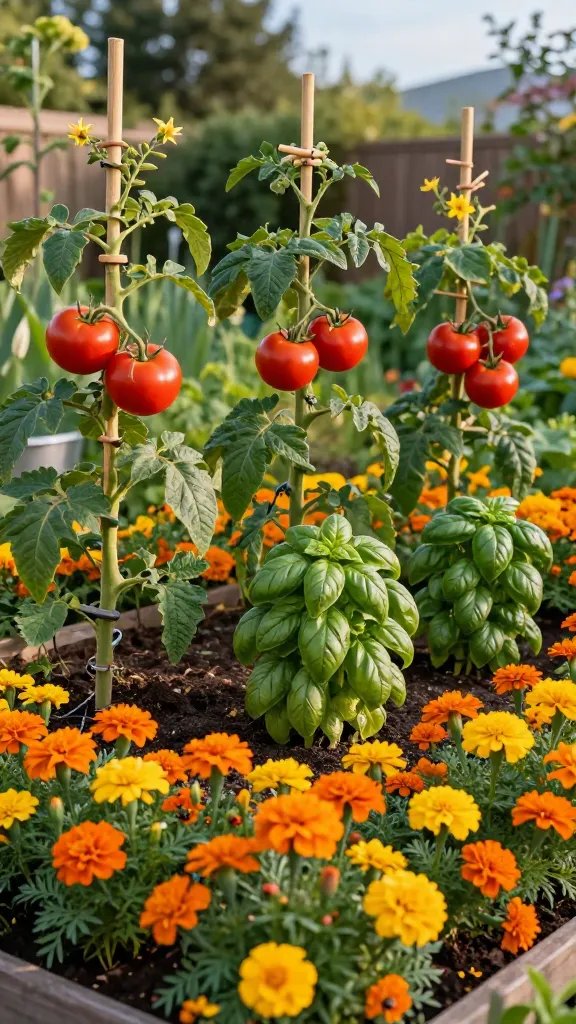
If you want a garden that practically cheers you on, start here. Tomatoes bring lycopene-packed fruit, basil adds brain-friendly aroma and antioxidants, and marigolds work crowd control on nematodes and annoying leaf pests. It’s a flavor fiesta with built-in security.
Key Points
- Tomatoes + basil: Better flavor and stronger growth when planted close.
- Marigolds: Tagetes patula helps suppress soil nematodes and draws in predator bugs.
- Airflow is everything: Don’t cram plants; space tomatoes 18–24 inches apart.
Plant marigolds at the row edges or every third tomato plant. Basil fits between tomatoes, benefiting from partial shade as summer heats up. Stake or trellis tomatoes—your future self will thank you during harvest chaos.
Care & Harvest
- Pinch basil tips often to prevent bolting and to boost leaf growth.
- Remove tomato suckers for better airflow and faster ripening.
- Deadhead marigolds to keep blooms coming and pests guessing.
Use this trio when you want maximum flavor, fewer pests, and a salad you can brag about. Seriously, the synergy tastes like victory.
3. Kale + Garlic + Calendula: Morning Greens With Built-In Bodyguards
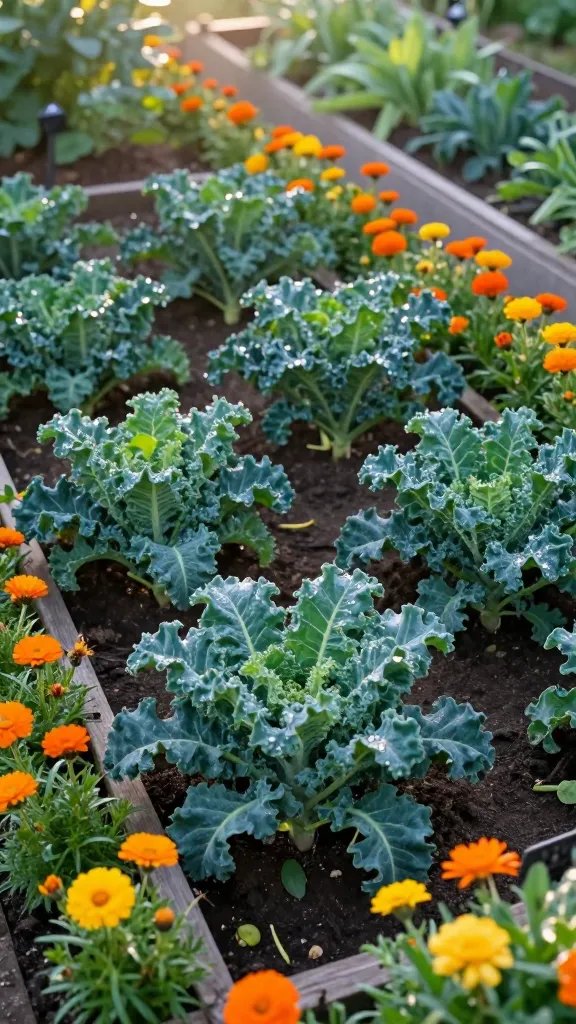
Kale brings steady, energizing greens that love cool weather. Garlic deters aphids and cabbage loopers with its sulfurous compounds, while calendula attracts beneficials and gives you edible petals for tea and salads. Together, they form a nutrient-packed, low-drama bed that just keeps giving.
How To Plant
- Spacing: Kale 12–18 inches apart; tuck garlic cloves 6 inches from kale stems.
- Calendula rhythm: Dot plants every 1–2 feet along the perimeter for pollinator traffic.
- Timing: Plant garlic in fall, kale in early spring, calendula once frost risk passes.
Calendula blooms lure lacewings and hoverflies that snack on aphids. Garlic builds soil health over time, and you can harvest scapes in late spring for a bonus stir-fry moment.
Maintenance
- Mulch heavily to keep kale sweet and tender.
- Pick outer kale leaves regularly to encourage new growth.
- Deadhead calendula to keep flowers coming; save petals for tea.
Choose this combo for cool-season energy: smoothies, sautés, and teas that support steady focus without the jitters. FYI, it thrives in raised beds and balcony boxes too.
4. Blueberries + Thyme + Bee Balm: Antioxidant Alley With Pollinator Party Vibes
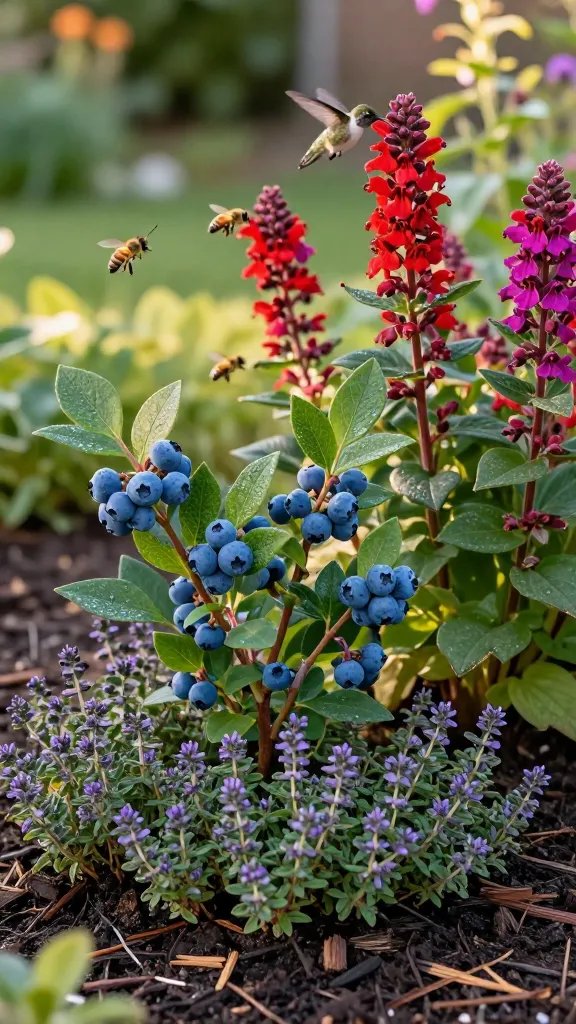
Blueberries offer antioxidant-rich fruit that supports stamina and recovery. Thyme forms a living mulch that keeps weeds down and boosts soil life, while bee balm (Monarda) brings hummingbirds and bees that supercharge blueberry yields. It’s a beautiful tangle of color, flavor, and buzzing energy.
Soil and Setup
- Acidic soil: Blueberries want pH 4.5–5.5. Amend with peat-free acidic compost and pine fines.
- Companion spacing: Plant thyme as a groundcover around the dripline; place bee balm 2–3 feet away.
- Moisture: Keep soil consistently damp but not soggy; use pine needle mulch.
Bee balm’s tubular flowers draw pollinators that hop from blossom to blossom, boosting fruit set. Thyme’s low growth protects shallow blueberry roots and subtly repels pests.
Variety Notes
- Blueberries: Pair two different cultivars (e.g., ‘Bluecrop’ and ‘Jersey’) for better yield.
- Thyme: ‘Creeping’ types fill space without suffocating roots.
- Bee Balm: Choose mildew-resistant varieties (like ‘Jacob Cline’) and give good airflow.
Use this trio if you love breakfast bowls, trail mix, or freezer smoothies. It turns a normal bed into a pollinator magnet and an antioxidant powerhouse—win-win.
5. Swiss Chard + Nasturtiums + Borage: Color, Courage, And Serious Snackability
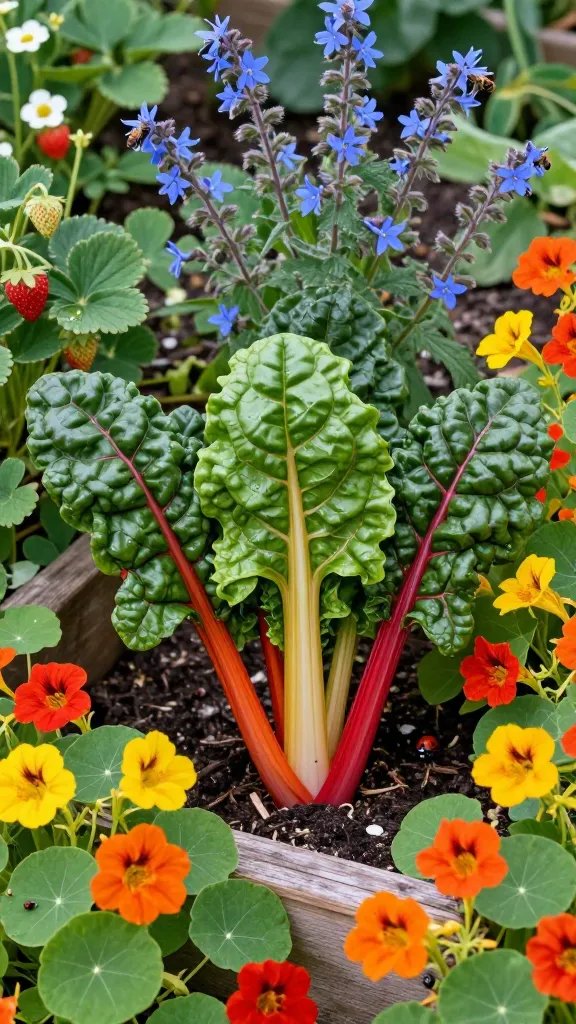
This combo looks like a party and acts like a bodyguard. Swiss chard delivers mineral-rich leaves and crunchy stems, nasturtiums lure aphids away and offer peppery edible flowers, and borage invites bees while improving strawberry neighbors if you plant them nearby. It’s edible landscaping that actually earns its keep.
Planting Layout
- Chard front and center: Space 10–12 inches apart for thick stalks and lush leaves.
- Nasturtiums trailing: Edge beds or hang them over raised bed sides to trap pests.
- Borage as a beacon: Place every 2–3 feet; it self-seeds politely if you harvest often.
Borage flowers taste faintly of cucumber and make refreshing ice cubes—yes, for your post-garden mocktail. Nasturtium leaves and flowers add a pepper kick to wraps and salads while acting as a sticky decoy for pests that would otherwise chew chard.
Care Cheats
- Harvest chard outer leaves regularly to keep plants vigorous.
- Thin borage if it shades out chard; it grows fast and tall.
- Pull and compost nasturtiums at season’s end to reduce pests overwintering.
Use this trio when you want visual drama, pollinator traffic, and easy snacks from one bed. Trust me, it makes quick garden-to-table dinners way too simple.
Ready to plant your power pairings? Start with one section, then stack another as you gain confidence. A little companion planting goes a long way, and your energized, buzzing garden will prove it every time you step outside.