
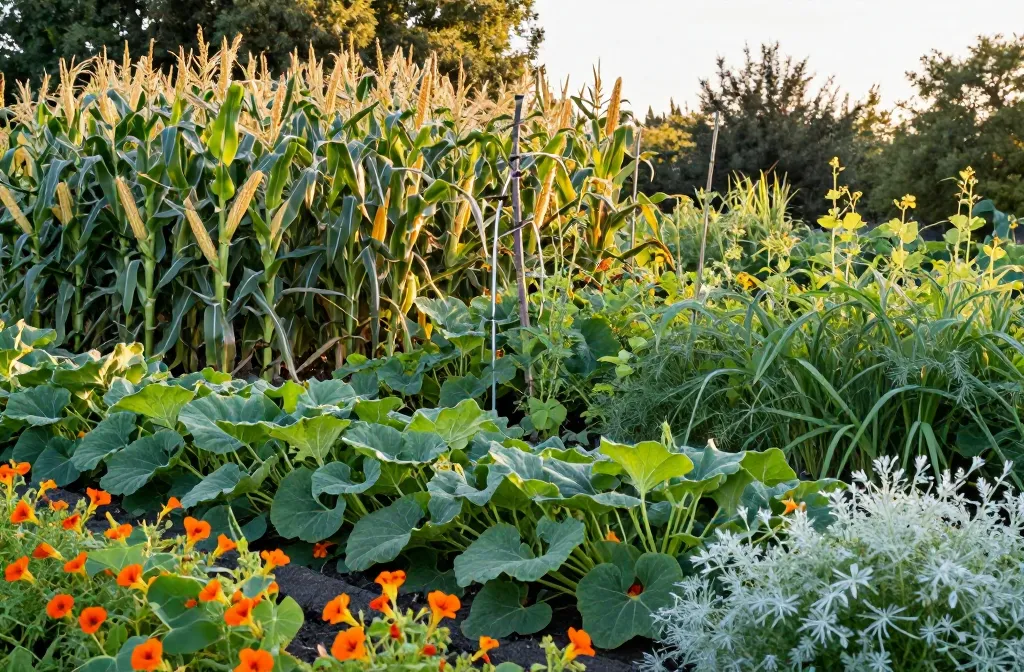
Want a garden that looks lush, grows more food, and basically takes care of itself? Stack your plants by height and let them team up. You’ll get shade where you need it, fewer pests, and way better yields. Bonus: it looks like you hired a landscape designer, even if you just Googled “what goes with corn.”
We’re building “vertical neighborhoods” with clever plant combos that play nice together. Think skyscrapers, mid-rise apartments, and cozy bungalows—just made of veggies, herbs, and flowers. Ready to layer like a pro? Let’s dig in.
1. The Classic Three Sisters, Upgraded
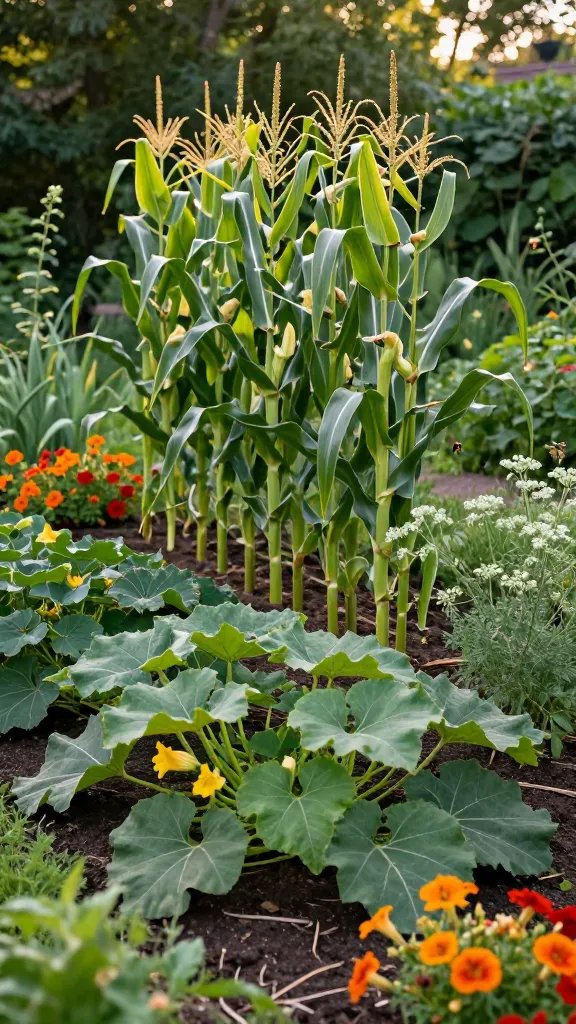
The OG of layered gardens still slaps. Corn, pole beans, and squash create a living scaffold, fertilizer station, and weed-blocker all in one. We’ll add flowers to turbocharge pollination and confuse pests.
Key Stack
- Tall (Canopy): Sweet corn
- Climbers (Vertical Fill): Pole beans twining up corn
- Groundcover (Mulch Layer): Winter or summer squash with big leaves
- Bonus Allies: Nasturtiums at edges for aphid diversion; dill nearby for beneficial insects
Corn gives the beans a ladder. Beans feed nitrogen back to the soil. Squash leaves shade out weeds and keep moisture in. Nasturtiums add color and “hey, aphids, snack here instead” vibes.
Tips
- Plant corn in blocks, not rows, for better pollination.
- Sow beans 2 weeks after corn so they don’t yank down baby stalks.
- Choose bushier squash for small beds; vining types for larger patches.
Use this when you want high output in a tight space and you’re okay with a wild, jungle look. It’s low-maintenance once established—seriously.
2. Sunflower Teepees With Cucumbers And Basil
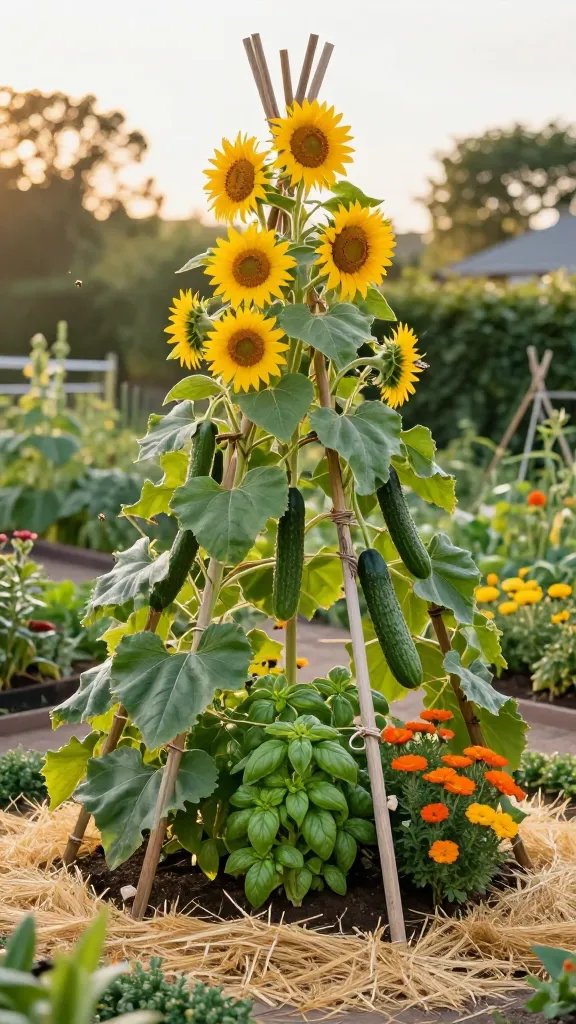
Turn your bed into a DIY trellis with towering sunflowers. Cucumbers climb, stay clean, and ripen evenly while basil fills the sunny gaps. It’s efficient, cheerful, and snack-ready.
Key Stack
- Tall (Canopy + Trellis): Mammoth sunflowers
- Climbers: Cucumbers trained up sunflower stalks (add twine if needed)
- Mid-Low Fill: Basil and calendula
- Groundcover: Straw mulch or low thyme along paths
Sunflowers act like living poles. Cucumbers appreciate the lift—less powdery mildew, straighter fruits. Basil deters pests and boosts pollinator traffic, while calendula lures beneficials and gives petals for the kitchen.
Planting Notes
- Sow sunflowers first; transplant cucumbers after stalks reach 2 feet.
- Pick a sunny, wind-sheltered spot—tall stalks can topple in gales.
- Water deeply; cucumbers get thirsty on vertical climbs.
This setup shines in kid-friendly gardens and anywhere you want height without buying trellises. FYI: the sunflower seed harvest is a nice bonus.
3. Tomato Skyscrapers With Lettuce, Onions, And Marigolds
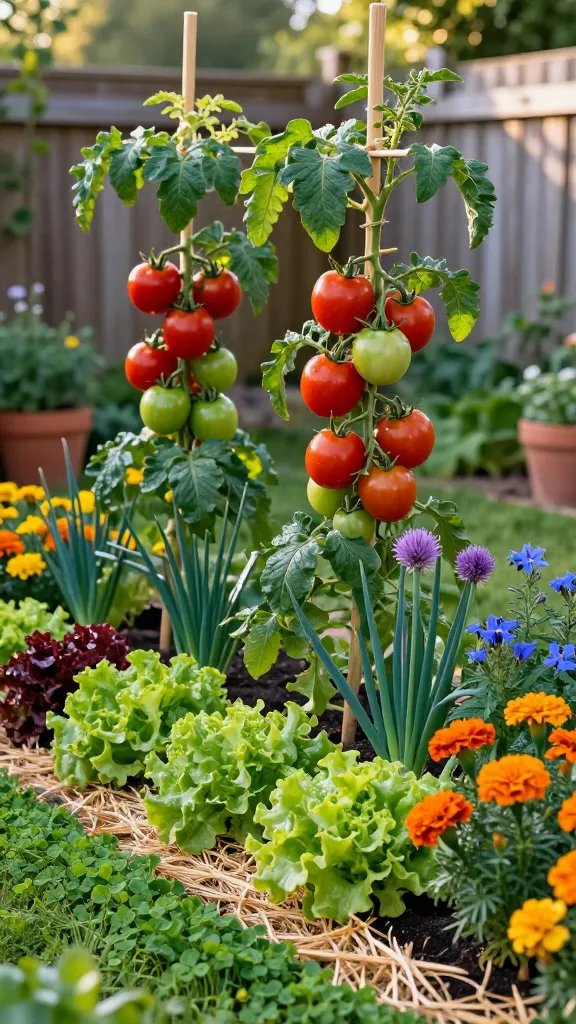
Tomatoes crave airflow and good neighbors. Stack them with shallow-rooted lettuce and alliums, then throw in marigolds for a pest-repelling glow-up. It’s tidy, productive, and ridiculously photogenic.
Key Stack
- Tall (Canopy): Indeterminate tomatoes on stakes or cages
- Mid (Pest Pressure Relief): Marigolds and borage
- Low (Root Zones That Don’t Compete): Leaf lettuce, green onions, chives
- Groundcover: Straw or living mulch like clover (trim often)
Tomatoes tower and cast dappled shade—perfect for lettuce that bolts in heat. Onions and chives help deter pests. Borage draws pollinators and helps tomatoes set more fruit. Marigolds? They look cute and tell nematodes to take a hike.
Care Tips
- Space tomatoes for airflow; prune lower leaves to prevent splash-back.
- Succession plant lettuce every 2-3 weeks under the canopy.
- Water at the base to avoid foliar diseases.
Use this when you want steady salad fixings and juicy tomatoes without babying your garden daily. IMO, it’s the ultimate small-space combo.
4. Corn-Free Trellis Towers: Okra, Malabar Spinach, And Sweet Potatoes
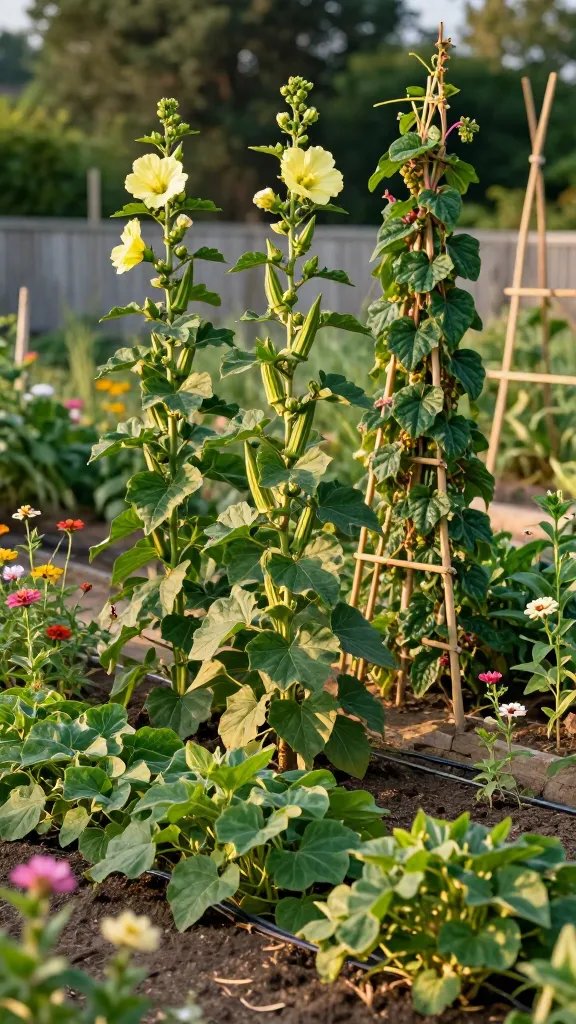
No corn? No problem. Okra brings height, Malabar spinach climbs, and sweet potatoes sprawl like living mulch. It’s heat-loving, drought-tolerant, and made for long summers.
Key Stack
- Tall (Canopy + Structure): Okra (choose productive varieties like ‘Clemson Spineless’)
- Climbers: Malabar spinach or hyacinth bean up simple bamboo teepees
- Groundcover: Sweet potato vines to lock in moisture and smother weeds
- Pollinator Boosters: Zinnias or cosmos in sunny gaps
Okra’s vertical habit creates dappled shade for climbers that love heat. Malabar spinach thrives when other greens faint. Sweet potatoes carpet the soil, reduce evaporation, and give you a bonus tuber harvest. Zinnias throw a pollinator party all season.
Setup And Timing
- Plant okra after soil warms; it sulks in cold soil.
- Direct sow Malabar or transplant once temps stay reliably warm.
- Start slips of sweet potato around the same time—give them room to roam.
Perfect for hot, humid climates where lettuce cries and tomatoes struggle. It’s low-fuss and seriously pretty—those Malabar vines glow.
5. Orchard-Style Layers: Dwarf Fruit Trees With Berries, Herbs, And Flowers
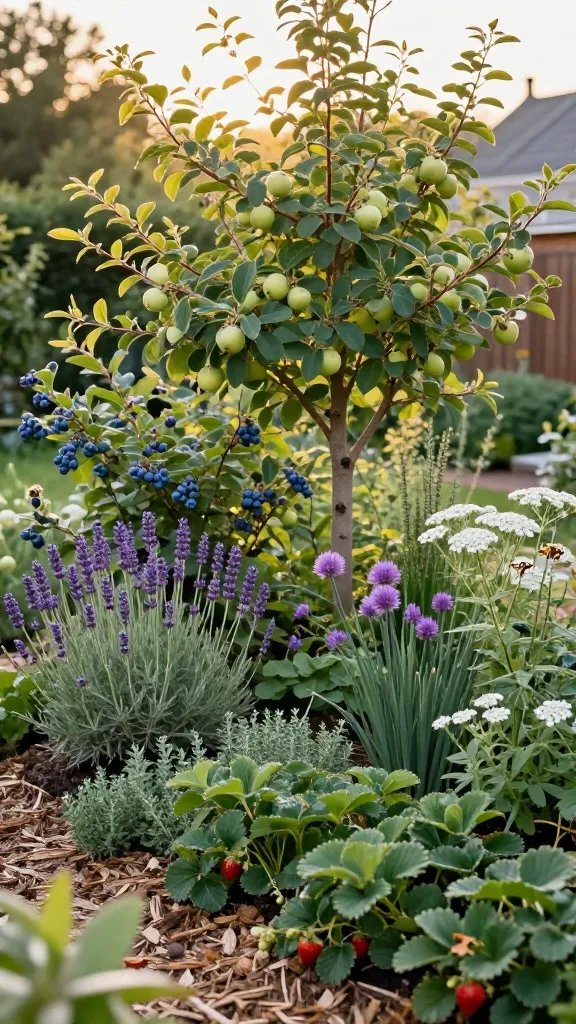
Bring the forest to your backyard with a fruit tree “guild.” Stack a dwarf tree, berry shrubs, aromatic herbs, and flowering companions. You get fruit, pollinators, fewer weeds, and a bed that looks intentional.
Key Stack
- Tall (Mini-Canopy): Dwarf apple, peach, or plum
- Mid (Shrub Layer): Blueberries, currants, or gooseberries (choose acidic soil if needed)
- Herb Layer: Lavender, oregano, thyme, chives, and yarrow
- Groundcover: Strawberry, creeping thyme, or white clover for living mulch
- Nurse Plants: Comfrey at the drip line for chop-and-drop mulch
The tree casts seasonal shade and anchors the bed. Berries fill in the mid-story and share pollinators. Aromatic herbs confuse pests and invite beneficial insects. Groundcovers protect soil and reduce watering needs. Comfrey mines nutrients and feeds your system when you cut it back.
Design And Care
- Keep the area right at the trunk clear for airflow; mulch beyond the flare.
- Plant herbs in sun-facing positions; tuck strawberries where they can run.
- Add a shallow basin around the drip line for efficient deep watering.
Use this when you want perennial abundance with minimal annual replanting. It’s a set-and-enjoy scenario that pays you back for years, trust me.
12 Dimensional Combinations At A Glance
- Three Sisters Core: Corn + Pole Beans + Squash
- Three Sisters Plus: Add Nasturtium + Dill
- Sunflower Trellis: Sunflower + Cucumbers
- Sunflower Support Cast: Basil + Calendula
- Tomato Tower: Indeterminate Tomato + Marigold
- Tomato Salad Bed: Lettuce + Green Onions + Chives
- Tomato Pollinator Boost: Borage
- Heat-Layer Combo: Okra + Malabar Spinach
- Soil Blanket: Sweet Potato Groundcover
- Orchard Canopy: Dwarf Fruit Tree
- Berry Mid-Story: Blueberry/Currant
- Herb And Groundcover Guild: Lavender/Oregano/Thyme + Strawberry/Clover
Mix and match within these stacks to suit your climate, sunlight, and space. The height logic stays the same—even when plant choices shift.
General Layering Rules That Save Your Sanity
- Think in sun slices: Tall plants on the north side in the Northern Hemisphere so they don’t shade everything out.
- Pair roots that don’t fight: Deep-rooted next to shallow-rooted. Everyone drinks, nobody argues.
- Use living mulch: Low growers reduce watering and tamp down weeds.
- Stage the planting: Put in the tall structures first, climbers second, groundcovers last.
- Invite allies: Flowers that bloom across the season keep beneficial insects on payroll.
- Harvest with pruners, not guilt: Thin crowded spots hard; lush growth comes back fast.
Soil And Water Hacks
- Compost under the canopy layers; top with mulch to lock in moisture.
- Drip irrigation or soaker hoses keep foliage dry and disease risk low.
- Add a handful of rock phosphate or bone meal at fruiting plantings if your soil tests low in P.
Healthy soil makes every combo better. Feed the soil first, then the plants. You’ll see the difference in both vigor and flavor.
Pest And Disease Notes
- Rotate families yearly: tomatoes/peppers/eggplant together; squash/cukes together; corn separate.
- Use sacrificial plants: nasturtiums for aphids, radishes for flea beetles.
- Keep airflow sacred: prune tall plants and space thoughtfully to avoid powdery mildew and blight.
Prevention beats treatment. A little spacing and smart companions go a long way, seriously.
Small-Space Adaptations
- Use dwarf varieties and compact vining types in containers with teepees.
- Swap sweet potato groundcover for creeping thyme in planters.
- Train cucumbers and beans up balcony railings with soft ties.
You can layer in a 2×4 bed or a set of pots. The concept scales down beautifully.
Ready to grow a garden that practically runs itself? Start with one layered combo, watch how it behaves, then expand. You’ll get more harvests, cooler microclimates, and a backyard that flexes all season. Go stack that greenery and enjoy the jungle you built.