Key Takeaways
- Match plants to your specific light conditions – south/west walls for sun-lovers, north/east for shade plants
- Consider the growth habit – trailing plants for top levels, climbers for vertical structures, compact plants for pockets
- Group plants with similar water and nutrient needs for easier maintenance
- Indoor vertical gardens require different plant selections than outdoor installations
- Plan for seasonal changes to maintain year-round visual interest and productivity
- Edible vertical gardens work best with vining vegetables and compact herbs
- Structure strength must support mature plant weight, especially for heavy fruiting plants
Introduction to Vertical Gardening
Vertical gardening has changed how we grow plants in small spaces. Whether you have a tiny balcony, a small yard, or just want to make the most of your gardening space, vertical gardens offer a smart solution that looks great and works well.
The secret to a successful vertical garden isn’t just about the structure you choose, but also about picking the right plants. Good plant selection can transform your vertical garden from just okay to really amazing. When you choose premium vertical garden stands, you’ll want to make sure the plants you select will thrive in that environment.
Vertical gardens do more than save space. They improve air flow around plants, which means fewer pest and disease problems. They also make harvesting and care easier since plants are at a comfortable height. Plus, they can act as privacy screens, help control temperature, and even reduce noise in urban areas.
Understanding Your Vertical Garden Environment
Before you pick plants, you need to understand the conditions of your vertical garden location. This step will help you choose plants that will grow well in your space.
Light Conditions
Vertical gardens often get different light patterns than regular horizontal gardens. The direction your vertical structure faces will determine how much sunlight reaches your plants throughout the day.
- Full sun locations (6+ hours of direct sunlight): South or west-facing walls get the most sunlight and are perfect for sun-loving plants like tomatoes, peppers, and many flowering plants.
- Partial sun/shade (3-6 hours of direct sunlight): East-facing walls or partially shaded areas work well for plants that like moderate light, such as leafy greens, ferns, and some herbs.
- Full shade (less than 3 hours of direct sunlight): North-facing walls or heavily shaded areas need shade-tolerant plants like certain ferns, mosses, and some tropical plants.
Remember that light conditions can change with the seasons, especially in areas with distinct seasons. A spot that’s sunny in winter might be shaded in summer because of tree leaves or changing sun angles. The intensity and duration of light also varies significantly between summer and winter months, which may necessitate seasonal plant rotations or selecting varieties that can adapt to changing light conditions throughout the year.
Indoor vs. Outdoor Considerations
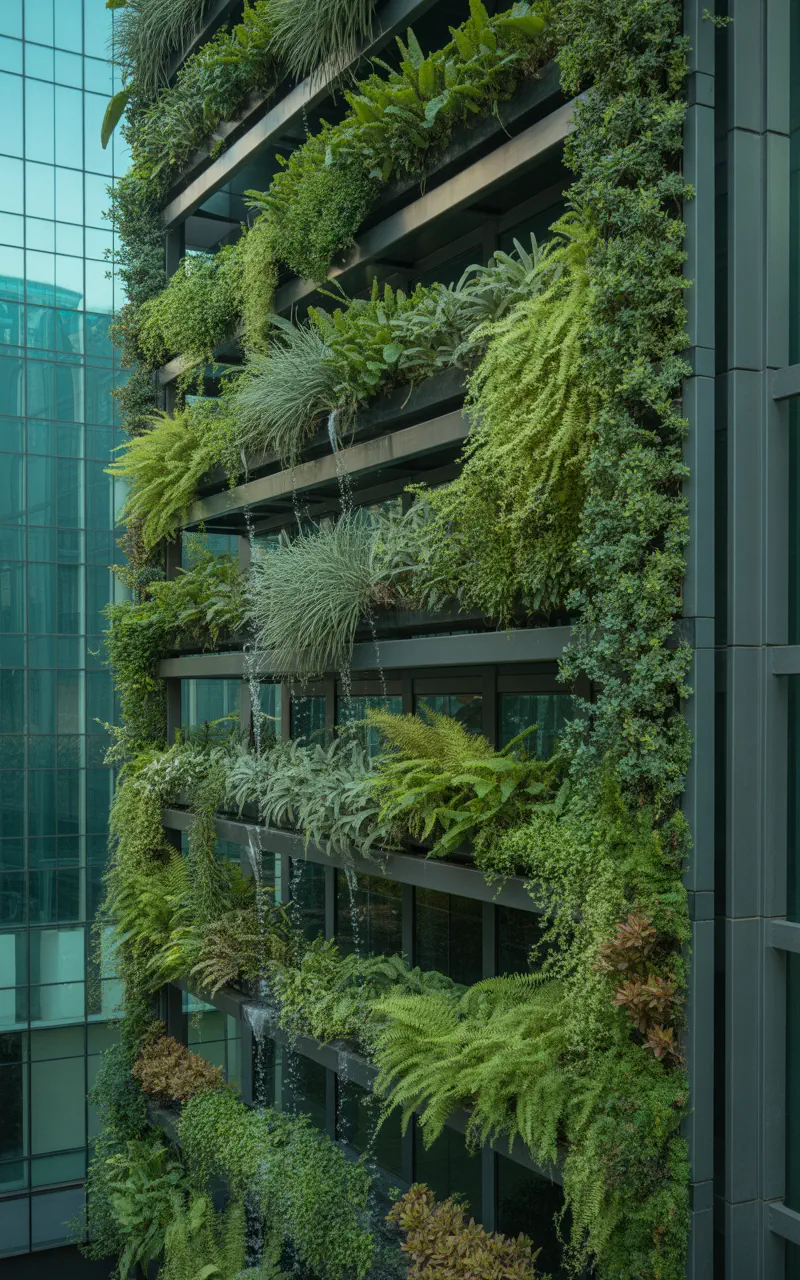
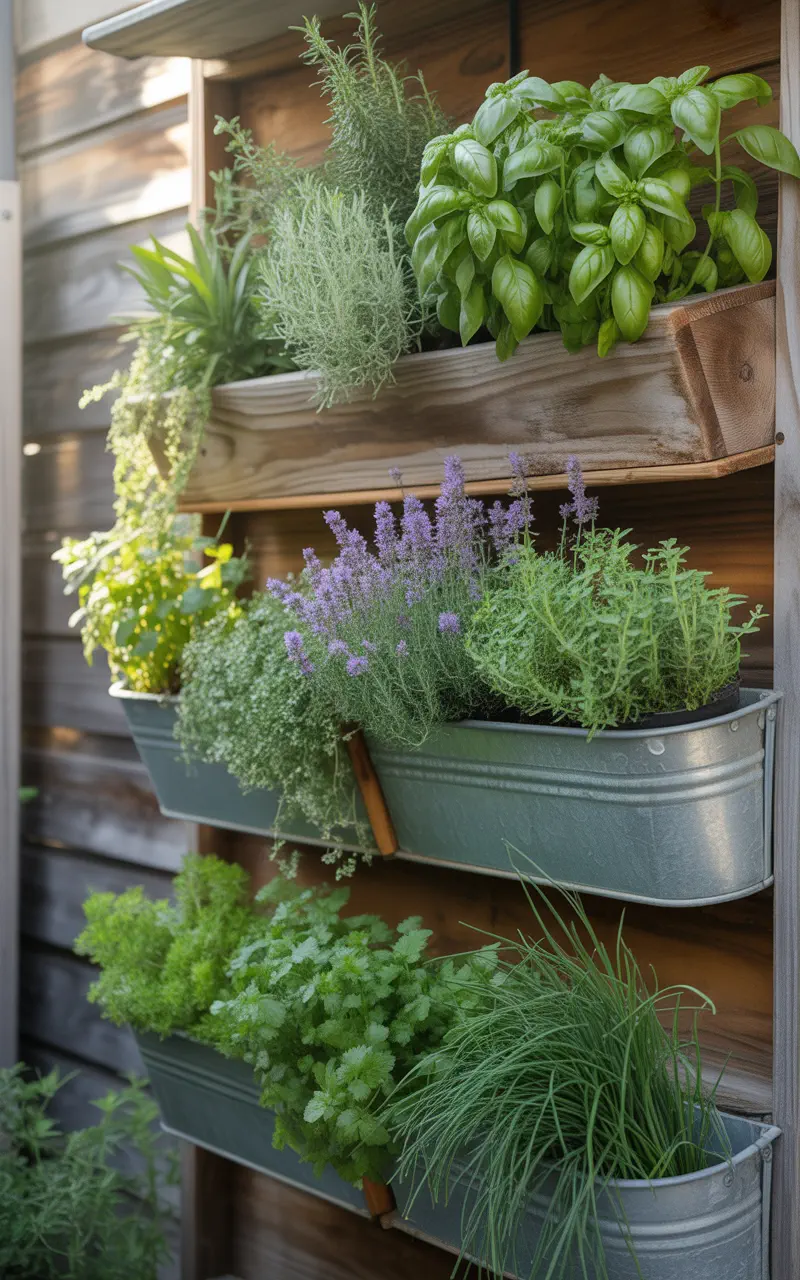
Indoor and outdoor vertical gardens have different environments that need different plant selections:
Indoor Vertical Gardens:
- Temperature is usually more stable but often warmer than outdoor environments
- Humidity levels might be lower (except in bathrooms or kitchens) requiring misting or humidifiers
- Light is typically less intense and comes from fewer directions, often requiring supplemental lighting
- Air circulation may be reduced, necessitating occasional fans or proper spacing
- Protection from extreme weather conditions but may face challenges from heating and cooling systems
- Limited exposure to beneficial insects and natural pollinators
- Often requires more frequent manual watering as plants don’t receive natural rainfall
Outdoor Vertical Gardens:
- Experience natural temperature changes and seasonal shifts that can stress some plants
- Subject to wind, rain, and potentially extreme weather including frost, heat waves, and storms
- Receive natural rainfall (though vertical structures may still need extra watering due to runoff)
- Better natural air circulation which helps prevent fungal diseases
- Possibility of interaction with local wildlife and insects, both beneficial and pest species
- May require seasonal plant changes or protective measures during extreme weather
- Often experience more dramatic light changes throughout the year
Urban apartment gardening requires special attention to indoor conditions, while outdoor vertical gardens need to account for your local climate and seasonal changes. Understanding your local microclimate and how it affects your vertical garden space is crucial for selecting plants that will not just survive but truly thrive in your specific conditions.
Selecting Plants Based on Growth Habits
The way plants grow plays a big role in how well they’ll do in vertical gardens. Some plants naturally grow upward, while others may need more training or support. Understanding these natural growth patterns will help you design a more successful and lower-maintenance vertical garden system.
Climbing and Vining Plants
These plants are natural vertical garden candidates, as they’ve evolved to grow upward using various methods:
Tendril Climbers: Plants like peas, cucumbers, and passion flowers produce special structures called tendrils that wrap around supports. These delicate appendages actively search for something to grasp, making them excellent choices for trellises with thin wires, strings, or mesh patterns. The tendrils need something appropriately sized to grip – typically structures less than 1/4 inch in diameter work best.
Twining Climbers: Plants such as beans, morning glories, and honeysuckle climb by twisting their stems or leaf stalks around supports. These plants spiral upward around structures and generally prefer slightly thicker supports than tendril climbers. They work exceptionally well on poles, sturdy stakes, and trellises with wider slats. The twining action is often clockwise or counterclockwise depending on the species, a fascinating adaptation worth observing.
Clinging Climbers: Plants like ivy and climbing hydrangea produce aerial roots or sticky pads that attach directly to surfaces. These specialized attachment structures allow them to climb flat walls, fences, and other vertical surfaces without additional support systems. However, be cautious when using these on building walls as they can potentially damage some surfaces over time by working into small cracks or removing paint.
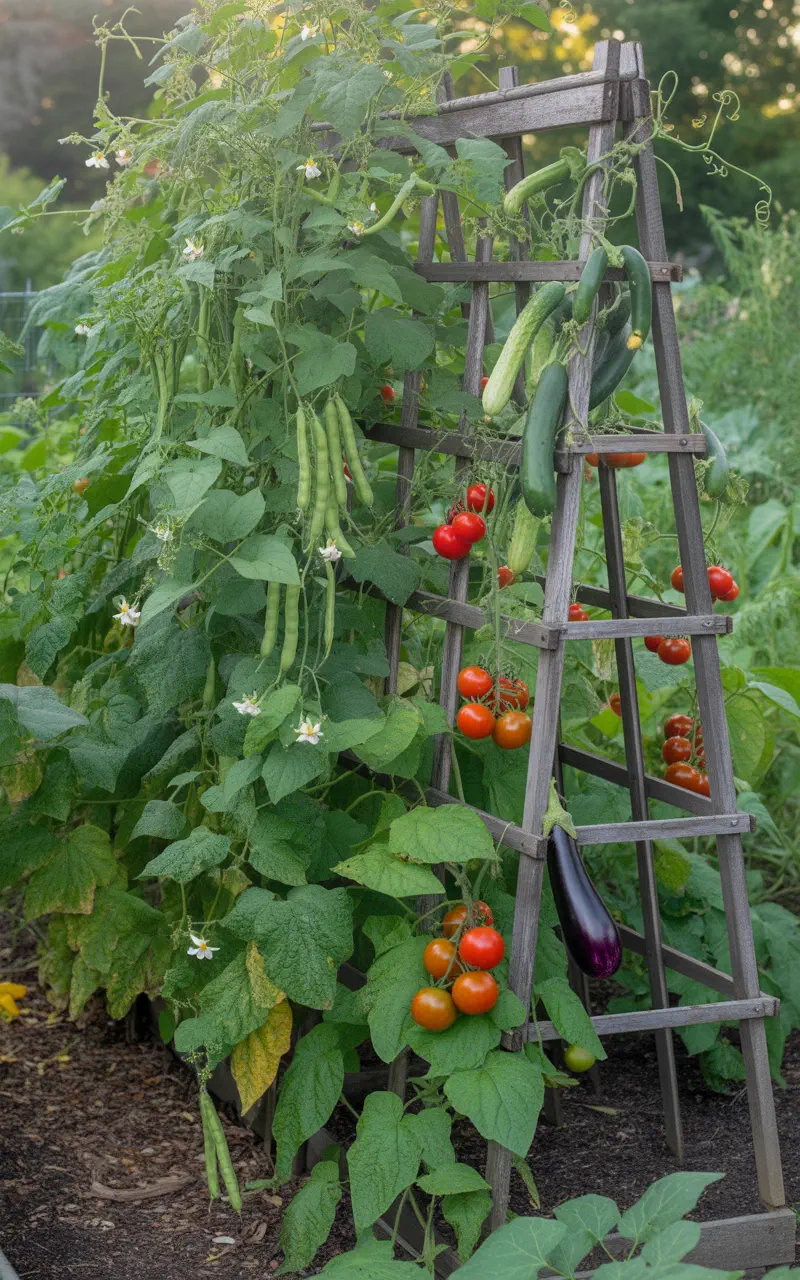
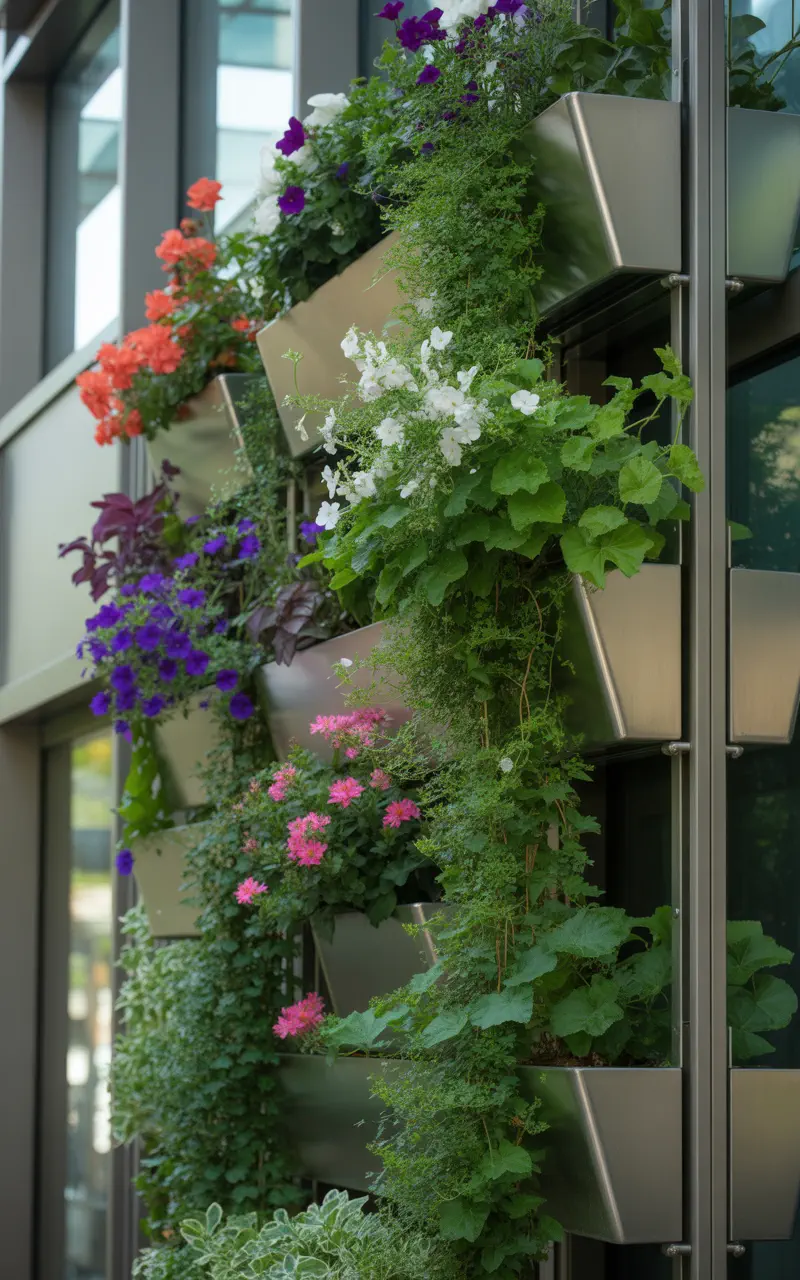
Climbing plants often need specific types of supports based on how they climb. For instance, tendril climbers need thin supports to grasp, while twining plants prefer larger diameter poles or trellises. When planning your vertical vegetable garden, matching the plant’s climbing style to the right support is essential for success. The weight of mature plants, especially when bearing fruit, should also be considered when designing support structures to ensure they remain stable throughout the growing season.
Trailing and Cascading Plants
These plants naturally grow downward, making them perfect for the tops of vertical gardens, hanging baskets, or wall-mounted planters:
- Trailing herbs like creeping thyme and prostrate rosemary, which not only look beautiful cascading down but also release wonderful aromas when brushed against
- Ornamental sweet potato vine with its heart-shaped leaves in vibrant greens, purples, or variegated patterns that can grow several feet long
- String of pearls and other trailing succulents that require minimal water and create distinctive textural elements with their unique shapes
- Trailing petunias and calibrachoa which produce abundant flowers throughout the growing season and come in countless color options
- Creeping Jenny and other ground covers that form dense mats of foliage, effectively covering soil and preventing erosion in vertical systems
- Dichondra ‘Silver Falls’ with its small, silver-dollar shaped leaves that create a stunning silver waterfall effect
- Trailing varieties of ivy that offer evergreen structure and interesting leaf patterns throughout the year
Trailing plants create a waterfall effect when placed at the top of vertical structures, softening the edges and adding visual interest. They’re particularly effective in tiered vertical garden stands where they can cascade from one level to the next. The dramatic draping habit of these plants adds dimension to vertical gardens and helps create a lush, established appearance even in relatively new installations.
Edible Plants for Vertical Gardens
Growing food vertically is one of the most rewarding uses of vertical gardening. With careful plant selection, you can create a productive garden even in limited space. Vertical edible gardens not only maximize harvest potential but also improve air circulation around fruits and vegetables, reducing disease problems and making harvesting significantly easier.
Vegetables That Thrive Vertically
Many vegetables naturally grow upward or can be trained to do so with proper support:
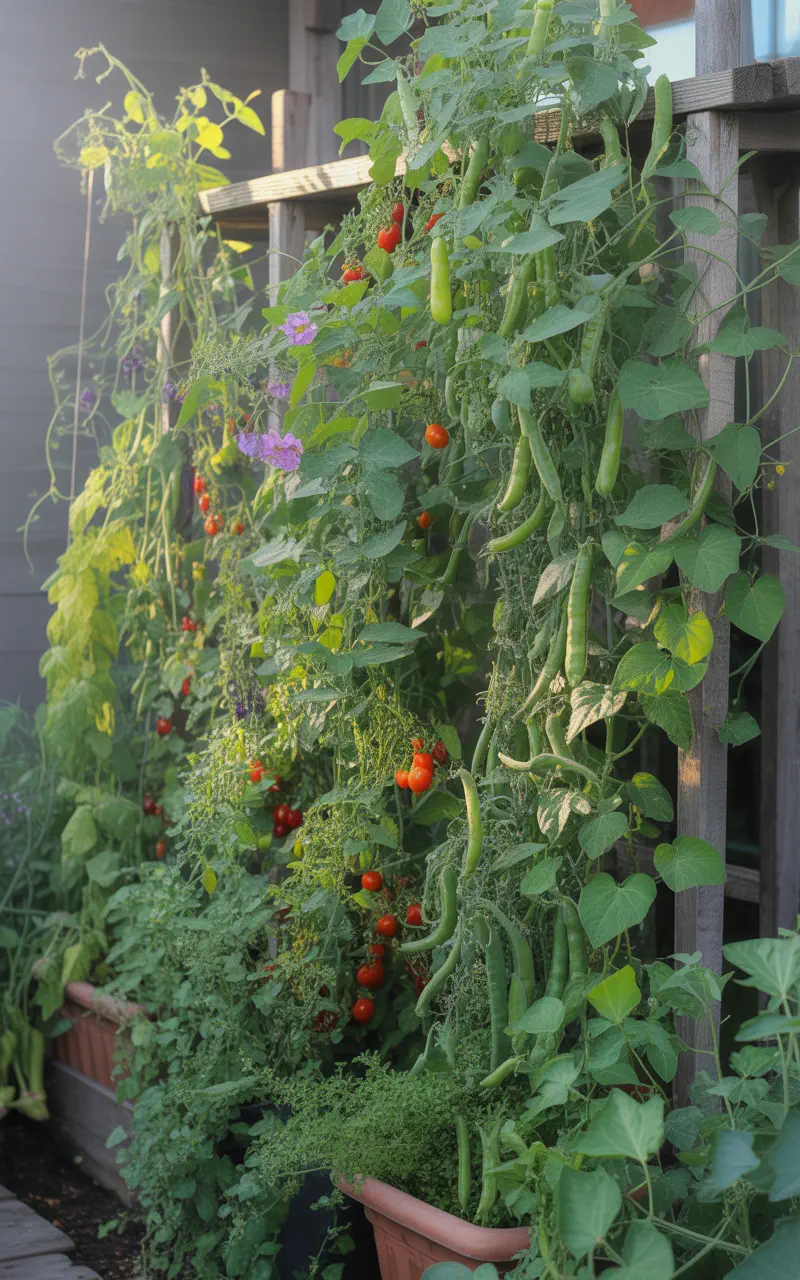
Tomatoes: Indeterminate (vining) varieties like ‘Sweet 100’, ‘Sun Gold’, and ‘Brandywine’ can grow 6-8 feet tall when properly supported. These varieties produce throughout the growing season rather than ripening all at once. Their continuous fruiting habit makes them ideal for vertical gardens where you want ongoing harvests. For best results, regularly remove suckers (side shoots) to maintain a manageable vine and direct energy to fruit production. Smaller-fruited varieties like cherry tomatoes are often easier to grow vertically than larger beefsteak types that may strain supports with their weight.
Cucumbers: Vining cucumbers like ‘Marketmore’, ‘Lemon’, and ‘Armenian’ readily climb trellises and produce straighter, cleaner fruits when grown vertically. They’re less likely to get disease and pests when kept off the ground. Vertical growing also makes harvesting much easier as fruits are visible and accessible. For vertical gardens, look specifically for varieties labeled as “climbing” or “vining” rather than “bush” cucumbers. Some varieties can reach 6-8 feet in height and benefit from regular harvesting to encourage continued production.
Beans and Peas: Pole varieties like ‘Kentucky Wonder’ beans and ‘Sugar Snap’ peas are natural climbers that produce over a longer period than bush varieties. They use vertical space efficiently and are very productive. A single pole bean plant can yield three times the harvest of a bush bean while using minimal ground space. These plants fix nitrogen in the soil, potentially benefiting neighboring plants in your vertical garden. Scarlet runner beans offer the dual benefit of edible beans and attractive red flowers that attract pollinators.
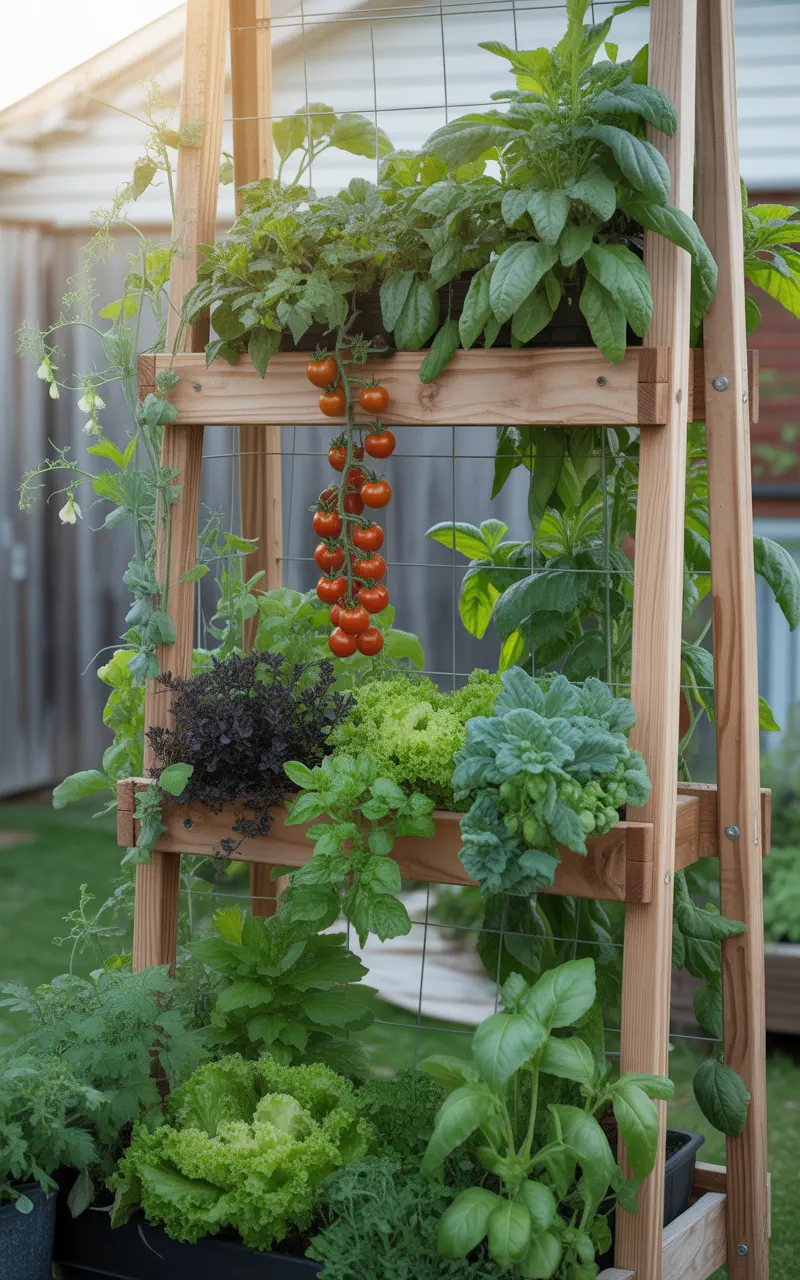
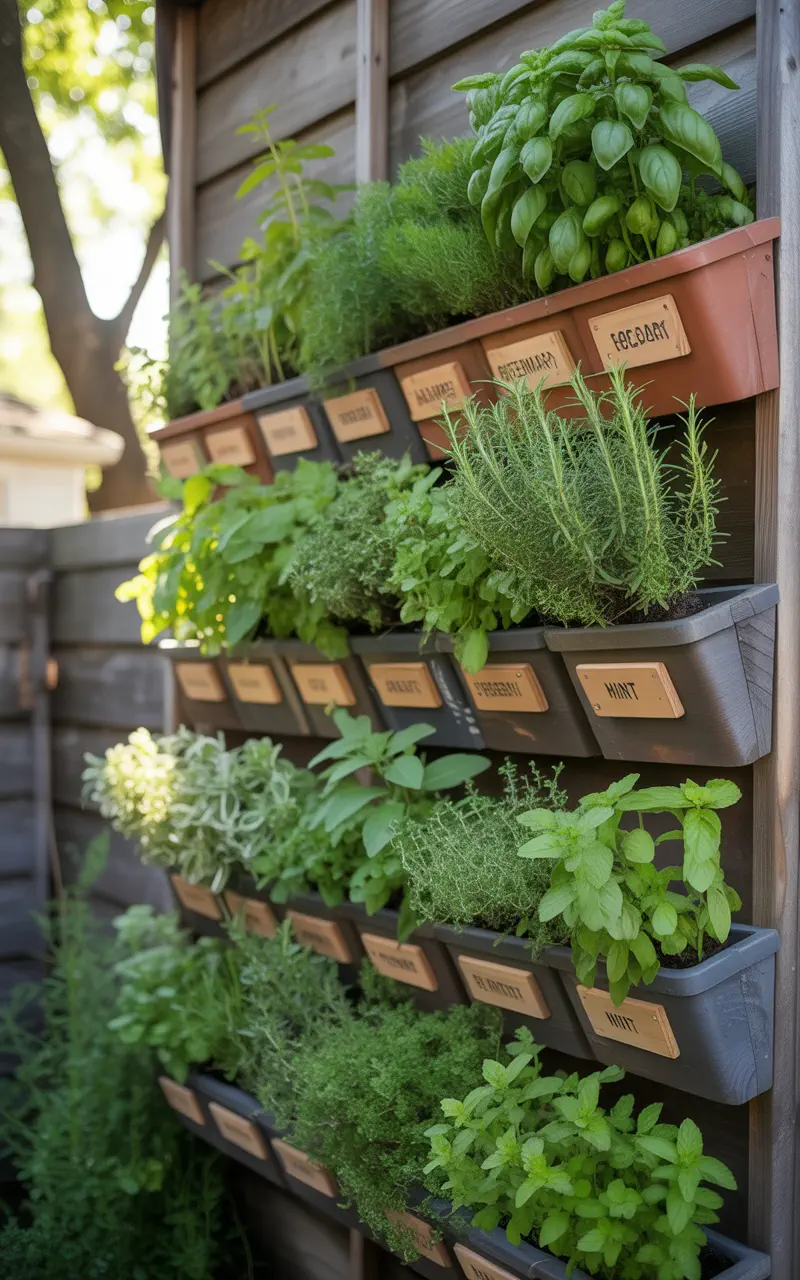
Herbs for Vertical Gardens
Herbs are ideal candidates for vertical gardens due to their compact size, nice smells, and the fact that you harvest them often. Many herbs actually produce stronger essential oils and more intense flavors when grown in the slightly stressed conditions that can occur in vertical gardens, particularly when watering is carefully managed.
Creating a vertical garden for herbs near your kitchen provides convenience and freshness for cooking. Many herbs also produce flowers that attract helpful insects, adding ecological value to your garden. The compact growth habit of most herbs makes them perfect for pocket-style vertical gardens, and their relatively shallow root systems mean they don’t require deep growing containers.
Ornamental Plants for Vertical Gardens
Ornamental vertical gardens can transform plain walls into living works of art. The right plant selection creates visual interest through color, texture, and seasonal change. These living tapestries can become focal points in both indoor and outdoor spaces, adding beauty while improving air quality and creating a sense of tranquility.
Flowering Plants for Color and Interest
Flowering plants add vibrant color and attract pollinators to your vertical garden:
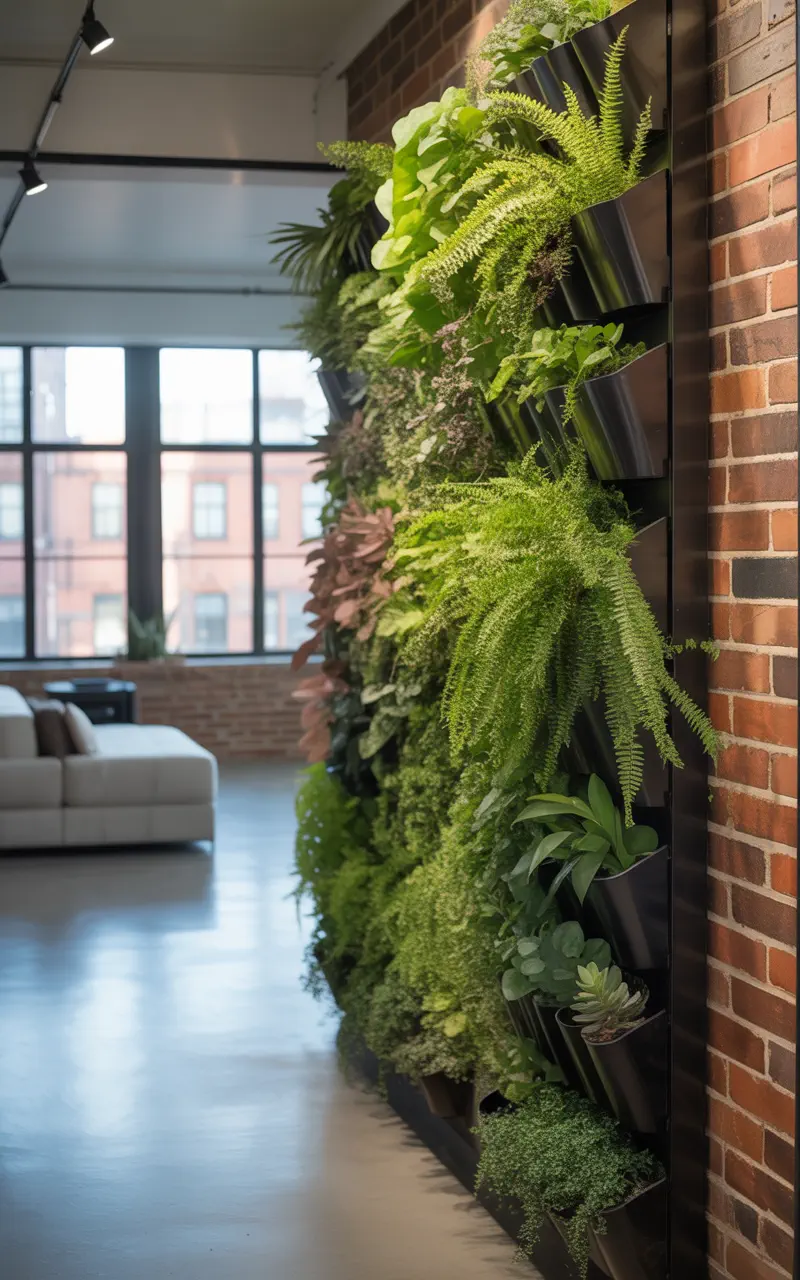
For indoor vertical gardens, flowering plants like peace lilies, anthuriums, and bromeliads can provide color even in lower light conditions. These plants are featured in many elegant vertical garden Singapore designs that thrive in tropical indoor environments. Their relatively low maintenance requirements and long-lasting blooms make them excellent choices for indoor living walls.
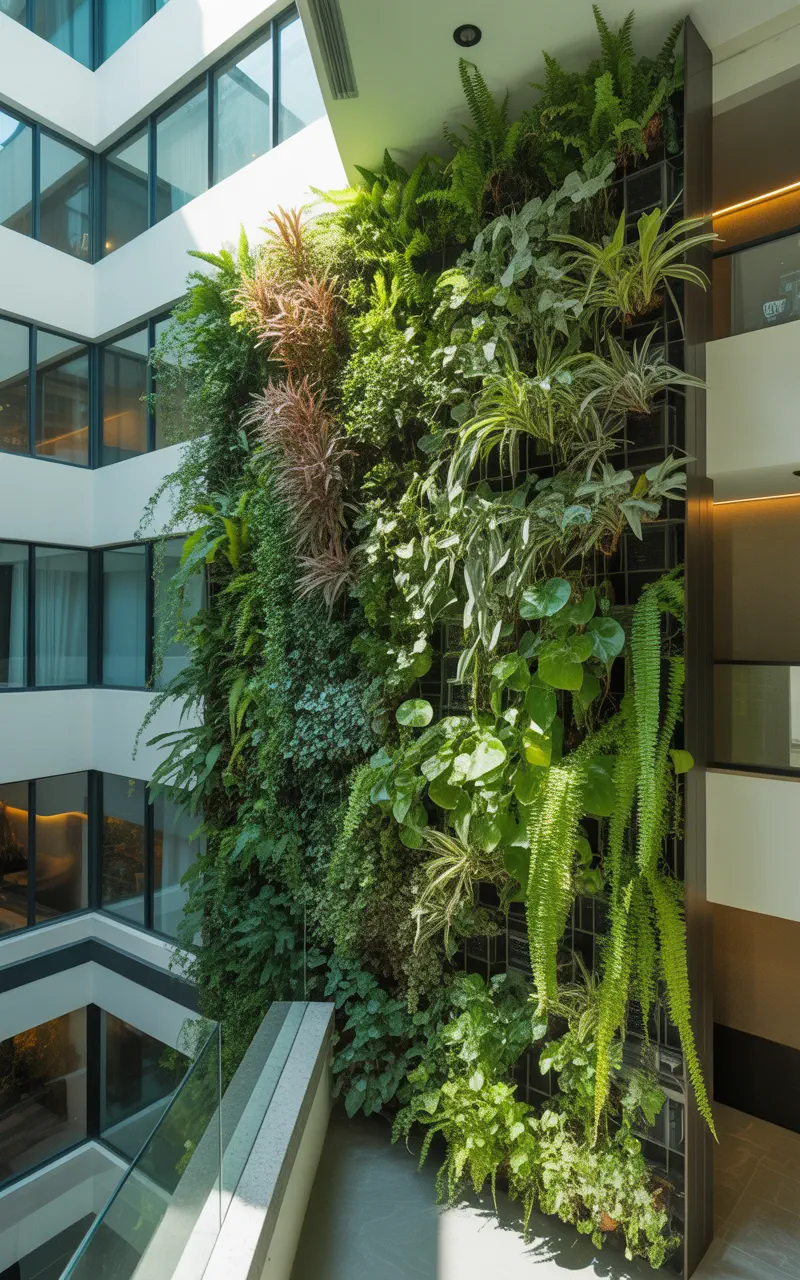
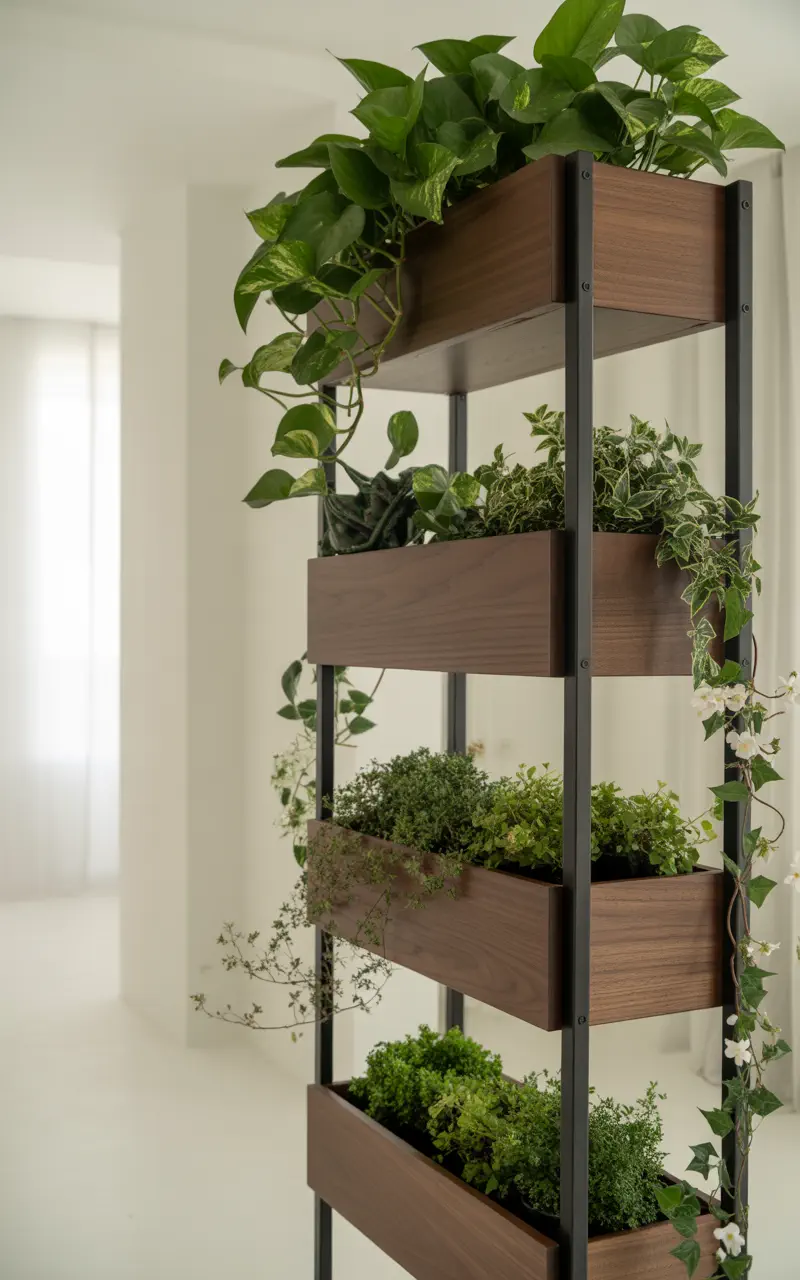
Foliage Plants for Texture and Structure
Plants with interesting foliage provide year-round interest and structure to vertical gardens:
Foliage plants often require less maintenance than flowering plants while providing consistent visual interest. They’re excellent for creating patterns and color blocks in living wall designs. When designing with foliage, consider contrasting fine-textured plants like ferns with bold-leaved specimens like caladiums for maximum visual impact. The interplay of different leaf shapes, sizes, and textures creates depth and interest even without flowers.
Indoor Vertical Garden Plant Selection
Indoor vertical gardens present unique opportunities and challenges compared to outdoor installations. Plant selection must account for indoor light levels, humidity, and temperature conditions. The controlled environment can allow for growing more tender species year-round, but also requires careful attention to providing appropriate growing conditions.
Low-Light Tolerant Plants
Many indoor locations don’t receive enough natural light for sun-loving plants. These species thrive in lower light conditions:
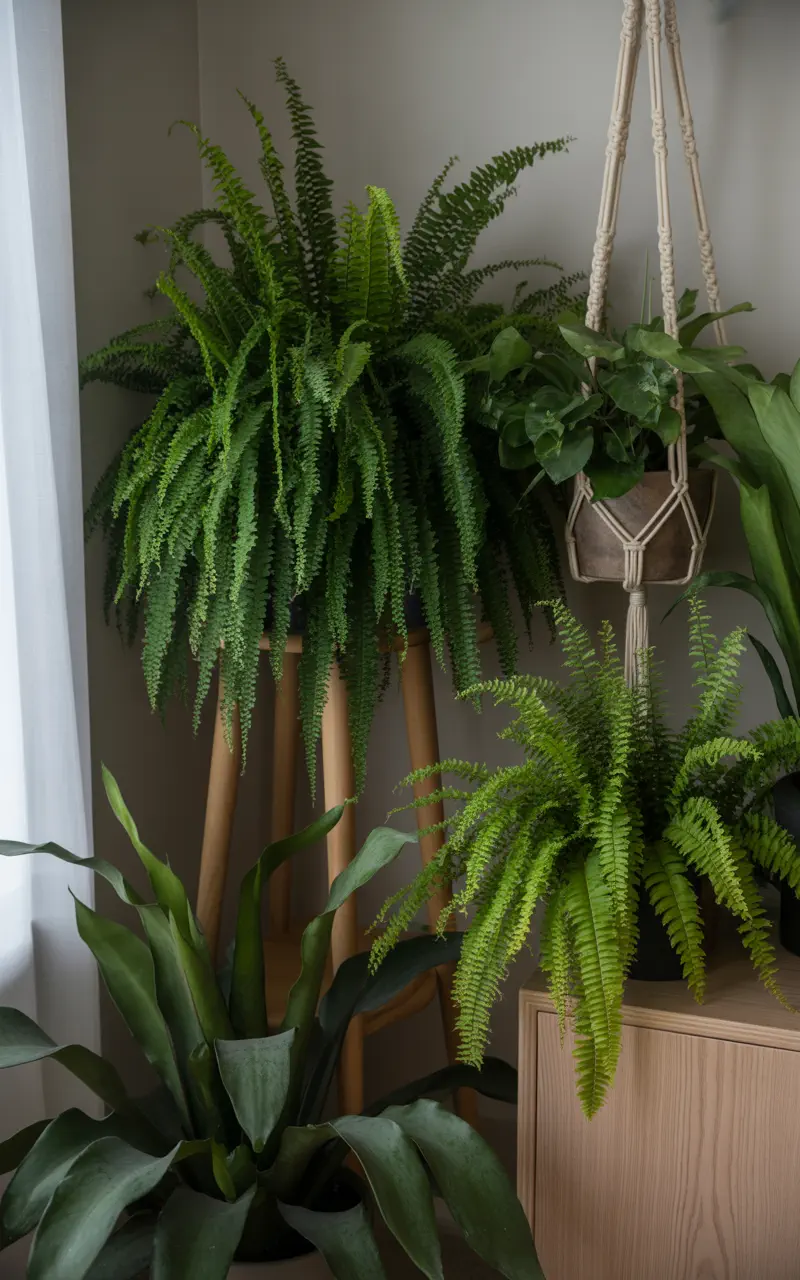
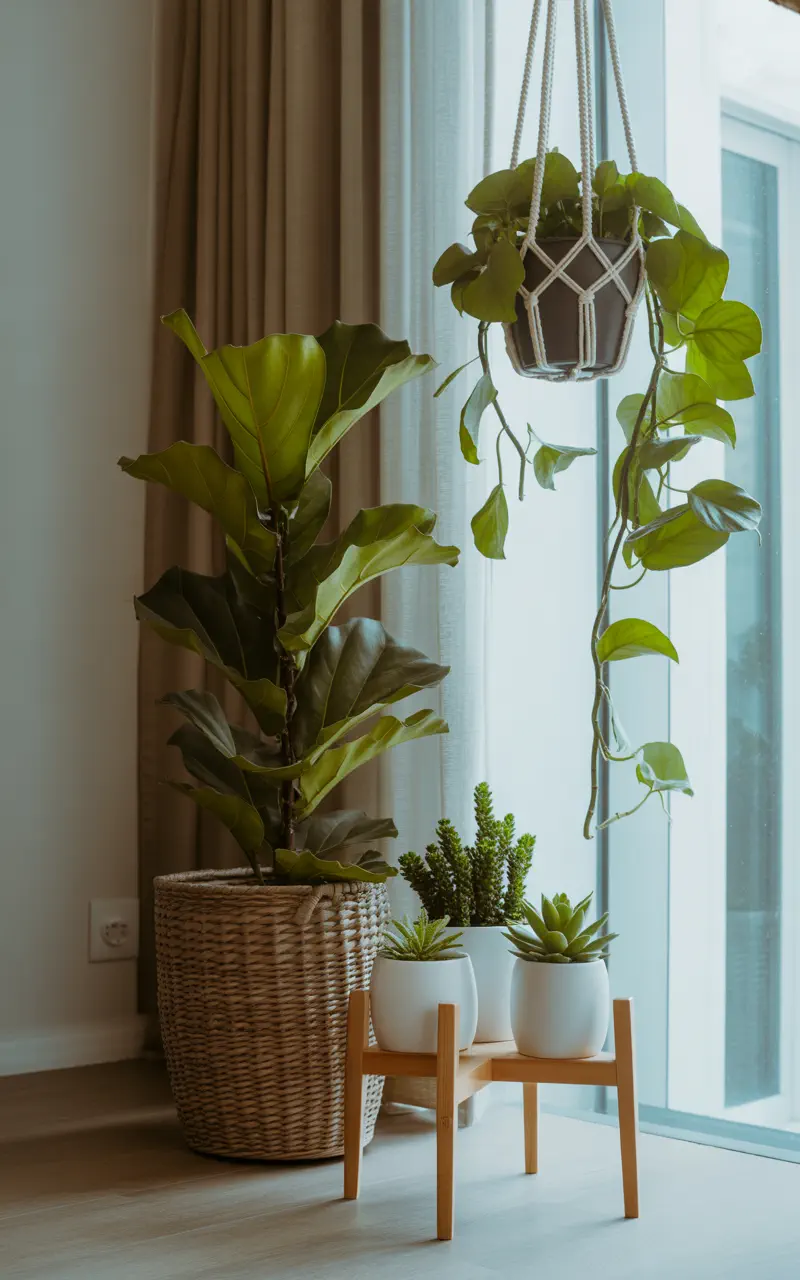
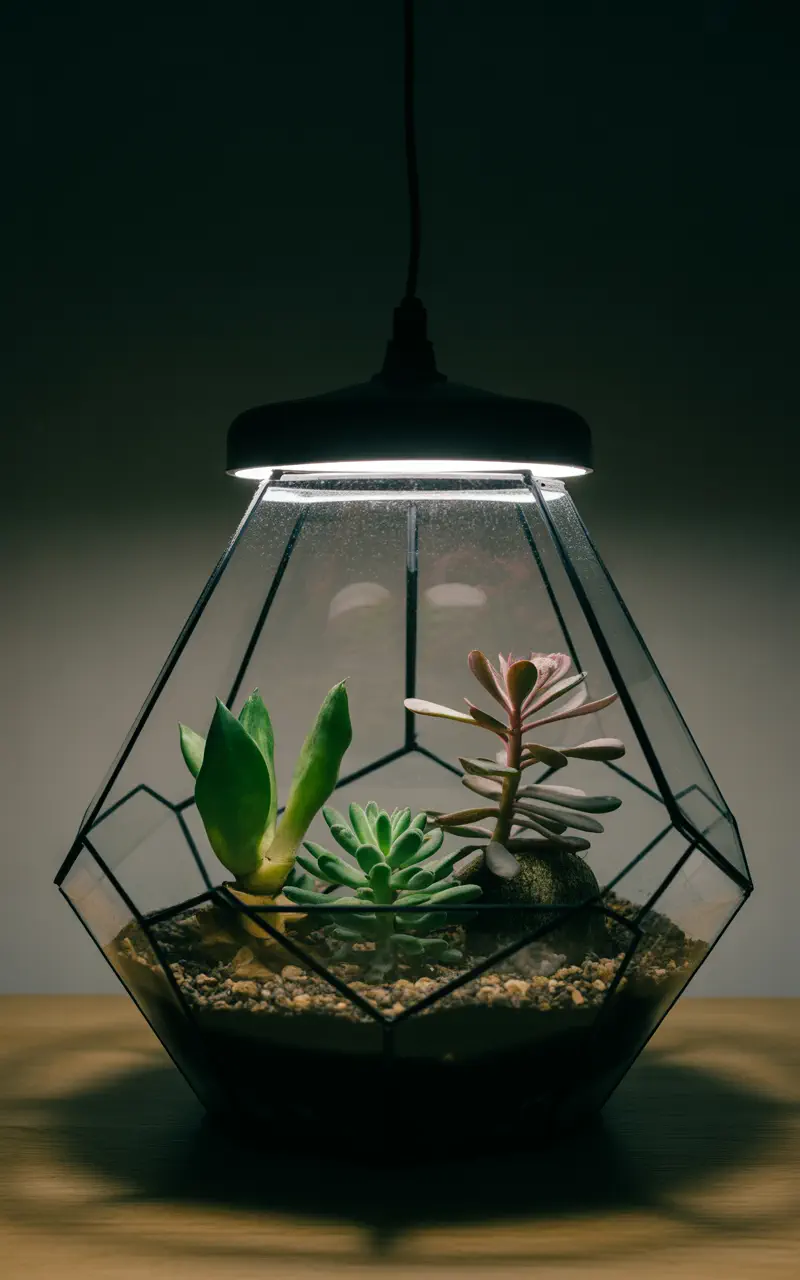
For extremely low light areas, consider adding grow lights. Modern LED grow lights use less energy and can be built into vertical garden designs without being too obvious. Full-spectrum LED lights with adjustable intensity are ideal for indoor vertical gardens, allowing you to grow a wider variety of plants even in windowless rooms. Many are now designed as decorative fixtures that blend with home decor while providing the light wavelengths plants need for photosynthesis.
Humidity-Loving Plants
Bathrooms, kitchens, and other high-humidity areas can support tropical plants that might struggle in drier indoor environments:
These plants can thrive in apartment gardening setups where humidity is maintained. In drier areas, consider using a small humidifier or regularly misting your vertical garden. Grouping plants together also creates a microclimate with higher humidity as plants release moisture through transpiration. For vertical gardens in particularly dry environments, consider incorporating a recirculating water feature that adds both visual interest and increased humidity.
Seasonal Considerations for Vertical Gardens
Understanding how plants perform through different seasons helps create a vertical garden that remains attractive and productive year-round. Seasonal planning ensures your vertical garden doesn’t experience periods of dormancy or decline that diminish its visual impact or productivity.
Year-Round Planning for Continuous Interest
A well-designed vertical garden should provide visual interest in all seasons. By carefully selecting plants that shine in different seasons, you can ensure your vertical garden looks great all year. Including some evergreen plants provides structure during winter, while flowering plants add color during their blooming seasons. For edible gardens, planning successive plantings ensures continuous harvests.
Remember that even the best-planned vertical gardens will have stronger and weaker seasons. In colder climates, winter will naturally be less lush than summer. The key is to make sure there’s always something worth looking at, whether it’s interesting bark, colorful berries, or structural elements of the garden itself.