
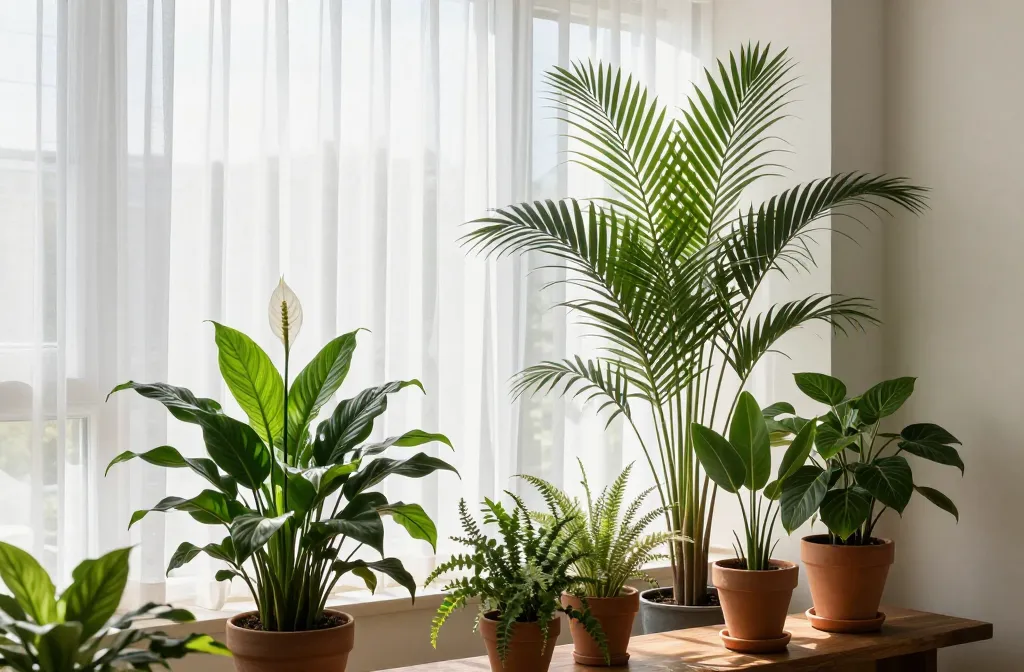
Got a bright window but zero clue what plants should hang out together there? Perfect. These companion pairings thrive in bright, indirect light and play nice with apartment life—small spaces, dry air, and busy schedules included.
We’re talking easy-care, visually stunning combos that help each other look and grow their best. No divas, no drama—just lush, healthy indoor jungles that make your space feel expensive (without the price tag).
Ready to matchmake your houseplants and build vibe-y, layered greenery like a pro? Let’s pair them up.
1. The Water-Buddy Duo: Peace Lily + Parlor Palm
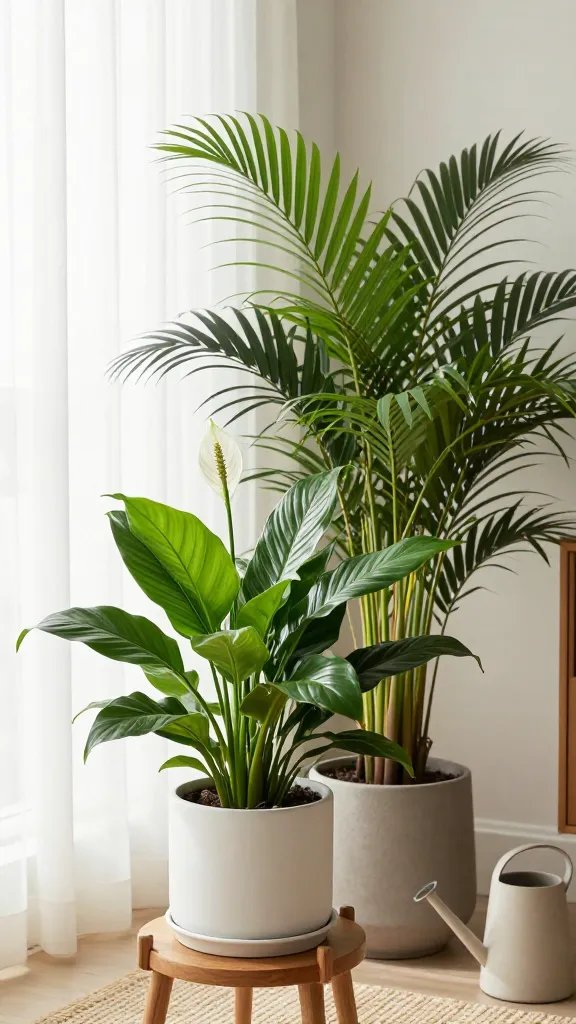
This pair is your low-stress starter combo. Both love evenly moist soil and thrive in the same bright, indirect light, so you won’t play watering roulette. Together they deliver soft, tropical texture with glossy blooms and feathery fronds.
Why It Works
- Same moisture rhythm: They appreciate consistent watering without drying out completely.
- Similar light needs: Bright, indirect light keeps both lush and avoids leaf burn.
- Complementary shapes: Peace lily’s upright leaves and white spathes pop against parlor palm’s airy fronds.
Set them near a sheer-curtained east or north window for smooth, even light. They’ll look like they belong on a spa brochure—no eucalyptus required.
Tips
- Use a well-draining mix with a bit of coco coir to hold moisture.
- Mist lightly or run a humidifier nearby to prevent crispy tips.
- Rotate monthly for even growth and fewer lopsided vibes.
Use this pairing when you want a calming, cohesive corner that looks polished with minimal effort. IMO, it’s the easiest way to get a hotel-lobby look at home.
2. Texture Goals: Pothos + ZZ Plant
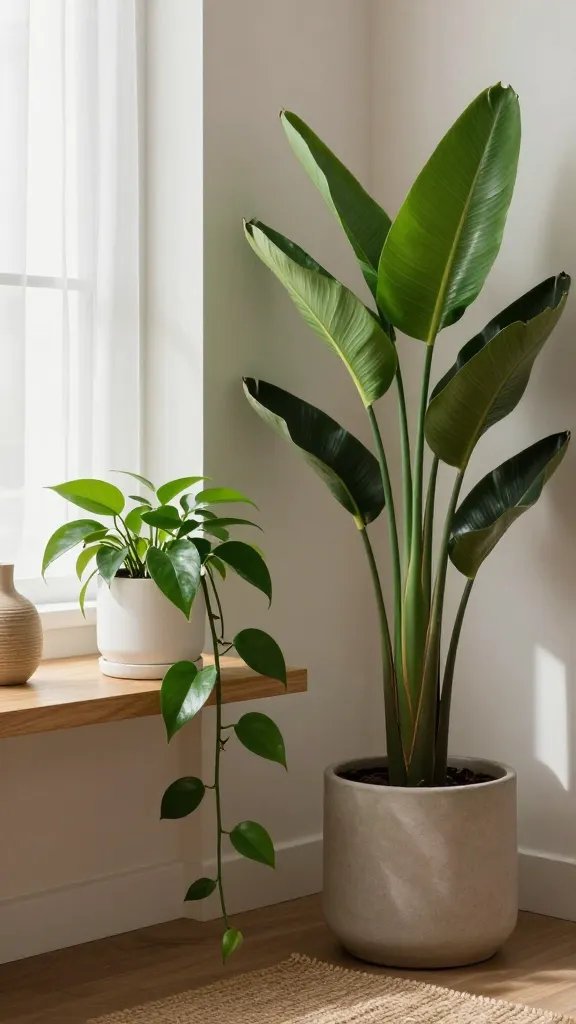
If you forget to water sometimes (same), this combo forgives everything. Pothos cascades in glossy vines while ZZ stands tall with sculptural, shiny leaves—together they create depth, drama, and major visual texture.
Why It Works
- Light flexibility: Both thrive in bright, indirect light and tolerate a bit less if needed.
- Opposite growth habits: Trailing pothos + upright ZZ = instant layered styling.
- Low maintenance: They handle occasional neglect like champs.
Hang the pothos or let it shelf-trail, and place the ZZ next to it to anchor the scene. Boom—Instagram-ready nook, achieved.
Key Points
- Let soil dry between waterings, especially for the ZZ.
- Use a chunky potting mix with perlite for pothos; add some sand for the ZZ.
- Wipe leaves monthly—dust dulls their natural shine and blocks light.
Choose this pair when you want texture without fuss. Seriously, they make any room look more styled and intentional.
3. Statement + Softness: Fiddle-Leaf Fig (Bush Form) + Maidenhair Fern
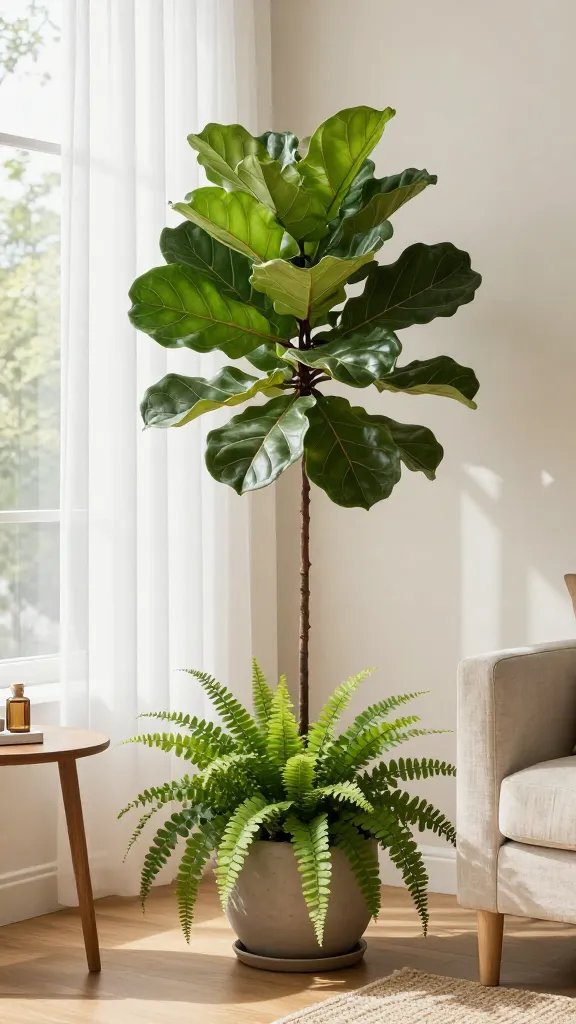
Want a design-forward moment that still feels cozy? Pair the bold, architectural fiddle-leaf fig with the delicate, lacy maidenhair fern. It’s like leather jacket meets silk scarf—contrasting, but perfect.
Why It Works
- Shared light sweet spot: Bright, indirect light keeps fiddle leaves happy and ferns fluffy.
- Balanced aesthetics: Big, glossy fiddle leaves frame the fern’s soft movement.
- Microclimate bonus: Fern appreciates slightly higher humidity created under larger foliage.
Place the fern just below or beside the fig, slightly shaded by the larger leaves. It reduces fern crispiness and creates a layered, high-end look.
Care Sync
- Fiddle-leaf: water when top 1–2 inches are dry; don’t let it sit in water.
- Maidenhair: keep the soil evenly moist, never bone-dry.
- Both love consistent placement—no drafts or weekly relocations.
Use this when you want a focal-point duo that screams “I know what I’m doing,” even if you’re Googling care tips at midnight. FYI, a small humidifier nearby helps a lot.
4. Color Pop Combo: Calathea (Prayer Plant Group) + Aglaonema (Chinese Evergreen)
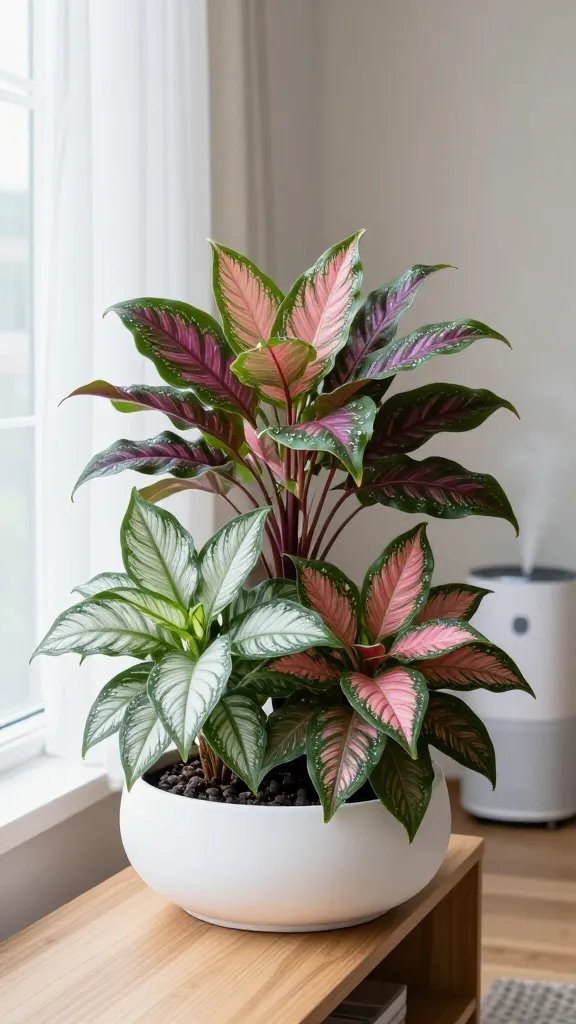
Craving color without a grow light rave? Calatheas bring bold patterns and dramatic undersides, while aglaonemas offer variegated leaves with pinks, silvers, or reds. Together, they create a living art display in bright, indirect light.
Why It Works
- Similar humidity love: Both enjoy moisture in the air, not soggy soil.
- Bright, indirect light fuels patterns: Keeps variegation sharp and colors rich.
- Even growth rates: Neither will overwhelm the other, so your arrangement stays balanced.
Use a low, wide planter or place two medium pots side by side for a “mini jungle shelf” moment. Let the aglaonema provide structure with broader leaves, and the calathea bring the drama.
Tips
- Water with filtered or dechlorinated water to prevent leaf edge browning on calathea.
- Keep away from heat vents; both hate dry blasts.
- Consider a pebble tray for gentle humidity without constant misting.
Use this combo when you want a painterly, patterned vibe that still reads sophisticated. Trust me, guests will ask if they’re rare (they’re not, but let them wonder).
5. Airy Jungle Shelf: Monstera Adansonii + Hoya (Pubicalyx or Carnosa)
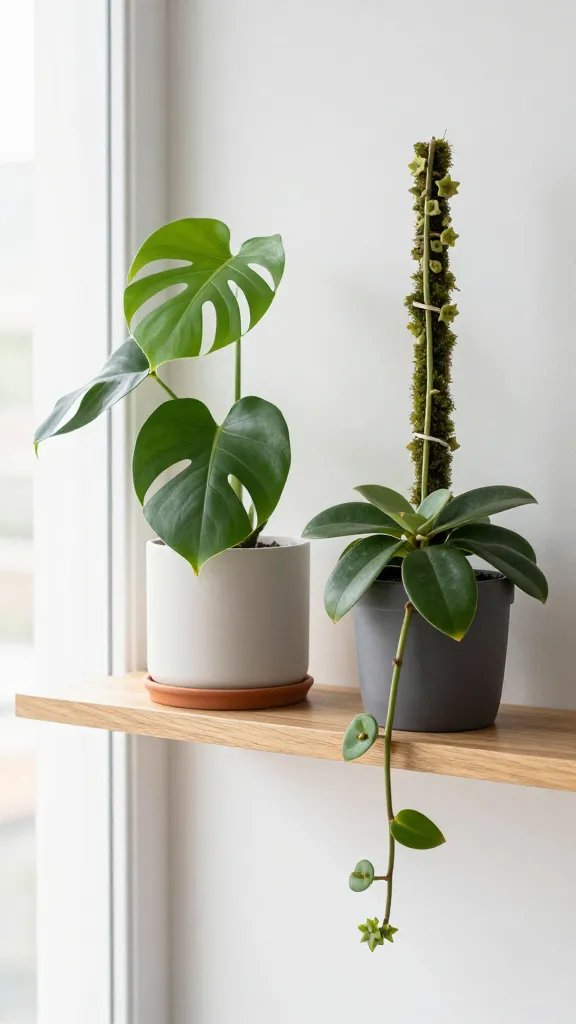
Want a cascading, airy setup that never feels heavy? Monstera adansonii brings Swiss cheese vibes, and hoya adds waxy, starry foliage with the occasional flower show. Both adore bright, indirect light and reward you with elegant trails.
Why It Works
- Contrasting leaf textures: Fenestrated monstera leaves vs. glossy hoya—chef’s kiss.
- Similar light but different watering: You’ll water the monstera a bit more, the hoya a bit less, which actually keeps root rot at bay on a shared shelf.
- Great for vertical styling: Let both trail from a high shelf or climb a small trellis.
Place the monstera slightly closer to the light to keep those holes popping, and tuck the hoya a few inches back. This creates dimension and staggered growth without extra effort.
Care Notes
- Monstera: water when the top inch is dry; give a support if you want larger leaves.
- Hoya: let it dry more deeply; use a fast-draining mix heavy on perlite or orchid bark.
- Fertilize lightly in spring/summer with a balanced liquid feed every 4–6 weeks.
Use this pair when you want “effortlessly curated.” It’s ideal for bookshelves, plant ledges, or above-desk moments where you need movement and interest without constant pruning.
Bonus Mini-Guide: How To Nail Bright, Indirect Light
- Best windows: East-facing or a few feet back from a south/west window with sheer curtains.
- Hand test: Bright, soft shadow = good. Crisp, hard-edged shadow = too direct.
- Rotate plants every few weeks so everyone gets their moment in the glow.
Quick Styling Ideas
- Use plant stands to vary heights and create depth.
- Group plants by water schedule to streamline care days.
- Match planter colors across pairs for a cohesive look (matte white, terracotta, or charcoal always win).
Common Apartment Pitfalls (And Fixes)
- Dry air: Add a small humidifier or cluster plants to raise local humidity.
- Overwatering: Use pots with drainage and lift liners when you water.
- Dusty leaves: Wipe with a damp cloth—clean leaves photosynthesize better and look shinier.
Ready to build your dream indoor jungle? Start with one pairing and see how your space responds, then add more for fuller layers. With the right companions, your plants won’t just survive—they’ll thrive, and your apartment will look ridiculously good while they do.