
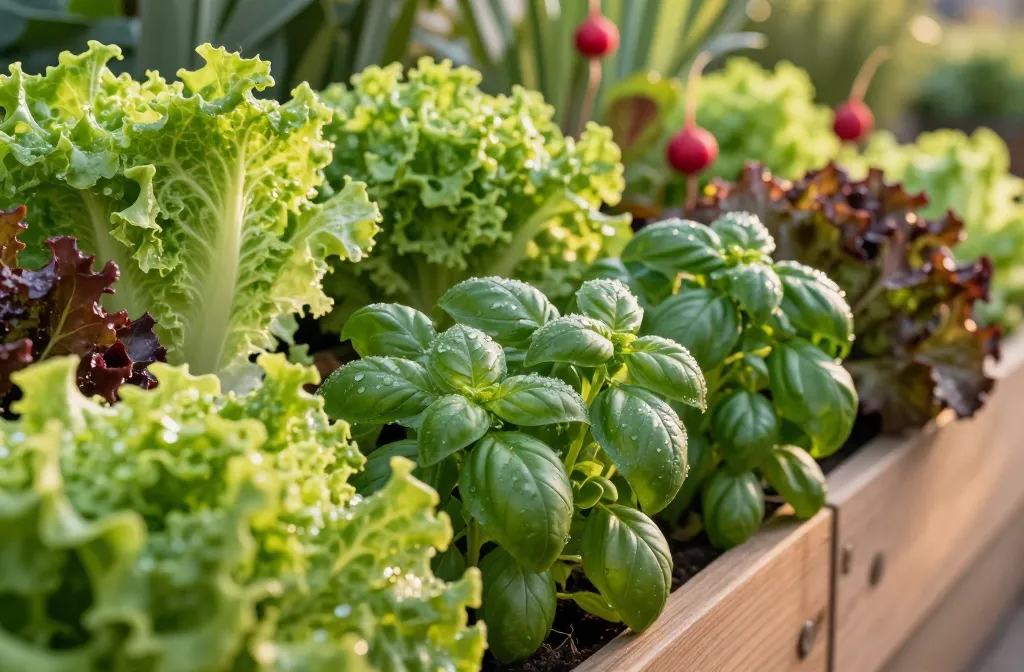
Want to crank up your salad game without needing a backyard? Vertical gardens let you harvest a ton of greens in tiny spaces. The trick: pair your lettuce and leafy greens with companions that boost growth, save space, and fight pests for you. These 12 matches make your wall of greens healthier, prettier, and—most importantly—more productive.
Ready to stack flavors, textures, and yields like a boss? Let’s climb.
1. Basil Bodyguards: Basil + Lettuce Stacks
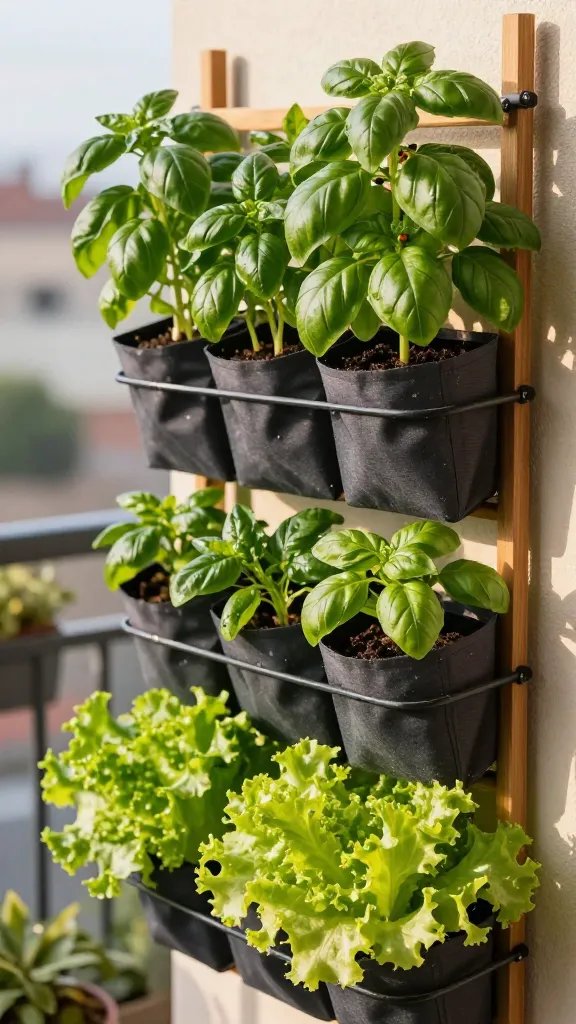
Basil keeps aphids and whiteflies guessing while lettuce happily chills in its shade. The scents confuse pests and the combo looks gorgeous on a trellis or pocket planter. Plus, basil loves the same frequent watering your lettuce craves.
Why It Works
- Aroma armor: Basil’s strong scent deters sap-suckers.
- Shade assist: Taller basil softens midday sun for tender greens.
- Flavor bonus: Harvest both for instant salad magic.
Plant compact basil varieties (like ‘Greek’ or ‘Spicy Globe’) in upper pockets and leaf lettuces below. Perfect for warm balconies where lettuce needs a little shade.
2. Crunch + Zing: Radishes With Cut-and-Come-Again Greens
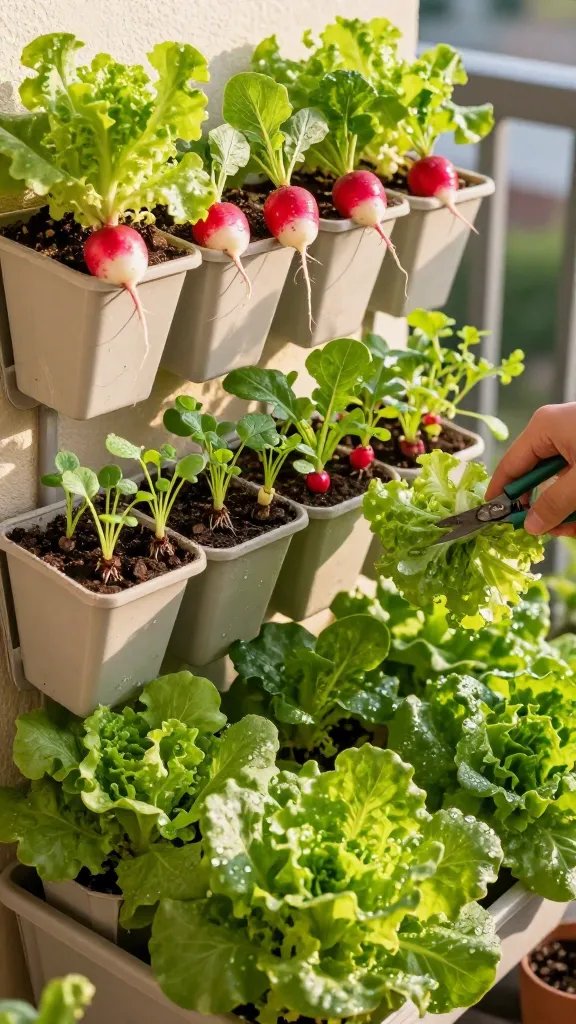
Radishes shoot up fast, loosen soil in pockets or towers, and don’t hog nutrients. They share space with baby leaf mixes or romaine starts like polite neighbors. You get peppery roots and crispy greens on repeat.
Tips
- Stagger sowing: Seed radishes weekly for nonstop snacks.
- Go slim: French breakfast or small globe types fit vertical spaces.
- Layer smart: Radishes in sunnier pockets, tender greens in partial shade.
Great for impatient gardeners who want quick wins while slower lettuces mature. IMO, it’s the best duo for first-timers.
3. The Pest-Blocking Perfumer: Dill As A Decoy
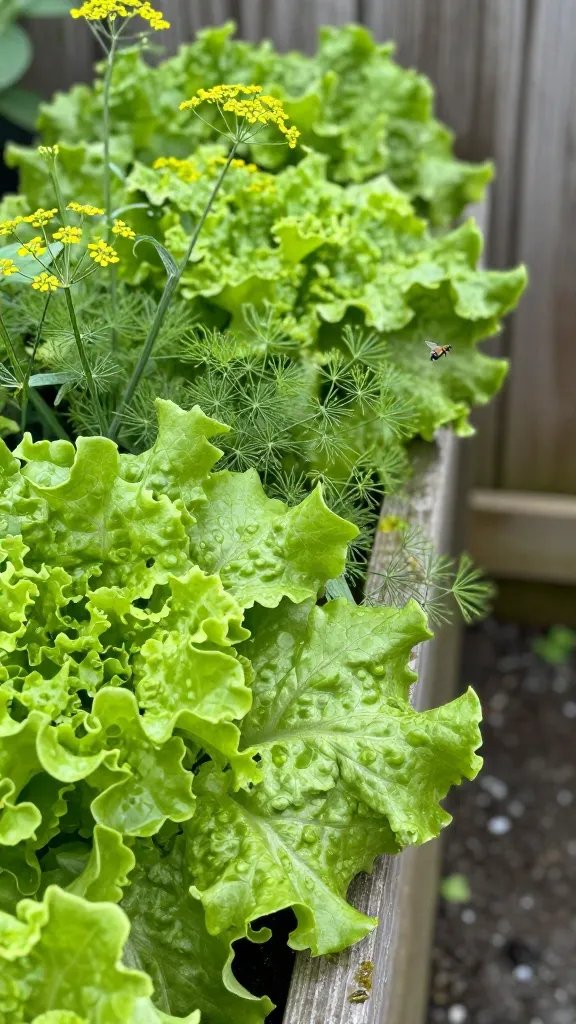
Dill attracts lacewings and parasitic wasps that hunt aphids like it’s a buffet. Its feathery leaves don’t steal light and add airy texture to your wall garden. Bonus: you’ll want it for dressings and pickles.
Key Points
- Beneficial magnet: Umbel flowers lure useful predators.
- Light footprint: Open habit means less shading.
- Cool-weather ally: Happy in the same temps as spring lettuces.
Use compact dill or pinch regularly to prevent it from towering. Ideal around susceptible leafy greens like butterhead.
4. Minty Fresh Shields: Mint Near Leafy Greens (But Contained)
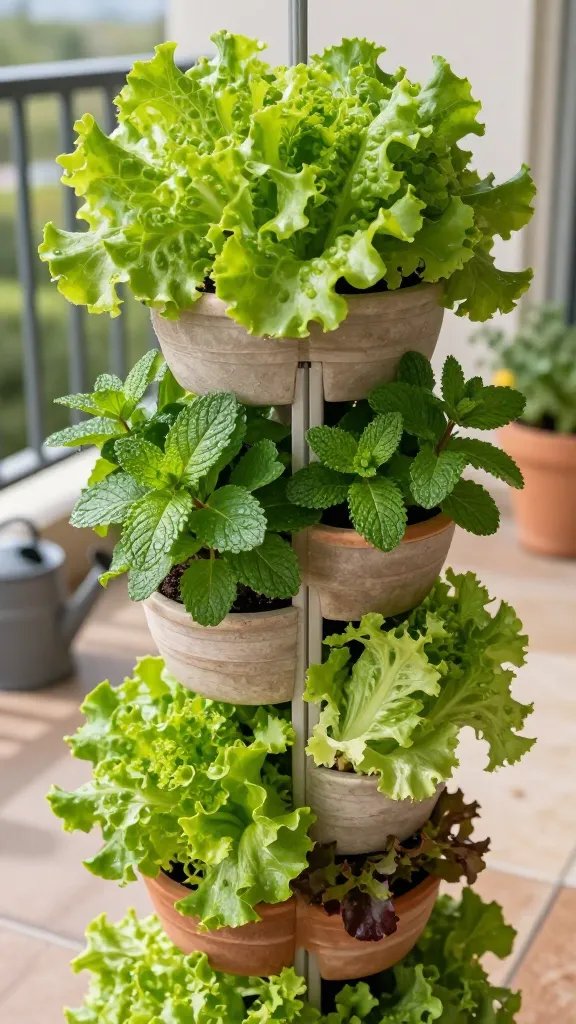
Mint’s scent confuses pests and its leaves love moisture—just like lettuce. In vertical planters, mint stays contained so it can’t go rogue. You get a built-in mojito bar and a pest buffer. Not bad, right?
Tips
- Contain it: Use a separate pocket or insert pot in your tower.
- Go compact: Try spearmint or peppermint minis.
- Partial shade: Mint thrives without blasting sun.
Great around heat-sensitive greens during summer; mint helps moderate microclimate and reduces pest pressure. FYI, keep snipping to prevent legginess.
5. Nasturtium Nets: Edible Flowers That Distract Pests
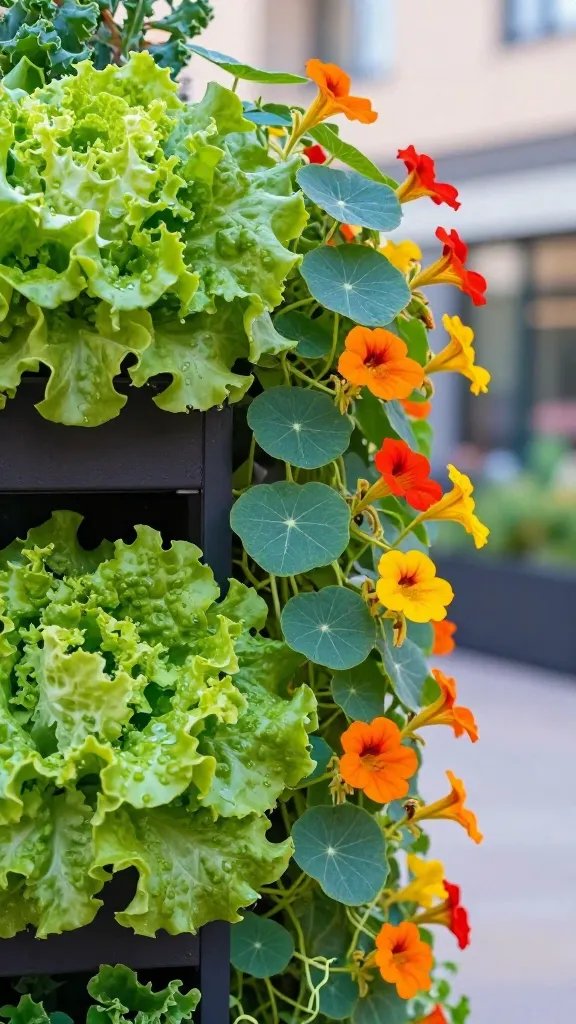
Nasturtiums act as sacrificial decoys for aphids and flea beetles, pulling them off your lettuce. Their trailing habit looks stunning draping off vertical planters. And those peppery flowers? Absolute salad gold.
Why It Works
- Trap crop: Pests choose nasturtiums over your greens.
- Spillover style: Cascading vines soften rigid vertical structures.
- Dry-ish tolerance: Top pockets won’t scare them.
Plant them along edges or higher tiers to lure pests up and away. Excellent around arugula and baby kale that bugs love to nibble.
6. Chive Vibes: Chives With Leaf Lettuce
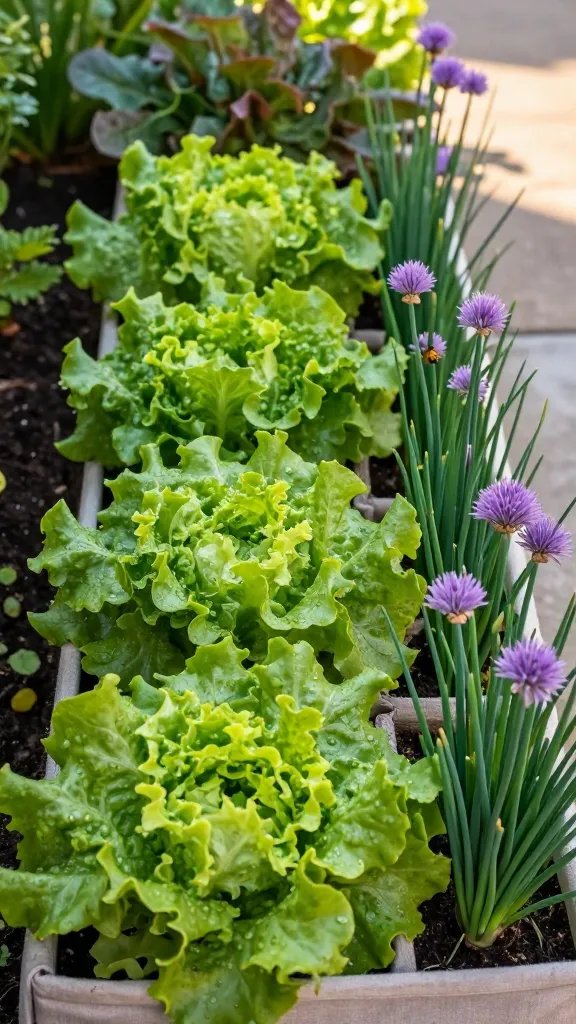
Chives throw a subtle onion barrier that pests dislike, but your salads will love. Their slim leaves barely cast shade, and they thrive in repeated trims. Come spring, purple pom flowers bring pollinators—cute and useful.
Key Points
- Scent shield: Helps deter aphids and thrips.
- Low footprint: Vertical-friendly clumps.
- Cut-and-return: Regrows fast after harvests.
Slip chives into corners of vertical pockets near butterhead, oakleaf, or mesclun. Use when you need gentle pest pressure control without the drama.
7. Cucumber Lifts: Mini Cucumbers With Shade-Loving Greens
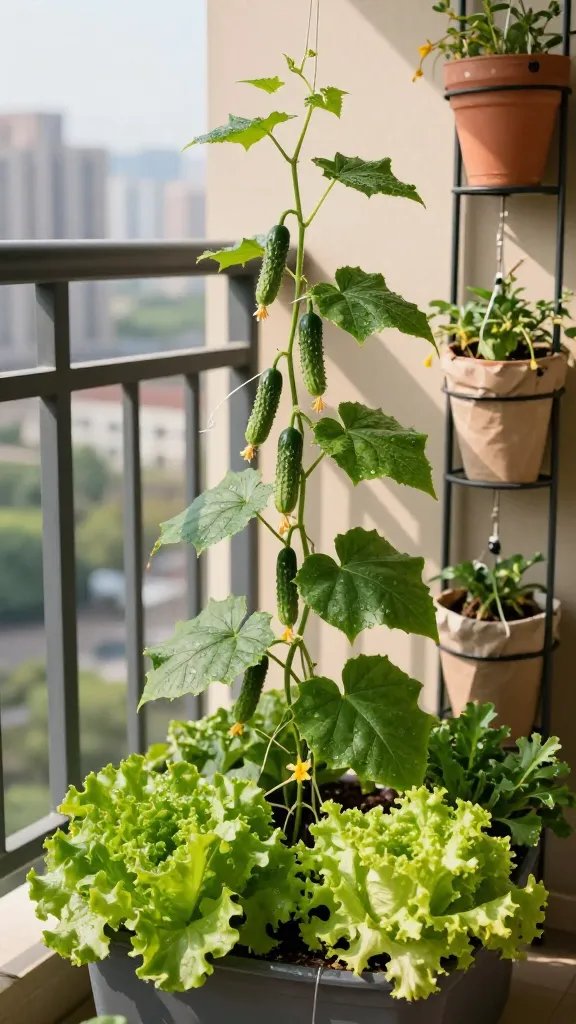
Compact cucumbers climb your trellis and cast dappled shade that lettuce appreciates in warm weather. Meanwhile, lettuce acts as a living mulch for cucumber roots in lower pockets. It’s a cozy little micro-ecosystem.
Tips
- Choose minis: ‘Patio Snacker,’ ‘Bush Pickle,’ or ‘Mini Munch.’
- Train early: Tie vines to prevent smothering.
- Hydration harmony: Both love steady moisture.
Best for sunny balconies where summer heat threatens lettuce. Harvest cucumbers often to keep vines tidy and light-balanced.
8. The Cooling Crew: Cilantro With Spinach or Arugula
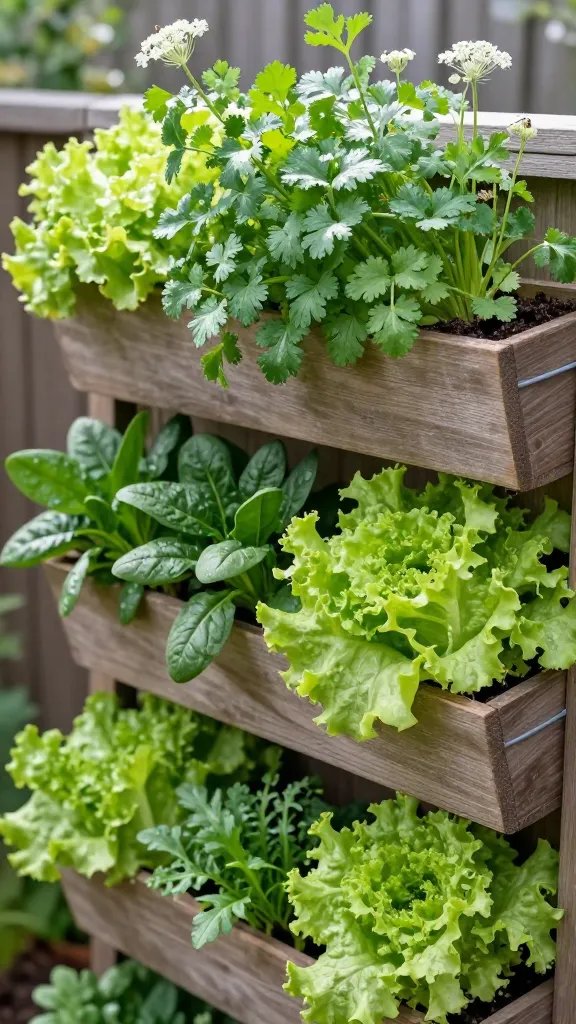
Cilantro hates heat but thrives alongside early-season greens in vertical setups. It cools soil pockets with its frilly canopy and brings in beneficials when it flowers. Also: salsa. Enough said.
Why It Works
- Shared season: Prefers the same cool conditions as spinach and arugula.
- Airy shade: Softens harsh sun on tender leaves.
- Pollinator boost: Umbels attract tiny allies when it bolts.
Plant cilantro above arugula to reduce bitterness in warmer spells. Great during spring and fall rotations in vertical towers.
9. Strawberry + Lettuce Duo: Sweet Meets Crisp
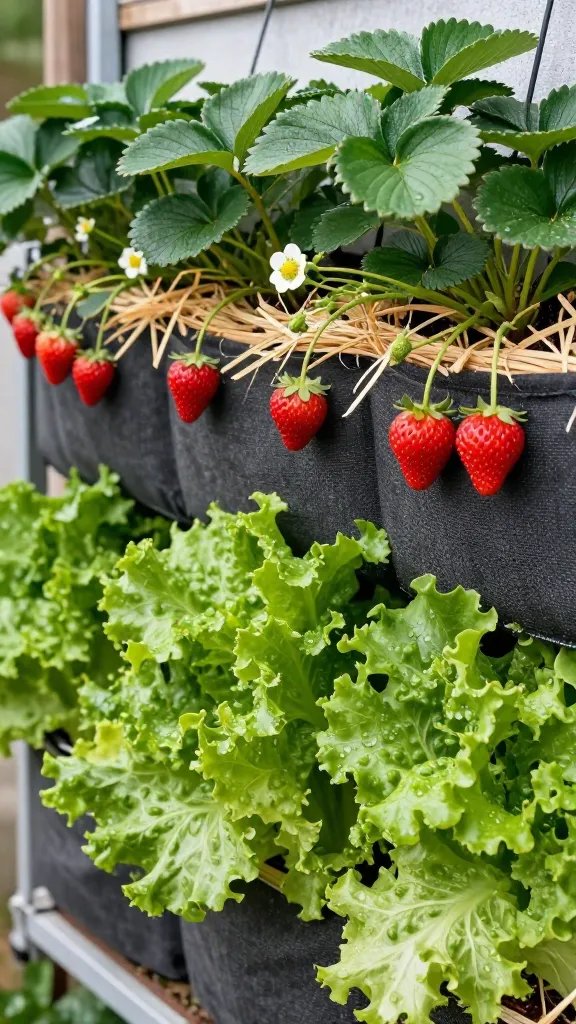
Strawberries droop and trail, making them perfect neighbors in vertical pockets. Their shallow roots don’t bully lettuce, and they appreciate the same consistent water. Bonus: you’ll snack during harvests like a garden gremlin.
Tips
- Place strategically: Strawberries in upper pockets to cascade, lettuces below.
- Match types: Day-neutrals give longer harvests alongside continuous greens.
- Mulch lightly: Keep berries clean with a thin coco liner or straw.
Use this pairing when you want looks and yields. It’s a crowd-pleaser for patio walls and balcony rails.
10. Thyme On Your Side: Thyme With Heat-Tolerant Lettuces
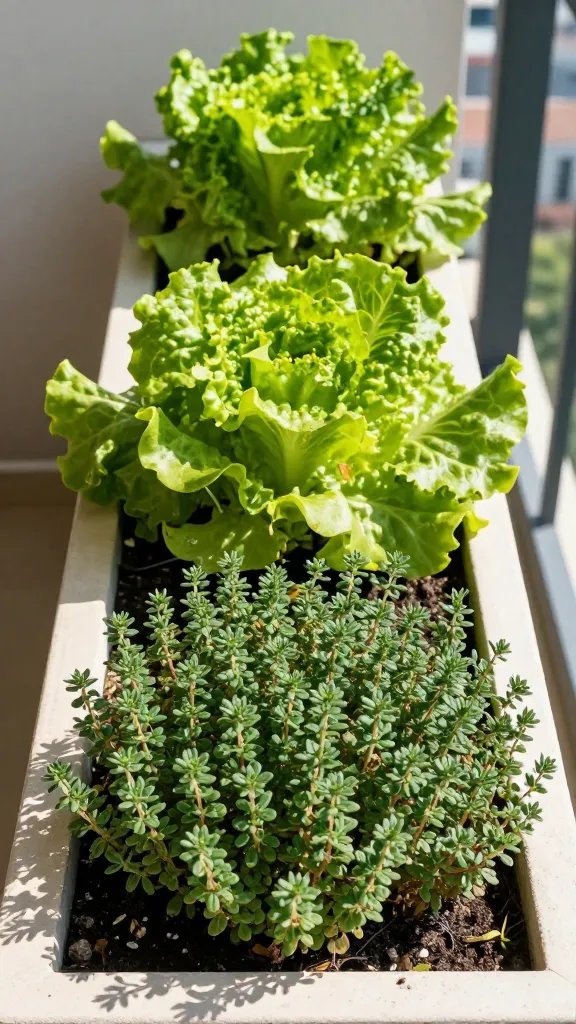
Thyme stays compact, dries out faster (which lettuce above it won’t mind), and scents the air enough to confuse pests. It won’t hog nutrients or shade, and it packs serious flavor in tiny leaves. A small plant with a big attitude.
Key Points
- Low maintenance: Drought-tolerant and forgiving.
- Pest disruption: Fragrance helps deter nibblers.
- Edge-friendly: Fits perfectly in shallow pockets.
Use alongside heat-tolerant lettuces like ‘Jericho’ or ‘Muir.’ Ideal for the driest, sunniest sections of vertical gardens where other herbs might sulk.
11. Marigold Buffers: French Marigolds With Kale or Swiss Chard
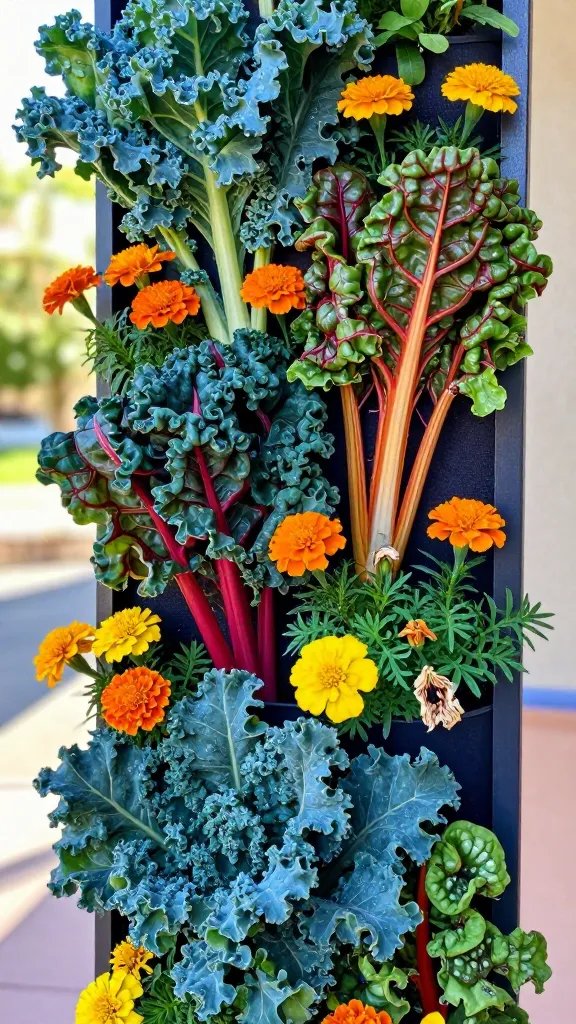
Marigolds make nematodes and aphids think twice while bringing pollinators with flashy blooms. The compact French varieties tuck into vertical systems beautifully. They’re the cheerleaders your greens deserve.
Tips
- Pick French types: ‘Bonanza’ or ‘Disco’ for smaller forms.
- Deadhead often: More flowers, fewer pests.
- Separation: Don’t crowd kale leaves; give airflow.
Slot marigolds near chard or kale to brighten the display and lift plant health. Use when pest pressure ramps up midseason—seriously, they help.
12. Pea Trellis Shade: Sugar Snap Peas With Spring Lettuces
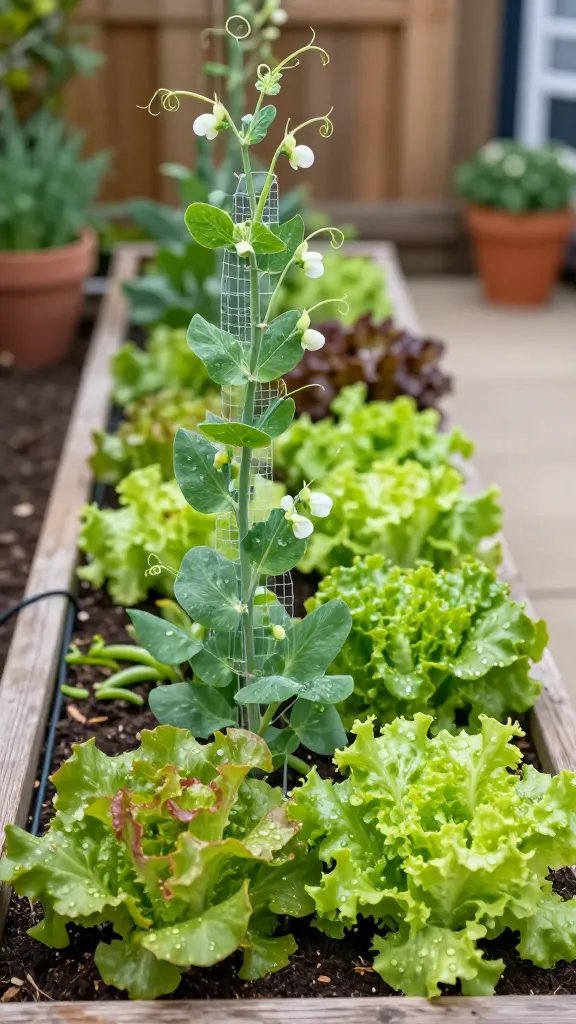
Peas climb fast, fix nitrogen, and offer just enough shade to protect tender greens in spring. As peas wind down in heat, your lettuces surge with the freed-up light. It’s a smart seasonal relay.
Why It Works
- Nitrogen fixer: Peas boost soil biology; your greens benefit.
- Gentle shade: Prevents tip burn on young leaves.
- Succession win: Transition from peas to summer herbs seamlessly.
Train peas on a slim net and plant looseleaf or romaine at the base. Perfect for early-season vertical gardens that want a strong head start.
Extra Vertical Garden Tips (Because You’ll Ask)
- Water smart: Drip lines or a watering wand keep moisture even from top to bottom.
- Feed lightly: Greens prefer steady, balanced feed—think compost tea every 2 weeks.
- Rotate pockets: Move sun-lovers up, shade-lovers down as seasons shift.
- Harvest often: Cut outer leaves, keep plants producing, and reduce disease risk.
Ready to build a vertical salad bar that basically gardens itself? Mix these 12 companions, keep water steady, and snip little and often. You’ll have prettier planters, fewer pests, and bowls of fresh crunch on repeat—trust me, your future self will thank you.