
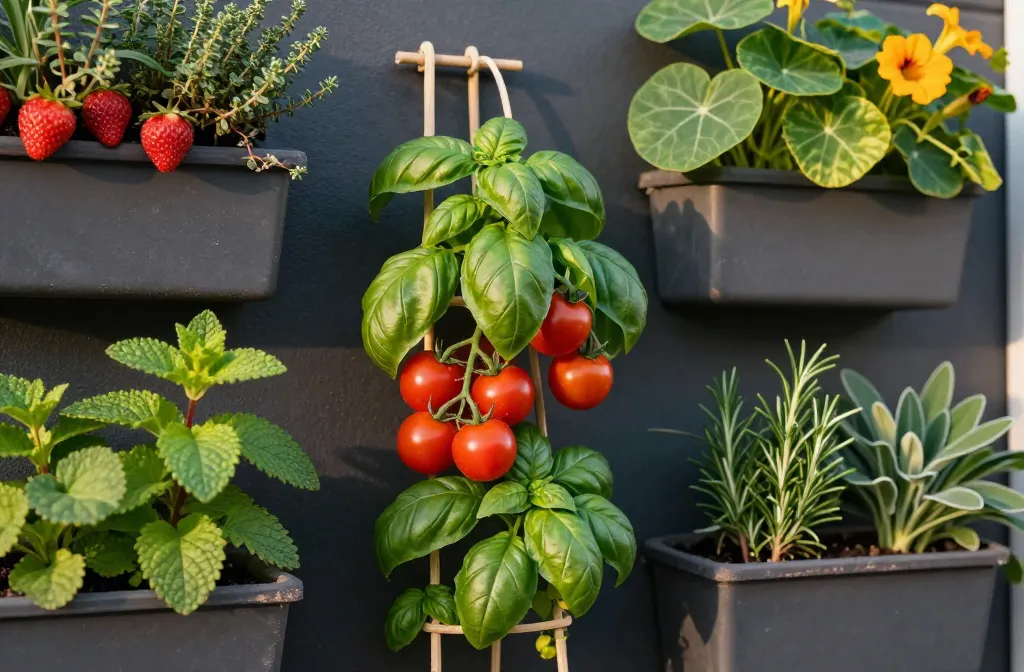
Ready to stack plants like a pro and watch them flourish? These 15 duos punch above their weight in tight spaces, fight pests for each other, and look ridiculously good doing it. Whether you’re rocking a balcony wall or a kitchen herb tower, these pairs deliver flavor, fragrance, and drama. Let’s climb.
1. Basil + Cherry Tomatoes: The Flavor Power Couple
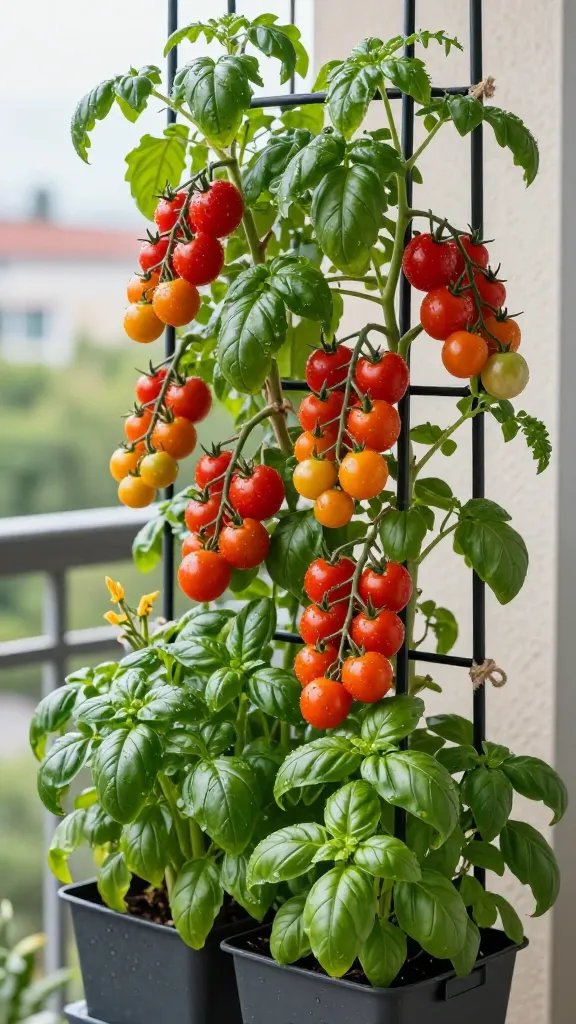
This duo brings the garden-to-plate romance straight to your wall. Basil boosts tomato flavor and helps repel pests, while cherry tomatoes keep things compact and prolific in vertical systems.
Why They Work
- Mutual benefit: Basil masks tomato scent from pests like aphids.
- Space-savvy: Compact cherry varieties climb trellises; basil fills pockets below.
- Continuous harvest: Snip basil weekly and grab tomatoes as they ripen.
Choose dwarf or indeterminate cherry types that behave on a trellis. Plant basil at mid or lower tiers to catch sun without shading fruit clusters.
Tips
- Pick varieties: ‘Sweet Basil’ + ‘Tumbler’ or ‘Sungold’ cherries.
- Sun: 6–8 hours minimum.
- Water: Consistent moisture; tomatoes hate swings.
- Feed: Tomato-focused fertilizer every 2–3 weeks.
Use this pair when you want maximum yield and classic caprese vibes from a small footprint. FYI, the scent alone makes the balcony feel like summer.
2. Strawberries + Thyme: Sweet Meets Savory (And Pollinator-Friendly)
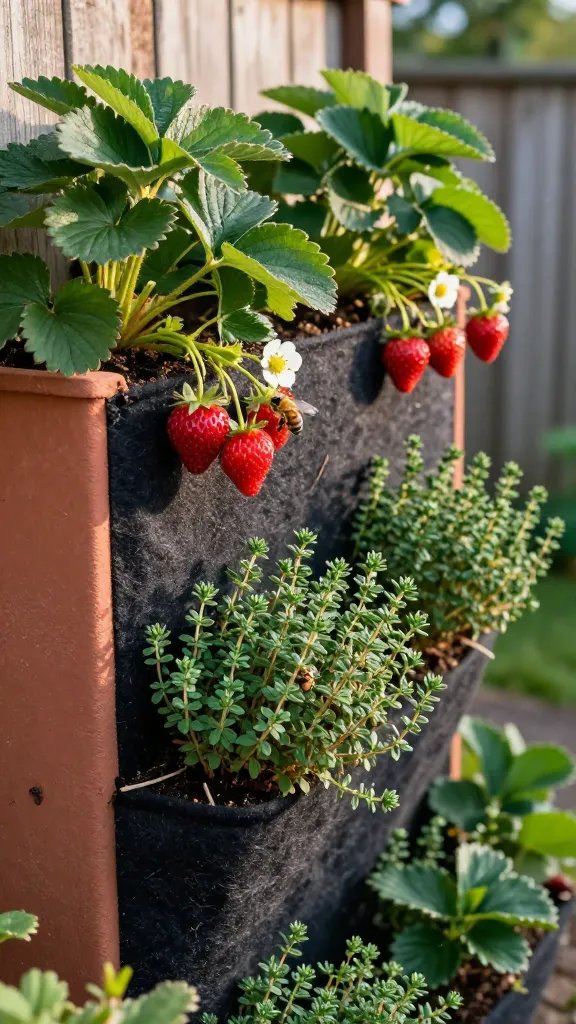
Strawberries cascade beautifully in vertical pockets, while thyme creeps and fills gaps with fragrance. The combo draws pollinators, suppresses weeds, and looks lush without trying too hard.
Why They Work
- Different growth habits: Strawberries spill; thyme spreads tightly, stabilizing soil.
- Pest deterrence: Thyme’s essential oils discourage some pests and fungal issues.
- Great drainage: Both prefer well-drained, slightly lean soil—perfect for vertical planters.
Plant strawberries in upper pockets so runners trail down. Tuck thyme at edges and mid-levels to create a fragrant “skirt.” Keep it trim so berries get sun.
Tips
- Pick varieties: Day-neutral strawberries like ‘Albion’ + creeping thyme or lemon thyme.
- Sun: 6+ hours for sweet fruit.
- Water: Even moisture; never soggy.
- Maintenance: Remove runners if space gets crowded; harvest thyme lightly to keep it dense.
Use this duo for beautiful, edible walls where you want low-fuss, high-charm results—patios, kids’ gardens, and entryways all win.
3. Cucumbers + Nasturtiums: The Pest-Decoy Dream Team
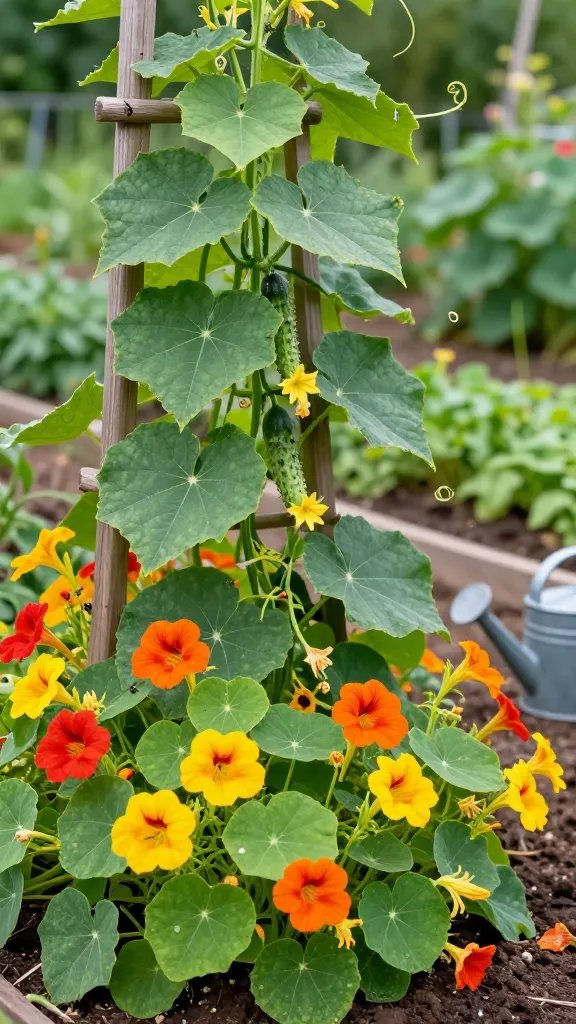
Cucumbers climb like champs in vertical gardens, and nasturtiums trail beneath them with edible flowers and leaves. Better yet, nasturtiums act as a magnet for aphids and keep them off your cucumbers. Sneaky? Absolutely.
Why They Work
- Companion defense: Nasturtiums draw pests away and attract beneficial insects.
- Form + function: Cucumbers climb; nasturtiums spill, softening the structure’s look.
- Edible bonus: Peppery nasturtium flowers level up salads and garnishes.
Give cucumbers a strong trellis or netting. Let nasturtiums drape from lower tiers—but don’t let them shade cucumber stems in early growth.
Tips
- Pick varieties: ‘Mini Munch’ or ‘Patio Snacker’ cucumbers + trailing nasturtiums (any color).
- Sun: 6–8 hours; cucumbers love heat.
- Water: Deep and regular; mulching helps in fabric pockets.
- Pruning: Train cucumbers up; pinch nasturtiums to direct growth.
Use this pair if you’ve battled aphids before or want a whimsical, edible cascade. The cucumber-nasturtium combo is drama-free and photogenic—IMO, a vertical must-have.
4. Kale + Parsley: The Cool-Season Workhorses
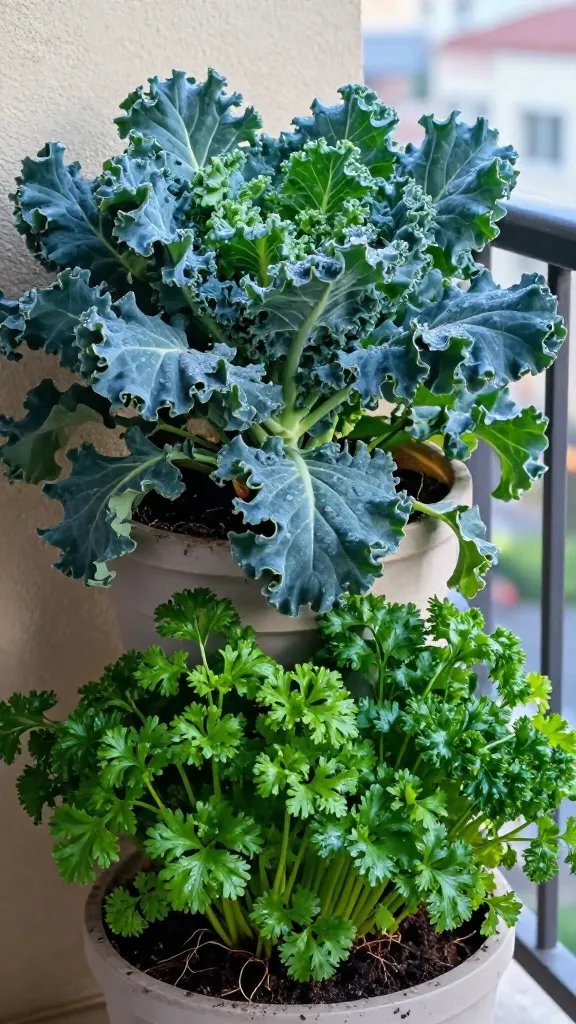
When heat-lovers lag, these two thrive. Kale gives bold structure, and parsley packs the herb punch, both cool-season champs that don’t mind a little shade in a dense planting.
Why They Work
- Temperature compatibility: Both excel in spring and fall and tolerate light frost.
- Different root zones: Kale roots deeper; parsley stays a bit shallower—less competition.
- Cut-and-come-again: Regular harvesting keeps plants compact and productive.
Plant kale on upper tiers to catch stronger light. Slot parsley in mid to lower tiers to fill gaps and fragrance the entire wall.
Tips
- Pick varieties: ‘Lacinato’ or ‘Red Russian’ kale + flat-leaf parsley for flavor.
- Sun: 4–6 hours works, especially in cooler temps.
- Water: Even moisture; avoid water stress to prevent bitterness.
- Feeding: Balanced organic fertilizer monthly; extra nitrogen helps leafy growth.
Use this duo for shoulder seasons, shady balconies, or spots where tomatoes sulk. It’s hearty, healthy, and honestly the easiest green wall you’ll ever grow—seriously.
5. Lavender + Trailing Rosemary: The Mediterranean Perfume Wall
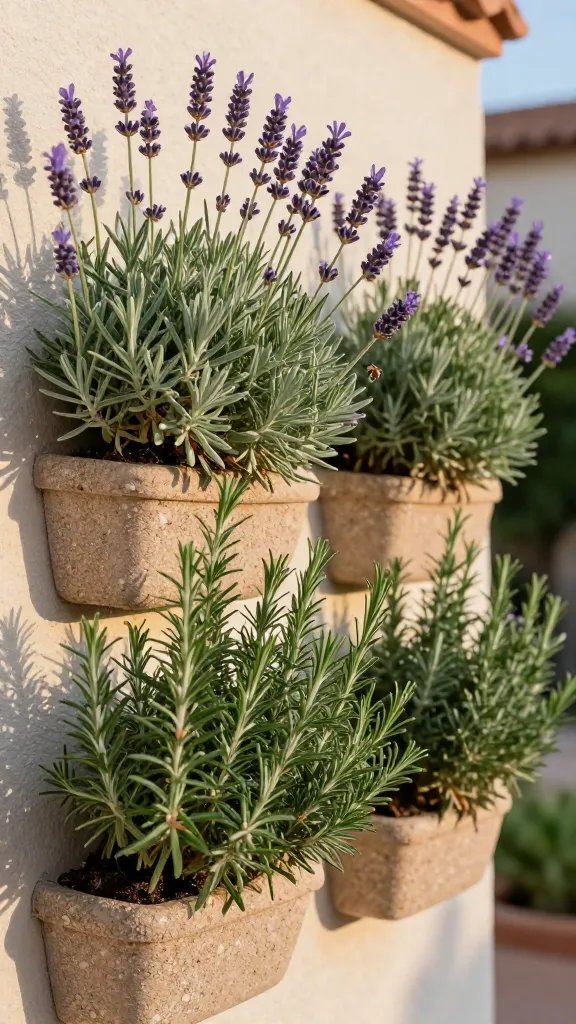
When you want low-maintenance and high-aesthetic, go Mediterranean. Lavender stands tall and attracts pollinators, while rosemary trails elegantly and perfumes every breeze.
Why They Work
- Shared preferences: Both love sun, good airflow, and sharp drainage.
- Textural contrast: Lavender’s upright spikes + rosemary’s cascading needles = instant design points.
- Drought tolerance: Once established, they sip water and still look luxe.
Use a gritty potting mix with added perlite or coarse sand. Place lavender on higher tiers for full sun and airflow; let rosemary drape from mid or lower pockets.
Tips
- Pick varieties: ‘Hidcote’ or ‘Munstead’ lavender + ‘Prostratus’ trailing rosemary.
- Sun: 6–8 hours, ideally with hot afternoons.
- Water: Let soil dry slightly between waterings; never waterlog.
- Pruning: Lightly shear after bloom; tip-prune rosemary to keep it full.
Use this duo for sunny facades, patios, and any spot where you want a low-water, high-style statement. It smells like vacation and looks like you hired a designer.
Feeling inspired yet? Grab a few of these plant duos, claim a wall, and start stacking wins. Keep it simple, water consistently, and let the plants do their thing. Your vertical garden is about to go from “cute idea” to “how did you grow all that up there?” Trust me, you’ll be hooked.