
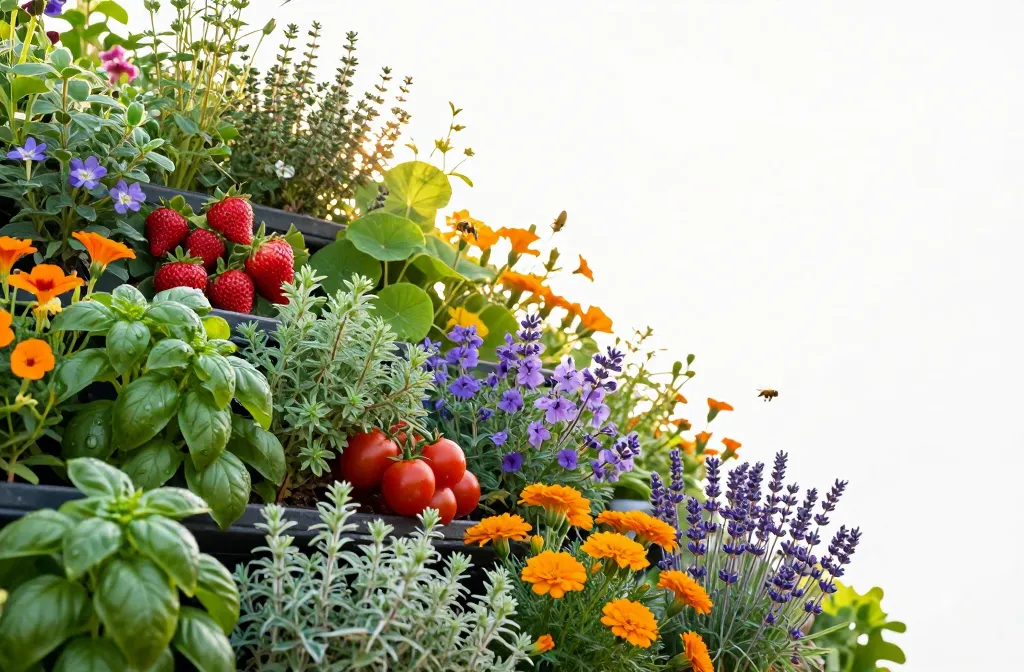
Your vertical garden can feed you and charm every bee in the neighborhood—why choose? The right flowering companions boost pollination, deter pests, and make your wall look like a botanical dessert cart. We’ll stack flavor, fragrance, and nectar so your strawberries, tomatoes, and herbs hit overdrive. Ready to build a living wall that hums with life?
1. The Nectar Ladder: Stacking Flower Heights For Constant Buzz
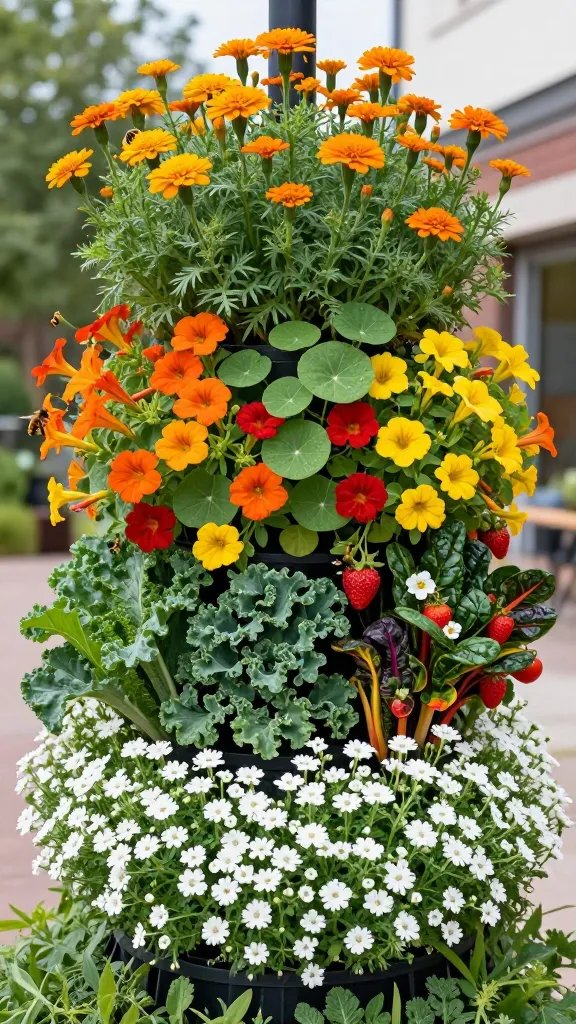
Pollinators fly like shoppers in a mall—different “floors” get different traffic. Layering bloom heights and shapes across your wall creates a nectar ladder they can’t resist. You get continuous pollination and fewer dead zones where nothing visits.
All-Star Companions (13 Pollinator Favorites, Ladder Style)
- Calendula (Pot Marigold) – Cheery daisies that lure beneficials and deter pests; edible petals.
- Nasturtium – Trailing gems with peppery edible flowers and leaves; aphid trap crop.
- Alyssum (Sweet Alyssum) – Honey-scented groundcover drapes pockets; attracts hoverflies that eat aphids.
- Borage – Starry blue flowers bees adore; boosts strawberry and tomato pollination; edible, cucumbery blossoms.
- Marigold (Tagetes) – Classic pest deterrent; strong color contrast pulls bees in.
- Catmint (Nepeta) – Long-blooming violet spikes; drought-tough and pollinator-magnetic.
- Lavender – Aromatic powerhouse; bees binge on it, and your wall smells like a spa.
- Thyme (Creeping or Upright) – Tiny flowers, huge nectar payoff; edible foliage year-round.
- Chives (Allium schoenoprasum) – Pom-pom blooms bring bees; onion scent confuses pests.
- Sage (Salvia officinalis + ornamental Salvias) – Tubular blooms for bees; culinary leaves for you.
- Fuchsia (Hardy or Trailing) – Hanging bells for hummingbirds; thrives in part shade pockets.
- Cosmos – Airy, tall daisy-like flowers; prime landing pads for bees and butterflies.
- Zinnia – Color bombs with long bloom time; perfect near tomatoes and peppers.
Mixing these creates a multi-level buffet. You’ll see more pollinator traffic and steadier fruit set, especially in tight urban spaces.
Tips
- Place trailing nasturtiums and alyssum near edges to cascade.
- Tuck thyme and chives in sunny, shallow pockets for low-upkeep blooms.
- Anchor mid-height slots with calendula, marigold, and borage.
- Use cosmos and zinnia at the top or in pockets with deeper soil.
Use this ladder anytime you want flower power from late spring to frost without micro-managing. FYI, it looks ridiculously photogenic.
2. Edible Meets Edible: Flowering Companions That Feed You And Your Pollinators
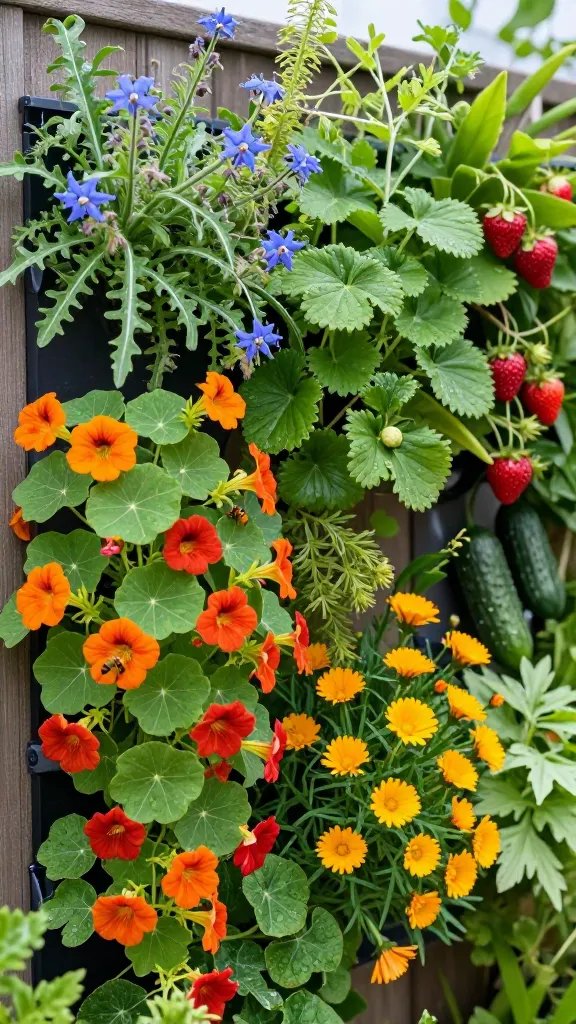
Why plant something that only looks pretty when you can nibble it, too? These flowers do double duty—attracting pollinators and adding flavor to salads, drinks, and desserts. Vertical gardens benefit from multipurpose plants because space is precious.
Best Edible Flowers For Vertical Pairings
- Nasturtium – Peppery kick in salads; pair with arugula, cucumbers, and strawberries.
- Calendula – “Poor man’s saffron”; petals dye rice and decorate cakes.
- Borage – Blue stars in ice cubes and lemonades; perfect with strawberries.
- Chive Blossoms – Mild onion flavor; infuse vinegar and garnish eggs.
- Thyme Flowers – Tiny but mighty; drizzle with honey over goat cheese.
- Sage Blossoms – Delicate herbal pop; toss on roasted veggies.
- Lavender – Infuse syrups, cookies, and cocktails; go light or it overpowers.
Pairing Ideas With Common Vertical Crops
- Tomatoes + Basil + Marigold + Borage: Basil boosts flavor, marigold deters pests, borage brings bees.
- Strawberries + Thyme + Borage + Alyssum: Low thyme covers soil; borage supercharges bee visits.
- Leafy Greens + Calendula + Nasturtium: Bright petals and peppery leaves make salads glam.
- Peppers + Zinnia + Catmint: Heat-loving trio that keeps pollinators coming all summer.
Use edible bloom combos when you want flavor and function in tiny spaces. Your plate—and the pollinators—win.
Quick Harvest Notes
- Harvest flowers in the cool morning for peak flavor.
- Rinse gently and use same day, or refrigerate on paper towels.
- Skip pesticides; you’re eating these. Opt for organic inputs and beneficial insects instead.
Bonus: edible flowers make your wall look boutique-level fancy, IMO.
3. Sun, Shade, And Everything Between: Right Plants For Your Light
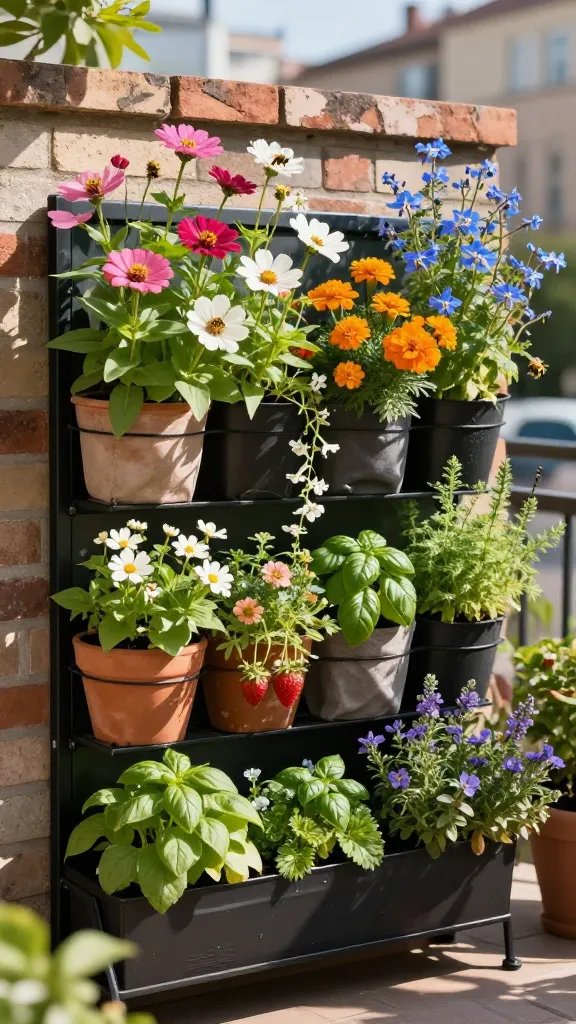
Vertical gardens create microclimates—top tiers roast, lower pockets chill in shade. Choose flowering companions that match the light so blooms keep coming instead of sulking. Put divas where they shine and shade-lovers where they can vibe.
Full Sun Champs (6+ Hours)
- Zinnia – Loves heat; deadhead for nonstop color.
- Cosmos – Thrives in lean soil; tall but light, perfect for top rows.
- Marigold – Tough and bright; handles reflected heat from walls.
- Borage – Enjoys sun and moderate water; pinch to keep compact.
- Lavender – Needs good drainage; choose compact varieties for pockets.
- Thyme – Heat-resilient mat that flowers for weeks.
Part Shade All-Stars (3–5 Hours Or Dappled)
- Alyssum – Blooms even with afternoon shade; cools the soil surface.
- Calendula – Prefers cooler conditions; great for spring and fall walls.
- Catmint – Tolerates light shade and still feeds bees.
- Sage – Culinary plus floral; afternoon shade prolongs bloom.
Shady-ish Winners (Bright Indirect/AM Sun)
- Fuchsia – Hummingbird magnet for north-facing walls.
- Nasturtium – Flowers in part shade, especially cool climates.
- Chives – Tolerates partial shade; bulbs store energy between blooms.
Use light-matched plantings when your wall spans multiple exposures. It’s the easiest way to get reliable blooms with minimal fuss.
Setup Tips
- Place sun-lovers high and shade-tolerant plants low under overhangs.
- Rotate planters seasonally: spring-loving calendula swaps out for summer zinnias.
- Use reflective light from pale walls to boost bloom in medium-light zones.
Trust me, aligning plants with light turns “meh” walls into pollinator hotspots fast.
4. Water-Wise And Wall-Smart: Irrigation, Soil, And Spacing That Actually Works
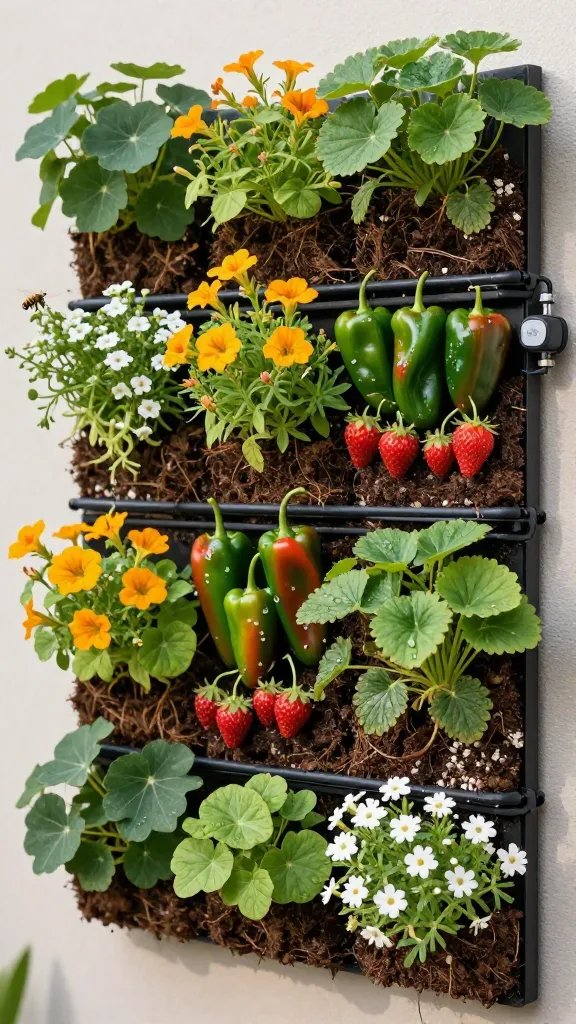
Great plants still flop without the right setup. Vertical gardens concentrate heat and drain fast, so you need soil and water strategies that keep flowers blooming and fruiting. Get this right, and maintenance becomes a breeze.
Media And Fertility
- Soilless mix with coco coir, perlite, and compost for drainage and nutrients.
- Slow-release organic fertilizer at planting; top up with liquid kelp or fish every 2–3 weeks.
- pH 6.0–7.0 suits most edibles and companion flowers.
Watering That Doesn’t Miss
- Use a drip line or micro-sprayers on each column so top tiers don’t hog all the moisture.
- Add moisture-retentive amendments (biochar, coco chips) in top rows that dry faster.
- Morning watering reduces mildew on dense plantings.
Smart Spacing And Pruning
- Pinch borage, cosmos, and zinnia early for bushier plants.
- Let nasturtium and alyssum trail to shade lower pockets and conserve water.
- Deadhead calendula, zinnia, cosmos to extend bloom; leave some late-season seed for finches and beneficials.
Pest And Disease Sanity
- Plant marigold and chives near aphid-prone crops; add alyssum to attract hoverflies.
- Space lavender and sage where air can move; they hate soggy leaves.
- Spot-treat with insecticidal soap or a strong water blast; avoid systemic pesticides.
Dial in irrigation and soil, and your wall becomes set-it-and-forget-it (well, almost). Fewer problems, more flowers, more fruit—simple math.
5. Bloom Calendar And Combos: Keep The Party Going From Spring To Frost
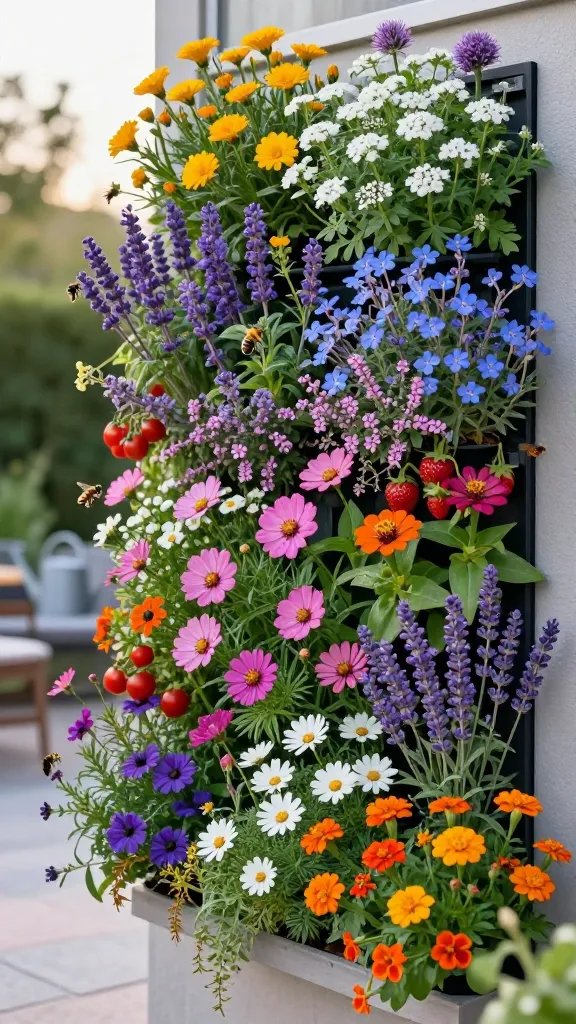
Want constant color and pollination? Stagger bloom times so something irresistible opens every week. Your edibles will set better fruit, and your wall won’t hit that awkward midseason slump.
Seasonal Bloom Waves
- Early Spring: Calendula, alyssum, chive blossoms.
- Late Spring–Early Summer: Sage, catmint, thyme, borage.
- Peak Summer: Zinnia, cosmos, marigold, lavender, nasturtium.
- Late Summer–Fall: Zinnia and cosmos keep going; calendula rebounds in cooler nights.
Vertical Garden Combo Recipes
- The Strawberry Soda: Top row borage, mid rows strawberries + thyme, edges alyssum. Bees binge; berries swell.
- The Salsa Ladder: Tomatoes + basil + marigold mid; zinnia top; nasturtium edges. Pollination plus pest control.
- The Shady Sipper: Lettuce/greens with fuchsia, chives, and calendula. Harvest greens under bells and pom-poms.
- The Mediterranean Wall: Lavender, sage, thyme, cherry tomatoes. Dry heat lovers with fragrance for days.
Pro Moves
- Sow successive rounds of zinnia and cosmos every 3–4 weeks for nonstop blooms.
- Use compact or dwarf varieties to avoid overcrowding pockets.
- Install a bee hotel nearby and a shallow water dish with pebbles for safe sipping.
Use these calendars and blends when you want predictable color and steady fruiting without constant replanting. It’s like programming your wall for “always in bloom.”
Ready to turn your vertical garden into a pollinator playground and a snack bar? Mix these 13 flowering favorites with your edibles, match them to your light, and keep the blooms rotating. Your wall will buzz, your harvest will boom, and your neighbors will ask for your plant list—seriously.