
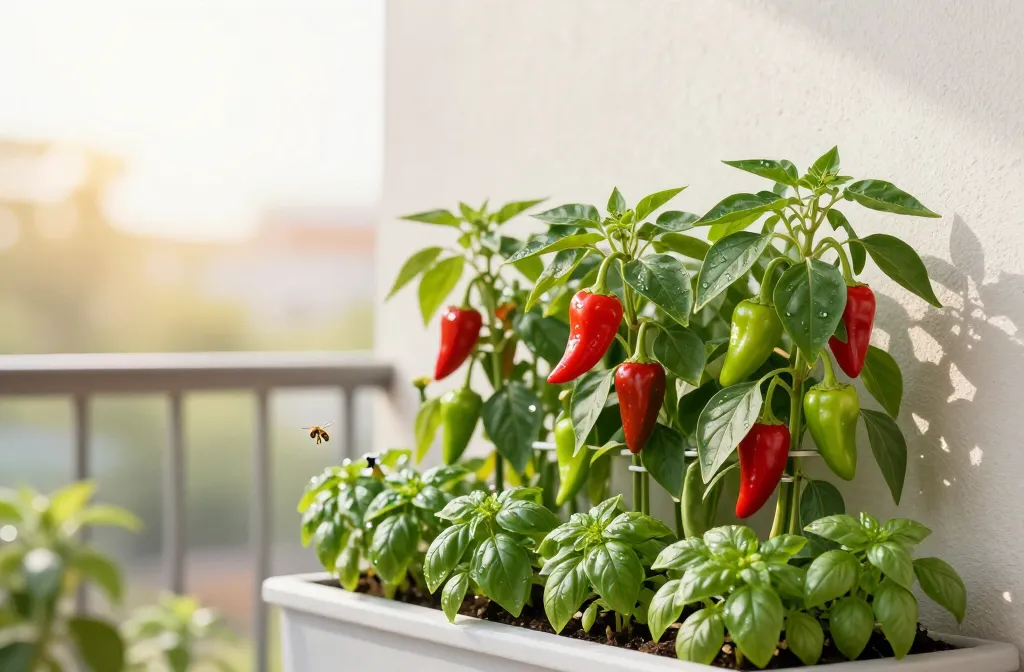
Your vertical pepper garden can do more than just look cool—it can produce like a champ. The secret? Smart companion planting that recruits pollinators, deters pests, and feeds your soil. I’ve rounded up the best pairings that actually work in tight, stacked spaces. Ready to grow taller, spicier, and more productive? Let’s get you planting.
1. Basil Borders That Supercharge Flavor And Pollination
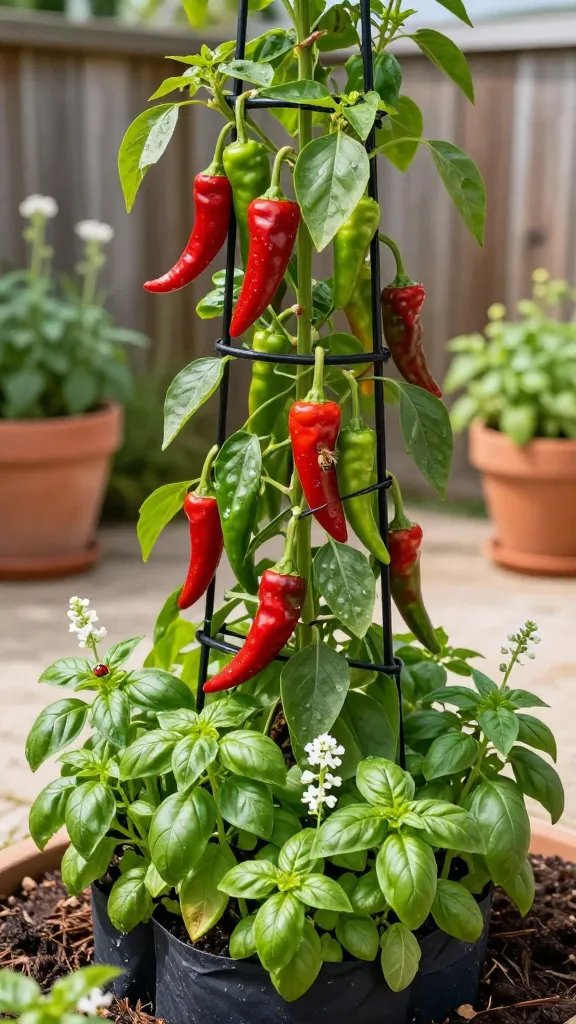
Basil and peppers are a classic duo for a reason—they boost each other’s vibes. Basil attracts pollinators and confuses pests with its scent, while peppers enjoy the calm microclimate basil creates around their roots. Plus, the flavor pairing is elite. Grow them together and your salsa basically makes itself.
Why It Works
- Pest control: Basil’s aromatic oils help deter aphids, thrips, and whiteflies.
- Better pollination: Flowering basil pulls in bees—great for fruit set in peppers.
- Microclimate magic: Basil shades the soil, keeping roots cooler and moisture steady.
Tips
- Plant basil at the base of vertical pepper towers, 6–8 inches away to avoid root competition.
- Pinch basil tips often to keep it compact and delay flowering until peppers set fruit.
- Choose small-leaf types (like Greek basil) for tight spaces.
Use basil when you want a simple, low-maintenance buddy that protects and boosts yield without hogging space.
2. Marigold “Moat” For Nematodes, Whiteflies, And Drama-Free Roots
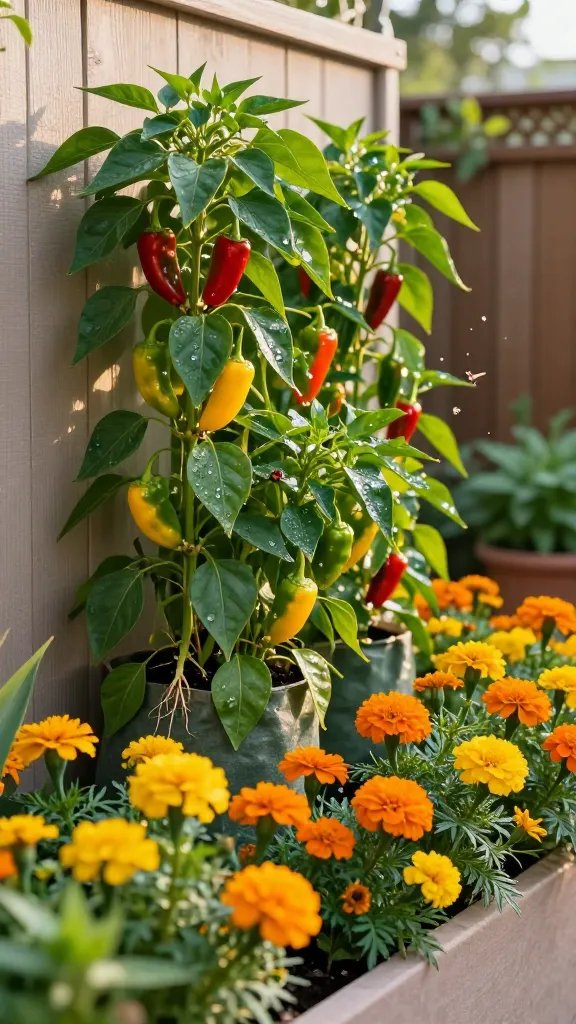
Marigolds bring big pest-fighting energy to vertical gardens. Their roots help suppress root-knot nematodes, and their flowers distract whiteflies from your peppers. They also look happy and cheerful, which IMO your garden deserves.
Key Points
- Nematode control: Certain marigold types (Tagetes patula and Tagetes erecta) exude compounds that deter root-knot nematodes.
- Trap-and-confuse effect: Marigolds pull whiteflies and aphids away from peppers.
- Pollinator draw: Flowers bring in beneficial insects that snack on pests.
Placement & Varieties
- Use dwarf French marigolds at the front or base of vertical frames.
- Plant in pockets or baskets along the lower tiers to “ring” your pepper column.
- Avoid crowding pepper stems—leave 8–10 inches of airspace for airflow.
Reach for marigolds when your past seasons screamed “nematodes” or you battled whiteflies. They’re a colorful insurance policy, seriously.
3. Aromatic Allies: Chives, Green Onions, And Garlic Chives
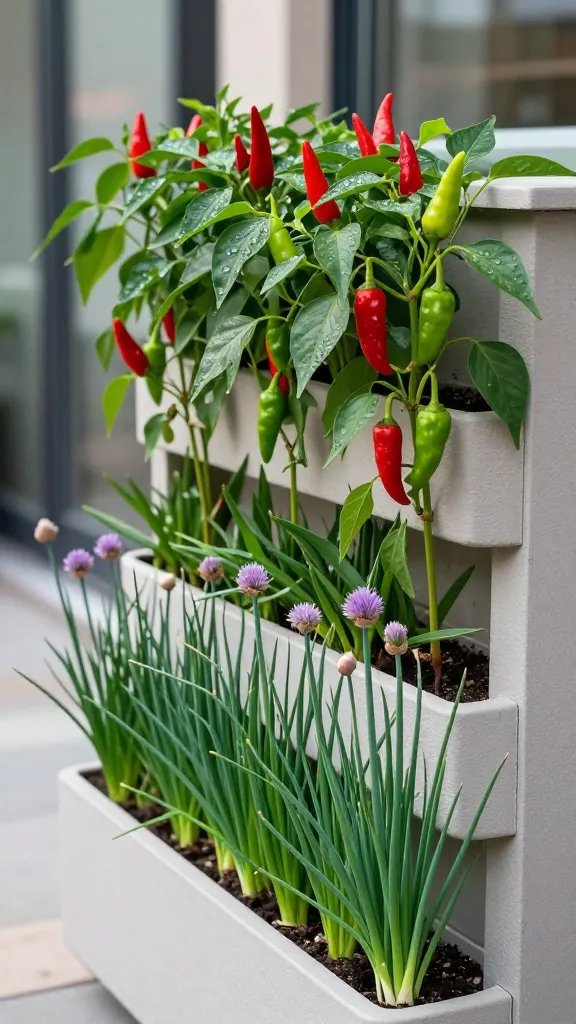
Want fewer aphids and a tighter, tidier plant profile? Enter the allium squad. Chives and scallions slip neatly into small pockets on vertical planters and repel pests without overpowering your peppers.
Why They’re Awesome
- Scent shield: Alliums confuse pests like aphids and spider mites.
- Space-savers: Upright growth fits perfectly along the edges of towers and wall planters.
- Perennial option: Garlic chives come back, making them a set-and-forget companion.
How To Plant
- Interplant chive clumps every 12–18 inches along the base or outer pockets.
- Keep soil consistently moist but not soggy; alliums hate waterlogged roots.
- Trim flower heads before seed set to prevent self-sowing (unless you like chaos).
Use alliums when you want subtle, long-term pest deterrence and easy snips for the kitchen—minimal fuss, maximum payoff.
4. Nectar Highways: Sweet Alyssum, Nasturtiums, And Calendula For Beneficial Bugs
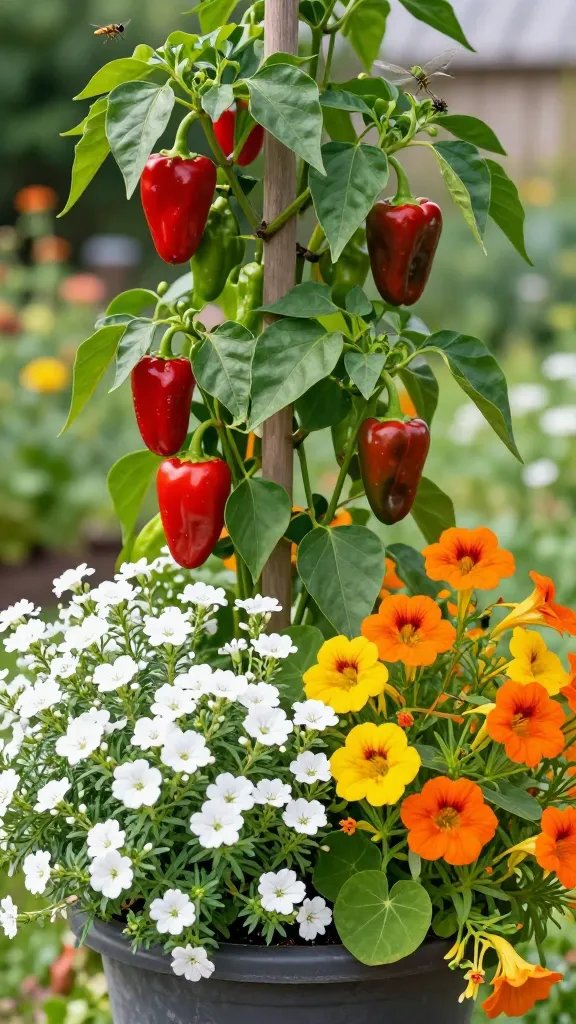
If you want natural pest control, you need the good bugs. These flowering companions act like neon “open late” signs for hoverflies, lacewings, and parasitic wasps—the A-team that hunts aphids, caterpillars, and more. Plus, they cascade beautifully over vertical edges. Garden glam with purpose.
Top Picks And Roles
- Sweet alyssum: Low, fragrant, and a hoverfly magnet—perfect for tight pockets.
- Nasturtiums: Trailing blooms lure aphids away from peppers and provide edible flowers.
- Calendula: Long-blooming, attracts predatory insects, and handles cooler temps.
Placement Tips
- Plant alyssum along the middle tiers to form “nectar lanes” up your tower.
- Use nasturtiums at the top or edges so vines trail down without smothering peppers.
- Slot calendula near sunnier edges; deadhead for nonstop flowers.
Care Notes
- Don’t overfertilize; too much nitrogen means leaves, not blooms.
- Water consistently—especially for trailing nasturtiums in small pockets.
- Watch spacing to keep airflow strong around pepper foliage.
Choose this trio when you want predator support with bonus edible and ornamental vibes. Your peppers will thank you with more fruit set and fewer pest freak-outs.
5. Living Mulch And Soil Boosters: Oregano, Thyme, Clover, And Buckwheat
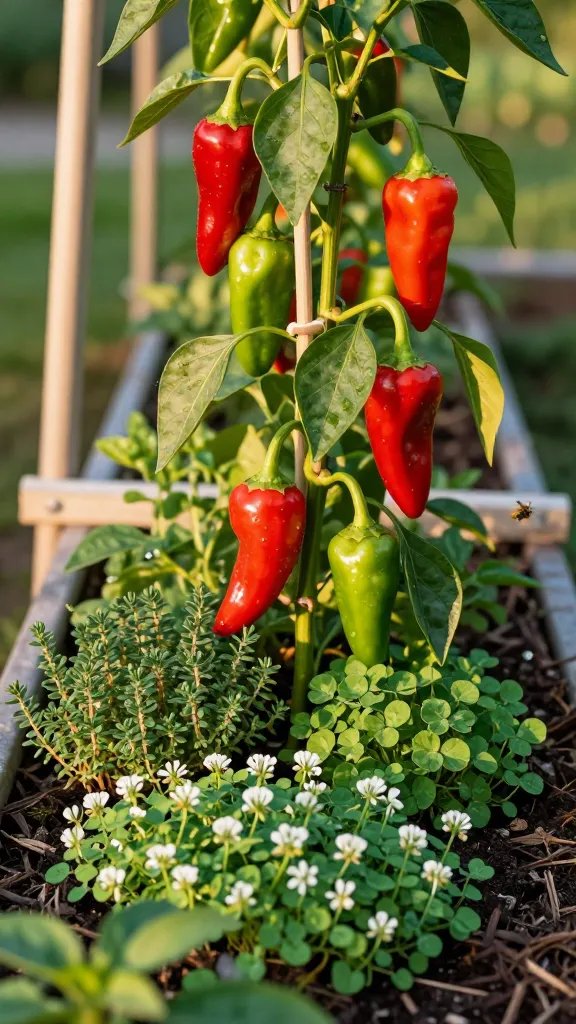
Vertical gardens dry out fast. Enter low-growers and quick cover crops that act like living mulch—locking in moisture, cooling roots, and feeding soil biology. Done right, they make your peppers happier and your watering schedule less chaotic.
Best Options
- Oregano and thyme: Aromatic groundcovers that deter pests and handle lean soil.
- White clover (micro clover works): Fixes nitrogen and covers bare soil around bases.
- Buckwheat: Super-fast cover crop with flowers that attract beneficials; chop-and-drop as mulch.
How To Use
- Plant oregano/thyme at the lowest tiers so they spill slightly but don’t climb stems.
- Broadcast micro clover seeds in any open base bed or grow bag supporting the vertical frame.
- Sow buckwheat in unused modules; cut it before it seeds and lay it as mulch.
Pro Tips
- Keep living mulch 4–6 inches away from pepper stems to prevent humidity spikes.
- Aim for light, even coverage—too dense can compete for nutrients.
- If peppers look pale, supplement with compost tea; living mulches aren’t magic fertilizer, FYI.
Use living mulches and boosters when heat and evaporation threaten your vertical setup. They stabilize moisture, invite helpers, and reduce soil compaction—triple win.
Ready to stack your garden’s advantages as high as your trellis? Mix a few of these companions based on your space and sunlight, then watch your peppers explode with growth. Get creative, experiment, and trust me—once you see the yields, you’ll never plant peppers alone again.